Roots and rhizomesPhlegm-resolvingStemonae Radix

Bai Bu (Stemona Root)

A practical guide to Bai Bu: what it is, how Traditional Chinese Medicine uses it, the classical formulas it appears in, and who should be careful with it.

View Herb Profile →

Last reviewed Oct 13, 2026

Quick Facts

Latin NameStemonae Radix
Chinese Name & Pinyin 百部 · Bai Bu
Medicinal PartRoots and rhizomes
The herbBai Bu is the dried tuber of the three stemona species above. Zi Wan and Kuan Dong Hua are different official drugs. Common forms: raw and honey-fried.
Nature and channelsSweet, bitter, slightly warm. Enters the Lung. Sweet bitter slight warmth moistens the Lung, directs qi down, and stops cough. External use kills parasites.
Pharmacopoeia lineMoistens the Lung, directs qi downward, and stops cough. Kills parasites and lice. Used for new or enduring cough, consumptive cough, and whooping cough; externally for head lice, body lice, pinworm, and genital itch.
Pattern cuesNew or enduring cough. Spasmodic cough. Consumptive cough.
In this articleBai Bu versus Zi Wan, Kuan Dong Hua, and Chuan Bei Mu. Raw versus honey-fried. Why spasmodic cough needs a clinic. Why external use is not a home pesticide. Who should skip it.

What Is Bai Bu?

Bai Bu (百部; Bǎi Bù; Latin: Stemonae Radix; English: stemona root) is the dried tuber of Stemona sessilifolia (Miq.) Miq., Stemona japonica, or Stemona tuberosa. In Chinese medicine it is a phlegm-transforming, cough-stopping herb. It is sweet, bitter, and slightly warm, enters the Lung channel, and its core actions are to moisten the Lung, direct qi downward, and stop cough, and to kill parasites and lice. Honey-fried Bai Bu is used more to moisten the Lung and stop cough. It is not Zi Wan. Tatarian aster is acrid, bitter, and warm, and more specifically dispels phlegm and stops cough. It is not Kuan Dong Hua. Coltsfoot is a flower bud that stops cough and transforms phlegm. Bai Bu is sweet, bitter, and slightly warm. New cough, enduring cough, and spasmodic cough can all appear with it, and tradition also records external use against parasites. Head lice, body lice, and pinworm need ordinary care pathways. Do not treat the decoction piece as a home pesticide. Spleen-deficiency loose stools are a caution. Spasmodic cough and consumptive cough need a clinic.

It is used most often for three patterns:

  • New or enduring cough — honey-fried
  • Consumptive cough, whooping cough — seek care
  • External use — head lice, body lice, pinworm, genital itch; pattern diagnosis and ordinary care

The usual decoction dose is 3–9 g. Sweet, bitter, and slightly warm, it is not a daily “cough stemona tea.” Moistening when there is no cough, or in damp-heat with no deficiency, obstructs the middle.

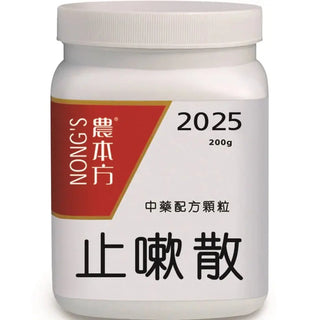
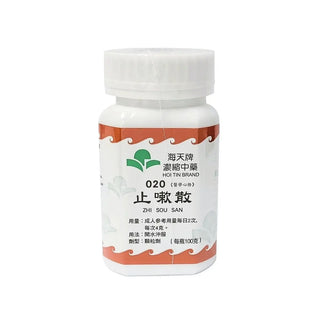
When Lung qi rebels and cough will not stop, cough and spasmodic cough are common. Bai Bu is sweet, bitter, and slightly warm. It moistens, directs down, and stops cough, which is why it appears in Zhi Sou San–type formulas. It warms and moistens more than it clears. Yellow sputum and fever from excess heat should not meet the root alone.

Bai Bu is not a catch-all cough or parasite root. In excess-heat yellow sputum or spleen-deficiency diarrhea, using it alone can obstruct the middle. Raw or honey-fried should be decided by a licensed Chinese medicine practitioner after pattern diagnosis.

Bai Bu Stemona Root

Bai Bu: Materia Medica Profile

Identification & Quality Standard

Stemonae Radix

Botanical Origin

The dried tuberous root of Stemona sessilifolia (Miq.) Miq., Stemona japonica (Bl.) Miq., Stemona tuberosa Lour. (Stemonaceae).

Production Regions

Primarily produced in the Chinese provinces of Hubei, Guangxi, Yunnan, Sichuan.

Quality Requirements

Superior medicinal material is thick and strong, firm, and yellowish-white.

Macroscopic Features

Stemona sessilifolia (Miq.) Miq: Fusiform, upper apex relatively thin and long, wrinkled and curved, 5~12cm long, 0.5~1cm diameter. Externally yellowish-white to pale brownish-yellow, with irregular deep longitudinal grooves, occasionally with horizontal wrinkles. Hard and easily broken texture, fractured surface is flat, horn-like, pale yellowish-brown or yellowish-white. Wide phloem, flat and wrinkled stele. faint odor. Taste sweet and bitter. Stemona japonica (Bl.) Miq: both ends gradually become thin, with many irregular creases and horizontal wrinkles. Stemona tuberosa Lour: long fusiform or long strips, 8~24cm long, 0.8~1.2cm diameter. Externally light yellowish-brown to grayish-brown, with shllow longitudinal wrinkles or irregular longitudinal troughs. Firm texture; fracture surface is yellowish-white to dark brown, with relatively large stele and off-white pith.

Authentic Regions and Quality Identification

Historically, high-quality roots come from regions like Anhui, Jiangsu, and Zhejiang. However, quality also depends on harvest time and processing.

  • Appearance: A good quality root is spindle-shaped with shallow, lengthwise wrinkles. It is brittle and breaks easily, revealing a flat, horny-looking center with a woody core.
  • Raw vs. Honey-Roasted: The raw form has a slightly bitter scent. The honey-roasted Mi Bai Bu has a brownish-yellow surface and a pleasant, slightly caramelized aroma.
  • Lookalikes: It is sometimes confused with Tian Men Dong (Asparagus Tuber), which is longer with finer wrinkles, or Mai Dong (Ophiopogon Tuber), which is smaller and more flexible.

Traditional Properties & Historical Lineage

Nature, Flavour & Channel Tropism

Sweet, Bitter; Slightly warmLung

1. Historical Records

Classic medical texts highlight its versatile applications:

  • Ming Yi Bie Lu noted its ability to treat stubborn coughs and eliminate bugs.
  • Xin Xiu Ben Cao mentioned it can warm the Qi and stop sudden, violent coughing fits.
  • Ben Cao Gang Mu (Compendium of Materia Medica) added that it treats pinworms, ringworm (when soaked in wine), and can even be used to treat pest-infested trees.

2. Evolution of TCM Understanding

Over time, TCM practitioners debated its primary strength.

  • Some doctors focused heavily on its ability to moisten Lung dryness for dry coughs.
  • Others emphasized its parasite-killing properties for both internal bugs and external skin issues.
  • Important Caution: Ancient doctors also warned that if a cough is caused by "excess heat," taking too much of this slightly warm herb could make the discomfort worse, showing that a proper TCM diagnosis is always needed.

Bai Bu Stemona Root

Core Efficacies & Traditional Applications

Traditional Functions

Moistens the lung, downbears qi, relieve cough, and kills worms. Applied to Lingering cough, coughing due to tuberculosis, whooping cough, externally applied to take care of head lice, body lice, enterobiasis, pruritus vulvae.

1. Main Focus: Moistening the Lungs and Stopping Coughs

  • What it does: The primary traditional function of Bai Bu (Stemona Root) is to moisten the Lungs, direct Qi downward, and stop coughing. It is highly effective for coughs caused by Lung dryness or Lung deficiency.
  • When it is used: It is commonly used for chronic coughs or dry coughs with little to no phlegm (or sticky phlegm that is hard to expectorate). Other signs include a dry throat, hoarse voice, and a feeling of heat in the palms and soles.
  • Common Pairings: To enhance its lung-moistening effects, it is often paired with Sha Shen (Glehnia Root), Mai Dong (Ophiopogon Tuber), and Bei Mu (Fritillary Bulb).
  • When to Avoid: If your cough is accompanied by a high fever or thick, yellow phlegm (signs of "excess heat"), do not use this herb on your own. It might trap the pathogen inside and worsen your symptoms.

2. Second Focus: Killing Parasites and Lice

  • What it does: Traditionally, it is famous for killing parasites and stopping itching. It targets both external parasites (like lice) and internal parasites (like pinworms).
  • When it is used: Externally, it is used for itchy scalp with lice eggs or pubic lice. Internally, it helps treat pinworms (often marked by nighttime anal itching).
  • Common Pairings: For external use, it is boiled into a wash with Ku Shen (Flavescent Sophora Root) or She Chuang Zi (Cnidium Fruit). For internal parasites, it is often combined with Bing Lang (Betel Nut) or Shi Jun Zi (Rangoon Creeper Fruit).
  • Safety/Warnings: When using as a skin wash, keep it away from your eyes and mouth. For internal use, dosage must be strictly controlled to avoid toxicity.

3. Common Herb Pair: The Synergy

A classic pairing is Bai Bu (Stemona Root) and Sha Shen (Glehnia Root).

  • Bai Bu (Stemona Root) focuses on moistening the Lungs and stopping the cough.
  • Sha Shen (Glehnia Root) excels at nourishing Yin and generating fluids in the stomach and Lungs.
  • Together: They strongly nourish Yin and moisten the Lungs, making them a perfect team for chronic dry coughs with a dry throat. Sha Shen (Glehnia Root) also helps balance the slightly warm nature of Bai Bu (Stemona Root). This pair requires a professional TCM diagnosis to adjust the correct dosage.

Bai Bu Stemona Root

Modern Research

Modern research offers useful context, but Traditional Chinese Medicine prescribes on whole-pattern diagnosis rather than isolated compounds.

1. Key Chemical Components

Modern science has found that the primary active ingredients in Bai Bu (Stemona Root) are various alkaloids (such as stemonine).

  • Lab Observations: In test-tube environments, these alkaloids show a paralyzing effect on certain parasites and mild cough-relieving properties in animal models.

2. Modern Pharmacological Focus

Today, modern research mostly looks into its anti-parasitic and cough-suppressing potential.

  • Findings: Lab tests show some effectiveness against head lice and pinworms. Animal studies suggest its extracts might help reduce coughing fits and increase airway mucus, which can help clear out phlegm.

3. Limitations of Modern Studies

While these scientific findings are interesting, it is important to keep a few things in mind:

  • Lab vs. Real Life: Results from test tubes or animals do not perfectly translate to complex human bodies.
  • Extracts vs. Whole Herb: Labs use highly concentrated, isolated chemicals, which act very differently from brewing a traditional, whole-herb tea.
  • TCM Synergy: TCM relies on the whole herb's natural balance. Looking at just one isolated chemical does not capture the full healing profile of the plant.

Bai Bu Stemona Root

Comparing Similar Herbs

1. What They Have in Common

We compare Bai Bu (Stemona Root) with Zi Wan (Tartarian Aster Root).

  • Both herbs moisten the Lungs and stop coughs.
  • Both are frequently used in formulas for chronic respiratory issues.
  • Both require careful consideration of dosage and body constitution.

2. The Core Differences

  • Nature and Flavor: Bai Bu (Stemona Root) is sweet, bitter, and slightly warm, with a very peaceful nature. Zi Wan (Tartarian Aster Root) is spicy, bitter, sweet, and slightly warm, but has a more "dispersing" quality.
  • Primary Strength: Bai Bu (Stemona Root) excels at moistening dryness and treating parasitic infections. Zi Wan (Tartarian Aster Root) is much better at resolving phlegm and opening up blocked Lung Qi.
  • Action Mechanism: Bai Bu (Stemona Root) acts by "astringing" or holding Lung energy in to stop chronic dry coughs. Zi Wan (Tartarian Aster Root) acts by "dispersing" energy to help expel stubborn phlegm.
  • Target Symptoms: Use Bai Bu (Stemona Root) for dry coughs, hoarseness, or parasite issues. Use Zi Wan (Tartarian Aster Root) when there is a lot of sticky phlegm that is hard to cough up, or chest tightness.
  • Contraindications: Avoid Bai Bu (Stemona Root) for coughs with heavy, thick phlegm or excess heat. Avoid Zi Wan (Tartarian Aster Root) for dry coughs caused by Yin deficiency (internal heat), as its spicy nature can dry you out further.

3. The One-Sentence Summary

In short: Bai Bu (Stemona Root) is best for moistening dry, chronic coughs and killing parasites, while Zi Wan (Tartarian Aster Root) is best for opening the Lungs and clearing out stubborn phlegm.

Bai Bu Stemona Root

Classical Formulas Containing Bai Bu

Formulas vs. Single Herbs

  • Synergy is Key: A formula is a balanced team. The healing power comes from how the herbs interact, so a single herb cannot simply replicate a full formula's effects.
  • Holistic Balance: The exact dosage and combination in a formula affect the entire body. Never try to mix or alter these formulas at home based on internet articles.

Diet & Daily Home Use

1. Home Teas and Recipes

  • Recipe 1: Bai Bu and Candied Date Tea
    • Ingredients: 5g raw Bai Bu (Stemona Root), 2 candied dates, a little rock sugar.
    • How to make: Boil the herb and dates in water for 20 minutes, strain, and add rock sugar to taste.
    • Usage: Good for mild, dry coughs and a scratchy throat. Do not use if you have thick phlegm or a fever. Limit to 1-2 times a week.
  • Recipe 2: Bai Bu and Ku Shen Skin Wash
    • Ingredients: 10g raw Bai Bu (Stemona Root), 10g Ku Shen (Flavescent Sophora Root), 8g She Chuang Zi (Cnidium Fruit).
    • How to make: Boil all herbs in water for 30 minutes. Strain the liquid, let it cool to a comfortable temperature, and use it to wash the scalp or affected skin.
    • Usage: For mild surface itching or suspected lice. Avoid using on broken skin or if you are prone to allergies. Wash with plain water afterward.

2. Decoction and Processing Differences

  • Raw vs. Honey-Roasted: Raw Sheng Bai Bu (Stemona Root) is mostly used for killing parasites (internal or external). The honey-roasted version, Mi Bai Bu (Stemona Root), is much better for moistening the Lungs and treating coughs as a tea or decoction.
  • Preparation: You can boil it directly with other herbs; it does not require special boiling techniques. Note that 10g of the raw herb does not equal 10g of the honey-roasted herb in terms of potency.

3. Dosage and Usage Cycle

  • Dosage: Clinical internal doses range from 3-9g. For home tea, stick to 3-5g.
  • Cycle: Do not use this long-term. For a cough tea, stop after 2 weeks. For an external wash, stop after 1 week. Always consult a doctor for children, pregnant women, or those with kidney/liver issues.
Bai Bu Stemona Root

Contraindications & Safety Warnings

1. Who Should Avoid It

  • Excess Heat Coughs: If you have thick phlegm, fever, and a very dry mouth, avoid this herb.
  • Pregnant/Nursing Women: There is insufficient safety data; consult a doctor before use.
  • Children and the Elderly: Must be used under strict professional guidance to ensure the correct dose.
  • Liver/Kidney Issues: As the herb is metabolized by these organs, consult a doctor to avoid organ stress.
  • Allergies: Avoid if you are allergic to plants in the Stemonaceae family.

2. Drug Interactions and Dietary Notes

  • Medication Conflicts: Bai Bu (Stemona Root) may interact with blood thinners, blood pressure medications, diabetes drugs, and sedatives, potentially altering how they absorb or metabolize. Always consult your doctor or pharmacist before mixing TCM herbs with Western prescriptions.

3. Adverse Reactions and Overdose Risks

  • Side Effects: Taking too much can cause nausea, vomiting, or dizziness. Externally, a concentration that is too high can irritate the skin and mucous membranes.
  • Emergency Steps: If you experience rapid worsening of symptoms, persistent vomiting, shortness of breath, or allergic reactions, stop using it immediately and seek medical attention.

Frequently Asked Questions About Bai Bu

What is Bai Bu? Are Dui Ye Bai Bu, Zi Wan and Kuan Dong Hua the same?
Official Bai Bu (百部) is the dried tuberous root of Stemona sessilifolia, Stemona japonica, or Stemona tuberosa. The pharmacopoeial name is Stemonae Radix. All three are included. Zi Wan is acrid-bitter and warm: moistens the Lung, directs qi downward, disperses phlegm and stops cough. Kuan Dong Hua is acrid, slightly bitter and warm: moistens the Lung, directs qi downward, stops cough and transforms phlegm. Write Bai Bu. Use caution in Spleen-Stomach weakness.
What are the TCM properties and traditional uses of Bai Bu?
According to the Chinese Pharmacopoeia, Bai Bu is sweet, bitter and slightly warm, enters the Lung channel, and acts to moisten the Lung, direct qi downward, stop cough, kill parasites and destroy lice. It is used for recent and chronic cough, taxation cough, and whooping cough; externally for head lice, body lice, pinworm and genital itch. Honey-fried root leans to moistening the Lung and stopping cough, for yin-vacuity taxation cough. Sweet-bitter and slightly warm, it suits cough and external parasite use—not large long courses in Spleen-Stomach weakness.
How do you choose raw versus honey-fried Bai Bu? Can Zi Wan replace it?
Raw root kills parasites more strongly, for external lice and pinworm. Honey-fried root moistens the Lung and stops cough, and is relatively better in yin-vacuity taxation cough. Aster disperses phlegm and stops cough; it cannot replace killing parasites and destroying lice by equal weight. Commercial stemona tea is not equal-weight pieces.
What is the usual dosage? Can it be drunk daily as a cough tea?
The pharmacopoeial decoction dose is 3–9 g. External use is an appropriate amount, decocted in water or steeped in wine. It is not a four-season “stemona cough tea.” Spleen-Stomach weakness only loosens further as it moistens. Chronic cough needs a practitioner to name a short course; it does not replace respiratory assessment.
What are the contraindications? Can it be used in pregnancy?
Use caution in Spleen-Stomach weakness. Heat cough and yin-vacuity fire are not for large raw doses alone. Pregnancy and children need a practitioner’s assessment. Do not get external preparations in the eyes or mouth. Stop if diarrhea or rash appears. Coughing blood and panting with cyanosis need medical care.
Can Bai Bu moisten the Lung, direct qi downward, stop cough, kill parasites and destroy lice?
It can help recent and chronic cough and whooping cough. Yin-vacuity taxation cough uses honey-fried root. Externally, a wine steep may be applied for head lice and body lice. It moistens the Lung, directs qi downward, stops cough, kills parasites and destroys lice—not a specific for every cough or every parasite.
Can Bai Bu be drunk daily as a cough, Lung or lice tea?
Recent and chronic cough may enter a short formula; Spleen-Stomach weakness only loosens further as it moistens. “Stemona must stop cough and destroy lice” does not replace respiratory and skin assessment. Moistening the Lung, directing qi downward and stopping cough should name 3–9 g, raw or honey-fried.
How do you choose among Bai Bu, Zi Wan, Kuan Dong Hua, Chuan Bei Mu and Ku Lian Pi?
Stemona is sweet-bitter and slightly warm: moistens the Lung, directs qi downward, stops cough, kills parasites and destroys lice—recent and chronic cough and external lice. Aster is acrid-bitter and warm: moistens the Lung, directs qi downward, disperses phlegm and stops cough—cough with copious phlegm. Coltsfoot is acrid, slightly bitter and warm: moistens the Lung, directs qi downward, stops cough and transforms phlegm—cold cough. Sichuan fritillaria is bitter-sweet and slightly cold: clears heat, moistens the Lung, transforms phlegm and stops cough—dry cough and yin vacuity, and it antagonizes aconite. Melia bark is bitter-cold and toxic: kills parasites and treats tinea—roundworm, and the dose must be strictly limited. Whooping cough and external lice favor Bai Bu; copious phlegm favors Zi Wan; cold cough favors Kuan Dong Hua; dry cough favors Chuan Bei Mu; roundworm favors Ku Lian Pi only if a practitioner sets the dose. They may be paired after pattern differentiation; Spleen-Stomach weakness forbids large Bai Bu and Chuan Bei.
Which herbs is Bai Bu combined with? What are the representative formulas?
Chronic cough joins aster, coltsfoot and platycodon in a modified Zhi Sou San type formula. Whooping cough may join stemona, glehnia and ophiopogon after pattern differentiation. External wine steep is applied for lice. Write Bai Bu 3–9 g, raw or honey-fried; do not replace killing parasites with aster by equal weight.
How do you choose and store Bai Bu?
For sessile stemona, choose fusiform roots, yellow-white, longitudinally grooved, a horny cut face, a flattened stele and a sweet-bitter taste. Tuberous stemona is larger, with a bigger stele. Moldy, moth-eaten, rotten or dirty lots are discarded. Store ventilated and dry against moisture. Buy pharmacopoeial Bai Bu; do not replace moistening the Lung, directing qi downward, stopping cough, killing parasites and destroying lice with aster or coltsfoot by equal weight.

Medical Disclaimer — This article is provided for educational purposes only and describes traditional Chinese medicine concepts. It is not medical advice, and it is not intended to diagnose, treat, cure or prevent any disease. Always consult a qualified practitioner before using any herb, particularly if you are pregnant, nursing, taking medication or managing a diagnosed condition.

More Chinese Herbs

Login

Forgot your password?

Don't have an account yet?
Create account

Bai Bu (Stemona Root): Moisten the Lungs, Descend Qi, and Stop Cough