
Frequent Nocturia
夜尿頻繁 / 夜尿频繁
Waking multiple times at night to urinate.
Quick Facts
| Health Topic | Men's Wellness |
|---|---|
| Also Known As | Night-time urination, Getting up to pee at night, Nocturnal frequency, Nighttime bathroom trips |
| Common Symptoms | Waking one or more times at night to pass urine. The volume may be small or moderate, and sleep is interrupted. There may be a sense of incomplete emptying, cold lower back, or fatigue the next day from broken sleep. |
| Related TCM Patterns | Kidney Yang Deficiency |
| Related Classical Formulas | |
| Related Articles | Frequent Nighttime Urination: Syndrome Differentiation and Daily Care |
Frequent Nocturia in Traditional Chinese Medicine
In Traditional Chinese Medicine, frequent nocturia is commonly associated with Kidney Yang deficiency. Differentiation looks at whether the urine is clear and copious, whether the person feels cold in the lower back and limbs, and whether daytime energy is low. Classical formulas are matched to this pattern context rather than to night-time frequency alone. Accompanying signs such as tongue appearance, pulse quality and the presence of heat or cold help distinguish one presentation from another.
TCM Patterns Associated With Frequent Nocturia
The same presentation may be understood through more than one pattern. Pattern differentiation weighs the accompanying signs, not the symptom on its own.
| Pattern | Common Features | Related Formulas |
|---|---|---|
| Kidney Yang Deficiency腎陽虛證Deficiency Patterns | Cold lower back and knees, cold limbs, clear copious urine or frequent nocturia, and reduced sexual drive or premature ejaculation. Energy is low, especially in the morning or in cold weather, and stools may be loose. The face can look pale and slightly puffy. Tongue pale and swollen with a white coating; pulse deep and weak, especially in the chi position. |
Classical Formulas Traditionally Associated
Associated with 6 classical formulas
Listed for study. Which formula fits, if any, depends on the pattern rather than the symptom.
Sang Piao Xiao San
桑螵蛸散 · Sāng Piāo Xiāo Sǎn
Kidney Yang DeficiencyAstringent FormulasSuo Quan Wan
縮泉丸 · Suō Quán Wán
Kidney Yang DeficiencyAstringent FormulasJin Suo Gu Jing Wan
金鎖固精丸 · Jīn Suǒ Gù Jīng Wán
Kidney Yang DeficiencyAstringent FormulasJin Gui Shen Qi Wan
金匱腎氣丸 · Jīn Guì Shèn Qì Wán
Kidney Yang DeficiencyYang-Tonifying FormulasYou Gui Wan
右歸丸 · Yòu Guī Wán
Kidney Yang DeficiencyYang-Tonifying FormulasJi Sheng Shen Qi Wan
濟生腎氣丸 · Jì Shēng Shèn Qì Wán
Kidney Yang DeficiencyYang-Tonifying FormulasLearn More About Frequent Nocturia
Related Health Topic
Men's Wellness — Formulas supporting male vitality, kidney function, and reproductive health.
Health Topic
See all Men's Wellness conditions
Frequently Asked Questions
How does Traditional Chinese Medicine understand frequent nighttime urination?
In TCM, frequent nighttime urination (夜尿频繁) is closely related to the Kidney failing to store and the Bladder failing to constrain urine during the night, when Yin should be dominant. The Kidney governs water and Essence. Yang or Qi deficiency, aging, overwork, or Damp-Heat in the Lower Burner can all increase night-time voiding.
What are the common TCM patterns of frequent nighttime urination?
Frequent patterns include Kidney Qi or Yang deficiency (clear copious night urine, low-back coldness), Lung-Spleen Qi deficiency (night frequency with fatigue and weak voice), Heart-Kidney disharmony (night waking with palpitations), and less often Damp-Heat in the Bladder if there is burning or dark urine. Accurate pattern differentiation determines the treatment approach.
How does TCM regulate frequent nighttime urination?
The main principles are to tonify and consolidate Kidney Qi, warm Yang if needed, or strengthen Lung and Spleen Qi according to the pattern. Formulas such as modifications of Suo Quan Wan, Jin Gui Shen Qi Wan or Bu Zhong Yi Qi Tang may be considered. Astringent methods are not used while Damp-Heat is still active. Internal treatment should be guided by a qualified TCM practitioner.
Related Products
 Nong's Sang Piao Xiao San (Mantis Egg-Case Powder) 5:1 Concentrated Granules
$109.03
Nong's Sang Piao Xiao San (Mantis Egg-Case Powder) 5:1 Concentrated Granules
$109.03
 Nong's Suo Quan Wan (Lock the Spring Formula) 5:1 Concentrated Granules
$70.51
Nong's Suo Quan Wan (Lock the Spring Formula) 5:1 Concentrated Granules
$70.51
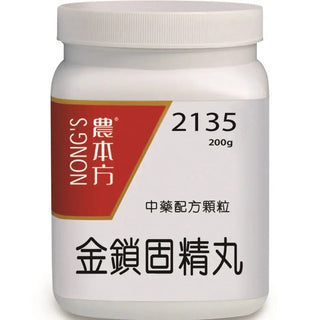 Nong's Jin Suo Gu Jing Wan (Golden Lock Essence-Securing Formula) 5:1 Concentrated Granules
$68.37
Nong's Jin Suo Gu Jing Wan (Golden Lock Essence-Securing Formula) 5:1 Concentrated Granules
$68.37
 Hoi Tin Jin Gui Shen Qi Wan (Golden Cabinet Kidney Qi Formula) 5:1 Concentrated Granules
$23.86
Hoi Tin Jin Gui Shen Qi Wan (Golden Cabinet Kidney Qi Formula) 5:1 Concentrated Granules
$23.86
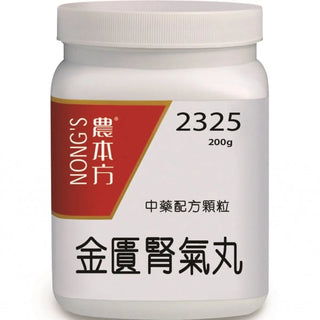 Nong's Jin Gui Shen Qi Wan (Golden Cabinet Kidney Qi Formula) 5:1 Concentrated Granules
$68.37
Nong's Jin Gui Shen Qi Wan (Golden Cabinet Kidney Qi Formula) 5:1 Concentrated Granules
$68.37
 Hoi Tin You Gui Wan (Restore the Right Kidney Pill) 5:1 Concentrated Granules
$40.23
Hoi Tin You Gui Wan (Restore the Right Kidney Pill) 5:1 Concentrated Granules
$40.23
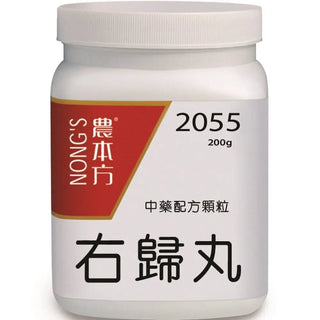 Nong's You Gui Wan (Restore the Right Kidney Pill) 5:1 Concentrated Granules
$112.24
Nong's You Gui Wan (Restore the Right Kidney Pill) 5:1 Concentrated Granules
$112.24
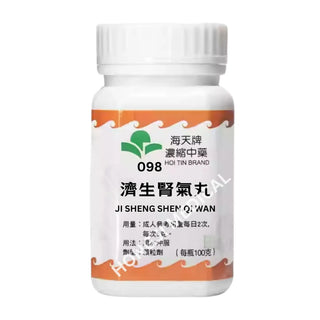 Hoi Tin Ji Sheng Shen Qi Wan (Jisheng Kidney Qi Formula) 5:1 Concentrated Granules
$30.50
Hoi Tin Ji Sheng Shen Qi Wan (Jisheng Kidney Qi Formula) 5:1 Concentrated Granules
$30.50
This library is educational. It describes how Traditional Chinese Medicine has traditionally understood these presentations. It is not a diagnosis, and it is not a treatment recommendation.
Back to the Condition Hub