Heat-Clearing Formulas

甘露飲 · Gān Lù Yǐn

Gan Lu Yin

A classical formula for Yin deficiency with damp-heat in the upper jiao — dry mouth, gum swelling and sticky saliva.

View formula profile →
Last reviewed August 2026
Formula CategoryHeat-Clearing Formulas
Primary PatternStomach Heat
Primary FunctionEnrich Yin, clear heat, resolve damp, generate fluids
Primary Therapeutic PrincipleNourish Yin, clear heat and drain damp from the upper jiao
Main HerbsRaw Rehmannia Root · Prepared Rehmannia Root · Dendrobium · Asparagus Root · Ophiopogon Tuber · Loquat Leaf · Virgate Wormwood · Scutellaria / Baikal Skullcap · Bitter Orange · Licorice Root
Classical SourceTai Ping Hui Min He Ji Ju Fang (Song, 1107)

Why This Formula?

Traditionally selected for Yin deficiency with damp-heat in the upper jiao affecting mouth and gums, rather than pure Stomach fire, Yin-deficiency Stomach heat, or latent Spleen heat alone.

Traditionally selected for Yin deficiency with damp-heat in the upper jiao affecting mouth and gums, rather than pure Stomach fire, Yin-deficiency Stomach heat, or latent Spleen heat alone.

What Is Gan Lu Yin?

1. Records in Ancient Literature

Gan Lu Yin (甘露饮), or Sweet Dew Drink, is a classical Song-dynasty formula from the Tai Ping Hui Min He Ji Ju Fang (Imperial Grace Formulary of the Tai Ping Era). It belongs to the category of formulas that nourish Yin, clear Heat, and drain residual Damp-Heat.

This formula addresses Yin deficiency of the Lungs, Stomach, and Kidneys with lingering Damp-Heat steaming upward. Typical signs include mouth ulcers, swollen or bleeding gums, sore throat, bad breath, dry mouth with a sticky sensation, possible low-grade fever or irritability, a red tongue with little coating or a thin yellow greasy coat, and a thin rapid pulse.

Combining Sheng Di Huang and Shu Di Huang to nourish Kidney and Blood Yin, Tian Men Dong, Mai Men Dong, and Shi Hu to moisten Lung and Stomach Yin and generate fluids, Huang Qin and Yin Chen Hao to clear Heat and drain Dampness, Pi Pa Ye to descend rebellious Stomach and Lung Qi, Zhi Ke to move Qi and prevent the Yin tonics from stagnating, and Zhi Gan Cao to harmonize, Gan Lu Yin effectively replenishes Yin, clears residual Heat, and is especially useful for chronic oral and throat Heat on a deficient background.

Gan Lu Yin: Clearing the Stomach, Draining Fire, Nourishing Yin and Moistening Dryness — Precise Conditioning for Recurrent Oral Ulcers, Periodontitis, and Chronic Pharyngolaryngitis | HJMEDICAL

2. Oral Conditions

Gan Lu Yin is highly regarded for oral health issues, particularly stomatitis (mouth inflammation) and oral ulcers.

  • How it Works: It clears heat, resolves toxicity, and reduces swelling.
  • Targeted Symptoms: It is ideal for painful mouth sores and swollen gums caused by a combination of yin deficiency, internal fire, and heat-toxins. Patients usually show signs like a dry mouth and throat, and a red tongue with very little coating. The formula helps relieve the pain and promotes the repair of the oral mucosa.

3. Digestive System Disorders

This formula can serve as a supportive treatment for digestive issues like gastritis and gastric ulcers when the specific pattern of "stomach damp-heat combined with yin deficiency" is present.

  • Stomach Relief: It helps soothe dull stomach pain, a dry mouth with a bitter taste, and the feeling of being hungry without an appetite. It works by regulating the stomach, clearing out damp-heat, and restoring stomach fluids.
  • Liver and Gallbladder Support: For hepatitis patients experiencing rib-area pain, a bitter taste, a dry throat, and a red tongue with a yellow, greasy coating, modified versions of Gan Lu Yin can be very helpful. It clears the liver, benefits the gallbladder, and cools internal heat.
Gan Lu Yin

4. Respiratory System Disorders

Gan Lu Yin is also beneficial for respiratory complaints like chronic pharyngitis and lingering coughs.

  • Ideal Candidates: It works best for patients suffering from insufficient lung yin mixed with damp-heat. Common signs include a dry and itchy throat, coughing up very little phlegm, and a red tongue with a sparse coating.
  • The Benefit: By nourishing yin, moistening the lungs, clearing heat, and resolving phlegm, the formula helps regulate lung function and significantly improves the patient's breathing and quality of life.

Herb Composition (Sovereign / Minister / Assistant / Envoy)

1. Chief Herb — Sheng Di Huang

Sheng Di Huang (Raw Rehmannia Root) serves as the chief herb in Gan Lu Yin. It is sweet and bitter in flavor, cold in nature, and targets the heart, liver, and kidney channels.

  • Actions: It clears heat, cools the blood, nourishes yin, and generates fluids.
  • Role in Formula: It builds the foundation for nourishing yin and clearing heat by restoring the body's yin fluid. This helps keep "yang-heat" pathogens in check, balancing the body's yin and yang. It is highly effective for symptoms caused by yin deficiency combined with internal heat.

2. Deputy Herbs — Shu Di Huang, Tian Men Dong, and Mai Men Dong

These herbs strongly support the chief herb in nourishing yin.

  • Shu Di Huang (Prepared Rehmannia Root): An essential herb for nourishing yin and blood. It is sweet and slightly warm, working alongside the chief herb to make the yin-nourishing effect much stronger.
  • Tian Men Dong (Asparagus Root): Intensely cold and sweet/bitter, it clears lung heat, drains fire, and moistens dryness.
  • Mai Men Dong (Ophiopogon Root): Sweet and cold, it moistens the lungs, benefits the stomach, and generates body fluids.
  • Synergy: Together, these herbs enhance the formula's ability to clear heat and moisten dryness, perfectly assisting the chief herb.

3. Assistant Herbs — Yin Chen, Huang Qin, Zhi Qiao, and Pi Pa Ye

These herbs assist the main herbs and prevent the formula from becoming too rich or cloying, which could otherwise block the body's energy flow.

  • Yin Chen (Artemisia Capillaris): Clears heat and drains dampness, helping to expel damp-heat pathogens through urination, particularly from the liver and gallbladder.
  • Huang Qin (Baikal Skullcap Root): Bitter and cold, it powerfully clears heat and dries dampness in the upper and middle parts of the body.
  • Zhi Qiao (Bitter Orange): Regulates the body's qi (energy) mechanism, relieves bloating, and keeps energy moving smoothly to help process dampness.
  • Pi Pa Ye (Loquat Leaf): Clears heat from the lungs and stomach, stopping coughs, vomiting, and rebellious energy.
Gan Lu Yin

4. Envoy Herb — Gan Cao

Gan Cao (Licorice) is sweet and neutral.

  • Actions: It tonifies the spleen, boosts qi, and moistens the lungs.
  • Role in Formula: It acts as a peacemaker, harmonizing all the other herbs so they work together without conflict. It also strengthens the stomach and spleen's digestive functions and guides the herbal effects directly to where they are needed.

Clinical Presentation in TCM

1. Pathomechanism Analysis

Gan Lu Yin is designed for a specific pattern: yin deficiency with internal heat, combined with damp-heat.

  • When the body lacks sufficient yin fluid, "deficiency heat" arises, causing dry mouth, dry throat, and a feeling of internal heat.
  • Simultaneously, the digestive system (spleen/stomach) struggles, creating internal "dampness." This dampness combines with the heat, settling in the stomach, liver, or gallbladder, causing symptoms like a sticky mouth, a bitter taste, or even jaundice.
  • This pattern can also disrupt lung and stomach functions, leading to coughing or dry heaving.

2. Actions

Based on this underlying issue, Gan Lu Yin works to nourish yin, clear heat, drain dampness, and resolve turbidity. By replenishing the body's fluids (yin), it naturally cools internal deficiency heat. At the same time, it clears out the stubborn damp-heat pathogens, restoring the natural balance of yin and yang and bringing organ function back to normal.

Gan Lu Yin: Clearing the Stomach, Draining Fire, Nourishing Yin and Moistening Dryness — Precise Conditioning for Recurrent Oral Ulcers, Periodontitis, and Chronic Pharyngolaryngitis | HJMEDICAL

3. Indications

Gan Lu Yin is primarily used when stomach damp-heat steams upward while lung yin is insufficient.

  • Common Symptoms: Dry mouth and throat, feeling hungry but not wanting to eat, dry lips and teeth, dry retching, swollen/painful gums, mouth sores, a red tongue with little coating, and a rapid, thin pulse.
  • Clinical Applications: It is often used for conditions linked to this specific damp-heat and yin deficiency pattern, such as stomatitis (mouth inflammation), pharyngitis, gastritis, and hepatitis.
  • Chronic Conditions: For chronic issues like diabetes or Sjögren's syndrome, practitioners may use a modified version of this formula if the patient's pattern matches yin deficiency with damp-heat.

The Mechanism in Classical Theory

1. The Ingenuity of Nourishing Yin and Clearing Heat

The brilliance of Gan Lu Yin lies in its ability to tackle the root cause of "yin deficiency with internal heat."

  • Targeting the Root: Generous amounts of Sheng Di Huang (Raw Rehmannia Root) and Shu Di Huang (Prepared Rehmannia Root) act as the chief herbs. They deeply nourish yin and blood, cool the blood, and restore liver-kidney yin to keep upward-flaring "deficiency fire" under control.
  • Strong Support: Tian Men Dong (Asparagus Root) and Mai Men Dong (Ophiopogon Root) back up the chief herbs by moistening dryness and draining fire. Together, this combination perfectly tonifies the body's deficient yin while cooling the internal heat.

2. The Method of Draining Dampness and Resolving Turbidity

While the formula nourishes, it also cleanses the body of trapped "damp-heat" pathogens.

  • Clearing and Moving: Yin Chen (Artemisia Capillaris) and Huang Qin (Baikal Skullcap Root) directly clear heat and drain dampness.
  • Keeping Energy Flowing: Zhi Qiao (Bitter Orange) regulates qi (energy) and gets things moving, which helps process the dampness.
  • Providing an Outlet: Pi Pa Ye (Loquat Leaf) pushes lung and stomach qi downward, calming the stomach and ensuring that the damp-heat has a clear way out of the body.
Gan Lu Yin

3. The Merit of Harmonising the Various Herbs

Gan Cao (Licorice) plays the vital role of the envoy herb, bringing the whole formula together.

  • Balancing the Blend: It harmonizes the properties of all the other herbs, making the formula balanced and effective without being too harsh.
  • Boosting Digestion: By tonifying the spleen and stomach, Gan Cao improves digestive function. This ensures the body can properly absorb the herbs and maximize their healing effects.

Clinical Comparison Table

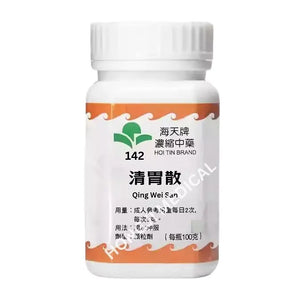
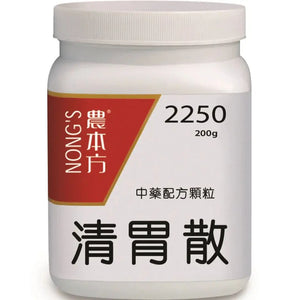
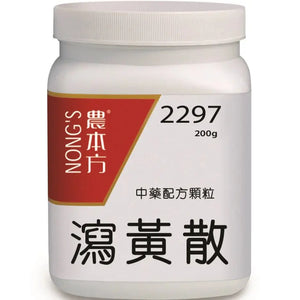
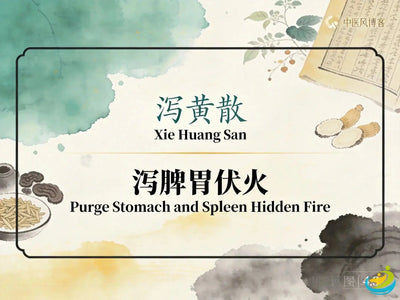
Compare Gan Lu YinQing Wei SanYu Nv JianXie Huang San
Primary Function Enrich Yin, clear heat, resolve damp, generate fluidsClear Stomach heat, cool blood, relieve fire toxinClear Stomach heat, nourish YinClear and drain Spleen-Stomach latent heat
Formula Category Heat-Clearing FormulasHeat-Clearing FormulasHeat-Clearing FormulasHeat-Clearing Formulas
Typical TCM Pattern Stomach HeatStomach HeatStomach HeatStomach Heat
Main Conditions Dry Mouth & ThroatHeadacheDry Mouth & Throat, Headache, ConstipationStomach Discomfort
Main Herbs Raw Rehmannia Root · Prepared Rehmannia Root · Dendrobium · Asparagus Root · Ophiopogon Tuber · Loquat Leaf · Virgate Wormwood · Scutellaria / Baikal Skullcap · Bitter Orange · Licorice RootCoptis Rhizome · Raw Rehmannia Root · Moutan Bark / Tree Peony Bark · Chinese Angelica Root · Cimicifuga RhizomeGypsum · Prepared Rehmannia Root · Ophiopogon Tuber · Anemarrhena Rhizome · Achyranthes RootAgastache / Patchouli · Gardenia Fruit · Gypsum · Saposhnikovia Root · Licorice Root
Classical Source Tai Ping Hui Min He Ji Ju Fang (Song, 1107)Li Dongyuan school / classicalJing Yue Quan Shu (Zhang Jingyue, Ming dynasty)Li Dongyuan school / classical

How to tell them apart

Gan Lu Yin, Qing Wei San, Yu Nv Jian and Xie Huang San clear heat related to the mouth or middle jiao. Qing Wei San is blazing Stomach fire with toothache; Yu Nv Jian is Stomach heat with Yin deficiency; Xie Huang San is latent Spleen-Stomach heat. Gan Lu Yin enriches Yin, clears heat and drains damp for Yin deficiency with damp-heat in the upper jiao — dry mouth, gum swelling and sticky saliva.

For educational reference only, based on traditional pattern differentiation — not a substitute for professional advice.

Clinical Modifications for Gan Lu Yin

1. Modifications for Treating Oral Conditions

When treating severe oral inflammation with noticeable redness, swelling, and pain, practitioners often customize the formula.

  • For Severe Inflammation: Herbs like Jin Yin Hua (Honeysuckle Flower), Lian Qiao (Forsythia Fruit), and Pu Gong Ying (Dandelion) are frequently added. These powerfully strengthen the formula's ability to clear heat, neutralize toxins, reduce swelling, and relieve pain.
  • For Recurrent Ulcers and Insomnia: If oral ulcers keep coming back and the patient also struggles with restlessness or insomnia (signs of intense "yin deficiency with fire"), Huang Lian (Coptis Rhizome) and Zhi Zi (Cape Jasmine Fruit) are added to clear the heat and drain the fire.
  • For Calming the Mind: Alongside the cooling herbs, Suan Zao Ren (Sour Jujube Seed) and Bai Zi Ren (Arborvitae Seed) may be included to nourish the heart and calm the spirit.

2. Modifications for Treating Digestive System Disorders

Gan Lu Yin can be adapted to target specific stomach and liver complaints.

  • For Gastritis with Severe Bloating: If stomach pain and bloating are the main issues, Mu Xiang (Aucklandia Root) and Hou Po (Magnolia Bark) are added to regulate qi (energy) and relieve pain.
  • For Acid Reflux: If there is excess stomach acid, Wu Zei Gu (Cuttlefish Bone) and calcined Wa Leng Zi (Ark Shell) are used to neutralize the acid and soothe the stomach.
  • For Hepatitis and Jaundice: In cases of hepatitis with severe jaundice, Zhi Zi (Cape Jasmine Fruit) and Da Huang (Rhubarb) help clear heat, drain dampness, and resolve the yellowing.
  • For Rib-Area Pain: If intense pain occurs in the hypochondriac (rib) region, Yan Hu Suo (Corydalis Rhizome) and Chuan Lian Zi (Toosendan Fruit) are added to soothe the liver, keep energy flowing smoothly, and relieve pain.
Gan Lu Yin

3. Modifications for Treating Respiratory System Disorders

The formula is also excellent for respiratory issues when tailored properly.

  • For a "Lump in the Throat": If a chronic pharyngitis patient feels like there is a foreign object stuck in their throat, Ban Xia (Pinellia Rhizome) and Hou Po (Magnolia Bark) can be added to clear the phlegm and soothe the throat.
  • For Severe Coughing: To treat a stubborn cough, Chuan Bei Mu (Fritillaria Bulb) and Xing Ren (Apricot Kernel) are added to deeply moisten the lungs and stop the coughing.
  • For Cold and Flu Symptoms: If the patient also has a fever or chills, exterior-releasing herbs like Jing Jie (Schizonepeta Herb) and Fang Feng (Siler Root) can be cautiously added. However, practitioners will carefully control the dose to avoid excessive sweating, which could further damage the body's essential fluids (yin).

What the Science Suggests

Gan Lu Yin originates from the Taiping Huimin Heji Ju Fang — Yixue Zhaicui (Imperial Grace Formulary of the Taiping Era — Selected Essentials of Medical Learning), and is a commonly used formula for treating oral erosion with bleeding gums, sores of the mouth and tongue, swollen, ulcerated gums with occasional discharge of pus and blood, bad breath, and swollen, painful throat, mainly treating drooping, heavy eyelids that constantly wish to close, and a good appetite yet emaciated body, among other patterns.

The formula's herbs — Shengdihuang, Shudihuang, Shihu (Dendrobium Stem), Pipaye, Zhiqiao, Huangqin, and Gancao, among others — clear heat and nourish yin, decocted in water and taken warm, providing good therapeutic effect for patterns of upper-burner damp-heat or yin deficiency with heat, and are commonly applied clinically with modifications.

1. Pharmacological Research

Modern science has explored the active biological effects of the herbs used in Gan Lu Yin:

  • Immunity and Anti-Aging: The core yin-nourishing herbs, Sheng Di Huang (Raw Rehmannia Root) and Shu Di Huang (Prepared Rehmannia Root), have been shown to help regulate immune function, boost natural resistance, and provide strong antioxidant and anti-aging benefits.
  • Fighting Pathogens and Inflammation: Herbs that clear heat and dampness, such as Yin Chen (Artemisia Capillaris) and Huang Qin (Baikal Skullcap Root), display antibacterial, antiviral, and anti-inflammatory properties. They help stop the growth of various pathogens and reduce inflammatory responses in the body.
  • Improving Digestion: The herbs responsible for regulating energy and harmonizing the stomach, like Zhi Qiao (Bitter Orange) and Pi Pa Ye (Loquat Leaf), stimulate natural intestinal movement. This strengthens digestive function and helps correct gastrointestinal motility issues.
Gan Lu Yin

2. Clinical Research

Recent clinical trials have consistently validated the traditional uses of Gan Lu Yin, proving its effectiveness across various conditions:

  • Autoimmune Support: Studies indicate that the formula offers therapeutic benefits for autoimmune diseases like oral lichen planus and Sjögren's syndrome. It effectively improves patients' daily clinical symptoms while helping to balance important immune indicators.
  • Digestive Healing: When treating digestive system disorders, it reliably relieves symptoms of chronic gastritis and peptic ulcers, actively promoting the repair of the damaged gastric mucosa (stomach lining).
  • Future Potential: These findings provide a strong scientific foundation for the clinical application of this formula, paving the way for its continued development and broader use in modern healthcare.

Safety Considerations

1. Dietary and Constitutional Precautions

While taking Gan Lu Yin, avoid spicy, greasy, irritating, and warming foods such as chili peppers, fried foods, coffee, and alcohol, which may worsen heat and dampness. People with a deficiency-cold constitution should use it cautiously, as its cooling nature may cause epigastric discomfort, abdominal pain, or diarrhea. Pregnant women should consult a physician before use.

2. Drug Interactions

Inform your physician about all medications and supplements you take, as Gan Lu Yin may interact with them. In particular, avoid combining it with products containing Lilu (Veratrum) unless specifically directed by a qualified healthcare professional.

Questions About Gan Lu Yin

Q1: What are the actions of Gan Lu Yin?
Gan Lu Yin has the actions of nourishing Yin, clearing Heat, regulating Qi, and transforming turbidity. From Tai Ping Hui Min He Ji Ju Fang, it treats “guest Heat” in the Stomach that rises to the gums, mouth, and throat while Yin has already been injured.
Q2: Which modern diseases is Gan Lu Yin suited to?
Modern TCM clinical practice commonly applies it to individuals whose pattern differentiation falls within Stomach Yin deficiency with residual Heat or Damp-Heat, including recurrent mouth ulcers, gingivitis or bleeding gums with bad breath, chronic sore throat of Yin-deficiency Heat type, and some red painful eyes that cannot tolerate purely cold formulas.
Q3: Is Gan Lu Yin suitable for improving swollen gums, mouth sores, and dry mouth?
For presentations of swollen or bleeding gums, halitosis, mouth or tongue sores, sore throat, dry mouth with residual Heat, a red tongue with little or yellow coating, and a thin rapid pulse — in those whose pattern differentiation confirms Yin injury with Stomach Heat — TCM commonly applies Gan Lu Yin as an adjunct. It cannot replace dental or ENT evaluation of infection or ulcerating disease.
Q4: Who should not take Gan Lu Yin?
Those with Spleen-Stomach deficiency Cold, prominent watery Dampness without Yin deficiency, or purely excess Damp-Heat that needs a stronger drying formula are generally not suitable. The two Rehmannias and the winter-related Yin tonics are enriching and can create fullness. Use should be assessed by a qualified TCM physician.
Q5: Why combine Yin-nourishing herbs with Huang Qin, Yin Chen, and Pi Pa Ye?
Stomach guest Heat both scorches Yin and steams upward to the mouth and gums. Sheng Di, Shu Di, Tian Dong, Mai Dong, and Shi Hu restore fluids. Huang Qin and Yin Chen clear residual Damp-Heat so that Heat does not keep consuming Yin. Pi Pa Ye descends Lung-Stomach Heat. Zhi Ke moves Qi so the rich herbs do not stagnate. Clearing without moistening further dries the Stomach; moistening without clearing leaves the Heat in place.
Q6: How does Gan Lu Yin differ from Gan Lu Xiao Du Dan or Yu Nu Jian?
Gan Lu Xiao Du Dan more strongly resolves Damp-Heat epidemic toxin and is less Yin-nourishing. Yu Nu Jian treats blazing Stomach Fire with Kidney Yin deficiency and toothache using Shi Gao. Gan Lu Yin is the mid-path choice when the mouth, gums, and throat are inflamed yet the patient already shows Yin injury and cannot tolerate a purely cold attacking formula.
Q7: What are the main ingredients of Gan Lu Yin?
The He Ji Ju Fang formula consists of Sheng Di Huang and Shu Di Huang to nourish Yin and cool the Blood; Tian Dong, Mai Dong, and Shi Hu to generate fluids and nourish Stomach Yin; Huang Qin and Yin Chen to clear Damp-Heat; Pi Pa Ye to descend Lung-Stomach Heat; Zhi Ke to regulate Qi; and Zhi Gan Cao to harmonize. Pi Pa Ye should have its fuzz removed.
Q8: Is Gan Lu Yin suitable for long-term use?
It may be used for a course of treatment in recurrent Yin-deficiency mouth and gum Heat under professional supervision. Because the formula is enriching, poor appetite or loose stools mean it should be modified. Once the sores and bleeding gums settle, many patients step down to a simpler Yin-generating prescription.
Q9: Can this formula help both the oral sores or bleeding gums and a dry mouth that still feels Heat?
Yes. That mixed picture is the reason Gan Lu Yin exists. Guest Heat rises to rot the gums and mouth while also consuming fluids, so the patient is dry yet still inflamed. Nourishing Yin and clearing residual Heat together address both complaints when a purely cold mouthwash-type formula would be too harsh.
Q10: What lifestyle advice supports the use of Gan Lu Yin?
Avoiding alcohol, late-night spicy food, and excessive snacking that ferments in the Stomach, keeping good dental hygiene, and seeking dental or medical care for pus, fever, or non-healing ulcers all support the formula. It treats a TCM pattern of Stomach Heat with Yin injury; it is not a substitute for treating periodontal infection.

General Questions

How do I choose the right formula?
TCM formulas are traditionally selected according to individual pattern differentiation rather than by symptom alone. If you're not sure which formula fits your presentation, take our AI Assessment below for a personalized starting point, then confirm with a qualified TCM practitioner.
What are concentrated herbal granules?
Concentrated herbal granules are made by decocting raw herbs, then extracting and concentrating the resulting liquid into a fine granule or powder form. This preserves the same active compounds as a traditional decoction while making the herbs far easier to store, measure, and prepare.
How should I take these products?
Dissolve the recommended amount of granules in hot water, stir until fully dissolved, and drink while warm — following the dosage and frequency advised by your TCM practitioner or as stated on the product packaging.
Are concentrated herbal granules equivalent to traditional decoctions?
Concentrated granules are produced from the same herbs and processed to retain their active compounds, so they are traditionally regarded as a convenient alternative to decoctions rather than a different remedy. Some practitioners note subtle differences in strength or absorption between the two forms, so your TCM practitioner may adjust dosage accordingly.
Are your products authentic?
Yes. HJMEDICAL sources its concentrated granules exclusively from established, reputable manufacturers such as Nong's and Hoi Tin, both long-standing names in the TCM granules industry, with GMP compliance stated directly on their packaging.
Are HJMEDICAL products manufactured under GMP standards?
HJMEDICAL sources its concentrated granules from established, reputable manufacturers such as Nong's and Hoi Tin, both long-standing names in the TCM granules industry. GMP compliance for these products is stated directly on their packaging.
Do you ship internationally?
Yes — we ship worldwide! Every order goes out via Hong Kong Post, and your exact shipping cost and estimated delivery time for your address are calculated and shown right at checkout, so there are never any surprises. We also offer free shipping once your order reaches our free-shipping threshold, so it's easy to stock up on your favorite formulas and save.
Can I take more than one formula at the same time?
Some formulas are traditionally combined, while others overlap or counteract each other. We recommend checking with a qualified TCM practitioner before combining formulas, especially if you are already taking other medication.
Are these products suitable during pregnancy or breastfeeding?
Some TCM formulas are not suitable during pregnancy or breastfeeding. Please consult a qualified TCM practitioner or your doctor before use if you are pregnant, trying to conceive, or nursing.
Do these products replace medical treatment?
No. These products are traditional herbal supplements intended to support wellbeing according to TCM principles — they are not a replacement for professional medical diagnosis or treatment. Please consult a qualified TCM practitioner or licensed healthcare provider before starting, stopping, or combining any treatment, especially if you have a chronic condition.
Medical Disclaimer

For general TCM education only — not medical advice. Consult a qualified TCM practitioner or licensed healthcare provider before use, especially if pregnant, nursing, on medication, or managing a chronic condition.

Not sure which formula is right for you?

Take the AI Assessment

最新文章

Login

Forgot your password?

Don't have an account yet?
Create account

Gan Lu Yin: Classic TCM Formula for Yin Deficiency with Damp-Heat, Mouth Sores & Gum Swelling