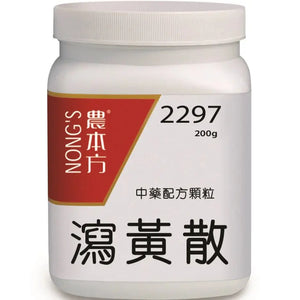
Xie Huang San: Classic TCM Formula for Spleen-Stomach Damp-Heat Causing Oral Symptoms

Xie Huang San (泻黄散), known in English as Drain the Yellow Powder, is a classical TCM formula by Qian Yi for clearing damp-heat from the Spleen and Stomach, especially when it manifests in the mouth. It is particularly indicated for mouth ulcers, canker sores, bad breath (halitosis), thirst, dry lips, and gum swelling with heat signs. In modern clinical practice, Xie Huang San is used for oral symptoms caused by Spleen-Stomach damp-heat in both children and adults. By powerfully clearing heat while aromatically drying dampness and protecting the middle jiao, it effectively resolves oral manifestations of damp-heat without damaging the Spleen’s function.

Xie Huang San: Clearing and Draining Latent Fire of the Spleen and Stomach, Relieving Recurrent Mouth Ulcers and Gum Swelling and Pain | HJMEDICAL

I. Origins and History

1. Background of Origins

Xie Huang San originates from the Xiao'er Yaozheng Zhijue (Craft of Medicines and Patterns for Children), authored by the Song dynasty physician Qian Yi. Qian Yi was one of the most celebrated paediatric specialists in China's history, possessing extensive experience and distinctive insights in the diagnosis and treatment of children's diseases. The Xiao'er Yaozheng Zhijue is China's first paediatric monograph preserved in its original form, and has exerted a far-reaching influence on the subsequent development of paediatric medicine. In the medical context of that period, spleen-stomach disorders in children were relatively common; to better treat such conditions, Qian Yi, through prolonged clinical practice and research, created the classical formula Xie Huang San.

2. Historical Evolution

Since Xie Huang San first appeared, physicians across the generations have applied and researched it extensively. In different historical periods, according to the needs of clinical practice and developments in medical theory, the application of Xie Huang San was expanded and modified. For example, during the Jin-Yuan period, physicians, building upon Qian Yi's academic thought and combining it with the prevailing scholarly views of the time, gained new understanding of Xie Huang San's herbs and formula rationale, further enriching its scope of application. During the Ming and Qing dynasties, physicians conducted even more in-depth research into Xie Huang San, accumulating more clinical experience and elaborating more fully on its theoretical aspects, solidifying its position within the fields of Chinese medicine paediatrics and spleen-stomach disease treatment.

Xie Huang San: Clearing and Draining Latent Fire of the Spleen and Stomach, Relieving Recurrent Mouth Ulcers and Gum Swelling and Pain | HJMEDICAL

II. Herb Composition (Sovereign, Minister, Assistant, Envoy)

1. Chief Herb — Shigao (Gypsum)

Shigao is acrid and sweet in flavour and greatly cold in nature, entering the Lung and Stomach channels. Its texture is heavy and sinking, with a relatively strong cold nature, possessing the actions of clearing heat and draining fire, and relieving vexation and quenching thirst. In Xie Huang San, Shigao is used in a relatively large dosage and plays an important role as the chief herb. It can clear and drain accumulated heat in the spleen and stomach, eliminating the vexing heat within the stomach, allowing the heat of the spleen and stomach to be cleared and resolved, laying the foundation for treating the pattern of latent spleen-stomach fire.

2. Deputy Herbs — Zhizi (Gardenia Fruit) and Fangfeng (Siler Root)

Zhizi is bitter in flavour and cold in nature, entering the Heart, Lung, and Triple Burner channels. It has the actions of draining fire and relieving vexation, clearing heat and disinhibiting dampness, and cooling blood and resolving toxicity. In Xie Huang San, Zhizi assists Shigao in clearing and draining spleen-stomach fire; its bitter-cold nature can reach directly to the lower burner, allowing the heat of the spleen and stomach to be expelled via urination, reinforcing the heat-clearing and fire-draining effect. Fangfeng is acrid and sweet in flavour and slightly warm in nature, entering the Bladder, Liver, and Spleen channels. Fangfeng has the actions of dispelling wind to release the exterior, overcoming dampness and relieving pain, and stopping spasm. Here, Fangfeng primarily performs the action of dispersing latent fire from the spleen and stomach; it can ascend and scatter outward, dispersing the constrained fire accumulated within the spleen and stomach to the body's surface, giving the fire pathogen an exit route and preventing the fire pathogen from further constraining inward and transforming into heat.

3. Assistant Herb — Huoxiang (Patchouli)

Huoxiang is acrid in flavour and slightly warm in nature, entering the Spleen, Stomach, and Lung channels. It has the actions of transforming turbidity with its aromatic nature, harmonising the middle and stopping vomiting, and releasing the exterior and dispersing summer-heat. Huoxiang, serving as the assistant herb in Xie Huang San, on one hand can aromatically arouse the spleen and stimulate the stomach, reviving the qi of the spleen and stomach and restoring normal transforming and transporting function; on the other hand, its acrid-warm nature can restrain the excessively cold nature of herbs such as Shigao and Zhizi, preventing damage to spleen-stomach yang qi, thereby performing a harmonising action.

4. Envoy Herb — Gancao (Licorice Root)

Gancao is sweet in flavour and neutral in nature, entering the Heart, Lung, Spleen, and Stomach channels. It has the actions of tonifying the spleen and boosting qi, moistening the lungs to relieve cough, clearing heat and resolving toxicity, and harmonising all the herbs. In Xie Huang San, Gancao, as the envoy herb, both harmonises the medicinal nature of Shigao, Zhizi, Fangfeng, Huoxiang, and the other herbs, allowing them to work synergistically and achieve optimal therapeutic effect, and tonifies the spleen and boosts qi, protecting spleen-stomach righteous qi and preventing the heat-clearing and fire-draining herbs from excessively depleting the spleen and stomach — performing the role of supporting the righteous and expelling the pathogen. Simultaneously, the sweet-gentle nature of Gancao can also moderate the potent nature of the other herbs, making the entire formula's medicinal nature balanced and easy to absorb.

Xie Huang San: Clearing and Draining Latent Fire of the Spleen and Stomach, Relieving Recurrent Mouth Ulcers and Gum Swelling and Pain | HJMEDICAL

III. Pathomechanism, Actions, and Indications

1. Pathomechanism Analysis

The pathomechanism targeted by Xie Huang San is latent fire of the spleen and stomach. The spleen and stomach are the postnatal root, governing the transformation and transport of food and water's refined essence. If the diet is irregular, with excessive consumption of acrid, spicy, rich, greasy foods, or emotional disturbance causes spleen-stomach functional disorder, fire-heat is internally generated; when the fire pathogen lurks within the spleen and stomach, accumulating over time without erupting, this forms the pattern of latent spleen-stomach fire. Latent spleen-stomach fire can give rise to numerous symptoms, such as bad breath, mouth sores, vexing thirst with easy hunger, and a red tongue with yellow coating.

2. Elaboration of Actions

Xie Huang San has the action of draining latent fire from the spleen and stomach. Through heat-clearing and fire-draining herbs such as Shigao and Zhizi clearing and draining accumulated heat from the spleen and stomach, Fangfeng dispersing latent spleen-stomach fire, Huoxiang aromatically arousing the spleen, and Gancao harmonising all the herbs — all working together — the latent fire of the spleen and stomach is cleared and drained, spleen-stomach function is restored to normal, and the goal of treating disease is thereby achieved.

3. Indications

Xie Huang San is primarily used to treat symptoms caused by the pattern of latent spleen-stomach fire, including epigastric burning heat, a flushed face with red lips, mouth sores and bad breath, vexing thirst with easy hunger, and tongue-playing behaviour in children. These symptoms are relatively common clinically, especially in children — whose spleen-stomach function is not yet fully developed — who are more prone to latent spleen-stomach fire, and Xie Huang San produces good therapeutic effects for this type of condition in children.

Xie Huang San: Clearing and Draining Latent Fire of the Spleen and Stomach, Relieving Recurrent Mouth Ulcers and Gum Swelling and Pain | HJMEDICAL

IV. Formula Analysis

1. Combining Heat-Clearing and Fire-Draining with Dispersing Latent Fire

Within the formula, Shigao combined with Zhizi produces a strong heat-clearing and fire-draining force. Shigao clears and drains stomach heat; Zhizi clears and drains fire from the Triple Burner — the two acting synergistically allow the accumulated heat of the spleen and stomach to be eliminated. Simultaneously, Fangfeng disperses latent spleen-stomach fire, dispersing the internally-constrained fire to the body's surface, giving the fire pathogen an exit route and preventing the fire pathogen from further attacking the zang-fu organs internally. This method of combining heat-clearing and fire-draining with dispersing latent fire both targets the pathomechanism of latent spleen-stomach fire and embodies the Chinese medicine principle of treating disease by seeking the root and guiding treatment according to the trend of the condition.

2. Combining Aromatic Dampness Transformation with Heat-Clearing Dampness Drying

Huoxiang aromatically transforms dampness, arouses the spleen and stimulates the stomach, capable of improving the state of dampness obstructing and qi stagnating within the spleen and stomach. Latent spleen-stomach fire is frequently intermingled with dampness pathogen; the application of Huoxiang helps to eliminate the dampness pathogen and restore spleen-stomach transforming and transporting function. Zhizi clears heat and dries dampness, capable of clearing and eliminating the damp-heat pathogen of the spleen and stomach; the two as assistant herbs together allow spleen-stomach damp-heat to be resolved, qi movement to be unobstructed, and the treatment of latent spleen-stomach fire to be facilitated.

3. Protecting Spleen-Stomach Righteous Qi

Gancao within the formula not only harmonises all the herbs but also has the action of tonifying the spleen and boosting qi. When using large quantities of heat-clearing and fire-draining herbs, Gancao can protect the spleen-stomach righteous qi, preventing the herbs from damaging spleen-stomach yang qi, embodying the Chinese medicine therapeutic concept of prioritising the support of righteous qi while expelling the pathogen. Simultaneously, the sweet-gentle nature of Gancao also moderates the potent nature of the other herbs, making the entire formula's medicinal nature balanced and easy to absorb.

Xie Huang San: Clearing and Draining Latent Fire of the Spleen and Stomach, Relieving Recurrent Mouth Ulcers and Gum Swelling and Pain | HJMEDICAL

V. Comparison with Related Formulas

1. Comparison with Qingwei San

Qingwei San originates from the Piwei Lun (Treatise on the Spleen and Stomach), with its primary action being clearing the stomach and cooling blood, indicated for stomach-fire toothache. Its composition includes Shengdihuang (Fresh Rehmannia Root), Danggui Shen (Angelica Root Body), Mudanpi (Tree Peony Bark), Huanglian (Coptis Root), and Shengma (Cimicifuga Rhizome). Compared with Qingwei San, Xie Huang San focuses on latent spleen-stomach fire, with an emphasis on clearing and draining accumulated spleen-stomach heat, covering a broader scope of treatment — including bad breath, mouth sores, vexing thirst with easy hunger, and other symptoms of latent spleen-stomach fire; Qingwei San, by contrast, focuses more specifically on clearing the stomach and cooling blood, producing better efficacy for symptoms such as toothache and gum swelling and pain caused by stomach fire flaming upward.

2. Comparison with Yunü Jian

Yunü Jian originates from the Jingyue Quanshu (Complete Works of Jingyue), with the actions of clearing stomach heat and nourishing kidney yin, indicated for the pattern of stomach heat with yin deficiency. Its composition includes Shigao, Shudi (Prepared Rehmannia Root), Maidong (Ophiopogon Root), Zhimu (Anemarrhena Rhizome), and Niuxi (Achyranthes Root). Compared with Xie Huang San, Yunü Jian, while clearing stomach heat, places greater emphasis on nourishing kidney yin, suited to symptoms of stomach heat with yin deficiency such as vexing heat with dry thirst, toothache, and headache; Xie Huang San, by contrast, primarily focuses on clearing and draining latent spleen-stomach fire, involving less in the way of yin-nourishing efficacy.

Xie Huang San: Clearing and Draining Latent Fire of the Spleen and Stomach, Relieving Recurrent Mouth Ulcers and Gum Swelling and Pain | HJMEDICAL

VI. Clinical Applications

1. Paediatric Applications

In paediatric clinical practice, Xie Huang San is commonly used to treat various conditions caused by latent spleen-stomach fire in children. For example, bad breath in children is mostly caused by accumulated spleen-stomach heat with turbid qi rising upward; Xie Huang San can clear and drain spleen-stomach fire and eliminate bad breath. For mouth sores in children, if accompanied by latent spleen-stomach fire symptoms such as a flushed face with red lips and vexing thirst, Xie Huang San can also achieve good therapeutic results. In addition, tongue-playing behaviour in children is mostly related to accumulated spleen-stomach heat, and Xie Huang San may be used for treatment.

2. Internal Medicine Applications

In adult internal medicine, Xie Huang San also has a degree of application. For adults presenting with symptoms such as bad breath, oral ulcers, burning stomach pain, and vexing thirst caused by latent spleen-stomach fire, Xie Huang San is equally applicable. Some people who have long had irregular eating habits and habitually consume acrid, spicy, greasy foods are prone to latent spleen-stomach fire, and Xie Huang San can serve as an effective formula for regulating the spleen and stomach and eliminating latent fire.

3. Other Indications

Beyond the common conditions described above, Xie Huang San may also be used to treat certain skin conditions related to latent spleen-stomach fire. For example, acne caused by latent spleen-stomach fire typically presents as facial comedones and papules accompanied by symptoms such as bad breath and constipation; Xie Huang San, through clearing and draining latent spleen-stomach fire and regulating the endocrine system, can assist in the treatment of acne. In addition, for symptoms such as throat swelling and pain and gum swelling and pain caused by latent spleen-stomach fire, Xie Huang San may also be applied with modifications according to the specific circumstances.

Xie Huang San: Clearing and Draining Latent Fire of the Spleen and Stomach, Relieving Recurrent Mouth Ulcers and Gum Swelling and Pain | HJMEDICAL

VII. Clinical Modifications

1. For More Severe Bad Breath

Herbs such as Peilan (Eupatorium) and Sharen (Cardamom) may be added to reinforce the aromatic dampness-transforming and spleen-arousing, stomach-stimulating action, further eliminating bad breath. Peilan has an aromatic fragrance and can transform turbid dampness and dispel foul turbidity; acting synergistically with Huoxiang, it reinforces the aromatic dampness-transforming potency. Sharen has the actions of transforming dampness and moving qi, warming the middle and stopping diarrhoea, and calming the fetus, capable of reinforcing spleen-stomach transforming and transporting function — particularly suited to those with more severe bad breath accompanied by spleen-stomach qi-stagnation symptoms.

2. For Severe Mouth Sores and Ulcers

Herbs such as Huanglian (Coptis Root) and Huangbai (Phellodendron Bark) may be added to reinforce the heat-clearing, fire-draining, toxicity-resolving, and swelling-reducing action. Huanglian and Huangbai are both bitter-cold herbs, possessing the actions of clearing heat and drying dampness, and draining fire and resolving toxicity; they can reinforce Xie Huang San's potency in clearing and draining spleen-stomach fire, producing good therapeutic effects for those with obvious mouth sores and ulcers and severe pain.

3. For Dry, Hard Stools

Herbs such as Dahuang (Rhubarb Root) and Mangxiao (Mirabilite) may be added to unblock the bowels and drain heat, allowing accumulated spleen-stomach heat to be expelled via the stool. Dahuang has the actions of draining downward to attack accumulation, clearing heat and draining fire, cooling blood and resolving toxicity, and expelling stasis to unblock the channels; Mangxiao has the actions of draining downward to attack accumulation, softening hardness and moistening dryness, and clearing heat and reducing swelling. Used together, they can reinforce the downward-draining, bowel-unblocking, and stomach-intestine-heat-clearing effect, relieving the symptoms of dry, hard stools.

Xie Huang San: Clearing and Draining Latent Fire of the Spleen and Stomach, Relieving Recurrent Mouth Ulcers and Gum Swelling and Pain | HJMEDICAL

VIII. Dosage and Preparation (Traditional Method and Modern Concentrated Granules)

1. Traditional Method

When ancient physicians applied Xie Huang San, they mostly used the powder (san) dosage form. The herbs were generally ground into a fine powder and taken in an appropriate quantity per dose. The specific dosage was determined according to factors such as the patient's age and condition — the paediatric dosage was relatively smaller and the adult dosage relatively larger. For example, for children with mild latent spleen-stomach fire, 1–2 g per dose may be taken; for adults with a more severe condition, 3–5 g per dose may be taken. When administering, the powder may be swallowed directly with warm boiled water, or combined with other herbs as required by the condition.

Correct Administration of Traditional Xie Huang San

An introduction to the traditional powder (san) dosage form of the classical spleen-and-stomach latent-fire-clearing formula "Xie Huang San," the administered dosages for different patient groups (children and adults), and the specific administration method.

【Dosage Form Characteristics and Preparation】
  • Xie Huang San fine powder: extremely fine powder produced by grinding the traditional herb decoction pieces
  • Warm boiled water: appropriate amount (for swallowing the powder directly)

⚠️ Note: The specific dosage must be strictly determined according to the patient's age, constitution, and severity of condition.

Step 1: Grinding the Herbs into Powder (Powder Preparation) Following the traditional method of classical physicians, dry the herb decoction pieces of Xie Huang San according to standard protocol, then thoroughly grind into an extremely fine powder (xì mò), to facilitate rapid absorption by the spleen and stomach and realisation of the therapeutic effect.
Step 2: Weighing the Dosage by Patient Group Determine the single dose based on the patient's age and condition:
Children (mild latent spleen-stomach fire): weigh and take 1–2 g per dose;
Adults (or more severe conditions): weigh and take 3–5 g per dose.
Step 3: Swallowing or Combining with Other Herbs Place the weighed powder directly in the mouth and swallow with an appropriate amount of warm boiled water. Alternatively, based on the specific clinical needs of the condition, the powder may be combined with other decoctions or herbs under medical guidance.

2. Modern Concentrated Granules

With the development of modern pharmaceutical technology, a concentrated granule dosage form of Xie Huang San is also available. Modern concentrated granules are granule preparations produced from traditional Chinese herbs through extraction, concentration, and related processes, convenient to take and easy to absorb. Generally, taken according to the recommended dosage in the product instructions: for adults, the common dosage is 1–2 times daily, one sachet per dose; the paediatric dosage is appropriately reduced according to age. The modern concentrated granule dosage form, while preserving the therapeutic effect of the traditional formula, is more convenient and well suited to modern fast-paced lifestyles.

Xie Huang San: Clearing and Draining Latent Fire of the Spleen and Stomach, Relieving Recurrent Mouth Ulcers and Gum Swelling and Pain | HJMEDICAL

IX. Precautions and Contraindications

1. Use with Caution in Those with Spleen-Stomach Deficiency-Cold

Xie Huang San is cold in nature and primarily used to treat the pattern of latent spleen-stomach fire. Those with spleen-stomach deficiency-cold already have insufficient spleen-stomach yang qi; using Xie Huang San may further damage spleen-stomach yang qi, leading to worsening of symptoms such as abdominal pain, diarrhoea, and cold stomach pain. Therefore, those with spleen-stomach deficiency-cold should use Xie Huang San with caution; if use is necessary, the dosage should be appropriately adjusted according to the specific circumstances under medical guidance.

2. Use with Caution in Pregnancy

Medication during pregnancy requires caution; most of the herbs within Xie Huang San are cold in nature and may have adverse effects on the fetus. Although no research has definitively established Xie Huang San as an absolute contraindication in pregnancy, to ensure fetal safety, pregnant women requiring Xie Huang San must use it only under strict medical evaluation and supervision.

3. Dietary Restrictions

During the course of taking Xie Huang San, a light diet should be maintained and spicy, greasy, and irritating foods should be avoided, to prevent adding burden to the spleen and stomach and affecting drug efficacy. Alcohol should also be avoided, as alcohol irritates the spleen and stomach and is unfavourable for treating latent spleen-stomach fire.

Xie Huang San: Clearing and Draining Latent Fire of the Spleen and Stomach, Relieving Recurrent Mouth Ulcers and Gum Swelling and Pain | HJMEDICAL

X. Modern Research

1. Pharmacological Research

Xie Huang San (Xiepi San) is a commonly used formula for treating tongue-playing behaviour in children due to spleen heat, possessing the action of clearing heat and resolving toxicity, primarily indicated for conditions such as dry mouth and lips, eye sores and bad breath, and a red tongue with a rapid pulse. It is suited to children with congenital insufficiency, cerebral developmental disorders, and those with yin deficiency and heat. The formula's composition includes Huoxiang Ye (Patchouli Leaf) and other herbs, applied clinically through pattern differentiation.

Modern pharmacological research has demonstrated that Shigao within Xie Huang San has antipyretic, anti-inflammatory, and antiallergic actions; Zhizi has anti-inflammatory, antibacterial, and antiviral actions; Fangfeng has anti-inflammatory, antiallergic, and analgesic actions; Huoxiang has antibacterial, antiviral, and gastrointestinal regulatory actions; and Gancao has anti-inflammatory, antiallergic, and immune-regulatory actions. These herbs, mutually synergistic, jointly exert the actions of draining latent spleen-stomach fire and regulating bodily function.

2. Clinical Research

In recent years, numerous clinical studies have observed the therapeutic effect of Xie Huang San for conditions related to latent spleen-stomach fire. Research results show that Xie Huang San has significant therapeutic effects in treating conditions such as bad breath, mouth sores, and indigestion in children, effectively improving patients' symptoms and quality of life. Simultaneously, in the treatment of adult conditions related to latent spleen-stomach fire, Xie Huang San has also demonstrated good safety and effectiveness, providing more options for clinical treatment.

3. Dosage Form Improvement Research

With the continuing advancement of modern science and technology, research into improving Xie Huang San's dosage form has been continuously deepening. Beyond the modern concentrated granule dosage form, some research has also explored producing Xie Huang San in capsule, tablet, and other forms, to further improve drug stability and convenience of administration. Simultaneously, by optimising extraction processes to increase the content of active constituents, improving drug bioavailability has also become an important direction in dosage form improvement research.

In summary, Xie Huang San, as a classical Chinese medicine formula, holds distinctive advantages and rich clinical experience in treating the pattern of latent spleen-stomach fire. Through a detailed introduction to its origins and history, herb composition, pathomechanism and actions, formula analysis, clinical applications, and comparisons with other formulas — as well as elaboration of its modifications, dosage and preparation, precautions, and modern research progress — it is hoped that more people will come to understand Xie Huang San, providing useful reference for its application and promotion in clinical practice.

Xie Huang San — Frequently Asked Questions

Q1: What are the therapeutic actions of Xie Huang San?

Xie Huang San has the actions of clearing and draining latent spleen-stomach fire, resolving toxicity and reducing swelling, and relieving vexation and stopping pain. It is primarily used for mouth and tongue sores, red swollen gums, bad breath and thirst, and vexation with irritability caused by accumulated spleen-stomach heat.

Q2: What modern conditions is Xie Huang San used for?

In modern TCM clinical practice, it is commonly used for oral ulcers, recurrent aphthous ulcers, gingivitis, periodontitis, bad breath, and oral inflammatory conditions in children, among individuals whose presentation corresponds to the pattern of accumulated spleen-stomach heat or stomach fire flaming upward.

Q3: Is Xie Huang San suitable for recurrent mouth ulcers?

If mouth ulcers recur repeatedly, accompanied by gum swelling and pain, bad breath, thirst with a preference for cold drinks, dry stools, and a red tongue with yellow coating reflecting accumulated spleen-stomach heat, TCM practitioners commonly apply Xie Huang San through pattern differentiation for regulation.

Q4: Who should not take Xie Huang San?

Those with spleen-stomach deficiency-cold, chronic diarrhoea, a yang-deficiency constitution, or oral ulcers caused by yin deficiency with fire hyperactivity should generally not use Xie Huang San. Treatment should be prescribed by a qualified TCM practitioner based on pattern differentiation according to the specific pattern type.

⚠️ This content is for reference only and does not provide medical advice. Consult a healthcare professional for any health concerns.

Login

Forgot your password?

Don't have an account yet?
Create account

Xie Huang San: Classic TCM Formula for Spleen-Stomach Damp-Heat Causing Oral Symptoms