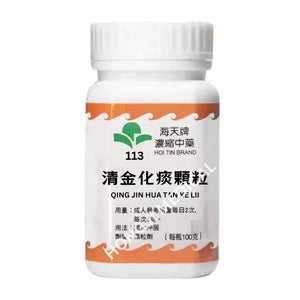
Qing Jin Hua Tan Tang: Clearing Lung Fire and Melting Thick Phlegm to Relieve Acute Burning Coughs

<span class=

1. Prescription Source & History

1. Origin & Development

Qingjin Huatan Decoction is mainly recorded in 'Medical Principles' written by Ye Wenling, a famous doctor in the Ming Dynasty. During the Ming Dynasty, medicine flourished, and doctors had a refined understanding of the syndrome differentiation of respiratory diseases. The term 'Qingjin' in the name of the prescription is deeply influenced by the theory of the five elements in traditional Chinese medicine. Since the lung belongs to metal in the five elements, 'Qingjin' means clearing and purifying the lung qi.

The establishment of this prescription aims to address the syndrome of excessive heat and phlegm in the lungs caused by liver fire invading the lung or improper treatment of exogenous pathogens. It is a representative prescription for treating coughs of the type of 'furnace metal damage' in clinical practice during the Ming and Qing dynasties, reflecting the high attention of the medical community at that time to the relationship between lung heat toxin and phlegm stagnation.

In terms of the formulation logic and medical principles, Qing jin Hua tan Decoction demonstrates a complex dialectical thinking that emphasizes both clearing fire and resolving phlegm, as well as moistening dryness and dispersing lung qi. This prescription uses Scutellaria baicalensis and Gardenia jasminoides to clear the lung fire, Morus alba root bark and Cortex Lycii radicis to lower the lung qi, and combines Fritillaria thunbergii and Trichosanthes kirilowii to resolve phlegm and moisten dryness. Additionally, Ophiopogon japonicus is used to assist in nourishing yin and preventing the cold and bitter drugs from damaging the lung fluid. This compatibility can not only quickly calm the heat in the lungs but also soften and expel the thick and sticky old phlegm caused by heat pathogen煎熬. Compared with simple heat-clearing prescriptions, it pays more attention to protecting the yin fluid of the lungs, reflecting the deep clinical consideration in traditional Chinese medicine of not forgetting to protect yin when treating phlegm.

2. Historical Evolution

After hundreds of years of inheritance, Qingjin Huatan Decoction has become a classic and effective prescription in traditional Chinese medicine for treating internal injury cough, acute and chronic bronchitis, pneumonia, and other diseases. In the context of modern medicine, when patients present with severe cough, thick and yellow sputum, even with blood streaks, and accompanied by typical lung heat symptoms such as dry mouth and sore throat, this prescription is often the first choice for treatment. It is not only widely included in various textbooks of traditional Chinese medicine internal medicine but has also been proven in modern pharmacological research to have significant anti-inflammatory, expectorant, and airway hyperresponsiveness-improving effects. It remains an important medical heritage for protecting respiratory health to this day.

<span class= Qingjin Huatan Decoction: A Detailed Explanation of the Classic Prescription for Clearing Heat, Resolving Phlegm, Moistening the Lungs, and Relieving Cough

2. Composition Introduction (King, Minister, Assistant & Guide)

1. King Drugs - Scutellaria baicalensis, Gardenia jasminoides

Scutellaria baicalensis is bitter and cold in nature and belongs to the lung, gallbladder, spleen, large intestine, and small intestine meridians. It has the effects of clearing heat and drying dampness, purging fire and detoxifying, stopping bleeding, and preventing miscarriage. In Qingjin Huatan Decoction, Scutellaria baicalensis can clear the internal fire and has a good therapeutic effect on symptoms such as heat phlegm caused by excessive internal heat. Gardenia jasminoides is also bitter and cold, belonging to the heart, lung, and triple energizer meridians, with the effects of purging fire and relieving restlessness, clearing heat and promoting diuresis, and cooling blood and detoxifying. It can assist Scutellaria baicalensis in enhancing the power of clearing heat and purging fire, so that the internal excess heat can be cleared. The two together are the monarch drugs, playing a key role in addressing the main pathogenesis of internal heat.

2. Minister Drugs - Anemarrhena asphodeloides, Mori Cortex, Platycodon grandiflorus

Anemarrhena asphodeloides is bitter, sweet, and cold, belonging to the lung, stomach, and kidney meridians, with the effects of clearing heat and purging fire, nourishing yin and moistening dryness. It can clear the internal heat while nourishing the internal yin, preventing excessive heat-clearing from damaging yin. Morus alba root bark is cold, belonging to the lung meridian, with the effects of purging lung qi and relieving asthma, promoting diuresis and reducing swelling. It can effectively clear the phlegm heat in the lungs, make the lung qi smooth, and relieve cough and throat phlegm symptoms. Platycodon grandiflorum is bitter, pungent, and neutral, belonging to the lung meridian, capable of dispersing lung qi, resolving phlegm, promoting diuresis, and expelling toxins. It can open and disperse qi, making the sputum easier to expel, and synergistically with Morus alba root bark, enhancing the effect of resolving phlegm and relieving cough. These three herbs together assist the monarch drugs, strengthening the effects of clearing heat and resolving phlegm, relieving cough and calming asthma, so they are the ministerial drugs.

3. Assistant Drugs - Fritillaria thunbergii, Trichosanthes kirilowii, Citri Reticulatae Exocarpium, Poria cocos

Fritillaria thunbergii has the effects of clearing heat and resolving phlegm, moistening the lungs and relieving cough, and dissipating nodules and swelling. Trichosanthes kirilowii can clear heat and resolve phlegm, widen the chest and dissipate nodules, and moisten dryness and lubricate the intestines. They cooperate with the monarch and ministerial drugs to further enhance the effect of clearing heat and resolving phlegm. At the same time, Fritillaria thunbergii can moisten the lungs and relieve cough, and Trichosanthes kirilowii can moisten the intestines and promote defecation, helping to expel the phlegm heat in the body. Citrus reticulata blanco has the effects of regulating qi and widening the middle, drying dampness and resolving phlegm, which can enhance the power of resolving phlegm and at the same time regulate qi movement, so that qi smoothness leads to phlegm elimination. Poria cocos promotes diuresis and percolates dampness, strengthens the spleen, can prevent the endogenous generation of phlegm dampness, and helps the absorption and transportation of other drugs. These four herbs assist the monarch and ministerial drugs, playing a synergistic role, so they are the adjuvant drugs.

4. Guide Drug - Glycyrrhiza uralensis

Licorice Root, being of neutral nature, acts on the Heart, Lung, Spleen, and Stomach meridians. It has the functions of invigorating the spleen and replenishing qi, moistening the lungs and relieving cough, clearing heat and detoxifying, and harmonizing all medicinal herbs. In Qingjin Huatan Decoction, licorice root can both moisten the lungs and relieve cough, alleviating cough symptoms, and harmonize the properties of all medicinal herbs in the formula, enabling each herb to better exert its synergistic effect. Therefore, it is the envoy herb.

<span class= Qingjin Huatan Decoction: <span class=">Detailed Explanation of the Classic Famous Prescription for Clearing Heat, Resolving Phlegm, Moistening the Lungs, and Relieving Cough HJMEDICAL">

III. Qingjin Huatan Decoction

1. Pathogenesis

The pathogenesis targeted by Qingjin Huatan Decoction is mainly the congestion of heat in the lungs, which transforms body fluids into phlegm. External contraction of warm-heat pathogens, or disharmony of zang-fu functions, generating internal fire, with the heat pathogens invading the lungs, leading to the failure of the lungs to perform their functions of clearing and descending, the upward reversal of lung qi, and the boiling of body fluids, which then coagulate into phlegm, thus presenting symptoms such as cough and expectoration.

2. Effects

This formula has the effects of clearing heat and resolving phlegm, relieving cough and calming asthma. By purging the lung fire and eliminating the pathological factor of lung heat, while resolving phlegm and relieving cough, enabling the phlegm to be discharged and the lung qi to be dispersed and smooth, thereby alleviating symptoms such as cough and expectoration and achieving the purpose of treating diseases.

3. Treatments

It is mainly used to treat lung heat, manifested as cough and asthma, expectoration of yellow and thick phlegm, stuffiness and fullness in the chest, and even dyspnea, nausea, restlessness and uneasiness, red tongue, yellow and greasy tongue coating, and slippery and rapid pulse. Clinically, when various respiratory infections, bronchitis, pneumonia and other diseases caused by lung heat present the above symptoms, Qingjin Huatan Decoction can be used for treatment.

<span class= Qingjin Huatan Decoction: <span class=">Detailed Explanation of the Classic Famous Prescription for Clearing Heat, Resolving Phlegm, Moistening the Lungs, and Relieving Cough HJMEDICAL">

IV. Analysis of Qingjin Huatan Decoction

1. Treat root cause by clearing heat

In the formula, Scutellaria baicalensis, Gardenia jasminoides, and Anemarrhena asphodeloides are all herbs for clearing heat and purging fire. Scutellaria baicalensis purges lung fire, Gardenia jasminoides assists Scutellaria baicalensis in enhancing the power of purging fire, and Anemarrhena asphodeloides can both clear heat and nourish yin. The three herbs act together to directly clear the excess heat in the lungs and fundamentally eliminate the causes of cough and expectoration. This is the key medication for targeting the pathogenesis.

2. Treat symptoms by resolving phlegm

Mulberry Bark, Platycodon grandiflorum, Fritillaria thunbergii, Trichosanthes kirilowii Maximowicz, and Citrus reticulata Blanco focus on resolving phlegm and relieving cough. Mulberry Bark and Platycodon grandiflorum act synergistically to enhance the power of resolving phlegm, making the phlegm easier to discharge; Fritillaria thunbergii and Trichosanthes kirilowii Maximowicz clear heat and resolve phlegm and moisten the lungs to relieve cough; Citrus reticulata Blanco regulates qi and resolves phlegm. The combination of these herbs treats the main symptoms of cough and expectoration, alleviating the discomfort of patients.

3. Prevent phlegm by strengthening spleen

Poria strengthens the spleen, promotes diuresis, and eliminates dampness, preventing the endogenous generation of phlegm-dampness. Since the spleen and stomach function normally and have a good function of transporting and transforming water-dampness, the production of phlegm can be reduced, the generation of phlegm pathogens can be eradicated from the source, and the therapeutic effect can be consolidated.

4. Harmonize herbs for synergy

Licorice harmonizes the properties of various herbs in the formula, enabling them to cooperate with each other and exert their effects synergistically, enhancing the overall therapeutic effect of the formula. At the same time, the effect of moistening the lungs and relieving cough of licorice itself also helps to alleviate cough symptoms. Licorice harmonizes the properties of various herbs in the formula, enabling them to cooperate with each other and exert their effects synergistically, enhancing the overall therapeutic effect of the formula. At the same time, the effect of moistening the lungs and relieving cough of licorice itself also helps to alleviate cough symptoms. Licorice harmonizes the properties of various herbs in the formula, enabling them to cooperate with each other and exert their effects synergistically, enhancing the overall therapeutic effect of the formula. At the same time, the effect of moistening the lungs and relieving cough of licorice itself also helps to alleviate cough symptoms.

<span class= Qingjin Huatan Decoction: A detailed explanation of the classic formula for clearing heat, resolving phlegm, moistening the lungs, and relieving cough <span class=">HJMEDICAL">

V. Comparison with other similar formulas

1. Comparison with Qing qi Hua tan Wan (Clear the qi and transform phlegm Pill)

Qiqing Huatan Pills It is from 'Medical Formula Examination' and is mainly composed of bile arisaema, Trichosanthes kirilowii Maximowicz, Pinellia ternata, Armeniaca vulgaris, Citrus reticulata Blanco, Poria cocos, Aurantii Fructus Immaturus, and Scutellaria baicalensis. Both formulas have the effect of clearing heat and resolving phlegm. However, Qiqi Huatan Pills focus on clearing heat and resolving phlegm, regulating qi and relieving cough, with a stronger phlegm-resolving power and more emphasis on regulating qi and widening the chest. While Qingjin Huatan Decoction emphasizes nourishing yin and moistening the lungs while clearing heat, taking into account the nourishment of lung yin on the basis of resolving phlegm, and is more suitable for cough with phlegm symptoms due to lung heat accompanied by insufficient lung yin.

2. Comparison with Sangbaipi Decoction

Mulberry Bark Decoction is from 'Complete Works of Jingyue' and is composed of Mori Cortex, Pinellia ternata, Perilla frutescens, Armeniaca vulgaris, Fritillaria thunbergii, Scutellaria baicalensis, Coptis chinensis, and Gardenia jasminoides. The main effect of Mulberry Bark Decoction is to clear heat, purge the lung, and resolve phlegm, focusing on treating asthma syndrome due to phlegm-heat obstructing the lung and upward adverse qi of the lung. Qingjin Huatan Decoction focuses more on the treatment of cough with expectoration symptoms. While clearing heat and resolving phlegm, it also takes into account the nourishment of lung yin and the regulation of spleen and stomach functions, with a relatively wider scope of application.

<span class=

VI. Clinical applications and indications

1. Respiratory diseases (Transform Phlegm)

Clinically Qingjin Huatan Decoction It is commonly used to treat various respiratory diseases caused by lung heat. For example, in acute bronchitis, patients show severe coughing, yellow and thick sputum, and may be accompanied by symptoms such as fever and thirst. Using Qingjin Huatan Decoction can effectively clear heat and resolve phlegm, and relieve cough symptoms. For the initial stage of pneumonia with symptoms such as fever, cough, and unsmooth expectoration, Qingjin Huatan Decoction can also be used as a commonly used formula for modification and treatment, which helps to control the development of the disease and promote recovery.

2. Pulmonary infections

When the lungs are infected by pathogens such as bacteria and viruses and show symptoms of lung heat. Qingjin Huatan Decoction can play an active role. For example, in some patients with viral pneumonia, if they show manifestations such as cough, expectoration, and fever, and are辨证 as lung heat syndrome by traditional Chinese medicine, Qingjin Huatan Decoction can regulate the internal environment of the body, enhance the body's resistance, assist in anti-infection treatment, relieve symptoms, and shorten the course of disease.

3. Other related conditions

In addition, Qingjin Huatan Decoction also has a certain therapeutic effect on some symptoms such as sore throat and hoarseness caused by lung heat. When the throat shows redness, swelling, heat pain, and hoarseness due to lung heat burning, using Qingjin Huatan Decoction for treatment can relieve the throat symptoms by clearing away lung heat.

<span class= Qingjin Huatan Decoction: <span class=">Detailed Explanation of the Classic Prescription for Clearing Heat, Resolving Phlegm, Moistening the Lungs and Relieving Cough HJMEDICAL">

7. Modified Qing jin Hua tan Decoction

1. Severe Lung Heat

If the lung heat is relatively severe, the dosage of Scutellaria baicalensis and Gardenia jasminoides can be increased to enhance the power of clearing heat and purging fire; or add Gypsum Fibrosum. Gypsum Fibrosum is pungent, sweet and extremely cold in nature, and can clear heat and purge fire, remove vexation and relieve thirst, further clearing away the heat of the lung and stomach.

2. Excessive Phlegm

When it is difficult to cough up phlegm, sea pumice, sea clam shell and other phlegm-softening and resolving substances can be added to enhance the phlegm-resolving effect; semen lepidii can also be added. Semen lepidii purges the lung to relieve asthma and promotes diuresis to alleviate edema, making phlegm easier to expel.

3. Lung Yin Deficiency

If accompanied by symptoms of lung yin deficiency, such as dry cough, hectic fever and night sweats, herbs that nourish yin and moisten the lung, such as radix adenophorae seu glehniae and radix ophiopogonis, can be added to nourish the lung yin and restore the function of the lung.

4. Dry Hard Stool

When the stool is dry and hard, 30 grams of semen benincasae can be added, and rhubarb can also be added. Rhubarb has the effects of purging downward to relieve constipation, clearing heat and purging fire, etc., which can make the intestine unobstructed and help expel the pathogenic factors of phlegm-heat in the body.

<span class= Qingjin Huatan Decoction: <span class=">Detailed Explanation of a Classical Famous Prescription for Clearing Heat, Resolving Phlegm, Moistening the Lung and Relieving Cough HJMEDICAL">

8. Dosage (Traditional and Concentrated Granules)

1. Traditional Method

The traditional method is to decoct the above medicinal slices with water. Generally, an appropriate amount of water is used for each dose. Soak for about 30 minutes first, then boil with strong fire, and then change to gentle fire and decoct for 20 - 30 minutes. Take the juice and warm it and take it in two doses daily, one dose per day. The specific dosage of the medicine is adjusted according to the condition and individual differences of the patient according to the proportion of the original prescription. For example, 9 grams of radix scutellariae and fructus gardeniae each, 6 grams of rhizoma anemarrhenae, cortex mori, and radix platycodonis each, 4.5 grams of bulbus fritillariae cirrhosae, semen benincasae, and pericarpium citri reticulatae viride each, 6 grams of poria cocos, and 3 grams of radix glycyrrhizae.

2. Modern Concentrated Granules

Modern concentrated granules are granules made by extracting and concentrating traditional Chinese medicinal slices. It is more convenient to take, just take it with boiling water. Its dosage is generally converted according to the equivalent dose of the original prescription drugs. For example, take a certain amount of concentrated granules of radix scutellariae, concentrated granules of fructus gardeniae, etc., which is equivalent to the dosage of traditional slices. The specific dosage can refer to the drug instruction manual or follow the doctor's advice. Generally, one dose per day, taken in two doses by冲服. While maintaining the efficacy of the original prescription, modern concentrated granules reduce the decocting process, save time, and are more suitable for the modern fast-paced lifestyle.

<span class=

IX. Precautions and Taboos

1. Dietary Taboos

During the period of taking Qingjin Huatan Decoction, spicy, greasy and stimulating foods, such as chili peppers and fried foods, should be avoided. These foods are likely to generate heat and assist fire, aggravating lung heat and being unfavorable for the recovery of the condition. At the same time, the intake of sweet and greasy foods should also be reduced. Sweet and greasy foods are likely to generate phlegm-dampness and will affect the phlegm-resolving effect of the prescription.

2. Constitution Differences

Those with a deficiency-cold constitution should use Qingjin Huatan Decoction with caution. Since most of the herbs in the formula are bitter and cold in nature, taking it may damage the yang qi of the spleen and stomach in those with a deficiency-cold constitution, leading to discomfort symptoms such as abdominal pain and diarrhea.

3. Condition Observation

During the course of taking the medicine, closely observe the changes in the condition. If symptoms such as cough and expectoration persist without remission or worsen, seek medical attention in a timely manner and adjust the treatment plan to avoid delaying the condition.

4. Special Situations

For special populations such as pregnant women, lactating women, and children, if they need to use Qingjin Huatan Decoction, it should be carried out under the guidance of a doctor, and the dosage and usage of the medicine should be adjusted according to the specific situation to ensure the safety of medication.

<span class= Qingjin Huatan Decoction: <span class=">Detailed Explanation of the Classic Formula for Clearing Heat, Resolving Phlegm, and Moistening the Lungs HJMEDICAL">

X. Modern Research Progress

1. Pharmacological Research

Modern research shows that various herbs in Qingjin Huatan Decoction have different pharmacological effects. Scutellaria baicalensis has antibacterial, antiviral, anti-inflammatory and other effects, can inhibit the growth and reproduction of various respiratory pathogens, and reduce the inflammatory reaction in the lungs. Gardenia jasminoides has anti-inflammatory and antipyretic effects, can reduce body temperature and relieve fever symptoms. Anemarrhena asphodeloides has the effects of nourishing yin and moistening dryness, regulating immunity, etc., which helps to improve the resistance of the body. Drugs such as Morus alba root bark and Platycodon grandiflorum also have the effects of resolving phlegm, relieving cough, and relieving asthma, and can improve symptoms such as cough and expectoration by regulating the physiological functions of the respiratory tract.

2. Clinical Effect Verification

A large number of clinical studies have confirmed the effectiveness of Qingjin Huatan Decoction in the treatment of diseases such as lung heat cough. By observing and analyzing the symptoms, signs, laboratory indicators, etc. of patients, it is found that Qingjin Huatan Decoction can significantly improve symptoms such as cough, expectoration, and fever, shorten the course of disease, and improve the cure rate. Compared with some western medicine treatments, Qingjin Huatan Decoction has certain advantages in relieving symptoms and reducing the recurrence rate.

3. Discussion on Mechanism

Further in-depth research found that Qingjin Huatan Decoction may exert its therapeutic effects through multiple mechanisms such as regulating the immune function of the body, improving the inflammatory state of the respiratory tract, and regulating the cytokine expression in lung tissues. For example, it may enhance the phagocytic function of macrophages in the body, improve the immunity of the body, so as to better resist the invasion of pathogens; at the same time, regulate the release of respiratory inflammatory mediators, reduce the inflammatory reaction in the lungs, and promote the repair and functional recovery of the respiratory tract. With the continuous in-depth research, the mechanism of action of Qingjin Huatan Decoction will be more clear, providing a more solid theoretical basis for its clinical application.

Qing Jin Hua Tan Tang Summary

Qing Jin Hua Tan Tang, also known as Qing Qi Hua Tan Wan or the Clear the Qi and Transform Phlegm Pill, is a classical formula that clears heat and transforms phlegm to address cough due to phlegm-heat. It regulates qi and dries dampness while relieving symptoms such as productive cough, yellow sputum, thick yellow phlegm, difficult to expectorate, shortness of breath, chest tightness, and dry mouth, often with a yellow greasy coating.

Key herbs include zhi ban xia, xing ren (apricot kernel), dan nan xing, huang qin (scutellaria), fu ling (poria), chen pi, and gua lou ren, making it effective for acute bronchitis and chronic bronchitis.

The formula particularly calms wheezing and stops cough by clearing phlegm-heat from the lungs and restoring smooth respiration.

Frequently Asked Questions

Q

What is Qing Jin Hua Tan Tang used for in Traditional Chinese Medicine?

Qing Jin Hua Tan Tang (Clear the Lungs and Transform Phlegm Decoction) is a classical TCM formula primarily prescribed to clear intense heat-fire from the Lung channel and dissolve accumulated phlegm stagnation. It clinically targets acute respiratory conditions—such as acute bronchitis or pneumonia-related symptoms—marked by a harsh, painful cough, profuse thick yellow or green sputum that is highly viscous and difficult to clear, chest pain or tightness during coughing, a parched throat, and a red tongue with a dry, yellow coating.

Q

How does Qing Jin Hua Tan Tang differentiate from other phlegm-clearing formulas?

Unlike standard damp-drying formulas (which can be too hot and dry out the body), Qing Jin Hua Tan Tang is uniquely engineered for "phlegm driven by localized fire." When intense lung heat bakes respiratory fluids, the mucus becomes thick, sticky, and scorched. This formula utilizes a sophisticated combination of heat-purging agents that cool the lung matrix, paired with moistening botanical elements that thin out and unlock the viscous phlegm so it can be expectorated safely without damaging precious pulmonary fluids.

Q

What are the primary herbal ingredients in Qing Jin Hua Tan Tang?

This precisely structured formulation relies on a comprehensive botanical matrix: Huang Qin (Scutellaria/Baical Skullcap Root) and Shan Zhi Zi (Gardenia Fruit) serve as the chief herbs to forcefully extinguish blazing lung fire. They are dynamically supported by Gua Lou Ren (Trichosanthes Seed), Zhe Bei Mu (Thunberg Fritillary Bulb), and Sang Bai Pi (Mulberry Root Bark) to clear respiratory heat, thin sticky mucus, and stop wheezing. To regulate stagnant chest Qi, facilitate smooth fluid metabolism, and protect the stomach core, it integrates Chen Pi (Aged Tangerine Peel), Fu Ling (Poria), Mai Men Dong (Ophiopogon Tuber), Jie Geng (Platycodon Root), and Gan Cao (Licorice Root).

⚠️ This content is for reference only and does not provide medical advice. Consult a healthcare professional for any health concerns.

Login

Forgot your password?

Don't have an account yet?
Create account

Qing Jin Hua Tan Tang: Clearing Lung Fire and Melting Thick Phlegm to Relieve Acute Burning Coughs