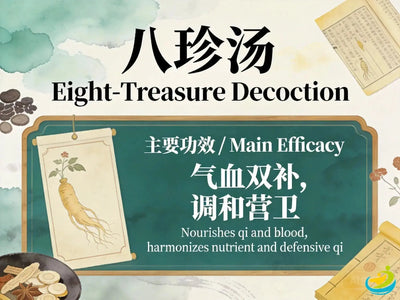
Ginseng Yang Rong Tang: Classic TCM Formula for Qi and Blood Deficiency, Fatigue & Post-Illness Recovery

Ginseng Yangrong Decoction

1. Prescription Source & History

1. Recorded in Ancient Books

The Ginseng Yang Rong Tang (Ginseng and Astragalus Decoction) for Nourishing Rong was first recorded in the Taiping Huimin Heji Jufang (Formulary of the People's Welfare Pharmacy) in the Song Dynasty, which is the first official pharmacopoeia of ready-made medicines compiled by the government in the history of China. In ancient times, medical resources were relatively scarce, and people attached great importance to the treatment and recuperation of diseases. The appearance of this pharmacopoeia provided norms and guidance for the clinical use of traditional Chinese medicine. As a classic formula in it, the Ginseng and Astragalus Decoction for Nourishing Rong has been playing an important role through thousands of years of inheritance.

2. Historical Evolution

With the development of the times, the Ginseng and Astragalus Decoction for Nourishing Rong has continuously evolved in the application and research of different physicians. Later physicians, on the basis of inheriting the original formula, adjusted and supplemented it according to clinical practice experience. For example, improvements have been made in aspects such as drug dosage and processing methods to make it more suitable for the conditions and constitutions of different patients. However, its core drug composition and main effects and indications basically remain unchanged, fully reflecting the characteristics of the continuous development of traditional Chinese medicine formulas in inheritance.

Ginseng Yangrong Decoction

2. Introduction to Ingredients of Renshen Yangrong Decoction

1. Monarch Drug

Ginseng is the monarch drug in the Ginseng and Astragalus Decoction for Nourishing Rong. Ginseng tastes sweet and slightly bitter, and is slightly warm in nature. It has the effects of greatly tonifying primordial qi, restoring pulse and arresting collapse, invigorating the spleen and benefiting the lung, promoting fluid production and nourishing blood, calming the mind and improving intelligence. In the formula, ginseng can greatly tonify the primordial qi of the human body, being the source of qi and blood generation, making qi and blood sufficient, and enabling the normal operation of zang-fu functions, thus improving the condition of physical weakness.

Astragalus membranaceus is also one of the monarch drugs. Astragalus membranaceus tastes sweet and is slightly warm in nature. It has the effects of boosting qi and raising yang, securing the exterior and stopping sweating, promoting diuresis and alleviating edema, promoting fluid production and nourishing blood, promoting qi movement to relieve pain, expelling pus by supporting healthy qi, and promoting granulation and promoting tissue regeneration. When combined with ginseng, it enhances the power of boosting qi, further promoting the generation and circulation of qi and blood, making qi flourish and blood grow, providing sufficient power for the body.

2. Ministerial Drug

Atractylodes macrocephala tastes sweet and bitter, and is warm in nature. It can invigorate the spleen and boost qi, dry dampness and promote diuresis, stop sweating, and prevent miscarriage. Atractylodes macrocephala can enhance the transportation and transformation functions of the spleen and stomach, enabling the spleen and stomach to better absorb and transform nutrients, laying a foundation for the generation of qi and blood, and being an important boost in the process of qi and blood generation.

Poria cocos tastes sweet and light, and is neutral in nature. It has the effects of promoting diuresis and percolating dampness, invigorating the spleen, and calming the mind. Poria cocos can percolate and eliminate dampness, enabling normal water metabolism in the body, preventing internal retention of dampness from affecting qi and blood circulation. At the same time, it can invigorate the spleen and calm the mind, helping to improve the symptoms of restlessness of the mind caused by qi and blood deficiency.

Angelica sinensis tastes sweet and spicy, and is warm in nature. It has the effects of enriching blood and promoting blood circulation, regulating menstruation and alleviating pain, and moistening the intestines and promoting defecation. Angelica sinensis is an important drug for enriching blood. It can nourish nutrient blood, making the blood abundant. At the same time, it can promote blood circulation and relieve stagnation, making qi and blood unobstructed, and having a good effect on improving the symptoms of blood deficiency and blood stasis.

Prepared Rehmannia Root tastes sweet and is slightly warm in nature. It can nourish yin and enrich blood, replenish essence and marrow. Prepared Rehmannia Root is an important drug for nourishing yin and blood. It can supplement the yin and blood of the human body, making the yin and blood sufficient to nourish the zang-fu organs. Acting synergistically with drugs such as Angelica sinensis, it enhances the efficacy of enriching and nourishing blood.

3. Assistant Drug

Radix Polygalae is pungent, bitter, and warm in nature. It has the effects of calming the mind and improving intelligence, connecting the heart and kidney, resolving phlegm and reducing swelling. Radix Polygalae can soothe the mind and calm the nerves, and has a good conditioning effect on symptoms such as restlessness of the mind and insomnia and dreaminess caused by deficiency of qi and blood. At the same time, it can also assist other drugs to better play their roles, making the qi and blood flow smoothly and the functions of the zang-fu organs coordinated.

Schisandra chinensis is sour, sweet, and warm in nature. It has the functions of astringing and consolidating, replenishing qi and promoting the production of body fluids, and tonifying the kidney and calming the heart. Schisandra chinensis can astringe the heart qi and prevent the dissipation of heart qi. At the same time, it can promote the production of body fluids and relieve thirst. It has a certain conditioning effect on the situation of deficiency of qi and blood accompanied by deficiency of body fluids. Cooperating with other drugs, it enhances the overall efficacy of the prescription.

Pericarpium Citri Reticulatae is pungent, bitter, and warm in nature. It has the effects of regulating qi and strengthening the spleen, drying dampness and resolving phlegm. Pericarpium Citri Reticulatae can regulate qi and promote qi movement, making the qi mechanism smooth and avoiding the unsmooth flow of qi and blood caused by qi stagnation. At the same time, it can dry dampness and resolve phlegm, preventing the endogenous generation of phlegm-dampness from hindering the generation of qi and blood, and helping to maintain the normal flow of qi and blood.

4. Guiding Drug

Radix Glycyrrhizae is sweet and neutral in nature. It has the functions of invigorating the spleen and replenishing qi, moistening the lungs and relieving cough, clearing heat and detoxifying, and coordinating various drugs. In the prescription, Radix Glycyrrhizae can not only coordinate various drugs to make them better synergistically play their roles, but also invigorate the spleen and replenish qi, enhance the functions of the spleen and stomach, promote the generation of qi and blood, and relieve the toxicity and potency of drugs, protecting the spleen and stomach from being damaged by drugs.

Ginseng Yangrong Decoction

III. Pathogenesis, Efficacy and Indications of Renshen Yangrong Decoction

1. Pathogenesis

The pathogenesis targeted by Ren Shen Yang Rong Tang is mainly deficiency of qi and blood and deficiency of both the heart and spleen. Under the influence of factors such as long-term fatigue, chronic illness, and irregular diet, the spleen and stomach become weak, the transportation and transformation functions are abnormal, and qi and blood cannot be normally generated, thus presenting symptoms of deficiency of qi and blood. Insufficient qi and blood cannot nourish the mind, resulting in deficiency of both the heart and spleen, presenting a series of symptoms such as palpitations, insomnia, dreaminess, sallow complexion, fatigue, etc.

2. Effects

Ren Shen Yang Rong Tang has the effect of warming and tonifying qi and blood. Through the synergistic effect of qi-tonifying drugs such as Radix Ginseng and Radix Astragali and blood-tonifying drugs such as Radix Angelicae Sinensis and Radix Rehmanniae Preparata in the prescription, it can greatly tonify the qi and blood of the human body, make the qi and blood sufficient, and the functions of the zang-fu organs can be restored and operate normally. At the same time, drugs such as Radix Polygalae and Schisandra chinensis in the prescription can soothe the mind and calm the nerves, further improving the symptoms of deficiency of both the heart and spleen caused by deficiency of qi and blood, making the mind nourished and the sleep peaceful.

3. Indications

It is mainly used to treat diseases such as emaciation and mental fatigue, poor appetite and loose stools, shortness of breath, wheezing when moving, palpitations due to heart deficiency, dryness and soreness of the throat and lips, hair loss, rough and scaly skin, irregular menstruation in women, and leukorrhea with red and white discharge caused by deficiency of both the heart and spleen and deficiency of qi and blood. These symptoms are also relatively common in modern society, mostly related to factors such as fast-paced life, high pressure, and irregular diet. Ren Shen Yang Rong Tang has a good curative effect on improving these symptoms.

Ginseng Yangrong Decoction

IV. Analysis of Formula's Significance

1. Tonify Qi and Blood

In the prescription, Radix Ginseng and Radix Astragali greatly tonify the primordial qi and are the key drugs for tonifying qi, which can promote the generation and movement of qi and blood. Rhizoma Atractylodis Macrocephalae and Poria cocos strengthen the spleen and replenish qi, promoting the transportation and transformation of the spleen and stomach, which is the source of qi and blood generation. Radix Angelicae Sinensis and Radix Rehmanniae Preparata nourish blood and yin, making the blood sufficient. When these drugs are used together, they tonify both qi and blood, making the qi and blood of the human body vigorous and the functions of the zang-fu organs nourished.

2. Treat Heart and Spleen Simultaneously

Polygala tenuifolia and Schisandra chinensis soothe the heart and calm the mind, and regulate the symptoms of restlessness of the mind caused by deficiency of both the heart and spleen. Tangerine peel regulates qi and strengthens the spleen, preventing qi stagnation from affecting the flow of qi and blood, and also helps in the recovery of the spleen and stomach functions. Licorice root harmonizes all the herbs in the formula, and can also invigorate the spleen and replenish qi, enabling the whole formula to both supplement qi and blood, and regulate the heart and spleen, achieving the effect of treating both the symptoms and the root cause.

3. Synergy of Herbs

The various herbs synergize with each other to enhance the medicinal power. For example, when ginseng and astragalus membranaceus are combined, the qi-tonifying power is stronger; when angelica sinensis and rehmannia glutinosa are coordinated, the blood-tonifying effect is better. The combination of atractylodes macrocephala, poria cocos and licorice root can better invigorate the spleen and replenish qi, promoting the generation of qi and blood. This synergistic effect between the herbs gives the formula a unique advantage in treating qi and blood deficiency and deficiency of both the heart and spleen.

Ginseng Yangrong Decoction

V. Comparison with Other Similar Formulas

1. Guipi Decoction

Gui Pi Tang is also a classical formula for treating deficiency of both the heart and spleen. Compared with Ren Shen Yang Rong Tang, Gui Pi Tang focuses more on strengthening the spleen and nourishing the heart, replenishing qi and blood, and has a stronger effect on nourishing the blood and calming the mind, being more prominent in treating symptoms such as palpitation and insomnia caused by deficiency of both the heart and spleen. And there are no herbs for nourishing yin and blood such as rehmannia glutinosa in Gui Pi Tang which emphasizes nourishing yin and blood. Ren Shen Yang Rong Tang has a relatively stronger power in nourishing yin and blood on the basis of supplementing both qi and blood, and is more suitable for patients with qi and blood deficiency accompanied by deficiency of yin and blood.

2. Bazhen Decoction

Ba Zhen Tang mainly functions to supplement both qi and blood, and is composed of eight herbs: ginseng, atractylodes macrocephala, poria cocos, licorice root, angelica sinensis, chuanxiong, white peony root and rehmannia glutinosa. Compared with Renshen Yangrong Decoction Compared with Bazhen Decoction, the drug composition of Renshen Yangrong Decoction is relatively simple, focusing on tonifying qi and blood. On the basis of Bazhen Decoction, Renshen Yangrong Decoction adds herbs such as Astragalus membranaceus, Polygala tenuifolia, Schisandra chinensis, and Citrus reticulata Blanco, enhancing the effects of tonifying qi and calming the mind, as well as regulating qi and strengthening the spleen and stomach. It is more comprehensive in regulating symptoms of qi and blood deficiency accompanied by deficiency of both the heart and spleen.

3. Shiquandabu Decoction

Renshen Yangrong Decoction is a commonly used formula for treating qi and blood deficiency and chronic fatigue and deficiency damage. It is applicable to symptoms such as loss of appetite, sallow complexion, irregular menstruation in women, etc. It is often compared with Shiquan Dabu Decoction In the formula, herbs such as Chinese date can tonify qi and blood and regulate the spleen and stomach. Both Renshen Yangrong Decoction and Shiquan Dabu Decoction are formulas for tonifying qi and nourishing blood, but they have different focuses: Shiquan Dabu Decoction is composed of Sijunzi Decoction (tonifying qi) and Siwu Decoction (tonifying blood), and it is used to treat qi and blood deficiency, sallow complexion, fatigue and weakness, pale tongue with thready and weak pulse; Renshen Yangrong Decoction pays more attention to nourishing blood and calming the mind and regulating the absorption of the spleen and stomach on the basis of tonifying qi. Herbs such as Alpinia oxyphylla are often used in the formula to help calm the mind or regulate functions, and it is applicable to those with qi and blood deficiency accompanied by palpitations, insomnia, amnesia or poor transportation and transformation of the spleen and stomach. When choosing, the formula should be selected according to specific symptoms (whether it is more biased towards symptoms of the mind or weakness of the spleen and stomach) through syndrome differentiation.

Ginseng Yangrong Decoction

VI. Clinical Applications and Indications

1. Chronic Fatigue Syndrome

In modern society, chronic fatigue syndrome is relatively common. Patients often show symptoms such as long-term fatigue, weakness, listlessness, memory loss, etc., which are mostly related to qi and blood deficiency and deficiency of both the heart and spleen. Renshen Yangrong Decoction can improve the fatigue state of patients, enhance physical strength and mental state by warming and tonifying qi and blood and regulating the heart and spleen.

2. Anemia

For patients with anemia caused by qi and blood deficiency such as iron deficiency anemia and megaloblastic anemia, Renshen Yangrong Decoction has a certain therapeutic effect. The blood-tonifying herbs in the formula can supplement the nutrients in the blood, promote the production of red blood cells, and at the same time the qi-tonifying herbs can enhance the hematopoietic function of the body and improve the body's resistance.

3. Insomnia

Insomnia caused by deficiency of both the heart and spleen is manifested as difficulty falling asleep, having many dreams and easy waking, palpitations and amnesia, etc. Renshen Yangrong Decoction can calm the mind and soothe the nerves, regulate the heart and spleen, improve sleep quality, enabling patients to obtain good rest, thus relieving other discomfort symptoms caused by insomnia.

4. Irregular Menstruation

For irregular menstruation in women, such as scanty menstrual flow, light color, and prolonged menstrual period, if accompanied by symptoms of qi and blood deficiency and deficiency of both the heart and spleen, Renshen Yangrong Decoction can restore normal menstruation by regulating qi and blood and nourishing the thoroughfare and conception vessels. Blood-tonifying herbs such as Angelica sinensis and Rehmannia glutinosa in the formula can nourish the blood sea, and qi-tonifying herbs such as Ginseng and Astragalus membranaceus can enhance the functions of the zang-fu organs, promote the circulation of qi and blood, thus improving the condition of irregular menstruation.

Ginseng Yangrong Decoction

VII. Modifications

1. Obvious Qi Deficiency

If the patient has obvious qi deficiency symptoms, the dosages of Ginseng and Astragalus membranaceus can be increased to enhance the qi-tonifying power. Codonopsis pilosula can also be added. Codonopsis pilosula is sweet in taste and neutral in nature, and can invigorate the spleen and benefit the lung, nourish blood and promote the production of body fluid. Acting synergistically with Ginseng and Astragalus membranaceus, it can further improve the qi-tonifying effect.

2. Severe Blood Deficiency

For those with severe blood deficiency, the dosages of Angelica sinensis and Rehmannia glutinosa can be increased, or Colla Corii Asini can be added. Colla Corii Asini is sweet in taste and neutral in nature, and has the functions of enriching blood, nourishing yin, moistening dryness, and stopping bleeding. It can enhance the blood-enriching effect and better improve the symptoms of blood deficiency.

3. Severe Insomnia

When insomnia is severe, the dosages of Polygala tenuifolia and Schisandra chinensis can be increased, or Ziziphus jujuba var. spinosa can be added. Ziziphus jujuba var. spinosa is sweet and sour in taste and neutral in nature, and has the functions of nourishing the heart and liver, calming the mind and tranquilizing the nerves. Acting together with Polygala tenuifolia and Schisandra chinensis, it can better regulate the mind and improve the symptoms of insomnia.

4. With Phlegm-Damp

If the patient has concurrent phlegm-dampness, Pinellia ternata and Poria cocos can be added to enhance the power of drying dampness and resolving phlegm. Pinellia ternata is pungent in taste, warm in nature, and toxic, and has the functions of drying dampness and resolving phlegm, lowering adverse qi and stopping vomiting, dissipating masses and resolving stagnation. Combined with Poria cocos, it can effectively remove phlegm-dampness in the body and make the circulation of qi and blood smoother.

Ginseng Yangrong Decoction

VIII. Dosage (Traditional and Modern Concentrated Granules)

1. Traditional Method

The traditional usage of Renshen Yangrong Decoction is to decoct the medicinal slices with water. Generally, an appropriate amount of water is used for one dose of the medicine, and it is decocted until the medicinal juice is concentrated, and taken in two doses, once in the morning and once in the evening. The specific dosages of the drugs are determined according to the condition and the patient's constitution. The common dosages are Ginseng 9g, Astragalus membranaceus 12g, Atractylodes macrocephala 9g, Poria cocos g, Glycyrrhiza uralensis 6g, Angelica sinensis 9g, Rehmannia glutinosa 9g, Paeonia lactiflora 9g, Polygala tenuifolia 6g, Schisandra chinensis 6g, Citrus reticulata Blanco 9g. Attention should be paid to the heat and time during the decocting process to ensure that the effective components of the medicine are fully decocted.

2. Modern Concentrated Granules

With the development of modern pharmaceutical technology, Renshen Yangrong Decoction also has a modern concentrated granule dosage form. This dosage form is convenient to take and the dosage is accurate. Generally, it can be taken by冲服 with boiling water according to the dosage in the instructions. While retaining the efficacy of the traditional formula, the modern concentrated granules are more convenient for patients to carry and use, especially suitable for the modern fast-paced lifestyle.

Ginseng Yangrong Decoction

IX. Precautions and Taboos

1. Dietary Taboos

During the period of taking Renshen Yangrong Decoction, it is necessary to avoid eating raw, cold, greasy, spicy and other stimulating foods. Raw and cold foods can damage the yang qi of the spleen and stomach, affect the transportation and transformation functions of the spleen and stomach, and are not conducive to the absorption of the medicine; greasy foods are not easy to digest and will加重 the burden on the spleen and stomach; spicy foods are likely to generate internal heat and dryness, which may cause abnormal circulation of qi and blood in the body and affect the therapeutic effect of the formula.

2. Special Populations

Use with caution during pregnancy. The drug components in Ren Shen Yang Rong Tang may have certain effects on the fetus. Pregnant women should consult a doctor before use. Dosage for children should be adjusted according to age and constitution and generally should be used under the guidance of a doctor.

3. Disease Changes

During the process of taking Ren Shen Yang Rong Tang, if the condition changes, such as the symptoms worsen or new symptoms appear, the medicine should be stopped immediately and medical advice should be sought in order to adjust the treatment plan. At the same time, patients should take the medicine on time according to the doctor's instructions and do not increase or decrease the dosage or stop taking the medicine by themselves, so as not to affect the treatment effect.

Ginseng Yangrong Decoction

X. Modern Research Progress

1. Pharmacological Research

Modern research shows that qi-tonifying herbs such as ginseng and astragalus root in Ren Shen Yang Rong Tang have the effects of enhancing the body's immunity, regulating the function of the nervous system, and improving the function of the cardiovascular system. Blood-tonifying herbs such as angelica sinensis and rehmannia glutinosa can promote hematopoiesis and improve hemorheological indexes. Herbs such as polygala tenuifolia and schisandra chinensis in the formula have the effects of calming the mind and regulating the endocrine system. These pharmacological effects provide a scientific basis for the formula to treat qi and blood deficiency, heart and spleen deficiency, etc.

2. Clinical Research

Multiple clinical studies have confirmed the effectiveness of Ren Shen Yang Rong Tang in the treatment of diseases such as chronic fatigue syndrome, anemia, insomnia, and irregular menstruation. Through the observation and analysis of patients' symptoms, signs, laboratory indicators, etc., it is found that Ren Shen Yang Rong Tang can significantly improve the patients' condition and improve the quality of life. Some studies have also explored the optimal dosage and treatment course of Ren Shen Yang Rong Tang, providing a more accurate reference for clinical application.

3. Dosage Form Improvement

Ginseng Yang Rong Tang (人参养荣汤), known in English as Ginseng Decoction to Nourish the Nutritive Qi, is a classical TCM formula designed to tonify both Qi and Blood, especially in cases of deficiency following prolonged illness, surgery, childbirth, or chronic fatigue. This comprehensive formula combines the Qi-tonifying power of Si Jun Zi Tang with the Blood-nourishing action of Si Wu Tang, plus additional herbs to support digestion and calm the spirit. It is particularly indicated for fatigue, shortness of breath, pale complexion, poor appetite, loose stools, dizziness, palpitations, insomnia, and spontaneous sweating. In modern clinical practice, Ginseng Yang Rong Tang is widely used for post-illness recovery, post-partum care, and general weakness in elderly or deficient patients. By simultaneously rebuilding Qi and Blood while strengthening the Spleen’s ability to generate them, it provides deep nourishment and gradual restoration of vitality.

In addition to the traditional decoction and modern concentrated granule dosage forms, researchers are also exploring other dosage forms of Ren Shen Yang Rong Tang, such as pills and capsules. These new dosage forms further improve the stability and convenience of taking the medicine while retaining the efficacy of the formula, providing more choices for patients. In the future, with the continuous deepening of research, Ren Shen Yang Rong Tang may have more innovations and breakthroughs in dosage forms, efficacy, etc., and better serve clinical treatment.

Frequently Asked Questions


Q

What is Ginseng Yang Rong Tang used for in Traditional Chinese Medicine?

Ginseng Yang Rong Tang (人参养荣汤) is a classical TCM formula for nourishing both Qi and Blood, particularly in cases of deficiency following illness, surgery, or chronic fatigue. It is indicated for fatigue, shortness of breath, pale complexion, poor appetite, loose stools, dizziness, palpitations, insomnia, and spontaneous sweating. The formula is especially suitable for patients with combined Qi and Blood deficiency who also have Spleen weakness and poor digestion. It is commonly used in post-illness recovery, post-partum care, and for elderly patients with general weakness and low energy.

Q

How does Ginseng Yang Rong Tang nourish both Qi and Blood?

Ginseng Yang Rong Tang combines the Qi-tonifying power of Si Jun Zi Tang (Ginseng, Atractylodes, Poria, Licorice) with the Blood-nourishing action of Si Wu Tang (Rehmannia, Angelica, Peony, Ligusticum), plus additional herbs to support digestion and calm the spirit. Huang Qi and Ren Shen powerfully tonify Qi. Shu Di Huang, Dang Gui, and Bai Shao nourish Blood. Chen Pi and Mu Xiang regulate Qi and improve digestion. Yuan Zhi and Suan Zao Ren calm the spirit and improve sleep. This comprehensive approach simultaneously rebuilds Qi and Blood while supporting the Spleen’s ability to generate and transport them, making it highly effective for deficiency patterns with digestive weakness.

Q

What are the precise herbal ingredients in Ginseng Yang Rong Tang?

Ginseng Yang Rong Tang contains: Ren Shen (Ginseng) or Dang Shen to powerfully tonify Qi; Bai Zhu and Fu Ling to strengthen the Spleen and dry Dampness; Zhi Gan Cao to tonify Qi and harmonize; Shu Di Huang and Dang Gui to nourish Blood; Bai Shao to nourish Blood and soften the Liver; Chuan Xiong to move Blood; Huang Qi to tonify Qi and raise Yang; Chen Pi to regulate Qi and improve digestion; Yuan Zhi and Suan Zao Ren to calm the spirit; and sometimes Rou Gui to warm and promote circulation. The formula elegantly combines Qi and Blood tonification with Spleen support and spirit calming.

⚠️ This content is for reference only and does not provide medical advice. Consult a healthcare professional for any health concerns.

Login

Forgot your password?

Don't have an account yet?
Create account

Ginseng Yang Rong Tang: Classic TCM Formula for Qi and Blood Deficiency, Fatigue & Post-Illness Recovery