Blood-Invigorating Formulas

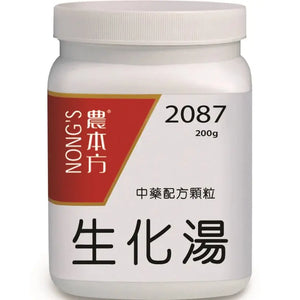
生化汤 · Shēng Huà Tāng

Sheng Hua Tang

Famous postpartum formula that generates new Blood while transforming (dispelling) stasis. Used for retained lochia, postpartum abdominal pain and cold-stasis patterns after delivery.

View formula profile →
Last reviewed July 2026
Formula CategoryBlood-Invigorating Formulas
Primary PatternBlood Stasis
Primary FunctionInvigorate Blood, dispel stasis, warm channels
Primary Therapeutic PrincipleInvigorate Blood, dispel stasis, warm the channels and relieve pain (especially postpartum)
Main HerbsChinese Angelica Root · Chuanxiong Rhizome · Peach Kernel · Blast-fried Ginger · Honey-fried Licorice
Classical SourceFu Qing Zhu Nu Ke (Fu Qingzhu's Obstetrics and Gynecology, Qing dynasty)

Why This Formula?

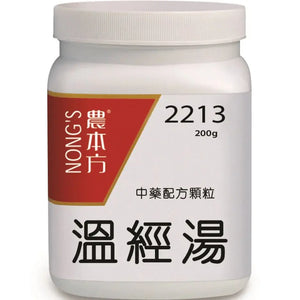
Traditionally selected specifically for the postpartum period, when residual Blood stasis and Cold cause retained lochia and abdominal pain — narrower in indication than the broader lower-abdominal stasis formulas Shao Fu Zhu Yu Tang and Ge Xia Zhu Yu Tang, and more acute than Wen Jing Tang.

Traditionally selected specifically for the postpartum period, when residual Blood stasis and Cold cause retained lochia and abdominal pain — narrower in indication than the broader lower-abdominal stasis formulas Shao Fu Zhu Yu Tang and Ge Xia Zhu Yu Tang, and more acute than Wen Jing Tang.

What Is Sheng Hua Tang?

1. The Legend of Sheng Hua Tang's Origins

Sheng Hua Tang (生化汤) is a classical Traditional Chinese Medicine formula traditionally used to support postpartum recovery, promote healthy blood circulation, and address patterns of blood stasis after childbirth.

Sheng Hua Tang comes from Fu Qingzhu Nüke (Fu Qingzhu's Gynaecology) by Qing physician Fu Shan. He developed it after seeing many women with postpartum weakness, prolonged lochia, and abdominal pain; after testing it in his own household, he found it promoted quick recovery and relieved symptoms, which—though partly legendary—shows the formula's effectiveness.

Sheng Hua Tang: Activating Blood, Resolving Stasis and Warming the Channels for Postpartum Recovery | HJMEDICAL

2. Prolonged Postpartum Lochia

Sheng Hua Tang is a crucial formula in postpartum care, effectively addressing common imbalances that arise after childbirth. Its unique composition targets specific conditions, promoting swift and healthy recovery. 

When lochia persists with dark purple color, clots, and lower abdominal pain exacerbated by pressure, it indicates blood stasis obstruction. Sheng Hua Tang nourishes blood and dispels stasis, facilitating the natural discharge of lochia. Patients typically observe a gradual reduction in lochia, a lighter color, and relieved abdominal discomfort.

Sheng Hua Tang: Activating Blood, Resolving Stasis and Warming the Channels for Postpartum Recovery | HJMEDICAL

3. Postpartum Abdominal Pain

This formula is highly effective for lower abdominal pain alleviated by warmth, accompanied by scant, dark lochia with clots, pallor, and cold extremities. This pattern signals blood deficiency with cold invasion and blood stasis. Sheng Hua Tang warms channels, disperses cold, nourishes blood, and eliminates stasis, leading to significant pain relief and a regulated recovery process.

Herb Composition (Sovereign / Minister / Assistant / Envoy)

1. Sovereign Herb: Danggui (Angelica Root)

Nourishes & activates blood, regulates menstruation, and alleviates pain. Replenishes postpartum blood loss, promotes lochia expulsion, and relieves abdominal discomfort.

2. Minister Herb: Chuanxiong (Ligusticum Rhizome)

Activates blood, moves qi, and alleviates pain. Assists Danggui by reinforcing blood activation, dispersing stasis, and restoring free flow of qi and blood to address stagnation.

3. Assistant Herbs: Taoren (Peach Kernel) & Zhigancao (Honey-Fried Licorice Root)

Taoren activates blood and dispels stasis, aiding lochia discharge. Zhigancao tonifies spleen, augments qi, and harmonizes all herbs, strengthening the body's foundational energy.

Sheng Hua Tang: Activating Blood, Resolving Stasis and Warming the Channels for Postpartum Recovery | HJMEDICAL

4. Envoy Herb: Paojiang (Blast-fried Ginger)

Warms channels, disperses cold, and alleviates pain. Warms the uterus to expel stagnant blood, addressing inhibited lochia discharge and cold pain from postpartum cold invasion.

Clinical Presentation in TCM

1. Postpartum Pathomechanism

Postpartum is primarily marked by concurrent qi and blood deficiency, and blood stasis. Blood loss during delivery leads to deficiency. An empty uterus is prone to lochia stagnation and internal blood stasis. Weak qi and blood circulation impede flow, causing various postpartum conditions. Sheng Hua Tang addresses this pattern by regulating qi and blood, eliminating stasis, and restoring balance.

2. Therapeutic Actions

Sheng Hua Tang nourishes blood to replenish depleted supply, dispels stasis to promote lochia discharge and clear obstructions, and warms the channels to warm the uterus and disperse cold, alleviating pain. These actions work synergistically to regulate the postpartum state and facilitate comprehensive recovery.

Sheng Hua Tang: Activating Blood, Resolving Stasis and Warming the Channels for Postpartum Recovery | HJMEDICAL

3. Clinical Indications

The formula is indicated for postpartum blood deficiency with cold invasion, inhibited lochia discharge, and cold pain in the lower abdomen. Lochia, the residual blood and fluids after delivery, can cause abdominal pain if stagnant. Sheng Hua Tang effectively improves these conditions, promoting smooth lochia expulsion and relieving discomfort, thus aiding postpartum recovery.

The Mechanism in Classical Theory

1. Blood Nourishing & Blood Activating

The core trio of Danggui, Chuanxiong, and Taoren creates a powerful yet balanced effect. Danggui primarily nourishes and activates blood, while Chuanxiong invigorates blood and moves qi, and Taoren breaks blood stasis. This combination ensures efficient stasis resolution without excessive depletion of qi and blood, crucial for postpartum recovery.

2. Warming Channels & Dispersing Cold

Paojiang plays a vital role by warming the channels and dispersing internal cold. This action is essential for invigorating circulation, facilitating the expulsion of stagnant lochia, and alleviating cold-induced pain in the lower abdomen. Its warming effect enhances the blood-activating properties of the other herbs, promoting smoother qi and blood flow.

Sheng Hua Tang: Activating Blood, Resolving Stasis and Warming the Channels for Postpartum Recovery | HJMEDICAL

3. Harmonising Medicinal Properties

Zhigancao acts as the harmonizer, integrating the diverse actions of the other herbs. It moderates any harshness, guides the formula to target areas, and ensures that the therapeutic effects are balanced and coordinated. By harmonizing, Zhigancao optimizes the formula's overall efficacy, preventing undue side effects and supporting holistic recovery.

Clinical Comparison Table

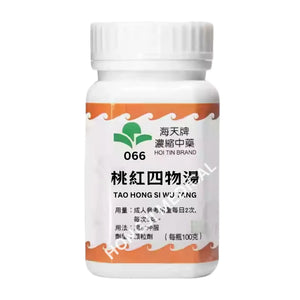
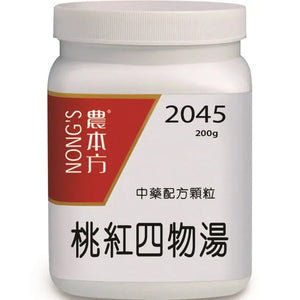
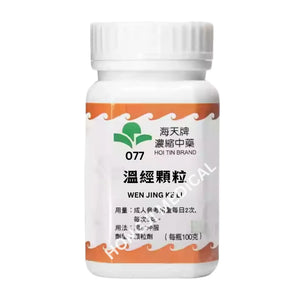
Compare Sheng Hua TangShao Fu Zhu Yu TangWen Jing TangTao Hong Si Wu Tang
Primary Function Invigorate Blood, dispel stasis, warm channelsInvigorate Blood in lower abdomen, warm menses, stop painWarm channels, nourish Blood, regulate mensesNourish and invigorate Blood, dispel stasis
Formula Category Blood-Invigorating FormulasBlood-Invigorating FormulasBlood-Tonifying FormulasBlood-Invigorating Formulas
Typical TCM Pattern Blood StasisBlood StasisBlood DeficiencyBlood Stasis
Main Conditions Abdominal Pain, Irregular Menstruation, Cold LimbsDysmenorrhea, Abdominal Pain, Irregular Menstruation, Cold LimbsIrregular Menstruation, Dysmenorrhea, Cold Limbs, Abdominal PainDysmenorrhea, Irregular Menstruation, Abdominal Pain
Main Herbs Chinese Angelica Root · Chuanxiong Rhizome · Peach Kernel · Blast-fried Ginger · Honey-fried LicoriceFennel Fruit · Dried Ginger · Corydalis Rhizome · Chinese Angelica Root · Chuanxiong Rhizome · Myrrh · Cattail Pollen · Flying Squirrel Feces · Red Peony Root · Cinnamon BarkEvodia Fruit · Cinnamon Twig · Chinese Angelica Root · Chuanxiong Rhizome · White Peony Root · Donkey-hide Gelatin · Ophiopogon Tuber · Moutan Bark / Tree Peony Bark · Ginseng Root · Fresh Ginger · Pinellia Rhizome · Licorice RootPrepared Rehmannia Root · Chinese Angelica Root · White Peony Root · Chuanxiong Rhizome · Peach Kernel · Safflower
Classical Source Fu Qing Zhu Nu Ke (Fu Qingzhu's Obstetrics and Gynecology, Qing dynasty)Yi Lin Gai Cuo (Wang Qingren, Qing dynasty)Jin Gui Yao Lue (Zhang Zhongjing, Eastern Han)Yi Lei Yuan Rong (Supreme Commanders of the Medical Ramparts, Yuan dynasty)

How to tell them apart

Sheng Hua Tang is specific for postpartum Blood stasis with cold. Shao Fu Zhu Yu Tang and Ge Xia Zhu Yu Tang are broader lower-abdominal stasis formulas. Wen Jing Tang addresses cold in Chong-Ren more chronically. Tao Hong Si Wu Tang is a general Blood nourishing + moving formula.

For educational reference only, based on traditional pattern differentiation — not a substitute for professional advice.

Clinical Modifications for Sheng Hua Tang

1. Excessive Lochia Volume

To manage excessive lochia, Taoren is removed to prevent further blood activation. Instead, Yimucao (Motherwort) is added and its dosage increased. Yimucao effectively activates blood, resolves stasis, and promotes urination to facilitate lochia discharge without causing excessive bleeding, ensuring a balanced recovery.

2. Severe Abdominal Pain

For severe postpartum abdominal pain, Yanhusuo (Corydalis Rhizome) and Puhuang (Cattail Pollen) are incorporated. Yanhusuo powerfully activates blood, moves qi, and alleviates pain, while Puhuang resolves stasis to stop bleeding and further reduce pain. This combination significantly enhances the formula's analgesic effects.

Sheng Hua Tang: Activating Blood, Resolving Stasis and Warming the Channels for Postpartum Recovery | HJMEDICAL

3. Pronounced Cold-Congealed Blood Stasis

When cold-congealed blood stasis is prominent, Rougui (Cinnamon Bark) and Wuzhuyu (Evodia Fruit) are added. These herbs strongly warm the channels and disperse cold, reinforcing the formula's ability to expel cold pathogens and stagnant blood, thereby alleviating severe cold-induced pain and facilitating complete stasis resolution.

What the Science Suggests

1. Pharmacological Research

Sheng Hua Tang (Engendering Transformation Decoction) is a well-known formula in Traditional Chinese Medicine specifically designed to address blood stasis in the uterus complicated by cold.

It warmly invigorates blood, dispels blood stasis with cold, and promotes the discharge of retained lochia after childbirth. The formula is particularly effective for postpartum conditions presenting with cold limbs, lower abdominal pain, dark lochia, and incomplete discharge of lochia. By warming the channels, invigorating blood, and transforming stasis, Sheng Hua Tang helps restore normal uterine function and alleviates discomfort arising from cold-induced blood obstruction in the postpartum period.

Modern studies show Sheng Hua Tang’s ingredients exert complementary actions: Danggui promotes hematopoiesis, improves circulation, and regulates uterine smooth muscle; Chuanxiong dilates vessels, enhances microcirculation, and inhibits platelet aggregation; Taoren is anticoagulant and improves hemodynamics; Paojiang aids coagulation, reduces inflammation, and relieves pain; Zhigancao modulates immunity and lowers inflammation—together supporting postpartum recovery.

Sheng Hua Tang: Activating Blood, Resolving Stasis and Warming the Channels for Postpartum Recovery | HJMEDICAL

2. Clinical Evidence

Recent clinical research reports that Sheng Hua Tang, often combined with treatments like acupuncture or tuina, improves outcomes for postpartum pelvic floor dysfunction, enhances sleep quality, and relieves postpartum anxiety and depression, suggesting broader applications in postpartum care.

Safety Considerations

1. Precautions

Do not take Sheng Hua Tang if postpartum lochia is profuse and bright red, as its blood‑activating action can worsen such excess patterns. Monitor lochia closely during use; if abnormalities arise (unusual odor, fever, severe pain), stop and seek medical attention promptly.

2. Contraindications

Sheng Hua Tang is contraindicated in pregnancy due to risk of fetal disturbance or miscarriage. If postpartum infection is present (fever, severe abdominal pain, malodorous lochia), treat the infection first and defer Sheng Hua Tang until the condition stabilizes.

Questions About Sheng Hua Tang

Q1: What are the actions of Sheng Hua Tang?
Sheng Hua Tang activates blood and resolves stasis, warms the channels and disperses cold, and nourishes blood to alleviate pain. It is primarily indicated for prolonged lochia, abdominal pain, aversion to cold, and poor uterine involution caused by internal blood stasis obstruction in the postpartum period.
Q2: Which modern conditions is Sheng Hua Tang indicated for?
In modern TCM clinical practice, it is commonly used for individuals whose pattern differentiation falls within the categories of internal blood stasis obstruction and cold congealing in the uterus — including postpartum recovery, prolonged lochia, incomplete postpartum uterine involution, and postpartum abdominal pain.
Q3: Is Sheng Hua Tang suitable for postpartum recovery?
For postpartum women presenting with signs of blood stasis obstruction — including inhibited lochia discharge, dull abdominal pain, aversion to cold, and slow recovery — TCM practitioners commonly apply Sheng Hua Tang through pattern differentiation as an adjunct regulating formula to promote uterine recovery and lochia expulsion.
Q4: Who should not take Sheng Hua Tang?
Sheng Hua Tang is generally not suitable for those with yin deficiency and blood-heat, heavy postpartum bleeding, infectious fever, or those without blood stasis signs. Use should be preceded by a pattern differentiation assessment by a qualified TCM practitioner according to the patient's constitution and condition.

General Questions

How do I choose the right formula?
TCM formulas are traditionally selected according to individual pattern differentiation rather than by symptom alone. If you're not sure which formula fits your presentation, take our AI Assessment below for a personalized starting point, then confirm with a qualified TCM practitioner.
What are concentrated herbal granules?
Concentrated herbal granules are made by decocting raw herbs, then extracting and concentrating the resulting liquid into a fine granule or powder form. This preserves the same active compounds as a traditional decoction while making the herbs far easier to store, measure, and prepare.
How should I take these products?
Dissolve the recommended amount of granules in hot water, stir until fully dissolved, and drink while warm — following the dosage and frequency advised by your TCM practitioner or as stated on the product packaging.
Are concentrated herbal granules equivalent to traditional decoctions?
Concentrated granules are produced from the same herbs and processed to retain their active compounds, so they are traditionally regarded as a convenient alternative to decoctions rather than a different remedy. Some practitioners note subtle differences in strength or absorption between the two forms, so your TCM practitioner may adjust dosage accordingly.
Are your products authentic?
Yes. HJMEDICAL sources its concentrated granules exclusively from established, reputable manufacturers such as Nong's and Hoi Tin, both long-standing names in the TCM granules industry, with GMP compliance stated directly on their packaging.
Are HJMEDICAL products manufactured under GMP standards?
HJMEDICAL sources its concentrated granules from established, reputable manufacturers such as Nong's and Hoi Tin, both long-standing names in the TCM granules industry. GMP compliance for these products is stated directly on their packaging.
Do you ship internationally?
Yes — we ship worldwide! Every order goes out via Hong Kong Post, and your exact shipping cost and estimated delivery time for your address are calculated and shown right at checkout, so there are never any surprises. We also offer free shipping once your order reaches our free-shipping threshold, so it's easy to stock up on your favorite formulas and save.
Can I take more than one formula at the same time?
Some formulas are traditionally combined, while others overlap or counteract each other. We recommend checking with a qualified TCM practitioner before combining formulas, especially if you are already taking other medication.
Are these products suitable during pregnancy or breastfeeding?
Some TCM formulas are not suitable during pregnancy or breastfeeding. Please consult a qualified TCM practitioner or your doctor before use if you are pregnant, trying to conceive, or nursing.
Do these products replace medical treatment?
No. These products are traditional herbal supplements intended to support wellbeing according to TCM principles — they are not a replacement for professional medical diagnosis or treatment. Please consult a qualified TCM practitioner or licensed healthcare provider before starting, stopping, or combining any treatment, especially if you have a chronic condition.
Medical Disclaimer

For general TCM education only — not medical advice. Consult a qualified TCM practitioner or licensed healthcare provider before use, especially if pregnant, nursing, on medication, or managing a chronic condition.

Not sure which formula is right for you?

Take the AI Assessment

最新文章

Login

Forgot your password?

Don't have an account yet?
Create account

Sheng Hua Tang: Traditional Chinese Formula for Postpartum Recovery and Blood Circulation