Blood-Invigorating Formulas

通竅活血湯 · Tōng Qiào Huó Xuè Tāng

Tong Qiao Huo Xue Tang

A Wang Qingren formula for blood stasis in the head and face.

View formula profile →
Last reviewed October 2026
Formula CategoryBlood-Invigorating Formulas
Primary PatternBlood Stasis
Primary FunctionInvigorate blood, unblock the orifices
Primary Therapeutic PrincipleInvigorate blood and unblock the orifices
Main HerbsRed Peony Root · Chuanxiong Rhizome · Peach Kernel · Safflower · Fresh Ginger · Jujube / Chinese Date
Classical SourceYi Lin Gai Cuo (Wang Qingren, Qing dynasty)

Why This Formula?

Selected for blood stasis in the head and face — fixed headache, dusky face — rather than chest or lower-abdominal stasis.

Selected for blood stasis in the head and face — fixed headache, dusky face — rather than chest or lower-abdominal stasis.

What Is Tong Qiao Huo Xue Tang?

1. Where the Formula Comes From

Tong Qiao Huo Xue Tang (通窍活血汤), or Opening-the-Orifices Blood-Activating Decoction, is a famous blood-activating classical formula created by the Qing-dynasty physician Wang Qingren in his Yi Lin Gai Cuo (Correcting Errors in Medicine). It belongs to the category of formulas that activate the blood, resolve stasis, and open the orifices and channels of the head and face.

The formula targets the pattern of "blood stasis blocking the head orifices and the network of the head and face." Typical signs include stubborn, fixed, knife-like headaches or migraines, dizziness, tinnitus or hearing loss, dark facial spots (especially melasma), redness of the nose (rosacea), a dark-purple complexion, and numbness or coldness of the limbs. It is widely used for stasis-type headaches and migraines, post-head-trauma sequelae, facial pigmentation, and stasis-type eye and ear disorders.

Wang Qingren valued hands-on practice and challenged the fuzzy views of the internal organs in his era. He even went to execution grounds to observe organs directly and correct old errors, and he built a large clinical experience with blood-stasis patterns. The core idea of the Yi Lin Gai Cuo is "activate blood and resolve stasis." Many patients had headaches and dizziness, deafness and ear pain, a dark-purple face, spots, and rosacea that wouldn't yield to the usual wind-dispelling, heat-clearing, or tonic methods. Wang concluded these came from stasis blocking the clear orifices of the head and the channels of the whole body, and designed this formula specifically for that pattern.

Tong Qiao Huo Xue Tang

2. Headache and Migraine

Headache is its commonest use — not an ordinary cold headache, but the recurrent, fixed kind: always the same temple, or the whole forehead, knife-like or explosive, long-standing, and unresponsive to ordinary painkillers or anti-inflammatories. The reason it works: the stasis blocks the head's channels, so the head isn't nourished and the qi-blood can't pass. Many migraine patients with a dull face and tongue stasis-spots get clear relief in 1–2 courses. Post-head-trauma headaches (with dizziness and poor memory) from stasis in the head's channels also respond well.

3. Facial Pigmentation and Spots

Facial spots — especially cheekbone melasma and rosacea — are in its range. Melasma usually follows emotional strain knotting the qi, slowing the blood, and leaving stasis in the facial channels; over time it shows as dull, neither-red-nor-swollen pigmentation, often with irregular menses and clots. Rosacea is similar — stasis at the nose tip with maybe a little damp-heat, but stasis at its core. The formula dissolves the facial stasis, restores blood flow to the face, nourishes the skin, and so fades the spots and eases the rosacea — patients often gain a rosier complexion and better color overall.

4. Ear and Eye Disorders

It also treats tinnitus, deafness, and failing vision. One important type of tinnitus/deafness is stasis in the ear's vessels: the qi-blood can't reach the ear, the nerves go under-nourished — usually long-standing, with headache, dizziness, and a dark face. The formula opens the ear's vessels, lets the blood nourish the auditory nerves, and improves the hearing. In failing vision from eye-ground stasis (such as retinal vein obstruction), it dissolves the fundus stasis, improves its circulation, and can raise the vision.

Tong Qiao Huo Xue Tang

5. Numb Limbs and Whole-Body Discomfort

It isn't only head problems — it also treats limb numbness and pain, especially of the hands and feet. Many middle-aged and older people have numb hands/feet or extremities that stay cold even in summer — stasis blocking the limb channels, so the qi-blood never reaches the tips. The formula opens the limb channels and lets the blood reach the hands and feet. It also helps the fixed, stinging spots or bruises that mark stasis.

Herb Composition (Sovereign / Minister / Assistant / Envoy)

1. The Lords: Chi Shao, Chuan Xiong, Tao Ren, Hong Hua

Four blood-activating herbs lead the formula:

  • Chi Shao (Red Peony) — bitter, slightly cold; drains liver heat and moves blood, good for stasis mixed with heat.
  • Chuan Xiong (Ligusticum) — pungent, warm; the "qi-moving herb among the blood herbs," it both breaks stasis and moves the qi — "when qi moves, blood moves" — and is especially effective for stasis of the head and face.
  • Tao Ren (Peach Kernel) — bitter-sweet, neutral; breaks through deeper stasis and moistens the bowels.
  • Hong Hua (Safflower) — pungent, warm; moves the blood, opens the channels, and scatters stasis and pain across the whole body.

Together they are the blood-stasis core, dissolving the trapped blood from different angles and laying the formula's foundation.

2. The Ministers: Lao Cong, Xian Jiang, Da Zao

Three herbs assist and protect:

  • Lao Cong (old scallion) — pungent, warm; opens the yang, opens the orifices, and moves blood. The scallion white is light and rises, carrying the effect up to the clear orifices of the head, and its warmth lets the yang push the stasis out.
  • Xian Jiang (fresh ginger) — pungent, warm; warms the middle, opens the yang, and moves blood, backing up the scallion and helping the effect reach the whole body.
  • Da Zao (jujube) — sweet, warm; builds the middle qi and harmonizes the digestion, protecting the stomach from the blood-activating herbs and blending the whole.

They assist the blood-moving, orifice-opening work and guard the upright so the attack isn't excessive.

Tong Qiao Huo Xue Tang

3. The Couriers: She Xiang and Huang Jiu

She Xiang (Musk) — pungent, warm — is a precious orifice-opening, blood-moving herb of strong "penetrating" nature. It can pass through the channels and, above all, the clear orifices of the head, carrying the whole formula's force directly to the stasis — the key "guide the medicine to the orifice" step. Huang Jiu (yellow rice wine) — sweet-pungent, warm — warms the vessels, strengthens the medicine, and harmonizes the herbs; it aids absorption and helps the other herbs release their actives. One guides the force to the lesion, the other strengthens and blends it — together they make the formula precise and potent.

Clinical Presentation in TCM

1. The Root Problem: Stasis Blocking the Head Orifices

The core pattern is "blood stasis blocking the head orifices with blocked channels." The "stasis" is blood that no longer flows freely and has settled — not deep in muscles and organs, but in the clear orifices and superficial channels of the head: the head's channels, the facial vessels, the vessels of the ear and nose. Common causes: trauma (a head injury leaving stasis), emotional strain (long-held bad mood knots the qi, and the qi stops moving the blood), cold (which constricts the vessels and slows the blood), and age and weakness (naturally slower flow). This leaves the body's parts under-nourished and the channels blocked, producing the symptoms below.

2. What It Does

Two linked actions, matching the mechanism:

  • Activate the blood and resolve stasis — the foundation: dissolve the trapped blood so the blood flows freely again.
  • Open the orifices and activate the channels — the key: because the stasis sits in the head's orifices and channels, the formula must specifically reopen them and carry the effect there, restoring nourishment to the head and face.

The two reinforce each other — only by resolving the stasis does the blood flow, and only by opening the channels does the effect and the blood reach the lesion. Together they solve the problem at its root.

Tong Qiao Huo Xue Tang

3. Who It's For

Its indications all share "stasis blocking the head orifices":

  • Head and face pain: stubborn, recurrent migraines — fixed, needle-like, poorly responsive to ordinary painkillers — and headache with dizziness, a head that feels blocked, sometimes with tinnitus.
  • Skin and face: dark facial spots (especially melasma on the cheekbones, dull, neither red nor swollen), rosacea (redness and papules around the nose), a dark-purple complexion, dark circles.
  • Eye and ear: tinnitus and deafness (a ringing that won't stop, falling hearing), and eye-ground stasis (blurred or distorted vision).
  • Whole body: numb, painful limbs (especially the hands and feet), cold extremities, bruises, and menstrual problems with dark clotted blood and pain (including period headaches).

The common thread: symptoms that are fixed, dark in color, long-standing, and unresponsive to ordinary treatment.

The Mechanism in Classical Theory

1. A Layered Assault on the Stasis

The pairing is strict, each herb in its place, working on the "head-orifice stasis" at several levels. First the lords dissolve the stasis at its root — Chi Shao clears stasis-heat, Chuan Xiong moves the qi stagnation, Tao Ren breaks up old dry stasis, Hong Hua opens the channels: the "resolve the stasis" step. Second the ministers make the effect reach the lesion — Lao Cong and Xian Jiang's pungent warmth opens the yang and frees the channels and carries the force upward to the head, while Da Zao protects the digestion: the "deliver and protect" step. Third the couriers focus the force on the orifice — She Xiang's penetration enters the head's clear orifices and concentrates all the herbs there, while Huang Jiu strengthens and blends: the "reach the blockage and open it" step.

2. Three Marked Features

  • Attack with protection: blood-activating herbs spend the upright, so Da Zao builds the middle qi — essential for patients already low in qi-blood, letting the formula attack the stasis without harming the body.
  • Rising and lowering together: Chi Shao and Chuan Xiong move and lower the deep stagnation, while Lao Cong, Xian Jiang, and She Xiang rise and scatter the force to the head — so the deep stasis is dissolved and the force stays focused on the head's orifices instead of dispersing.
  • A gentle warmth: though a blood-moving formula, its overall nature is warm but not dry — She Xiang's warm penetration and Lao Cong and Xian Jiang's warm dispersal are checked by Chi Shao's slight cold, giving a "warm without dryness" that most patients can take long-term without "fire."
Tong Qiao Huo Xue Tang

3. A Complete Closed Loop

The jun-chen-zuo-shi structure forms a full cycle — dissolve the stasis, open the channels, reach the orifice, protect the upright. The lords dissolve the stasis; the ministers open the channels so the qi-blood moves; the couriers carry the force to the head lesion and strengthen it; Da Zao guards the upright. Each link depends on the next — no lords, no stasis-resolving base; no ministers, the force can't reach the lesion; no couriers, it can't focus on the orifice; no Da Zao, the patient may suffer from the attack. This is why the formula handles not only simple stasis but stubborn, long-standing, severe head-orifice stasis.

Clinical Comparison Table

Compare Tong Qiao Huo Xue TangXue Fu Zhu Yu TangShao Fu Zhu Yu TangTao Hong Si Wu Tang
Primary Function Invigorate blood, unblock the orificesInvigorate Blood, dispel stasis, move QiInvigorate Blood in lower abdomen, warm menses, stop painNourish and invigorate Blood, dispel stasis
Formula Category Blood-Invigorating FormulasBlood-Invigorating FormulasBlood-Invigorating FormulasBlood-Invigorating Formulas
Typical TCM Pattern Blood StasisBlood StasisBlood StasisBlood Stasis
Main Conditions Headache, Dizziness & Vertigo, Tinnitus, Hair Loss, Dull ComplexionChest Tightness, Headache, Hypochondriac Distension, Emotional Depression, Anxiety RestlessnessDysmenorrhea, Abdominal Pain, Irregular Menstruation, Cold LimbsDysmenorrhea, Irregular Menstruation, Abdominal Pain
Main Herbs Red Peony Root · Chuanxiong Rhizome · Peach Kernel · Safflower · Fresh Ginger · Jujube / Chinese DatePeach Kernel · Safflower · Chinese Angelica Root · Raw Rehmannia Root · Chuanxiong Rhizome · Red Peony Root · Achyranthes Root · Bupleurum Root · Platycodon Root · Bitter Orange · Licorice RootFennel Fruit · Dried Ginger · Corydalis Rhizome · Chinese Angelica Root · Chuanxiong Rhizome · Myrrh · Cattail Pollen · Flying Squirrel Feces · Red Peony Root · Cinnamon BarkPrepared Rehmannia Root · Chinese Angelica Root · White Peony Root · Chuanxiong Rhizome · Peach Kernel · Safflower
Classical Source Yi Lin Gai Cuo (Wang Qingren, Qing dynasty)Yi Lin Gai Cuo (Corrections of Errors in Medical Classics, Wang Qingren, Qing dynasty)Yi Lin Gai Cuo (Wang Qingren, Qing dynasty)Yi Lei Yuan Rong (Supreme Commanders of the Medical Ramparts, Yuan dynasty)

How to tell them apart

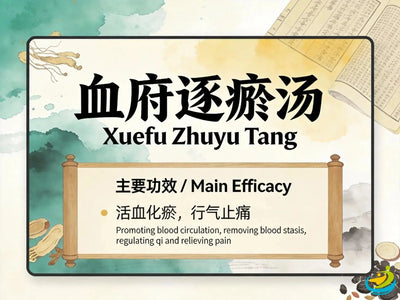
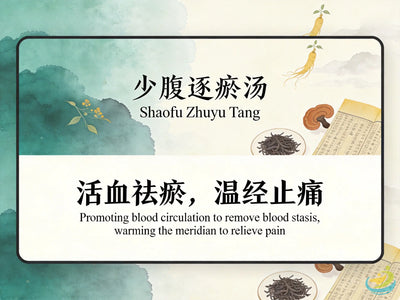
Tong Qiao Huo Xue Tang, Xue Fu Zhu Yu Tang and Shao Fu Zhu Yu Tang are Wang Qingren stasis formulas. Xue Fu Zhu Yu Tang is for the chest. Shao Fu Zhu Yu Tang is for the lower abdomen. This formula unblocks the upper orifices.

For educational reference only, based on traditional pattern differentiation — not a substitute for professional advice.

Clinical Modifications for Tong Qiao Huo Xue Tang

1. For Dominant Pain

For severe headache or limb pain, raise the blood-moving herbs (Tao Ren, Hong Hua) or add the analgesic blood-movers Ru Xiang and Mo Yao. For a fixed headache (migraine), add guide herbs — Chuan Xiong already guides to the head; add Chai Hu for left-side pain, Yu Jin for right-side, to focus the force. With dizziness, add Tian Ma and Gou Teng to calm the wind — treating branch and root together.

2. For Facial Spots and Rosacea

For deep-colored spots, add the spot-fading, wind-channel-opening Bai Zhi and Bai Jiang Can. For rosacea (a red nose, some lung heat), add Huang Qin and Sang Bai Pi to clear lung heat, plus Xin Yi Hua to open the nose's channels. For the depressed mood so common in spot patients, add the liver-soothing Chai Hu and Xiang Fu — freeing the qi lets the blood move and helps fade the spots.

3. For Ear and Eye Disorders

For tinnitus and deafness, add the orifice-opening Shi Chang Pu and Yuan Zhi, plus Ge Gen, which widens vessels and improves ear circulation. For failing vision from eye-ground stasis, add the vision-benefiting, blood-moving Ju Hua and Gou Qi Zi, plus Dan Shen to improve the fundus circulation and absorb the stasis. Since many ear/eye patients are older with liver-kidney deficiency, add a little Nv Zhen Zi and Han Lian Cao so the long-term blood-moving doesn't tax the liver and kidney.

Tong Qiao Huo Xue Tang

4. For Whole-Body Symptoms

For qi-blood deficiency (fatigue, palpitations), add a little Huang Qi and Dang Shen — blood-movers spend some qi, and building the qi lets it push the stasis ("build the qi to move the blood"). For poor digestion, add Bai Zhu and Fu Ling to protect the spleen. For a cold, chilly patient, raise the ginger or add Gui Zhi to warm the yang — much limb cold is cold-constriction stasis, and warming the yang helps dissolve it.

What the Science Suggests

1. Activating Blood and Improving Circulation

Modern pharmacology supports the blood-activating action. Chi Shao, Chuan Xiong, Tao Ren, and Hong Hua widen vessels, lower blood viscosity, reduce platelet aggregation, and help prevent thrombus — improving circulation of the head, face, and limbs. In cerebral research the formula raises cerebral blood flow and improves microcirculation, which is how it helps post-head-trauma sequelae and migraines. In skin it improves facial circulation and nutrition and promotes pigment absorption, fading spots and easing rosacea — the modern echo of "activate blood, resolve stasis, nourish the skin."

2. Opening Orifices and Nerve Repair

She Xiang and Lao Cong show newer findings. She Xiang can cross the blood-brain barrier, act on the central nervous system, and promote nerve repair and regeneration — relevant to tinnitus, deafness, and failing vision: it improves inner-ear microcirculation and auditory-nerve repair. Lao Cong's warmth improves peripheral-nerve circulation, helping numb limbs and peripheral neuropathy. The formula also has anti-inflammatory action, supporting the treatment of inflammation-driven stasis — rosacea's redness, for instance, eases through better local circulation and less inflammation.

3. Newer Clinical Uses

Its range has widened well beyond tradition: in coronary heart disease and angina, where much disease involves stasis, it improves cardiac circulation and eases chest pain and tightness alongside standard treatment; in diabetic retinopathy and retinal vein obstruction, it improves fundus circulation, helps absorb stasis, and protects vision, with clinical support; and in hair loss (seborrheic and patchy alopecia) tied to poor scalp circulation, it improves the scalp's blood flow and follicle nutrition — a new extension of the original formula.

4. Safety and Quality Control

Safety assessment finds it generally safe when the pattern is correct and use is proper; side effects are few, mainly mild gastrointestinal upset that resolves on stopping. The contraindications for pregnancy and special groups are confirmed — use in pregnancy raises miscarriage risk and is forbidden. Modern technology also enables quality control by assaying the main active markers — Chuan Xiong's ferulic acid and Hong Hua's hydroxysafflor yellow A — so batches are consistent in both effect and safety, making the formula's use more standardized.

Safety Considerations

1. Special Groups

  • Pregnancy — Tao Ren, Hong Hua, and She Xiang strongly activate blood and can contract the uterus, risking miscarriage or early labor. Absolutely forbidden.
  • Breastfeeding — the amounts of She Xiang and Tao Ren are small, but use only under a doctor, to keep the herbs out of the milk.
  • Minors — their qi-blood is young and tender; the formula's attack can harm the upright. Any use must be doctor-led, with adjusted doses.
  • Heavy periods — don't take it during a heavy flow; the blood-movers would increase the loss. Take it after the period ends to treat the stasis.

2. Pattern Mismatch

It's for "stasis blocking the head orifices," so a wrong pattern is contraindicated. If there's no stasis — an ordinary cold headache from wind-cold — it won't help and can delay treatment. With marked qi-blood deficiency (fatigue, palpitations, pallor), blood-moving alone can worsen it; build the qi-blood first or add qi-blood herbs under a doctor, not alone. In heat-leaning people (dry mouth, mouth sores, dry stools), the warming herbs (Lao Cong, ginger, She Xiang) can aggravate; adjust with heat-clearing herbs rather than using it alone.

3. While Taking It

Avoid overwork (it drains the qi-blood and blunts the effect — rest and sleep well, especially with headache or numbness). Keep the emotions steady — anger and depression worsen stasis; walking or tai chi helps the qi-blood move. If side effects appear (stomach pain, nausea, excessive menses), stop and consult rather than pushing on. And if you take other drugs — especially anticoagulants — check with a doctor: the formula's blood-activating action plus an anticoagulant can raise bleeding risk and may need dose adjustment.

Questions About Tong Qiao Huo Xue Tang

Q1: What is Tong Qiao Huo Xue Tang? Are Xue Fu Zhu Yu Tang and Bu Yang Huan Wu Tang the same?
Tong Qiao Huo Xue Tang (通窍活血汤) is a classic formula from the Yi Lin Gai Cuo, centered on invigorating blood, transforming stasis, opening orifices and freeing the collaterals for blood stasis in the head and face with hair loss, rosacea, chronic deafness and vitiligo. Xue Fu Zhu Yu Tang invigorates blood, dispels stasis and regulates qi, leaning to blood stasis in the chest. Bu Yang Huan Wu Tang tonifies qi and invigorates blood, leaning to qi deficiency with blood stasis sequelae of stroke. The three cannot be interchanged by equal weight. Write Tong Qiao Huo Xue Tang. Contraindicated in pregnancy; use caution with bleeding.
Q2: What is the composition and traditional use of Tong Qiao Huo Xue Tang?
Classic composition: Chi Shao 3 g, Chuan Xiong 3 g, Tao Ren 9 g, Hong Hua 9 g, Lao Cong 3 roots, Xian Jiang 9 g, Hong Zao 7 pieces, She Xiang 0.15 g. It acts to invigorate blood, transform stasis, open orifices and free the collaterals. It is used for hair loss, red and painful eyes, rosacea, chronic deafness, purple and white vitiligo, gingival ulcerations and women's dry blood consumption from blood stasis in the head and face. Tao Ren, Hong Hua, Chi Shao and Chuan Xiong invigorate blood; scallion and ginger free yang; She Xiang opens orifices; yellow wine frees the collaterals; red dates moderate.
Q3: How do you choose raw versus prepared? Can Xue Fu Zhu Yu Tang replace it?
Tao Ren is ground to mud; She Xiang is added later. Xue Fu Zhu Yu Tang leans to the chest without opening orifices; it cannot replace opening orifices by equal weight. Commercial products follow regulated compounding; do not self-modify.
Q4: What is the usual dosage? Can it be drunk daily as a blood-invigorating orifice tea?
Ancient use was the first seven ingredients decocted in yellow wine, She Xiang added and boiled twice more, taken at bedtime. Modern use adjusts proportions; common as decoction, with dose named by a practitioner. It is not a four-season “Orifice-opening Blood-invigorating tea.” Contraindicated in pregnancy and bleeding. Head and face blood stasis needs a practitioner to name a short course; it does not replace assessment.
Q5: What are the contraindications? Can it be used in pregnancy?
Contraindicated in pregnancy. Use caution in unceasing bleeding and yin deficiency with blood heat. Contains She Xiang. Stop if bleeding or palpitations appear. Hair loss with severe pain or abnormal bleeding need immediate medical care.
Q6: Can Tong Qiao Huo Xue Tang invigorate blood, transform stasis, open orifices and free the collaterals?
It can help hair loss, rosacea and chronic deafness from blood stasis in the head and face. It invigorates blood, transforms stasis, opens orifices and frees the collaterals—not a specific for every hair loss or every skin disease.
Q7: Can Tong Qiao Huo Xue Tang be drunk daily as a blood-invigorating, orifice-opening or stasis-transforming tea?
Head and face blood stasis may enter a short formula; pregnancy and bleeding are contraindicated. “Musk must open orifices” does not replace dermatological assessment. Invigorating blood, transforming stasis, opening orifices and freeing the collaterals should be named by a practitioner with form and dose.
Q8: How do you choose among Tong Qiao Huo Xue Tang, Xue Fu Zhu Yu Tang, Bu Yang Huan Wu Tang, Tao Hong Si Wu Tang and Shi Xiao San?
Tong Qiao Huo Xue Tang invigorates blood and transforms stasis while opening orifices, containing Tao Ren, Hong Hua, Chi Shao, Chuan Xiong, She Xiang, scallion and ginger, leaning to blood stasis in the head and face. Xue Fu Zhu Yu Tang invigorates blood, dispels stasis and regulates qi, leaning to blood stasis in the chest. Bu Yang Huan Wu Tang tonifies qi and invigorates blood, leaning to qi deficiency with blood stasis. Tao Hong Si Wu Tang nourishes blood and invigorates blood, leaning to blood deficiency with blood stasis. Shi Xiao San invigorates blood and stops pain, leaning to blood stasis pain. Head and face blood stasis favors Tong Qiao Huo Xue Tang; chest stasis favors Xue Fu; qi deficiency favors Bu Yang Huan Wu; blood deficiency favors Tao Hong Si Wu; pain favors Shi Xiao. They may be referenced after pattern differentiation; pregnancy forbids Tong Qiao Huo Xue Tang.
Q9: How is Tong Qiao Huo Xue Tang commonly modified? What is the representative use?
The original already contains invigorating blood and opening orifices. Hair loss may increase Tao Ren and Hong Hua; rosacea may add Dan Pi. Write Tong Qiao Huo Xue Tang; do not replace the orifice-opening action with an equal weight of Xue Fu Zhu Yu Tang.
Q10: How do you choose and store Tong Qiao Huo Xue Tang?
Choose regulated Chinese patent medicines or classically compounded decoctions that list the composition (including She Xiang). Moldy, damp, or abnormal-smelling lots are discarded. Store cool and dry. Buy “Tong Qiao Huo Xue Tang”; do not replace invigorating blood, transforming stasis, opening orifices and freeing the collaterals with an equal weight of Xue Fu Zhu Yu Tang or Bu Yang Huan Wu Tang.

General Questions

How do I choose the right formula?
TCM formulas are traditionally selected according to individual pattern differentiation rather than by symptom alone. If you're not sure which formula fits your presentation, take our AI Assessment below for a personalized starting point, then confirm with a qualified TCM practitioner.
What are concentrated herbal granules?
Concentrated herbal granules are made by decocting raw herbs, then extracting and concentrating the resulting liquid into a fine granule or powder form. This preserves the same active compounds as a traditional decoction while making the herbs far easier to store, measure, and prepare.
How should I take these products?
Dissolve the recommended amount of granules in hot water, stir until fully dissolved, and drink while warm — following the dosage and frequency advised by your TCM practitioner or as stated on the product packaging.
Are concentrated herbal granules equivalent to traditional decoctions?
Concentrated granules are produced from the same herbs and processed to retain their active compounds, so they are traditionally regarded as a convenient alternative to decoctions rather than a different remedy. Some practitioners note subtle differences in strength or absorption between the two forms, so your TCM practitioner may adjust dosage accordingly.
Are your products authentic?
Yes. HJMEDICAL sources its concentrated granules exclusively from established, reputable manufacturers such as Nong's and Hoi Tin, both long-standing names in the TCM granules industry, with GMP compliance stated directly on their packaging.
Are HJMEDICAL products manufactured under GMP standards?
HJMEDICAL sources its concentrated granules from established, reputable manufacturers such as Nong's and Hoi Tin, both long-standing names in the TCM granules industry. GMP compliance for these products is stated directly on their packaging.
Do you ship internationally?
Yes — we ship worldwide! Every order goes out via Hong Kong Post, and your exact shipping cost and estimated delivery time for your address are calculated and shown right at checkout, so there are never any surprises. We also offer free shipping once your order reaches our free-shipping threshold, so it's easy to stock up on your favorite formulas and save.
Can I take more than one formula at the same time?
Some formulas are traditionally combined, while others overlap or counteract each other. We recommend checking with a qualified TCM practitioner before combining formulas, especially if you are already taking other medication.
Are these products suitable during pregnancy or breastfeeding?
Some TCM formulas are not suitable during pregnancy or breastfeeding. Please consult a qualified TCM practitioner or your doctor before use if you are pregnant, trying to conceive, or nursing.
Do these products replace medical treatment?
No. These products are traditional herbal supplements intended to support wellbeing according to TCM principles — they are not a replacement for professional medical diagnosis or treatment. Please consult a qualified TCM practitioner or licensed healthcare provider before starting, stopping, or combining any treatment, especially if you have a chronic condition.
Medical Disclaimer

For general TCM education only — not medical advice. Consult a qualified TCM practitioner or licensed healthcare provider before use, especially if pregnant, nursing, on medication, or managing a chronic condition.

Not sure which formula is right for you?

Take the AI Assessment

最新文章

Login

Forgot your password?

Don't have an account yet?
Create account

Tong Qiao Huo Xue Tang: Opening the Orifices and Invigorating Blood