Exterior-Releasing Formulas

杏苏散 · Xìng Sū Sǎn

Xing Su San

Formula for cool-dryness attacking the Lungs. Characterised by dry cough or cough with thin white sputum, nasal congestion, slight headache and aversion to cold, without significant Heat signs.

View formula profile →
Last reviewed August 2026
Formula CategoryExterior-Releasing Formulas
Primary PatternWind-Cold
Primary FunctionDisperse cool-dryness, regulate Lung Qi, transform phlegm
Primary Therapeutic PrincipleGently disperse cool-dryness, regulate Lung Qi and transform thin phlegm
Main HerbsBitter Apricot Kernel · Perilla Leaf · Peucedanum Root · Platycodon Root · Bitter Orange · Tangerine Peel · Poria / Hoelen · Pinellia Rhizome · Fresh Ginger · Jujube / Chinese Date · Licorice Root
Classical SourceWen Bing Tiao Bian (Wu Jutong, Qing dynasty)

Why This Formula?

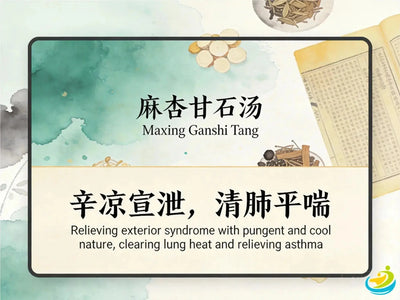
Traditionally selected for cool-dryness, where dryness is accompanied by chills, nasal congestion and thin sputum rather than heat signs — the counterpart to the warm-dryness formulas Sang Xing Tang and Qing Zao Jiu Fei Tang, and quite distinct from Ma Xing Shi Gan Tang's frank Lung Heat.

Traditionally selected for cool-dryness, where dryness is accompanied by chills, nasal congestion and thin sputum rather than heat signs — the counterpart to the warm-dryness formulas Sang Xing Tang and Qing Zao Jiu Fei Tang, and quite distinct from Ma Xing Shi Gan Tang's frank Lung Heat.

What Is Xing Su San?

1. Background of Origin

Xing Su San (杏苏散), or Apricot Kernel and Perilla Leaf Powder, is a classic Qing-dynasty Chinese herbal formula from Wu Jutong’s Wen Bing Tiao Bian (Systematic Differentiation of Warm Diseases, 1798). It belongs to the category of formulas that gently disperse cool-dryness and regulate Lung qi.

This formula is designed for externally contracted cool-dryness, a pattern common in autumn and early winter. It addresses mild chills without sweating, slight headache, dry cough or cough with thin watery sputum, nasal congestion, and dry throat. By combining Perilla Leaf and Apricot Kernel with supporting herbs, Xing Su San lightly disperses cool-dryness, restores Lung qi flow, transforms thin mucus, and stops coughing—making it suitable for pattern-matched cases of upper respiratory infections and seasonal dry cough.

Xing Su San: Lightly Venting Cool-Dryness, Diffusing the Lung and Resolving Phlegm — Precise Resolution of Aversion to Cold Without Sweating, Cough with Thin Phlegm, and Autumn Chronic Bronchitis | HJMEDICAL

2. Respiratory Issues

  • The "Post-Cold" Cough: This formula is excellent for that lingering cough that stays after your main cold symptoms (like the chills) have faded.

    • How it looks: You don't feel "sick" anymore, but you can't stop coughing up clear, thin phlegm. Your nose might still be stuffy, and your throat feels very dry.
    • How it helps: By clearing out the remaining "cool-dryness" and resetting your Lung energy, it stops the cough and clears the mucus.
  • Chronic Bronchitis: For people with long-term bronchitis, their symptoms often flare up when the weather turns cold and dry.

    • How it looks: You experience a worsening cough with clear, watery phlegm and feel a bit chilled.
    • How it helps: Xing Su San acts as a supportive treatment. It helps clear the mucus and moves the "stuck" energy in your chest, making it easier to breathe and reducing inflammation.
Xing Su San

3. Ear, Nose, and Throat (ENT) Issues

  • Allergic Rhinitis (Seasonal Allergies): Many people find their allergies get worse in the late autumn or winter when the air is sharp and dry.

    • How it looks: Constant sneezing, a runny nose with clear discharge, and a stuffy nose, often combined with a dry throat and a nagging cough.
    • How it helps: It helps your body adapt to the cool-dry air. By "venting" the dryness and clearing the airways, it reduces the sneezing and nasal congestion.
  • Dry and Sore Throat: This is for a specific type of sore throat caused by catching a dry chill.

    • How it looks: Your throat feels parched and painful, you have a phlegmy cough, and you generally feel a bit chilled.
    • How it helps: Instead of just "cooling" the throat, the formula "opens up" the Lungs and hydrates the area. This relieves the pain and scratchiness by getting your body's natural fluids moving again.

Herb Composition (Sovereign / Minister / Assistant / Envoy)

1. The Leaders (Chief Herbs) — Zi Su Ye and Xing Ren

These two herbs are the "commanders" of the formula, working together to reset your respiratory system.

  • Zi Su Ye (Perilla Leaf): This herb is warm and spicy. Its main job is to push "wind-cold" out of your body. Think of it as opening the windows to let a cold draft escape. It helps your lungs breathe freely again and is a go-to for coughs caused by catching a chill.
  • Xing Ren (Apricot Kernel): While Zi Su Ye helps open things up, Xing Ren focuses on pushing energy (Qi) downward. This is essential for stopping a cough or wheezing.
  • The Perfect Balance: In Traditional Chinese Medicine, the lungs need to both "expand" and "descend." By pairing these two—one opening up and one pushing down—they fix the rhythm of your breathing and stop the coughing fit.

2. The Supporters (Deputy Herbs) — Ban Xia and Fu Ling

These herbs act as the "cleanup crew," focusing on getting rid of the mucus and phlegm that make you cough.

  • Ban Xia (Pinellia): This is a powerful herb for drying up "dampness" and dissolving phlegm. If your cough feels heavy or productive, Ban Xia helps clear out the gunk so you can breathe clearly. It also helps settle the stomach.
  • Fu Ling (Poria): Instead of just clearing the phlegm in the lungs, Fu Ling goes to the source—the digestive system. It helps your body process fluids better and drains excess moisture through urination. By strengthening your "middle," it prevents new phlegm from forming in the first place.

3. The Helpers (Assistant Herbs) — Zhi Qiao, Qian Hu, Sheng Jiang, and Da Zao

These herbs help the leaders work more effectively and ensure your whole body feels better.

  • Zhi Qiao (Bitter Orange): This herb moves energy (Qi) and relieves that heavy, "stuck" feeling in your chest or stomach. It helps the leaders clear the pathways so your breath flows smoothly.
  • Qian Hu (Peucedanum Root): This is another great herb for directing energy downward and clearing out phlegm. It’s especially helpful if your cough is caused by a mix of different environmental factors.
  • Sheng Jiang (Fresh Ginger): A kitchen favorite, it helps Zi Su Ye kick out the cold. It also warms up your stomach and helps settle any nausea or "upward" energy that makes you cough.
  • Da Zao (Jujube): This sweet fruit nourishes your body and keeps your energy levels up. It acts as a "buffer," making the formula gentler on your system so you can take it comfortably for a longer period if needed.
Xing Su San

4. The Harmonizer (Envoy Herb) — Gan Cao

Gan Cao (Licorice) is the "peacemaker" found in many classic formulas.

  • Soothing the Throat: It has a natural ability to moisten the lungs and stop a scratchy cough.
  • Teamwork: Its most important job is to make sure all the other herbs work together perfectly as a team.
  • Protection: It protects your stomach from being irritated by the stronger herbs, ensuring the formula is both safe and effective for your digestion.

Clinical Presentation in TCM

1. What’s Going Wrong in the Body? (Pathomechanism)

The main issue Xing Su San targets is "Cool-Dryness." This usually happens when you are exposed to cold, dry air (like in late autumn or winter).

  • The Respiratory Block: This cool-dryness attacks your body's outer defense system and the Lungs. It prevents your Lungs from "expanding and descending" correctly.
  • The Phlegm Problem: Because the natural flow of fluids is interrupted, they start to clump together and turn into phlegm. This "gunk" blocks your airways, leading to a persistent cough.
  • Stomach Upset: This blockage can also affect your digestion, making you feel nauseous or like there is a heavy weight on your chest.

2. What the Formula Does (Actions)

Xing Su San is designed to gently clear out the cool-dryness while cleaning up the phlegm.

  • Venting the Sickness: It helps "vent" the cold and dry pathogens out through the surface of your body, kind of like letting a drafty room air out.
  • Restoring the Flow: It gets your Lung energy (Qi) moving in the right direction again. By clearing out the phlegm and opening the airways, it stops the coughing and allows you to breathe easily.
  • Regulating the System: It settles your midsection, relieving that tight feeling in your chest and calming any nausea.
Xing Su San: Lightly Venting Cool-Dryness, Diffusing the Lung and Resolving Phlegm — Precise Resolution of Aversion to Cold Without Sweating, Cough with Thin Phlegm, and Autumn Chronic Bronchitis | HJMEDICAL

3. Who This Formula Is For (Indications)

This is the classic remedy for a cold caused by Cool-Dryness. You might need it if you have:

  • Chills and Skin: You feel chilled (aversion to cold) but you aren't sweating.
  • The Head: A mild, nagging headache.
  • The Cough: You have a cough that produces thin, watery phlegm.
  • Nose and Throat: Your nose feels stuffed up, but your throat feels very dry.
  • Physical Signs: A practitioner would see a thin white coating on your tongue and feel a "wiry" pulse (like a tight guitar string).

Summary: Unlike a "warm" cold where you feel hot and have a sore throat, a cool-dry cold makes you feel chilled and "dried out" with a phlegmy cough. Xing Su San is specifically designed to warm you up, moisten the dryness, and clear the mucus.

The Mechanism in Classical Theory

1. Opening the Lugs and Clearing the Surface

The combination of Zi Su Ye and Xing Ren is the "secret sauce" of this formula. They work together using a "push and pull" strategy:

  • Opening Up: Zi Su Ye has a warm, spicy nature that helps push the "cool-dryness" out of your body's surface. Think of it as opening the doors to let the sickness escape.
  • Directing Downward: Xing Ren has a bitter, warm quality that helps guide your Lung energy (Qi) downward.
  • The Teamwork: When one pushes up/out and the other pulls down, they fix the "breathing rhythm" of your Lungs. This is the most important step for stopping a cough caused by catching a dry chill.

2. Clearing Mucus and Moving Energy

This group of herbs acts like a cleanup crew for your airways, focusing on the "gunk" (phlegm) and the feeling of being "stuffed up":

  • Drying and Draining: Ban Xia dries up the mucus, while Fu Ling strengthens your digestion to stop new mucus from forming at the source.
  • Unblocking Traffic: Zhi Qiao and Qian Hu help get your internal energy moving again.
  • The Result: Together, they clear out the phlegm obstructing your breathing, stop the cough, and relieve that heavy, tight feeling in your chest.

3. Balancing Your Digestion (Spleen and Stomach)

Sheng Jiang, Da Zao, and Gan Cao are added to make sure your stomach stays happy while you recover.

  • Settling the Stomach: Sheng Jiang (Fresh Ginger) helps kick out the cold and stops you from feeling nauseous.
  • Boosting Strength: Da Zao (Jujube) and Gan Cao (Licorice) nourish your "middle" and give you the energy needed to heal.
  • Safety Buffer: They harmonize all the herbs, making the formula gentler on your system and ensuring your body absorbs the medicine effectively without any stomach upset.
Xing Su San: Lightly Venting Cool-Dryness, Diffusing the Lung and Resolving Phlegm — Precise Resolution of Aversion to Cold Without Sweating, Cough with Thin Phlegm, and Autumn Chronic Bronchitis | HJMEDICAL

4. Total Body Recovery

Instead of just treating one symptom, the whole formula works as a complete system. It handles everything from the initial chill and headache to the deep-seated phlegm and digestive sluggishness. By getting your Lungs, Spleen, and Stomach back in sync, Xing Su San helps your body clear the "cool-dryness" naturally and restores your health from the inside out.

Clinical Comparison Table

Compare Xing Su SanSang Xing TangSang Ju YinQing Zao Jiu Fei TangMa Xing Shi Gan Tang
Primary Function Disperse cool-dryness, regulate Lung Qi, transform phlegmDisperse warm-dryness, moisten Lungs, stop coughDisperse Wind-Heat, stop coughClear Dryness, moisten Lungs, rescue Lung Yin and QiClear Lung Heat
Formula Category Exterior-Releasing FormulasExterior-Releasing FormulasExterior-Releasing FormulasHeat-Clearing FormulasHeat-Clearing Formulas
Typical TCM Pattern Wind-ColdWind-HeatWind-HeatLung HeatLung Heat
Main Conditions Cough, Excessive Mucus, Nasal CongestionDry Cough, Dry Mouth & Throat, Sore ThroatCough, Dry Cough, Sore Throat, FeverDry Cough, Sore Throat, Dry Mouth & ThroatCough, Asthma & Wheezing
Main Herbs Bitter Apricot Kernel · Perilla Leaf · Peucedanum Root · Platycodon Root · Bitter Orange · Tangerine Peel · Poria / Hoelen · Pinellia Rhizome · Fresh Ginger · Jujube / Chinese Date · Licorice RootMulberry Leaf · Bitter Apricot Kernel · Glehnia / Adenophora Root · Thunberg Fritillaria Bulb · Prepared Soybean · Gardenia Peel · Pear PeelMulberry Leaf · Chrysanthemum Flower · Forsythia Fruit · Mentha / Peppermint · Platycodon Root · Bitter Apricot Kernel · Reed Rhizome · Licorice RootMulberry Leaf · Gypsum · Ophiopogon Tuber · Donkey-hide Gelatin · Black Sesame Seed · Bitter Apricot Kernel · Loquat Leaf · Ginseng Root · Licorice RootEphedra Herb · Gypsum · Bitter Apricot Kernel · Honey-fried Licorice
Classical Source Wen Bing Tiao Bian (Wu Jutong, Qing dynasty)Wen Bing Tiao Bian (Wu Jutong, Qing dynasty)Wen Bing Tiao Bian (Systematic Differentiation of Warm Pathogen Diseases, Wu Jutong, 1798)Yi Men Fa Lu (Qing dynasty, Yu Chang)Shang Han Lun (Zhang Zhongjing, Eastern Han)

How to tell them apart

Xing Su San addresses cool-dryness. Sang Xing Tang and Qing Zao Jiu Fei Tang address warm-dryness. Ma Xing Shi Gan Tang is for Lung Heat with wheezing. Sang Ju Yin is for mild Wind-Heat cough.

For educational reference only, based on traditional pattern differentiation — not a substitute for professional advice.

Clinical Modifications for Xing Su San

1. If You Have a Strong "Wind-Cold" Chill

If your symptoms include a very strong aversion to cold and you aren't sweating at all, the formula can be strengthened to "kick out" the cold more aggressively:

  • Ma Huang (Ephedra) and Gui Zhi (Cinnamon Twig): These are added to turn up the heat. Ma Huang helps open the pores and calm wheezing, while Gui Zhi warms the channels and releases the muscle layer.
  • The Result: Together with Zi Su Ye, they work as a powerful team to break through the chill, induce a light sweat, and clear the cold from your system.

2. If the Phlegm and Mucus are Heavy

If your cough feels very "wet" or productive and you feel heavy or bloated, you likely have a lot of "dampness" in your system. To fix this, extra drying herbs are added:

  • Hou Po (Magnolia Bark) and Cang Zhu (Atractylodes): Hou Po is excellent at drying dampness and clearing the "stuck" feeling in your chest, while Cang Zhu strengthens your Spleen to stop the body from making more mucus.
  • The Result: These additions turn the formula into a high-powered cleanup crew, effectively drying up heavy phlegm and clearing the airways.
Xing Su San

3. If You Feel Very Bloated or Stressed (Qi Stagnation)

If your cough is accompanied by a lot of pressure in your chest, frequent burping, or a tight feeling in your stomach, energy-moving herbs are needed:

  • Mu Xiang (Costus Root) and Xiang Fu (Cyperus Rhizome): Mu Xiang is a specialist at moving energy in the digestive tract and stopping pain, while Xiang Fu "smooths out" the Liver energy and relieves tension.
  • The Result: These herbs boost the "pump" effect of the formula, clearing out the "stuck" energy (Qi) that causes chest tightness and abdominal bloating.

What the Science Suggests

1. What Science Says About the Herbs (Pharmacological Research)

Modern studies have looked into how the individual ingredients in Xing Su San work at a biological level. Here is what the research tells us:

  • Zi Su Ye (Perilla Leaf): Scientists have found that the essential oils in this leaf have natural antibacterial, antiviral, and anti-allergic properties. This supports its traditional use as a first line of defense against seasonal bugs.
  • Xing Ren (Apricot Kernel): This herb contains a compound called amygdalin, which has a direct effect on the "cough center" in the brain. It helps tell the body to stop the coughing reflex and calms the airways.
  • Ban Xia (Pinellia): Research shows it can calm the stomach's "vomiting center" to stop nausea. Its natural alkaloids also help break down phlegm and reduce inflammation in the respiratory tract.
  • Fu Ling (Poria): This mushroom-like herb is known for its immune-regulating and diuretic effects. It helps strengthen your body's natural defenses and assists in flushing out excess fluid metabolism.
Xing Su San

2. Proven Results in Real-World Patients (Clinical Efficacy)

Many clinical studies have confirmed that Xing Su San is highly effective for treating seasonal coughs and related respiratory issues:

  • Solving the "Post-Cold" Cough: For patients whose cold has passed but who are left with a lingering, phlegmy cough, this formula has shown excellent results. Clinical data shows it significantly reduces the amount of phlegm and quiets the cough.
  • Managing Bronchitis: For people with chronic bronchitis who experience a sudden "flare-up," adding Xing Su San to their treatment plan helped shorten the time they were sick and reduced overall lung inflammation.
  • Improving Quality of Life: By clearing the airways and stopping persistent coughing, the formula helps patients sleep better and feel more energetic during recovery.

In summary: The time-tested wisdom of Xing Su San is backed by modern science. It remains a reliable and effective tool for treating seasonal "cool-dryness" and getting your respiratory system back on track safely.

Safety Considerations

1. Dietary Precautions

While taking Xing Su San, avoid raw/cold and greasy foods (e.g., cold drinks, fried foods) that damage spleen‑stomach yang, impair digestion and herb absorption, or generate phlegm‑dampness and worsen cough. Maintain a light, warm, easily digestible diet to support recovery.

2. Special Populations & Monitoring

Use Xing Su San with caution in pregnancy—take only under physician guidance (some herbs like Banxia have toxicity). Those with spleen‑stomach deficiency‑cold who develop epigastric discomfort, abdominal pain, or diarrhea should stop and consult a physician for dose adjustment or alternative therapy.

Questions About Xing Su San

Q1: What are the actions of Xing Su San?
Xing Su San has the actions of gently dispersing Cool-Dryness, disseminating Lung Qi, and transforming phlegm. It is the classic formula for externally contracted Cool-Dryness attacking the Lung.
Q2: Which modern diseases is Xing Su San suited to?
Modern TCM clinical practice commonly applies it to individuals whose pattern differentiation falls within Cool-Dryness or mild Wind-Cold with phlegm, including upper respiratory tract infections, chronic bronchitis, emphysema, and autumn dry coughs with thin watery phlegm and chills.
Q3: Is Xing Su San suitable for improving cough with thin phlegm and mild chills?
For presentations of mild headache, aversion to cold without sweating, cough with thin watery white phlegm, nasal congestion, dry throat without much thirst, a white tongue coating, and a wiry pulse — in those whose pattern differentiation confirms Cool-Dryness — TCM commonly applies Xing Su San as an adjunct. It cannot replace standard medical treatment.
Q4: Who should not take Xing Su San?
Those with Warm-Dryness patterns, Wind-Heat, Lung Yin deficiency dry cough, or severe external Cold with internal fluid retention are generally not suitable. The formula is warm and dispersing; using it for Heat or severe deficiency patterns is inappropriate. Use should be assessed by a qualified TCM physician.
Q5: How does Xing Su San differ from Sang Xing Tang?
Xing Su San treats Cool-Dryness (chills, thin watery phlegm, white coating) with warming and dispersing herbs. Sang Xing Tang treats Warm-Dryness (mild fever, dry cough with little sticky phlegm, thirst, red tongue) with cooling and moistening herbs. The key distinction is the temperature nature of the Dryness pathogen.
Q6: Can Xing Su San help with autumn coughs that feel cold?
Yes, it is classically indicated for Cool-Dryness contracted in autumn that constrains the Lung, producing cough with thin phlegm and mild exterior Cold signs. It gently disperses the pathogen while transforming the resulting phlegm.
Q7: What are the main ingredients of Xing Su San?
The classical formula includes Xing Ren (Apricot kernel) and Zi Su Ye (Perilla leaf) as chief herbs to disperse Cool-Dryness and descend Lung Qi, supported by Qian Hu, Jie Geng, Zhi Ke, Ban Xia, Chen Pi, Fu Ling, Gan Cao, Sheng Jiang, and Da Zao to transform phlegm, regulate Qi, and harmonize.
Q8: Is Xing Su San suitable for long-term use?
It is generally used for a relatively short course under professional supervision until the Cool-Dryness and phlegm resolve. Prolonged use of its warm, drying components is not ideal if Yin or fluids become depleted.
Q9: How does Xing Su San address both exterior Cool-Dryness and internal phlegm?
Acrid-warm herbs such as Zi Su Ye gently disperse the exterior Cool-Dryness, while Xing Ren and the Er Chen Tang components (Ban Xia, Chen Pi, Fu Ling) restore Lung descending function and transform the thin phlegm that forms when fluids are constrained by dryness and cold.
Q10: What lifestyle advice supports the use of Xing Su San?
Protecting against cold and dry winds, keeping the neck and chest warm, avoiding excessive cold drinks, and maintaining moderate indoor humidity help support recovery. Professional guidance remains essential for accurate pattern differentiation and safe use.

General Questions

How do I choose the right formula?
TCM formulas are traditionally selected according to individual pattern differentiation rather than by symptom alone. If you're not sure which formula fits your presentation, take our AI Assessment below for a personalized starting point, then confirm with a qualified TCM practitioner.
What are concentrated herbal granules?
Concentrated herbal granules are made by decocting raw herbs, then extracting and concentrating the resulting liquid into a fine granule or powder form. This preserves the same active compounds as a traditional decoction while making the herbs far easier to store, measure, and prepare.
How should I take these products?
Dissolve the recommended amount of granules in hot water, stir until fully dissolved, and drink while warm — following the dosage and frequency advised by your TCM practitioner or as stated on the product packaging.
Are concentrated herbal granules equivalent to traditional decoctions?
Concentrated granules are produced from the same herbs and processed to retain their active compounds, so they are traditionally regarded as a convenient alternative to decoctions rather than a different remedy. Some practitioners note subtle differences in strength or absorption between the two forms, so your TCM practitioner may adjust dosage accordingly.
Are your products authentic?
Yes. HJMEDICAL sources its concentrated granules exclusively from established, reputable manufacturers such as Nong's and Hoi Tin, both long-standing names in the TCM granules industry, with GMP compliance stated directly on their packaging.
Are HJMEDICAL products manufactured under GMP standards?
HJMEDICAL sources its concentrated granules from established, reputable manufacturers such as Nong's and Hoi Tin, both long-standing names in the TCM granules industry. GMP compliance for these products is stated directly on their packaging.
Do you ship internationally?
Yes — we ship worldwide! Every order goes out via Hong Kong Post, and your exact shipping cost and estimated delivery time for your address are calculated and shown right at checkout, so there are never any surprises. We also offer free shipping once your order reaches our free-shipping threshold, so it's easy to stock up on your favorite formulas and save.
Can I take more than one formula at the same time?
Some formulas are traditionally combined, while others overlap or counteract each other. We recommend checking with a qualified TCM practitioner before combining formulas, especially if you are already taking other medication.
Are these products suitable during pregnancy or breastfeeding?
Some TCM formulas are not suitable during pregnancy or breastfeeding. Please consult a qualified TCM practitioner or your doctor before use if you are pregnant, trying to conceive, or nursing.
Do these products replace medical treatment?
No. These products are traditional herbal supplements intended to support wellbeing according to TCM principles — they are not a replacement for professional medical diagnosis or treatment. Please consult a qualified TCM practitioner or licensed healthcare provider before starting, stopping, or combining any treatment, especially if you have a chronic condition.
Medical Disclaimer

For general TCM education only — not medical advice. Consult a qualified TCM practitioner or licensed healthcare provider before use, especially if pregnant, nursing, on medication, or managing a chronic condition.

Not sure which formula is right for you?

Take the AI Assessment

最新文章

Login

Forgot your password?

Don't have an account yet?
Create account

Xing Su San: Classic TCM Formula for Cool Dryness, Dry Cough & Lung Dryness