
Night Sweats
盜汗 / 盗汗
Sweating that occurs during sleep, commonly associated with yin deficiency.
Quick Facts
| Health Topic | Constitution Care |
|---|---|
| Also Known As | Sweating at night, Night-time sweating, Sleep sweating, Sweat during sleep, Nocturnal sweating |
| Common Symptoms | Sweating that occurs during sleep and often stops after waking. The sweat may soak clothing or bedding, and the person may feel warm or restless before it starts. Dry mouth, warm palms or a thin body frame can appear in longer-standing cases. |
| Related TCM Patterns | Blood Deficiency · Yin Deficiency · Kidney Yin Deficiency |
| Related Classical Formulas | |
| Related Articles | Night Sweats: Syndrome Differentiation and Daily Care |
Night Sweats in Traditional Chinese Medicine
In Traditional Chinese Medicine, night sweats are classically associated with Yin deficiency patterns, including Kidney Yin deficiency. Differentiation looks at whether there is five-heart heat, a red tongue with little coating, tinnitus or lumbar soreness, and whether the sweating is purely nocturnal. Classical formulas are matched to these Yin-related pattern features rather than to night sweating alone. Accompanying signs such as tongue appearance, pulse quality and the presence of heat or cold help distinguish one presentation from another.
TCM Patterns Associated With Night Sweats
The same presentation may be understood through more than one pattern. Pattern differentiation weighs the accompanying signs, not the symptom on its own.
| Pattern | Common Features | Related Formulas |
|---|---|---|
| Blood Deficiency血虛證Deficiency Patterns | A pale or sallow complexion, dry hair or skin, light-headedness on standing, blurred vision, and easy fatigue. In women the menstrual flow is often scanty and pale. Sleep may be light, and the hands and feet can feel numb when tired. Tongue pale and thin; pulse thin and weak. | |
| Yin Deficiency陰虛證Deficiency Patterns | Dry mouth and throat, night sweats or warm palms and soles, a thin body frame, and restlessness that is worse in the afternoon or at night. Sleep may be light, and there is often a preference for cool drinks. Symptoms feel empty rather than forceful. Tongue red with scant coating; pulse thin and rapid. | |
| Kidney Yin Deficiency腎陰虛證Deficiency Patterns | Soreness and weakness of the lower back and knees, tinnitus or dizziness, night sweats, warm palms and soles, and dry mouth or throat that is worse at night. Sleep may be light, and the person often prefers cool drinks. The frame may be thinner. Tongue red with little coating; pulse thin and rapid. |
Classical Formulas Traditionally Associated
Associated with 13 classical formulas
Listed for study. Which formula fits, if any, depends on the pattern rather than the symptom.
Qi Ju Di Huang Wan
杞菊地黃丸 · Qǐ Jú Dì Huáng Wán
Kidney Yin DeficiencyYin-Tonifying FormulasZhi Bai Di Huang Wan
知柏地黃丸 · Zhī Bǎi Dì Huáng Wán
Kidney Yin DeficiencyYin-Tonifying FormulasBai He Gu Jin Tang
百合固金湯 · Bǎi Hé Gù Jīn Tāng
Yin DeficiencyYin-Tonifying FormulasLiu Wei Di Huang Wan
六味地黃丸 · Liù Wèi Dì Huáng Wán
Kidney Yin DeficiencyYin-Tonifying FormulasDang Gui Liu Huang Tang
當歸六黃湯 · Dāng Guī Liù Huáng Tāng
Yin DeficiencyYin-Tonifying FormulasSuan Zao Ren Tang
酸棗仁湯 · Suān Zǎo Rén Tāng
Blood DeficiencyCalm the Shen FormulasTian Wang Bu Xin Dan
天王補心丹 · Tiān Wáng Bǔ Xīn Dān
Yin DeficiencyCalm the Shen FormulasDa Bu Yin Wan
大補陰丸 · Dà Bǔ Yīn Wán
Kidney Yin DeficiencyYin-Tonifying FormulasZuo Gui Wan
左歸丸 · Zuǒ Guī Wán
Kidney Yin DeficiencyYin-Tonifying FormulasMai Wei Di Huang Wan
麥味地黃丸 · Mài Wèi Dì Huáng Wán
Kidney Yin DeficiencyYin-Tonifying FormulasQing Hao Bie Jia Tang
青蒿鱉甲湯 · Qīng Hāo Biē Jiǎ Tāng
Yin DeficiencyHeat-Clearing FormulasZi Yin Jiang Huo Tang
滋陰降火湯 · Zī Yīn Jiàng Huǒ Tāng
Yin DeficiencyYin-Tonifying FormulasQin Jiao Bie Jia San
秦艽鱉甲散 · Qín Jiāo Biē Jiǎ Sǎn
Yin DeficiencyYin-Tonifying FormulasLearn More About Night Sweats
Related Health Topic
Constitution Care — Formulas tailored to individual constitutional patterns such as qi, yin, yang deficiency or stagnation.
Health Topic
See all Constitution Care conditions
Frequently Asked Questions
How does Traditional Chinese Medicine understand night sweats?
In TCM, night sweats (盗汗) are sweats that appear during sleep and often stop after waking. They are most often related to Yin deficiency failing to restrain Yang, so Heat stirs and Body Fluids leak at night. Less commonly, Qi deficiency, lingering Heat or disharmony of Ying and Wei can also cause night sweating. This is distinguished from spontaneous sweating in the daytime.
What are the common TCM patterns of night sweats?
Frequent patterns include Yin deficiency with Fire (night sweats with dry mouth, heat in the palms and soles), Heart-Kidney disharmony, Qi deficiency (sweating with fatigue), and lingering Heat after illness. Accurate pattern differentiation determines the treatment approach.
How does TCM regulate night sweats?
The main principles are to nourish Yin, clear deficiency Heat, consolidate Body Fluids, or tonify Qi according to the pattern. Formulas such as modifications of Dang Gui Liu Huang Tang, Liu Wei Di Huang Wan or Mu Li San may be considered. Sleep hygiene and avoiding late nights are equally important. Internal treatment should be guided by a qualified TCM practitioner.
Related Products
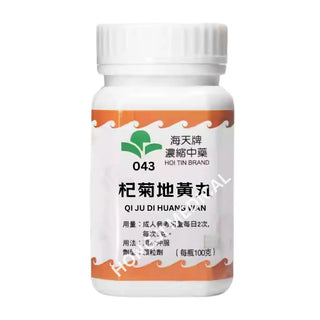 Hoi Tin Qi Ju Di Huang Wan (Lycium and Chrysanthemum Rehmannia Formula) 5:1 Concentrated Granules
$30.50
Hoi Tin Qi Ju Di Huang Wan (Lycium and Chrysanthemum Rehmannia Formula) 5:1 Concentrated Granules
$30.50
 Nong's Qi Ju Di Huang Wan (Lycium and Chrysanthemum Rehmannia Formula) 5:1 Concentrated Granules
$51.25
Nong's Qi Ju Di Huang Wan (Lycium and Chrysanthemum Rehmannia Formula) 5:1 Concentrated Granules
$51.25
 Hoi Tin Zhi Bai Di Huang Wan (Anemarrhena and Phellodendron Rehmannia Formula) 5:1 Concentrated Granules
$22.15
Hoi Tin Zhi Bai Di Huang Wan (Anemarrhena and Phellodendron Rehmannia Formula) 5:1 Concentrated Granules
$22.15
 Nong's Zhi Bai Di Huang Wan (Anemarrhena and Phellodendron Rehmannia Formula) 5:1 Concentrated Granules
$51.25
Nong's Zhi Bai Di Huang Wan (Anemarrhena and Phellodendron Rehmannia Formula) 5:1 Concentrated Granules
$51.25
 Nong's Bai He Gu Jin Tang (Lily Decoction to Preserve the Lungs) 5:1 Concentrated Granules
$125.08
Nong's Bai He Gu Jin Tang (Lily Decoction to Preserve the Lungs) 5:1 Concentrated Granules
$125.08
 Nong's Liu Wei Di Huang Wan (Six-Flavor Rehmannia Formula) 5:1 Concentrated Granules
$50.18
Nong's Liu Wei Di Huang Wan (Six-Flavor Rehmannia Formula) 5:1 Concentrated Granules
$50.18
 Hoi Tin Liu Wei Di Huang Tang (Six-Flavor Rehmannia Decoction) 5:1 Concentrated Granules
$24.93
Hoi Tin Liu Wei Di Huang Tang (Six-Flavor Rehmannia Decoction) 5:1 Concentrated Granules
$24.93
 Nong's Dang Gui Liu Huang Tang (Angelica Six-Yellow Decoction) 5:1 Concentrated Granules
$64.09
Nong's Dang Gui Liu Huang Tang (Angelica Six-Yellow Decoction) 5:1 Concentrated Granules
$64.09
This library is educational. It describes how Traditional Chinese Medicine has traditionally understood these presentations. It is not a diagnosis, and it is not a treatment recommendation.
Back to the Condition Hub