
Shoulder Discomfort
肩周不適 / 肩周不适
Pain or restricted movement in the shoulder area.
Quick Facts
| Health Topic | Pain & Mobility |
|---|---|
| Also Known As | Shoulder ache, Sore shoulder, Shoulder stiffness, Uncomfortable shoulder, Shoulder pain mild |
| Common Symptoms | Discomfort, mild pain or stiffness in one or both shoulders. Raising the arm or reaching behind the back may feel limited, and symptoms can worsen after desk work or sleep posture. Weather change may also influence the sensation. |
| Related TCM Patterns | Dampness |
| Related Classical Formulas | |
| Related Articles | Shoulder Discomfort: TCM Syndrome Differentiation & Care Tips |
Shoulder Discomfort in Traditional Chinese Medicine
In Traditional Chinese Medicine, shoulder discomfort is often discussed with wind-damp or Qi-Blood patterns affecting the channels, though formula coverage in the current set is still limited. Differentiation would consider whether cold or damp weather worsens the symptoms and whether movement is restricted. Accompanying signs such as tongue appearance, pulse quality and the presence of heat or cold help distinguish one presentation from another. This page outlines how the tradition has organised such presentations for educational reference.
TCM Patterns Associated With Shoulder Discomfort
The same presentation may be understood through more than one pattern. Pattern differentiation weighs the accompanying signs, not the symptom on its own.
| Pattern | Common Features | Related Formulas |
|---|---|---|
| Dampness濕阻證Damp Patterns | A heavy, sluggish body feeling, abdominal fullness, sticky sensation in the mouth, and reduced appetite. Stools may be sticky or incomplete, and the person often feels worse in humid weather. There can be oedema of the limbs or a greasy facial sheen. Tongue with a thick greasy white coating; pulse soft or slippery. |
Classical Formulas Traditionally Associated
Associated with 2 classical formulas
Listed for study. Which formula fits, if any, depends on the pattern rather than the symptom.
Learn More About Shoulder Discomfort
Related Health Topic
Pain & Mobility — Formulas that invigorate blood, dispel wind-damp, and ease joint and muscle discomfort.
Health Topic
See all Pain & Mobility conditions
Frequently Asked Questions
How does Traditional Chinese Medicine understand shoulder discomfort?
In TCM, shoulder discomfort (often corresponding to periarthritis of the shoulder or “fifty shoulder”) belongs to the category of Bi syndrome. It is primarily caused by Liver-Kidney deficiency and Qi-Blood insufficiency as the root, combined with invasion of Wind-Cold-Damp, chronic strain, or trauma leading to Qi and Blood stagnation in the shoulder meridians. “Where there is obstruction, there is pain; where there is lack of nourishment, there is also pain.”
What are the common TCM patterns of shoulder discomfort?
The main patterns include Wind-Cold-Damp obstruction (cold pain worse with cold, better with warmth, heavy sensation), Qi and Blood stagnation (fixed stabbing pain, worse at night), Qi-Blood deficiency (dull ache aggravated by fatigue), and Liver-Kidney deficiency (accompanied by low-back or knee weakness). Accurate pattern differentiation by a qualified TCM practitioner is essential.
How does acupuncture help with shoulder discomfort?
Acupuncture unblocks the meridians, moves Qi and Blood, and relieves pain. Common points include Jian Yu (LI15), Jian Liao (TE14), Jian Zhen (SI9) (the “Shoulder Three Needles”), Ashi points, and distal points such as Tiao Kou (ST38). Warm needling or electro-acupuncture may be added according to the pattern. It is used as an adjunct and does not replace proper medical evaluation.
Related Products
 Hoi Tin Juan Bi Tang (Remove Painful Obstruction Decoction) 5:1 Concentrated Granules
$24.93
 Nong's Juan Bi Tang (Remove Painful Obstruction Decoction) 5:1 Concentrated Granules
$44.83
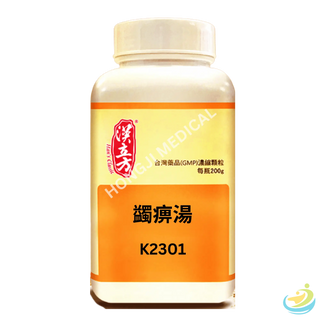 Han's Juan Bi Tang (Removing Obstruction Decoction) 5:1 Concentrated Granules
$47.08
 Han's Shu Jing Huo Xue Tang (Relaxing the Sinews & Invigorating Blood Decoction) 5:1 Concentrated Granules
$64.55
This library is educational. It describes how Traditional Chinese Medicine has traditionally understood these presentations. It is not a diagnosis, and it is not a treatment recommendation.
Back to the Condition Hub