Fruits and seedsTonifyingTritici Fructus

Xiao Mai (Wheat)

A practical guide to Xiao Mai: what it is, how Traditional Chinese Medicine uses it, the classical formulas it appears in, and who should be careful with it.

View Herb Profile →

Last reviewed Oct 29, 2026

Quick Facts

Latin NameTritici Fructus
Chinese Name & Pinyin 小麥 · Xiao Mai
Medicinal PartFruits and seeds
The itemXiao Mai is the dried ripe grain of common wheat. Gan Cao (licorice) and the Da Mai look-alike (barley) are not this drug.
Nature and channelsNeutral, sweet. Enters the Heart, with the Spleen and Kidney. Neutral sweet nourishes the heart, settles the spirit, supplements qi, and eases restlessness.
Pharmacopoeia lineNourishes the heart, supplements the kidney, clears heat, and stops thirst. Used for mild restlessness and irritability.
Pattern cuesLight irritability. Many dreams. Waking easily. Restless stuffy feeling. Restless heat. Thirst. Fatigue. Yellow urine.
In this articleXiao Mai versus Gan Cao. Nourishing the heart and easing restlessness versus supplementing the middle and harmonizing formulas. Why damp-heat should skip it. Home porridge and tea.

What Is Xiao Mai?

Xiao Mai (小麦; Xiǎo Mài; Latin: Tritici Fructus; English: wheat grain) is the dried ripe grain of common wheat — the everyday grain of the flour shop, gathered at the summer harvest and sun-dried, the same wheat a neighbor once doubted could sit in a doctor's prescription for two weeks of restless nights. It is neutral, sweet, enters the Heart channel (with the Spleen and Kidney), and its core actions are to nourish the heart and settle the spirit, and to supplement qi and ease restlessness. It is the gentle grain that steadies a restless mind. The usual amount is 10–30 g in a decoction. It soaks 30 minutes and boils with the other ingredients — no special first, last, or wrapped step. It is not a snack to overeat for its calm effect.

It is not Gan Cao. Licorice is also neutral and sweet, but it centers on supplementing the middle and harmonizing formulas; this wheat grain centers on nourishing the heart and easing restlessness, with a gentler, food-like character. It is not a strong herb; it settles softly. In marked damp-heat of the spleen-stomach — a bitter mouth, a thick greasy coat — or with fever-driven agitation, using it on your own is a poor match. Severe insomnia or confusion needs a clinic first. Do not take it yourself for a long time.

It is used most often for three patterns:

  • Light irritability, many dreams, waking easily, a restless stuffy feeling — without marked illness — the heart undernourished
  • Restless heat, thirst, yellow urine, fatigue with light heart agitation — spleen qi weak
  • Marked damp-heat — a bitter mouth, thick greasy coat, sticky stools — or fever-driven agitation — seek care / skip it

Neutral, sweet, and mild, it is not a daily "calm-grain porridge" to keep eating. Nourishing when there is no deficiency, or in damp-heat, feeds the damp instead of helping.

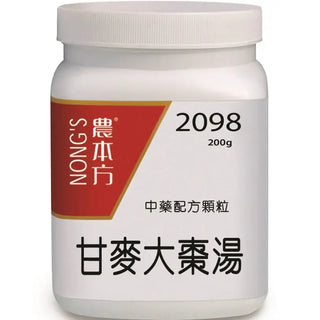
When workplace pressure and long worry unsettle the heart — nights turn to tossing, the chest feels heavy, the mind will not rest — the body needs a soft nourishment, not a forceful change. Xiao Mai is neutral and sweet. It nourishes the heart, settles the spirit, and eases the restlessness, which is why it appears in Gan Mai Da Zao Tang (Licorice, Wheat, and Jujube Decoction)–type formulas. It settles more than it pushes. In marked damp-heat, or with fever-driven agitation, more makes it worse.

Xiao Mai is not a catch-all calm or energy grain. In marked damp-heat, in fever-driven agitation, or without deficiency, using it alone is a poor match. Whether it belongs in a formula, and at what dose, should be decided by a licensed Chinese medicine practitioner after pattern diagnosis.

Xiao Mai

Xiao Mai: Materia Medica Profile

Identification & Quality Standard

Tritici Fructus

Botanical Origin

The dried mature fruit of Triticum aestivum L. (Poaceae).

Production Regions

Produced in most agricultural areas of China.

Quality Requirements

Superior medicinal material is full, white, and powdery.

Macroscopic Features

Fusiform or oblong, 5~8mm long, 2~3mm diameter. Externally yellowish-brown, with longitudinal groove on one side. Texture hard; cross section is white, starchy, with a small embryo at one end. Faint odor, taste sweet.

Main Regions and Quality Identification

Classic texts and trade experience favor wheat from the Huai River basin — several provinces along it — but quality still depends on variety, harvest time, processing, and storage. Good wheat is plump and even, yellowish-white, a light wheat scent, no mold or insect damage, the bran not shedding too much when rubbed. The raw grain is harder at the break; the stir-fried form is darker, looser, with a slight toasted smell. The common look-alike is barley — flatter, harder husk, fainter smell — clearly different in form and smell.

Traditional Properties & Historical Lineage

Nature, Flavour & Channel Tropism

Sweet; CoolHeartSpleenKidney

1. Records in Classic Materia Medica

  • Shen Nong Ben Cao Jing: "is used for clearing heat, stopping thirst, freeing the urine, nourishing the liver qi, and stopping blood leakage."
  • Ming Yi Bie Lu: "nourishes the heart qi, eases restlessness, stops thirst."
  • Ben Cao Gang Mu: "supplements qi, eases restlessness, stops thirst, frees the urine, nourishes the liver qi."
  • Zhong Hua Ben Cao: "nourishes the heart, supplements the kidney, clears heat, stops thirst."

2. How Views of Its Nature Changed

Tang doctors leaned on clearing heat and easing restlessness — for deficiency-heat agitation; doctors after the Song stressed nourishing the heart and supplementing the qi — for long light heart deficiency; Ming-Qing doctors narrowed the range — for light restlessness and heat, not severe excess or emergencies. The refinement keeps it from being a universal remedy.

Xiao Mai

Core Efficacies & Traditional Applications

Traditional Functions

Nourishes the heart and settles emotion, supplements spleen and kidney, relieves restlessness and quenches thirst.

1. Main Use 1: Nourishing the Heart and Settling the Spirit

(1) Traditional action: supplementing the heart qi and settling a restless mind. (2) Typical patterns: heart undernourished — light irritability, many dreams, waking easily, a restless stuffy feeling — without marked excess or serious organ illness. (3) Usual pairings: Gan Cao (licorice) and Da Zao (jujube) in formula form; at home, Lian Zi (lotus seed) and Bai He (lily bulb) for the same calming support. (4) Not for self-use: severe excess — fever-driven agitation — or serious insomnia or confusion; consult a practitioner first.

2. Main Use 2: Supplementing Qi and Easing Restlessness

(1) Traditional action: building the spleen-stomach qi and clearing light deficiency heat. (2) Typical patterns: spleen qi weak — restless heat, thirst, yellow urine, fatigue, with light heart agitation. (3) Usual pairings: Shan Yao (Chinese yam) and Bai Zhu (atractylodes) to build the spleen; Mai Dong (ophiopogon) and Yu Zhu (solomon's seal) for clear deficiency heat. (4) Not for self-use: damp-heat of the spleen-stomach — a bitter mouth, a thick greasy coat, sticky stools — the grain alone can feed the damp; adjust the pairing first.

3. A Classic Pairing

Xiao Mai pairs classically with Da Zao: the wheat nourishes the heart and eases restlessness; the jujube supplements the middle, builds the blood, and calms the spirit — the wheat's heart care supports the jujube's blood building, the jujube's supplementing strengthens the wheat's qi care — together they nourish the heart-spleen and ease the agitation, for heart-spleen dual deficiency with light restlessness, fatigue, and many dreams. A practitioner decides the dose — too many jujubes can bring indigestion.

Xiao Mai

Modern Research

Modern research offers useful context, but Traditional Chinese Medicine prescribes on whole-pattern diagnosis rather than isolated compounds.

1. Main Chemical Constituents

Detected in the ripe grain are starch, proteins — glutenin and gliadin — dietary fiber, B vitamins such as B1 and B2, and small amounts of saponins and flavonoids. In vitro, some flavonoids show antioxidant activity; in animals, restless mice given the extract show slightly less spontaneous activity. No sufficient human clinical study directly proves a clear effect on the human mind — the rest is inference from tradition and preliminary experiments.

2. Current Research Directions

Current work centers on the antioxidant activity of active components and possible effects on neurotransmitters. The dietary fiber supports normal bowel function, and the gut is linked to the mind; some extracts interact lightly with nerve cells in vitro, but the mechanism is unclear. The studies are preliminary — human verification of real effects is still needed.

3. Limitations of Current Research

  • Lab results are not clinical efficacy — animal and human physiology differ.
  • Extracts are not decoction pieces — dose, form, and pairing differ completely.
  • Doses and preparations vary between studies — effects hard to judge, no safe human dose fixed.
  • One component does not define the whole herb — the grain acts as a team of constituents.

Xiao Mai

Comparing Similar Herbs

1. What They Share

  • Both nourish the heart and supplement the qi.
  • Both are used for light restlessness and irritability.
  • Both appear in heart-calming food remedies and formulas — constitution and dose matter; overuse can bring discomfort.

2. Key Differences

Nature and flavor: Xiao Mai is neutral, sweet — calm, neither cold nor hot; Gan Cao is also neutral and sweet, with a mild harmonizing side — the tendencies differ slightly. Focus: Xiao Mai nourishes the heart and eases restlessness — for heart-qi undernourishment; Gan Cao supplements the middle and harmonizes formulas — besides building the spleen, it coordinates other herbs, with a light calming side but centered on harmonizing. Tendency: Xiao Mai supplements and harmonizes levelly — little effect on qi movement, mainly settling the heart qi; Gan Cao supplements, harmonizes, and eases — besides building, it softens harsh herbs, tuning the whole rather than the heart directly. Best fit: Xiao Mai for heart-driven restlessness and many dreams with light spleen-qi weakness; Gan Cao for spleen-weak fatigue and shortness of breath with light restlessness, or for harmonizing a formula. Who should avoid: Xiao Mai — marked damp-heat of the spleen-stomach, or excess-driven agitation; Gan Cao — edema and high blood pressure, long heavy use can hold water and swell. Where you meet them: Xiao Mai in heart-calming food remedies and light calming formulas — daily teas and porridges; Gan Cao in formula after formula as the harmonizer or middle-supplementing support — rarely alone in daily food.

3. One-Line Takeaway

In short, Xiao Mai nourishes the heart and eases restlessness; Gan Cao supplements the middle and harmonizes formulas. Both can serve light restlessness — but they are not stand-ins for each other.

Xiao Mai

Classical Formulas Containing Xiao Mai

Formula vs. Single Herb

A formula is a coordinated team — the monarch-minister pairings strengthen and check each other; a single herb cannot copy a full formula's effect. The doses and pairings are designed as a whole — a herb that works in a formula does not automatically work the same way alone, and the missing partners blunt the effect or even bring discomfort. Do not self-formulate from web articles.

Diet & Daily Home Use

1. Home Porridge and Tea

Example 1 — Wheat and lotus-seed porridge: Huai Xiao Mai 30 g, Lian Zi 15 g, rice 50 g — cook the wheat in water 20 minutes, strain the liquid, cook the lotus seeds and rice in it until thick. Fit: daily restlessness, many dreams, waking easily — most balanced or slightly deficient bodies. Not for: marked damp-heat — a bitter mouth, a thick greasy coat — or allergy to wheat or lotus seed. Frequency: 1–2 times a week, no long unbroken stretches. Example 2 — Wheat and lily tea: Huai Xiao Mai 20 g, Bai He 10 g — steep in boiling water, cover 10 minutes, re-steep until faint. Fit: light daily irritability and thirst — workplace stress. Not for: cold-weak spleen-stomach with frequent diarrhea, or lily allergy. Frequency: 2–3 times a week, one cup each, no excess.

2. Decoction and Processing Differences

The raw grain is hard — it needs longer cooking to release the components; the stir-fried grain is looser and extracts faster, fitting quick teas and porridges. Wheat needs no first, last, wrapped, or dissolved step — soak 30 minutes, then cook with the other ingredients. Different forms cannot be converted directly — a medicinal dose is not a daily flour-and-porridge amount.

3. Dosage and How Long to Use

The classic range is 10–30 g, adjusted to the pattern; food-use amounts are 10–20 g as daily support, while medicinal doses are larger for targeted care. No long continuous use — food-remedy stretches of 1–2 weeks; if symptoms persist, consult a practitioner or pharmacist. Pregnant women, children, and the elderly adjust the dose — best under a professional.

Xiao Mai

Contraindications & Safety Warnings

1. Who Should Avoid It

Marked damp-heat of the spleen-stomach — a bitter mouth, a thick greasy coat, sticky stools, bad breath — the grain can feed the damp; pregnancy and nursing — consult a practitioner or pharmacist before use; children and the elderly — weaker bodies, adjust the dose, best under a professional; liver or kidney impairment — consult a doctor first; allergy to wheat or grass-family plants — avoid; people on chemotherapy or radiotherapy — consult a doctor first, watch for interactions.

2. Interactions and Diet Notes

No serious interaction with specific medicines is reported, but anyone on anticoagulant, blood-pressure, blood-sugar, or sedative medicines should consult a doctor or pharmacist first. No blanket "food clash" with ordinary foods is established, but herbs can interact with specific medicines — check with a professional before pairing.

3. Side Effects and Overuse

At normal doses, reactions are generally absent; overuse can bring indigestion, bloating, and poor appetite. Stop and seek care at once for marked discomfort, an allergic reaction, persistent vomiting, trouble breathing, confusion, or a rapid worsening of symptoms. Control the daily amount — never raise it on your own.

Frequently Asked Questions About Xiao Mai

What is Xiaomai? Is it the same as Fuxiaomai or Damai?
Xiaomai is the dried mature fruit of Triticum aestivum, Latin name Tritici Fructus. It is a common Chinese medicine centered on nourishing the heart and eliminating vexation, boosting qi, eliminating heat, and stopping sweating. Fuxiaomai secures the exterior and stops sweating while boosting qi. Damai disperses food and harmonizes the stomach while promoting lactation cessation. They cannot be used interchangeably in equal amounts. Prescribe as Xiaomai. Caution with unresolved exterior pathogens.
What are the composition and effects of Xiaomai?
Pharmacopoeial name Xiaomai, Latin Triticum aestivum L. Sweet in taste, cool in nature, enters the Heart meridian. Functions to nourish the heart and eliminate vexation, boost qi, eliminate heat, and stop sweating. Used for visceral agitation, vexing heat, night sweating, and spontaneous sweating. Nourishes the heart and stops sweating.
How to choose between raw and processed? Can Fuxiaomai replace it?
Fruit is used raw. Fuxiaomai emphasizes securing the exterior rather than strongly eliminating vexation, and cannot replace it in equal amounts. Commercial products are standardized; do not adjust arbitrarily.
What is the dosage of Xiaomai? Can it be used daily as a heart-nourishing tea?
Decoction, 9-30g. Modern use requires physician-determined dosage. It is not a year-round "Xiaomai tea." Unresolved exterior pathogens will be further injured by prolonged use. Vexing heat requires short-term, physician-determined dosage and cannot replace evaluation.
What are the contraindications of Xiaomai? Can pregnant women use it?
Not suitable with unresolved exterior pathogens. Pregnant women require physician evaluation. Stop if loose stools or abdominal distension occur. Seek immediate medical care for severe vexing heat or high fever.
Can Xiaomai nourish the heart, eliminate vexation, and stop sweating?
It can assist visceral agitation, vexing heat, night sweating, and spontaneous sweating. It nourishes the heart and eliminates vexation, boosts qi, eliminates heat, and stops sweating, but is not a specific remedy for all vexing heat or all night sweating.
Can Xiaomai be taken daily as a heart-nourishing or sweating-stopping tea?
Visceral agitation and vexing heat can be used short-term in formulas; unresolved exterior pathogens will be further injured. The idea that "Xiaomai must nourish the heart" cannot replace evaluation. Nourishing the heart and eliminating vexation requires physician-determined formulation and dosage.
How to choose between Xiaomai, Fuxiaomai, Damai, Suanzaoren, and Baiziren?
Xiaomai nourishes the heart and stops sweating, suited to visceral agitation. Fuxiaomai secures the exterior and stops sweating. Damai disperses food and harmonizes the stomach. Suanzaoren nourishes the heart and calms the spirit. Baiziren nourishes the heart and calms the spirit while moistening the intestines. Choose Xiaomai for nourishing the heart; Fuxiaomai for stopping sweating; Damai for dispersing food; Suanzaoren for calming the spirit; Baiziren for moistening the intestines. Pattern differentiation applies, but large doses of Xiaomai are contraindicated with unresolved exterior pathogens.
How is Xiaomai commonly modified? What is a representative usage?
Modifications depend on the pattern. Add Gancao for visceral agitation; add Fuxiaomai for night sweating. Specify Xiaomai; do not substitute Fuxiaomai in equal amounts for eliminating vexation.
How to select and store Xiaomai?
Choose regular Chinese medicinal materials with intact fruits. Discard if moldy, damp, or abnormal in odor. Store in a dry place. Purchase "Xiaomai"; do not substitute Fuxiaomai or Damai in equal amounts for nourishing the heart, eliminating vexation, and stopping sweating.

Medical Disclaimer — This article is provided for educational purposes only and describes traditional Chinese medicine concepts. It is not medical advice, and it is not intended to diagnose, treat, cure or prevent any disease. Always consult a qualified practitioner before using any herb, particularly if you are pregnant, nursing, taking medication or managing a diagnosed condition.

More Chinese Herbs

Login

Forgot your password?

Don't have an account yet?
Create account

Xiao Mai (Wheat): Nourishes the heart, calms the spirit, and astringes sweating