
Insomnia
失眠
Difficulty sleeping or maintaining restful sleep.
Quick Facts
| Health Topic | Sleep & Emotional Balance |
|---|---|
| Also Known As | Trouble sleeping, Cannot sleep, Sleeplessness, Difficulty sleeping, Poor sleep onset or maintenance |
| Common Symptoms | Difficulty falling asleep, staying asleep, or returning to sleep after waking. Night-time rest feels insufficient, and daytime alertness may drop. Thoughts may race at bedtime, or waking may occur at regular hours of the night. |
| Related TCM Patterns | Phlegm-Dampness · Heart Fire · Qi Stagnation · Qi Deficiency · Blood Deficiency · Yang Deficiency · Yin Deficiency · Kidney Yang Deficiency |
| Related Classical Formulas | |
| Related Articles | Insomnia: Syndrome Differentiation and Daily Care |
Insomnia in Traditional Chinese Medicine
In Traditional Chinese Medicine, insomnia in the current set is associated with Kidney Yang deficiency among other possible patterns. Differentiation looks at whether there is cold limbs and frequent nocturia, or heat signs and restlessness, and whether the sleep problem is mainly onset or maintenance. Classical formulas are matched to the broader pattern rather than to sleeplessness alone. Accompanying signs such as tongue appearance, pulse quality and the presence of heat or cold help distinguish one presentation from another.
TCM Patterns Associated With Insomnia
The same presentation may be understood through more than one pattern. Pattern differentiation weighs the accompanying signs, not the symptom on its own.
| Pattern | Common Features | Related Formulas |
|---|---|---|
| Phlegm-Dampness痰濕證Phlegm Patterns | Copious white or sticky phlegm, a heavy chest or head, and a greasy tongue coating. There may be nausea, poor appetite, and a foggy or heavy mental feeling that worsens in damp weather or after rich food. Coughing brings up phlegm that is hard to clear completely. Tongue pale with a thick greasy white coating; pulse slippery. | |
| Heart Fire心火證Heat Patterns | Restlessness, insomnia with vivid dreams, a red tip of the tongue, and sores on the tongue or mouth in stronger cases. There may be a bitter or dry mouth, dark scanty urine, and a sense of heat in the chest. The person feels agitated rather than merely tired. Tongue red at the tip; pulse rapid, possibly forceful. | |
| Qi Stagnation氣滯證Stagnation Patterns | Distension, tightness or a constrained feeling in the chest, flanks or abdomen that comes and goes with emotion or stress. Frequent sighing, a sense that emotions are hard to move, and in women premenstrual breast or lower abdominal discomfort are common. Symptoms often ease after movement, expression or belching. Tongue may be normal or slightly dusky; pulse wiry. | |
| Qi Deficiency氣虛證Deficiency Patterns | Easy fatigue, shortness of breath on mild effort, a soft or low voice, and spontaneous sweating with light activity. The complexion is often pale, and recovery after exertion is slow. There may be a tendency to catch external pathogens more easily. Tongue pale with a thin white coating; pulse weak or empty. | |
| Blood Deficiency血虛證Deficiency Patterns | A pale or sallow complexion, dry hair or skin, light-headedness on standing, blurred vision, and easy fatigue. In women the menstrual flow is often scanty and pale. Sleep may be light, and the hands and feet can feel numb when tired. Tongue pale and thin; pulse thin and weak. | |
| Yang Deficiency陽虛證Deficiency Patterns | Aversion to cold, cold limbs, preference for warm drinks and clothing, and low energy that worsens in cold weather. There may be loose stools, clear copious urine, a pale puffy face, and reduced libido or lumbar weakness. The person feels better with warmth and worse with cold exposure. Tongue pale and possibly swollen with a white coating; pulse deep and weak. | |
| Yin Deficiency陰虛證Deficiency Patterns | Dry mouth and throat, night sweats or warm palms and soles, a thin body frame, and restlessness that is worse in the afternoon or at night. Sleep may be light, and there is often a preference for cool drinks. Symptoms feel empty rather than forceful. Tongue red with scant coating; pulse thin and rapid. | |
| Kidney Yang Deficiency腎陽虛證Deficiency Patterns | Cold lower back and knees, cold limbs, clear copious urine or frequent nocturia, and reduced sexual drive or premature ejaculation. Energy is low, especially in the morning or in cold weather, and stools may be loose. The face can look pale and slightly puffy. Tongue pale and swollen with a white coating; pulse deep and weak, especially in the chi position. |
Classical Formulas Traditionally Associated
Associated with 16 classical formulas
Listed for study. Which formula fits, if any, depends on the pattern rather than the symptom.
Sang Piao Xiao San
桑螵蛸散 · Sāng Piāo Xiāo Sǎn
Kidney Yang DeficiencyAstringent FormulasGui Zhi Jia Long Gu Mu Li Tang
桂枝加龍骨牡蠣湯 · Guì Zhī Jiā Lóng Gǔ Mǔ Lì Tāng
Yang DeficiencyCalm the Shen FormulasChai Hu Jia Long Gu Mu Li Tang
柴胡加龍骨牡蠣湯 · Chái Hú Jiā Lóng Gǔ Mǔ Lì Tāng
Qi StagnationCalm the Shen FormulasSuan Zao Ren Tang
酸棗仁湯 · Suān Zǎo Rén Tāng
Blood DeficiencyCalm the Shen FormulasDao Chi San
導赤散 · Dǎo Chì Sàn
Heart FireHeat-Clearing FormulasRen Shen Yang Rong Tang
人參養榮湯 · Rén Shēn Yǎng Róng Tāng
Qi DeficiencyQi-Tonifying FormulasTian Wang Bu Xin Dan
天王補心丹 · Tiān Wáng Bǔ Xīn Dān
Yin DeficiencyCalm the Shen FormulasGui Pi Tang
歸脾湯 · Guī Pí Tāng
Qi DeficiencyQi-Tonifying FormulasGan Mai Da Zao Tang
甘麥大棗湯 · Gān Mài Dà Zǎo Tāng
Qi DeficiencyCalm the Shen FormulasZhi Zi Chi Tang
梔子豉湯 · Zhī Zǐ Chǐ Tāng
Heart FireHeat-Clearing FormulasWen Dan Tang
溫膽湯 · Wēn Dǎn Tāng
Phlegm-DampnessPhlegm-Resolving FormulasZhi Gan Cao Tang
炙甘草湯 · Zhì Gān Cǎo Tāng
Qi DeficiencyQi-Tonifying FormulasAn Shen Ding Zhi Wan
安神定志丸 · Ān Shén Dìng Zhì Wán
Qi DeficiencyCalm the Shen FormulasHuang Lian E Jiao Tang
黃連阿膠湯 · Huáng Lián Ē Jiāo Tāng
Heart FireHeat-Clearing FormulasYang Xin Tang
養心湯 · Yǎng Xīn Tāng
Blood DeficiencyCalm the Shen FormulasGou Teng San
鉤藤散 · Gōu Téng Sǎn
Liver FireLiver-Wind Extinguishing FormulasLearn More About Insomnia
Related Health Topic
Sleep & Emotional Balance — Formulas that calm the spirit, ease restlessness, and promote restful sleep.
Health Topic
See all Sleep & Emotional Balance conditions
Frequently Asked Questions
How does Traditional Chinese Medicine understand insomnia?
TCM holds that insomnia is mainly related to inadequate nourishment of the Spirit (Shen) or disturbance of the Spirit. When Blood deficiency or Yin deficiency fails to nourish and house the Spirit, or when Fire, Phlegm, or stagnation disturbs the Shen, Yin and Yang fail to connect at night, resulting in difficulty falling asleep, light sleep, or easy awakening.
What are the common TCM patterns of insomnia?
Common patterns include Heart-Spleen dual deficiency (difficulty falling asleep, dream-disturbed and easily awakened sleep, fatigue), Heart-Kidney non-interaction (easy awakening at night, night sweats), Liver Fire harassing the Heart (irritability, excessive dreaming), internal disturbance of Phlegm-Heat, and Yin deficiency with Fire. Accurate pattern differentiation determines the direction of regulation.
How does TCM regulate insomnia?
Depending on the pattern, the main principles of regulation are nourishing Blood and Yin, calming the Spirit, clearing Fire, or resolving Phlegm. Formulas such as Suan Zao Ren Tang, Gui Pi Tang, Tian Wang Bu Xin Dan, or Wen Dan Tang may be used with modifications. Sleep habits and emotional regulation are equally important. Internal medication should be used under the guidance of a qualified TCM practitioner.
Related Products
 Nong's Sang Piao Xiao San (Mantis Egg-Case Powder) 5:1 Concentrated Granules
$109.03
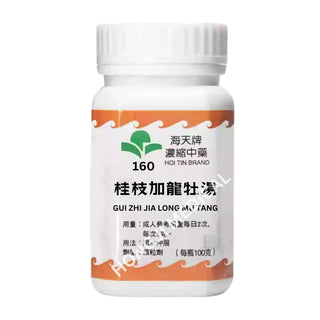 Hoi Tin Gui Zhi Jia Long Gu Mu Li Tang (Cinnamon Twig, Dragon Bone and Oyster Shell Decoction) 5:1 Concentrated Granules
$27.71
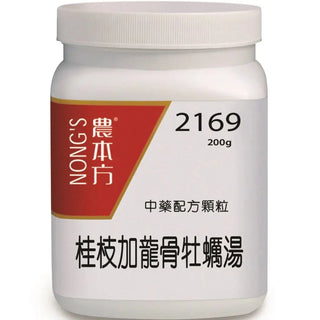 Nong's Gui Zhi Jia Long Gu Mu Li Tang (Cinnamon Twig, Dragon Bone and Oyster Shell Decoction) 5:1 Concentrated Granules
$40.55
 Hoi Tin Chai Hu Jia Long Gu Mu Li Tang (Bupleurum, Dragon Bone and Oyster Shell Decoction) 5:1 Concentrated Granules
$29.10
 Hoi Tin Suan Zao Ren Tang (Sour Jujube Seed Decoction) 5:1 Concentrated Granules
$47.19
 Nong's Suan Zao Ren Tang (Sour Jujube Seed Decoction) 5:1 Concentrated Granules
$127.22
 Hoi Tin Suan Zao Ren Tang (Sour Jujube Seed Decoction, 3g x 6 Packets) 5:1 Concentrated Granules
$24.50
 Hoi Tin Dao Chi San (Guide Out the Red Powder) 5:1 Concentrated Granules
$26.32
This library is educational. It describes how Traditional Chinese Medicine has traditionally understood these presentations. It is not a diagnosis, and it is not a treatment recommendation.
Back to the Condition Hub