An Gong Niu Huang Wan: Classic TCM Emergency Formula for Heat Toxin Entering the Pericardium
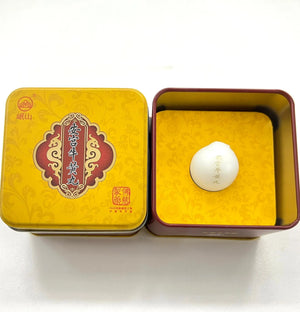
An Gong Niu Huang Wan (安宫牛黄丸), known in English as Peaceful Palace Bovine Bezoar Pill, is one of the most famous classical emergency formulas in Traditional Chinese Medicine for clearing Heat, resolving toxicity, and opening the orifices when Heat enters the Pericardium or Phlegm-Heat clouds the mind. It is particularly indicated for high fever with delirium, coma, stroke, encephalitis, meningitis, and other critical conditions with Heat toxin affecting consciousness. In modern clinical practice, An Gong Niu Huang Wan is used in acute febrile diseases with mental changes, convulsions, or loss of consciousness due to extreme Heat toxin. By powerfully clearing Heat toxin while opening blocked orifices and calming the spirit, it provides rapid intervention in life-threatening Heat patterns.

I. Origins and History
1. Background of Origin
Angong Niuhuang Wan originated in the Qing dynasty, a time when the Warm Disease school of thought was flourishing, bringing deeper understanding and exploration of the treatment of warm-heat disease. During this period, warm-heat disease often caused conditions to progress acutely and change rapidly, posing a serious threat to patients' lives. To address this situation, physicians continually researched and created new formulas. Angong Niuhuang Wan emerged precisely against this backdrop. It embodies the wisdom and experience of numerous physicians, aiming to provide an effective medicine for treating patients with warm-heat disease.
2. Recorded in the Classical Literature
Angong Niuhuang Wan was first recorded in the *Wenbing Tiaobian* (Systematic Differentiation of Warm Diseases), written by the Qing dynasty physician Wu Tang. Building on the experience of earlier physicians and combining it with his own clinical practice, Wu Tang provided a detailed exposition of the formula's composition, actions, and indications. The *Wenbing Tiaobian* is an important classical text of the Warm Disease school, and Angong Niuhuang Wan, as one of its renowned formulas, has provided an important reference for later generations treating warm-heat disease, being widely applied in clinical practice and passed down through history.
3. Historical Evolution and Transmission
Since its appearance, Angong Niuhuang Wan has continued to develop and be refined through the process of transmission. With advances in medicine and the accumulation of clinical experience, its manufacturing process and herbal formulation have both undergone certain improvements. Physicians of different periods adjusted the formula according to actual circumstances, making it better suited to clinical needs. On the whole, however, Angong Niuhuang Wan has consistently maintained its core actions and indication characteristics, becoming one of the classical formulas in Chinese medicine for treating warm-heat disease; having been transmitted for several centuries, it continues to play an important role in clinical practice today.
II. Herb Composition (Sovereign, Minister, Assistant, Envoy)
1. Chief Herbs — Niuhuang and Shexiang
Niuhuang (Bovine Gallstone): Niuhuang is cool in nature, sweet and bitter in flavour, and enters the heart and liver channels. It has the actions of clearing the heart, resolving phlegm, opening the orifices, cooling the liver, extinguishing wind, and resolving toxicity. In Angong Niuhuang Wan, Niuhuang clears the heart and resolves toxicity, resolving phlegm and opening the orifices, making it the key herb for treating heat entering the pericardium with phlegm-heat clouding the orifices of the heart. It clears heat toxin from the body and dissolves turbid phlegm, allowing the orifices of the heart to open and consciousness to be restored.
Shexiang (Musk): Shexiang is warm in nature, acrid in flavour, and enters the heart and spleen channels. It has the actions of opening the orifices and reviving consciousness, activating blood and unblocking the channels, and reducing swelling and relieving pain. Shexiang opens the orifices and unblocks closure, guiding the other herbs upward to reach the site of disease directly, strengthening the formula's power to open the orifices and revive consciousness. At the same time, it also activates blood and unblocks the channels, helping to disperse blood stasis in the body, and provides some regulatory benefit for blood-stasis obstruction that may arise during the course of warm-heat disease.

2. Deputy Herbs — Huanglian, Huangqin, and Zhizi
Huanglian (Coptis Rhizome): Huanglian is intensely bitter and cold, with a strong action of clearing heat, drying dampness, draining fire, and resolving toxicity. It clears and drains heart fire, eliminating heat toxin from the heart channel, providing good therapeutic effect for symptoms such as high fever with vexation and agitation, and delirious speech with clouded consciousness. Huanglian also dries dampness, helping to eliminate damp-heat pathogens from the body.
Huangqin (Scutellaria Root): Huangqin clears heat and dries dampness, drains fire and resolves toxicity, stops bleeding, and calms the fetus. It excels at clearing upper-burner lung heat, assisting Huanglian in clearing and draining heat from the heart channel, while also attending to heat pathogens in other organs. Huangqin's heat-clearing action helps relieve high fever symptoms, and its fetus-calming action can, to some extent, also prevent instability of the fetus that may arise during warm-heat disease.
Zhizi (Gardenia Fruit): Zhizi drains fire and relieves vexation, clears heat and drains dampness, cools the blood and resolves toxicity. It clears and drains fire from all three burners, allowing heat toxin in the body to be comprehensively eliminated. Zhizi's heat-clearing action is broad, providing good therapeutic effect for symptoms caused by warm-heat disease such as vexation, bitter taste in the mouth, and jaundice; by draining fire and relieving vexation, it relieves symptoms such as the patient's restlessness and agitation.
3. Assistant Herbs — Yujin, Bingpian, Zhusha, and Zhenzhu
Yujin (Turmeric Tuber): Yujin activates blood and relieves pain, moves qi and resolves depression, clears the heart and cools the blood, and benefits the gallbladder to resolve jaundice. It moves qi and resolves depression, helping to unblock qi and blood and relieve symptoms such as chest tightness and hypochondriac pain caused by sluggish qi-blood movement. At the same time, Yujin also clears the heart and cools the blood, assisting Niuhuang and other herbs in strengthening the action of clearing heat, cooling blood, and opening the orifices to revive consciousness.
Bingpian (Borneol): Bingpian is acrid and bitter in flavour, slightly cold in nature, and has the actions of opening the orifices, reviving consciousness, clearing heat, and relieving pain. Bingpian strengthens the formula's orifice-opening action, allowing consciousness to be restored more quickly. Its heat-clearing, pain-relieving action also provides some relief for symptoms such as headache and mouth sores that may arise during warm-heat disease.
Zhusha (Cinnabar): Zhusha is sweet in flavour, slightly cold in nature, and toxic; it clears the heart, settles fright, calms the spirit, and resolves toxicity. It has a heavy, settling action for calming the spirit, providing good therapeutic effect for patients with high fever, vexation and agitation, delirious speech and clouded consciousness accompanied by mental restlessness, settling the patient's spirit and helping recovery.
Zhenzhu (Pearl): Zhenzhu is sweet and salty in flavour, cold in nature, and can calm the spirit and settle fright, brighten the eyes and dissolve nebula, resolve toxicity and promote tissue regeneration. Zhenzhu assists Zhusha and other herbs in strengthening the action of calming the spirit and settling fright, while its toxin-resolving, tissue-regenerating action also helps, to some extent, protect the body's righteous qi and promote recovery.
4. Envoy Herb — Xionghuang
Xionghuang (Realgar) is acrid in flavour, warm in nature, and toxic; it resolves toxicity and kills parasites, dries dampness and resolves phlegm, and interrupts malarial patterns. Xionghuang resolves toxicity and kills parasites, assisting the other herbs in strengthening the action of resolving toxicity, providing some therapeutic benefit for heat-toxin binding that may arise during warm-heat disease. At the same time, Xionghuang's action of drying dampness and resolving phlegm helps eliminate phlegm-dampness pathogens from the body, allowing the condition to be better controlled.
III. Pathomechanism, Actions, and Indications
1. Pathomechanism Analysis
The pathomechanism targeted by Angong Niuhuang Wan is mainly warm-heat pathogens sinking inward into the pericardium, with phlegm-heat clouding the orifices of the heart. When warm-heat pathogens invade the body, the condition progresses rapidly; if the heat pathogen is exuberant and reverses direction to enter the pericardium, this causes the orifices of the heart to become clouded by phlegm-heat. The patient presents with high fever, clouded consciousness, delirious speech, and convulsions. At this point, heat toxin must be promptly eliminated from the body and phlegm resolved to open the orifices, restoring the normal function of the orifices of the heart.
2. Explanation of Actions
Angong Niuhuang Wan has the actions of clearing heat, resolving toxicity, resolving phlegm, and opening the orifices. Clearing heat and resolving toxicity eliminates warm-heat toxin pathogens from the body and relieves high fever symptoms; resolving phlegm and opening the orifices dissolves turbid phlegm, allowing the phlegm pathogen clouding the orifices of the heart to be eliminated, thereby restoring consciousness and reviving the patient. These two actions complement each other, providing good therapeutic effect for pericardial disorders caused by warm-heat disease.
3. Indications
Angong Niuhuang Wan mainly treats warm-heat disease with the pattern of heat pathogen sinking inward into the pericardium. Symptoms include high fever with vexation and agitation, clouded consciousness with delirious speech, dryness of the mouth and tongue, profuse phlegm and saliva, a red or crimson tongue, and a rapid pulse. In addition, it also has some therapeutic effect for stroke with coma and infantile convulsions attributed to internal closure by heat pathogens. Clinically, any patient whose presentation matches the above pathomechanism and symptoms may be considered for treatment with Angong Niuhuang Wan.

IV. Formula Analysis of Angong Niuhuang Wan
1. Synergy Between Clearing Heat and Draining Fire, and Opening the Orifices to Revive Consciousness
In the formula, heat-clearing, fire-draining herbs such as Niuhuang, Huanglian, Huangqin, and Zhizi eliminate heat toxin from the body, allowing the pathogenic heat to be dispersed. At the same time, orifice-opening, consciousness-reviving herbs such as Niuhuang, Shexiang, and Bingpian open the orifices of the heart, restoring clear consciousness. Clearing heat and draining fire creates the conditions for opening the orifices and reviving consciousness, while opening the orifices and reviving consciousness in turn prevents the pathogenic heat from sinking further inward; the two work together synergistically to treat the pattern of warm-heat disease with heat pathogens sinking into the pericardium.
2. Mutual Coordination Between Resolving Phlegm and Resolving Toxicity
Phlegm-heat is a common pathological product during the course of warm-heat disease, and an important factor causing clouding of the orifices of the heart. In the formula, Huanglian, Huangqin, and Zhizi, while clearing heat, also dry dampness and resolve phlegm; Xionghuang dries dampness, resolves phlegm, resolves toxicity, and kills parasites. These herbs work together, both eliminating heat toxin and dissolving turbid phlegm, allowing the phlegm-heat pathogen to be comprehensively eliminated, thereby achieving the goal of treating the disease.
3. Attending to Both Heavy Settling of the Spirit and Supporting Righteous Qi
Heavy, settling spirit-calming herbs such as Zhusha and Zhenzhu settle the patient's spirit and relieve symptoms such as restlessness and agitation. At the same time, Zhenzhu also has a toxin-resolving, tissue-regenerating action, which to some extent protects righteous qi and promotes recovery. This reflects the formula's approach of, in the process of treating disease, both emphasising the expulsion of pathogens and attending to supporting righteous qi, in order to achieve better therapeutic results.

V. Comparison with Related Formulas
1. Comparison with Zixue Dan
Angong Niuhuang Wan excels at clearing heat and resolving toxicity, and resolving phlegm to open the orifices, making it suitable for the pattern of heat pathogens sinking into the pericardium with exuberant phlegm-heat. Zixue Dan, on the other hand, mainly clears heat and opens the orifices while extinguishing wind and stopping spasms, making it more suitable for high fever with vexation and agitation, clouded consciousness with delirious speech, accompanied by convulsions and spasms. The two formulas differ somewhat in emphasis of action; clinical selection should be based on the patient's specific symptoms.
2. Comparison with Zhibao Dan
Zhibao Dan has the actions of resolving turbidity and opening the orifices, and clearing heat and resolving toxicity. Compared with Angong Niuhuang Wan, Zhibao Dan places greater emphasis on resolving turbidity and opening the orifices, making it more suitable for cases where turbid phlegm predominates and foul turbid qi clouds the clear orifices. Angong Niuhuang Wan is more pronounced in clearing heat and resolving toxicity, making it suitable for cases with more exuberant heat toxin. In clinical application, selection can be made according to the relative predominance of phlegm-heat versus turbid phlegm in the patient.

VI. Clinical Applications
1. Emergency Treatment of Warm-Heat Disease
When warm-heat disease progresses to the stage of heat pathogens sinking into the pericardium, presenting with symptoms such as high fever, clouded consciousness, and delirious speech, Angong Niuhuang Wan is a commonly used emergency medicine. Prompt use can rapidly eliminate heat toxin and resolve phlegm to open the orifices, saving the patient's life. For example, in the treatment of conditions such as epidemic encephalitis B and epidemic cerebrospinal meningitis, if the above symptoms appear, Angong Niuhuang Wan may be used in combination with comprehensive Western medical treatment.
2. Stroke with Coma
For stroke patients presenting with sudden coma, unconsciousness, tightly clenched jaw, a flushed complexion with coarse breathing, and phlegm rattling in the throat, differentiated as internal closure by heat pathogens, Angong Niuhuang Wan may also serve as an adjunctive treatment. It helps eliminate phlegm-heat from the body, open the orifices of the heart, promote the patient's revival, and improve the condition.
3. Infantile Convulsions
For infantile convulsions attributed to internal closure by heat pathogens, such as febrile convulsions, Angong Niuhuang Wan also has some therapeutic effect. Children's organs are delicate, and after contracting warm-heat pathogens, they readily transform into heat and generate wind, leading to convulsions. Angong Niuhuang Wan can clear heat and resolve toxicity, and resolve phlegm to open the orifices, relieving symptoms of infantile convulsions and protecting the function of the child's nervous system.

VII. Clinical Modifications for Angong Niuhuang Wan
1. Exuberant Heat Damaging Yin
If, during treatment with Angong Niuhuang Wan, the patient develops symptoms of exuberant heat damaging yin, such as dryness of the mouth and throat, and a red tongue with scanty coating, Shengdi (Rehmannia Root) and Maidong (Ophiopogon Root) may be added to the original formula to nourish yin and clear heat, strengthening the action of nourishing yin and moistening dryness, and preventing the heat pathogen from further scorching yin fluid.
2. Profuse Phlegm and Saliva
When the patient has profuse phlegm and saliva with difficulty expectorating, Tianzhuhuang (Bamboo Sugar) and Dan Nanxing (Bile-Processed Arisaema) may be added as heat-clearing, phlegm-resolving herbs, strengthening the formula's phlegm-resolving action, making it easier for the phlegm pathogen to be expelled from the body, and thereby better relieving the condition.
3. Concurrent Blood Stasis
If the patient presents with symptoms of blood stasis, such as dry, scaly skin and a dark purple tongue body, an appropriate amount of Danshen (Salvia Root) may be added to activate blood and resolve stasis, improving blood circulation and allowing qi and blood to flow smoothly, helping with recovery.

VIII. Dosage and Preparation (Traditional Method and Modern Concentrated Granules)
1. Traditional Method
The traditional form of Angong Niuhuang Wan is a honey-bound pill, generally weighing 3g per pill. For adults, the dose is 1 pill at a time; for children under 3 years old, 1/4 pill at a time; for children aged 4 to 6, 1/2 pill at a time — once daily, or as directed by a physician. The pill should be dissolved in warm boiled water before taking, to aid absorption and allow the medicine to take effect.
2. Modern Concentrated Granules
A modern concentrated granule form of Angong Niuhuang Wan is also available. It is generally taken by dissolving in boiled water; the specific dosage should follow the product label or a physician's advice. The concentrated granule form offers advantages such as convenience and dosage accuracy, making it more suited to the fast pace of modern life and clinical needs.

IX. Precautions and Contraindications
1. Use with Caution in Pregnancy
Angong Niuhuang Wan contains blood-activating, channel-unblocking herbs such as Shexiang; use by pregnant women may cause fetal restlessness or even miscarriage, and it should therefore be used with caution in pregnancy. If a pregnant woman presents with a condition matching the indications of Angong Niuhuang Wan, it must be used cautiously under a physician's guidance.
2. Should Not Be Taken in Excess
Angong Niuhuang Wan contains toxic substances such as Zhusha and Xionghuang; taking it in excess may lead to toxic reactions. It must therefore be taken strictly according to the specified dosage and administration, and the dose must not be increased without medical guidance. If any discomfort occurs after taking it, medical attention should be sought promptly.
3. Contraindicated in Cold-Closure Coma
Angong Niuhuang Wan is suited to clouded consciousness with delirious speech caused by heat pathogens sinking into the pericardium; it is not suitable for cold-closure coma, presenting with symptoms such as sudden collapse, a tightly clenched jaw, a pale complexion with cold body, a white tongue coating, and a slow pulse. Cold-closure coma should be treated with warming, opening herbs instead.

X. Modern Research
1. Pharmacological Research
Angong Niuhuang Wan is an orifice-opening formula among the patent Chinese medicine formulas, originating from the *Wenbing Tiaobian* and recognised as one of the "Three Treasures of Warm Disease." It has the actions of clearing heat and resolving toxicity, clearing heat and opening the orifices, resolving phlegm and resolving toxicity, resolving toxicity and settling fright, and calming fright to open the orifices, and is mainly indicated for stroke with coma, febrile convulsions, encephalitis, cerebral haemorrhage, sepsis, toxic encephalopathy, mercury poisoning, arsenic poisoning, acute ischaemic stroke, infantile convulsions, restlessness and agitation, heat-closure coma, cold-closure coma, and febrile disease, being suited to febrile disease with clouded consciousness or cold-closure coma. The formula combines herbs such as Niuhuang, concentrated water buffalo horn powder, Bingpian, Xionghuang, Zhusha, Huanglian, Huangqin, and Zhizi, and is clinically used for the recovery of neurological function following stroke sequelae and as an emergency medicine; it has been designated a national-level intangible cultural heritage, and randomised double-blind placebo-controlled trials have demonstrated its efficacy.
Modern research shows that Angong Niuhuang Wan has a variety of pharmacological actions. Through effects such as regulating neurotransmitters, improving cerebral blood flow, and reducing cerebral oedema, it exerts a protective and regulatory effect on the central nervous system. At the same time, the herbs in the formula also have anti-inflammatory, antibacterial, and antiviral actions, helping to eliminate infectious pathogens from the body, reduce inflammatory response, and promote recovery.
2. Observation of Clinical Efficacy
In clinical practice, patients meeting the indications for Angong Niuhuang Wan have shown good therapeutic outcomes in terms of improving symptoms such as high fever and clouded consciousness. Some studies have also found that combining Angong Niuhuang Wan with Western medical treatment for certain conditions, such as coma caused by cerebral infarction or cerebral haemorrhage, can improve patients' rate of recovery of consciousness, improve neurological deficits, and enhance quality of life.
3. Quality Control and Improvement
With the development of modern technology, quality control of Angong Niuhuang Wan has also become more rigorous. Through advanced analytical and testing techniques, the composition and content of the herbs are precisely measured, ensuring the stability and consistency of the medicine's quality. At the same time, the manufacturing process has also been continually improved, enhancing the purity and efficacy of the medicine, allowing it to better exert its therapeutic effect.
As a classical Chinese medicine formula, Angong Niuhuang Wan, having undergone several centuries of clinical verification, holds important clinical value. Understanding its origins, composition, actions, and applications is of great significance for correctly using this formula to treat related diseases. Driven by modern research, the mechanisms of action and clinical applications of Angong Niuhuang Wan continue to be deeply explored and expanded, playing an increasingly important role in safeguarding human health.

Angong Niuhuang Wan — Frequently Asked Questions
What are the main actions of Angong Niuhuang Wan?
Angong Niuhuang Wan clears heat and resolves toxicity, resolves phlegm and opens the orifices, and settles fright to revive consciousness; it is one of the representative formulas in Chinese medicine for emergency conditions and is commonly used as adjunctive treatment for critical conditions such as heat-closure coma and febrile convulsions.
What is it commonly used for in modern practice?
It is commonly used as adjunctive treatment for the acute phase of stroke, encephalitis, meningitis, febrile convulsions, severe infection, disturbances of consciousness, and certain neurological emergencies.
Can Angong Niuhuang Wan be taken long-term as a health supplement?
Long-term use is not recommended. Angong Niuhuang Wan is an emergency medicine and should be used according to a physician's pattern differentiation and the needs of the condition; it is not suitable for routine health maintenance or preventive use.
Who should avoid taking it?
Those with cold-closure patterns, collapse patterns, pregnant women, and those with abnormal liver or kidney function should use it with caution. If suspected stroke, disturbance of consciousness, or persistent high fever occurs, emergency medical care should be sought immediately — Angong Niuhuang Wan alone should not be relied upon, as this could delay treatment.
⚠️ This content is for reference only and does not provide medical advice. Consult a healthcare professional for any health concerns.