Zhi Zi Chi Tang: Classic Traditional Chinese Medicine Formula for Heat in the Chest

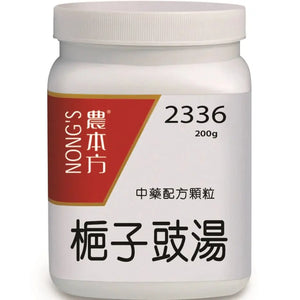
Zhi Zi Chi Tang (栀子豉汤), known in English as Gardenia and Fermented Soybean Decoction, is a classical formula from the Shang Han Lun for Heat in the Chest or Heat in the Stomach causing irritability, insomnia, fever, and chest oppression. It is particularly indicated for febrile diseases with mental restlessness, insomnia, and a feeling of heat in the chest without significant exterior signs. In modern clinical practice, Zhi Zi Chi Tang is widely used for febrile diseases with prominent chest Heat and emotional restlessness. By powerfully clearing Heat from the Heart, Lung, and Stomach while gently releasing any residual exterior Heat, it effectively relieves both the physical and emotional symptoms of chest Heat patterns.

Zhi Zi Chi Tang: Clearing Heat, Relieving Vexation, Venting Constraint and Dispersing Heat, Relieving Insomnia, Restlessness and Anxiety | HJMEDICAL

I. Origins and History

1. Classical Literary Records

Zhi Zi Chi Tang originates from the Shanghan Lun (Treatise on Cold Damage), authored by the Sage of Medicine Zhang Zhongjing of the Eastern Han dynasty — a classical work that has exerted a far-reaching influence on Chinese medicine clinical practice. Within the Shanghan Lun, Zhi Zi Chi Tang is mentioned on multiple occasions, testifying to its important place within Zhang Zhongjing's medical system. The text elaborates in detail on the formula's composition, method of use, actions, and applicable conditions, providing a solid theoretical foundation and practical model for later physicians applying Zhi Zi Chi Tang in the treatment of disease.

2. Historical Transmission and Evolution

Since the Shanghan Lun first appeared, Zhi Zi Chi Tang has consistently been valued and applied by physicians across the generations. Over time, physicians of later eras, while inheriting Zhang Zhongjing's academic thought, continuously enriched and developed the scope of application and clinical experience of Zhi Zi Chi Tang. For example, in different historical periods, further exploration and innovation took place in aspects such as herb dosage, method of administration, and modifications, allowing it to better meet the clinical treatment needs of various complex conditions. In this way it was transmitted and developed throughout the long history of Chinese medicine formula studies, becoming one of the commonly used formulas in Chinese medicine for treating febrile vexation and related conditions.

Zhi Zi Chi Tang: Clearing Heat, Relieving Vexation, Venting Constraint and Dispersing Heat, Relieving Insomnia, Restlessness and Anxiety | HJMEDICAL

II. Herb Composition (Sovereign, Minister, Assistant, Envoy)

1. Chief Herb — Zhizi (Gardenia Fruit)

Zhizi is the dried, ripe fruit of Gardenia jasminoides of the Rubiaceae family. It is bitter in flavour and cold in nature, entering the Heart, Lung, and Triple Burner channels. Zhizi has the actions of draining fire and relieving vexation, clearing heat and disinhibiting dampness, and cooling blood and resolving toxicity. In Zhi Zi Chi Tang, Zhizi serves as the chief herb, exerting the core action of clearing heat and draining fire, capable of effectively eliminating the vexing heat pathogen from within the body, producing a significant therapeutic effect for symptoms such as vexation and insomnia caused by heat pathogen disturbing the heart. Its bitter-cold nature directly breaks the momentum of fire, allowing the heat pathogen to be cleared and drained, thereby relieving the patient's discomfort symptoms.

2. Deputy Herb — Dandouchi (Fermented Soybean)

Dandouchi is the fermentation-processed product of the mature seeds of Glycine max of the Leguminosae family. It is bitter and acrid in flavour and cool in nature, entering the Lung and Stomach channels. Dandouchi has the actions of releasing the exterior, relieving vexation, and venting and dispersing constrained heat. It serves as the deputy herb in Zhi Zi Chi Tang, assisting Zhizi in reinforcing the heat-clearing and vexation-relieving action. Dandouchi can vent and scatter constrained heat, allowing exterior-level pathogen to be dispersed and transmitted outward and interior heat pathogen to be vented and discharged; combined with Zhizi, treating the interior and exterior simultaneously, the two jointly eliminate the vexation and oppression caused by heat pathogen — exerting a synergistic, mutually reinforcing effect.

3. Assistant and Envoy Herbs

Although Zhi Zi Chi Tang does not explicitly mention assistant and envoy herbs, viewed from the overall formula combination, Gancao (Licorice Root) may be considered to serve as an assistant and envoy herb in certain circumstances. Gancao is sweet in flavour and neutral in nature, entering the Heart, Lung, Spleen, and Stomach channels, with the actions of tonifying the spleen and boosting qi, moistening the lungs to relieve cough, clearing heat and resolving toxicity, and harmonising all the herbs. If Gancao is added when using Zhi Zi Chi Tang, on one hand it can moderate the bitter-cold nature of Zhizi and Dandouchi, reducing irritation to the gastrointestinal tract; on the other hand it can harmonise the medicinal nature of the various herbs within the formula, making the action of the entire formula more coordinated, thereby performing the effect of simultaneously attending to the righteous and expelling the pathogen.

Zhi Zi Chi Tang: Clearing Heat, Relieving Vexation, Venting Constraint and Dispersing Heat, Relieving Insomnia, Restlessness and Anxiety | HJMEDICAL

III. Pathomechanism, Actions, and Indications

1. Pathomechanism Analysis

The pathomechanism targeted by Zhi Zi Chi Tang is primarily heat disturbing the chest and diaphragm. When the body is invaded by an external pathogen that enters the interior and transforms into heat, the heat pathogen accumulates and binds within the chest and diaphragm, leading to obstructed qi movement and the appearance of symptoms such as vexation and anxious anguish. Heat disturbing the heart-spirit causes the spirit to become restless, manifesting as vexation with inability to sleep; heat accumulating in the chest and diaphragm causing obstruction of qi movement leads to a subjective sensation of vexing oppression and discomfort within the chest, even manifesting as turning and tossing repeatedly, and heart anguish. This pathomechanism of heat disturbing the chest and diaphragm differs from both the dry-heat internal binding of the Yangming bowel excess pattern and the heart-kidney non-communication of the Shaoyin heat-transformation pattern — it is a relatively distinctive febrile pathomechanism.

2. Actions

The primary action of Zhi Zi Chi Tang is clearing heat and relieving vexation. Through Zhizi's bitter-cold fire-draining and Dandouchi's venting and scattering of constrained heat, the heat pathogen within the chest and diaphragm is cleared, qi movement is restored, and the goal of relieving vexation is thereby achieved. Its heat-clearing force is primarily concentrated on clearing and draining upper-burner heat, producing excellent therapeutic effects for various symptoms of heart vexation caused by heat pathogen disturbing the heart — capable of rapidly relieving the patient's discomfort and restoring calm to body and spirit.

3. Indications

Zhi Zi Chi Tang is indicated for deficiency vexation with inability to sleep, heart anguish, turning and tossing repeatedly, binding pain in the heart region, or persistent bodily heat with vexing oppression — arising after resolution by perspiration, emesis, or purgation. All these symptoms are caused by heat disturbing the chest and diaphragm. Whether it is residual heat lingering to disturb the chest and diaphragm during an externally-contracted febrile disease process following treatment by perspiration, emesis, or purgation, or similar symptoms arising from heat pathogen internally accumulating in the chest and diaphragm due to factors such as emotional disturbance and dietary irregularity in internal-damage miscellaneous diseases — Zhi Zi Chi Tang has good therapeutic action for both. Clinically, as long as pattern differentiation accurately identifies the pattern as heat disturbing the chest and diaphragm, Zhi Zi Chi Tang may be used for treatment.

Zhi Zi Chi Tang: Clearing Heat, Relieving Vexation, Venting Constraint and Dispersing Heat, Relieving Insomnia, Restlessness and Anxiety | HJMEDICAL

IV. Formula Analysis

1. Combination of Zhizi and Dandouchi

Zhizi is bitter and cold, skilled at clearing heat and draining fire, with particular ability to clear and drain heat pathogen from the heart and chest. Dandouchi is acrid and cool, capable of venting and scattering constrained heat and dispersing and transmitting exterior pathogen. Combined, the two — one primarily clearing and draining, the other assisting with venting and dispersal — achieve a combination of clearing with venting and venting with clearing, allowing the heat pathogen within the chest and diaphragm to be dispersed both from within and without. Zhizi clears and drains the heat of the chest and diaphragm, acting directly on the site of disease; Dandouchi vents and disperses constrained heat, giving the heat pathogen an exit route, thereby reinforcing the heat-clearing and vexation-relieving action. This combination method embodies the subtlety of Zhang Zhongjing's use of herbs — targeting the pathomechanism of heat disturbing the chest and diaphragm from different angles to achieve the optimal therapeutic effect.

2. Overall Smoothing of Qi Movement

Heat disturbing the chest and diaphragm not only gives rise to symptoms such as heart vexation but also affects the normal operation of qi movement. Zhi Zi Chi Tang, through clearing heat and relieving vexation, eliminates the heat pathogen and thereby removes the obstruction the heat pathogen had imposed on qi movement. When qi movement is unobstructed, the body's qi-blood circulation becomes normal and zang-fu organ function becomes coordinated. The synergistic action of Zhizi and Dandouchi within the formula helps restore the ascending and descending of qi movement in the chest and diaphragm region, allowing the qi of the upper burner to be vented and unblocked, creating favourable conditions for the body's recovery. This approach of treating disease through regulating qi movement embodies the characteristics of the holistic concept and pattern-differentiated treatment in Chinese medicine.

Zhi Zi Chi Tang: Clearing Heat, Relieving Vexation, Venting Constraint and Dispersing Heat, Relieving Insomnia, Restlessness and Anxiety | HJMEDICAL

V. Comparison with Related Formulas

1. Comparison with Huanglian Ejiao Tang

Huanglian Ejiao Tang is primarily indicated for the Shaoyin heat-transformation pattern, with yin deficiency and yang hyperactivity and heart-kidney non-communication as the primary pathomechanism, manifesting as vexation with inability to sleep, dry mouth and throat, a red tongue with scant coating, and a fine, rapid pulse. Its herbs use Huanglian (Coptis Root) and Huangqin (Scutellaria Root) to clear heat and drain fire, Ejiao (Donkey-hide Gelatin) and Jizihuang (Egg Yolk) to nourish yin and tonify blood, and Shaoyao (Peony Root) to harmonise yin and yang. Zhi Zi Chi Tang, by contrast, is primarily indicated for the pattern of heat disturbing the chest and diaphragm, with heat pathogen accumulating in the chest and diaphragm and obstructed qi movement as the primary presentation, manifesting as vexation and anguish, and uses Zhizi and Dandouchi to clear heat and relieve vexation. Although both have the symptom of vexation with inability to sleep, the pathomechanism and herb selection are entirely different. Huanglian Ejiao Tang emphasises nourishing yin and draining fire and communicating the heart and kidneys; Zhi Zi Chi Tang emphasises clearing heat, venting, and dispersing, and smoothing the qi movement.

2. Comparison with Zhuye Shigao Tang

Zhuye Shigao Tang is primarily indicated for the pattern of uncleared residual heat from cold damage, warm disease, and summer-heat disease with dual qi-fluid damage, manifesting as bodily heat with excessive sweating, vexing oppression of the chest and heart, counterflowing qi with a desire to vomit, dry mouth with a preference for drinking, or deficiency-emaciation with scanty qi, a red tongue with scant coating, and a deficient, rapid pulse. The formula uses Zhuye (Bamboo Leaf) and Shigao (Gypsum) to clear heat and relieve vexation, Banxia (Pinellia) to direct counterflow downward and stop vomiting, Renshen (Ginseng) and Maidong (Ophiopogon Root) to boost qi and nourish yin, and Gancao and Jingmi (Polished Rice) to boost qi and harmonise the middle. Both Zhi Zi Chi Tang and Zhuye Shigao Tang have the action of clearing heat and relieving vexation, but Zhuye Shigao Tang, while clearing heat, places greater emphasis on boosting qi and nourishing yin — suited to situations where the heat pathogen has already receded but qi and fluids have been damaged; Zhi Zi Chi Tang, by contrast, focuses purely on clearing heat and relieving vexation — suited to conditions where heat disturbs the chest and diaphragm and the qi and yin have not yet been injured.

Zhi Zi Chi Tang: Clearing Heat, Relieving Vexation, Venting Constraint and Dispersing Heat, Relieving Insomnia, Restlessness and Anxiety | HJMEDICAL

VI. Clinical Applications

1. Externally-Contracted Febrile Disease

In the course of externally-contracted febrile diseases such as the common cold and influenza, if after treatment by perspiration, emesis, or purgation the patient develops symptoms such as persistent bodily heat, vexing oppression of the chest, and deficiency vexation with inability to sleep, with pattern differentiation identifying the pattern as heat disturbing the chest and diaphragm, Zhi Zi Chi Tang may be used. For example, if a patient with the common cold takes excessive diaphoretic medication and perspires profusely — the exterior pathogen resolved but residual heat lingering to disturb the chest and diaphragm — presenting with vexation and anguish, applying Zhi Zi Chi Tang to clear heat and relieve vexation can rapidly alleviate the symptoms.

2. Internal Damage and Miscellaneous Diseases

In some internal-damage miscellaneous diseases — such as emotional disturbance causing liver constraint transforming into fire, with heat pathogen disturbing the heart, giving rise to symptoms of vexation, insomnia, and irritability; or dietary irregularity with excessive consumption of acrid, spicy, rich, and sweet foods generating damp-heat internally, which accumulates and transforms into heat, with heat disturbing the chest and diaphragm giving rise to vexing oppression of the heart and a bitter, dry taste — for patterns identified as heat disturbing the chest and diaphragm, Zhi Zi Chi Tang may likewise be applied for treatment. In clinical practice, for this type of condition caused by internal-damage factors leading to heat disturbing the chest and diaphragm, Zhi Zi Chi Tang often achieves good therapeutic results, regulating the body's yin-yang balance and restoring normal physiological function.

Zhi Zi Chi Tang: Clearing Heat, Relieving Vexation, Venting Constraint and Dispersing Heat, Relieving Insomnia, Restlessness and Anxiety | HJMEDICAL

VII. Clinical Modifications

1. For Concurrent Exterior Pattern

If the patient presents with heat disturbing the chest and diaphragm complicated by mild exterior-pattern symptoms such as aversion to cold, fever, and headache, an appropriate amount of exterior-releasing herbs such as Bohe (Peppermint) and Jingjie (Schizonepeta) may be added to the base formula to achieve simultaneous treatment of the exterior and interior. This can both clear the heat of the chest and diaphragm and disperse the exterior pathogen, allowing the condition to receive comprehensive treatment. However, the dosage of exterior-releasing herbs should not be excessive, lest over-dispersing damages the righteous qi and affects Zhi Zi Chi Tang's efficacy in clearing and draining the chest-diaphragm heat pathogen.

2. For Concurrent Phlegm Fluid Retention

If the patient has concurrent internal retention of phlegm fluid, presenting with symptoms such as cough with expectoration and chest oppression, phlegm-transforming and dampness-dispelling herbs such as Banxia (Pinellia) and Fuling (Poria) may be added to Zhi Zi Chi Tang. Banxia can dry dampness and transform phlegm, and direct counterflow downward to stop vomiting; Fuling can strengthen the spleen and disinhibit water-dampness. Combined with Zhi Zi Chi Tang, the two can reinforce the formula's phlegm-transforming, dampness-dispelling, heat-clearing, and vexation-relieving action — suited to the condition of heat disturbing the chest and diaphragm complicated by internal retention of phlegm fluid.

3. For Concurrent Qi Stagnation

If the patient presents with obstructed qi movement due to emotional disturbance, giving rise to symptoms such as chest and hypochondriac fullness and distension and belching, qi-regulating and qi-moving herbs such as Zhike (Bitter Orange Fruit) and Houpo (Magnolia Bark) may be added to Zhi Zi Chi Tang. Zhike can move qi and widen the middle, eliminating distension and dissipating glomus; Houpo can dry dampness and dissolve phlegm, and descend qi to eliminate fullness. After adding these herbs, the formula can better regulate qi movement while clearing heat and relieving vexation, relieving qi-stagnation symptoms and improving the therapeutic effect.

Zhi Zi Chi Tang: Clearing Heat, Relieving Vexation, Venting Constraint and Dispersing Heat, Relieving Insomnia, Restlessness and Anxiety | HJMEDICAL

VIII. Dosage and Preparation (Traditional Method and Modern Concentrated Granules)

1. Traditional Method

The traditional method for Zhi Zi Chi Tang uses 14 pieces of Zhizi (split open) and 4 ge of Dandouchi (wrapped in gauze). With 4 sheng of water (approx. 800 ml), first decoct the Zhizi until 2.5 sheng (approx. 500 ml) remains, then add the Dandouchi and decoct to 1.5 sheng (approx. 300 ml), remove the dregs; divide into two doses and take one dose warm. If vomiting occurs, stop subsequent doses. This method of use reflects the ancient physicians' distinctive understanding of herb processing and decoction methods. After being split open, Zhizi can better release its active constituents during decoction; wrapping Dandouchi in gauze prevents it from dispersing and affecting the drug's efficacy. Zhizi is decocted first, then Dandouchi is added and a set volume of decoction liquid is extracted, taken in two warm doses. The instruction to stop subsequent doses if vomiting occurs is because Zhi Zi Chi Tang has the action of inducing emesis to expel the heat pathogen from the chest and diaphragm; if vomiting occurs after taking the formula, this indicates that the pathogenic qi has been expelled, and the formula may be discontinued.

2. Modern Concentrated Granules

In modern clinical practice, Zhi Zi Chi Tang is also available in a concentrated granule preparation. Its method of administration is relatively simple — generally, simply dissolve in boiled water according to the dosage specified in the product instructions. Concentrated granules preserve the therapeutic effect of the traditional formula while being convenient to carry and take, suited to the modern fast-paced lifestyle. However, when using the formula, it remains necessary to follow the principle of TCM pattern differentiation and treatment, accurately selecting the formula according to the patient's specific condition to ensure therapeutic efficacy.

Zhi Zi Chi Tang: Clearing Heat, Relieving Vexation, Venting Constraint and Dispersing Heat, Relieving Insomnia, Restlessness and Anxiety | HJMEDICAL

IX. Precautions and Contraindications

1. Discontinue Once Effective

When using Zhi Zi Chi Tang, care should be taken to discontinue once the condition has responded — the formula should not be taken in excess. Because Zhi Zi Chi Tang has a degree of emesis-inducing action, excessive doses may lead to excessive vomiting and depletion of the righteous qi. When the patient's symptoms such as heart vexation have resolved after taking the formula, or mild vomiting occurs indicating that the pathogenic qi has been expelled, administration should be stopped to avoid adverse effects on the body from over-medication.

2. Use with Caution in Those with Spleen-Stomach Deficiency-Cold

Zhi Zi Chi Tang is bitter and cold in nature; those with spleen-stomach deficiency-cold may, after taking it, have their spleen-stomach burden further aggravated, leading to symptoms such as abdominal pain and diarrhoea. Therefore, patients with spleen-stomach deficiency-cold — manifesting as cold pain in the stomach region, preference for warmth and pressure, absence of thirst with a bland taste, and loose stools — should use Zhi Zi Chi Tang with caution. If use is necessary, the appropriate dosage should be adjusted or spleen-strengthening and middle-warming herbs combined under medical guidance, to reduce the damage of bitter-cold herbs to the spleen and stomach.

3. Use with Caution in Pregnancy

Pregnant women have a relatively unique constitution and medication requires caution. The bitter-cold nature of Zhi Zi Chi Tang may exert a degree of influence on the fetus, so pregnant women should use it with caution. If a pregnant woman develops symptoms of heat disturbing the chest and diaphragm requiring the use of Zhi Zi Chi Tang, it should be used carefully only after professional medical evaluation and guidance, weighing the benefits and risks to ensure medication safety.

Zhi Zi Chi Tang: Clearing Heat, Relieving Vexation, Venting Constraint and Dispersing Heat, Relieving Insomnia, Restlessness and Anxiety | HJMEDICAL

X. Modern Research

1. Pharmacological Action Research

Zhi Zi Chi Tang originates from the Shanghan Lun and the Jin Gui Yao Lue, and is the representative formula among the Zhi Zi Chi Tang formula family. It has the actions of draining heat, relieving vexation, and stopping vomiting, primarily indicated for the Zhi Zi Chi Tang pattern — such as residual heat accumulating in the chest and diaphragm, constrained heat of the chest and diaphragm, and heat constrained in the chest and diaphragm — giving rise to deficiency vexation with inability to sleep, heart vexation with insomnia, heart anguish, restless turning and tossing, glomus and oppression of the chest and stomach, soft and non-tender on pressure, stuffiness in the chest, and binding pain in the heart region; patients presenting with a red tongue, a slightly yellow coating, a rapid pulse, and scanty qi. Within the formula, Zhizi is bitter and cold in nature and paired with Dandouchi — descending within venting; clinically, modifications are commonly made into Zhizi Shengjiang Chi Tang, Zhizi Gancao Chi Tang, Zhishi Zhi Zi Chi Tang, and Zhizi Houpo Tang, used for conditions such as gastritis, administered as a water decoction.

Modern pharmacological research has demonstrated that Zhizi possesses anti-inflammatory, antibacterial, antiviral, antipyretic, and sedative actions. Constituents such as geniposide within Zhizi can inhibit the release of inflammatory mediators and reduce inflammatory responses; it has a degree of inhibitory action against various bacteria and viruses, applicable to the treatment of infectious diseases; it can regulate the thermoregulatory centre to produce an antipyretic effect; it can also act on the nervous system to produce sedative effects, helping to relieve symptoms such as vexation and insomnia. Dandouchi also has a degree of immune-regulatory and antioxidant actions, acting synergistically with Zhizi to enhance the overall therapeutic efficacy of the formula.

2. Clinical Application Expansion Research

With the development of modern medicine, Zhi Zi Chi Tang has also found new clinical applications. Beyond the traditional treatment of externally-contracted febrile diseases and internal-damage miscellaneous diseases, modern research has found that Zhi Zi Chi Tang also has a degree of therapeutic action for certain psychiatric and neurological conditions such as anxiety disorders and depression — by regulating neurotransmitter levels, it can improve the patient's emotional state and sleep quality. In addition, research into digestive system disorders and cardiovascular system disorders continues to deepen, providing broader prospects for the clinical application of Zhi Zi Chi Tang.

Zhi Zi Chi Tang — Frequently Asked Questions

Q1: What are the therapeutic actions of Zhi Zi Chi Tang?

Zhi Zi Chi Tang has the actions of clearing heat and relieving vexation, venting constraint and dispersing heat, and widening the chest to disperse binds. It is primarily used for heart vexation with insomnia, chest anguish, emotional restlessness, and deterioration of sleep quality caused by heat pathogen accumulating in the chest and diaphragm.

Q2: What modern conditions is Zhi Zi Chi Tang used for?

In modern TCM clinical practice, it is commonly used for insomnia, anxiety states, neurasthenia, mood disorders, mild depressive tendency, and sleep disorders, among individuals whose presentation corresponds to the pattern of constrained heat disturbing the spirit or heat disturbing the chest and diaphragm.

Q3: Is Zhi Zi Chi Tang suitable for chronic insomnia and emotional restlessness?

For insomnia accompanied by irritability, chest oppression with discomfort, emotional depression, and a slightly red tongue tip reflecting constrained heat, TCM practitioners commonly apply Zhi Zi Chi Tang through pattern differentiation for regulation. However, long-term severe insomnia should still receive professional medical evaluation.

Q4: Who should not take Zhi Zi Chi Tang?

Those with spleen-stomach deficiency-cold, yang deficiency with aversion to cold, loose stools, or no manifestation of heat should generally not use Zhi Zi Chi Tang. If chronic aversion to cold and cold limbs and pronounced fatigue with lassitude are present, a qualified TCM practitioner should first be consulted for pattern-differentiation assessment.

⚠️ This content is for reference only and does not provide medical advice. Consult a healthcare professional for any health concerns.

Login

Forgot your password?

Don't have an account yet?
Create account

Zhi Zi Chi Tang: Classic Traditional Chinese Medicine Formula for Heat in the Chest