Bai Du San: Classic TCM Formula for Supporting Zheng Qi and Expelling External Pathogens

1. Prescription Source & History
1. Origin & Development
Baidusan (Powder for Removing Toxins) originated from ancient classical medical works and has a long history. Its formation is the crystallization of the wisdom of generations of physicians through continuous summarization and improvement in long-term clinical practice. As early as in ancient times, physicians observed a series of symptoms that occurred after the human body was invaded by exogenous pathogenic factors and began to explore corresponding treatment methods. The prototype of Baidusan might have gradually evolved from early prescriptions for exogenous pathogenic factors. Over time, through the clinical verification and improvement by physicians in different dynasties, the formula and application scope of Baidusan have been continuously optimized and clarified.
2. Ancient Doctors' Contributions
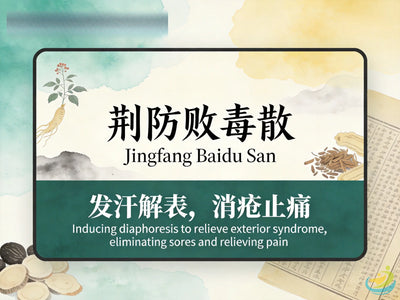
Bai Du San (败毒散), known in English as Powder for Overcoming Toxicity, is a classical TCM formula that embodies the principle of “supporting the righteous Qi while expelling pathogens.” It is particularly indicated for early-stage febrile diseases, carbuncles, boils, sores, and skin infections when there is Wind-Cold-Damp invasion that has begun to transform into Heat, especially in patients with underlying deficiency or weak constitution. In modern clinical practice, Bai Du San is widely used in pediatrics and for early infections where the patient needs both pathogen expulsion and Qi support. By combining tonifying herbs like Ren Shen and Fu Ling with Wind-dispersing, Heat-clearing, and Damp-draining herbs, it gently releases the exterior, clears emerging toxicity, and strengthens the body’s defensive capacity without exhausting the patient.
Many famous ancient physicians have made important contributions to the development of prescriptions. For example, Li Dongyuan, a physician in the Jin and Yuan dynasties, emphasized the crucial role of the spleen and stomach in human health and had unique insights into the compatibility of prescriptions. His academic thoughts might have had a certain impact on the formulation ideas of prescriptions and provided theoretical support for the improvement of Baidusan. Another example is Zhang Jingyue, a physician in the Ming Dynasty. He also made many achievements in the application and theoretical interpretation of prescriptions. The ideas on the differentiation and treatment of exogenous diseases in his works might have had inextricable links with the clinical application of Baidusan. These physicians continuously explored and innovated on the basis of predecessors, making Baidusan gradually become one of the commonly used prescriptions for treating exogenous diseases in clinical practice.

2. Composition of Medicinal Herbs
1. Monarch Herb
羌活 Notopterygium incisum is pungent, bitter, and warm in nature. It has a strong effect of relieving exterior syndrome and dispelling cold, is good at expelling wind and dampness, and has a remarkable analgesic effect. Notopterygium incisum can quickly disperse the wind-cold-dampness pathogenic factors in the muscle surface. It has a good therapeutic effect on symptoms such as aversion to cold, fever, headache, and body pain caused by the invasion of exogenous wind-cold-dampness pathogenic factors into the human muscle surface. Its medicinal power is relatively strong and can directly reach the top of the head, so it has an especially good curative effect on the symptom of headache extending to the neck and back.
独活 Angelica pubescens is also pungent, bitter, and warm in nature. Its efficacy is similar to that of Notopterygium incisum, and it is also a good medicine for expelling wind and dampness and relieving exterior syndrome and dispelling cold. However, Angelica pubescens is more inclined to act downward and is good at expelling the wind-cold-dampness pathogenic factors in the lower jiao and between the muscles and bones. In Baidusan, when combined with Notopterygium incisum, the two work synergistically. They can not only disperse the pathogenic factors in the muscle surface but also expel the wind and dampness throughout the body, making the wind-cold-dampness pathogenic factors have nowhere to hide. For patients with exogenous wind-cold-dampness and pain all over the body, the combination of Angelica pubescens and Notopterygium incisum can play a good therapeutic role.
2. Minister Herb
柴胡 Bupleurum chinense is bitter, pungent, and slightly cold in nature. It has the effects of reconciling shaoyang and relieving fever, soothing the liver and relieving depression. In Baidusan, Bupleurum chinense can disperse the pathogenic factors in the half exterior and half interior, and assist Notopterygium incisum and Angelica pubescens to enhance the power of relieving the exterior syndrome. When the human body is invaded by exogenous pathogenic factors and the condition is in the half exterior and half interior, Bupleurum chinense can play its unique reconciling role, enabling the pathogenic factors to be resolved externally and preventing the further development of the disease. At the same time, Bupleurum chinense can also regulate qi movement and has a certain conditioning effect on the possible qi stagnation in exogenous diseases.
前胡 Peucedanum praeruptorum is pungent, bitter, and slightly cold in nature. It can lower qi and resolve phlegm, disperse wind-heat. When treating exogenous diseases, Peucedanum praeruptorum can help disperse the wind-heat pathogenic factors. At the same time, it has a good therapeutic effect on symptoms such as cough and expectoration that may occur during the process of exogenous diseases. By lowering qi and resolving phlegm, it makes the lung qi smooth, helps to relieve the situation of lung qi counterflow caused by exogenous pathogenic factors, and works synergistically with other exterior-relieving drugs to jointly treat the condition of exogenous diseases combined with cough.
3. Assistant Herb
川芎 Ligusticum chuanxiong is pungent and warm in nature. It has the effects of promoting blood circulation and regulating qi, dispelling wind and relieving pain. It can ascend to the head and eyes and is the key medicine for treating headache. In Baidusan, Ligusticum chuanxiong can strengthen the effects of Notopterygium incisum, Angelica pubescens and other drugs in dispelling wind and relieving pain. At the same time, its effect of promoting blood circulation and regulating qi helps to improve the situation of qi and blood stagnation that may occur during the process of exogenous diseases. For headache caused by exogenous wind-cold-dampness, Ligusticum chuanxiong can play a good adjuvant therapeutic role and relieve the headache symptoms.
枳壳 Citrus aurantium is bitter, pungent, sour, and slightly cold in nature. It can regulate qi and relieve distension, promote qi movement and eliminate fullness. In the prescription, Citrus aurantium can regulate qi movement and prevent qi stagnation caused by exogenous pathogenic factors. It can promote the movement of qi in the spleen and stomach, make the qi movement in the middle jiao smooth, and help other drugs play their roles better. At the same time, Citrus aurantium also has a certain conditioning effect on symptoms such as abdominal distension and fullness that may occur in exogenous diseases, enabling the discomfort symptoms of patients to be more comprehensively relieved while treating exogenous diseases.
桔梗 : Platycodon grandiflorum is bitter, pungent, and neutral in nature. It can promote the dispersing of lung qi, benefit the throat, resolve phlegm, and drain pus. Platycodon grandiflorum can open and disperse the lung qi, making the lung qi smooth, which helps the exterior-releasing drugs play their roles better. It can expel the phlegm in the lungs and has a good therapeutic effect on symptoms such as cough and expectoration in exogenous diseases. In Baitu San, Platycodon grandiflorum combined with other drugs can not only disperse exogenous pathogenic factors but also regulate the lung qi, making the treatment of exogenous diseases more comprehensive and effective.
茯苓 : Poria cocos is sweet, light, and neutral in nature. It can promote diuresis to eliminate dampness and strengthen the spleen. When affected by exogenous pathogenic factors, the spleen and stomach functions of the human body may be affected. Poria cocos can strengthen the spleen and promote diuresis to prevent the endogenous generation of dampness. It can enhance the transportation and transformation functions of the spleen and stomach, enabling the normal metabolism of water and dampness, avoiding the combination of dampness pathogen and exogenous pathogenic factors, and aggravating the disease. At the same time, the diuretic effect of Poria cocos helps to relieve symptoms such as edema that may accompany exogenous diseases.
甘草 : Licorice is sweet and neutral in nature. It can invigorate the spleen qi, moisten the lung and relieve cough, clear heat and detoxify, and harmonize all the drugs. Licorice plays an important role in harmonizing all the drugs in Baitu San. It can coordinate the properties of various drugs in the prescription, making them play a better synergistic effect. At the same time, Licorice can also invigorate the spleen qi, enhance the functions of the spleen and stomach, and provide certain support for the body to resist exogenous pathogenic factors. In addition, the effect of Licorice in moistening the lung and relieving cough also has a certain relieving effect on the cough symptoms that may appear in exogenous diseases.
4. Courier Herb
人参 : Ginseng is sweet, slightly bitter, and slightly warm in nature. It has the effects of greatly tonifying primordial qi, restoring pulse and arresting collapse, invigorating the spleen and benefiting the lung, promoting fluid production and nourishing blood, calming the mind and improving intelligence, etc. In Baitu San, Ginseng is not used to directly attack pathogenic factors but plays the role of strengthening healthy qi and dispelling pathogenic factors. When the human body is invaded by exogenous pathogenic factors, the healthy qi is often damaged to a certain extent. Ginseng can greatly tonify primordial qi, enhance the resistance of the body, so that when the body resists exogenous pathogenic factors, the healthy qi will not be overly consumed. It assists other drugs to play a better role in dispelling pathogenic factors, making the pathogenic factors dispelled without damaging the healthy qi, reflecting the treatment concept of strengthening healthy qi and dispelling pathogenic factors in traditional Chinese medicine.

III. Pathogenesis, Efficacy & Indications
1. Pathogenesis Analysis
The pathogenesis targeted by Baitu San is mainly the invasion of the human body by exogenous wind-cold-dampness pathogenic factors. When the healthy qi of the human body is insufficient, the wind-cold-dampness pathogenic factors take advantage of the deficiency and invade the muscle surface. The wind-cold pathogenic factors bind the muscle surface, resulting in the stagnation of defensive qi and symptoms such as aversion to cold and fever; the dampness pathogen is heavy, turbid, sticky, and stagnant, obstructing qi movement, making the whole body feel heavy and painful; the wind-cold-dampness pathogenic factors block the meridians, and the qi and blood circulation is not smooth, further aggravating the pain and other discomforts. At the same time, the invasion of exogenous pathogenic factors may also affect the functions of the lungs, spleen and other zang-fu organs, resulting in the failure of the lung qi to disperse and the abnormal transportation and transformation of the spleen and stomach.
2. Efficacy Explanation
Relieving exterior cold: Drugs such as Notopterygium incisum, Angelica pubescens, Bupleurum chinense, Peucedanum praeruptorum, etc. cooperate with each other, can effectively disperse the wind-cold-dampness pathogenic factors on the muscle surface, make the defensive qi of the human body unblocked, and relieve the exterior syndrome such as aversion to cold and fever.
Dispelling wind and removing dampness: Notopterygium incisum and Angelica pubescens are good at dispelling wind and removing dampness, can dispel the wind-dampness pathogenic factors all over the body, and relieve symptoms such as joint pain and limb heaviness caused by the blockage of wind-dampness.
Benefiting qi and strengthening healthy qi: Ginseng greatly tonifies primordial qi, enhances the resistance of the body, protects the healthy qi while dispelling pathogenic factors, prevents the excessive consumption of healthy qi, enables the human body to better resist exogenous pathogenic factors, and promotes the recovery of the disease.
3. Indicated Diseases
Baidusan is mainly used to treat the syndrome of exogenous wind-cold with dampness. The clinical manifestations include aversion to cold and fever, stiffness and pain in the head and neck, limb soreness, absence of sweating, heavy nasal congestion, cough with phlegm, fullness and discomfort in the chest diaphragm, pale tongue with white and greasy coating, and weak pulse on superficial palpation. This disease commonly occurs in seasons with cold and humid climate, and the human body is easily invaded by wind-cold-damp pathogens. For example, in areas with cold and rainy winters, people are prone to develop similar symptoms if they don't pay attention to keeping warm. At this time, Baidusan often plays a good therapeutic role.

IV. Analysis of Formula's Meaning
1. Compatibility Idea
In the formula, Qianghuo (Notopterygium incisum) and Duhuo (Angelica pubescens) are the monarch drugs. Both can dispel wind, cold, and dampness, and relieve pain. Qianghuo is good at treating wind-cold-damp pathogens in the upper part of the body, while Duhuo is good at treating those in the lower part. When combined, they can dispel wind-cold-damp pathogens throughout the body and relieve headache and body pain. Chaihu (Bupleurum chinense) and Qianhu (Peucedanum praeruptorum) are the minister drugs. Chaihu disperses the pathogens in the half-exterior and half-interior, and Qianhu reduces qi and resolves phlegm, disperses wind-heat, assisting the monarch drugs to enhance the power of relieving the exterior syndrome and regulating the lung qi to relieve cough and expectoration symptoms. Chuanxiong (Ligusticum chuanxiong), Zhike (Citrus aurantium), Jiegeng (Platycodon grandiflorum), Fuling (Poria cocos), and Gancao (Glycyrrhiza glabra) are the assistant drugs. Chuanxiong strengthens the effect of dispelling wind and relieving pain. Zhike regulates qi and relieves fullness. Jiegeng promotes lung qi, soothes the throat, and resolves phlegm and expels pus. Fuling strengthens the spleen and promotes diuresis. Gancao harmonizes all the drugs. Renshen (Panax ginseng) is the envoy drug, greatly tonifying primordial qi, strengthening healthy qi to dispel pathogens, making the healthy qi sufficient, and assisting the medicinal power to expel pathogens outwards.
2. Drug Synergistic Effect
The combination of Qianghuo and Duhuo synergistically enhances the power of dispelling wind-dampness and relieving exterior cold, having a significant curative effect on symptoms such as body pain, aversion to cold and fever. The combination of Chaihu and Qianhu can not only disperse the pathogens in the half-exterior and half-interior but also regulate the lung qi, enabling the complete elimination of exogenous pathogens. The drugs such as Chuanxiong, Zhike, Jiegeng, Fuling, and Gancao cooperate with each other, playing a synergistic role in regulating qi, resolving phlegm, strengthening the spleen, and relieving pain, jointly improving various discomfort symptoms that occur during the course of exogenous diseases. Renshen synergistically acts with other drugs, strengthening healthy qi to dispel pathogens, protecting the healthy qi while expelling pathogens, and promoting the recovery of the disease.

V. Comparison with Other Similar Formulas
1. Differences and Similarities with Jiuwei Qianghuo Decoction
Similarities: Both Jiuwei Qianghuo Decoction and Baidusan are used to treat the syndrome of exogenous wind-cold-damp pathogens. Both have the effects of relieving exterior cold, dispelling wind-dampness, and contain drugs for relieving exterior wind such as Qianghuo and Fangfeng.
Differences: Jiuwei Qianghuo Decoction Has a stronger effect of relieving the exterior. The application of drugs such as Xixin (Asarum heterotropoides) and Cangzhu (Atractylodes lancea) in its drug composition makes the formula more focused on dispersing wind-cold-damp pathogens, suitable for cases with more severe exogenous wind-cold-damp pathogens, obvious exterior syndrome, and severe aversion to cold, fever, headache, and body pain. Baidusan While relieving the exterior syndrome, more attention is paid to supplementing qi and strengthening the healthy qi. There is ginseng in the formula, which is applicable to the syndrome of deficiency of healthy qi with exogenous wind-cold and dampness. In addition to the exterior syndrome, there are also manifestations of qi deficiency, such as a floating pulse that feels weak when pressed.
2. Differences and Similarities with Cansu Decoction
Similarities: Both Shensu Yin and Baidu San can be used to treat the syndrome of exogenous wind-cold with internal injury. Both have the effects of relieving the exterior syndrome and strengthening the healthy qi.
Differences: Shensu Yin Focuses on supplementing qi to relieve the exterior syndrome, regulating qi and resolving phlegm. In its drug composition, exterior-relieving drugs such as perilla leaf and kudzu root are combined with qi-regulating and phlegm-resolving drugs such as pinellia ternata and dried tangerine peel, and is more applicable to those with exogenous wind-cold, internal phlegm-dampness, prominent symptoms such as aversion to cold and fever, cough with profuse sputum, and fullness and stuffiness in the chest and epigastrium. Baidu San Mainly dispels wind and dampness, relieves exterior cold, and supplements qi and strengthens the healthy qi by the way. It is more suitable for patients with exogenous wind-cold and dampness, obvious headache and body pain, and slightly deficient healthy qi.
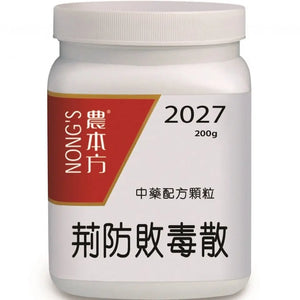
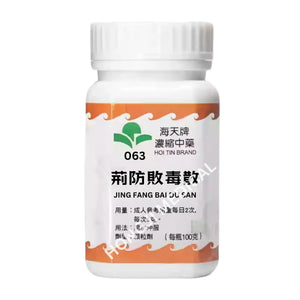
3. Differences and Similarities with Jingfang Baidu Powder
Jingfang Baidu San Both are formulas for relieving exterior syndrome and dispelling dampness, but their compositions and main treatments are slightly different. Baidu San (from Wa Tai Mi Yao) mainly contains Qiang Huo, Du Huo, Fang Feng, Jing Jie, and Chuan Xiong, which can relieve wind-cold, dispel wind-dampness, and treat wind-cold-dampness exterior syndrome, headache, body pain, aversion to cold and fever, etc. Jing Fang Baidu San takes Jing Jie, Fang Feng, Qiang Huo, and Du Huo as the core, focuses on dispersing wind-cold, relieving exterior syndrome and pain, and also dispelling damp-heat. It is often used for headache, neck pain, and upper body discomfort caused by wind-cold-dampness exterior syndrome. The drug items and focuses of the two formulas overlap, but the prescription compatibility and main treatment parts in clinical practice are different. When using, it should be selected according to syndrome differentiation.

VI. Clinical Applications and Indications
1. Applications for Common Diseases
Common cold: For wind-cold-dampness type common cold, when patients show symptoms such as severe aversion to cold, mild fever, headache, body pain, limb soreness, no sweating, nasal congestion, runny nose, cough with white phlegm, thin white and greasy tongue coating, Baidu San is a commonly used treatment formula. Through its effects of relieving exterior cold, expelling wind and dampness, it can effectively relieve the symptoms of common cold and promote the recovery of the body.
Rheumatoid arthritis: When patients with rheumatoid arthritis show joint pain, swelling, aggravated by cold, accompanied by symptoms of wind-cold-dampness exterior syndrome such as aversion to cold, fever, and heavy body, Baidu San can be used with modifications. In the formula, drugs such as Qiang Huo and Du Huo that expel wind and dampness can relieve joint pain, and exterior-relieving drugs can relieve exterior symptoms. Tonifying drugs such as Ren Shen can help enhance the body's resistance and promote the recovery of the disease.
2. Characteristics of Suitable Populations
Baidu San is suitable for people with insufficient healthy qi and are prone to being invaded by wind-cold-dampness pathogens. Such people usually have weak constitutions, are prone to common colds, or are prone to physical discomfort in cold and humid climates. For example, the elderly, children, and people with weak constitutions are more suitable to use Baidu San when invaded by wind-cold-dampness exterior pathogens. Because its effect of supplementing qi and strengthening healthy qi can protect the healthy qi, enabling the body to better resist external pathogens, and at the same time, the effects of relieving exterior, expelling wind and removing dampness can effectively relieve the symptoms.

VII. Modifications
1. Modifications Based on Symptoms
If the headache is severe, Bai Zhi and Gao Ben can be added to enhance the power of expelling wind and relieving pain. Bai Zhi is good at treating headache in the Yangming meridian, and Gao Ben is good at treating headache at the vertex. Working together with drugs such as Qiang Huo and Du Huo, they can more effectively relieve headache symptoms.
If there is excessive cough with phlegm, Ban Xia and Chen Pi can be added to dry dampness and resolve phlegm. Ban Xia and Chen Pi are commonly used phlegm-resolving drugs, which can enhance the effect of resolving phlegm and relieving cough in the formula and relieve the symptoms of cough with expectoration.
If the nasal congestion and runny nose are severe, Xin Yi and Cang Er Zi can be added to promote nasal passage. Xin Yi and Cang Er Zi are commonly used drugs for treating nasal congestion and runny nose such as nasal sinusitis, which can make the nasal passages unobstructed and relieve the symptoms of nasal congestion and runny nose.
2. Adjust according to constitution
If the patient's physical weakness is more obvious, the dosage of Ren Shen can be appropriately increased to enhance the power of strengthening healthy qi.
If the patient has a weak spleen and stomach and a poor transportation and transformation function, drugs for strengthening the spleen such as Atractylodes macrocephala and Chinese yam can be added to enhance the function of the spleen and stomach and promote the absorption of drugs and the recovery of the body.

VIII. Dosage (Traditional and modern concentrated granules)
1. Traditional dosage
The traditional usage of Baidu Powder is to decoct it in water for oral administration. The general dosage is: Notopterygium incisum and Angelica pubescens 9g each, Bupleurum chinense, Peucedanum praeruptorum, Ligusticum chuanxiong, Aurantii Fructus Immaturus, Platycodon grandiflorum 6g each, Poria cocos 9g, Glycyrrhiza glabra 3g, Panax ginseng 6g (or Codonopsis pilosula 9g). Add appropriate amount of water to the above drugs, soak them and then decoct to obtain the medicinal liquid, and take it warm in two doses.
2. Dosage of modern concentrated granules
There is a concentrated granule dosage form of Baidu Powder in modern times. Its dosage varies slightly according to the specifications of different manufacturers. Generally speaking, for concentrated granules equivalent to the dosage of traditional cut herbs, just take them according to the instructions. For example, for concentrated granules equivalent to 10g of crude drugs per bag, it can be taken 2 - 3 times a day, 1 - 2 bags each time, and taken by冲服 with boiling water according to the condition and doctor's advice.

IX. Precautions and taboos
1. Precautions during medication
During the period of taking Baidu Powder, the patient should pay attention to rest, avoid fatigue, and ensure sufficient sleep to facilitate the recovery of the body.
The diet should be light and easy to digest, and avoid eating spicy, greasy, raw and cold and other stimulating foods to avoid increasing the burden on the spleen and stomach and affecting the curative effect of the drugs.
2. Taboo groups
Those who are allergic to any drug in Baidu Powder are prohibited from using it. Those with an allergic constitution should be cautious when using it and closely observe the reaction after taking the medicine.
It should be used with caution during pregnancy. Since some drugs in the formula have certain effects such as promoting qi and activating blood circulation, using it during pregnancy may have an impact on the fetus. If it is necessary to use it, it should be carried out under the guidance of a doctor.

X. Modern research progress
1. Research on Pharmacological Effects
Baidu Powder (also known as Ginseng Baidu Powder) is a traditional Chinese medicine prescription. Jingfang Baidu Powder is its modified prescription, which has the functions of inducing sweating to relieve exterior syndrome, dispersing wind and removing dampness, and benefiting qi to relieve exterior syndrome. It is mainly used for symptoms such as aversion to cold and fever, no sweating with chills and fever, stiffness and pain in the head and neck, soreness and pain in the limbs, cough with phlegm, fullness and discomfort in the chest diaphragm, white and greasy tongue coating caused by exogenous wind-cold-damp pathogen and wind-cold-damp exterior syndrome. It is widely used clinically for colds, influenza, bronchitis, rheumatoid arthritis, dysentery, sores and ulcers, eczema, etc. It is composed of Saposhnikovia divaricata, Schizonepeta tenuifolia, Ligusticum chuanxiong, Platycodon grandiflorum, Aurantii Fructus Immaturus, Bupleurum chinense, Panax ginseng, Poria cocos, etc. Attention should be paid to the usage and dosage. Those with qi deficiency and exogenous pathogen due to yin deficiency should use it with caution.
Modern research shows that some drugs in Baidu San have various pharmacological effects. For example, drugs for expelling wind and dampness such as Notopterygium Root and Angelica Pubescens have anti-inflammatory and analgesic effects, which can reduce inflammatory reactions and relieve pain symptoms. Drugs such as Bupleurum Root and Peucedanum Root have antipyretic, antibacterial, antiviral and other effects, which can help the body fight exogenous pathogenic factors, regulate body temperature, and inhibit the growth and reproduction of pathogens. Ginseng can enhance the body's immunity, improve the body's stress response ability, and promote the body's recovery.
2. Clinical efficacy verification
In clinical research, the therapeutic effect of Baidu San on diseases such as exogenous wind-cold complicated with dampness syndrome has been further verified. Through the observation and analysis of a large number of patients, it is found that Baidu San can effectively relieve symptoms such as aversion to cold and fever, headache and body pain, cough and expectoration, shorten the course of disease, and improve the cure rate. When treating diseases such as rheumatoid arthritis with exogenous symptoms, it can also play a certain adjuvant therapeutic role and improve the patient's joint pain and physical discomfort symptoms.
Frequently Asked Questions
What is Bai Du San used for in Traditional Chinese Medicine?
Bai Du San (败毒散) is a classical TCM formula for supporting the righteous Qi (Zheng Qi) while expelling external pathogens, particularly Wind-Cold-Damp invasion that has begun to turn into Heat or toxicity. It is indicated for early-stage febrile diseases, carbuncles, boils, sores, and skin infections with underlying deficiency. The formula is especially useful when the patient has weak constitution or the pathogen is strong, as it tonifies Qi while dispersing Wind, draining Dampness, and clearing Heat. It is commonly used in pediatrics and for early infections where pure exterior-releasing formulas may be too harsh.
How does Bai Du San support the body while expelling pathogens?
Bai Du San employs a “support Zheng while dispelling Xie” strategy. Ren Shen and Fu Ling tonify Qi and strengthen the Spleen to support the body’s defensive energy. Qiang Huo and Du Huo disperse Wind-Damp from the exterior. Chai Hu harmonizes and clears Shaoyang Heat. Jie Geng opens the Lung and expels phlegm. Chuan Xiong moves Blood to relieve pain. The combination allows the formula to gently release the exterior, clear emerging Heat, and support the body’s ability to fight infection without exhausting the patient — making it ideal for those with weak constitution or children.
What are the precise herbal ingredients in Bai Du San?
Bai Du San contains: Ren Shen (Ginseng) to tonify Qi and support Zheng; Qiang Huo and Du Huo to disperse Wind-Damp; Chai Hu to harmonize and clear Heat; Jie Geng to open the Lung and expel phlegm; Zhi Qiao to move Qi and relieve distension; Chuan Xiong to move Blood and relieve pain; Fu Ling to strengthen the Spleen and drain Damp; Gan Cao to harmonize; and often Bo He (Mint) to clear Wind-Heat from the head. The formula elegantly balances tonification with pathogen expulsion.
⚠️ This content is for reference only and does not provide medical advice. Consult a healthcare professional for any health concerns.