Jiu Wei Qiang Huo Tang: Classic TCM Formula for Wind-Cold-Damp with Interior Heat

I. Origins and History
1. Background of Origin
Jiuwei Qianghuo Tang emerged from the continuous exploration and practice of ancient physicians regarding externally contracted disease. In ancient times, externally contracted illness was a relatively common and seriously harmful category of disease, and physicians devoted themselves to finding effective treatment methods. Jiuwei Qianghuo Tang gradually took shape against this backdrop. It draws together the experience of physicians throughout history in treating externally contracted disease, combined with the actual clinical circumstances of its time, with its composition and combination continually refined.
2. Historical Development
Its history is long, traceable back to the Jin-Yuan period. At that time, numerous medical schools existed, each with its own distinctive approach to understanding and treating disease. Jiuwei Qianghuo Tang was created by Zhang Yuansu and later supplemented and refined by Li Dongyuan. Zhang Yuansu was the founding figure of the Yishui school, placing great importance on organ pattern differentiation and precise attention to channel affinity in herb use. Li Dongyuan further developed the Spleen-Stomach doctrine, adjusting and optimising the formula, making Jiuwei Qianghuo Tang more mature and refined. Since then, through transmission and application by physicians of the Ming, Qing, and modern eras, Jiuwei Qianghuo Tang has remained a commonly used formula for treating externally contracted wind-cold-damp pathogens, playing an important role in Chinese medicine clinical practice.

II. Herb Composition (Sovereign, Minister, Assistant, Envoy)
1. Chief Herb — Qianghuo
Qianghuo (Notopterygium Rhizome) has a strong, penetrating aroma, is warm in nature, and excels at dispelling wind and dispersing cold, with a relatively strong power to release the exterior. It can rise to the head and eyes, descend to the feet and knees, and penetrate outward to the skin, excelling at expelling wind-cold-damp pathogens at the exterior, and is particularly effective for Taiyang-channel headache. In Jiuwei Qianghuo Tang, Qianghuo serves as the chief herb, leading the other herbs to exert their action of releasing the exterior, dispersing cold, and dispelling wind and dampness, making it the key herb for treating externally contracted wind-cold-damp pathogens.
2. Deputy Herbs — Fangfeng and Cangzhu
Fangfeng (Siler Root) is acrid and sweet in flavour, warm in nature, and is a moistening agent among wind-dispelling herbs, able to both dispel wind and release the exterior, and overcome dampness to relieve pain. Combined with Qianghuo, it strengthens the power to dispel wind, disperse cold, and eliminate dampness. Cangzhu (Atractylodes lancea Rhizome) is acrid and bitter in flavour, warm in nature, drying dampness and strengthening the spleen, able to transport and transform dampness pathogens in the middle burner, making it an essential herb for eliminating dampness. Fangfeng and Cangzhu assist Qianghuo, strengthening the formula's action of releasing the exterior and eliminating dampness, and are the deputy herbs in Jiuwei Qianghuo Tang, helping the chief herb to better exert its therapeutic action.
3. Assistant Herbs — Xixin, Chuanxiong, Baizhi, Huangqin, and Shengdi
Xixin (Asarum) is acrid and warm, able to dispel wind, disperse cold, open the orifices, and relieve pain, while also assisting Qianghuo and Fangfeng in strengthening the power to release the exterior. Chuanxiong (Szechuan Lovage Rhizome) is acrid, warm, fragrant, and penetrating, activating blood, moving qi, dispelling wind, and relieving pain, excelling at treating headache. Baizhi (Angelica dahurica Root) is acrid and warm, releasing the exterior, dispersing cold, dispelling wind, and relieving pain, particularly skilled at treating Yangming-channel headache. These three herbs strengthen the formula's action of dispelling wind and relieving pain, while also helping Qianghuo and the other herbs disperse wind-cold. Huangqin (Scutellaria Root) is bitter and cold, clearing heat and drying dampness; in the formula, it prevents the various acrid, warming herbs from transforming into heat and damaging yin. Shengdi (Raw Rehmannia Root) is sweet and bitter in flavour, cold in nature, clearing heat, cooling the blood, and nourishing yin, both restraining the acrid, warming, drying, fierce nature of the other herbs, and preventing internal heat from damaging fluids. Xixin, Chuanxiong, Baizhi, Huangqin, and Shengdi together serve as assistant herbs, playing both an assisting and a moderating role, making the formula more comprehensive.
4. Envoy Herb — Gancao
Gancao (Licorice) is sweet and neutral in nature, harmonising the various herbs — both moderating the fierce, potent nature of the herbs in the formula, and coordinating the interactions among them, allowing the whole formula's combination to be more harmonious and its therapeutic action to be exerted together, and is therefore the envoy herb.

III. Pathomechanism, Actions, and Indications of Jiuwei Qianghuo Tang
1. Pathomechanism
The pathomechanism targeted by Jiuwei Qianghuo Tang is externally contracted wind-cold-damp pathogens with internal heat accumulation. When the body's righteous qi is insufficient, wind-cold-damp pathogens invade the muscle layer and stagnate, transforming into heat. Wind-cold-damp binding the exterior, with wei yang obstructed, gives rise to exterior manifestations such as aversion to cold with fever and absence of sweating; damp pathogens obstructing the channels and joints, with sluggish qi-blood movement, give rise to soreness and pain of the limbs; internal heat accumulation gives rise to a bitter taste with slight thirst.
2. Actions
Jiuwei Qianghuo Tang has the actions of inducing sweating and dispelling dampness, while also clearing interior heat. Through inducing sweating and releasing the exterior, wind-cold-damp pathogens at the exterior are expelled, giving the pathogen an outlet; at the same time, interior heat is cleared and drained, preventing the pathogen from penetrating inward and transforming into heat, achieving the goal of resolving both the exterior and the interior.
3. Indications
It mainly treats the pattern of externally contracted wind-cold-damp pathogens with internal heat accumulation. Symptoms include aversion to cold with fever, absence of sweating, headache with stiffness of the nape, soreness and pain of the limbs, a bitter taste with slight thirst, a white or slightly yellow tongue coating, and a floating pulse. Clinically, it is commonly used to treat the common cold, influenza, and rheumatoid arthritis attributable to a wind-cold-damp pattern with concurrent interior heat.

IV. Formula Analysis of Jiuwei Qianghuo Tang
1. Equal Emphasis on Releasing the Exterior, Dispersing Cold, and Eliminating Dampness
In the formula, herbs such as Qianghuo, Fangfeng, and Cangzhu are combined together, with a relatively strong power to dispel wind, disperse cold, and eliminate dampness. Qianghuo excels at dispelling wind-cold-damp pathogens from the Taiyang channel; Fangfeng both assists Qianghuo in dispelling wind and overcomes dampness; Cangzhu dries dampness and strengthens the spleen, transporting and transforming middle-burner dampness pathogens. The three work synergistically, allowing wind-cold-damp pathogens to be dispersed, embodying the characteristic of placing equal emphasis on releasing the exterior, dispersing cold, and eliminating dampness.
2. Treating Both the Exterior and Interior
Huangqin clears and drains interior heat, while Shengdi clears heat, cools the blood, and nourishes yin, addressing the pathomechanism of internal heat accumulation. Combined with the exterior-releasing, cold-dispersing, dampness-eliminating herbs, they both disperse the exterior pathogen and clear and drain interior heat, achieving the effect of treating both the exterior and interior together, allowing the externally contracted pathogen and internally generated heat to be eliminated together.
3. Guiding to the Channels
Xixin, Chuanxiong, and Baizhi enter the Shaoyin, Shaoyang, and Yangming channels respectively, able to guide the herbs directly to the site of disease, strengthening the action of dispelling wind and relieving pain, while also helping Qianghuo and the other herbs to better exert their action of releasing the exterior and dispersing cold, embodying the combination characteristic of guiding the herbs to their respective channels.
4. Harmonising the Herbs' Properties
Gancao harmonises the various herbs, moderating the fierce, potent nature of the herbs in the formula, making the whole formula's action more balanced, working synergistically to exert its therapeutic action, and ensuring the formula's stability and effectiveness.

V. Comparison with Related Formulas
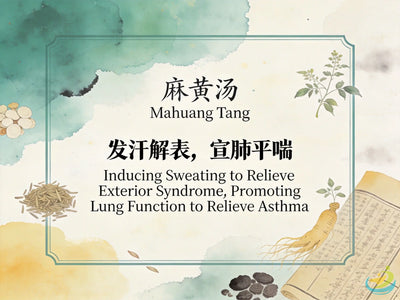
1. Comparison with Mahuang Tang
Mahuang Tang mainly treats externally contracted wind-cold with an exterior-excess pattern, presenting mainly with aversion to cold with fever, wheezing without sweating, and a floating, tight pulse. Its power to release the exterior is relatively strong, focusing on inducing sweating, releasing the exterior, diffusing the lung, and calming wheezing. Jiuwei Qianghuo Tang, besides treating externally contracted wind-cold, also treats concurrent damp pathogens and interior heat, with more comprehensive herb use — not only including exterior-releasing, sweat-inducing herbs such as Qianghuo, but also the dampness-eliminating Cangzhu and interior-heat-clearing herbs such as Huangqin and Shengdi, placing greater emphasis on resolving both the exterior and interior.
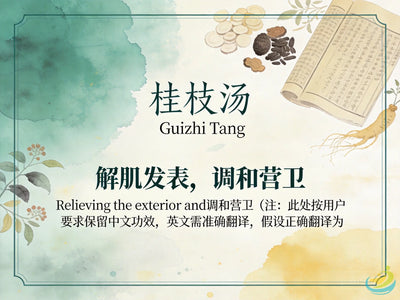
2. Comparison with Guizhi Tang
Guizhi Tang mainly treats externally contracted wind-cold with an exterior-deficiency pattern, characterised by headache with fever, sweating with aversion to wind, and a floating, moderate pulse. It emphasises releasing the muscle layer and the exterior, and harmonising ying and wei. Jiuwei Qianghuo Tang targets the pattern of externally contracted wind-cold-damp with concurrent interior heat, with a relatively strong power to release the exterior and eliminate dampness, and also has an action of clearing interior heat, differing notably from Guizhi Tang in pathomechanism, action, and indication.
3. Comparison with Qianghuo Shengshi Tang
Qianghuo Shengshi Tang mainly treats the pattern of wind-damp bi obstruction at the exterior, with heaviness and pain of the head and body, and shoulder and back pain that cannot be turned as the main symptoms, focusing on dispelling wind, overcoming dampness, and relieving pain. Although Jiuwei Qianghuo Tang also has the action of dispelling wind and eliminating dampness, it also attends to externally contracted wind-cold and interior heat conditions, with a more complex herb composition and broader action.

VI. Clinical Applications
1. Common Cold (Exterior-Releasing Formula)
For patients with a cold caused by wind-cold combined with dampness, with concurrent internal heat accumulation, presenting with aversion to cold with fever, headache with bodily aches, absence of sweating, and a bitter taste with slight thirst, Jiuwei Qianghuo Tang has good therapeutic effect. It can rapidly release the exterior, disperse cold, eliminate dampness, and clear heat, relieving cold symptoms.
2. Influenza
In the early stage of influenza, if symptoms resembling wind-cold-damp with concurrent interior heat appear, such as high fever, aversion to cold, headache, muscle aches, and a dry throat with a bitter taste, applying Jiuwei Qianghuo Tang can release the exterior, clear heat, and help control disease progression.
3. Rheumatoid Arthritis
For rheumatoid arthritis patients with wind-cold-damp pathogens obstructing the channels and joints, accompanied by interior-heat symptoms such as fever and a bitter taste, Jiuwei Qianghuo Tang can relieve joint pain and swelling through dispelling wind, eliminating dampness, clearing heat, and unblocking the channels.
4. Other Applications
In addition, it may also be used to treat certain conditions of muscle pain and headache caused by externally contracted wind-cold-damp pathogens; as long as the condition matches the pathomechanism of wind-cold-damp with concurrent interior heat, Jiuwei Qianghuo Tang may be considered for treatment.

VII. Clinical Modifications
- If damp pathogens predominate, with pronounced heaviness and fatigue of the limbs, Yiyiren (Job's Tears) and Fuling (Poria) may be added to strengthen the action of eliminating dampness.
- If interior heat is relatively exuberant, with a pronounced bitter taste and dry throat, the dosage of Huangqin may be increased, or Shigao (Gypsum) and Zhimu (Anemarrhena Rhizome) may be added to clear heat and drain fire.
- If headache is severe, Quanxie (Scorpion) and Wugong (Centipede) may be added to unblock the channels and relieve pain.
- If cough is relatively pronounced, Xingren (Apricot Kernel) and Jiegeng (Platycodon Root) may be added to stop coughing and calm wheezing.
- If aversion to cold is relatively pronounced, with marked absence of sweating, the dosages of Qianghuo and Mahuang may be appropriately increased to strengthen the action of inducing sweating and releasing the exterior.

VIII. Dosage and Preparation (Traditional Method and Modern Concentrated Granules)
1. Traditional Method
The original formula's method is "decocted in water and taken." Generally, the herbs are cut into pieces, soaked in water, brought to a boil over high heat, then simmered over a low flame for a set period of time; the liquid is strained off and taken warm in divided doses. The commonly used dosage is Qianghuo, Fangfeng, and Cangzhu, 9g each; Xixin, 3g; Chuanxiong, Baizhi, Huangqin, and Shengdi, 6g each; and Gancao, 6g. The specific dosage may be appropriately adjusted according to factors such as the severity of the condition and the patient's constitution.
2. Modern Concentrated Granules
A modern concentrated granule form of Jiuwei Qianghuo Tang is available today. Its method of administration is simpler, generally dissolved directly in boiled water. The dosage varies somewhat according to different manufacturers' specifications, but is roughly comparable to the traditional decoction. The concentrated granules preserve the efficacy of the original formula and are convenient to store and take, suiting the fast pace of modern life.

IX. Precautions and Contraindications
1. Precautions
This formula is acrid, warming, and drying in nature, and can readily deplete fluids; those with yin deficiency and internal heat should use it with caution. During treatment, a light diet should be maintained, avoiding spicy, greasy, raw, and cold irritating foods, so as not to affect the herbs' efficacy. At the same time, adequate rest should be maintained, avoiding overexertion, and drinking plenty of water to promote metabolism and aid recovery from illness.
2. Contraindications
Use with caution in pregnancy, since most of the herbs in the formula are acrid and warming in nature and may adversely affect the fetus. In addition, it is contraindicated in those allergic to any of the herbs in the formula. If an allergic reaction occurs during use, the medication should be discontinued immediately and medical attention sought promptly.

X. Modern Research
1. Pharmacological Research
Jiuwei Qianghuo Tang originates from the *Yifang Jijie* (Collected Explanations of Medical Formulas) and is an exterior-releasing formula, used for externally contracted patterns with concurrent interior heat accumulation; it is acrid, warming, and releases the exterior, inducing sweating to release the exterior, and should be flexibly modified according to the pattern — for example, adding Shengjiang and removing Cangzhu, or adding Zhiqiao to treat chest fullness, or using Huangqin and Shengdi to clear heat, and decocting with scallion white to aid exterior release — treating according to channel and applying it flexibly.
Modern research shows that Jiuwei Qianghuo Tang has anti-inflammatory, antipyretic, and analgesic actions. Its various chemical constituents, such as volatile oils, alkaloids, and flavonoids, may be the material basis for these pharmacological actions. For example, the volatile oil in Qianghuo has antibacterial and antiviral actions, while baicalin in Huangqin has anti-inflammatory and antipyretic effects; these constituents work synergistically, providing a certain scientific basis for the use of Jiuwei Qianghuo Tang in treating externally contracted disease.
2. Clinical Research
Clinical research has further verified the efficacy of Jiuwei Qianghuo Tang. In treating conditions such as the common cold and influenza, compared with other commonly used formulas, Jiuwei Qianghuo Tang can relieve symptoms more quickly and shorten the course of illness. For conditions such as rheumatoid arthritis, it can also improve symptoms such as joint pain and swelling to a certain degree, enhancing patients' quality of life. In addition, some studies have also explored the application potential of Jiuwei Qianghuo Tang in other conditions, providing new avenues for expanding its clinical application.
3. Research on Dosage Form Improvement
With the development of modern pharmaceutical technology, research into improving the dosage forms of Jiuwei Qianghuo Tang continues to deepen. Besides the concentrated granule form mentioned above, pill and capsule forms have also been developed, to meet the needs of different patients. These new dosage forms, while maintaining efficacy, improve the stability and convenience of the herbs, providing more options for the clinical application of Jiuwei Qianghuo Tang.
As a classical Chinese medicine formula, Jiuwei Qianghuo Tang, having been transmitted for a thousand years, holds distinctive advantages in treating the pattern of externally contracted wind-cold-damp pathogens with concurrent interior heat. Through in-depth understanding of its origins, composition, actions, applications, and modern research developments, we can better exert its clinical value, safeguarding patients' health.

💡 Jiuwei Qianghuo Tang — Frequently Asked Questions & Medication Safety (FAQ)
Q1: What are the core actions and mechanism of Jiuwei Qianghuo Tang?
Jiuwei Qianghuo Tang is precisely combined from nine classical herbs — Qianghuo, Fangfeng, Cangzhu, Xixin, Chuanxiong, Baizhi, Shengdihuang, Huangqin, and Gancao — with the core actions of inducing sweating and dispelling dampness, while also clearing interior heat. Chinese medicine holds that "cold pathogens close the exterior, and damp pathogens obstruct the collaterals, readily stagnating internally and transforming into heat." The essence of this formula's combination fully embodies the grand Chinese medicine wisdom of "treating according to channel affinity, dually regulating exterior and interior": Qianghuo is used generously as the chief herb, acrid, warm, and fiercely potent, entering specifically the Taiyang channel (the back of the head and the nape and back) to disperse cold, dispel dampness, and relieve generalised bi pain; combined with Fangfeng and Cangzhu to dry dampness and induce sweating, expelling damp pathogens from the muscle layer; combined with Chuanxiong (for Jueyin-channel lateral headache), Baizhi (for Yangming-channel frontal headache), and Xixin (for Shaoyin-channel deep pain), achieving comprehensive channel-unblocking pain relief across the whole head and channel system; the most ingenious touch is that, within the large contingent of acrid, warming, drying, fierce herbs, a counterbalancing pair of bitter-cold and sweet-cold herbs — Huangqin and Shengdihuang — is added, directly clearing the lung-stomach interior heat generated from cold-pathogen stagnation, while also nourishing yin and protecting fluids. HJMEDICAL notes that this formula regulates both sweating and dampness, combining clearing with dispersing, able to precisely interrupt the course of disease, and is known as the foremost interrupting formula for "externally contracted wind-cold-damp pathogens with internal heat accumulation."
Q2: What conditions is Jiuwei Qianghuo Tang mainly used for in modern medicine?
Modern clinical practice and pharmacological research in antipyretic-analgesic and neuromuscular fluid dynamics show that this formula is widely applied in treating wind-cold-damp colds, influenza, acute migraine, tension headache, rheumatic and rheumatoid arthritis, polymyalgia syndrome, sciatica, and reflex headache caused by chronic sinusitis. When patients — particularly those exposed to the changing cold seasons of winter and spring, exposed to wind, cold, and dampness, or who spend long periods in a damp, cold environment — present with typical manifestations of "wind-cold-damp invading the exterior with internal heat accumulation," such as sudden persistent high fever, pronounced aversion to cold, closed skin with absolutely no sweating, intense, splitting pain throughout the head, generalised aching heaviness of the joints or muscles with difficulty bending and extending, a bitter taste in the mouth, a pale red tongue, and a thin, white or yellow, greasy tongue coating, rational use of this formula can significantly interrupt viral replication, provide powerful antipyretic and analgesic effects, inhibit excessive cerebral vascular dilation, and effectively eliminate inflammatory oedema in the joint spaces. Consultation with HJMEDICAL or a qualified physician for pattern-based diagnosis is recommended.
Q3: What are the strict pattern-based contraindications for taking Jiuwei Qianghuo Tang?
This formula is a typical acrid, warming, drying, powerfully dispersing, sweat-inducing heavy preparation, which can very readily deplete qi and damage yin; safe clinical use requires absolutely strict distinction between colds and pain-related constitutions. It is absolutely contraindicated in exterior deficiency with spontaneous sweating (those who habitually sweat easily and profusely), yin-deficiency night sweats, simple wind-heat colds without pronounced fever or bodily heaviness (presenting with mild aversion to cold, pronounced fever, a red, swollen, severely painful throat, dry, hard stools, and a red tongue with scanty coating), and chronic headache purely attributable to yin deficiency with fire effulgence. Careless misuse will cause the body's yin fluid to become further depleted by the large contingent of warming, drying herbs, triggering profuse sweating with dehydration, a sharp rise in blood pressure, or worsening of skin lesions and burning throat pain. In addition, the highest-level medication safety warning: because the formula's principal herb Chuanxiong has an extremely strong action of activating blood and moving qi, and Xixin, Baizhi, and Qianghuo are warming, drying, and orifice-opening, pregnant women, breastfeeding women, and women during their menstrual period must strictly avoid use, to prevent intense stimulation of the uterus leading to fetal restlessness, miscarriage, premature birth, or severe uterine bleeding. This formula should be stopped as soon as it takes effect (discontinue immediately once sweating occurs and fever subsides), and must never be used indiscriminately over the long term. During treatment, smoking, alcohol, spicy foods, raw and cold foods, seafood and other "hair-inducing" foods, beef, lamb, and all rich, greasy foods should be avoided. Those uncertain of their own constitution should seek professional assessment at an HJMEDICAL partner medical institution.
⚠️ This content is for reference only and does not provide medical advice. Consult a healthcare professional for any health concerns.