Q1: What are the actions of Jing Fang Bai Du San?
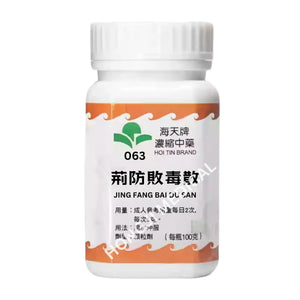
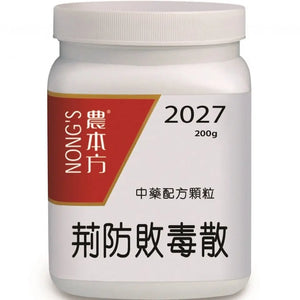
Jing Fang Bai Du San has the actions of releasing the exterior by sweating, dispersing Wind-Cold-Damp, and relieving body aches. It is a strong exterior-releasing formula for excess-type Wind-Cold-Damp invasion without significant underlying Qi deficiency.
Q2: Which modern diseases is Jing Fang Bai Du San suited to?
Modern TCM clinical practice commonly applies it to individuals whose pattern differentiation falls within exterior Wind-Cold-Damp excess, including common cold or influenza with prominent body and joint aches, early-stage sores or boils with exterior Cold signs, acute urticaria or eczema flares of Wind-Cold type, and early dysentery accompanied by exterior Cold-Damp symptoms.
Q3: Is Jing Fang Bai Du San suitable for improving strong chills, fever, no sweating, and severe body aches?
For presentations of strong aversion to cold with fever, absence of sweating, headache, stiff neck, generalized body or limb soreness and pain, nasal congestion, cough with phlegm, a white greasy tongue coating, and a floating pulse — in those whose pattern differentiation confirms exterior Wind-Cold-Damp excess — TCM commonly applies Jing Fang Bai Du San as an adjunct. It cannot replace standard medical treatment.
Q4: Who should not take Jing Fang Bai Du San?
Those with Wind-Heat exterior patterns (sore throat, yellow phlegm, thirst), Yin deficiency with internal Heat, pure Damp-Heat dysentery without exterior Cold signs, or significant Qi deficiency requiring tonification are generally not suitable. The formula is warm, acrid, and strongly dispersing. Use should be assessed by a qualified TCM physician.
Q5: How does Jing Fang Bai Du San differ from Ren Shen Bai Du San?
Ren Shen Bai Du San includes Ren Shen to support Qi in deficient patients and is milder in its exterior-releasing action. Jing Fang Bai Du San replaces or emphasizes Jing Jie and Fang Feng, omits Ren Shen, and is stronger at dispersing Wind-Cold-Damp. It is preferred for more robust patients with clear excess exterior signs and prominent body aches.
Q6: Can Jing Fang Bai Du San be used for early-stage skin conditions or dysentery?
Yes, when there are clear exterior Wind-Cold-Damp signs. It is classically applied to early sores, boils, or carbuncles before pus forms, and to early dysentery with exterior symptoms (the “ni liu wan zhou” approach of drawing the pathogen outward). Once the condition becomes purely interior Heat or Damp-Heat, a different strategy is required.
Q7: What are the main ingredients of Jing Fang Bai Du San?
Key herbs include Jing Jie and Fang Feng to strongly disperse Wind and release the exterior; Qiang Huo and Du Huo to expel Wind-Cold-Damp from the upper and lower body and relieve aches; Chuan Xiong to move Blood and ease headache; Chai Hu and Qian Hu to release the exterior and regulate Lung Qi; Zhi Ke and Jie Geng to move Qi and transform Phlegm; Fu Ling to support the Spleen and drain Dampness; and Gan Cao to harmonize.
Q8: Is Jing Fang Bai Du San suitable for long-term use?
No. It is an acute exterior-releasing formula intended for short-term use until the exterior symptoms (chills, body aches, no sweating) resolve. Once the pathogen is expelled, the formula should be stopped. Prolonged use of its warm, drying, dispersing herbs is inappropriate.
Q9: Why is this formula particularly effective for body and joint aches in colds?
The combination of Jing Jie, Fang Feng, Qiang Huo, and Du Huo strongly disperses Wind-Cold-Damp that has lodged in the exterior and channels. Qiang Huo and Du Huo specifically address upper- and lower-body aches and heaviness, while Chuan Xiong moves Blood to relieve pain, making the formula well-suited to colds dominated by muscle and joint soreness.
Q10: What lifestyle advice supports the use of Jing Fang Bai Du San?
Keeping warm, resting, inducing mild sweating without overexertion, and avoiding cold drafts and cold raw foods help the formula release the exterior. Once exterior symptoms improve, focus shifts to recovery. Professional pattern differentiation is essential to distinguish this excess Wind-Cold-Damp presentation from deficiency or Heat patterns.