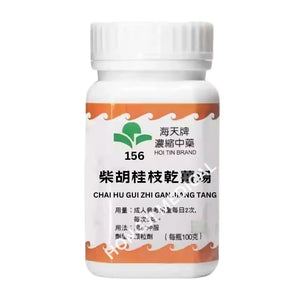
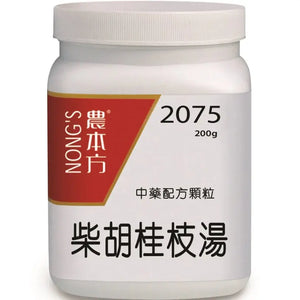
Q1: What are the actions of Chai Hu Gui Zhi Gan Jiang Tang?
Chai Hu Gui Zhi Gan Jiang Tang has the actions of harmonizing Shao Yang, warming and transforming water/rheum (fluids), and regulating the mixed Cold-Heat pattern. It addresses Shao Yang disharmony complicated by fluid retention or concurrent Spleen Cold.
Q2: Which modern diseases is Chai Hu Gui Zhi Gan Jiang Tang suited to?
Modern TCM clinical practice commonly applies it to individuals whose pattern differentiation falls within Shao Yang with fluid retention or Gallbladder Heat–Spleen Cold, including certain cases of chronic gastritis, cholecystitis, chronic hepatitis, irritable bowel or digestive disorders with mixed Heat and Cold signs, and some presentations of lingering feverish sensations or fluid imbalance matching this pattern.
Q3: Is Chai Hu Gui Zhi Gan Jiang Tang suitable for improving alternating chills and fever with chest fullness, thirst, and difficult urination?
For presentations of alternating chills and fever (often with more Cold), fullness or slight binding in the chest and hypochondrium, thirst without vomiting, difficult or scanty urination, sweating mainly on the head, irritability, and a tendency toward cold extremities or loose stools — in those whose pattern differentiation confirms Shao Yang disorder with water/rheum or concurrent Tai Yin Cold — TCM commonly applies this formula as an adjunct. It cannot replace standard medical treatment.
Q4: Who should not take Chai Hu Gui Zhi Gan Jiang Tang?
Those with pure excess Heat, pure Yin deficiency with vigorous Fire, strong Damp-Heat, or pure Cold deficiency without the Shao Yang component are generally not suitable. The formula contains both cooling Shao Yang herbs and warming fluid-transforming herbs; mismatched patterns can worsen the condition. Caution is advised in pregnancy. Use should be assessed by a qualified TCM physician.
Q5: How does this formula differ from Xiao Chai Hu Tang?
Xiao Chai Hu Tang is the primary formula for classic Shao Yang with more balanced or Heat-leaning presentations and often includes Ren Shen and Ban Xia. Chai Hu Gui Zhi Gan Jiang Tang is used when there is additional fluid retention, more Cold, thirst with urinary difficulty, head-only sweating, or concurrent Spleen Cold; it replaces some ingredients with Gui Zhi, Gan Jiang, Tian Hua Fen, and Mu Li to warm, transform fluids, generate fluids, and soften hardness.
Q6: Why does the formula include both cooling and warming herbs?
The pattern involves Shao Yang constraint (addressed by Chai Hu and Huang Qin) together with fluid retention or Spleen Cold (addressed by Gui Zhi and Gan Jiang). Tian Hua Fen generates fluids to relieve thirst without aggravating Dampness, while Mu Li helps soften and astringe. This combination resolves the half-exterior half-interior pathogen while warming and transforming the concurrent fluid or Cold aspect.
Q7: What are the main ingredients of Chai Hu Gui Zhi Gan Jiang Tang?
The classical formula consists of Chai Hu to harmonize Shao Yang; Huang Qin to clear Shao Yang Heat; Gui Zhi and Gan Jiang to warm and transform water/rheum and support Yang; Tian Hua Fen (Gua Lou Gen) to generate fluids and relieve thirst; Mu Li to soften hardness and astringe; and Zhi Gan Cao to harmonize the formula.
Q8: Is Chai Hu Gui Zhi Gan Jiang Tang suitable for long-term use?
It is generally used for a defined course while the Shao Yang and fluid/Cold aspects are being resolved. Once the alternating sensations, chest fullness, thirst, and urinary difficulty improve, the formula is typically modified or discontinued. Long-term use should be guided by ongoing pattern assessment.
Q9: Can this formula help patterns described as “Gallbladder Heat and Spleen Cold”?
Yes. Many modern clinicians use it for presentations in which upper or Gallbladder-area Heat signs (bitterness, chest/hypochondriac fullness, irritability, thirst) coexist with lower or Spleen Cold signs (loose stools, cold extremities, fluid retention). The formula’s dual cooling and warming structure matches this mixed pattern when properly differentiated.
Q10: What lifestyle advice supports the use of Chai Hu Gui Zhi Gan Jiang Tang?
Eating regular, easily digestible meals that are neither too cooling nor overly heating, avoiding emotional extremes and overwork, keeping the abdomen and lower body warm, and maintaining regular rest help the formula restore Shao Yang balance and transform residual fluids. Persistent digestive, hepatic, or feverish symptoms require proper medical evaluation.