Harmonising Formulas

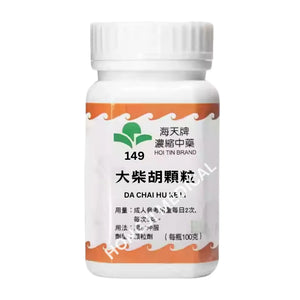
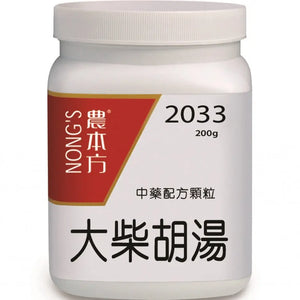
大柴胡湯 · Dà Chái Hú Tāng

Da Chai Hu Tang

A classical formula for Shaoyang-Yangming concurrent disease with alternating fever/chills, constipation and epigastric fullness.

View formula profile →
Last reviewed September 2026
Formula CategoryHarmonising Formulas
Primary PatternShaoyang Syndrome
Primary FunctionHarmonize Shaoyang, drain interior heat, move stool
Primary Therapeutic PrincipleHarmonize Shaoyang and simultaneously drain Yangming heat accumulation
Main HerbsBupleurum Root · Scutellaria / Baikal Skullcap · Pinellia Rhizome · Rhubarb Root and Rhizome · Immature Bitter Orange · White Peony Root · Fresh Ginger · Jujube / Chinese Date
Classical SourceShang Han Lun (Zhang Zhongjing, Eastern Han)

Why This Formula?

Traditionally selected when Shaoyang and Yangming present together — alternating chills/fever with constipation and epigastric urgency — rather than pure Shaoyang or pure Yangming excess.

Traditionally selected when Shaoyang and Yangming present together — alternating chills/fever with constipation and epigastric urgency — rather than pure Shaoyang or pure Yangming excess.

What Is Da Chai Hu Tang?

1. Ancient Classics Inheritance

Da Chai Hu Tang (大柴胡汤), or Major Bupleurum Decoction, is a classical formula from Zhang Zhongjing’s Shang Han Lun and Jin Gui Yao Lue. It belongs to the category of formulas that simultaneously harmonize Shaoyang and drain Yangming excess.

This formula addresses a concurrent Shaoyang and Yangming pattern, in which the pathogen remains half-exterior and half-interior while Heat has already bound in the Stomach and Intestines. Typical signs include alternating chills and fever, bitter taste, chest and hypochondriac fullness or pain, vomiting, epigastric hardness or distention, constipation or incomplete bowel movements, a yellow tongue coating, and a wiry excess pulse.

Combining Chai Hu and Huang Qin to harmonize Shaoyang and clear constrained Heat, Ban Xia and Sheng Jiang to descend rebellious Qi and stop vomiting, Zhi Shi and Da Huang to break Qi stagnation and drain Yangming accumulation, Bai Shao to soften the Liver and ease spasm, and Da Zao to protect the Middle, Da Chai Hu Tang is the “major” counterpart to Xiao Chai Hu Tang: it still pivots Shaoyang, but adds purgation because interior excess has already formed.

Da Chai Hu Tang

2. Digestive System Applications

Da Chai Hu Tang (Major Thorowax Decoction) is widely used in traditional practice to support digestive health.

  • Common uses: It is traditionally applied to help manage symptoms associated with gallbladder irritation, gallstones, and general gastrointestinal upset.
  • Target symptoms: If a person experiences rib pain, a bitter taste, a dry throat, nausea, vomiting, and constipation, this formula can be very helpful.
  • How it helps: It clears liver and gallbladder blockages while flushing out intestinal heat, offering relief from pain and nausea. It is also sometimes considered as a complementary approach for issues like acute pancreatitis, provided the traditional symptom pattern matches.

3. Respiratory System Applications

This formula also has traditional applications for certain respiratory situations, particularly when a cold or flu lingers and moves deeper into the body.

  • When to use it: It is considered when post-cold symptoms include fever, a cough, a bitter taste, a dry throat, and chest discomfort, paired with constipation.
  • How it helps: By harmonizing the exterior and purging internal heat, Da Chai Hu Tang helps clear out lingering heat toxins. Its ability to regulate energy flow also supports the body's natural resistance, promoting a smoother recovery.
Da Chai Hu Tang

4. Other Applications

The holistic nature of Da Chai Hu Tang allows it to be used for various other conditions rooted in energy stagnation and internal heat.

  • Women's health: It is often used to help balance irregular menstrual cycles, especially when accompanied by chest or rib tenderness, a bitter taste, irritability, and constipation. It cools the blood and gets the energy moving again.
  • Mental well-being: For mood-related concerns like mild anxiety or feeling down, traditional practitioners may use this formula as a supportive tool. If low mood, restlessness, and chest tightness are paired with digestive blockages, this formula can help by clearing the physical stagnation that contributes to emotional distress.

Herb Composition (Sovereign / Minister / Assistant / Envoy)

1. Emperor Herb — Chai Hu (Thorowax Root)

Chai Hu (Thorowax Root) is the main "emperor" herb in the Da Chai Hu Tang formula. It has a slightly cold nature and a bitter, pungent taste.

  • Key actions: It helps harmonize the exterior and interior, soothes the liver, relieves stagnation, and lifts Yang energy.
  • How it works: In this formula, Chai Hu clears out pathogens that are stuck halfway between the body's surface and its interior. By soothing the liver, it regulates the body's energy flow, making it great for issues caused by liver Qi stagnation. Its natural lifting action also helps guide the other herbs directly to where they are needed most in the body.

2. Minister Herb — Huang Qin (Baical Skullcap Root)

Huang Qin (Baical Skullcap Root) acts as the supporting "minister" herb. It is bitter and cold, traditionally targeting the lung, gallbladder, spleen, and intestinal systems.

  • Key actions: It clears heat, dries dampness, purges fire, and detoxifies.
  • How it works: Huang Qin primarily focuses on clearing heat. When paired with Chai Hu, they work perfectly together—one disperses while the other cools. It effectively relieves symptoms like a bitter taste in the mouth, dry throat, and dizziness caused by excess heat in the gallbladder, while preventing the condition from worsening.

3. Assistant Herbs — Shao Yao (Peony Root), Zhi Shi (Immature Bitter Orange), and Ban Xia (Pinellia)

These three herbs work together to assist the primary ingredients and balance the formula.

  • Shao Yao (Peony Root): This herb nourishes the blood and softens the liver to relieve pain and cramps. It helps ease rib discomfort caused by blocked energy and balances the strong dispersing effects of Chai Hu and Huang Qin, making the formula gentler on the digestive system.
  • Zhi Shi (Immature Bitter Orange): Known for moving Qi (energy) and breaking down buildup, it helps clear intestinal blockages to relieve bloating and abdominal pain. Paired with Shao Yao, it ensures smooth digestion without draining the body's normal energy.
  • Ban Xia (Pinellia): This warming herb is excellent for drying dampness, transforming phlegm, and stopping nausea and vomiting. It works alongside the other herbs to clear out internal dampness and soothe an upset stomach.
Da Chai Hu Tang

4. Courier Herb — Da Huang (Rhubarb)

Da Huang (Rhubarb) serves as the "courier" herb. It has a bitter and cold profile.

  • Key actions: It purges heat buildup, cools the blood, and detoxifies.
  • How it works: Da Huang's main job here is to flush out excess heat and physical blockages from the stomach and intestines through bowel movements. This helps quickly relieve intense symptoms like high fever, irritability, and severe constipation, while also helping to improve local blood circulation.

Clinical Presentation in TCM

1. Pathogenesis (How the Illness Develops)

The Da Chai Hu Tang formula is designed for a specific traditional Chinese medicine condition called the Shaoyang and Yangming combined syndrome.

  • Shaoyang phase: Pathogens get stuck halfway in the body, causing an energy blockage. This leads to symptoms like alternating chills and fever, a bitter taste, dry throat, dizziness, and a feeling of fullness in the chest and ribs.
  • Yangming phase: If the illness moves deeper and turns into heat, it affects the stomach and intestines. This creates internal dryness and heat, leading to constipation, bloating, and abdominal pain. Additionally, stagnant liver energy can disrupt normal digestion, making the stomach issues even worse.

2. Efficacy (What the Formula Does)

This formula is highly effective at harmonizing the Shaoyang (clearing out the "halfway" trapped illness) and purging internal heat from the Yangming (the stomach and intestines).

  • Chai Hu and Huang Qin work together to clear the surface-level issues.
  • Da Huang and Zhi Shi flush out the deep internal heat and blockages.
  • Shao Yao and Ban Xia help balance the formula, ensuring it safely and comprehensively treats both the exterior and interior at the same time.
Da Chai Hu Tang

3. Indications (What It Treats)

Da Chai Hu Tang is traditionally used to relieve the combined Shaoyang and Yangming syndrome.

  • Common signs: Alternating chills and fever, fullness and discomfort in the chest and rib area, continuous vomiting, subtle irritability, a hard or painful feeling in the upper abdomen, and constipation (or sometimes diarrhea with heat).
  • Physical markers: A yellow tongue coating and a strong, wiry, and rapid pulse.

By addressing stagnant energy, internal heat, and digestion issues all at once, this formula helps relieve these complex, intertwined symptoms and guides the body back to a healthy balance.

The Mechanism in Classical Theory

1. Harmonizing the Shaoyang

The pairing of Chai Hu (Thorowax Root) and Huang Qin (Baical Skullcap Root) is central to this formula. Chai Hu is great at freeing up blocked energy in the Shaoyang channels, while Huang Qin excels at clearing out gallbladder heat.

  • Working together: One herb disperses while the other cools, effectively harmonizing the area between the body's surface and its interior.
  • The benefit: This helps relieve classic Shaoyang symptoms like alternating chills and fever, a feeling of fullness in the chest and ribs, a bitter taste in the mouth, a dry throat, and dizziness.

2. Purging Internal Heat and Blockages

Da Huang (Rhubarb) and Zhi Shi (Immature Bitter Orange) team up to tackle deep internal blockages. Da Huang has a powerful purging effect to clear solid heat buildup in the gut, while Zhi Shi keeps energy moving to break down these blockages.

  • Fast relief: Together, they help the body quickly flush out excess stomach and intestinal heat.
  • Key actions: This combination relieves hard, painful abdominal bloating and stubborn constipation by drawing internal heat down and safely out of the body through bowel movements.

3. Balancing the Liver and Spleen

Shao Yao (Peony Root) works closely with Chai Hu and Zhi Shi to create a gentle balance. Shao Yao nourishes the blood and softens the liver to ease pain, Chai Hu relieves liver stagnation, and Zhi Shi breaks down blockages.

  • Harmonizing effect: These three work together to ensure energy flows smoothly and the blood stays nourished.
  • Targeted relief: It helps balance the liver and spleen, effectively easing rib pain and abdominal bloating caused by blocked liver energy.
Da Chai Hu Tang

4. Calming the Stomach and Stopping Nausea

Ban Xia (Pinellia) is paired with Sheng Jiang (Fresh Ginger) to settle the stomach. Ban Xia dries internal dampness and stops nausea, while Sheng Jiang warms the stomach and pushes out cold.

  • Synergy: When combined, they strongly enhance the formula's ability to calm an upset stomach.
  • Symptom relief: This pairing is highly effective at stopping continuous vomiting, helping the stomach's energy flow downward as it naturally should.

Clinical Comparison Table

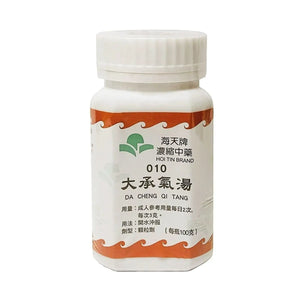
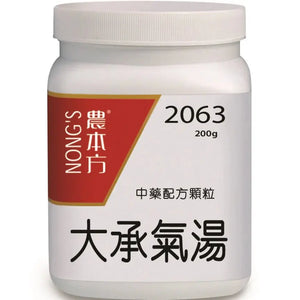
Compare Da Chai Hu TangXiao Chai Hu TangDa Cheng Qi TangFang Feng Tong Sheng San
Primary Function Harmonize Shaoyang, drain interior heat, move stoolHarmonise Shaoyang, release the pivotStrongly purge Heat accumulation and constipationRelease exterior, clear heat, drain downward, resolve toxin
Formula Category Harmonising FormulasHarmonising FormulasPurgative FormulasExterior-Releasing Formulas
Typical TCM Pattern Shaoyang SyndromeQi StagnationStomach HeatWind-Heat
Main Conditions Fever, Constipation, Abdominal Pain, NauseaFever, Chest Tightness, Nausea, Poor Appetite, Bitter Taste in MouthConstipation, Bloating, Abdominal Pain, Fever, Anxiety RestlessnessFever, Constipation, Headache
Main Herbs Bupleurum Root · Scutellaria / Baikal Skullcap · Pinellia Rhizome · Rhubarb Root and Rhizome · Immature Bitter Orange · White Peony Root · Fresh Ginger · Jujube / Chinese DateBupleurum Root · Scutellaria / Baikal Skullcap · Pinellia Rhizome · Ginseng Root · Fresh Ginger · Jujube / Chinese Date · Honey-fried LicoriceRhubarb Root and Rhizome · Mirabilite / Glauber's Salt · Magnolia Bark · Immature Bitter OrangeSaposhnikovia Root · Schizonepeta / Japanese Catnip · Forsythia Fruit · Ephedra Herb · Mentha / Peppermint · Chuanxiong Rhizome · Chinese Angelica Root · White Peony Root · White Atractylodes Rhizome · Gardenia Fruit · Rhubarb Root and Rhizome · Mirabilite / Glauber's Salt · Gypsum · Scutellaria / Baikal Skullcap · Platycodon Root · Licorice Root · Talcum
Classical Source Shang Han Lun (Zhang Zhongjing, Eastern Han)Shang Han Lun (Zhang Zhongjing, Eastern Han)Shang Han Lun (Zhang Zhongjing, Eastern Han)Classical TCM formulary

How to tell them apart

Da Chai Hu Tang, Xiao Chai Hu Tang, Da Cheng Qi Tang and Fang Feng Tong Sheng San address Shaoyang and/or Yangming. Xiao Chai Hu Tang harmonizes Shaoyang alone; Da Cheng Qi Tang strongly drains Yangming heat accumulation; Fang Feng Tong Sheng San releases exterior and drains interior more broadly. Da Chai Hu Tang simultaneously harmonizes Shaoyang and drains Yangming for alternating fever/chills with constipation and epigastric fullness.

For educational reference only, based on traditional pattern differentiation — not a substitute for professional advice.

Clinical Modifications for Da Chai Hu Tang

Depending on a person's specific symptoms, traditional practitioners often adjust the Da Chai Hu Tang (Major Thorowax Decoction) formula to better suit their needs.

1. For Severe Heat

When signs of internal heat are particularly strong, the doses of Huang Qin (Baical Skullcap Root) and Da Huang (Rhubarb) can be increased.

  • Adjustments: Huang Qin may be increased to 15-20 grams, and Da Huang to 10-15 grams.
  • The goal: This helps the body more effectively clear out heat toxins and solid waste buildup in the stomach and intestines.

2. For Severe Qi Stagnation

If symptoms like severe bloating and stuck energy (Qi stagnation) are the main focus, herbs that promote energy flow are emphasized.

  • Adjustments: The dose of Zhi Shi (Immature Bitter Orange) can be increased to 15-20 grams. Alternatively, herbs like Mu Xiang (Costus Root) and Hou Po (Magnolia Bark) can be added at about 10 grams each.
  • The goal: These additions help break down physical blockages and get the digestive energy moving smoothly again.

3. For Severe Dampness

When the body feels heavy or there are signs of excess fluid buildup (dampness), moisture-draining herbs are added to the mix.

  • Adjustments: Practitioners may add Fu Ling (Poria) at 15-20 grams, Ze Xie (Asian Water Plantain) at 10-15 grams, and Cang Shu (Atractylodes Rhizome) at 10 grams.
  • The goal: These herbs work together to help the body process and eliminate excess dampness.
Da Chai Hu Tang

4. For Severe Blood Stasis

If there are signs of poor blood circulation—such as a sharp, stabbing pain in the ribs or a dark purple tongue—blood-invigorating herbs are included.

  • Adjustments: Herbs like Tao Ren (Peach Seed) at 10 grams, Hong Hua (Safflower) at 6 grams, and Chi Shao (Red Peony Root) at 15 grams can be added.
  • The goal: This combination helps promote healthy blood flow and clears up local blood stasis.

What the Science Suggests

1. Pharmacological Research

Modern scientific studies have explored how Da Chai Hu Tang works, showing that it offers several potential health benefits for the digestive system.

  • Liver and gallbladder support: Studies suggest its active components can help promote bile secretion, reduce bile thickness, and potentially lower the risk of gallstone formation.
  • Anti-inflammatory effects: Research indicates it can help inhibit inflammatory responses, protecting liver and gallbladder tissues.
  • Digestive regulation: It has shown a clear ability to help restore normal digestive movement and ease gastrointestinal cramps.

2. Expanded Clinical Applications

While traditionally used for the "Shaoyang and Yangming combined syndrome," modern clinical practice has expanded the use of Da Chai Hu Tang to include various acute abdominal and metabolic issues.

  • Digestive conditions: It is frequently used as a complementary approach to help manage acute cholecystitis, gallstones, acute pancreatitis, and fatty liver.
  • Metabolic health: In recent years, clinical observations have noted its potential benefits in supporting patients with metabolic syndrome, including those dealing with obesity, high cholesterol, high blood pressure, and type 2 diabetes.
Da Chai Hu Tang

3. Modern Preparations and Innovations

To make the formula easier to use and ensure consistent quality, Da Chai Hu Tang has evolved beyond the traditional method of boiling raw herbs.

  • New formats: Today, it is widely available in modern formats such as granules, concentrated extract powders, capsules, and oral liquids.
  • The benefits: These modern options retain the active ingredients of the original formula but offer precise, standardized dosing, making it much more convenient for today's patients to take their herbal supplements.

Safety Considerations

1. Use with Caution in Weak Individuals

Dachaihu Decoction is a potent purgative formula. People with weak constitutions, especially those with spleen-stomach deficiency-cold or qi-blood deficiency, should use it only under medical supervision, as it may cause abdominal pain, diarrhea, or further depletion of healthy qi.

Pregnant women should not use it because its purgative ingredients may increase the risk of fetal harm, including miscarriage or premature labor.

2. Dietary Restrictions

While taking Dachaihu Decoction, maintain a light diet and avoid spicy, greasy, raw, and cold foods. These foods may increase gastrointestinal strain, reduce treatment effectiveness, or worsen symptoms.

Questions About Da Chai Hu Tang

Q1: What are the actions of Da Chai Hu Tang?
Da Chai Hu Tang has the actions of harmonizing Shaoyang and draining interior Yangming Heat. It is used when Shaoyang has not resolved and Yangming Excess has already formed — the so-called combined Shaoyang–Yangming pattern.
Q2: Which modern conditions is Da Chai Hu Tang suited to?
Modern TCM clinical practice commonly applies it to robust individuals whose pattern differentiation falls within Shaoyang plus Yangming Excess, including some acute cholecystitis or biliary colic pictures of this pattern, pancreatitis presentations after medical evaluation, and febrile illness with hypochondriac fullness, vomiting, and constipation.
Q3: Is Da Chai Hu Tang suitable for alternating chills and fever with constipation and vomiting?
For presentations of alternating chills and fever, bitter taste, chest and hypochondriac fullness, vomiting, abdominal fullness or pain, constipation or hard stool, a yellow coating, and a wiry forceful pulse — in those whose pattern differentiation confirms combined Shaoyang–Yangming — TCM commonly applies this formula as an adjunct. Acute abdomen or jaundice with high fever needs urgent medical care.
Q4: Who should not take Da Chai Hu Tang?
Those who are deficient, pregnant, have loose stools, or present with Shaoyang only (no interior Excess) are generally not suitable. The formula contains Da Huang and Zhi Shi and will purge. Use should be assessed by a qualified TCM physician after serious abdominal disease has been excluded as needed.
Q5: Why is there no Ren Shen, unlike Xiao Chai Hu Tang?
Xiao Chai Hu Tang treats a Shaoyang pivot pattern in which Zheng Qi already needs support, so Ren Shen is included. Da Chai Hu Tang treats a more excess picture: the interior is bound and must be drained. Chai Hu and Huang Qin still harmonize Shaoyang. Shao Yao eases spasm. Ban Xia and Sheng Jiang stop vomiting. Zhi Shi and Da Huang break stagnation and drain Yangming. Adding a Qi tonic here would blunt the attack on Excess.
Q6: How does Da Chai Hu Tang differ from Xiao Chai Hu Tang or Da Cheng Qi Tang?
Xiao Chai Hu Tang harmonizes Shaoyang without purging the stool. Da Cheng Qi Tang fiercely drains Yangming fu Excess when the Shaoyang pivot is no longer the issue. Da Chai Hu Tang sits between them: Shaoyang signs remain (alternating chills and fever, hypochondriac fullness, vomiting) and Yangming is already bound (constipation, abdominal fullness).
Q7: What are the main ingredients of Da Chai Hu Tang?
The Shang Han / Jin Gui formula consists of Chai Hu and Huang Qin to harmonize Shaoyang; Shao Yao to ease spasm and preserve Yin; Ban Xia, Sheng Jiang, and Da Zao to descend rebellion and harmonize; and Zhi Shi and Da Huang to move Qi and drain interior Excess. There is no Ren Shen.
Q8: Is Da Chai Hu Tang suitable for long-term use?
No. It is a short-course attacking formula. Once vomiting eases and the stool has moved, Da Huang should be stopped. Continuing to purge after the Excess is gone injures the Middle.
Q9: Can this formula help both the bitter hypochondriac fullness and the bound stool?
Yes. That pairing is the formula’s defining pattern. Heat occupies the Shaoyang pivot (bitter taste, chest-rib fullness, vomiting) and has also bound the Yangming fu (hard stool, abdominal fullness). Harmonizing the pivot and draining the interior together address both when the person is excess.
Q10: What lifestyle advice supports the use of Da Chai Hu Tang?
Resting, taking only simple fluids or light food until vomiting settles, and seeking emergency care for severe abdominal pain, jaundice, or high fever all support correct use. This formula treats a TCM combined-channel Excess pattern; it is not a substitute for imaging or surgery when biliary or pancreatic disease requires them.

General Questions

How do I choose the right formula?
TCM formulas are traditionally selected according to individual pattern differentiation rather than by symptom alone. If you're not sure which formula fits your presentation, take our AI Assessment below for a personalized starting point, then confirm with a qualified TCM practitioner.
What are concentrated herbal granules?
Concentrated herbal granules are made by decocting raw herbs, then extracting and concentrating the resulting liquid into a fine granule or powder form. This preserves the same active compounds as a traditional decoction while making the herbs far easier to store, measure, and prepare.
How should I take these products?
Dissolve the recommended amount of granules in hot water, stir until fully dissolved, and drink while warm — following the dosage and frequency advised by your TCM practitioner or as stated on the product packaging.
Are concentrated herbal granules equivalent to traditional decoctions?
Concentrated granules are produced from the same herbs and processed to retain their active compounds, so they are traditionally regarded as a convenient alternative to decoctions rather than a different remedy. Some practitioners note subtle differences in strength or absorption between the two forms, so your TCM practitioner may adjust dosage accordingly.
Are your products authentic?
Yes. HJMEDICAL sources its concentrated granules exclusively from established, reputable manufacturers such as Nong's and Hoi Tin, both long-standing names in the TCM granules industry, with GMP compliance stated directly on their packaging.
Are HJMEDICAL products manufactured under GMP standards?
HJMEDICAL sources its concentrated granules from established, reputable manufacturers such as Nong's and Hoi Tin, both long-standing names in the TCM granules industry. GMP compliance for these products is stated directly on their packaging.
Do you ship internationally?
Yes — we ship worldwide! Every order goes out via Hong Kong Post, and your exact shipping cost and estimated delivery time for your address are calculated and shown right at checkout, so there are never any surprises. We also offer free shipping once your order reaches our free-shipping threshold, so it's easy to stock up on your favorite formulas and save.
Can I take more than one formula at the same time?
Some formulas are traditionally combined, while others overlap or counteract each other. We recommend checking with a qualified TCM practitioner before combining formulas, especially if you are already taking other medication.
Are these products suitable during pregnancy or breastfeeding?
Some TCM formulas are not suitable during pregnancy or breastfeeding. Please consult a qualified TCM practitioner or your doctor before use if you are pregnant, trying to conceive, or nursing.
Do these products replace medical treatment?
No. These products are traditional herbal supplements intended to support wellbeing according to TCM principles — they are not a replacement for professional medical diagnosis or treatment. Please consult a qualified TCM practitioner or licensed healthcare provider before starting, stopping, or combining any treatment, especially if you have a chronic condition.
Medical Disclaimer

For general TCM education only — not medical advice. Consult a qualified TCM practitioner or licensed healthcare provider before use, especially if pregnant, nursing, on medication, or managing a chronic condition.

Not sure which formula is right for you?

Take the AI Assessment

最新文章

Login

Forgot your password?

Don't have an account yet?
Create account

Da Chai Hu Tang: Classic TCM Formula for Combined Shaoyang & Yangming Disorder