
金沸草散 · Jīn Fèi Cǎo Sàn
Jin Fei Cao San
A classical formula for Wind-Cold cough with copious thin phlegm and chest oppression.
View formula profile →Why This Formula?
Traditionally selected for Wind-Cold cough with thin phlegm and chest oppression, rather than heavier cold fluids, throat rales, or post-exterior lingering cough.
Traditionally selected for Wind-Cold cough with thin phlegm and chest oppression, rather than heavier cold fluids, throat rales, or post-exterior lingering cough.
Overview
What Is Jin Fei Cao San?
1. Ancient Classics Inheritance
Jin Fei Cao San (金沸草散), or Inula Powder, is a classical Song-dynasty formula from the Tai Ping Hui Min He Ji Ju Fang (Imperial Grace Formulary of the Tai Ping Era). Jin Fei Cao is another name for Xuan Fu Hua. The formula belongs to the category of formulas that disperse Wind-Cold, descend Lung Qi, and transform Phlegm.
This formula addresses Wind-Cold constraining the exterior while Phlegm obstructs the descent of Lung Qi. Typical signs include aversion to cold with fever, cough and wheezing with copious phlegm, nasal congestion, a white greasy tongue coating, and a floating pulse.
Combining Xuan Fu Hua as the chief herb to descend rebellious Qi and transform Phlegm, Ma Huang to release the exterior and disseminate Lung Qi, Jing Jie to disperse Wind-Cold, Qian Hu and Ban Xia to descend Qi and resolve Phlegm, Chi Shao to move Blood and prevent constraint in the channels, and Gan Cao with Sheng Jiang and Da Zao to harmonize the Middle, Jin Fei Cao San opens the exterior and directs Lung Qi downward, and is distinct from Xuan Fu Dai Zhe Tang, which treats rebellious Qi from Stomach deficiency rather than an exterior Wind-Cold cough.

2. Respiratory System Conditions
In traditional practice, Jin Fei Cao San (Inula Flower Powder) is a go-to remedy for various respiratory issues, especially those triggered by catching a cold.
- Lingering colds: It is highly effective for a cough that just won't quit after a cold. If the patient has a lot of clear or white, sticky phlegm, along with a stuffy nose and a lingering chill, this formula helps clear the remaining wind-cold and stop the cough.
- Bronchitis support: For acute flare-ups of chronic bronchitis, where coughing, wheezing, and excessive phlegm are the main complaints, it can serve as a helpful complementary therapy to ease breathing and improve comfort.
- Pediatric use: Because its herbal profile is relatively gentle, it is often safely adapted for children suffering from cold-induced bronchitis or mild pneumonia, helping their little bodies clear out the trapped mucus without being overly harsh.

3. Other Related Conditions
Interestingly, the benefits of this formula extend beyond just the lungs, showcasing the traditional concept of "treating different diseases with the same method."
- Allergic rhinitis: For allergy sufferers who experience a constant runny nose, sneezing, and an irritating cough triggered by cold weather or dampness, this formula can help warm the system and reduce the watery symptoms, improving overall comfort.
- Digestive discomfort: Sometimes a severe cough comes with nausea, a loss of appetite, or an upset stomach. Because herbs in this formula also help direct energy downward and support the spleen, it can simultaneously relieve respiratory distress and settle the digestive system.
How It Works
Herb Composition (Sovereign / Minister / Assistant / Envoy)
1. The Emperor Herb: Xuan Fu Hua (Inula Flower)
In the formula Jin Fei Cao San (Inula Flower Powder), the primary ingredient—known as the "Emperor" herb—is Xuan Fu Hua (Inula Flower).
- Properties: It has a slightly warm nature with a salty and bitter taste, primarily targeting the lungs and digestive system.
- Traditional Role: It is highly valued in traditional practice for its ability to direct lung energy (Qi) downward and clear out stubborn phlegm.
- How it works: When someone is dealing with a tough cough, sticky mucus, and shortness of breath, this herb helps clear the airways. By gently pushing lung energy downward, it makes it much easier to cough up trapped phlegm and breathe comfortably.
2. The Minister Herb: Qian Hu (Peucedanum Root)
Acting as the supportive "Minister," Qian Hu (Peucedanum Root) works hand-in-hand with the Emperor herb to boost the formula's effectiveness.
- Properties: It is slightly cold in nature with a pungent, bitter taste.
- Traditional Role: It not only helps clear up phlegm but also gently disperses "wind-heat" (often associated with early-stage cold symptoms).
- How it works: If a person has a cough accompanied by a mild fever, a mild headache, or a sensitivity to cold drafts, Qian Hu steps in to help relieve both the internal phlegm congestion and the external cold-like symptoms at the same time.
3. The Assistant Herbs: Jing Jie (Schizonepeta), Ban Xia (Pinellia Rhizome), Chi Shao (Red Peony Root), and Xi Xin (Asarum)
The "Assistant" herbs provide crucial backup to the main ingredients, with each herb targeting specific aspects of the illness:
- Jing Jie (Schizonepeta): A slightly warm herb that helps release external "wind" from the surface of the body. It is great for stopping early-stage cold symptoms from diving deeper into the body and making the cough worse.
- Ban Xia (Pinellia Rhizome): Working closely with the Emperor herb, it is traditionally used to dry up internal dampness, clear watery phlegm, and settle an upset stomach or nausea that sometimes accompanies a bad cough.
- Chi Shao (Red Peony Root): Slightly cold in nature, it helps cool the blood and promote healthy circulation. It acts as a balancing agent, preventing the warmer herbs in the formula from becoming too drying, while also helping to soothe chest tightness.
- Xi Xin (Asarum): A warming herb that excels at dispelling deep cold and opening up stuffy nasal passages. It brings warmth to the lungs, making it especially useful for breaking up cold, watery mucus.

4. The Courier Herb: Gan Cao (Licorice Root)
Rounding out the formula is the "Courier" herb, Gan Cao (Licorice Root), which acts as the great peacemaker of the blend.
- Soothing effect: It naturally moistens the lungs to help soothe a dry, scratchy throat and ease coughing.
- Harmonizing the blend: Its primary job is to blend the effects of all the other herbs together. It softens the harsher, stronger qualities of ingredients like Xuan Fu Hua and Qian Hu, making the entire formula gentle, balanced, and much easier for the stomach to digest and absorb.
Symptoms Traditionally Associated
Clinical Presentation in TCM
1. Underlying Mechanism (Pathogenesis)
In traditional Chinese medicine, understanding the root cause of an illness is key. For this specific condition, the issue usually arises from a combination of external weather and internal weakness.
- External triggers: "Wind" (like sudden weather changes or cold drafts) invades the body's surface and disrupts the normal, downward flow of lung energy.
- Internal factors: At the same time, if a person's digestion is weak, natural fluids can pool up and transform into excess phlegm inside the lungs.
- The result: When outside wind traps this internal phlegm in the chest, it blocks the airways, leading to a persistent cough, wheezing, and a heavy feeling in the chest.
2. Core Effects
The overall design of Jin Fei Cao San (Inula Flower Powder) aims to tackle both the root cause and the visible symptoms safely and effectively:
- Clearing the lungs: By directing energy downward, it helps the body naturally break up and expel stubborn phlegm.
- Relieving the surface: It acts like a gentle release valve, pushing out external "wind" or cold elements that are keeping the person sick.
- Finding balance: By combining these actions, it provides a comprehensive, two-pronged approach to easing coughs and opening up the airways.

3. Primary Indications
Traditionally, Jin Fei Cao San (Inula Flower Powder) is highly recommended for people dealing with a combination of an external cold and internal damp phlegm.
- Target symptoms: It is commonly used when a person catches a chill and develops a cough with a large amount of clear or watery mucus.
- Accompanying signs: Other common signs include a mild fever, feeling easily chilled, a very stuffy or runny nose, and a thick, white coating on the tongue.
- Practical use: For example, if you catch a cold after being exposed to a chilly draft and end up with a very phlegmy cough, a stuffy nose, and slight chills, this formula is traditionally used to gently warm the body, dry up the excess mucus, and help you breathe clearly again.
Formula Analysis
The Mechanism in Classical Theory
1. The Synergy of Clearing Phlegm and Dispelling Wind
The design of Jin Fei Cao San (Inula Flower Powder) relies on a beautiful teamwork between herbs that clear the chest and herbs that fight off external cold.
- Clearing the airways: Herbs like Xuan Fu Hua (Inula Flower), Qian Hu (Peucedanum Root), and Ban Xia (Pinellia Rhizome) take on the heavy lifting of breaking down thick phlegm and directing lung energy downward to calm the cough.
- Fighting off the cold: Meanwhile, Jing Jie (Schizonepeta) and Xi Xin (Asarum) act as the defense system. They help dispel the external "wind" and chill that initially made the person sick.
- Working together: By combining these two actions, the formula prevents external elements from digging deeper into the body and turning into heat, while simultaneously clearing the internal blockage. This dual approach tackles both the root cause (the cold) and the stubborn symptoms (the phlegm).

2. Mutual Restraint and Synergy Among the Herbs
In traditional Chinese medicine, a great formula doesn't just pile on strong herbs; it uses supporting ingredients to balance the overall effect.
- Cooling balance: Since herbs like Xuan Fu Hua (Inula Flower) are quite warm, Chi Shao (Red Peony Root) is added. Its slightly cold nature prevents the formula from becoming too drying, which could otherwise damage the body's natural fluids. Additionally, it helps promote healthy blood flow, which can ease chest discomfort from heavy coughing.
- The great harmonizer: Gan Cao (Licorice Root) is added to round out the harsh edges of the stronger herbs. It ensures the whole blend is gentle on the stomach and suitable for various body types.
- Enhanced benefits: Together, these herbs don't just cancel out side effects; they work in synergy to boost the formula's ability to moisten the lungs, support digestion, and provide comprehensive relief.
How This Formula Compares
Clinical Comparison Table
| Compare | Jin Fei Cao San | Xiao Qing Long Tang | She Gan Ma Huang Tang | Zhi Sou San |
|---|---|---|---|---|
| Primary Function | Diffuse Lung, resolve phlegm, stop cough, release exterior | Release exterior, transform congested fluids, stop cough and wheezing | Disperse cold, transform phlegm, stop wheezing and cough | Diffuse Lung, stop cough, resolve phlegm, release exterior |
| Formula Category | Exterior-Releasing Formulas | Exterior-Releasing Formulas | Exterior-Releasing Formulas | Exterior-Releasing Formulas |
| Typical TCM Pattern | Wind-Cold | Wind-Cold | Wind-Cold | Wind-Cold |
| Main Conditions | Cough, Asthma & Wheezing | Cough, Asthma & Wheezing, Excessive Mucus, Nasal Congestion, Cold Limbs | Cough, Asthma & Wheezing, Excessive Mucus, Sore Throat | Cough, Dry Cough |
| Main Herbs | Inula · Pinellia Rhizome · Ephedra Herb · Poria / Hoelen · Schizonepeta / Japanese Catnip · Perilla Leaf · Licorice Root | Ephedra Herb · Cinnamon Twig · Dried Ginger · Asarum / Wild Ginger · Schisandra Fruit · White Peony Root · Pinellia Rhizome · Honey-fried Licorice | Belamcanda Rhizome · Ephedra Herb · Fresh Ginger · Asarum / Wild Ginger · Aster Root · Coltsfoot Flower · Pinellia Rhizome · Schisandra Fruit · Jujube / Chinese Date | Platycodon Root · Schizonepeta / Japanese Catnip · Aster Root · Stemona Root · Cynanchum Root · Tangerine Peel · Licorice Root |
| Classical Source | Tai Ping Hui Min He Ji Ju Fang (Song, 1107) | Shang Han Lun (Zhang Zhongjing, Eastern Han) | Jin Gui Yao Lue (Zhang Zhongjing, Eastern Han) | Yi Xue Xin Wu (Cheng Guopeng, Qing) |
How to tell them apart
Jin Fei Cao San, Xiao Qing Long Tang, She Gan Ma Huang Tang and Zhi Sou San treat Wind-Cold cough or wheezing. Xiao Qing Long Tang is exterior cold with interior fluids; She Gan Ma Huang Tang treats cold fluids with throat rales; Zhi Sou San is lingering cough after exterior resolution. Jin Fei Cao San diffuses Lung and resolves phlegm for Wind-Cold cough with thin phlegm and chest oppression.
Clinical Modifications
Clinical Modifications for Jin Fei Cao San
Depending on a person's specific symptoms, traditional practitioners often customize the original Jin Fei Cao San (Inula Flower Powder) formula to better target their unique needs.
1. Severe Wind-Cold Symptoms
If the external cold is very strong, with obvious chills, body aches, and a slight fever, extra warming herbs are added to the mix.
- Adjustments: Herbs like Ma Huang (Ephedra Stem) and Gui Zhi (Cassia Twig) are commonly included.
- The goal: Ma Huang is excellent at opening the airways and inducing a light sweat to push the cold out, while Gui Zhi warms the body's circulation. Together, they quickly drive out the deep chill and relieve severe cold symptoms.
2. Heavy Phlegm and Dampness
When the main issue is a large amount of thick, sticky, and heavy phlegm, the formula needs extra drying power.
- Adjustments: Practitioners may add Fu Ling (Poria) and Bai Zhu (Atractylodes Rhizome).
- The goal: Both herbs are highly effective at strengthening the digestive system to process fluids better. This helps dry up the internal "dampness" at the root level, making it much easier to clear out heavy phlegm from the chest.

3. Chronic Cough with Lung Qi and Yin Deficiency
If a cough has lingered for a long time, it can dry out the lungs and deplete the body's natural energy and moisture (Yin).
- Adjustments: Hydrating herbs like Sha Shen (Glehnia Root) and Mai Dong (Ophiopogon Tuber) are added.
- The goal: These herbs deeply nourish and moisturize the lungs. They are perfect for soothing a chronic, dry, hacking cough accompanied by a dry throat, thirst, and general fatigue.
Modern Research
What the Science Suggests
1. Pharmacological Research
Modern scientific studies have looked into the active compounds of the herbs in Jin Fei Cao San (Inula Flower Powder) to understand how they work on a biological level:
- Cough and asthma relief: Research shows that Xuan Fu Hua (Inula Flower) contains natural compounds that suppress coughing, promote mucus clearance, and relax bronchial spasms to make breathing easier.
- Anti-inflammatory properties: Qian Hu (Peucedanum Root) has natural anti-inflammatory and mild antibacterial effects, helping to soothe respiratory irritation and reduce swelling in the airways.
- Allergy support: Jing Jie (Schizonepeta) acts as a mild anti-allergic agent, which helps reduce airway inflammation and is useful for coughs triggered by environmental allergies.
- Symptom management: Herbs like Ban Xia (Pinellia Rhizome) further aid in breaking down mucus, while Chi Shao (Red Peony Root) provides mild pain relief, easing the chest soreness that often comes from heavy coughing.

2. Clinical Efficacy Validation
Recent clinical reports have observed the real-world benefits of using this formula for respiratory conditions:
- Effective symptom relief: Studies indicate that the formula is highly effective in relieving lingering post-cold coughs and easing acute flare-ups of chronic bronchitis, significantly improving patients' daily comfort.
- Quicker recovery times: In several comparative studies, patients taking Jin Fei Cao San (Inula Flower Powder) experienced faster relief from coughing and a more noticeable reduction in phlegm compared to those using standard over-the-counter cough medications.
- Evidence-based support: These clinical findings provide modern scientific backing for the formula's traditional use, highlighting its overall safety and effectiveness for respiratory health.
Safety
Safety Considerations
1. Dietary Restrictions
While taking Jinfucao Powder, avoid raw or cold foods, greasy foods, and spicy or irritating foods. These may impair digestion, increase phlegm and dampness, burden the spleen and stomach, or worsen coughing.
2. Special-Population Precautions and Monitoring
Pregnant women should consult a doctor before use, as some ingredients, such as processed Pinellia, may pose risks. Children require age- and weight-adjusted doses under medical supervision. Older adults and people with weak constitutions should be monitored closely.
Seek medical attention if coughing or phlegm persists or worsens. Stop taking the medicine and contact a doctor if nausea, vomiting, abdominal pain, or diarrhea occurs.
Available Products
Where to Get It
 HJMEDICAL
Hoi Tin Jin Fei Cao San (Inula Powder) 5:1 Concentrated Granules
$30.50
HJMEDICAL
Hoi Tin Jin Fei Cao San (Inula Powder) 5:1 Concentrated Granules
$30.50
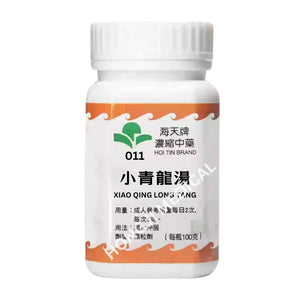 HJMEDICAL
Hoi Tin Xiao Qing Long Tang (Minor Blue Dragon) 5:1 Concentrated Granules
$24.93
HJMEDICAL
Hoi Tin Xiao Qing Long Tang (Minor Blue Dragon) 5:1 Concentrated Granules
$24.93
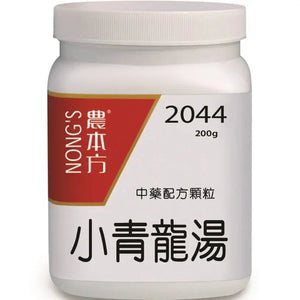 HJMEDICAL
Nong's Xiao Qing Long Tang (Minor Bluegreen Dragon Decoction) 5:1 Concentrated Granules
$46.97
HJMEDICAL
Nong's Xiao Qing Long Tang (Minor Bluegreen Dragon Decoction) 5:1 Concentrated Granules
$46.97
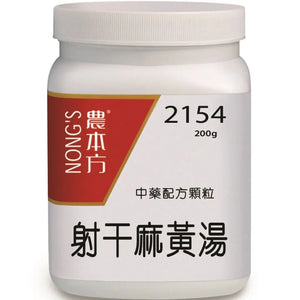 HJMEDICAL
Nong's She Gan Ma Huang Tang (Belamcanda & Ephedra Decoction) 5:1 Concentrated Granules
$467.59
HJMEDICAL
Nong's She Gan Ma Huang Tang (Belamcanda & Ephedra Decoction) 5:1 Concentrated Granules
$467.59
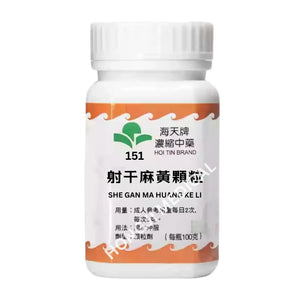 HJMEDICAL
Hoi Tin She Gan Ma Huang Tang (Ephedra and Belamcanda Chinensis Decoction) 5:1 Concentrated Granules
$535.00
HJMEDICAL
Hoi Tin She Gan Ma Huang Tang (Ephedra and Belamcanda Chinensis Decoction) 5:1 Concentrated Granules
$535.00
 HJMEDICAL
Hoi Tin Zhi Sou San (Stemona Cough-Stopping Powder) 5:1 Concentrated Granules
$24.93
HJMEDICAL
Hoi Tin Zhi Sou San (Stemona Cough-Stopping Powder) 5:1 Concentrated Granules
$24.93
 HJMEDICAL
Nong's Zhi Sou San (Stop Coughing Powder) 5:1 Concentrated Granules
$44.83
HJMEDICAL
Nong's Zhi Sou San (Stop Coughing Powder) 5:1 Concentrated Granules
$44.83
 HJMEDICAL
Hoi Tin Zhi Sou San (Stop Coughing Powder, 4g x 6 Packets) 5:1 Concentrated Granules
$23.43
HJMEDICAL
Hoi Tin Zhi Sou San (Stop Coughing Powder, 4g x 6 Packets) 5:1 Concentrated Granules
$23.43


FAQ
Questions About Jin Fei Cao San
Q1: What are the actions of Jin Fei Cao San?
Q2: Which modern diseases is Jin Fei Cao San suited to?
Q3: Is Jin Fei Cao San suitable for a cold with lots of phlegm and a stuffy nose?
Q4: Who should not take Jin Fei Cao San?
Q5: Why is Xuan Fu Hua (Jin Fei Cao) the chief herb?
Q6: How does Jin Fei Cao San differ from Zhi Sou San or Xiao Qing Long Tang?
Q7: What are the main ingredients of Jin Fei Cao San?
Q8: Is Jin Fei Cao San suitable for long-term use?
Q9: Can this formula help both the chills and stuffy nose and the productive cough?
Q10: What lifestyle advice supports the use of Jin Fei Cao San?
FAQ
General Questions
How do I choose the right formula?
What are concentrated herbal granules?
How should I take these products?
Are concentrated herbal granules equivalent to traditional decoctions?
Are your products authentic?
Are HJMEDICAL products manufactured under GMP standards?
Do you ship internationally?
Can I take more than one formula at the same time?
Are these products suitable during pregnancy or breastfeeding?
Do these products replace medical treatment?
Medical Disclaimer
For general TCM education only — not medical advice. Consult a qualified TCM practitioner or licensed healthcare provider before use, especially if pregnant, nursing, on medication, or managing a chronic condition.
Not sure which formula is right for you?
Take the AI Assessment最新文章
-

Yang He Tang: Classic TCM Formula for Yin-Type Sores, Cold Abscesses & Deficiency Cold
Yang He Tang: Classic TCM Formula for Yin-Type Sores, Cold Abscesses & Deficiency Cold

-
Yang He Tang: Classic TCM Formula for Yin-Type Sores, Cold Abscesses & Deficiency Cold
Yang He Tang: Classic TCM Formula for Yin-Type Sores, Cold Abscesses & Deficiency Cold -

Juan Bi Tang: Classic TCM Formula for Wind-Damp Bi Syndrome, Joint Pain & Numbness
Juan Bi Tang: Classic TCM Formula for Wind-Damp Bi Syndrome, Joint Pain & Numbness -

Shi Xiao San: Classic TCM Formula for Blood Stasis, Menstrual Pain & Fixed Abdominal Pain
Shi Xiao San: Classic TCM Formula for Blood Stasis, Menstrual Pain & Fixed Abdominal Pain -

Zhi Bai Di Huang Wan: Classic TCM Formula for Yin Deficiency with Fire, Night Sweats & Hot Flashes
Zhi Bai Di Huang Wan: Classic TCM Formula for Yin Deficiency with Fire, Night Sweats & Hot Flashes -

Fang Ji Huang Qi Tang: Classic TCM Formula for Edema, Sweating & Wind-Damp
Fang Ji Huang Qi Tang: Classic TCM Formula for Edema, Sweating & Wind-Damp


