Xiao Qing Long Tang: The Classic TCM Formula for Cold-Triggered Cough, Wheezing and Phlegm

Many people experience coughing and wheezing whenever they catch a chill — chills and aversion to cold, absence of sweating, headache — accompanied by coughing, wheezing, and copious thin, frothy phlegm that is difficult to expectorate, along with chest tightness. Some have been troubled by chronic bronchitis or asthma for years, with symptoms worsening each autumn and winter or upon exposure to cold, sometimes severe enough to prevent lying flat at night. Others present with nasal congestion, clear nasal discharge, dry retching, limb heaviness, a white slippery tongue coating, and a floating tight pulse — having tried numerous cough remedies and cold medicines with only inconsistent relief.

From a TCM perspective, the root cause of these seemingly stubborn complaints is exterior cold with interior fluid retention (外寒里饮) — the body is invaded by wind-cold on the surface while pre-existing phlegm-fluid accumulation lurks within. The external cold stirs up the internal fluids; cold and fluids intertwine, obstructing lung qi and impairing the circulation of qi and blood, triggering a cascade of symptoms. The formula discussed here — Xiao Qing Long Tang (Minor Blue-Green Dragon Decoction) — is a classical prescription from the Sage of Medicine, Zhang Zhongjing, recorded in the Shang Han Lun (Treatise on Cold Damage). Specifically designed for exterior cold with interior fluid retention, it has been clinically validated for nearly 2,000 years. By simultaneously releasing the exterior and dissolving retained fluids — treating both branch and root — it remains the core formula for cold-fluid cough and wheeze to this day.

This blog will fully unpack Xiao Qing Long Tang — from its historical origins, standard composition, combination logic, core effects, suitable populations, contraindications, dosage, and clinical modifications to real case examples — so you can understand its therapeutic principles, correctly assess whether it suits you, and confidently manage the various complaints caused by exterior cold with interior fluid retention.

Xiao Qing Long Tang: Formula for Cold-Fluid Cough & Wheeze | HJMEDICAL

I. Origins of Xiao Qing Long Tang: Zhang Zhongjing's Classic from the Shang Han Lun

1. Origins and the Meaning Behind the Name

Xiao Qing Long Tang originates from the Shang Han Lun by the Eastern Han physician Zhang Zhongjing, first recorded in the chapter "Differentiating Taiyang Disease by Pulse, Pattern, and Treatment." The original text states: "When cold damage fails to resolve at the exterior and there is water-qi below the heart with dry retching, fever and coughing — or thirst, or diarrhea, or a choking sensation, or difficulty urinating with lower abdominal fullness, or wheezing — Xiao Qing Long Tang governs." This classic indication precisely captures the core symptoms of exterior cold with interior fluid retention and has formed the basis for clinical application ever since.

The name carries deep meaning: the "Blue-Green Dragon" (青龙) is the Eastern Wood deity in Chinese cosmology, symbolising the power of generation, warmth, and movement — capable of driving off cold and transforming dampness. The prefix "Minor" (小) distinguishes it from Da Qing Long Tang (Major Blue-Green Dragon Decoction), which treats exterior cold with interior heat. The name implies that this formula is warm yet measured in force — like a dragon gathering strength in concealment — able to both release the exterior and scatter cold while warming the lung and dissolving retained fluids. It precisely matches the pathomechanism of exterior cold with interior fluid retention, showcasing the physician's consummate prescribing wisdom. As the foundational formula for releasing the exterior, warming the lung, and dissolving fluids, Xiao Qing Long Tang has been widely applied and adapted by generations of physicians and remains a benchmark prescription in TCM for cold-fluid cough and wheeze.

2. Core Pathomechanism: Exterior Cold Binding the Surface with Interior Fluid Accumulation

The core pathomechanism of Xiao Qing Long Tang is "exterior cold with interior fluid retention" — in simple terms, "cold on the surface, fluids within," the two influencing and intertwining with each other. According to TCM, when wind-cold invades, the body's surface yang qi is suppressed, the pores close, and exterior cold signs appear: aversion to cold, absence of sweating, headache, and body aches. Meanwhile, pre-existing phlegm-fluid accumulation internally (often due to spleen-stomach weakness, impaired transformation of dampness, or prolonged exposure to cold and cold drinks) is further stirred by the invading cold. This causes the retained fluids to surge upward and flood the lung qi; the lung loses its ability to disperse and descend, leading to coughing, wheezing, and copious thin, watery phlegm — the interior fluid signs.

As the Nan Jing · Difficulty 49 states: "Exposure to cold and cold drinks injures the lung." Cold and fluid pathogenic factors bind together, internally and externally reinforcing each other, fluid moving and unsettled, cold water assaulting the lung — this is the core reason why Xiao Qing Long Tang can address so many varieties of cough and wheeze. By grasping the key strategy of "releasing the exterior and scattering cold, warming the lung and dissolving fluids," it treats both branch and root: dispersing surface cold while eliminating internal fluids, restoring the lung's dispersing and descending function so that all symptoms resolve.


Xiao Qing Long Tang: Formula for Cold-Fluid Cough & Wheeze | HJMEDICAL

II. The Eight-Herb Formula: Composition, Synergy, and Logic

Xiao Qing Long Tang is composed of eight herbs — Mahuang (Ephedra), Guizhi (Cinnamon Twig), Shaoyao (Peony Root), Xixin (Asarum), Ganjiang (Dry Ginger), Banxia (Pinellia), Wuweizi (Schisandra), and Zhigancao (Honey-Fried Licorice) — strictly following the "sovereign, minister, assistant, and envoy" (君臣佐使) combination principle. Each herb plays a distinct, complementary role: collectively emphasising the core effects of releasing the exterior, warming the lung, and dissolving fluids, while simultaneously protecting the ying, astringing the lung, and harmonising the stomach, to prevent excessive warm-acrid dispersal from depleting vital qi. Below is a herb-by-herb breakdown of the combination logic.

(I) Standard Composition and Dosage

1. Classic composition (decoction): Mahuang 9g (nodes removed), Guizhi 9g (bark removed), Shaoyao 9g, Xixin 6g, Ganjiang 6g, Banxia 9g (washed), Wuweizi 6g, Zhigancao 6g. These are the Han-dynasty original quantities converted to modern common doses; they may be adjusted flexibly according to constitution and symptom severity.

2. Modern common dosage: Mahuang 6–12g, Guizhi 6–9g, Shaoyao 9–15g, Xixin 3–6g (strictly controlled to avoid toxicity), Ganjiang 6–9g, Banxia 9–12g, Wuweizi 6–9g, Zhigancao 6–9g. For predominant exterior cold, increase Mahuang and Guizhi; for predominant fluid retention, increase Xixin, Ganjiang, and Banxia.

3. Key points: Mahuang must be pre-decocted to remove the foam on top, reducing its harsh nature. Xixin is toxic and dosage must be strictly controlled — it must not be exceeded or taken long-term. The formula contains many acrid-warm herbs; yin-protecting measures are essential to prevent depletion of yin fluids.

(II) Herb-by-Herb Analysis

1. Chief Herbs: Mahuang + Guizhi — Releasing the Exterior, Calming Wheezing

Mahuang (Ephedra) is acrid, slightly bitter, and warm; it enters the lung and bladder channels and its core actions are promoting sweating to release the exterior, diffusing lung qi to calm wheezing, and promoting urination to reduce swelling. Guizhi (Cinnamon Twig) is acrid, sweet, and warm; it enters the heart, lung, and bladder channels and its core actions are promoting sweating to release the muscle layer, warming and unblocking the channels, and assisting yang to transform qi. Together as sovereign herbs, they act synergistically and form the core exterior-releasing pair of Xiao Qing Long Tang.

Mahuang, being acrid and strongly warm, promotes sweating to release the exterior and dispel surface cold, while simultaneously diffusing lung qi to relieve cough and wheeze — opening the pores so cold is expelled through sweat. Guizhi warms and unblocks the channels and assists yang, both reinforcing Mahuang's exterior-releasing power and warming and transforming dampness to help dissolve internal phlegm-fluid, while preventing Mahuang from causing excessive sweating that depletes yang. Modern pharmacological research shows that the ephedrine in Mahuang relaxes the bronchi and suppresses cough and wheeze, while the volatile oils in Guizhi have anti-inflammatory, analgesic, and microcirculation-improving effects. Together they effectively relieve the cough, wheeze, and limb pain caused by exterior cold with interior fluid retention.

2. Deputy Herbs: Ganjiang + Xixin — Warming the Lung and Dissolving Fluids

Ganjiang (Dry Ginger) is acrid and hot; it enters the spleen, stomach, and lung channels and its core actions are warming the middle and scattering cold, warming the lung and dissolving fluids. Xixin (Asarum) is acrid and warm; it enters the lung, kidney, and heart channels and its core actions are releasing the exterior and scattering cold, dispelling wind and relieving pain, opening the orifices, and warming the lung to dissolve fluids. These two as deputy herbs target the internal phlegm-fluid and form the core warm-lung fluid-dissolving pair.

Ganjiang, purely warm and yang, warms the lung, scatters cold, and dissolves phlegm-fluids, relieving the cough and copious thin phlegm caused by lung cold. Xixin, acrid and penetrating, assists Mahuang and Guizhi in releasing the exterior while also penetrating deeply into the lung orifices to warm and dissolve cold fluids — particularly effective at relieving cough, wheeze, and chest tightness caused by cold-fluid obstruction, as well as relieving pain, opening nasal passages, and alleviating nasal congestion and headache. Important safety note: Xixin is toxic; overdose causes nausea, vomiting, dizziness, and other toxic symptoms. The daily dose must not exceed 6g and it must not be taken for prolonged consecutive periods. Modern pharmacological research shows that the volatile oils in Xixin have antitussive, antiasthmatic, and anti-inflammatory actions, while Ganjiang promotes gastrointestinal motility and enhances immunity. Together they effectively dissolve internal cold-fluid accumulation.

3. Adjuvant Herbs: Banxia + Shaoyao + Wuweizi — Resolving Phlegm, Protecting Yin, Harmonising

Banxia (Pinellia) is acrid and warm; it enters the spleen, stomach, and lung channels and its core actions are drying dampness to resolve phlegm, directing rebellious qi downward to stop vomiting, and dispersing nodules. It assists Ganjiang and Xixin in warming and dissolving cold fluids, while also resolving phlegm to stop coughing and harmonising the stomach to redirect rebellious qi downward, relieving cough with copious phlegm and dry retching, and preventing phlegm-fluid from surging upward to worsen cough and wheeze.

Shaoyao (Peony Root) is sweet, bitter, and slightly sour, with a slightly cold nature; it enters the liver and spleen channels and its core actions are nourishing blood and astringing yin, softening the liver and relieving spasm and pain. Its role is precise: it nourishes yin and protects the lung, preventing the acrid warm dispersing herbs — Mahuang, Guizhi, Ganjiang, and Xixin — from depleting the body's yin fluids, achieving "dispersal within restraint"; it also softens the liver and relieves spasm, easing limb pain and chest tightness, while harmonising the formula's overall properties.

Wuweizi (Schisandra) is sour and sweet, with a warm nature; it enters the lung, heart, and kidney channels and its core actions are astringing and consolidating, tonifying qi and generating fluids, tonifying the kidney and calming the mind. It astringes the lung to stop coughing, enhancing the cough- and wheeze-relieving effect, while also consolidating lung qi to prevent excessive dispersal of lung qi. Combined with Shaoyao — one sour, one sweet — they work together to nourish and protect yin, making the overall formula warm without dryness and dispersing without damage.

4. Envoy Herb: Zhigancao — Tonifying Qi and Harmonising the Formula

Zhigancao (Honey-Fried Licorice) is sweet and neutral; it enters the heart, lung, spleen, and stomach channels. As the envoy herb, its core actions are tonifying qi and the middle, clearing heat and resolving toxicity, and harmonising all the herbs. It serves two main purposes: first, tonifying qi and harmonising the middle — protecting spleen and stomach function, preventing the acrid warm herbs from damaging the digestive system, and supplementing vital qi to enhance the body's resistance; second, harmonising all herbs — moderating the harsh nature of Mahuang and Xixin, and reconciling the different properties — acrid dispersing, sour astringing, and warm dissolving — so that the formula as a whole is balanced and acts synergistically.

(III) Overall Formula Summary

The combination logic of Xiao Qing Long Tang is clear: the eight herbs act synergistically to form a complete therapeutic system of "disperse, warm, dissolve, and consolidate." Mahuang and Guizhi serve as sovereign herbs — releasing the exterior, scattering cold, diffusing lung qi, and calming wheezing, addressing the branch of exterior cold. Ganjiang and Xixin serve as deputy herbs — warming the lung, dissolving fluids, scattering cold, and relieving pain, addressing the root of interior fluid retention. Banxia, Shaoyao, and Wuweizi serve as adjuvant herbs — resolving phlegm, harmonising the stomach, nourishing yin, and protecting the lung, preventing excessive warm-acrid dispersal. Zhigancao serves as the envoy herb — tonifying qi, harmonising the middle, and moderating all herbs, while supporting vital qi.

As the formula mnemonic states: "The Minor Blue-Green Dragon achieves great things, wind-cold binding the exterior with fluids stagnant in the chest; Xixin, Banxia, Gancao, and Wuweizi, combined with Ganjiang, Guizhi, Mahuang, and Shaoyao." This precisely captures the essence of the formula's combination and core effects. Treating both branch and root, dispersing within restraint and opening within consolidation, the formula simultaneously dispels surface cold and warms internal fluids, while protecting vital qi, making the therapeutic process gentler and more effective — truly achieving "exterior cold resolved, interior fluids dissolved, lung qi diffused, cough and wheeze stopped."


Xiao Qing Long Tang: Formula for Cold-Fluid Cough & Wheeze | HJMEDICAL

III. Core Actions and Clinical Applications

Based on its combination logic, the core actions of Xiao Qing Long Tang can be summarised as releasing the exterior and scattering cold, warming the lung and dissolving fluids, and stopping cough and calming wheeze. Its core clinical indication is "exterior cold with interior fluid retention" — i.e., wind-cold invasion combined with internal fluid accumulation giving rise to various disorders. These are divided below into traditional indications and modern applications for easy reference.

1. Traditional Indications

These are the original uses of Xiao Qing Long Tang as clearly recorded in the Shang Han Lun, and remain the core direction of TCM clinical application today, primarily targeting the following conditions caused by exterior cold with interior fluid retention:

Cough and wheeze pattern: coughing, wheezing, copious thin frothy phlegm, difficulty expectorating, accompanied by chills, fever, absence of sweating, headache, body aches, white slippery tongue coating, and a floating tight pulse.

Phlegm-fluid pattern: chest and diaphragm stuffiness, dry retching, absence of thirst, possibly accompanied by nasal congestion, clear nasal discharge, and throat itch — worsening in cold — mostly caused by cold fluid obstructing the chest and diaphragm with stomach qi rebelling upward.

Overflow fluid pattern: heaviness and swelling of the limbs, with chills, absence of sweating, coughing, and wheezing — mostly caused by cold fluids overflowing into the muscles and blocking the channels.

Variable manifestations: depending on the clinical picture, there may also be thirst, diarrhea, a choking sensation, difficulty urinating, or lower abdominal fullness — all caused by exterior cold with interior fluids obstructing the flow of qi.

2. Modern Applications

With the changes in modern lifestyle, exterior cold with interior fluid retention is increasingly prevalent — especially in autumn and winter and among those with weaker constitutions. The clinical scope of Xiao Qing Long Tang has expanded accordingly:

Respiratory diseases: acute bronchitis, acute exacerbation of chronic bronchitis, bronchial asthma, pneumonia, whooping cough, and acute exacerbations of COPD — presenting with coughing, wheezing, copious thin phlegm, and chills without sweating due to exterior cold with interior fluid retention. Clinical research shows Xiao Qing Long Tang combined with standard treatment significantly improves outcomes, reduces inflammation, and alleviates dyspnoea.

ENT disorders: allergic rhinitis, catarrhal otitis media, and catarrhal conjunctivitis — presenting with nasal congestion, clear discharge, sneezing, ear fullness, and itchy eyes, worsening in cold — due to cold fluids invading the orifices.

Rheumatic and immune conditions: rheumatic and rheumatoid arthritis presenting with cold aching joints, heaviness, and worsening in cold, with chills and absence of sweating — due to cold fluids obstructing the channels.

Sub-health management: those with weak constitutions who catch cold easily and develop cough, copious phlegm, chills, and nasal congestion upon exposure to cold — yang-deficient constitutions prone to external cold stirring internal fluids — may use the formula short-term under medical guidance to improve constitution and prevent recurrence.

Other conditions: oedema due to chronic nephritis or heart failure attributable to cold-fluid obstruction with internal water-dampness stagnation may be treated with a modified version of Xiao Qing Long Tang after proper TCM differentiation.

3. Self-Assessment Checklist

To assess whether Xiao Qing Long Tang is appropriate for you, check the following constitutional and symptomatic indicators. Matching 3 or more items strongly suggests exterior cold with interior fluid retention, and the formula may be used under qualified TCM physician guidance:

Constitution: yang-deficient or cold-fluid constitution — chronically averse to cold, cold hands and feet, easily catches cold, prone to cough and copious phlegm after cold exposure, pale puffy tongue with teeth marks and white slippery coating, floating tight or wiry slippery pulse.

Exterior cold signs: chills, fever, absence of sweating, headache, body aches, nasal congestion, clear nasal discharge, throat itch — all worsening in cold.

Interior fluid signs: coughing, wheezing, copious thin frothy phlegm, difficulty expectorating, chest tightness, dry retching, no thirst or preferring warm drinks.

Triggers: symptoms mostly triggered by cold exposure, rain, wind, or cold foods; more pronounced in autumn and winter.

Other features: limb heaviness or oedema, ear fullness or itchy eyes; poor response to conventional cough medicines or cold remedies.

IV. Contraindications and Precautions

Although Xiao Qing Long Tang is an excellent formula for releasing the exterior, warming the lung, and dissolving fluids, it is not appropriate for everyone. Its core mechanism is "warm dispersal of cold fluids," and it contains toxic or potent herbs including Xixin and Mahuang. Safety in use is paramount. The following groups must never use this formula without medical supervision, to avoid worsening the condition or causing harm.

1. Absolute Contraindications

Pregnant women: Xixin has some toxicity and Mahuang has sudorific and stimulant effects that may destabilise the foetus. Strictly prohibited during pregnancy to avoid miscarriage or preterm labour.

Excess-pattern heat wheeze: characterised by severe wheezing, flaring nostrils, high fever, and agitation due to heat pathogen flooding the lung — the opposite of the cold-fluid cough and wheeze this formula treats. Use will worsen wheezing.

Allergy to formula ingredients: those allergic to Mahuang, Guizhi, Xixin, or any component may develop skin itching, rash, nausea, or vomiting. Strictly contraindicated.

Hypertension, heart disease, and glaucoma patients: ephedrine in Mahuang may raise blood pressure, accelerate heart rate, increase cardiac workload, and trigger glaucoma attacks. These patients must use the formula only under physician supervision.

2. Usage Precautions

Xixin safety — critical: Xixin is toxic and dosage must be strictly controlled; the daily dose must not exceed 6g and must not be taken for continuous extended periods (generally no longer than 7 days). If numbness of the lips, dizziness, nausea, or limb weakness occur after ingestion, stop immediately and seek medical attention.

Mahuang decoction method: Mahuang must be pre-decocted for 5–10 minutes and the foam skimmed off the top to reduce its harsh nature and prevent excessive sweating from depleting yang qi. Those with weak constitutions or who sweat easily should reduce the Mahuang dose or use honey-processed Mahuang (Zhi Mahuang) instead.

Dietary restrictions: strictly avoid raw, cold, and greasy foods during treatment; do not consume alcohol, coffee, or strong tea, as these exacerbate internal cold-fluid accumulation, damage the spleen and stomach, and reduce efficacy. A light diet is recommended; warming foods such as ginger, scallion whites, and lamb assist the therapeutic process.

Lifestyle precautions: avoid cold exposure, rain, and wind draughts; keep warm, especially the chest, abdomen, and respiratory tract, to prevent re-invasion by cold. Avoid strenuous exercise and rest adequately to allow the body sufficient energy to expel cold and dissolve fluids.

Treatment duration: Xiao Qing Long Tang is an exterior-releasing fluid-dissolving formula and must not be taken continuously for a long period. Typically 3–7 days; discontinue once symptoms improve or adjust dosage under physician guidance. Prolonged use may cause dry-heat, internal fire, or depletion of yin fluids.

Special populations: children, the elderly, and those with weak constitutions should take reduced doses under physician guidance to avoid harm from excessive dosing.

Combination restrictions: avoid taking tonifying herbs (e.g. Ejiao, Lurong) or cold-natured herbs (e.g. Huanglian, Huangqin) concurrently, as these may interfere with efficacy or aggravate discomfort.

V. Dosage, Preparation, and Clinical Modifications

(I) Preparation and Dosage

1. Decoction (Recommended — Best Efficacy)

Method: Rinse all herbs. First, place Mahuang in a ceramic pot, add 500 ml of water, and pre-decoct for 5–10 minutes, skimming the foam from the surface. Add the remaining herbs and top up with water to 600 ml. Soak for 30 minutes, bring to a boil over high heat, then simmer over low heat for 20–30 minutes. Strain the liquid and divide into two portions, taken warm in the morning and evening, ideally 30 minutes after meals to minimise digestive irritation.

Dosage: 1 decoction per day for adults. Adjust according to constitution and severity: for predominant exterior cold, increase Mahuang and Guizhi; for predominant fluid retention, increase Xixin, Ganjiang, and Banxia; for weak constitutions, reduce Mahuang and Xixin and add small amounts of Huangqi and Dangshen to tonify qi.

2. Patent Medicine Options

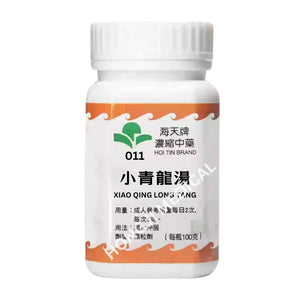
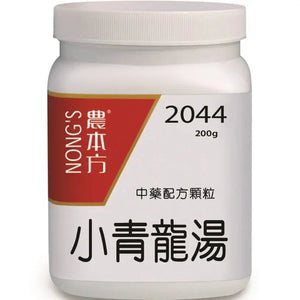
Xiao Qing Long Tang is available as patent medicine preparations, including Xiao Qing Long Granules (小青龙颗粒) and Xiao Qing Long Mixture (小青龙合剂). The core ingredients are identical to the decoction formula; these are convenient to use and suitable for daily management, mild cases, or consolidation treatment after symptom stabilisation.

Administration: take orally with warm water, after meals. Dosage: refer to the product insert; generally adults take 1 sachet (13g) three times daily; children take half the adult dose or as directed by a physician.

(II) Common Clinical Modifications (Use Under Medical Guidance)

TCM practice emphasises pattern differentiation and treatment modification tailored to the individual. In clinical use, herbs are added to or removed from Xiao Qing Long Tang based on the patient's specific presentation for optimal results. The most common modifications are listed below for reference — do not self-modify the formula:

Severe cough and wheeze with copious phlegm: add Xingren (Apricot Kernel), Shegan (Belamcanda), and Kuandonghua (Coltsfoot) to enhance phlegm-resolving, qi-descending, cough-stopping, and wheeze-calming effects.

Internal heat and agitation (cold-fluid transforming to heat): add Shengshigao (Raw Gypsum) and Huangqin to clear heat and calm agitation while maintaining fluid-dissolving warmth — suitable for exterior cold with interior fluids and concurrent depressed heat.

Nasal congestion and clear discharge with nasal itch (allergic rhinitis): add Xinyi (Magnolia Flower) and Cang'erzi (Xanthium Fruit) to open the nasal passages and relieve congestion and itch.

Marked oedema and difficulty urinating (water-fluid invading the stomach): add Fuling (Poria), Zhuling (Polyporus), and Zexie (Alisma) to strengthen water-draining and swelling-reducing effects, promoting elimination of dampness.

Pronounced dry retching and nausea: increase the dose of Banxia and Shengjiang, or add Chenpi (Aged Tangerine Peel) to harmonise the stomach, redirect qi downward, and stop retching.

Marked limb pain: add Qianghuo (Notopterygium) and Duhuo (Angelica Pubescens) to dispel wind, scatter cold, unblock the channels, and relieve pain.

Weak constitution with shortness of breath and fatigue: add Huangqi (Astragalus) and Dangshen (Codonopsis) to tonify qi, strengthen the spleen, supplement the lung, and consolidate the exterior — enhancing the constitution and preventing excessive sweating from depleting vital qi.

VI. Clinical Case Study

To give a more tangible sense of how Xiao Qing Long Tang works in practice, the following real-world case is shared (simplified and anonymised for educational purposes). Note: this case is for educational reference only — do not self-diagnose or self-medicate based on it. Specific treatment requires proper pattern differentiation.

Patient: Female, 58 years old, with a 5-year history of chronic bronchitis, recurring each autumn and winter upon cold exposure. One week prior, she developed chills and fever, absence of sweating, headache, cough, and wheezing after catching a cold; copious thin frothy phlegm, chest tightness, dry retching, no thirst, pale puffy tongue with white slippery coating, and a floating tight pulse. She had taken cough syrup and cold medicine with poor results; cough and wheeze persisted.

Pattern differentiation: Exterior cold with interior fluid retention pattern (acute exacerbation of chronic bronchitis).

Prescription: Modified Xiao Qing Long Tang — Mahuang 9g (pre-decocted), Guizhi 9g, Shaoyao 12g, Xixin 3g, Ganjiang 6g, Banxia 12g, Wuweizi 9g, Zhigancao 6g, plus Xingren 10g and Shegan 9g; 1 decoction daily, decocted in water, taken warm after meals.

Outcome: After 3 decoctions, the patient's chills, fever, and headache improved; coughing and wheezing were reduced; phlegm volume decreased. At the second visit, Mahuang was reduced to 6g and Fuling 15g was added to drain water and dissolve fluids; 7 more decoctions were administered. At the third visit, cough, wheeze, and chest tightness had completely resolved and the tongue coating had normalised. The prescription was switched to Yu Ping Feng San for a consolidation week to strengthen the constitution. At follow-up, no cold-triggered cough or wheeze recurred during autumn or winter, and the condition remained stable.

VII. Conclusion: A Time-Tested Formula for Cold-Fluid Cough and Wheeze

Xiao Qing Long Tang, as a classical formula from the Shang Han Lun, has been validated over nearly 2,000 years of clinical practice. With its precise combination and reliable efficacy, it has become the benchmark prescription for releasing the exterior, warming the lung, and dissolving fluids. Its core strength is treating both branch and root: Mahuang and Guizhi disperse exterior cold to address the branch; Ganjiang and Xixin warm and dissolve interior fluids to address the root; the formula simultaneously protects yin, harmonises the stomach, and tonifies qi, making treatment gentler and safer — especially suited for managing cold-fluid cough and wheeze in autumn and winter.

It must be remembered, however, that the core indication of Xiao Qing Long Tang is "exterior cold with interior fluid retention" — not all cough and wheeze patterns are appropriate for this formula. Those with yin deficiency with fire excess or phlegm-heat cough and wheeze will not only fail to benefit but may see their condition worsen. Furthermore, the formula contains toxic or potent herbs including Xixin and Mahuang; safety is paramount. It must be used under the guidance of a qualified TCM physician — do not self-diagnose or self-prescribe. Pay particular attention to the Xixin dose and the decoction method for Mahuang to avoid toxicity.

Moreover, managing an exterior cold with interior fluid constitution cannot rely on herbal medicine alone; healthy diet and lifestyle habits are equally essential. Avoiding cold and raw foods, keeping warm, protecting against cold exposure, and engaging in moderate gentle exercise to strengthen the constitution are the only ways to fundamentally reduce cold-fluid accumulation and free the body from the burden of cough, wheeze, and chills — allowing smooth passage through the autumn and winter seasons.

We hope this in-depth guide to Xiao Qing Long Tang helps readers understand and use this formula correctly. May everyone troubled by cold-fluid-induced cough, wheeze, and chills find their way back to balance and health through evidence-based care.

⚠️ This content is for reference only and does not provide medical advice. Consult a healthcare professional for any health concerns.

Login

Forgot your password?

Don't have an account yet?
Create account

Xiao Qing Long Tang: The Classic TCM Formula for Cold-Triggered Cough, Wheezing and Phlegm