Yin-Tonifying Formulas

滋陰降火湯 · Zī Yīn Jiàng Huǒ Tāng

Zi Yin Jiang Huo Tang

A yin-nourishing formula for deficiency fire with tidal heat and night sweats.

View formula profile →
Last reviewed October 2026
Formula CategoryYin-Tonifying Formulas
Primary PatternYin Deficiency
Primary FunctionNourish yin, descend fire
Primary Therapeutic PrincipleNourish yin and descend deficiency fire
Main HerbsPrepared Rehmannia Root · Anemarrhena Rhizome · Phellodendron Bark · Tortoise Plastron · Moutan Bark / Tree Peony Bark · Wolfberry Root Bark
Classical SourceLater yin-tonifying formula

Why This Formula?

Selected for yin deficiency with deficiency fire — tidal fever and night sweats — rather than excess heat or pure yin deficiency without fire.

Selected for yin deficiency with deficiency fire — tidal fever and night sweats — rather than excess heat or pure yin deficiency without fire.

What Is Zi Yin Jiang Huo Tang?

1. Where It Began

Zi Yin Jiang Huo Tang (滋阴降火汤), or Nourish-Yin and Down-Fire Decoction, is a classical formula first shaped by Zhu Zhen Heng (better known as Zhu Dan Xi), the founder of the "nourish-yin" school in the Yuan dynasty. It belongs to the category of formulas that nourish the yin and clear deficient fire.

The formula is aimed at yin deficiency with deficient fire — a state where the body's fluids run low and leave a low-grade "false heat" that flares upward. Typical signs include night sweats, hot palms and soles, a dry mouth and throat, a dry cough, irritability, insomnia, weak knees, a red tongue with little coating, and a thin rapid pulse. It is widely used for menopausal hot flushes, chronic dry coughs, thyroid overactivity, habitual constipation, and other conditions rooted in yin deficiency.

Zhu Dan Xi saw most people of his time as having "yang often in excess, yin often insufficient." Stress, rich food, and overwork drained the body's fluids, leaving an inner fire that wasn't real heat but a sign of drying out. He began his formula as a flexible addition for "deficiency exhaustion" (chronic wasting illness) and, through years of use, it was refined into a systematic recipe.

Zi Yin Jiang Huo Tang

2. Lung Problems

In respiratory care, the formula is used for yin-deficient chronic cough and as support in tuberculosis:

  • Chronic dry cough with little sputum, occasional blood, night sweats, and hot palms — from lung yin loss and fire scorching the lung vessels.
  • Tuberculosis — added to anti-TB treatment, it eases the dryness, night sweats, and fatigue, and patients often recover faster and relapse less.

3. Hormone Problems

Two endocrine conditions fit well:

  • Menopause: hot flushes, sweating, irritability, insomnia, and weak knees from liver-kidney yin deficiency — the formula steadies these without hormone-replacement side effects.
  • Thyroid overactivity: palpitations, sweating, hand tremor, weight loss, and a dry mouth — the formula calms the overactive metabolism and supports stable thyroid function alongside Western treatment.

4. Digestion Problems

In digestion, it helps two yin-deficient patterns:

  • Chronic gastritis with a burning stomach, dry mouth, hard stools, and a red tongue — from stomach-yin loss and deficient fire, without the drying effect of ordinary stomach medicine.
  • Habitual constipation of the "dry boat stuck in a shallow river" type — it adds fluid to the gut, easing hard stools without the dependency of a laxative.
Zi Yin Jiang Huo Tang

5. Sleep and Anxiety

For yin-deficient insomnia and anxiety — poor sleep with restlessness, hot palms, night sweats, and a dry mouth — the formula nourishes the heart and kidney, brings the fire down, and lets the spirit rest. It's gentle enough for long-term adjustment.

Herb Composition (Sovereign / Minister / Assistant / Envoy)

1. The Fire-Bringers: Zhi Mu and Huang Bai

These two bitter, cold herbs are the formula's "bring the fire down" engine — the core of Zhu Dan Xi's idea of cooling fire while protecting yin:

  • Zhi Mu (Anemarrhena Rhizome) clears deficient fire from the lung and kidney while also moistening — so it cools without drying the yin further.
  • Huang Bai (Phellodendron Bark) is more focused on the lower body, draining the latent fire in the kidney behind weak knees, hot flushes, and night sweats.

Used together they cool the lung above, moisten the stomach in the middle, and clear the kidney below — without being so dry they hurt the body's qi.

2. The Fluid-Builders

Three herbs rebuild the yin — the real foundation of the formula:

  • Sheng Di Huang (Raw Rehmannia Root) restores the kidney yin and liver blood, refilling the body's deepest stores.
  • Xuan Shen (Scrophularia) cools fire, moistens dryness, and soothes a sore throat and constipated bowels.
  • Mai Dong (Ophiopogon) moistens the lungs and stomach, easing a dry mouth and a dry cough.

Together these three (a classic trio known as Zeng Ye Tang) top up the fluids of the lung, stomach, and kidney — giving the fire-clearing herbs the "material" they need, so the cure treats the root, not just the symptom.

3. The Balancing Pair

Bai Shao (White Peony Root) and Dang Gui (Chinese Angelica) round out the formula:

  • Bai Shao nourishes blood, softens the liver, and reins in the sweating that deficient fire causes.
  • Dang Gui builds and moves blood, so the heavy yin herbs don't stagnate, and it eases the sallow face and dizziness of blood deficiency.

One pulls in (Bai Shao), one keeps things moving (Dang Gui) — so the formula both strengthens the yin and avoids that heavy, "clogged" feeling.

Zi Yin Jiang Huo Tang

4. The Harmonizer: Zhi Gan Cao

Zhi Gan Cao (Processed Licorice Root) smooths over the harsh cold of Zhi Mu and Huang Bai so they don't chill the digestion, and it eases the heavy texture of the yin herbs. It's what lets the formula be taken over time without wearing the body down.

Clinical Presentation in TCM

1. The Root Problem

The pattern is yin deficiency at the root, deficient fire as the branch.

Yin — the body's fluids — acts like a savings account. Long nights, overwork, spicy food, stress, or too much strain spend it down. When fluids run low, yang loses its brake and turns into "deficient fire." This is not a true excess heat:

  • Real heat (excess) shows as high fever, a sore throat, thick yellow phlegm — treated by clearing with strong cold herbs.
  • Deficient fire shows as low-grade heat — night sweats, hot palms and soles, a dry mouth — and comes from a shortage of fluid, so it must be treated by replenishing, not by blasting with more cold herbs.

This is why the formula's name pairs "nourish yin" (the root) with "down fire" (the symptom).

2. What It Does

The formula has three connected actions:

  • Nourishes the yin. It refills the lung, stomach, and kidney fluids, like watering dry ground so the "savings account" recovers.
  • Brings the fire down. It clears the restless deficient fire, easing the hot flushes, sweating, and irritability.
  • Moistens dryness. It eases the dry mouth, dry skin, and hard stools that come with fluid loss.

Treating both the branch (fire) and the root (yin) at once is what makes it a "treat the whole problem" formula rather than a quick patch.

Zi Yin Jiang Huo Tang

3. Who It's For

The formula fits people with the yin-deficiency-with-fire pattern, shown in many ways:

  • Whole-body: night sweats, hot palms and soles, a dry mouth and throat, irritability, insomnia, weak knees, a red tongue with little coating, a thin rapid pulse.
  • Lungs: a dry cough with little sputum, sometimes with blood.
  • Digestion: a burning stomach, hard stools, scanty dark urine.
  • Menopause: hot flushes, sweating, and irritability around the change of life.

You don't need all of these at once — as long as yin deficiency is the core, the formula can be matched to the person.

The Mechanism in Classical Theory

1. Nourish First, Cool Second

It's easy to misread the name and think the point is "cooling." In fact, nourishing the yin is the foundation; cooling the fire is the means.

Think of a lamp: when the oil (yin) runs low, the flame (fire) flares up. Blowing at the flame only shrinks it for a moment; adding oil is what truly calms it. That's why most of the formula is yin-nourishing herbs (Sheng Di Huang, Xuan Shen, Mai Dong), while the fire-cooling herbs (Zhi Mu, Huang Bai) make up only about a fifth of the dose.

2. Avoiding the Two Traps

Yin-cooling formulas usually fall into one of two traps, and this one dodges both:

  • Cold herbs damaging the digestion. Zhi Gan Cao softens the harsh cold of Zhi Mu and Huang Bai, so the stomach stays warm.
  • Yin herbs clogging the body. Bai Shao and Dang Gui keep the blood moving, so the rich yin herbs don't sit heavy and cause bloating or a greasy tongue.

Small choices matter too: it uses Sheng Di Huang rather than the heavier Shu Di Huang, and Zhi Mu's moistening rather than pure cold — keeping the whole formula balanced enough for most yin-deficient people.

Zi Yin Jiang Huo Tang

3. Looking After Qi and Blood Too

Yin deficiency rarely travels alone. When fluids run low, blood thins and the liver's qi gets stuck. Bai Shao and Dang Gui handle these companions: Bai Shao tops up the blood and untangles the liver; Dang Gui builds and moves the blood. So the formula improves not just the fire but also the sallow face, dizziness, and a stuffy chest that often come with it.

Clinical Comparison Table

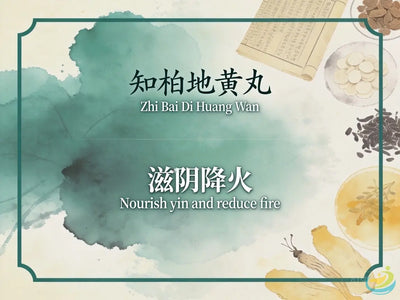
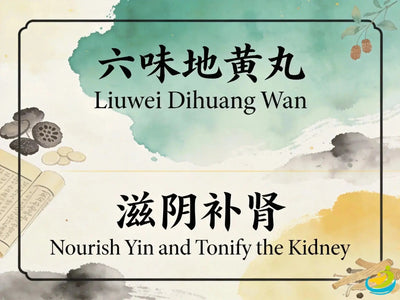
Compare Zi Yin Jiang Huo TangZhi Bai Di Huang WanQing Hao Bie Jia TangLiu Wei Di Huang Wan
Primary Function Nourish yin, descend fireNourish Yin, clear deficiency HeatNourish Yin, vent heat, clear deficiency heatNourish Kidney Yin
Formula Category Yin-Tonifying FormulasYin-Tonifying FormulasHeat-Clearing FormulasYin-Tonifying Formulas
Typical TCM Pattern Yin DeficiencyKidney Yin DeficiencyYin DeficiencyKidney Yin Deficiency
Main Conditions Night Sweats, Yin Deficiency Constitution, Menopausal Discomfort, Dry Mouth & ThroatYin Deficiency Constitution, Night SweatsNight SweatsDizziness & Vertigo, Tinnitus, Night Sweats, Fatigue & Low Energy, Yin Deficiency Constitution
Main Herbs Prepared Rehmannia Root · Anemarrhena Rhizome · Phellodendron Bark · Tortoise Plastron · Moutan Bark / Tree Peony Bark · Wolfberry Root BarkPrepared Rehmannia Root · Cornus Fruit · Chinese Yam · Alisma Rhizome · Moutan Bark / Tree Peony Bark · Poria / Hoelen · Anemarrhena Rhizome · Phellodendron BarkSweet Wormwood · Turtle Shell · Raw Rehmannia Root · Anemarrhena Rhizome · Moutan Bark / Tree Peony BarkPrepared Rehmannia Root · Cornus Fruit · Chinese Yam · Alisma Rhizome · Moutan Bark / Tree Peony Bark · Poria / Hoelen
Classical Source Later yin-tonifying formulaYi Zong Jin Jian / Investigation of Medical Formulas (Ming dynasty)Wen Bing Tiao Bian (Wu Jutong, 1798)Xiao Er Yao Zheng Zhi Jue (Qian Yi, Song dynasty) / later popularised

How to tell them apart

Zi Yin Jiang Huo Tang, Zhi Bai Di Huang Wan and Qing Hao Bie Jia Tang all clear deficiency heat. Zhi Bai Di Huang Wan is the standard kidney yin-fire formula. Qing Hao Bie Jia Tang vents residual heat. This formula nourishes yin and descends fire.

For educational reference only, based on traditional pattern differentiation — not a substitute for professional advice.

Clinical Modifications for Zi Yin Jiang Huo Tang

1. Adjusting for Symptoms

The formula bends to the main complaint:

  • Heavy night sweats: increase Zhi Mu and Huang Bai, or add Fu Xiao Mai and Ma Huang Gen.
  • Dry cough and sore throat: add Chuan Bei Mu and Bai He.
  • Hard stools: increase Xuan Shen and Sheng Di Huang, or add Huo Ma Ren and Yu Li Ren.
  • Insomnia: add Suan Zao Ren and Bai Zi Ren.
  • Weak knees: add Gou Qi Zi and Niu Xi.

2. Adjusting for Body Type

For weaker constitutions, the formula changes to match:

  • Weak digestion (bloating on tonics): reduce Sheng Di Huang and Mai Dong, add Bai Zhu, Fu Ling, and Chao Mai Ya.
  • Blood deficiency (pale face, dizziness): increase Dang Gui and Bai Shao, or add E Jiao and Hong Zao.
  • Stuck qi (a stuffy chest, belching): add Fo Shou and Xiang Fu.
Zi Yin Jiang Huo Tang

3. Adjusting for Specific Diseases

Doctors tailor it to the illness: Bai Bu and Bai Ji for TB; Nu Zhen Zi and Mo Han Lian for menopause; Xia Ku Cao and Mu Li for thyroid overactivity; Yu Zhu and Shi Hu for chronic gastritis.

What the Science Suggests

1. Active Ingredients

Lab research has found likely mechanisms for the formula's effects:

  • Zhi Mu saponins help regulate the hormonal axis, linking the formula to menopause and thyroid uses.
  • Berberine in Huang Bai is antibacterial and anti-inflammatory, supporting chronic cough and gastritis.
  • Catalpol in Sheng Di Huang nourishes and clears heat and supports kidney function; Mai Dong polysaccharides help immunity; ferulic acid in Dang Gui improves blood flow.

2. Clinical Findings

Several studies support its use:

  • In yin-deficient menopause, hot flushes and irritability improved at a notably higher rate than placebo, with better hormone balance.
  • Added to anti-TB drugs, patients turned sputum negative faster with fewer side effects.
  • For yin-deficient chronic cough and habitual constipation, it eased symptoms and helped over 85% of constipation cases, without laxative dependency.

3. New Uses

Research is widening its scope: relieving the dryness, night sweats, and restlessness caused by cancer chemotherapy and radiotherapy, supporting blood-sugar control and easing dry mouth in diabetes, and soothing dry-eye syndrome by nourishing liver yin. These directions give the classic formula more room to help.

Safety Considerations

1. Who Should Avoid It

Not every "heat" fits this formula. Avoid it if you have:

  • Yang deficiency (sensitive to cold, cold hands and feet, loose stools) — the "fire" here is a floating false yang, and this formula would make it worse.
  • Cold, weak digestion (frequent bloating, abdominal pain, loose stools).
  • Pregnancy or breastfeeding — Huang Bai and Dang Gui may affect the baby.
  • A cold or true excess heat (high fever, sore throat, thick yellow tongue coating) — the nourishing herbs would "lock the door on the invader."

2. Who Should Be Careful

Children, older adults, people on long-term medication (blood pressure or diabetes drugs), and anyone with a weak digestion should reduce the dose or add spleen-supporting herbs, and ideally check with a doctor first.

3. Long-Term Use

This formula is for short courses or long-term use at a small dose, but review it every 2–4 weeks with a doctor. If a dry mouth worsens, stools turn loose, or appetite drops, the dose is off or the pattern is wrong — stop and adjust. Don't self-prescribe for long stretches; it suits people with genuine yin-deficiency-with-fire.

Questions About Zi Yin Jiang Huo Tang

Q1: What is Zi Yin Jiang Huo Tang? Are Zhi Bai Di Huang Wan and Da Bu Yin Wan the same?
Zi Yin Jiang Huo Tang (滋阴降火汤) is a classic formula from Shoushi Baoyuan and other sources, centered on nourishing yin and descending fire for deficiency fire rising with throat sores and other yin-deficiency fire patterns. Zhi Bai Di Huang Wan nourishes the Kidney and descends fire, leaning to Kidney yin deficiency with fire. Da Bu Yin Wan nourishes yin, descends fire and fills essence, leaning to yin deficiency with fire. The three cannot be interchanged by equal weight. Write Zi Yin Jiang Huo Tang. Use caution in Spleen-Stomach vacuity cold and pure excess heat.
Q2: What is the composition and traditional use of Zi Yin Jiang Huo Tang?
Composition from Shoushi Baoyuan: Dang Gui, Chuan Xiong, Bai Shao, Huang Bai (honey-fried), Zhi Mu, Shu Di Huang, Tian Hua Fen, Gan Cao, Xuan Shen, Jie Geng, etc. Decocted with Zhu Li. It acts to nourish yin and descend fire. It is used for deficiency fire rising with throat sores, or yin-deficiency fire with sore throat, cough, night sweats, etc. Dang Gui, Bai Shao and Shu Di nourish blood and yin; Huang Bai and Zhi Mu descend fire; Xuan Shen and Tian Hua Fen nourish yin; Jie Geng benefits the throat; Chuan Xiong regulates blood.
Q3: How do you choose raw versus prepared? Can Zhi Bai Di Huang Wan replace it?
Huang Bai is often honey-fried or salt-fried to reduce coldness; Zhi Mu is wine-fried. Zhi Bai Di Huang Wan leans to Kidney supplementation without heavy blood-nourishing and throat-benefiting; it cannot replace the formula by equal weight. Commercial products follow regulated compounding; do not self-modify.
Q4: What is the usual dosage? Can it be drunk daily as a fire-descending tea?
Ancient use was chopped herbs decocted and taken warm with Zhu Li. Modern use adjusts proportions; common as decoction or patent medicine, with dose named by a practitioner. It is not a four-season “yin-nourishing fire tea.” Spleen-Stomach vacuity cold only loosens further. Yin-deficiency fire needs a practitioner to name a short course; it does not replace assessment.
Q5: What are the contraindications? Can it be used in pregnancy?
Use caution in Spleen-Stomach vacuity cold and loose stool. Not suitable for pure excess heat without deficiency. Pregnancy requires practitioner assessment. Stop if loose stool or cold epigastric pain appears. High fever, coughing blood or throat obstruction need immediate medical care.
Q6: Can Zi Yin Jiang Huo Tang nourish yin and descend fire?
It can help throat sores, sore throat, night sweats and cough from yin deficiency with fire. It nourishes yin and descends fire—not a specific for every sore throat, every vacuity heat or every night sweat.
Q7: Can Zi Yin Jiang Huo Tang be drunk daily as a yin-nourishing, fire-descending or throat tea?
Yin deficiency with fire may enter a short formula; Spleen-Stomach vacuity cold only injures further. “Yin-nourishing must descend fire” does not replace throat and systemic assessment. Nourishing yin and descending fire should be named by a practitioner with form and dose.
Q8: How do you choose among Zi Yin Jiang Huo Tang, Zhi Bai Di Huang Wan, Da Bu Yin Wan, Qing Gu San and Bai He Gu Jin Tang?
Zi Yin Jiang Huo Tang nourishes yin, descends fire, nourishes blood and benefits the throat, containing Si Wu herbs plus Zhi Mu, Huang Bai, Xuan Shen, Jie Geng and others. Zhi Bai Di Huang Wan nourishes the Kidney and descends fire, leaning to lower-burner Kidney yin deficiency with fire. Da Bu Yin Wan nourishes yin, descends fire and fills essence, leaning to yin deficiency with fire. Qing Gu San clears vacuity heat and eliminates bone steaming, leaning to bone steaming tidal fever. Bai He Gu Jin Tang nourishes yin, moistens the Lung, transforms phlegm and stops cough, leaning to Lung-Kidney yin deficiency cough. Deficiency fire throat sores favor Zi Yin Jiang Huo Tang; Kidney fire favors Zhi Bai; filling essence favors Da Bu Yin; bone steaming favors Qing Gu; Lung yin cough favors Bai He Gu Jin. They may be referenced after pattern differentiation; Spleen-Stomach vacuity cold forbids large Zi Yin Jiang Huo Tang.
Q9: How is Zi Yin Jiang Huo Tang commonly modified? What is the representative use?
The original already contains nourishing yin, descending fire, nourishing blood and benefiting the throat. Concurrent blood heat may add Mu Dan Pi and Huang Qin; marked yin deficiency may add Tian Dong and Mai Dong. Write Zi Yin Jiang Huo Tang; do not replace the throat-benefiting action with an equal weight of Zhi Bai Di Huang Wan.
Q10: How do you choose and store Zi Yin Jiang Huo Tang?
Choose regulated Chinese patent medicines or classically compounded decoctions/granules that list the composition. Moldy, damp, or abnormal-smelling lots are discarded. Store cool and dry. Buy “Zi Yin Jiang Huo Tang”; do not replace nourishing yin and descending fire with an equal weight of Zhi Bai Di Huang Wan or Da Bu Yin Wan.

General Questions

How do I choose the right formula?
TCM formulas are traditionally selected according to individual pattern differentiation rather than by symptom alone. If you're not sure which formula fits your presentation, take our AI Assessment below for a personalized starting point, then confirm with a qualified TCM practitioner.
What are concentrated herbal granules?
Concentrated herbal granules are made by decocting raw herbs, then extracting and concentrating the resulting liquid into a fine granule or powder form. This preserves the same active compounds as a traditional decoction while making the herbs far easier to store, measure, and prepare.
How should I take these products?
Dissolve the recommended amount of granules in hot water, stir until fully dissolved, and drink while warm — following the dosage and frequency advised by your TCM practitioner or as stated on the product packaging.
Are concentrated herbal granules equivalent to traditional decoctions?
Concentrated granules are produced from the same herbs and processed to retain their active compounds, so they are traditionally regarded as a convenient alternative to decoctions rather than a different remedy. Some practitioners note subtle differences in strength or absorption between the two forms, so your TCM practitioner may adjust dosage accordingly.
Are your products authentic?
Yes. HJMEDICAL sources its concentrated granules exclusively from established, reputable manufacturers such as Nong's and Hoi Tin, both long-standing names in the TCM granules industry, with GMP compliance stated directly on their packaging.
Are HJMEDICAL products manufactured under GMP standards?
HJMEDICAL sources its concentrated granules from established, reputable manufacturers such as Nong's and Hoi Tin, both long-standing names in the TCM granules industry. GMP compliance for these products is stated directly on their packaging.
Do you ship internationally?
Yes — we ship worldwide! Every order goes out via Hong Kong Post, and your exact shipping cost and estimated delivery time for your address are calculated and shown right at checkout, so there are never any surprises. We also offer free shipping once your order reaches our free-shipping threshold, so it's easy to stock up on your favorite formulas and save.
Can I take more than one formula at the same time?
Some formulas are traditionally combined, while others overlap or counteract each other. We recommend checking with a qualified TCM practitioner before combining formulas, especially if you are already taking other medication.
Are these products suitable during pregnancy or breastfeeding?
Some TCM formulas are not suitable during pregnancy or breastfeeding. Please consult a qualified TCM practitioner or your doctor before use if you are pregnant, trying to conceive, or nursing.
Do these products replace medical treatment?
No. These products are traditional herbal supplements intended to support wellbeing according to TCM principles — they are not a replacement for professional medical diagnosis or treatment. Please consult a qualified TCM practitioner or licensed healthcare provider before starting, stopping, or combining any treatment, especially if you have a chronic condition.
Medical Disclaimer

For general TCM education only — not medical advice. Consult a qualified TCM practitioner or licensed healthcare provider before use, especially if pregnant, nursing, on medication, or managing a chronic condition.

Not sure which formula is right for you?

Take the AI Assessment

最新文章

Login

Forgot your password?

Don't have an account yet?
Create account

Zi Yin Jiang Huo Tang: Nourishing Yin and Descending Fire