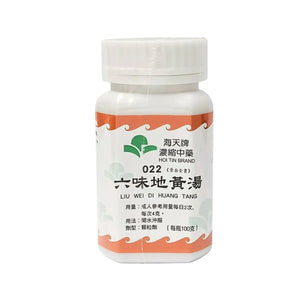
Liu Wei Di Huang Wan: Classic TCM Formula for Kidney and Liver Yin Deficiency

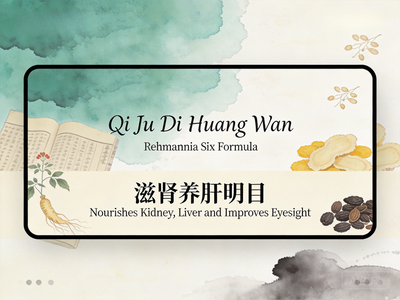
Liu Wei Di Huang Wan (六味地黄丸), known in English as Six-Ingredient Pill with Rehmannia, is one of the most famous and widely used classical formulas in Traditional Chinese Medicine for nourishing Kidney and Liver Yin. It is particularly indicated for dizziness, tinnitus, lower back and knee weakness, night sweats, seminal emission, dry mouth and throat, and heat in the palms and soles due to Yin deficiency with empty heat. In modern clinical practice, Liu Wei Di Huang Wan is used as a base formula for many chronic conditions involving Yin deficiency, including diabetes, hypertension, menopausal symptoms, and age-related decline. By deeply nourishing Yin while clearing the empty heat that arises from deficiency, it restores balance to the Kidney and Liver, the root of Yin and Essence in the body.

I. Origins and History

1. Legend of Origins

The origin of Liu Wei Di Huang Wan is accompanied by a rich legendary story. It is said that during the Northern Song dynasty, the paediatric specialist Qian Yi possessed exceptional medical skill, with distinctive insights and methods in treating children's diseases. On one occasion, Qian Yi encountered a child patient with a flushed complexion, night sweating, vexing heat in the palms and soles, and soreness and weakness of the lumbar region and knees. After careful diagnosis, Qian Yi concluded that this was a manifestation of kidney deficiency in the child. At that time, traditional kidney-tonifying formulas were mostly warm-hot, yang-strengthening preparations, which were not suited to a child's constitution. Qian Yi therefore created the formula Liu Wei Di Huang Wan in the Xiao'er Yaozheng Zhijue (Craft of Medicines and Patterns for Children), using the three tonifying herbs Shudihuang (Prepared Rehmannia Root), Shanzhuyu (Cornus Fruit), and Shanyao (Dioscorea Rhizome) to nourish kidney yin, and the three draining herbs Zexie (Alisma Rhizome), Mudanpi (Tree Peony Bark), and Fuling (Poria) to clear heat from the Liver, Spleen, and Kidney organs — tonification with purgation, supplementing without greasiness — well suited to children's physiological characteristics. Although this legend carries a degree of traditional embellishment, it also reflects the early origins of Liu Wei Di Huang Wan's application in paediatrics.

2. Historical Evolution

Over time, the scope of application of Liu Wei Di Huang Wan gradually expanded. From originally targeting primarily children, its therapeutic effect was later recognised by more physicians and applied to various conditions of kidney yin depletion in adults. During the Jin-Yuan period, physicians further explored and developed the theory and application of the formula, and Liu Wei Di Huang Wan continued to be refined throughout this process. During the Ming and Qing dynasties, numerous physicians conducted more in-depth research into the formula, accumulating rich clinical experience in its application, and the formula's combination and medicinal characteristics also became more mature. In modern times, Liu Wei Di Huang Wan has become one of the classical formulas commonly used in Chinese medicine clinical practice, widely applied across multiple disciplines including internal medicine, surgery, gynaecology, and paediatrics.

3. Cultural Significance

Liu Wei Di Huang Wan is not only an effective remedy for treating disease but also embodies profound cultural connotations within Chinese medicine. It embodies the Chinese medicine concepts of "holism" and "treatment based on pattern differentiation." Through accurately grasping the pathomechanism of kidney yin depletion, it uses an ingenious herb combination to regulate the body's yin-yang balance, achieving the goals of treating disease and nurturing health. Within traditional culture, it also reflects the Chinese people's emphasis on health and wellness preservation, becoming an important representative formula within Chinese medicine's health-preservation culture, deeply loved and revered by the public — its influence has long since extended beyond the medical realm, becoming woven into people's daily life and cultural awareness.

Liu Wei Di Huang Wan: Nourishing Yin, Tonifying the Kidneys, Filling Essence and Cultivating the Root, Improving Yin Deficiency Symptoms in Diabetes and Menopausal Syndrome | HJMEDICAL

II. Herb Composition (Sovereign, Minister, Assistant, Envoy)

1. Chief Herb — Shudihuang (Prepared Rehmannia Root)

Shudihuang is the chief herb within Liu Wei Di Huang Wan. It is sweet in flavour and slightly warm in nature, with a rich, viscous texture, entering the Liver and Kidney channels. Shudihuang has the actions of nourishing yin and tonifying blood, and boosting essence and filling the marrow. Its black colour enters the kidneys, capable of greatly tonifying the kidneys' true yin, making it the foremost herb for tonifying kidney yin. Within the formula, Shudihuang acts like a commander with a stable foundation, continuously providing sufficient yin fluids to the body, nourishing the five zang and six fu organs, ensuring kidney yin becomes replete, thereby improving the various symptoms caused by kidney yin depletion. For example, for manifestations of insufficient kidney yin such as soreness and weakness of the lumbar region and knees, dizziness and blurred vision, and tinnitus and hearing loss, Shudihuang plays an important therapeutic role.

2. Deputy Herbs — Shanzhuyu (Cornus Fruit) and Shanyao (Dioscorea Rhizome)

Shanzhuyu is sour and astringent in flavour and slightly warm in nature, entering the Liver and Kidney channels. It has the actions of tonifying the liver and kidneys, and astringing and consolidating. Shanzhuyu can both tonify liver and kidney yin and astringe the essential qi, preventing excessive outward leakage of essential qi from the kidneys. Combined with Shudihuang, it reinforces the kidney-tonifying and yin-nourishing potency while also ensuring tonification without leakage, performing a mutually reinforcing role. Shanyao is sweet in flavour and neutral in nature, entering the Spleen, Lung, and Kidney channels. It can tonify the spleen and nourish the stomach, generate fluids and benefit the lungs, and tonify the kidneys and astringe essence. Within Liu Wei Di Huang Wan, Shanyao, on one hand, through tonifying the spleen, transforms and transports the refined essence of food and water, providing the material foundation for the generation of kidney yin; on the other hand, it directly tonifies the kidneys, allowing kidney yin to be nourished. Shanzhuyu and Shanyao together assist Shudihuang, reinforcing the formula's yin-nourishing and kidney-tonifying action, making them important deputy herbs within the formula.

3. Assistant Herbs — Zexie (Alisma Rhizome), Mudanpi (Tree Peony Bark) and Fuling (Poria)

Zexie is sweet and bland in flavour and cold in nature, entering the Kidney and Bladder channels. It has the actions of promoting urination and clearing damp-heat. Within the formula, Zexie can drain kidney turbidity, preventing the tonifying herbs such as Shudihuang from being excessively rich and greasy, allowing the tonifying herbs to better exert their effect, while simultaneously, through promoting urination, expelling excess water-dampness from the kidneys, performing the "draining" function. Mudanpi is bitter and acrid in flavour and slightly cold in nature, entering the Heart, Liver, and Kidney channels. It can clear heat, cool blood, activate blood, and resolve stasis. Mudanpi clears and drains ministerial fire, preventing deficiency-fire from flaring upward, while also unblocking the blood vessels, preventing the tonifying herbs from causing stagnation. Fuling is sweet and bland in flavour and neutral in nature, entering the Heart, Lung, Spleen, and Kidney channels. Fuling disinhibits water and percolates dampness, strengthens the spleen, and calms the heart. Fuling can both percolate and disinhibit water-dampness and strengthen the spleen to assist in transforming water-dampness, while also calming the heart and settling the spirit, providing a degree of regulatory benefit for symptoms such as restlessness of the heart-spirit caused by kidney yin depletion. These three herbs together serve as assistant herbs, performing the actions of expelling the pathogen, draining fire, and dispelling dampness, working in coordination with the chief and deputy herbs so that the entire formula achieves tonification with purgation, supplementing without stagnation.

Liu Wei Di Huang Wan: Nourishing Yin, Tonifying the Kidneys, Filling Essence and Cultivating the Root, Improving Yin Deficiency Symptoms in Diabetes and Menopausal Syndrome | HJMEDICAL

III. Pathomechanism, Actions, and Indications

1. Pathomechanism

The pathomechanism targeted by Liu Wei Di Huang Wan is primarily kidney yin depletion. The kidneys are the prenatal root, and kidney yin is the foundation of the body's yin fluids. When kidney yin is insufficient, a series of pathological changes may occur. Kidney yin depletion, unable to nourish liver wood, may manifest as dizziness and blurred vision, soreness and weakness of the lumbar region and knees, and dull pain in the hypochondrium; kidney yin insufficiency with deficiency-fire flaring upward may manifest as tidal fever, night sweating, vexing heat in the five centres, and dryness of the throat and mouth; kidney yin depletion with failure of storage may manifest as spermatorrhoea and seminal efflux. In addition, kidney yin mutually nourishes the yin of the other organs; kidney yin depletion can also affect other organs, leading to conditions such as heart yin insufficiency and lung yin depletion.

2. Actions

The primary action of Liu Wei Di Huang Wan is nourishing yin and tonifying the kidneys. Through the three herbs Shudihuang, Shanzhuyu, and Shanyao nourishing liver and kidney yin, kidney yin becomes sufficient, thereby improving the various symptoms arising from kidney yin depletion. Simultaneously, the three herbs Zexie, Mudanpi, and Fuling clear and drain heat from the Liver, Spleen, and Kidney organs, preventing excessive tonification from generating internal heat, allowing the entire formula to achieve the effect of nourishing yin without assisting fire, and clearing heat without damaging yin.

3. Indications

Liu Wei Di Huang Wan is indicated for the pattern of kidney yin depletion. Common symptoms include soreness and weakness of the lumbar region and knees, dizziness and blurred vision, tinnitus and hearing loss, night sweating, spermatorrhoea, wasting-thirst, steaming bone tidal fever, vexing heat in the palms and soles, and dryness of the mouth and throat. Clinically, it may be used to treat numerous conditions caused by kidney yin insufficiency, such as chronic nephritis, diabetes, hypertension, and menopausal syndrome. It has broad application across multiple fields including Chinese medicine internal medicine, andrology, gynaecology, and paediatrics. For example, for patients with chronic nephritis presenting with kidney yin depletion symptoms, Liu Wei Di Huang Wan can nourish kidney yin and improve renal function; for diabetic patients with kidney yin insufficiency, it can assist in regulating blood glucose and relieving symptoms such as excessive thirst, excessive appetite, and excessive urination caused by kidney yin depletion.

Liu Wei Di Huang Wan: Nourishing Yin, Tonifying the Kidneys, Filling Essence and Cultivating the Root, Improving Yin Deficiency Symptoms in Diabetes and Menopausal Syndrome | HJMEDICAL

IV. Formula Analysis

1. Combining Tonification with Purgation

The formula rationale of Liu Wei Di Huang Wan embodies the characteristic of combining tonification with purgation. The three tonifying herbs Shudihuang, Shanzhuyu, and Shanyao serve as the primary herbs, greatly tonifying liver and kidney yin — this is the formula's core. The three draining herbs Zexie, Mudanpi, and Fuling serve as the supporting herbs, draining kidney turbidity, clearing ministerial fire, and disinhibiting water-dampness. Tonification with purgation prevents the tonifying herbs from causing stagnation, avoiding the disadvantages of simple tonification such as greasy obstruction of the stomach and internal generation of deficiency-fire. This combination method of tonification together with purgation accords with the Chinese medicine treatment principle of "seeking balance as the goal," allowing the formula to better exert its yin-nourishing and kidney-tonifying action, achieving a state of yin-yang balance.

2. Tonifying the Three Yins Together

Within the formula, Shudihuang tonifies kidney yin, Shanzhuyu tonifies liver yin, and Shanyao tonifies spleen yin — tonifying the three yins together. The yin of the Liver, Spleen, and Kidney mutually nourish and mutually support one another. When kidney yin is sufficient, it can nourish liver wood, allowing liver yin to be nurtured; kidney yin can also support spleen yin, promoting spleen-stomach transformation and transport. Through tonifying the three yins together, the body's yin fluids are comprehensively nourished, the body's yin-yang balance is regulated, the body's righteous qi is reinforced, and the body's disease-resistance capacity is improved. This combination method of tonifying the three yins together embodies the Chinese medicine concepts of holism and treatment based on pattern differentiation, targeting the fundamental pathomechanism of kidney yin depletion by regulating from multiple organs, making the treatment more comprehensive and systematic.

3. Combining Movement with Stillness

Liu Wei Di Huang Wan contains both rich, viscous, relatively still-acting tonifying herbs such as Shudihuang, Shanzhuyu, and Shanyao, and clear, draining, relatively dynamic-acting purgative herbs such as Zexie, Mudanpi, and Fuling. Combining movement with stillness allows the formula, while tonifying, to maintain free flow of qi movement, preventing the tonifying herbs from causing qi-movement stagnation. This combination method of movement combined with stillness allows the formula to better exert its yin-nourishing and kidney-tonifying efficacy while avoiding adverse reactions caused by the herbs' biased nature, embodying the subtlety of Chinese medicine formula combination.

Liu Wei Di Huang Wan: Nourishing Yin, Tonifying the Kidneys, Filling Essence and Cultivating the Root, Improving Yin Deficiency Symptoms in Diabetes and Menopausal Syndrome | HJMEDICAL

V. Comparison with Related Formulas

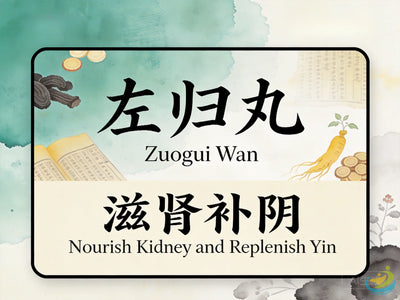
1. Zuogui Wan

Zuogui Wan and Liu Wei Di Huang Wan both have the action of nourishing yin and tonifying the kidneys. However, Zuogui Wan places greater emphasis on pure tonification without purgation, with a relatively stronger medicinal potency. It is composed on the foundation of Liu Wei Di Huang Wan, with Zexie, Fuling, and Mudanpi removed, and Lujiaojiao (Deer Antler Glue), Guibanjiao (Tortoise Plastron Glue), Gouqizi (Goji Berry), Tusizi (Cuscuta Seed), and Chuan Niuxi (Sichuan Achyranthes Root) added. These herbs reinforce the actions of nourishing yin, tonifying the kidneys, filling essence, and boosting the marrow, suitable for conditions of true yin insufficiency with more severe essence-and-marrow depletion, such as soreness and weakness of the lumbar region and knees, spermatorrhoea and seminal efflux, spontaneous sweating and night sweating, dryness of the mouth and throat, and a red tongue with scant coating. Liu Wei Di Huang Wan, by contrast, combines tonification with purgation, with a relatively milder medicinal potency, more suited to kidney yin depletion accompanied by mild damp-heat or deficiency-fire.

2. Dabu Yin Wan

Dabu Yin Wan is also a yin-nourishing and fire-draining formula. Its difference from Liu Wei Di Huang Wan lies in the fact that Dabu Yin Wan focuses primarily on nourishing yin and draining fire, with its composition consisting of Shudihuang, Guiban (Tortoise Plastron), Huangbai (Phellodendron Bark), Zhimu (Anemarrhena Rhizome), and Zhujisui (Pig Spinal Marrow). Within the formula, Huangbai and Zhimu have a relatively strong heat-clearing and fire-draining potency, and combined with the yin-nourishing herbs, are used to treat the pattern of yin deficiency with fire hyperactivity, such as steaming bone tidal fever, night sweating with spermatorrhoea, cough with haemoptysis, and vexation with irritability. Liu Wei Di Huang Wan, by contrast, places its primary emphasis on nourishing yin and tonifying the kidneys, with a relatively milder fire-draining potency, more suited to patients with milder symptoms of yin deficiency with fire hyperactivity.

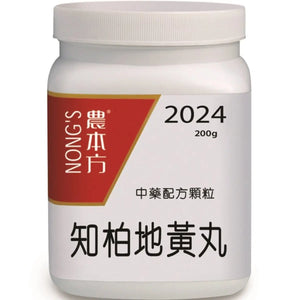
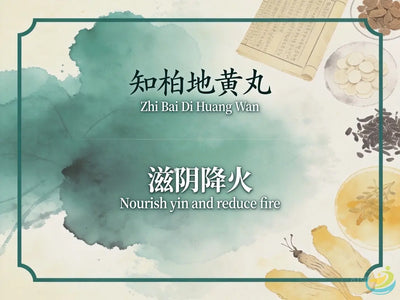
3. Zhibai Dihuang Wan

Zhibai Dihuang Wan is formed on the foundation of Liu Wei Di Huang Wan with the addition of Zhimu and Huangbai. Zhimu and Huangbai reinforce the heat-clearing and fire-draining action, suitable for conditions of kidney yin depletion accompanied by yin deficiency with fire hyperactivity, such as tidal fever and night sweating, dry mouth and sore throat, tinnitus with spermatorrhoea, and short, reddish urination. Compared with Dabu Yin Wan, Zhibai Dihuang Wan has a slightly weaker heat-clearing and fire-draining potency, but its yin-nourishing and kidney-tonifying action remains based on Liu Wei Di Huang Wan, making it relatively gentler and better suited for long-term administration by patients with less severe symptoms of yin deficiency with fire hyperactivity.

Liu Wei Di Huang Wan: Nourishing Yin, Tonifying the Kidneys, Filling Essence and Cultivating the Root, Improving Yin Deficiency Symptoms in Diabetes and Menopausal Syndrome | HJMEDICAL

VI. Clinical Applications

1. Internal Medicine Disorders

In treating chronic nephritis, if the patient presents with the pattern of kidney yin depletion — manifesting as soreness and weakness of the lumbar region and knees, dizziness and tinnitus, dryness of the mouth and throat, and frequent urination — Liu Wei Di Huang Wan may serve as an adjunctive treatment medication, helping to nourish kidney yin and improve renal function. For diabetic patients, if there is a condition of kidney yin insufficiency, such as thirst with excessive drinking, soreness and weakness of the lumbar region and knees, and vexing heat in the five centres, Liu Wei Di Huang Wan can perform the actions of regulating blood glucose and nourishing yin to tonify the kidneys. In treating hypertension, when the patient presents with manifestations of kidney yin depletion, Liu Wei Di Huang Wan may be used together with antihypertensive medication, helping to stabilise blood pressure and improve symptoms such as dizziness and tinnitus caused by kidney yin insufficiency.

2. Andrological Disorders

For male spermatorrhoea, premature ejaculation, and related conditions, if caused by kidney yin depletion, Liu Wei Di Huang Wan produces good therapeutic results. It can nourish kidney yin, consolidate essence, and stop seminal efflux, improving the failure to consolidate the essence gate caused by kidney yin insufficiency. For male infertility, if a condition of kidney yin depletion is present, Liu Wei Di Huang Wan can, through nourishing kidney yin, provide a favourable environment for the generation and development of sperm, improving fertility.

3. Gynaecological Disorders

In menopausal syndrome, when women present with kidney yin depletion symptoms such as tidal fever, night sweating, vexation with insomnia, and soreness and weakness of the lumbar region and knees, Liu Wei Di Huang Wan can regulate the body's yin-yang balance, relieving menopausal symptoms. For menstrual irregularities in women, if caused by kidney yin insufficiency with depletion of the blood sea, Liu Wei Di Huang Wan can nourish yin and blood, regulate the menstrual cycle, and improve the symptoms of menstrual irregularities.

4. Paediatric Disorders

During children's growth and development, if a condition of kidney yin insufficiency appears — such as a thin, emaciated physique, vexing heat in the five centres, night sweating, and dry mouth — Liu Wei Di Huang Wan may be taken with the dosage appropriately adjusted according to the child's age, helping to nourish kidney yin and promote healthy childhood growth. In treating childhood enuresis, if caused by kidney yin depletion with failure of the bladder to restrain, Liu Wei Di Huang Wan can also perform a degree of therapeutic action, reinforcing the bladder's restraining function through nourishing kidney yin.

Liu Wei Di Huang Wan: Nourishing Yin, Tonifying the Kidneys, Filling Essence and Cultivating the Root, Improving Yin Deficiency Symptoms in Diabetes and Menopausal Syndrome | HJMEDICAL

section-7

VII. Clinical Modifications

1. Pronounced Liver-Kidney Yin Deficiency

Gouqizi (Goji Berry), Nüzhenzi (Privet Fruit), and Mohanlian (Eclipta) may be added to reinforce the action of nourishing liver and kidney yin fluids. Gouqizi is sweet in flavour and neutral in nature, entering the Liver and Kidney channels, capable of nourishing the liver and kidneys, and boosting essence to brighten the eyes; Nüzhenzi is sweet and bitter in flavour and cool in nature, entering the Liver and Kidney channels, capable of nourishing the liver and kidneys, and brightening the eyes while darkening the hair; Mohanlian is sweet and sour in flavour and cold in nature, entering the Kidney and Liver channels, capable of nourishing the liver and kidneys, and cooling the blood to stop bleeding. These herbs, combined with Liu Wei Di Huang Wan, can more effectively nourish liver and kidney yin.

2. Marked Yin Deficiency with Fire Hyperactivity

Huanglian (Coptis Root) and Zhizi (Gardenia Fruit) may be added to clear heat and drain fire. Huanglian is bitter in flavour and cold in nature, entering the Heart, Spleen, Stomach, Liver, Gallbladder, and Large Intestine channels, capable of clearing heat, drying dampness, draining fire, and resolving toxicity; Zhizi is bitter in flavour and cold in nature, entering the Heart, Lung, and Triple Burner channels, capable of draining fire, relieving vexation, clearing heat, disinhibiting dampness, cooling blood, and resolving toxicity. Adding these two herbs to Liu Wei Di Huang Wan can reinforce the formula's heat-clearing and fire-draining action, suitable for patients with more pronounced symptoms of yin deficiency with fire hyperactivity.

3. Concurrent Spleen Deficiency with Dampness Exuberance

Baizhu (Atractylodes Rhizome) and Yiyiren (Coix Seed) may be added to strengthen the spleen and dispel dampness. Baizhu is bitter and sweet in flavour and warm in nature, entering the Spleen and Stomach channels, capable of strengthening the spleen, boosting qi, drying dampness, and promoting urination; Yiyiren is sweet and bland in flavour and cool in nature, entering the Spleen, Stomach, and Lung channels, capable of disinhibiting water, percolating dampness, strengthening the spleen, stopping diarrhoea, eliminating painful obstruction, expelling pus, and resolving toxicity to dissipate binds. This allows attention to spleen-stomach function while nourishing kidney yin, preventing the rich, greasy herbs from damaging spleen-stomach yang qi, while also eliminating internal dampness.

VIII. Dosage and Preparation (Traditional Method and Modern Concentrated Granules)

1. Traditional Method

Liu Wei Di Huang Wan is traditionally prepared as a pill.

Large honey pills weigh 9 g per pill, taken orally, 1 pill per dose, twice daily; small honey pills are sold at 60 g per bottle, taken at 9 g per dose, twice daily; water-honey pills are taken at 6 g per dose, twice daily. Take with warm boiled water.

The traditional pill-making process is relatively complex; the herb's active constituents are released relatively slowly, with a sustained action, making it suited to the management of chronic conditions. However, the pill form has a relatively unpleasant taste and requires a larger administered volume, making it somewhat inconvenient for children or patients with difficulty swallowing.

2. Modern Concentrated Granules

Modern concentrated granules are produced from the herbs of Liu Wei Di Huang Wan through extraction, concentration, and related processes to form granules. When taking, dissolve in boiled water, 1 sachet per dose, twice daily. Concentrated granules are convenient to take, with accurate dosing and better taste, making them easier for patients to accept. Furthermore, their herb constituent concentration is high and absorption is rapid, allowing the therapeutic effect to be exerted quickly — making them relatively suitable for certain acute conditions or situations requiring a rapid onset of action. However, certain volatile constituents may be lost during the manufacturing process of concentrated granules, and their therapeutic effect may differ slightly from that of the traditional pill form.

Liu Wei Di Huang Wan: Nourishing Yin, Tonifying the Kidneys, Filling Essence and Cultivating the Root, Improving Yin Deficiency Symptoms in Diabetes and Menopausal Syndrome | HJMEDICAL

IX. Precautions and Adverse Reactions

1. Use with Caution in Those with Weak Spleen-Stomach Function

Liu Wei Di Huang Wan has a relatively strong rich, greasy nature and readily obstructs the stomach. Those with weak spleen-stomach function and poor transforming and transporting capacity may, after taking the formula, develop indigestion symptoms such as epigastric fullness and distension, poor appetite, and nausea and vomiting. Therefore, this population, if needing to use the formula, should appropriately combine spleen-strengthening and stomach-harmonising herbs under medical guidance, or select a dosage form more suited to their constitution, such as concentrated granules, while paying attention to adjusting the administered dosage and method.

2. Contraindicated in Those with a Yang-Deficiency Constitution

Liu Wei Di Huang Wan is a yin-nourishing and kidney-tonifying formula, primarily targeting the pattern of kidney yin depletion. Those with a yang-deficiency constitution already have insufficient yang qi with internal generation of cold pathogen; taking Liu Wei Di Huang Wan may further damage the yang qi, leading to aggravation of yang-deficiency symptoms such as aversion to cold with cold limbs, a pale complexion, and fatigue with lassitude. Therefore, those with a yang-deficiency constitution should avoid using Liu Wei Di Huang Wan.

3. Not Suitable During a Cold

During a cold, the body's righteous qi is engaged in resisting the pathogen at the exterior; it is not appropriate to use tonifying medications at this time. Liu Wei Di Huang Wan is a tonifying preparation; taking it during a cold may "shut the door and detain the bandit," making the pathogen difficult to expel and leading to a prolonged or aggravated course of the cold. Use of Liu Wei Di Huang Wan should be considered only after the cold has fully resolved.

4. Avoid Spicy and Greasy Foods

During the course of taking Liu Wei Di Huang Wan, spicy and greasy foods should be avoided. Spicy foods are warm-hot in nature and readily assist fire and generate heat, aggravating symptoms of yin deficiency with fire hyperactivity; greasy foods are difficult to digest and add burden to the spleen and stomach, affecting the herb's absorption and therapeutic efficacy. Maintaining a light diet helps the herb to better exert its effect and promotes bodily recovery.

Liu Wei Di Huang Wan: Nourishing Yin, Tonifying the Kidneys, Filling Essence and Cultivating the Root, Improving Yin Deficiency Symptoms in Diabetes and Menopausal Syndrome | HJMEDICAL

section-10

X. Modern Research

1. Influence on the Immune System

Liu Wei Di Huang Wan, as a Chinese patent medicine, is composed of six Chinese herbs (including wine-prepared Shanzhuyu), employing three tonifying and three draining herbs, possessing the actions of tonifying kidney yin and boosting spleen yin, primarily indicated for the pattern of liver-kidney insufficiency, applicable for patients with colds, night sweating, and heel pain, among other presentations. Unlike Shenqi Wan, which warms and tonifies kidney yang, it is commonly used clinically for those with a weak constitution.

Modern research has demonstrated that Liu Wei Di Huang Wan has the action of regulating the immune system. It can strengthen the body's immune function, increase the lymphocyte transformation rate, and promote antibody generation. For populations with weakened immune function, Liuwei Dihuang preparations can strengthen the body's resistance and help prevent the onset of disease. In certain patients with chronic conditions — such as chronic hepatitis and chronic nephritis — Liu Wei Di Huang Wan can, through regulating the immune system, improve the patient's immune status and assist in disease treatment.

2. Regulation of the Endocrine System

Liu Wei Di Huang Wan has a degree of regulatory action on the endocrine system. It can regulate hormone levels within the body, exerting a degree of influence on, for example, gonadal hormones and thyroid hormones. In patients with menopausal syndrome, Liu Wei Di Huang Wan can, through regulating the endocrine system, relieve symptoms such as tidal fever, night sweating, and vexation caused by changes in hormone levels. For sexual dysfunction and similar problems caused by male endocrine disorders, Liu Wei Di Huang Wan may also have a degree of improving action.

3. Antioxidant and Anti-Ageing Actions

The herb constituents within Liu Wei Di Huang Wan have antioxidant actions, capable of scavenging free radicals within the body and reducing oxidative damage. Free radicals are closely related to ageing and disease onset; Liu Wei Di Huang Wan, through its antioxidant action, helps to delay cellular ageing and protect the function of bodily tissues and organs. Research has found that long-term administration of Liu Wei Di Huang Wan may have a degree of preventive and improving action on certain ageing-related conditions, such as senile dementia and cardiovascular disease.

4. Influence on the Nervous System

Liu Wei Di Huang Wan also has a degree of regulatory action on the nervous system. It can improve nervous system function, relieve emotional symptoms such as anxiety and depression, and improve sleep quality. For certain symptoms caused by kidney yin depletion — such as dizziness, tinnitus, and insomnia — Liu Wei Di Huang Wan, through regulating the nervous system, can achieve good therapeutic results. Simultaneously, it may also have a degree of protective action on nerve cells, helping to prevent the onset of neurodegenerative conditions.

5. Research on Other Actions

Beyond the actions described above, modern research has also found that Liu Wei Di Huang Wan may have a degree of action in areas such as anti-tumour effects, lowering blood glucose, and lowering blood lipids. In tumour treatment, Liu Wei Di Huang Wan may serve as an adjunctive medication, strengthening the body's tolerance to radiotherapy and chemotherapy and reducing adverse reactions. In treating conditions such as diabetes and hyperlipidaemia, Liu Wei Di Huang Wan can, through regulating metabolic function, assist in controlling blood glucose and lipid levels, improving the patient's condition. However, these actions still require further in-depth research and verification, to be better applied in clinical treatment.

Liu Wei Di Huang Wan — Frequently Asked Questions

Q1: What are the therapeutic actions of Liu Wei Di Huang Wan?

Liu Wei Di Huang Wan has the actions of nourishing yin and tonifying the kidneys, filling essence and nourishing the marrow, and nourishing the liver and kidneys. It is primarily used for soreness and weakness of the lumbar region and knees, dizziness and tinnitus, tidal fever and night sweating, dryness of the mouth and throat, and vexing heat in the five centres caused by kidney yin insufficiency.

Q2: What modern conditions is Liu Wei Di Huang Wan used for?

In modern TCM clinical practice, it is commonly used for diabetes (type 2 diabetes), menopausal syndrome, chronic kidney disease, and age-related functional decline, among individuals whose presentation corresponds to the pattern of kidney yin depletion.

Q3: Is Liu Wei Di Huang Wan suitable for menopausal women's wellness management?

For those experiencing tidal fever, night sweating, insomnia, restlessness, dry mouth, and soreness and weakness of the lumbar region and knees reflecting kidney yin insufficiency during menopause, TCM practitioners commonly apply Liu Wei Di Huang Wan through pattern differentiation as adjunctive treatment, but it cannot replace gynaecological or endocrine specialist treatment.

Q4: Who should not take Liu Wei Di Huang Wan?

Those with yang deficiency and cold sensitivity, weak spleen-stomach function, loose stools, or internal exuberance of phlegm-dampness should generally not self-administer Liu Wei Di Huang Wan. Assessment should be made by a qualified TCM practitioner based on the individual's constitution and pattern differentiation findings.

⚠️ This content is for reference only and does not provide medical advice. Consult a healthcare professional for any health concerns.

Login

Forgot your password?

Don't have an account yet?
Create account

Liu Wei Di Huang Wan: Classic TCM Formula for Kidney and Liver Yin Deficiency