Heat-Clearing Formulas

散腫潰堅湯 · Sàn Zhǒng Kuì Jiān Tāng

San Zhong Kui Jian Tang

A classical formula for hard swollen masses and scrofula from heat toxin and phlegm.

View formula profile →
Last reviewed August 2026
Formula CategoryHeat-Clearing Formulas
Primary PatternPhlegm-Heat
Primary FunctionClear heat, resolve toxin, soften hardness, reduce swelling
Primary Therapeutic PrincipleClear heat toxin and soften hard masses
Main HerbsScutellaria / Baikal Skullcap · Coptis Rhizome · Phellodendron Bark · Anemarrhena Rhizome · Platycodon Root · Kudzu Root · White Peony Root · Scrophularia Root · Cimicifuga Rhizome · Bupleurum Root · Forsythia Fruit · Licorice Root
Classical SourceLi Dongyuan school / classical

Why This Formula?

Traditionally selected for hard heat-toxin and phlegm masses or scrofula, rather than soft phlegm goiter, yang-type early abscess, or yin-type cold abscess.

Traditionally selected for hard heat-toxin and phlegm masses or scrofula, rather than soft phlegm goiter, yang-type early abscess, or yin-type cold abscess.

What Is San Zhong Kui Jian Tang?

1. Origin Background

San Zhong Kui Jian Tang (散肿溃坚汤), or Disperse Swelling and Ulcerate the Hard Decoction, is a classical Jin-Yuan formula from Li Dongyuan’s Lan Shi Mi Cang (Secrets from the Orchid Chamber). It belongs to the category of formulas that clear Heat-toxin, move Qi and Blood, soften hardness, and disperse scrofulous swellings.

This formula addresses hard, stone-like sores and scrofula (Ma Dao Chuang and Luo Li) along the Shaoyang and Yangming channels—below the ear, in the supraclavicular fossa, on the shoulder, or under the ribs—caused by constrained Fire, Phlegm, and Blood stasis. Typical signs include firm, non-ulcerating or poorly draining swellings, a bitter taste, irritability, a red tongue with yellow coating, and a wiry rapid pulse.

Combining Huang Qin, Huang Lian, Huang Bai, Long Dan Cao, and Zhi Mu to drain constrained Fire from the San Jiao and Liver-Gallbladder, Lian Qiao, Tian Hua Fen, and Jie Geng to clear toxin and dissipate clumps, Kun Bu to soften hardness and transform Phlegm, San Leng and E Zhu to break Blood stasis and attack stubborn masses, Chai Hu, Sheng Ma, and Ge Gen to course Qi and raise the formula to the neck and chest, and Dang Gui with Bai Shao to nourish and move Blood, San Zhong Kui Jian Tang disperses swelling and helps hard toxins either scatter or ripen and drain.

San Zhong Kui Jian Tang

2. Neck Diseases

This formula is frequently referenced for conditions involving hard nodules in the neck area.

  • Scrofula (Lymphatic nodules): If a patient presents with hard, immovable masses in the neck that do not change skin color, San Zhong Kui Jian Tang can be used to address the underlying heat-toxin and phlegm. It is particularly relevant when the patient also shows signs of liver depression (bitter taste, irritability) or underlying yin deficiency (fatigue, night sweats).
  • Thyroid Nodules: For nodules that feel firm or hard, especially when accompanied by emotional stress or a sense of "stuck" qi in the chest, the formula helps by soothing the liver and softening the nodules. It aims to reduce the size of the mass and improve the overall local environment of the neck.
San Zhong Kui Jian Tang

3. Breast Diseases

The formula is often considered for breast issues rooted in stagnation and phlegm-dampness.

  • Breast Hyperplasia (Mastopathy): If a patient experiences distending breast pain that changes with their menstrual cycle, accompanied by emotional low-mood or a feeling of fullness in the chest, this formula can be beneficial. Chai Hu (Bupleurum) helps relieve the breast distension, while San Leng (Sparganium) and E Zhu (Curcuma) work to dissolve the underlying stagnation.
  • Small Fibroids: In cases where small, hard breast lumps are identified and the patient shows symptoms of "liver-stomach disharmony" (poor digestion, mood fluctuations), the formula acts to improve the systemic circulation. By addressing the accumulation of phlegm and blood stasis, it can assist the body in regulating these benign growths.

Herb Composition (Sovereign / Minister / Assistant / Envoy)

1. Monarch Drug

  • Chai Hu (Bupleurum): This herb is essential for soothing the liver and regulating the flow of qi (vital energy). In San Zhong Kui Jian Tang (Decoction for Dispersing Swelling and Resolving Firmness), it ensures that liver qi moves smoothly and does not stagnate. When a person develops neck lumps due to emotional stress or anger—often accompanied by chest tightness and a depressed mood—Chai Hu helps relieve these discomforts from the root. Additionally, it acts as a "messenger," guiding the healing properties of other herbs directly to the liver and gallbladder meridians, making it highly effective for treating swelling in areas like the neck and underarms.
  • Lian Qiao (Forsythia): Known for its ability to clear heat and detoxify, Lian Qiao is a go-to herb for reducing swelling and breaking down lumps. It quickly targets localized heat-toxins, reducing symptoms like redness, heat, and pain. Its cooling nature stops the spread of inflammation, making it excellent for treating abscesses and swollen masses.

2. Ministerial Drug

  • Huang Qin (Baical Skullcap): This herb clears heat, dries dampness, and purges "fire" from the body. It supports the Monarch herbs by boosting the formula's heat-clearing power. When swelling is paired with signs of internal heat—such as a fever, a bitter taste in the mouth, or excessive thirst—Huang Qin effectively provides relief while preventing dampness from making the condition worse.
  • Huang Lian (Coptis): Extremely bitter and cold in nature, Huang Lian has a powerful ability to dry dampness and detoxify. It acts as a direct counter-attack against intense "fire" or severe heat-toxins. In this formula, it works hand-in-hand with Huang Qin to rapidly soothe red, hot, and painful swellings.

3. Assistant Drug

  • Huang Bo (Phellodendron): This herb helps clear heat and dry dampness while protecting the body's yin (cooling and moistening fluids). Together with Huang Qin and Huang Lian, it forms a strong defense against heat-toxins. For patients who have had long-lasting swelling that has depleted their bodily fluids, Huang Bo helps clear the infection without causing further dehydration.
  • Zhi Mu (Anemarrhena): It assists the primary herbs by clearing heat and purging fire, while also nourishing yin and moistening dryness. When paired with Huang Bo, it beautifully balances the body's internal yin and yang, preventing the medicinal treatment from being too drying.
  • Jie Geng (Balloon Flower Root): This herb resolves phlegm and promotes the draining of pus. Its unique role in the formula is to carry the effects of the other herbs upward, making the treatment especially effective for swellings on the head, face, and neck. It also helps improve local blood and qi circulation.
  • Kun Bu (Kelp): Famous for its ability to soften hardness and dissolve nodules, this herb is crucial for breaking down stubborn, hard lumps.
  • San Leng (Sparganium): This herb aggressively promotes blood circulation and breaks up stasis (stagnant blood) to relieve pain. For swellings that are dark red or involve fixed, localized pain, San Leng helps clear the blockage.
  • E Zhu (Curcuma): Working very similarly to San Leng, E Zhu helps break up stagnant blood and move qi. When a mass is large, hard, and deeply congested, these two herbs are often paired together to effectively shrink the lump.
San Zhong Kui Jian Tang

4. Guide Drug

  • Gan Cao (Licorice): This sweet herb is a natural harmonizer. In the formula, it smooths out the harsh properties of the other herbs, ensuring they work together gently and effectively. It also supports the spleen and stomach, helping the body properly digest and absorb the herbal medicine.

Clinical Presentation in TCM

1. Pathogenesis

San Zhong Kui Jian Tang is designed to treat conditions caused by a combination of three main issues: heat-toxin accumulation, qi and blood stasis, and phlegm-dampness buildup. When excess heat invades the body, it can slow down local blood and qi circulation, creating a "traffic jam" (stasis). At the same time, this heat thickens the body's natural fluids into sticky phlegm. When heat, stagnant blood, and phlegm clump together, they form hard, swollen lumps. For example, chronic stress can cause "liver fire," which travels up to the neck and creates lumps. If a person also eats too much greasy or sweet food, it damages the digestion, creating internal dampness and phlegm. When these factors combine, the swelling becomes worse.

2. Efficacy

This formula offers a comprehensive, multi-angle approach to healing:

  • Clearing heat and detoxifying: It removes the root heat-toxin, quickly soothing redness, pain, and inflammation.
  • Dissipating swelling and resolving nodules: It actively shrinks lumps and disperses hardened masses.
  • Promoting blood circulation: By removing stagnant blood blockages, it helps fresh, healing blood reach the affected area, allowing the body to absorb and clear the swelling.
  • Resolving phlegm and softening hardness: It breaks down sticky phlegm, slowly softening rock-hard lumps so they can naturally dissipate.
San Zhong Kui Jian Tang

3. Indications

Traditionally, San Zhong Kui Jian Tang is used to treat Ma Dao Jia Ying (scrofula or hard nodules on the neck). These lumps typically appear near the ears or neck, feel as hard as a stone, do not move when pushed, and usually do not change the color of the skin. They might not be very painful, but patients often experience a bitter taste in the mouth, dizziness, or chest tightness.

In modern medicine, if a patient is diagnosed with cervical lymph node tuberculosis, thyroid nodules, or breast hyperplasia nodules, and a TCM practitioner determines that their symptoms match the pattern of heat-toxin, blood stasis, and phlegm buildup, this formula can be a highly effective reference for treatment.

The Mechanism in Classical Theory

1. Overall Compatibility Idea

The core strategy of San Zhong Kui Jian Tang (Decoction for Dispersing Swelling and Resolving Firmness) is to treat the complex "root and branch" of swollen masses. It doesn't just attack the lump; it manages the internal environment that allows the lump to grow.

The formula relies on a comprehensive, multi-layered approach:

  • Targeting the Heat-Toxin: By using potent heat-clearing and detoxifying herbs, the formula controls the active inflammatory process, which is the primary "engine" driving the swelling.
  • Moving Stagnation: It incorporates herbs that promote blood circulation to remove stasis (stagnant blood), which is essential because masses often create a local "traffic jam" that prevents healing.
  • Softening and Dissolving: To deal with the physical mass, it adds agents that soften hardness and dissolve phlegm-dampness, helping stubborn lumps shrink over time.
  • Regulating Qi: By including herbs that soothe the liver and regulate qi (vital energy), the formula ensures that internal pressure doesn't build up, as emotional stress is often a trigger for these conditions.

By combining these actions, the formula creates a balanced cycle: smooth qi movement helps blood flow better, and improved blood flow helps resolve phlegm, ultimately leading to the dissipation of the swelling.

San Zhong Kui Jian Tang

2. Drug Synergistic Effect

The effectiveness of this formula comes from how the herbs work as a team:

  • The "Director": Chai Hu (Bupleurum) acts as the director of the formula. By soothing the liver and regulating qi, it ensures the other herbs can travel where they are needed most.
  • The "Cooling Team": Lian Qiao (Forsythia), Huang Qin (Baical Skullcap), Huang Lian (Coptis), and Huang Bo (Phellodendron) work together to create a powerful cooling environment. While each herb clears heat, they do so in slightly different ways (some target internal fire, some dry dampness), creating a comprehensive cooling effect that stops inflammation in its tracks.
  • The "Dissolving Team": San Leng (Sparganium), E Zhu (Curcuma), and Kun Bu (Kelp) form the heavy-duty crew. San Leng and E Zhu are experts at "breaking" stasis, while Kun Bu softens hard, rock-like masses. Together, they attack the physical structure of the lump.
  • The "Messenger": Jie Geng (Balloon Flower) ensures that the medicinal power is directed upward to the head, face, and neck, which is critical for treating conditions in those areas.
  • The "Harmonizer": Gan Cao (Licorice) is used to mellow out the properties of the stronger, colder herbs, ensuring the formula is effective yet gentle enough for the body to tolerate.

Clinical Comparison Table

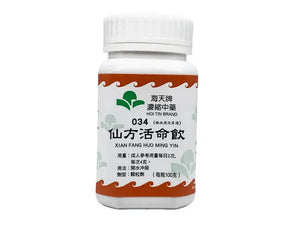
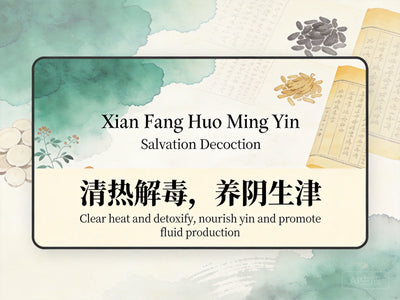
Compare San Zhong Kui Jian TangHai Zao Yu Hu TangXian Fang Huo Ming YinYang He Tang
Primary Function Clear heat, resolve toxin, soften hardness, reduce swellingResolve phlegm, soften hardness, move Qi and bloodClear heat, resolve toxin, reduce swelling, invigorate blood, stop painWarm Yang, nourish blood, disperse cold, unblock stagnation
Formula Category Heat-Clearing FormulasPhlegm-Resolving FormulasHeat-Clearing FormulasYang-Tonifying Formulas
Typical TCM Pattern Phlegm-HeatPhlegm-DampnessDamp-HeatYang Deficiency
Main Conditions Neck PainNeck PainFever, Sore ThroatJoint Discomfort, Cold Limbs, Fatigue & Low Energy
Main Herbs Scutellaria / Baikal Skullcap · Coptis Rhizome · Phellodendron Bark · Anemarrhena Rhizome · Platycodon Root · Kudzu Root · White Peony Root · Scrophularia Root · Cimicifuga Rhizome · Bupleurum Root · Forsythia Fruit · Licorice RootSeaweed · Kelp · Fritillaria Bulb · Pinellia Rhizome · Green Tangerine Peel · Tangerine Peel · Chinese Angelica Root · Chuanxiong Rhizome · Forsythia Fruit · Licorice RootAngelica Dahurica Root · Fritillaria Bulb · Saposhnikovia Root · Red Peony Root · Chinese Angelica Root · Licorice Root · Gleditsia Thorn · Trichosanthes Root · Frankincense · Myrrh · Honeysuckle Flower · Tangerine PeelPrepared Rehmannia Root · Cinnamon Bark · Ephedra Herb · Deer Antler Glue · White Mustard Seed · Blast-fried Ginger · Licorice Root
Classical Source Li Dongyuan school / classicalMing-Qing classical formularyMing-Qing classical formularyMing-Qing classical formulary

How to tell them apart

San Zhong Kui Jian Tang, Hai Zao Yu Hu Tang, Xian Fang Huo Ming Yin and Yang He Tang address masses or sores. Hai Zao Yu Hu Tang softens phlegm goiter; Xian Fang Huo Ming Yin clears yang-type abscess toxin; Yang He Tang warms yin-type cold abscesses. San Zhong Kui Jian Tang clears heat toxin and softens hard masses for scrofula and hard swellings from heat and phlegm.

For educational reference only, based on traditional pattern differentiation — not a substitute for professional advice.

Clinical Modifications for San Zhong Kui Jian Tang

In practice, a TCM practitioner will often adjust San Zhong Kui Jian Tang (Decoction for Dispersing Swelling and Resolving Firmness) to match a patient's specific symptoms. Here are some common ways the formula is modified:

1. More Severe Heat Toxin

If a patient has severe signs of heat-toxin—such as intense local redness, swelling, heat, and sharp pain—the cooling power of the formula needs a boost.

  • Dosage increases: The amounts of core cooling herbs like Lian Qiao (Forsythia) can be increased to 15g, while Huang Lian (Coptis) and Huang Qin (Baical Skullcap) are increased to 12g each.
  • Herb additions: Practitioners often add Jin Yin Hua (Honeysuckle) and Pu Gong Ying (Dandelion). These are excellent for clearing out heat and neutralizing toxins, helping to rapidly calm the local inflammation.

2. More Severe Blood Stasis

When blood stagnation is the main issue, the mass might look dark red, and the pain is usually severe and fixed in one place.

  • Dosage increases: The stasis-breaking herbs San Leng (Sparganium) and E Zhu (Curcuma) are increased to 10g each.
  • Herb additions: Blood-activating herbs like Dan Shen (Salvia) and Chi Shao (Red Peony Root) are added to supercharge blood circulation, clear out the "traffic jam," and help the mass dissipate more quickly.

3. Excessive Phlegm-Dampness

If the body has too much phlegm-dampness, the lumps tend to feel softer, and the patient might feel a heavy tightness in the chest and cough up extra phlegm.

  • Herb additions: To dry this dampness and melt away the phlegm, herbs like Ban Xia (Pinellia), Chen Pi (Tangerine Peel), and Zhe Bei Mu (Thunberg Fritillary Bulb) are added.
  • Standard dosages: Typically, Ban Xia and Chen Pi are given at 9g, and Zhe Bei Mu at 12g. This combination actively softens hard masses by breaking down the sticky phlegm holding them together.
San Zhong Kui Jian Tang

4. Obvious Yin Deficiency

Sometimes, chronic heat can burn off the body's natural cooling and moistening fluids (yin), leading to a dry mouth, dry throat, and a red tongue with very little coating.

  • Herb additions: To replenish these fluids, yin-nourishing herbs are added, such as Sheng Di Huang (Rehmannia) at 15g, Mai Dong (Ophiopogon) at 12g, and Xuan Shen (Scrophularia) at 12g. These protect the body from further heat damage and create a better internal environment for the swelling to heal.

What the Science Suggests

Modern science has taken a closer look at how San Zhong Kui Jian Tang works. Here is what recent pharmacological and clinical studies have found:

1. Pharmacological Research

  • Anti-inflammatory & Immune Support: Chai Hu (Bupleurum) contains compounds like saikosaponins that help regulate the immune system and reduce overall inflammation. Meanwhile, Gan Cao (Licorice) provides additional anti-allergic and immune-boosting support, while also reducing potential side effects from other herbs.
  • Antibacterial & Antiviral Action: Lian Qiao (Forsythia) contains phillyrin, which can block the release of inflammatory chemicals. Alongside Huang Qin (Baical Skullcap), Huang Lian (Coptis), and Huang Bo (Phellodendron), this formula shows strong antibacterial properties, helping to fight off pathogens causing the redness, heat, and pain.
  • Improved Circulation: Herbs like San Leng (Sparganium) and E Zhu (Curcuma) have been shown to improve hemorheology—meaning they make the blood less thick and sticky. This boosts local blood flow, helping the medicine reach the target area more effectively.
  • Tissue Regulation: Kun Bu (Kelp) is rich in minerals and amino acids, which researchers believe may help regulate local tissue metabolism, physically encouraging stubborn lumps to break down.
San Zhong Kui Jian Tang

2. Clinical Research

In clinical settings, this formula has shown promising results, especially for neck and breast issues:

  • Neck Scrofula (Lymphatic tuberculosis): Studies suggest that when San Zhong Kui Jian Tang is used alongside conventional anti-tuberculosis medications, patients often see a higher cure rate, a shorter treatment time, and a lower chance of the nodules returning. For example, a clinical trial with 50 patients showed that the group using the combined treatment had significantly better recovery rates than those using standard medication alone.
  • Breast Nodules: For conditions like breast hyperplasia, clinical observations note that the formula effectively relieves breast pain, helps shrink the size of the nodules, and notably improves the patient's overall quality of life.

Safety Considerations

1. Dietary and Emotional Precautions

While taking Sanzhong Kuijian Decoction, avoid spicy, greasy, and stimulating foods, such as chili peppers, fried foods, fatty meats, and strong tea. These may worsen heat-toxin symptoms, burden digestion, or affect the formula’s efficacy. Maintain a calm mood, as prolonged stress, anxiety, or anger may contribute to liver-qi stagnation and hinder recovery.

2. Special-Population Precautions

Pregnant women should use Sanzhong Kuijian Decoction only under medical supervision, because blood-moving ingredients such as Sparganium and Curcuma zedoaria may pose risks to the fetus. Elderly people, weak individuals, and those with spleen-stomach deficiency-cold should receive individualized dosage adjustments and professional guidance.

Questions About San Zhong Kui Jian Tang

Q1: What are the actions of San Zhong Kui Jian Tang?
San Zhong Kui Jian Tang has the actions of clearing Heat-toxin, transforming Phlegm, invigorating Blood, and dispersing hard swellings. Li Dongyuan designed it so stone-hard lumps along the Shao Yang and Yang Ming channels can either scatter or break down.
Q2: Which modern conditions is San Zhong Kui Jian Tang suited to?
Modern TCM clinical practice commonly applies it to individuals whose pattern differentiation falls within Phlegm-Fire and stasis forming hard lumps, including scrofula or hard cervical nodes of this excess pattern, some firm goiter or neck-shoulder swellings, and hard Yang-type lumps from the ear down to the clavicle or hypochondrium — always after imaging and medical diagnosis.
Q3: Is San Zhong Kui Jian Tang suitable for a hard, stone-like lump on the neck?
For presentations of a firm swelling below the ear, along the neck to the clavicle, on the shoulder, or under the ribs, possibly with bitter taste, thirst, and a wiry rapid pulse — in those whose pattern differentiation confirms excess Heat-Phlegm-stasis — TCM commonly applies this formula as an adjunct. Any neck mass needs proper medical evaluation before herbs are considered.
Q4: Who should not take San Zhong Kui Jian Tang?
Those with Cold-deficiency soft lumps, marked Qi-Blood deficiency, pregnancy, or who cannot tolerate bitter-cold and Blood-breaking herbs are generally not suitable. The formula is attacking. Use should be assessed by a qualified TCM physician after malignancy and infection have been excluded as needed.
Q5: Why combine Fire-draining, Phlegm-softening, and Blood-breaking herbs?
Hard “horse-knife” scrofula forms when Shao Yang and Yang Ming Fire cooks Phlegm and Blood into a stone. Huang Qin, Huang Lian, Huang Bai, Long Dan Cao, and Zhi Mu drain Triple-Burner Fire. Kun Bu and Lian Qiao transform Phlegm and dissipate nodules. San Leng and E Zhu break stasis. Tian Hua Fen and Jie Geng clear and vent. Chai Hu, Sheng Ma, and Ge Gen raise and course Shao Yang–Yang Ming. Dang Gui Wei and Bai Shao protect Blood. One strategy alone cannot soften a Fire-Phlegm-stasis stone.
Q6: How does San Zhong Kui Jian Tang differ from Xiao Luo Wan or Xian Fang Huo Ming Yin?
Xiao Luo Wan more gently transforms Phlegm and softens scrofula without draining Triple-Burner Fire so fiercely. Xian Fang Huo Ming Yin treats early red-hot yang sores rather than long-standing stone-hard neck lumps. San Zhong Kui Jian Tang is the attacking formula for hard Shao Yang–Yang Ming swellings of excess Fire-Phlegm-stasis.
Q7: What are the main ingredients of San Zhong Kui Jian Tang?
The Lan Shi Mi Cang formula includes Huang Qin, Huang Lian, Huang Bai, Long Dan Cao, and Zhi Mu to drain Fire; Kun Bu, Lian Qiao, Tian Hua Fen, and Jie Geng to transform Phlegm and dissipate nodules; San Leng and E Zhu to break stasis; Chai Hu, Sheng Ma, and Ge Gen to course and raise Shao Yang–Yang Ming; and Dang Gui Wei, Bai Shao, and Gan Cao to protect Blood and harmonize.
Q8: Is San Zhong Kui Jian Tang suitable for long-term use?
No. It is a short-course attacking formula. Bitter-cold and Blood-breaking herbs injure Qi, Yin, and the Spleen if continued after the hardness begins to recede. Deficiency after a long illness needs a different, supporting strategy.
Q9: Can this formula make a hard lump either disperse or soften toward drainage?
Classically that is the intent of “san zhong kui jian”: scatter the swelling or break the hardness. In a robust excess pattern, draining Fire, transforming Phlegm, and breaking stasis may shrink the mass or help a formed abscess point. It is never a substitute for biopsy, surgery, or antituberculous treatment when those are indicated.
Q10: What lifestyle advice supports the use of San Zhong Kui Jian Tang?
Completing recommended imaging and biopsy, avoiding alcohol and spicy heating foods, and not squeezing a hard neck mass all support correct use. Rapidly growing lumps, night sweats with weight loss, or difficulty swallowing require prompt medical care rather than self-use of this attacking decoction.

General Questions

How do I choose the right formula?
TCM formulas are traditionally selected according to individual pattern differentiation rather than by symptom alone. If you're not sure which formula fits your presentation, take our AI Assessment below for a personalized starting point, then confirm with a qualified TCM practitioner.
What are concentrated herbal granules?
Concentrated herbal granules are made by decocting raw herbs, then extracting and concentrating the resulting liquid into a fine granule or powder form. This preserves the same active compounds as a traditional decoction while making the herbs far easier to store, measure, and prepare.
How should I take these products?
Dissolve the recommended amount of granules in hot water, stir until fully dissolved, and drink while warm — following the dosage and frequency advised by your TCM practitioner or as stated on the product packaging.
Are concentrated herbal granules equivalent to traditional decoctions?
Concentrated granules are produced from the same herbs and processed to retain their active compounds, so they are traditionally regarded as a convenient alternative to decoctions rather than a different remedy. Some practitioners note subtle differences in strength or absorption between the two forms, so your TCM practitioner may adjust dosage accordingly.
Are your products authentic?
Yes. HJMEDICAL sources its concentrated granules exclusively from established, reputable manufacturers such as Nong's and Hoi Tin, both long-standing names in the TCM granules industry, with GMP compliance stated directly on their packaging.
Are HJMEDICAL products manufactured under GMP standards?
HJMEDICAL sources its concentrated granules from established, reputable manufacturers such as Nong's and Hoi Tin, both long-standing names in the TCM granules industry. GMP compliance for these products is stated directly on their packaging.
Do you ship internationally?
Yes — we ship worldwide! Every order goes out via Hong Kong Post, and your exact shipping cost and estimated delivery time for your address are calculated and shown right at checkout, so there are never any surprises. We also offer free shipping once your order reaches our free-shipping threshold, so it's easy to stock up on your favorite formulas and save.
Can I take more than one formula at the same time?
Some formulas are traditionally combined, while others overlap or counteract each other. We recommend checking with a qualified TCM practitioner before combining formulas, especially if you are already taking other medication.
Are these products suitable during pregnancy or breastfeeding?
Some TCM formulas are not suitable during pregnancy or breastfeeding. Please consult a qualified TCM practitioner or your doctor before use if you are pregnant, trying to conceive, or nursing.
Do these products replace medical treatment?
No. These products are traditional herbal supplements intended to support wellbeing according to TCM principles — they are not a replacement for professional medical diagnosis or treatment. Please consult a qualified TCM practitioner or licensed healthcare provider before starting, stopping, or combining any treatment, especially if you have a chronic condition.
Medical Disclaimer

For general TCM education only — not medical advice. Consult a qualified TCM practitioner or licensed healthcare provider before use, especially if pregnant, nursing, on medication, or managing a chronic condition.

Not sure which formula is right for you?

Take the AI Assessment

最新文章

Login

Forgot your password?

Don't have an account yet?
Create account

San Zhong Kui Jian Tang: Classic TCM Formula for Scrofula, Goiter & Hard Phlegm-Stagnation Masses