Liver-Wind Extinguishing Formulas

鉤藤散 · Gōu Téng Sǎn

Gou Teng San

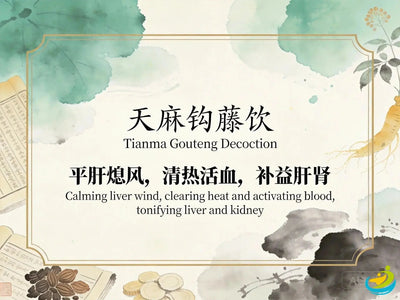
A liver-wind formula centered on Uncaria, not the same as Tian Ma Gou Teng Yin.

View formula profile →
Last reviewed October 2026
Formula CategoryLiver-Wind Extinguishing Formulas
Primary PatternLiver Fire
Primary FunctionCalm the liver, extinguish wind, clear heat
Primary Therapeutic PrincipleCalm the liver, extinguish wind, clear heat
Main HerbsUncaria Stem with Hooks · Tangerine Peel · Pinellia Rhizome · Ophiopogon Tuber · Poria / Hoelen · Poria with Pine Root · Ginseng Root · Chrysanthemum Flower · Saposhnikovia Root · Honey-fried Licorice · Gypsum · Fresh Ginger
Classical SourcePu Ji Ben Shi Fang (Xu Shuwei, Song dynasty)

Why This Formula?

Selected for dizziness from liver wind with phlegm-heat, when a Song-dynasty Gou Teng-centred formula is preferred over Tian Ma Gou Teng Yin.

Selected for dizziness from liver wind with phlegm-heat, when a Song-dynasty Gou Teng-centred formula is preferred over Tian Ma Gou Teng Yin.

What Is Gou Teng San?

1. Where It Began

Gou Teng San (钩藤散), or Uncaria Powder, is a classical formula first recorded in Sun Si Miao's Qian Jin Yao Fang (Essential Formulas Worth a Thousand in Gold, 652 AD) — one of the earliest systematic collections of medicinal formulas in China. It belongs to the category of formulas that clear heat from the liver, calm liver wind, and settle the spirit.

The formula is aimed at liver wind rising with heat in the liver channel — a common pattern behind dizziness, headaches, and ringing ears. When pent-up emotion or heat makes the liver burn and wind rises to the head, the result is dizziness and blurred vision, headaches, tinnitus, a red face, irritability, a dry bitter mouth, and restless sleep. It is widely used for hypertension with heat signs, tension headaches and migraines, the early stage of infantile convulsions, and menopausal hot flushes and irritability.

In the original text the formula sat in the chapter on "wind dizziness" and was used for vertigo, tinnitus, and headache from liver wind rising. It has been in continuous use for over a thousand years.

Gou Teng San

2. High Blood Pressure

Gou Teng San is a common herbal support for hypertension of the liver-heat/liver-wind type. Typical signs are a headache and dizziness that worsen with stress or fatigue, a red face, irritability, a dry bitter mouth, hard stools, a yellow tongue coating, and a wiry rapid pulse.

Research suggests the rhynchophylline in Gou Teng widens blood vessels and lowers peripheral resistance, which helps lower blood pressure. For mild-to-moderate hypertension, adding Gou Teng San on top of a conventional drug often eases the dizziness and headache and improves quality of life.

3. Early Convulsions in Children

In children, the very start of a convulsion — fever, restlessness, easy startling, mild twitching — can be calmed early. Children are naturally prone to liver-heat stirring wind, and Gou Teng plus Ju Hua cool the liver and ease the restless startle. For children under six, the dose is adjusted by age, often given as a light brew; the formula is gentle and doesn't tax a child's digestion.

4. Menopause

Many menopausal women have hot flushes, sweating, dizziness, irritability, and poor sleep — often a mix of liver heat and stagnant liver qi. Gou Teng San calms the liver and eases the flushes and restlessness. When there are dizziness, a bitter taste, and a red tongue, it's sometimes combined with Liu Wei Di Huang Wan so that cooling and nourishing work together.

Gou Teng San

5. Tension Headaches and Migraines

Tension headaches and migraines often flare with stress, when liver wind rises. Gou Teng and Ju Hua calm the wind; Long Dan Cao drains the liver fire. In the acute phase, one dose a day often clearly eases the headache within three to five days and cuts how often it returns.

Herb Composition (Sovereign / Minister / Assistant / Envoy)

1. The Lead Herb: Gou Teng

Gou Teng (Uncaria Stem with Hooks) is the heart of the formula. It is slightly cool and sweet, enters the liver and pericardium channels, and is the go-to herb for clearing heat and calming liver wind that stirs up. The hooked stems are the strongest part — the hooks are where the medicine concentrates — and its compounds (rhynchophylline and isorhynchophylline) help calm the nervous system and ease the dizziness and headache of rising liver wind.

As the lead herb, Gou Teng is used in the largest dose (roughly 15–30 g), both to settle wind that has already risen and to drain heat from the liver.

2. The Cool Support

Two herbs back up the lead:

  • Ju Hua (Chrysanthemum Flower) is cool and fragrant. It scatters wind, calms the liver, and clears the eyes — a good match for dizziness, red eyes, and wind-heat signs.
  • Long Dan Cao (Chinese Gentian Root) is bitter and cold, the classic herb for draining excess fire straight from the liver and gallbladder. It targets the headache and tinnitus of liver heat rising.

Together they support Gou Teng from two angles — scattering wind above and draining heat below — and widen what the formula can handle.

3. The Supporting Trio

Three more herbs balance the formula:

  • Shi Gao (Gypsum) is strongly cooling and clears heat in the qi level, easing the general heat, dryness, and thirst that come with liver heat.
  • Fang Feng (Saposhnikovia Root) is slightly warm. It scatters external wind and protects against wind mixing with dampness to cause stiff limbs.
  • Ren Shen (Ginseng) supports the body's qi, so the many cold herbs don't hurt the digestion, and it helps weaker people hold up against the heat.

This trio looks after the heat, the wind, and the body's strength, keeping the formula cold enough to work but gentle enough to be safe.

Gou Teng San

4. The Harmonizer: Gan Cao

Gan Cao (Licorice Root) plays two quiet but important roles: it blends the actions of all the other herbs and softens the harsh, cold herbs so they don't damage the stomach, and it gently supports the spleen. Used in a small dose (about 3–6 g), it protects the digestion while helping the medicine work smoothly.

Clinical Presentation in TCM

1. The Root Problem

The formula targets heat in the liver channel with liver wind rising.

In Chinese medicine, the liver likes to flow freely and dislikes being blocked. When emotions stay bottled up, or heat comes in from outside, or the body is worn down, the liver's qi gets stuck, turns into heat, and that heat eventually stirs wind. The wind then rides up along the liver channel to the head, producing:

  • Dizziness and blurred vision, headaches, ringing ears — wind and heat rushing to the head.
  • Irritability, insomnia, vivid dreams — heat disturbing the spirit.
  • A red face, a dry bitter mouth, red eyes — heat driving fluids upward.

The key here is that heat and wind are working together, which is different from an ordinary headache from wind-cold or from qi-blood deficiency.

2. What It Does

Gou Teng San works on both parts of the problem:

  • Clears the heat. The cold herbs drain the liver fire, cutting off the source that turns heat into wind — easing the red face, dry mouth, and restlessness.
  • Calms the wind. Gou Teng settles the wind that has already risen, so the dizziness and headache stop.
  • Settles the spirit. For tremors, easy startling, and infantile convulsions, it steadies the nerves back to calm.
Gou Teng San

3. Who It's For

The formula suits people with rising liver wind and liver heat:

  • Adults: vertigo and headache (including from high blood pressure), tension or migraine headaches of the liver-heat type, insomnia from irritability, and high-pitched tinnitus with headache and a bitter taste.
  • Children: the very start of convulsions (fever, restlessness, mild twitching) and night crying with a red face.
  • Menopause: dizziness, hot flushes, and irritability when the pattern is liver heat.

The Mechanism in Classical Theory

1. Cool and Warm Together

The design follows the TCM rule of "expelling the harmful without hurting the body." The cold herbs (Gou Teng, Ju Hua, Long Dan Cao, Shi Gao) drain the heat and calm the wind, while two slightly warm herbs balance them:

  • Fang Feng keeps the qi moving, so the cold herbs don't freeze and stagnate it.
  • Ren Shen guards the body's qi, so the strong cold herbs don't wear down weaker patients.

So whether a person runs hot or is a little frail, they get the clearing they need with protection built in.

2. Treating the Whole Body

Liver-heat wind rising touches several parts of the body at once, and the formula handles each level:

  • Upper (head and face): Gou Teng and Ju Hua clear the wind and heat above, easing dizziness and blurred vision.
  • Middle (liver and gallbladder): Long Dan Cao drains the fire, improving irritability and a bitter taste.
  • Middle (digestion): Ren Shen and Gan Cao protect the spleen from the heat.

At the same time, calming the wind deals with the root while the herbs above and below ease the immediate symptoms — a "treat both the branch and the root" approach.

Gou Teng San

3. A Lean, Focused Formula

Gou Teng San uses only seven herbs, with no redundant additions. Each one has a clear job: Gou Teng calms the wind, Ju Hua and Long Dan Cao clear the heat, Shi Gao clears deep heat, Fang Feng scatters wind, Ren Shen supports the qi, and Gan Cao harmonizes. This simplicity keeps the medicine focused and avoids the side effects of a cluttered formula — a good example of precise, targeted prescribing.

Clinical Comparison Table

Compare Gou Teng SanTian Ma Gou Teng YinZhen Gan Xi Feng TangBan Xia Bai Zhu Tian Ma Tang
Primary Function Calm the liver, extinguish wind, clear heatCalm Liver Yang, extinguish internal wind, clear heatSedate Liver Yang, extinguish internal wind, nourish YinDry damp, resolve phlegm, calm Liver, extinguish wind
Formula Category Liver-Wind Extinguishing FormulasLiver-Wind Extinguishing FormulasLiver-Wind Extinguishing FormulasPhlegm-Resolving Formulas
Typical TCM Pattern Liver FireLiver FireLiver FirePhlegm-Dampness
Main Conditions Dizziness & Vertigo, Headache, Tinnitus, InsomniaHeadache, Dizziness & Vertigo, Tinnitus, Anxiety Restlessness, Poor Sleep QualityDizziness & Vertigo, HeadacheDizziness & Vertigo, Headache, Nausea
Main Herbs Uncaria Stem with Hooks · Tangerine Peel · Pinellia Rhizome · Ophiopogon Tuber · Poria / Hoelen · Poria with Pine Root · Ginseng Root · Chrysanthemum Flower · Saposhnikovia Root · Honey-fried Licorice · Gypsum · Fresh GingerGastrodia Rhizome · Uncaria Stem with Hooks · Abalone Shell · Gardenia Fruit · Scutellaria / Baikal Skullcap · Leonurus / Motherwort · Cyathula Root · Eucommia Bark · Taxillus / Mulberry Mistletoe · Fleeceflower Stem · Poria with Pine RootAchyranthes Root · Hematite · Dragon Bone / Fossilized Bone · Oyster Shell · Tortoise Plastron · White Peony Root · Scrophularia Root · Asparagus Tuber · Toosendan Fruit · Barley Sprout · Virgate Wormwood · Licorice RootPinellia Rhizome · Gastrodia Rhizome · Poria / Hoelen · Red Tangerine Peel · White Atractylodes Rhizome · Licorice Root
Classical Source Pu Ji Ben Shi Fang (Xu Shuwei, Song dynasty)Zhong Yi Nei Ke Za Bing Zheng Zhi Xin Yi (Hu Guangci, 1958)Yi Xue Zhong Zhong Can Xi Lu (Records of Medicine with Reference to East and West, Zhang Xichun, 1918)Li Dongyuan school / classical

How to tell them apart

Gou Teng San and Tian Ma Gou Teng Yin both calm liver wind. Tian Ma Gou Teng Yin is stronger for liver yang rising with more blood-invigorating and kidney-tonifying herbs. Gou Teng San adds phlegm-transforming and qi-tonifying herbs from the Song dynasty original.

For educational reference only, based on traditional pattern differentiation — not a substitute for professional advice.

Clinical Modifications for Gou Teng San

1. Dryness From Too Much Heat

If there's a dry mouth, hard stools, and a tongue with little moisture, add Lu Gen (Reed Rhizome, 15 g) and Mai Dong (Ophiopogon, 10 g) to clear heat and generate fluids. This helps people who get constipated from heat — the extra moisture also eases the bowels.

2. Liver Wind With Dampness

If the limbs feel heavy, the chest is stuffy, and the tongue coating is thick and greasy, add Fu Ling (Poria, 12 g) and Yi Yi Ren (Coix Seed, 15 g) to strengthen the spleen and drain dampness. This suits menopausal women with a heavy, damp feeling — it calms the liver without adding to the dampness.

3. A Restless Mind

If insomnia and a racing, anxious mind are the main problem, add Suan Zao Ren (Sour Jujube Seed, 12 g) and Ye Jiao Teng (Polygonum Vine, 15 g) to nourish and calm the spirit. This helps people with hypertension who sleep poorly.

Gou Teng San

4. Adjusting for Children

For the early stage of a child's convulsion, cut Long Dan Cao in half (to 3 g) and add Bo He (Peppermint, 6 g) to scatter wind-heat gently. Because a child's digestion is delicate, swap Ren Shen for the gentler Tai Zi Shen (Prince Ginseng, 6 g), which supports the qi without being drying.

What the Science Suggests

1. Active Ingredients

Lab research has found the likely mechanisms behind the formula:

  • Rhynchophylline in Gou Teng widens blood vessels and lowers blood pressure without disrupting normal regulation, and it calms the central nervous system to ease dizziness and headache.
  • Gentian bitter principles in Long Dan Cao have an anti-inflammatory effect.
  • Flavonoids in Ju Hua help regulate blood lipids and improve vessel elasticity, supporting dizziness from high blood pressure and cholesterol.

2. Broader Uses

Beyond its traditional uses, research has looked at Gou Teng San for other conditions: nerve headaches without organic disease, where it eases stress-related tension; anxiety with dizziness and restlessness, where it has a calming effect; and menopausal depression of the liver-heat type, where it may lift the low mood and irritability.

3. New Dosage Forms

Researchers are exploring new forms, such as quick-dissolving drops for acute migraine attacks and skin patches that deliver the medicine through the skin for long-term care, avoiding any strain on the stomach. These give doctors and patients more options and widen the formula's practical use.

Safety Considerations

1. Who Should Avoid It

Because the formula is mostly cold, it's not for people with a cold, weak spleen-stomach (cold stomach pain, loose stools, a pale tongue), and pregnant women should be careful since Long Dan Cao and Shi Gao are strongly cold. People with low blood pressure should also avoid it, because Gou Teng lowers blood pressure and could push it too low. Anyone allergic to Gou Teng or Ju Hua should not use it.

2. While Taking It

Avoid spicy and greasy food, which feed liver heat, and try to keep stress down — getting worked up can stir the wind again. Don't take it for long stretches; generally stop after about two weeks if there's no clear improvement and see a doctor, since long-term use of cold herbs can tire the digestion.

3. Special Situations

If you feel nauseated, vomit, or get diarrhea, the cold herbs may be upsetting your stomach — stop the formula; mild cases can sip a little ginger water. People with high blood pressure must not use Gou Teng San in place of their medication; it should be taken alongside a prescribed drug under a doctor's guidance, with blood pressure monitored.

Questions About Gou Teng San

Q1: What is Gou Teng San? Are Tian Ma Gou Teng Yin and Zhen Gan Xi Feng Tang the same?
Gou Teng San (钩藤散) is a classic formula from Puji Benshi Fang, centered on leveling the Liver, extinguishing wind, clearing heat, transforming phlegm, and tonifying qi and nourishing yin for Liver reversal dizziness. Tian Ma Gou Teng Yin levels the Liver, extinguishes wind, clears heat and moves blood, leaning to Liver yang rising with wind-fire. Zhen Gan Xi Feng Tang sedates the Liver, extinguishes wind, nourishes yin and subdues yang, leaning to yin deficiency with yang rising. The three cannot be interchanged by equal weight. Write Gou Teng San. Use caution in pure deficiency without heat and Spleen-Stomach vacuity cold.
Q2: What is the composition and traditional use of Gou Teng San?
Classic composition: Gou Teng, Chen Pi, Ban Xia, Mai Dong, Fu Ling, Fu Shen, Ren Shen, Ju Hua, Fang Feng each 15 g; Zhi Gan Cao about 3 g; Sheng Shi Gao 30 g. It acts to level the Liver, extinguish wind, clear heat, transform phlegm, tonify qi and nourish yin. It is used for Liver reversal dizziness: dizziness, headache, tinnitus, insomnia, etc. Gou Teng, Ju Hua and Fang Feng level the Liver, extinguish wind and clear the head; Shi Gao clears heat; Ban Xia, Chen Pi and Fu Ling transform phlegm and harmonize the center; Ren Shen and Mai Dong tonify qi and nourish yin; Fu Shen calms the spirit.
Q3: How do you choose raw versus prepared? Can Tian Ma Gou Teng Yin replace it?
Ban Xia is usually washed and prepared; Gan Cao is honey-fried. Tian Ma Gou Teng Yin leans to pure leveling of the Liver and clearing heat without heavy Ren Shen and Mai Dong for qi and yin; it cannot replace the formula by equal weight. Commercial products or decoctions follow regulated compounding; do not self-modify.
Q4: What is the usual dosage? Can it be drunk daily as a blood-pressure or spirit tea?
Ancient use was coarse powder, 12 g per dose decocted with seven slices of fresh ginger. Modern use adjusts proportions; common as decoction, with dose named by a practitioner. It is not a four-season “Uncaria blood-pressure tea.” Pure deficiency without heat only injures further. Dizziness needs a practitioner to name a short course; it does not replace blood-pressure and neurologic assessment.
Q5: What are the contraindications? Can it be used in pregnancy?
Use caution in pure deficiency without heat and Spleen-Stomach vacuity cold. Pregnancy requires practitioner assessment. Stop if loose stool or worsening fatigue appears. Severe headache, vomiting or sudden blood-pressure surge need immediate medical care.
Q6: Can Gou Teng San level the Liver, extinguish wind and clear heat while transforming phlegm?
It can help Liver reversal dizziness, dizziness, headache, tinnitus and insomnia. It levels the Liver, extinguishes wind, clears heat, transforms phlegm, tonifies qi and nourishes yin—not a specific for every dizziness or every hypertension.
Q7: Can Gou Teng San be drunk daily as a Liver-leveling, blood-pressure or spirit tea?
Liver yang rising with concurrent qi-yin insufficiency may enter a short formula; pure deficiency without heat only injures further. “Uncaria must lower blood pressure” does not replace blood-pressure management. Leveling the Liver, extinguishing wind, clearing heat and transforming phlegm should be named by a practitioner with form and dose.
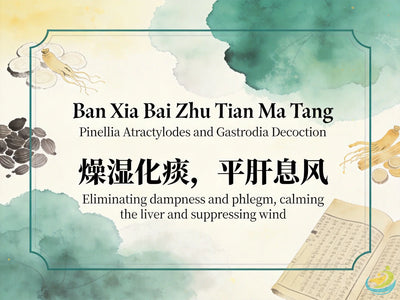
Q8: How do you choose among Gou Teng San, Tian Ma Gou Teng Yin, Zhen Gan Xi Feng Tang, Ling Jiao Gou Teng Tang and Ban Xia Bai Zhu Tian Ma Tang?
Gou Teng San levels the Liver, extinguishes wind, clears heat, transforms phlegm, tonifies qi and nourishes yin, containing Gou Teng, Ju Hua, Shi Gao, Ren Shen, Mai Dong, Ban Xia and others. Tian Ma Gou Teng Yin levels the Liver, extinguishes wind, clears heat and moves blood, leaning to Liver yang rising with wind-fire. Zhen Gan Xi Feng Tang sedates the Liver, extinguishes wind, nourishes yin and subdues yang, leaning to yin deficiency with yang rising. Ling Jiao Gou Teng Tang cools the Liver, extinguishes wind, increases fluids and relaxes the sinews, leaning to heat excess with wind. Ban Xia Bai Zhu Tian Ma Tang transforms phlegm and extinguishes wind, leaning to wind-phlegm rising. Liver reversal dizziness with qi-yin favors Gou Teng San; pure Liver yang favors Tian Ma Gou Teng; yin-deficiency yang rising favors Zhen Gan; heat excess favors Ling Jiao; wind-phlegm favors Ban Xia Tian Ma. They may be referenced after pattern differentiation; pure deficiency forbids large Gou Teng San.
Q9: How is Gou Teng San commonly modified? What is the representative use?
The original already contains leveling the Liver, clearing heat, transforming phlegm, tonifying qi and nourishing yin. Concurrent blood stasis may add Chuan Xiong and Chi Shao; concurrent yin deficiency may increase Mai Dong. Write Gou Teng San; do not replace the qi-yin tonifying action with an equal weight of Tian Ma Gou Teng Yin.
Q10: How do you choose and store Gou Teng San?
Choose regulated Chinese patent medicines or classically compounded decoctions/powders that list the composition. Moldy, damp, or abnormal-smelling lots are discarded. Store cool and dry. Buy “Gou Teng San”; do not replace leveling the Liver, extinguishing wind, clearing heat, transforming phlegm, tonifying qi and nourishing yin with an equal weight of Tian Ma Gou Teng Yin or Zhen Gan Xi Feng Tang.

General Questions

How do I choose the right formula?
TCM formulas are traditionally selected according to individual pattern differentiation rather than by symptom alone. If you're not sure which formula fits your presentation, take our AI Assessment below for a personalized starting point, then confirm with a qualified TCM practitioner.
What are concentrated herbal granules?
Concentrated herbal granules are made by decocting raw herbs, then extracting and concentrating the resulting liquid into a fine granule or powder form. This preserves the same active compounds as a traditional decoction while making the herbs far easier to store, measure, and prepare.
How should I take these products?
Dissolve the recommended amount of granules in hot water, stir until fully dissolved, and drink while warm — following the dosage and frequency advised by your TCM practitioner or as stated on the product packaging.
Are concentrated herbal granules equivalent to traditional decoctions?
Concentrated granules are produced from the same herbs and processed to retain their active compounds, so they are traditionally regarded as a convenient alternative to decoctions rather than a different remedy. Some practitioners note subtle differences in strength or absorption between the two forms, so your TCM practitioner may adjust dosage accordingly.
Are your products authentic?
Yes. HJMEDICAL sources its concentrated granules exclusively from established, reputable manufacturers such as Nong's and Hoi Tin, both long-standing names in the TCM granules industry, with GMP compliance stated directly on their packaging.
Are HJMEDICAL products manufactured under GMP standards?
HJMEDICAL sources its concentrated granules from established, reputable manufacturers such as Nong's and Hoi Tin, both long-standing names in the TCM granules industry. GMP compliance for these products is stated directly on their packaging.
Do you ship internationally?
Yes — we ship worldwide! Every order goes out via Hong Kong Post, and your exact shipping cost and estimated delivery time for your address are calculated and shown right at checkout, so there are never any surprises. We also offer free shipping once your order reaches our free-shipping threshold, so it's easy to stock up on your favorite formulas and save.
Can I take more than one formula at the same time?
Some formulas are traditionally combined, while others overlap or counteract each other. We recommend checking with a qualified TCM practitioner before combining formulas, especially if you are already taking other medication.
Are these products suitable during pregnancy or breastfeeding?
Some TCM formulas are not suitable during pregnancy or breastfeeding. Please consult a qualified TCM practitioner or your doctor before use if you are pregnant, trying to conceive, or nursing.
Do these products replace medical treatment?
No. These products are traditional herbal supplements intended to support wellbeing according to TCM principles — they are not a replacement for professional medical diagnosis or treatment. Please consult a qualified TCM practitioner or licensed healthcare provider before starting, stopping, or combining any treatment, especially if you have a chronic condition.
Medical Disclaimer

For general TCM education only — not medical advice. Consult a qualified TCM practitioner or licensed healthcare provider before use, especially if pregnant, nursing, on medication, or managing a chronic condition.

Not sure which formula is right for you?

Take the AI Assessment

最新文章

Login

Forgot your password?

Don't have an account yet?
Create account

Gou Teng San: Calming the Liver and Relieving Spasms