
Joint Discomfort
關節不適 / 关节不适
Pain, stiffness, or reduced mobility in the joints.
Quick Facts
Joint Discomfort in Traditional Chinese Medicine
In Traditional Chinese Medicine, joint discomfort in the current set is associated with Blood deficiency or Qi deficiency patterns. Differentiation looks at whether there is a pale complexion and numbness, or fatigue and weak limbs, and whether the discomfort is better with gentle movement. Classical formulas are matched to these pattern features rather than to joint location alone. Accompanying signs such as tongue appearance, pulse quality and the presence of heat or cold help distinguish one presentation from another.
TCM Patterns Associated With Joint Discomfort
The same presentation may be understood through more than one pattern. Pattern differentiation weighs the accompanying signs, not the symptom on its own.
| Pattern | Common Features | Related Formulas |
|---|---|---|
| Wind-Cold風寒證Exterior Patterns | Chills that outweigh the fever, no sweating, a stuffy or runny nose with clear discharge, an itchy or scratchy throat rather than a sore one, body aches, and a cough with thin white phlegm. Symptoms often start abruptly after exposure to cold or wind. Tongue with a thin white coating; pulse floating and tight. | |
| Shaoyang Syndrome少陽證Exterior Patterns | Alternating chills and fever, fullness and discomfort in the chest and rib-side, a bitter taste in the mouth, dry throat, dizziness, poor appetite and nausea, and an irritable or restless mood. Tongue with a thin white coating; pulse wiry. | |
| Damp-Heat濕熱證Damp Patterns | A heavy body with a sense of heat, sticky or bitter taste in the mouth, scanty dark urine, and discomfort that worsens in hot humid weather. There may be greasy skin, sticky stools, or yellowish discharge. Thirst is present but drinking may not feel satisfying. Tongue red with a yellow greasy coating; pulse slippery and rapid. | |
| Dampness濕阻證Damp Patterns | A heavy, sluggish body feeling, abdominal fullness, sticky sensation in the mouth, and reduced appetite. Stools may be sticky or incomplete, and the person often feels worse in humid weather. There can be oedema of the limbs or a greasy facial sheen. Tongue with a thick greasy white coating; pulse soft or slippery. | |
| Blood Stasis血瘀證Stagnation Patterns | Fixed, stabbing or piercing pain that does not move freely, often worse at night or with pressure. The complexion may look darker or purplish, and in women the menstrual flow can be dark with clots. Lips or nails may appear dusky. Tongue dark or with purple spots or congested veins under the tongue; pulse choppy or wiry and hesitant. | |
| Qi Deficiency氣虛證Deficiency Patterns | Easy fatigue, shortness of breath on mild effort, a soft or low voice, and spontaneous sweating with light activity. The complexion is often pale, and recovery after exertion is slow. There may be a tendency to catch external pathogens more easily. Tongue pale with a thin white coating; pulse weak or empty. | |
| Blood Deficiency血虛證Deficiency Patterns | A pale or sallow complexion, dry hair or skin, light-headedness on standing, blurred vision, and easy fatigue. In women the menstrual flow is often scanty and pale. Sleep may be light, and the hands and feet can feel numb when tired. Tongue pale and thin; pulse thin and weak. | |
| Yang Deficiency陽虛證Deficiency Patterns | Aversion to cold, cold limbs, preference for warm drinks and clothing, and low energy that worsens in cold weather. There may be loose stools, clear copious urine, a pale puffy face, and reduced libido or lumbar weakness. The person feels better with warmth and worse with cold exposure. Tongue pale and possibly swollen with a white coating; pulse deep and weak. |
Classical Formulas Traditionally Associated
Associated with 22 classical formulas
Listed for study. Which formula fits, if any, depends on the pattern rather than the symptom.
Huang Qi Gui Zhi Wu Wu Tang
黃芪桂枝五物湯 · Huáng Qí Guì Zhī Wǔ Wù Tāng
Qi DeficiencyQi-Tonifying FormulasDang Gui Si Ni Tang
當歸四逆湯 · Dāng Guī Sì Nì Tāng
Blood DeficiencyBlood-Tonifying FormulasFang Ji Huang Qi Tang
防己黃芪湯 · Fáng Jǐ Huáng Qí Tāng
Qi DeficiencyDampness-Draining FormulasShen Tong Zhu Yu Tang
身痛逐瘀湯 · Shēn Tòng Zhú Yū Tāng
Blood StasisBlood-Invigorating FormulasBai Du San
敗毒散 · Bài Dú Sàn
Wind-ColdExterior-Releasing FormulasJiu Wei Qiang Huo Tang
九味羌活湯 · Jiǔ Wèi Qiāng Huó Tāng
Wind-ColdExterior-Releasing FormulasShao Yao Gan Cao Tang
芍藥甘草湯 · Sháo Yào Gān Cǎo Tāng
Blood DeficiencyHarmonising FormulasDu Huo Ji Sheng Tang
獨活寄生湯 · Dú Huó Jì Shēng Tāng
DampnessWind-Damp Dispelling FormulasSi Miao San
四妙散 · Sì Miào Sàn
Damp-HeatDampness-Draining FormulasSan Bi Tang
三痹湯 · Sān Bì Tāng
DampnessWind-Damp Dispelling FormulasJuan Bi Tang
蠲痹湯 · Juān Bì Tāng
DampnessWind-Damp Dispelling FormulasDang Gui Nian Tong Tang
當歸拈痛湯 · Dāng Guī Niān Tòng Tāng
Damp-HeatDampness-Draining FormulasGui Zhi Shao Yao Zhi Mu Tang
桂枝芍藥知母湯 · Guì Zhī Sháo Yào Zhī Mǔ Tāng
DampnessWind-Damp Dispelling FormulasYi Yi Ren Tang
薏苡仁湯 · Yì Yǐ Rén Tāng
DampnessWind-Damp Dispelling FormulasQiang Huo Sheng Shi Tang
羌活勝濕湯 · Qiāng Huó Shèng Shī Tāng
DampnessWind-Damp Dispelling FormulasChai Hu Gui Zhi Tang
柴胡桂枝湯 · Chái Hú Guì Zhī Tāng
Shaoyang SyndromeHarmonising FormulasYang He Tang
陽和湯 · Yáng Hé Tāng
Yang DeficiencyYang-Tonifying FormulasTong Feng Wan
痛風丸 · Tòng Fēng Wán
Damp-HeatWind-Damp Dispelling FormulasShu Jing Huo Xue Tang
疏經活血湯 · Shū Jīng Huó Xuè Tāng
Blood StasisBlood-Invigorating FormulasMa Xing Yi Gan Tang
麻杏薏甘湯 · Má Xìng Yì Gān Tāng
DampnessWind-Damp Dispelling FormulasZheng Gu Zi Jin Dan
正骨紫金丹 · Zhèng Gǔ Zǐ Jīn Dān
Blood StasisBlood-Invigorating FormulasEr Zhu Tang
二朮湯 · Èr Zhú Tāng
DampnessWind-Damp Dispelling FormulasLearn More About Joint Discomfort
Related Health Topic
Pain & Mobility — Formulas that invigorate blood, dispel wind-damp, and ease joint and muscle discomfort.
Health Topic
See all Pain & Mobility conditions
Frequently Asked Questions
How does Traditional Chinese Medicine understand joint discomfort?
In TCM, joint discomfort is often classified as Bi syndrome, in which Wind, Cold, Dampness or Heat obstructs the channels and impairs the flow of Qi and Blood through the joints. Deficiency of Liver and Kidney, overuse, trauma or aging can also leave the joints under-nourished and more vulnerable to external pathogens.
What are the common TCM patterns of joint discomfort?
Frequent patterns include Wind-Cold-Damp Bi (pain worse in cold or damp weather, stiffness), Heat Bi (red, swollen, burning joints), Blood stasis (fixed stabbing pain), and Liver-Kidney deficiency (chronic aching, weakness of the lower back and knees). Accurate pattern differentiation determines the treatment approach.
How does TCM regulate joint discomfort?
The main principles are to dispel Wind, scatter Cold, resolve Dampness, clear Heat, invigorate Blood or tonify Liver and Kidney according to the pattern. Formulas such as modifications of Juan Bi Tang, Du Huo Ji Sheng Tang or Xuan Bi Tang may be considered. Acupuncture, movement and local warmth or cooling are also used. Internal treatment should be guided by a qualified TCM practitioner.
Related Products
 Nong's Huang Qi Gui Zhi Wu Wu Tang (Astragalus and Cinnamon Twig Five-Substance Decoction) 5:1 Concentrated Granules
$51.25
 Hoi Tin Dang Gui Si Ni Tang (Angelica Decoction for Frigid Extremities) 5:1 Concentrated Granules
$29.10
 Nong's Dang Gui Si Ni Tang (Angelica Decoction for Frigid Extremities) 5:1 Concentrated Granules
$67.30
 Hoi Tin Fang Ji Huang Qi Tang (Stephania and Astragalus Decoction) 5:1 Concentrated Granules
$30.50
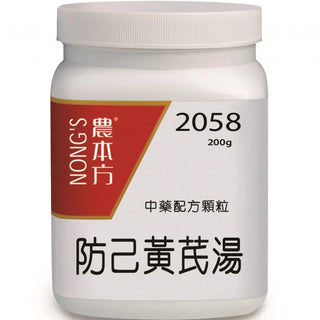 Nong's Fang Ji Huang Qi Tang (Stephania and Astragalus Decoction) 5:1 Concentrated Granules
$58.74
 Nong's Shen Tong Zhu Yu Tang (Drive Out Blood Stasis in Body Pain Decoction) 5:1 Concentrated Granules
$56.60
 Hoi Tin Ren Shen Bai Du San (Ginseng Powder to Overcome Pathogenic Influences) 5:1 Concentrated Granules
$24.93
 Nong's Ren Shen Bai Du San (Ginseng Powder to Overcome Pathogenic Influences) 5:1 Concentrated Granules
$50.18
This library is educational. It describes how Traditional Chinese Medicine has traditionally understood these presentations. It is not a diagnosis, and it is not a treatment recommendation.
Back to the Condition Hub