Roots and rhizomesWind-damp dispellingRadix Stephaniae Tetrandrae

Fang Ji (Stephania Root)

A practical guide to Fang Ji: what it is, how Traditional Chinese Medicine uses it, the classical formulas it appears in, and who should be careful with it.

View Herb Profile →

Last reviewed Oct 13, 2026

Quick Facts

Latin NameRadix Stephaniae Tetrandrae
Chinese Name & Pinyin 防己 · Fang Ji
Medicinal PartRoots and rhizomes
The herbOfficial Fang Ji is the dried root of Stephania tetrandra. Guang Fang Ji is an Aristolochia and must not be used. Fang Feng is a different official drug.
Nature and channelsBitter, cold. Enters the Bladder and Lung. Bitterness drains and dries dampness. Cold clears heat.
Pharmacopoeia lineDispels wind and relieves pain. Promotes urination and reduces swelling. Used for wind-damp painful obstruction, edema and leg qi, inhibited urine, and damp sores.
Pattern cuesWind-damp swollen joints. Edema and leg qi. Inhibited urine. Damp sores.
In this articleFen Fang Ji versus Guang Fang Ji, Fang Feng, and Huang Qi. Why Aristolochia Fang Ji is never acceptable. Why yin deficiency should not be drained. Who should skip it.

What Is Fang Ji?

Fang Ji (防己; Fáng Jǐ; Latin: Stephaniae Tetrandrae Radix; English: stephania root) in the current pharmacopoeia is the dried root of Stephania tetrandra S. Moore, also called Fen Fang Ji. In Chinese medicine it dispels wind-damp and promotes urine. It is bitter and cold, enters the Bladder and Lung channels, and its core actions are to dispel wind and relieve pain, and to promote urination and reduce swelling. It is not Guang Fang Ji. That plant is an Aristolochia. It contains aristolochic acid and has been linked to kidney injury. It must not be used as Fang Ji. Buy only Fen Fang Ji / Stephania tetrandra. Do not use unlabeled “fangji.” It is not Fang Feng. Saposhnikovia is acrid, sweet, and slightly warm; it releases the exterior and dispels wind. Fang Ji is bitter-cold; it promotes urine and dispels dampness. Yin deficiency with no dampness, and a cold weak spleen, are cautions.

It is used most often for three patterns:

  • Wind-damp painful obstruction — swollen painful joints
  • Edema, leg qi, inhibited urine
  • Damp sores and toxin

It is usually used raw. The usual decoction dose is 5–10 g. Bitter cold injures the stomach. Poor appetite and loose stools are a poor match. It is not a “damp root” that can swap with Guang Fang Ji. Drain when there is no dampness, and yin is injured.

When wind-damp and water sit in the flesh and joints, swelling, pain, and scant urine are common. Fang Ji is bitter-cold. It dispels and drains, which is why it appears in Fang Ji Huang Qi Tang. It drains more than it holds. A sallow face, shortness of breath, and pain with no swelling become weaker if more drainage is added.

Fang Ji is not a catch-all wind-damp or diuretic root. Guang Fang Ji must not be used. In yin deficiency with no dampness, or middle-cold loose stools, even official Stephania can injure the middle. Whether it belongs in Fang Ji Huang Qi Tang should be decided by a licensed Chinese medicine practitioner after pattern diagnosis and confirmation of the species.

Fang Ji Stephania Root

Fang Ji: Materia Medica Profile

Identification & Quality Standard

Radix Stephaniae Tetrandrae

Botanical Origin

The dried root of Stephania tetrandra S. Moore (Menispermaceae).

Production Regions

Primarily produced in the Chinese provinces of Hunan, Hubei, Jiangxi, Anhui.

Quality Requirements

Superior medicinal material is firm; fractured surface is white and powdery.

Macroscopic Features

Irregular cylindrical, shaped like a "pig’s large intestine," cut into semi-cylindrical or lump-like shape, curved, deep indented horizontally-oriented grooves arranged in rings, 5~15cm long, 1~5cm diameter. Externally grayish-yellow, with thin wrinkles and horizontal raised lenticels. Firm and heavy texture; fractured surface is smooth and grayish-white, with ‘spider-web pattern’, powdery. faint odor; bitter taste.

3 Growing Regions and Quality Identification

While it grows in various parts of China, quality depends heavily on the specific species, harvest time, and processing.

  • Spotting Good Quality: High-quality Fen Fang Ji (from provinces like Zhejiang or Jiangxi) comes in pale grayish-yellow, firm, cylindrical slices with a slightly bitter smell. Mu Fang Ji tends to be thinner and looser in texture.
  • Processing Differences: Raw Sheng Fang Ji is better for aggressively clearing dampness, while wine-processed Jiu Fang Ji is milder and better for soothing the meridians.
  • Crucial Safety Warning: It is vital not to confuse this with Guang Fang Ji (Aristolochia fangchi). Guang Fang Ji contains aristolochic acid, a compound known to be toxic to the kidneys. Always ensure proper identification from a trusted herbal source.

Traditional Properties & Historical Lineage

Nature, Flavour & Channel Tropism

Bitter; ColdBladderLung

1. 2 Historical TCM Records

Ancient texts have documented the traditional applications of Fang Ji (Stephania Root) for centuries:

  • Shen Nong Ben Cao Jing mentions its use for clearing wind-cold and promoting urination.
  • Ming Yi Bie Lu notes its ability to treat water retention (edema), clear heat from the bladder, and soothe joint spasms.
  • Ben Cao Gang Mu (Compendium of Materia Medica) highlights its effectiveness for treating rheumatism and damp-heat in the legs and feet.
  • Note: These records are summaries of ancient medical experiences, not modern clinical guarantees.

2. 3 Evolution of TCM Perspectives

Over time, TCM practitioners developed a nuanced understanding of this herb:

  • Differing Focuses: Some doctors focused on its ability to clear lower-body damp-heat (like water retention and swelling), while others praised its ability to unblock meridians for rheumatic joint pain and stiffness.
  • Important Cautions: Because of its strong cold and clearing nature, many historical experts warned that people with a weak or cold Spleen and Stomach should use it with extreme caution. Overusing it can damage the body's vital Qi (energy). It is not a one-size-fits-all remedy for every type of dampness.

Fang Ji Stephania Root

Core Efficacies & Traditional Applications

Traditional Functions

Promotes urination, reduces swelling, dispels wind, relieves pain. apply to edema and beriberi, difficulty in micturition, wind-damp impediment, rheumatic arthralgia, hypertension. According to common views, Han fang ji has stronger effect of promotes urination and reduces swelling; Mu fang ji has stronger effect of dispels wind and relieves pain.

1. 1 Clearing Damp-Heat

  • Traditional Function: In traditional Chinese medicine (TCM), the primary role of Fang Ji (Stephania Root) is to clear "damp-heat" in the lower body. It is believed to help guide out stagnant damp and heat pathogens, relieving the discomfort caused by this blockage.
  • Common Signs: This pattern often presents as heavy, aching legs, swollen calves, stiff joints, or dark, scanty urine. These feelings might worsen during the rainy season or after sitting for a long time.
  • Typical Pairings: It is frequently paired with Qi-boosting herbs like Huang Qi (Astragalus) and Bai Zhu (Atractylodes) to prevent its strong clearing action from weakening the body's energy. For damp-heat joint pain, it is often combined with Yi Yi Ren (Coix Seed) to enhance its ability to unblock meridians.
  • When to Avoid: People with a cold and weak Spleen and Stomach, frequent diarrhea, or cold hands and feet should not use this herb on their own. Its cold nature can worsen internal coldness and aggravate these symptoms.

2. 2 Dispersing Wind and Unblocking Meridians

  • Traditional Function: The second core function of Fang Ji is dispersing "wind" and unblocking the body's meridians. It helps relieve pain and stiffness caused by blocked energy channels.
  • Common Signs: This is often seen in wind-damp joint issues (similar to rheumatic pain), presenting as stiff, painful joints that restrict movement. The pain often flares up on rainy days or after exposure to cold, usually accompanied by a heavy, sluggish feeling.
  • Typical Pairings: It is commonly used alongside Qiang Huo (Notopterygium) and Du Huo (Angelica Pubescens) to dispel wind and dampness. If joint stiffness is severe, herbs like Wei Ling Xian (Clematis) and Mu Gua (Papaya) are added.
  • When to Avoid: Individuals with "Yin deficiency with active fire" (often showing up as a dry mouth, hot flashes, or night sweats) should avoid self-medicating with this, as its dispersing nature can worsen internal dryness and heat.

3. 3 Common Herb Pairings

A classic TCM pairing is Fang Ji and Huang Qi. While Fang Ji excels at clearing damp-heat and unblocking meridians, Huang Qi is great at boosting Qi, strengthening the Spleen, and reducing swelling. Together, they create a balanced effect: Huang Qi protects the digestive system from the harshness of Fang Ji. This combo is typically used for heavy limbs, swelling, and joint pain accompanied by fatigue and poor appetite.

  • Note: This pairing requires a professional practitioner to adjust the exact dosage and ratio based on your specific condition.

Fang Ji Stephania Root

Modern Research

Modern research offers useful context, but Traditional Chinese Medicine prescribes on whole-pattern diagnosis rather than isolated compounds.

1. 1 Key Chemical Components

Modern science has analyzed Fang Ji (Stephania Root) and found that its primary active compounds are alkaloids. For instance, Fen Fang Ji contains tetrandrine, while Mu Fang Ji contains trilobine. It is important to remember that these are naturally occurring plant chemicals, and their presence doesn't automatically equate to a direct clinical cure in humans.

2. 2 Modern Pharmacological Focus

Current laboratory research on Fang Ji (Stephania Root) mainly looks at these alkaloid compounds:

  • Inflammation: Test-tube studies suggest that certain alkaloids might influence inflammation-related signaling pathways.
  • Joint Health & Urination: Some animal studies indicate potential benefits for reducing joint swelling and regulating urination. However, these are preliminary findings and require much more human testing.

3. 3 Limitations of Modern Studies

When reading about modern herbal research, keep these limitations in mind:

  • Lab vs. Human Body: What works in a petri dish or a mouse doesn't always work the same way in the complex human body.
  • Different Forms: The highly purified, concentrated extracts used in labs act very differently than a traditionally brewed cup of Fang Ji (Stephania Root) tea. You cannot simply swap one for the other.
  • Inconsistent Methods: Different labs use different extraction methods and doses, which can lead to varying results.

Holistic Synergy: In TCM, an herb works because all of its compounds act together in harmony. Judging the entire herb based on just one isolated chemical misses the bigger picture of how traditional medicine functions.

Fang Ji Stephania Root

Comparing Similar Herbs

1. 2 Common Ground with Wu Jia Pi

Fang Ji is often compared to Wu Jia Pi (Acanthopanax Bark), as both are traditionally used for dampness and joint stiffness.

  • Both dispel wind-dampness and unblock meridians to relieve pain.
  • Both are used for sluggish limbs and joint pain.
  • Both require careful consideration of the user's body constitution (whether cold, hot, weak, or strong).

2. 3 Core Differences

  • Nature and Flavor: Fang Ji is cold and bitter, making it better for clearing and purging. Wu Jia Pi is warm, spicy, and bitter, making it more suited for warming and nourishing.
  • Primary Focus: Fang Ji targets damp-heat stagnation, heaviness, and swelling. Wu Jia Pi focuses on strengthening tendons and bones, especially when joint pain is paired with weakness.
  • Energy Movement: Fang Ji pushes energy downwards to drain dampness. Wu Jia Pi warms and expands energy outwards and upwards.
  • Ideal Scenarios: Use Fang Ji for acute, hot, or sticky dampness (like sudden leg swelling in humid weather). Use Wu Jia Pi for chronic joint pain accompanied by weak knees and lower back, especially when cold weather makes it worse.
Fang Ji Stephania Root

Classical Formulas Containing Fang Ji

Diet & Daily Home Use

1. 1 Home Tea Recipe

A gentle option for home use is Fang Ji Fu Ling Tea.

  • Ingredients: 3 grams of Fang Ji, 5 grams of Fu Ling (Poria), and 1 slice of fresh ginger.
  • Method: Rinse the herbs, place them in a cup, and steep with boiling water for 10 minutes.
  • Use Case: Best for mild dampness, like slight leg heaviness or dark urine after prolonged sitting or during humid weather.
  • Caution: Not for those with a weak, cold stomach or frequent diarrhea. Limit this to 1-2 times a week. Remember, Fang Ji is a medicinal herb, not a standard daily food ingredient.

2. 2 Preparation Differences

  • Raw (Sheng Fang Ji): Best for aggressively clearing damp-heat. Ideal for severe damp-stagnation joint pain.
  • Wine-Processed (Jiu Fang Ji): The wine makes the herb's nature milder and enhances its ability to unblock meridians. Better suited for stiffness and pain without severe heat.
  • At home, the raw herb can be boiled with other ingredients for about 20-30 minutes. Do not swap raw herbs for concentrated extracts, as the dosages vary wildly.

3. 3 Dosage and Usage Cycle

In clinical TCM formulas, the standard dose is 5-10 grams. However, for home wellness, the dose should be kept under 3 grams to avoid damaging the digestive system.

  • Short-Term Use Only: Do not use it continuously. A typical home wellness cycle should not exceed one week. If symptoms persist, stop using it and consult a healthcare professional.
Fang Ji Stephania Root

Contraindications & Safety Warnings

1. 1 Not Suitable For

  • Cold/Weak Digestion: People who frequently experience stomach aches, diarrhea, or cold hands and feet should avoid it.
  • Yin Deficiency: Those with chronic dry mouth, hot flashes, or night sweats should use it with extreme caution.
  • Vulnerable Populations: Pregnant or nursing women must avoid this herb, as there is insufficient safety data. Children and the elderly should only use it under strict medical supervision.
  • Organ Health: People with compromised liver or kidney function should avoid it to prevent added stress on these organs. Do not use if you are allergic to plants in the Menispermaceae family.

2. 2 Drug Interactions and Dietary Notes

Fang Ji may interact with various prescription medications, including blood thinners, blood pressure medications, diabetes drugs, and sedatives. It might alter how these drugs are metabolized or amplify their effects. If you are on any prescription medication, always consult your doctor or pharmacist before drinking teas or taking supplements containing this herb.

3. 3 Adverse Reactions and Risks

  • Side Effects: Discontinue use immediately if you experience nausea, vomiting, or diarrhea.
  • Allergic Reactions: Stop using if you develop a rash or itchiness.
  • Seek Immediate Help: If you experience severe discomfort, continued vomiting, difficulty breathing, confusion, or rapidly worsening symptoms, stop the herb immediately and seek emergency medical care.

Frequently Asked Questions About Fang Ji

What is Fang Ji? Are Guang Fang Ji, Mu Fang Ji and Han Fang Ji the same?
Current pharmacopoeial Fang Ji (防己) is the dried root of Stephania tetrandra. The official name is Stephaniae Tetrandrae Radix, also called Han Fang Ji or Fen Fang Ji. Guang Fang Ji (Aristolochia) contains aristolochic acid, is banned, and must never substitute. Mu Fang Ji is a different source, more wind-dispelling—not equal-weight Fen Fang Ji. Write Fang Ji or Fen Fang Ji and verify the pharmacopoeial source. Use caution in yin vacuity without damp-heat.
What are the TCM properties and traditional uses of Fang Ji?
According to the Chinese Pharmacopoeia, Fang Ji is bitter and cold, enters the Bladder and Lung channels, and acts to dispel wind and stop pain, promote urination and reduce swelling. It is used for wind-damp painful obstruction, edema and beriberi, inhibited urination, and damp sores. Bitter-cold and downbearing, it suits damp-heat obstruction and lower-burner water-damp—not poor appetite, or yin vacuity without damp-heat.
Does Fang Ji need special processing? Can Guang Fang Ji replace it?
Wash and slice for decoction. Guang Fang Ji must never replace it. Aristolochic acid can cause kidney injury and urinary-tract tumors. Commercial “Fang Ji” must be verified as Stephania tetrandra. Do not mix unlabeled “Han Fang Ji” or “Mu Fang Ji.”
What is the usual dosage? Can it be drunk daily as a diuretic swelling tea?
The pharmacopoeial decoction dose is 5–10 g. It is not a four-season “Fang Ji swelling tea.” Without damp-heat, cold only injures the Stomach. Edema and damp-heat obstruction need a practitioner to name a short course; it does not replace heart-kidney function and joint assessment.
What are the contraindications? Can it be used in pregnancy?
Use caution when appetite is poor and in yin vacuity without damp-heat. Bitter-cold injures Stomach qi; large doses are unsuitable. Pregnancy edema needs a practitioner’s assessment; it is not a calm-fetus or daily diuretic. Stop if poor intake, loose stool and fatigue appear. Anuria, dyspnea and hot swollen joints are emergencies. Guang Fang Ji is forbidden.
Can Fang Ji promote urination, reduce swelling and stop wind-damp pain?
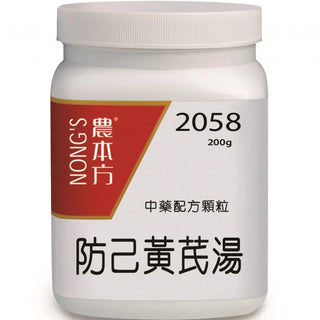
It can help damp-heat obstruction and wind-water or beriberi. Exterior-vacuity edema joins Astragalus, Atractylodes and licorice in Fang Ji Huang Qi Tang. Excess water-rheum joins Zanthoxylum seed, Lepidium and rhubarb in Ji Jiao Li Huang Wan. Damp-heat obstruction joins Coix and talc. It dispels wind, stops pain, promotes urination and reduces swelling—not a specific for every edema or every joint pain. Cardiac and renal edema need conventional assessment.
Can Fang Ji be drunk daily as a blood-pressure, swelling or rheumatism tea?
Damp-heat painful obstruction and lower-limb swelling may enter a short formula; yin vacuity without damp only grows more injured as it drains. “Fang Ji lowers pressure and reduces swelling” does not replace blood-pressure and kidney-function assessment. Dispelling wind, stopping pain, promoting urination and reducing swelling should name Fen Fang Ji 5–10 g.
How do you choose among Fang Ji, Fu Ling, Ze Xie, Huang Qi and Du Huo?
Fang Ji is bitter-cold: dispels wind, stops pain, promotes urination and reduces swelling—damp-heat obstruction and lower-burner water-damp. Poria is sweet-bland-neutral: promotes urination, percolates damp, fortifies Spleen and calms the Heart. Alisma is sweet-cold: promotes urination, percolates damp and drains heat. Astragalus is sweet and slightly warm: supplements qi, raises yang, promotes urination and reduces swelling. Du Huo is acrid-bitter and slightly warm: dispels wind-damp and unblocks painful obstruction—lower-body wind-cold-damp. Damp-heat swelling and pain favor Fang Ji; Spleen-vacuity water-damp favors Poria and Astragalus; simple drainage favors Alisma; wind-cold-damp obstruction favors Du Huo. They may be paired (Fang Ji Huang Qi Tang); yin vacuity without damp forbids Fang Ji; exterior excess without vacuity cautions Astragalus.
Which herbs is Fang Ji combined with? What are the representative formulas?
Exterior-vacuity edema joins Astragalus, Atractylodes and licorice in Fang Ji Huang Qi Tang. Excess water-rheum joins Zanthoxylum seed, Lepidium and rhubarb in Ji Jiao Li Huang Wan. Write pharmacopoeial Fang Ji (Fen Fang Ji) 5–10 g; Guang Fang Ji is forbidden.
How do you choose and store Fang Ji?
Choose firm Fen Fang Ji with a gray-white powdery fracture, sparse radiating lines and a bitter taste. Woody, odd-smelling or unidentified lots—especially suspected Guang Fang Ji—are discarded. Store dry against mold and moths. Buy pharmacopoeial Fang Ji / Stephaniae Tetrandrae Radix; never replace dispelling wind, stopping pain, promoting urination and reducing swelling with Guang Fang Ji or an unidentified root by equal weight.

Medical Disclaimer — This article is provided for educational purposes only and describes traditional Chinese medicine concepts. It is not medical advice, and it is not intended to diagnose, treat, cure or prevent any disease. Always consult a qualified practitioner before using any herb, particularly if you are pregnant, nursing, taking medication or managing a diagnosed condition.

More Chinese Herbs

Login

Forgot your password?

Don't have an account yet?
Create account

Fang Ji (Stephania Root): Dispel Wind, Stop Pain, and Promote Urination