Roots and rhizomesWind-damp dispellingRadix Stephaniae Tetrandrae

Fang Ji (Stephania Root)

防己 · Fang Ji

Wind-damp dispelling herb in Traditional Chinese Medicine. Traditional functions: Promotes urination, reduces swelling, dispels wind, relieves pain.

In-Depth Guide

Want to learn more about Fang Ji?

Read our in-depth guide →

Quick Facts

Latin NameRadix Stephaniae Tetrandrae
Chinese Name & Pinyin防己 · Fang Ji
Medicinal PartRoots and rhizomes
Efficacy CategoryWind-damp dispelling
Botanical OriginThe dried root of Stephania tetrandra S. Moore (Menispermaceae).
Nature & FlavourBitter; Cold
Channels EnteredBladder, Lung

What Is Fang Ji?

Fang Ji (Stephania Root) is a medicinal herb of Traditional Chinese Medicine.

Primarily produced in the Chinese provinces of Hunan, Hubei, Jiangxi, Anhui.

Nature & Flavour: Bitter; Cold
Channels Entered: Bladder, Lung

Fang Ji: Materia Medica Profile

Identification & Quality Standard

Radix Stephaniae Tetrandrae

Botanical Origin

The dried root of Stephania tetrandra S. Moore (Menispermaceae).

Production Regions

Primarily produced in the Chinese provinces of Hunan, Hubei, Jiangxi, Anhui.

Quality Requirements

Superior medicinal material is firm; fractured surface is white and powdery.

Macroscopic Features

Irregular cylindrical, shaped like a "pig’s large intestine," cut into semi-cylindrical or lump-like shape, curved, deep indented horizontally-oriented grooves arranged in rings, 5~15cm long, 1~5cm diameter. Externally grayish-yellow, with thin wrinkles and horizontal raised lenticels. Firm and heavy texture; fractured surface is smooth and grayish-white, with ‘spider-web pattern’, powdery. faint odor; bitter taste.

Traditional TCM Properties

Bitter; ColdBladderLung

Traditional Functions

Promotes urination, reduces swelling, dispels wind, relieves pain. apply to edema and beriberi, difficulty in micturition, wind-damp impediment, rheumatic arthralgia, hypertension. According to common views, Han fang ji has stronger effect of promotes urination and reduces swelling; Mu fang ji has stronger effect of dispels wind and relieves pain.

How Fang Ji Is Used in TCM

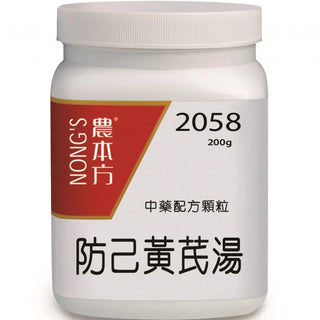
In the Chinese materia medica, Fang Ji is classified among the Wind-damp dispelling herbs. It appears in 4 classical formulas in our library.

Formulas containing Fang Ji are traditionally used for:

EdemaSpontaneous SweatingJoint DiscomfortFatigue & Low EnergyLow Back PainMuscular StiffnessNumbness in LimbsNeck PainShoulder DiscomfortCold Limbs

Classical Formulas Containing Fang Ji

Frequently Asked Questions

What is Fang Ji? Are Guang Fang Ji, Mu Fang Ji and Han Fang Ji the same?
Current pharmacopoeial Fang Ji (防己) is the dried root of Stephania tetrandra. The official name is Stephaniae Tetrandrae Radix, also called Han Fang Ji or Fen Fang Ji. Guang Fang Ji (Aristolochia) contains aristolochic acid, is banned, and must never substitute. Mu Fang Ji is a different source, more wind-dispelling—not equal-weight Fen Fang Ji. Write Fang Ji or Fen Fang Ji and verify the pharmacopoeial source. Use caution in yin vacuity without damp-heat.
What are the TCM properties and traditional uses of Fang Ji?
According to the Chinese Pharmacopoeia, Fang Ji is bitter and cold, enters the Bladder and Lung channels, and acts to dispel wind and stop pain, promote urination and reduce swelling. It is used for wind-damp painful obstruction, edema and beriberi, inhibited urination, and damp sores. Bitter-cold and downbearing, it suits damp-heat obstruction and lower-burner water-damp—not poor appetite, or yin vacuity without damp-heat.
Does Fang Ji need special processing? Can Guang Fang Ji replace it?
Wash and slice for decoction. Guang Fang Ji must never replace it. Aristolochic acid can cause kidney injury and urinary-tract tumors. Commercial “Fang Ji” must be verified as Stephania tetrandra. Do not mix unlabeled “Han Fang Ji” or “Mu Fang Ji.”
Read the complete guide →

Learn More About Fang Ji

Explore our in-depth article covering the traditional uses, properties, functions, and TCM context of Fang Ji.

Read the Fang Ji Guide →

Medical Disclaimer — This article is provided for educational purposes only and describes traditional Chinese medicine concepts. It is not medical advice, and it is not intended to diagnose, treat, cure or prevent any disease. Always consult a qualified practitioner before using any herb, particularly if you are pregnant, nursing, taking medication or managing a diagnosed condition.

Login

Forgot your password?

Don't have an account yet?
Create account