Yin-Tonifying Formulas

虎潛丸 · Hǔ Qián Wán

Hu Qian Wan

A classical yin-tonifying formula, also known as Qian Yang Jiang Huo Tang, used for kidney yin deficiency with fire, weak sinew and bone.

View formula profile →
Last reviewed October 2026
Formula CategoryYin-Tonifying Formulas
Primary PatternKidney Yin Deficiency
Primary FunctionNourish Yin, subdue Yang, strengthen sinew and bone
Primary Therapeutic PrincipleNourish yin, descend fire, strengthen sinew and bone
Main HerbsPhellodendron Bark · Tortoise Plastron · Anemarrhena Rhizome · Prepared Rehmannia Root · Tangerine Peel · White Peony Root · Dried Ginger · Chinese Angelica Root · Achyranthes Root
Classical SourceDan Xi Xin Fa (Zhu Danxi, Yuan dynasty)

Why This Formula?

Selected when yin deficiency with deficiency fire presents as weak, atrophic lower limbs rather than only tidal heat or night sweats.

Selected when yin deficiency with deficiency fire presents as weak, atrophic lower limbs rather than only tidal heat or night sweats.

What Is Hu Qian Wan?

1. Where It Began

Hu Qian Wan (虎潜丸), or Tiger-Hidden Pill, is a classical tonic formula rooted in the teachings of Zhu Dan Xi, one of the four great physicians of the Jin-Yuan period. It belongs to the category of formulas that nourish the liver and kidneys, strengthen sinews and bones, and subdue deficient yang.

This formula treats Wei Zheng (atrophy disorder) caused by liver-kidney yin deficiency with depleted essence and blood, so the sinews and bones lose their nourishment and the limbs become weak and flaccid rather than acutely painful. Typical signs include weak, limp lower limbs, sore knees and lower back, hot palms and soles, night sweats, dry mouth, dizziness, ringing ears, a red tongue with little coating, and a thin or rapid pulse. Combining Shu Di Huang (Prepared Rehmannia Root) as the chief herb to replenish essence and blood, Gui Jia (Tortoise Shell) to nourish yin and hold down floating yang, Huang Bai (Phellodendron Bark) and Zhi Mu (Anemarrhena Rhizome) to clear deficient heat, Suo Yang (Cynomorium) and Rou Cong Rong (Cistanche) to warm and moisten without drying, Dang Gui (Chinese Angelica) and Bai Shao (White Peony Root) to nourish and move blood, and Hu Gu (Tiger Bone) — or its modern substitute Gou Gu (Dog Bone) — to guide the formula into the sinews and bones, Hu Qian Wan nourishes the root and rebalances yin and yang so the sinews and bones regain their strength.

Zhu Dan Xi first sketched the formula in his classic text Dan Xi Xin Fa. At the time he was treating people worn down by overwork and long illness, whose sinews and bones had lost their support and turned weak and flaccid. The first version was fairly simple, aimed mainly at this core problem of weak, limp limbs. Because it worked well, later doctors kept polishing it.

Hu Qian Wan

2. Joint and Back Problems

In older adults, knee osteoarthritis and lumbar disc problems often come with a pattern of depleted liver-kidney essence-blood plus inner heat. Typical signs are sore knees and lower back, joint pain that worsens with activity, warm palms and soles, and night sweats. Hu Qian Wan nourishes the cartilage and bone, cools the heat, and helps ease pain and improve movement.

3. Slow-Growing Children

Some children — because of a congenital weakness or poor care — stand and walk late, have weak legs and stiff joints, and sweat easily. Hu Qian Wan can support their bone and sinew development. Children are sensitive, though, so the dose and mix must be adjusted by a doctor.

4. Nerve and Stroke Recovery

For weakness in the legs after a stroke or a spinal cord injury, when the pattern is liver-kidney yin deficiency, Hu Qian Wan can support recovery by nourishing the sinews. It is a helpful extra alongside rehabilitation — not a replacement for it.

Hu Qian Wan

5. Menopause

In menopause, falling hormone levels can leave the liver-kidney essence-blood low, showing up as sore knees, dizziness, insomnia, warm palms and soles, and joint pain. Hu Qian Wan is often used for long-term adjustment, and it can be especially helpful for menopause-related joint aches and irritability.

Herb Composition (Sovereign / Minister / Assistant / Envoy)

1. The Core Pair: Shu Di Huang and Gui Jia

Every formula has a lead, and here it is two herbs working as a team.

Shu Di Huang (Prepared Rehmannia Root) is rehmannia that has been steamed with Huang Jiu (yellow rice wine). The raw herb cools and clears heat, but this processed version turns warm, rich, and gentle, and it goes straight into the liver and kidney channels. It is the go-to herb for topping up liver-kidney yin and blood, and it eases sore knees, dizziness, and ringing ears.

Gui Jia (Tortoise Shell) is the shell of a turtle. It is hard, cool, and very good at holding down rising yang. It does two things at once: it feeds the yin, and it keeps restless heat from floating up and disturbing the mind.

Together they cover the two jobs that matter most — one replenishes the fuel, the other keeps the fire from flaring out of control.

2. Clearing the Heat: Huang Bai and Zhi Mu

When yin runs low, the body tends to run hot. These two herbs are the cooling support team:

  • Huang Bai (Phellodendron Bark) enters the kidney channel and mops up lingering heat, protecting the essence and blood.
  • Zhi Mu (Anemarrhena Rhizome) clears and moistens heat in the lungs and stomach, and helps settle it so it stops keeping you up at night.

Their job in plain words: take away the excess heat, and leave the deficient part to be rebuilt.

3. The Support Group

These four herbs round out the formula and keep it gentle on the body:

  • Suo Yang (Cynomorium) and Rou Cong Rong (Cistanche) are warm, moist yang tonics. They add a light touch of warmth without being drying, help the yin take root, and can ease constipation.
  • Dang Gui (Chinese Angelica) and Bai Shao (White Peony Root) nourish the blood and keep it moving; Bai Shao also steadies the liver so its energy doesn't flare.

The net effect: the formula tonifies without getting stuck, and warms without turning harsh.

Hu Qian Wan

4. The Guide Herb

Traditionally, Hu Gu (Tiger Bone) was the "messenger" herb. It steers the whole formula into the sinews and bones, where the strength is needed most. Because tigers are protected, Gou Gu (Dog Bone) is now commonly used instead and plays the same role, so the formula keeps working as intended.

Clinical Presentation in TCM

1. The Root Problem

To see why Hu Qian Wan works, start with what it is aimed at: liver-kidney yin deficiency.

In Chinese medicine, the liver looks after the sinews and the kidney looks after the bones. The essence and blood of these two organs are like the fuel that keeps the sinews and bones healthy. When that fuel runs low — from overwork, long illness, or too much strain — the sinews and bones lose their support and turn weak.

At the same time, a shortage of yin lets yang drift upward without a leash, which shows up as hot, restless symptoms. So the usual picture has two sides:

  • The weak side: soft, limp limbs, and a tired, achy lower body.
  • The hot side: warm palms and soles, night sweats, dry mouth, and restlessness.

This two-sided pattern is the core of Wei Zheng (atrophy disorder) and explains most of the complaints the formula is used for.

2. What It Does

Hu Qian Wan tackles both sides of the problem at once:

  • Replenishes liver-kidney essence and blood, so the sinews and bones get their fuel back.
  • Strengthens sinews and bones, helping repair what has been worn down.
  • Settles the deficient heat, easing hot flushes, restlessness, and poor sleep.

In a phrase: it nourishes the root, builds the body back up, and brings yin and yang back into balance — instead of only masking the surface symptoms.

Hu Qian Wan

3. Who It's For

The formula suits people with liver-kidney yin deficiency, especially when the lower body feels the strain. Common situations include:

  • Weak, heavy legs, and in more serious cases trouble walking.
  • Sore knees and lower back, and stiff joints.
  • Signs of inner heat, such as hot palms and soles, night sweats, dry mouth, dizziness, ringing ears, and poor sleep.
  • A red tongue with little coating, and a thin or quick pulse.

It is often considered for knee osteoarthritis and lumbar disc problems in middle-aged and older adults, and for some children who develop slowly with weak sinews and bones.

The Mechanism in Classical Theory

1. Nourish and Settle at Once

The heart of the formula is a two-part move:

  • Nourish the liver-kidney essence and blood (Shu Di Huang, Gui Jia).
  • Settle the heat that flares upward (Huang Bai, Zhi Mu).

Both are needed. If you only nourish, the restless heat simply burns away what you just added. If you only settle the heat, there is no fuel left to repair the deficiency. Doing both together is what keeps yin and yang stable — this is the single most important idea behind the formula.

2. A Little Yang to Move the Yin

Chinese medicine sees yin and yang as two sides of the same coin: yin is the material, and yang is the energy that moves it. If you pile in pure yin tonics with no warmth behind them, they can sit heavy and cause bloating or a poor appetite.

Hu Qian Wan avoids this with a clever twist:

  • Small amounts of warm herbs — Suo Yang and Rou Cong Rong — add just enough yang to help the yin move and be absorbed.
  • Blood-moving herbs like Dang Gui and Bai Shao keep things flowing, so the tonic doesn't get stuck.

The result is a formula that tonifies smoothly, without the heavy, cloying feeling that plain tonic herbs can cause.

Hu Qian Wan

3. Aiming at the Sinews and Bones

Most tonic herbs act on the whole body. What makes Hu Qian Wan special is the guide herb (tiger or dog bone), which directs the whole formula to the liver, kidneys, and — most importantly — the sinews and bones. This focus is a big reason the formula is regarded as a key treatment for Wei Zheng (atrophy) conditions.

Clinical Comparison Table

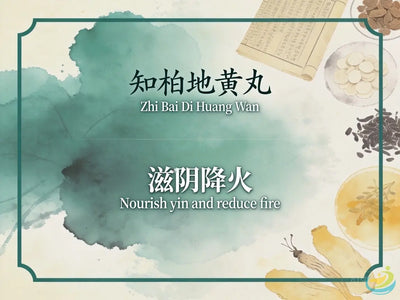
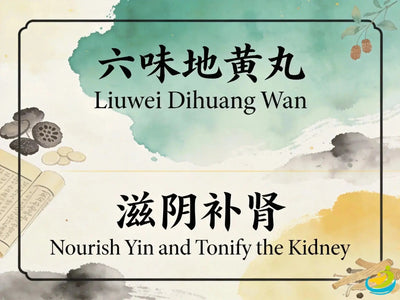
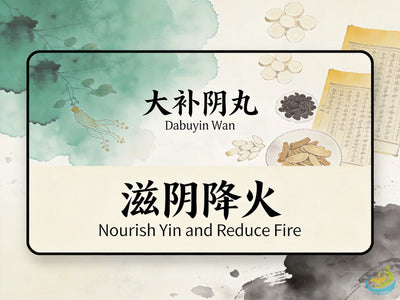
Compare Hu Qian WanDa Bu Yin WanLiu Wei Di Huang WanZhi Bai Di Huang Wan
Primary Function Nourish Yin, subdue Yang, strengthen sinew and boneEnrich Yin, direct fire downwardNourish Kidney YinNourish Yin, clear deficiency Heat
Formula Category Yin-Tonifying FormulasYin-Tonifying FormulasYin-Tonifying FormulasYin-Tonifying Formulas
Typical TCM Pattern Kidney Yin DeficiencyKidney Yin DeficiencyKidney Yin DeficiencyKidney Yin Deficiency
Main Conditions Low Back Pain, Yin Deficiency Constitution, Fatigue & Low EnergyNight SweatsDizziness & Vertigo, Tinnitus, Night Sweats, Fatigue & Low Energy, Yin Deficiency ConstitutionYin Deficiency Constitution, Night Sweats
Main Herbs Phellodendron Bark · Tortoise Plastron · Anemarrhena Rhizome · Prepared Rehmannia Root · Tangerine Peel · White Peony Root · Dried Ginger · Chinese Angelica Root · Achyranthes RootPrepared Rehmannia Root · Tortoise Plastron · Phellodendron Bark · Anemarrhena RhizomePrepared Rehmannia Root · Cornus Fruit · Chinese Yam · Alisma Rhizome · Moutan Bark / Tree Peony Bark · Poria / HoelenPrepared Rehmannia Root · Cornus Fruit · Chinese Yam · Alisma Rhizome · Moutan Bark / Tree Peony Bark · Poria / Hoelen · Anemarrhena Rhizome · Phellodendron Bark
Classical Source Dan Xi Xin Fa (Zhu Danxi, Yuan dynasty)Ming-Qing classical formularyXiao Er Yao Zheng Zhi Jue (Qian Yi, Song dynasty) / later popularisedYi Zong Jin Jian / Investigation of Medical Formulas (Ming dynasty)

How to tell them apart

Hu Qian Wan, Da Bu Yin Wan and Liu Wei Di Huang Wan all nourish kidney yin. Da Bu Yin Wan emphasises descending deficiency fire with less bone-strengthening force. Liu Wei Di Huang Wan is a milder base yin tonic. Hu Qian Wan adds Suo Yang and bone-strengthening substances for atrophic weakness.

For educational reference only, based on traditional pattern differentiation — not a substitute for professional advice.

Clinical Modifications for Hu Qian Wan

The formula is rarely used exactly as written. Doctors adjust it to match the person. Here are the common tweaks:

1. Too Much Heat

If the inner heat is strong — heat that seems to come from deep inside the bones, a red tongue, a quick thin pulse — increase Huang Bai and Zhi Mu, or add Di Gu Pi (Wolfberry Root Bark) and Yin Chai Hu (Stellaria Root). For heavy night sweats, add Fu Xiao Mai (Light Wheat) and Duan Mu Li (Calcined Oyster Shell) to help stop them.

2. Very Weak Limbs

If the legs are clearly weak, increase the tiger/dog bone or add Niu Xi (Achyranthes Root) and Chuan Duan (Dipsacus) to strengthen the kidneys, sinews, and bones. For stiff, painful joints, add Wei Ling Xian (Clematis Root) and Shen Jin Cao (Clubmoss).

3. Depleted Essence and Blood

If the main complaint is tiredness, dizziness, and ringing ears, increase Shu Di Huang and Gui Jia, or add Gou Qi Zi (Goji Berry) and E Jiao (Donkey-hide Gelatin). For pallor or scanty periods, add more Dang Gui, or Bai Shao and Ji Xue Teng (Spatholobus Stem).

Hu Qian Wan

4. Weak Digestion

Tonic herbs can feel heavy, and some people get bloating or lose their appetite. Adding Chen Pi (Tangerine Peel), Chao Bai Zhu (Stir-fried Atractylodes), and Fu Ling (Poria) helps the stomach process them. For a poor appetite, add Sha Ren (Amomum) and Ji Nei Jin (Chicken Gizzard Lining).

What the Science Suggests

1. Joint and Bone Support

Modern lab work suggests that Shu Di Huang and Gui Jia carry amino acids, minerals (such as calcium and phosphorus), and polysaccharides that support cartilage and bone metabolism. The collagen in dog bone may help with bone strength. That's why Hu Qian Wan is sometimes used as a support in osteoporosis and osteoarthritis care.

2. Hormones and Heat

Huang Bai and Zhi Mu contain flavonoids and alkaloids. Studies hint that they may help calm inflammation and influence the hormone-regulating axis in the brain, which fits the formula's traditional use for menopause and deficiency-heat symptoms.

3. Nerve Support

Dang Gui and Bai Shao contain oils and glycosides that may improve blood flow to the brain and spinal cord and nourish nerve tissue. This supports interest in the formula for helping legs recover after a stroke or spinal injury.

4. Immunity and Overall Balance

Herbs such as Shu Di Huang, Gui Jia, and Suo Yang may help steady the immune system. For people weakened by long illness, the formula is seen as a way to restore overall balance and cut the chance of relapse.

5. New Forms of the Formula

Beyond honey pills, the formula now comes as concentrated granules and capsules — easier to take and more consistent in dose. Research continues on how it works, such as its effects on bone markers and nerve signals, which may open up more uses in the future.

Safety Considerations

1. Cold Digestion

The formula is cool overall, especially because of Huang Bai and Zhi Mu. If you often have stomach pain, bloating, loose stools, or cold hands and feet, the cooling herbs can make it worse. In that case a doctor should adjust the mix and add warming herbs for the digestion.

2. Damp-Heat

If you feel heavy and damp — a bitter taste, a thick greasy tongue coating, sticky stools — this formula is usually not for you. The tonics can feed the dampness. Damp-heat should be cleared first.

3. Yang Deficiency

The formula targets yin deficiency. If you are very cold-natured (cold hands and feet, low energy, loose stools), the cold herbs can make things worse, so it's best avoided.

4. Pregnancy and Special Groups

Hu Qian Wan is not for use during pregnancy, because it contains blood-moving herbs such as Dang Gui. Breastfeeding women, children, and older adults should use it only under a doctor's guidance.

5. While Taking It

Don't overdo physical strain, especially long standing or walking. And watch your diet — spicy, greasy, and cold food can interfere with the formula. If you get stomach pain, bloating, or a rash, stop and check with a doctor.

Questions About Hu Qian Wan

Q1: What is Hu Qian Wan? Are Da Bu Yin Wan and Liu Wei Di Huang Wan the same?
Hu Qian Wan (虎潜丸) is a classic formula from Zhu Danxi’s Danxi Xinfa, centered on nourishing yin, descending fire, and strengthening sinews and bones for atrophy patterns due to Liver-Kidney yin deficiency with ministerial fire. Da Bu Yin Wan shares Huang Bai, Zhi Mu, Shu Di, and Gui Ban but leans more to nourishing yin and descending fire to fill essence. Liu Wei Di Huang Wan evenly supplements Liver and Kidney without heavy bitter-cold fire-purging or dedicated bone-strengthening herbs. The three cannot be interchanged by equal weight. Write Hu Qian Wan. Use caution in Spleen-Stomach vacuity cold and loose stool.
Q2: What is the composition and traditional use of Hu Qian Wan?
Classic composition: Huang Bai (wine-fried) 240 g, Gui Ban (wine-roasted) 120 g, Zhi Mu (wine-fried) 60 g, Shu Di Huang 60 g, Chen Pi 60 g, Bai Shao 60 g, Suo Yang 45 g, Hu Gu (roasted) 30 g, Gan Jiang 15 g. It acts to nourish yin, descend fire, and strengthen sinews and bones. It is used for atrophy from Liver-Kidney insufficiency with yin-deficiency internal heat: soreness and weakness of the low back and knees, weak sinews and bones, thinning of the legs and feet, difficulty walking, or dizziness, tinnitus, seminal emission, and enuresis; red tongue with little coating, thin weak pulse. Huang Bai and Zhi Mu clear vacuity fire; Gui Ban and Shu Di nourish yin; Suo Yang warms yang and benefits essence; the bone strengthens sinews; Chen Pi and Gan Jiang harmonize the Stomach.
Q3: How is tiger bone substituted? How do you choose raw versus prepared?
Because of wildlife protection, tiger bone is commonly replaced by dog bone, leopard bone, or by Achyranthes or Cibotium; the action is similar but requires pattern-based adjustment. Wine-frying of Huang Bai and Zhi Mu reduces coldness; wine-roasting of Gui Ban strengthens yin-nourishing and yang-subduing. Commercial products follow modern regulations; do not self-prepare with raw tiger bone.
Q4: What is the usual dosage? Can it be drunk daily as a bone-strengthening tea?
Traditionally made as wine-paste or honey pills. Modern use is usually honey or water pills, about 9 g per pill, 1 pill 1–2 times daily with light salt water or warm water; or a reduced-dose decoction. It is not a four-season “Tiger Latent bone tea.” Spleen-Stomach vacuity cold only loosens further. Atrophy needs a practitioner to name a short course; it does not replace assessment.
Q5: What are the contraindications? Can it be used in pregnancy?
Contraindicated in Spleen-Stomach vacuity cold and loose stool. Huang Bai and Zhi Mu are bitter-cold and easily damage Stomach qi. Pregnancy requires practitioner assessment because of the bitter-cold constituents; self-administration is not advised. Stop if loose stool or cold epigastric pain appears. Acute atrophy or progressive weakness needs medical care.
Q6: Can Hu Qian Wan nourish yin, descend fire, and strengthen sinews and bones?
It can help atrophy and low-back/knee weakness from Liver-Kidney yin deficiency with ministerial fire. It nourishes yin, descends fire, and strengthens sinews and bones—not a specific for every leg weakness, every osteoporosis, or every vacuity heat.
Q7: Can Hu Qian Wan be drunk daily as a Kidney, bone, or fire-descending tea?
Liver-Kidney yin-deficiency atrophy may enter a short formula; Spleen-Stomach vacuity cold only injures further. “Tiger Latent must strengthen bone” does not replace orthopedic or neurologic assessment. Nourishing yin, descending fire, and strengthening sinews and bones should be named by a practitioner with form and dose.
Q8: How do you choose among Hu Qian Wan, Da Bu Yin Wan, Zhi Bai Di Huang Wan, Zuo Gui Wan, and tiger-bone wine?
Hu Qian Wan nourishes yin, descends fire, and strengthens sinews and bones, specialized for atrophy; it contains Suo Yang, bone, Chen Pi, and Gan Jiang. Da Bu Yin Wan more specifically nourishes yin, descends fire, and fills essence without dedicated bone-strengthening. Zhi Bai Di Huang Wan nourishes the Kidney, descends fire, and drains dampness, leaning to lower-burner damp-heat or yin-deficiency fire. Zuo Gui Wan purely supplements Liver and Kidney without fire-purging. Tiger-bone wine leans to warming, freeing, and dispelling wind-damp. Atrophy with yin-deficiency fire favors Hu Qian Wan; pure yin deficiency favors Zuo Gui or Liu Wei; damp-heat favors Zhi Bai Di Huang. They may be referenced after pattern differentiation; Spleen-Stomach vacuity cold forbids large Hu Qian Wan.
Q9: How is Hu Qian Wan commonly modified? What is the representative use?
The original already contains yin-nourishing, fire-descending, sinew-strengthening, and Stomach-harmonizing actions. Later versions add Dang Gui and Niu Xi to enhance blood-nourishing and channel-freeing. Write Hu Qian Wan and note the bone substitute (e.g., dog bone or Achyranthes); do not replace the sinew-strengthening action with an equal weight of pure Da Bu Yin Wan.
Q10: How do you choose and store Hu Qian Wan?
Choose regulated Chinese patent medicines or classically compounded pills that list the composition and substitutes. Moldy, damp, or abnormal-smelling lots are discarded. Store cool and dry. Buy “Hu Qian Wan”; do not replace nourishing yin, descending fire, and strengthening sinews and bones with an equal weight of Da Bu Yin Wan or Liu Wei Di Huang Wan.

General Questions

How do I choose the right formula?
TCM formulas are traditionally selected according to individual pattern differentiation rather than by symptom alone. If you're not sure which formula fits your presentation, take our AI Assessment below for a personalized starting point, then confirm with a qualified TCM practitioner.
What are concentrated herbal granules?
Concentrated herbal granules are made by decocting raw herbs, then extracting and concentrating the resulting liquid into a fine granule or powder form. This preserves the same active compounds as a traditional decoction while making the herbs far easier to store, measure, and prepare.
How should I take these products?
Dissolve the recommended amount of granules in hot water, stir until fully dissolved, and drink while warm — following the dosage and frequency advised by your TCM practitioner or as stated on the product packaging.
Are concentrated herbal granules equivalent to traditional decoctions?
Concentrated granules are produced from the same herbs and processed to retain their active compounds, so they are traditionally regarded as a convenient alternative to decoctions rather than a different remedy. Some practitioners note subtle differences in strength or absorption between the two forms, so your TCM practitioner may adjust dosage accordingly.
Are your products authentic?
Yes. HJMEDICAL sources its concentrated granules exclusively from established, reputable manufacturers such as Nong's and Hoi Tin, both long-standing names in the TCM granules industry, with GMP compliance stated directly on their packaging.
Are HJMEDICAL products manufactured under GMP standards?
HJMEDICAL sources its concentrated granules from established, reputable manufacturers such as Nong's and Hoi Tin, both long-standing names in the TCM granules industry. GMP compliance for these products is stated directly on their packaging.
Do you ship internationally?
Yes — we ship worldwide! Every order goes out via Hong Kong Post, and your exact shipping cost and estimated delivery time for your address are calculated and shown right at checkout, so there are never any surprises. We also offer free shipping once your order reaches our free-shipping threshold, so it's easy to stock up on your favorite formulas and save.
Can I take more than one formula at the same time?
Some formulas are traditionally combined, while others overlap or counteract each other. We recommend checking with a qualified TCM practitioner before combining formulas, especially if you are already taking other medication.
Are these products suitable during pregnancy or breastfeeding?
Some TCM formulas are not suitable during pregnancy or breastfeeding. Please consult a qualified TCM practitioner or your doctor before use if you are pregnant, trying to conceive, or nursing.
Do these products replace medical treatment?
No. These products are traditional herbal supplements intended to support wellbeing according to TCM principles — they are not a replacement for professional medical diagnosis or treatment. Please consult a qualified TCM practitioner or licensed healthcare provider before starting, stopping, or combining any treatment, especially if you have a chronic condition.
Medical Disclaimer

For general TCM education only — not medical advice. Consult a qualified TCM practitioner or licensed healthcare provider before use, especially if pregnant, nursing, on medication, or managing a chronic condition.

Not sure which formula is right for you?

Take the AI Assessment

最新文章

Login

Forgot your password?

Don't have an account yet?
Create account

Hu Qian Wan: Nourishing Yin, Descending Fire, Strengthening Sinews and Bones