Da Bu Yin Wan: Classic TCM Formula for Night Sweats & Tidal Fever
Da Bu Yin Wan (大补阴丸), known in English as Great Tonify Yin Pill, is a classical TCM formula for Liver and Kidney Yin deficiency with empty Heat causing night sweats, tidal fever, cough with blood, and other deficiency Heat signs. It is particularly indicated for tuberculosis, menopausal symptoms, chronic Yin deficiency with Heat, and recovery from long-term illness with Yin deficiency. In modern clinical practice, Da Bu Yin Wan is widely used for chronic Yin deficiency patterns with Heat signs. By deeply nourishing Liver and Kidney Yin while clearing the empty Heat generated by the deficiency, it provides effective relief for both the deficiency and the secondary Heat symptoms.
I. Origins and History
1. Crystallisation of Ancient Physicians' Wisdom
Da Bu Yin Wan originates from the Danxi Xinfa (Teachings of Danxi), authored by the celebrated Jin-Yuan period physician Zhu Danxi. Zhu Danxi, given name Zhenheng and courtesy name Yanxiu, acquired the honorific title "Master Danxi" from the beautiful stream called Danxi near his ancestral home. He lived from the late Southern Song dynasty into the early Yuan dynasty and was one of the "Four Great Masters of the Jin-Yuan Period" in the history of Chinese medicine, advocating the academic thought of "nourishing yin and draining fire," whose far-reaching influence on the subsequent development of medicine has endured to this day. Da Bu Yin Wan stands as the classical formula representative of his yin-nourishing and fire-draining theory.
2. Era Background and Academic Transmission
Against the backdrop of medical development at that time, the disease spectrum had undergone change, and some conditions responded poorly to traditional treatment methods. Building upon inherited academic experience, and combining it with his rich clinical practice, Zhu Danxi recognised that the body's yin qi is prone to depletion and that ministerial fire is prone to reckless stirring — and so he established the treatment method of nourishing yin and draining fire, and created the effective formula Da Bu Yin Wan. His academic thought and formula have been continuously transmitted and developed by later generations, becoming an important cornerstone of the yin-nourishing school within Chinese medicine.
3. Formula Transmission Lineage
Since Zhu Danxi created Da Bu Yin Wan, physicians across the generations have applied and researched it extensively. During the Ming and Qing dynasties, numerous physicians continuously verified and refined the formula through clinical practice, broadening its scope of application and making its therapeutic effect more definite. Da Bu Yin Wan is documented and discussed in many medical texts, with a clear lineage of transmission, providing an important formula basis for treating the pattern of yin deficiency with fire hyperactivity in later generations.

II. Herb Composition (Combination Characteristics)
1. Chief Herb — Shudihuang (Prepared Rehmannia Root)
Shudihuang is sweet in flavour and slightly warm in nature, entering the Liver and Kidney channels. It is the foremost herb for nourishing yin and tonifying blood, capable of filling essence and boosting the marrow, serving as the foundational herb for tonifying kidney yin. The Bencao Gangmu (Compendium of Materia Medica) records: "It fills the bone marrow, builds up the flesh, generates essence and blood, supplements internal injury and insufficiency of the five zang organs, unblocks the blood vessels, benefits the ears and eyes, and blackens the hair and beard." In Da Bu Yin Wan, Shudihuang nourishes yin and tonifies the kidneys, greatly supplementing true yin, serving as the chief herb and laying the yin-nourishing foundation of the formula.
2. Deputy Herbs — Guiban (Tortoise Plastron) and Huangbai (Phellodendron Bark)
Guiban is salty and sweet in flavour and cold in nature, entering the Liver, Kidney, and Heart channels. Its texture is hard and heavy, skilled at nourishing yin and subduing yang, boosting the kidneys and strengthening the bones, and nourishing blood to supplement the heart. Huangbai is bitter in flavour and cold in nature, entering the Kidney, Bladder, and Large Intestine channels, with the actions of clearing heat and drying dampness, draining fire and resolving toxicity, and reducing deficiency-heat. Guiban combined with Huangbai: Guiban focuses on nourishing yin and subduing yang, while Huangbai focuses on clearing heat, draining fire, and drying dampness — the two acting synergistically assist the chief herb, reinforcing the yin-nourishing and fire-draining potency, together serving as deputy herbs.
3. Assistant Herbs — Zhimu (Anemarrhena Rhizome, Nourishing Yin and Draining Fire) and Zhujisuǐ (Pig Spinal Marrow, Filling Essence and Boosting the Marrow)
Zhimu is sweet and bitter in flavour and cold in nature, entering the Lung, Stomach, and Kidney channels. It can clear heat and drain fire, nourish yin and moisten dryness; combined with Huangbai, it reinforces the heat-clearing and fire-draining action, while simultaneously assisting Shudihuang in nourishing yin — serving as an assistant herb. Zhujisuǐ (Pig Spinal Marrow) is sweet and moistening, capable of supplementing essence and marrow, assisting Shudihuang and Guiban in filling essence and boosting the marrow, allowing the yin-nourishing herbs to tonify without being excessively greasy — likewise serving as an assistant herb.
4. Envoy Herb — Fengmi (Refined Honey)
Fengmi is sweet in flavour and neutral in nature, entering the Lung, Spleen, and Large Intestine channels. It has the actions of tonifying the middle and moistening dryness, relieving pain, and resolving toxicity. In Da Bu Yin Wan, Fengmi, serving as the envoy herb, on one hand harmonises all the herbs, making the medicinal nature gentle and moderate; on the other hand, it moistens the skin and prevents the herbs from being excessively greasy and damaging the stomach; simultaneously, it also corrects the taste, making the formula more palatable and convenient to take.

III. Pathomechanism, Actions, and Indications
1. Pathomechanism Analysis
The pathomechanism targeted by Da Bu Yin Wan is primarily liver-kidney yin deficiency with reckless stirring of ministerial fire. When liver and kidney yin are deficient, yin cannot restrain yang, causing ministerial fire to be internally generated and deficiency-fire to flame upward, giving rise to a series of symptoms of yin deficiency with fire hyperactivity. For example, kidney yin depletion may manifest as soreness and weakness of the lumbar region and knees and dizziness with tinnitus; reckless stirring of ministerial fire disturbing the heart-spirit may cause vexation with insomnia; deficiency-fire flaming upward and scorching the lung network-vessels may lead to cough with haemoptysis.
2. Yin-Nourishing and Fire-Draining Actions
Based on the above pathomechanism, Da Bu Yin Wan has the action of nourishing yin and draining fire. Through nourishing liver and kidney yin, the reckless stirring of ministerial fire is restrained, thereby achieving the goal of balancing yin and yang and eliminating symptoms of yin deficiency with fire hyperactivity. Yin-nourishing and fire-draining are mutually complementary: yin is nourished to restrain fire, and fire is drained to preserve yin, restoring the body's yin-yang balance.
3. Indications
Da Bu Yin Wan is indicated for the pattern of liver-kidney yin deficiency with deficiency-fire flaming upward. Common symptoms include steaming bone tidal fever, night sweating with spermatorrhoea, cough with haemoptysis, vexation with irritability, heat and pain in the feet and knees, a red tongue with scant coating, and a rapid, forceful pulse at the chi position. In modern clinical practice, these symptoms are commonly seen in various chronic diseases such as tuberculosis, hyperthyroidism, and diabetes when they present with manifestations of yin deficiency with fire hyperactivity.

IV. Formula Analysis
1. Yin-Nourishing and Fire-Draining Combination
Shudihuang and Guiban nourish yin and fill essence, serving as the core herbs for yin nourishment and laying the yin-nourishing foundation of the formula. Huangbai and Zhimu clear heat and drain fire, directly breaking the upward-flaming deficiency-fire. The four herbs combined, with yin-nourishing and fire-draining mutually synergistic, treat both root and manifestation, allowing the yin deficiency to be supplemented and the deficiency-fire to be drained.
2. Combining Tonification with Purgation
The formula contains both tonifying herbs such as Shudihuang, Guiban, and Zhujisuǐ, and heat-clearing and fire-draining herbs such as Huangbai and Zhimu, embodying the characteristic of combining tonification with purgation. Purgation within tonification prevents the yin-nourishing herbs from being excessively greasy and obstructing the stomach; the fire-draining herbs are prevented from excessively damaging yin — thereby achieving the goals of nourishing yin without retaining the pathogen, and draining fire without damaging the righteous.
3. Treating the Liver and Kidneys Together
The herbs within the formula primarily act upon the Liver and Kidney channels. Shudihuang and Guiban nourish and supplement liver and kidney yin; Huangbai and Zhimu clear and drain liver and kidney fire; Zhujisuǐ can also enter the Liver and Kidney channels, filling essence and boosting the marrow. Through treating the liver and kidneys together, the pathological state of liver-kidney yin deficiency with reckless stirring of ministerial fire is comprehensively regulated, allowing liver and kidney yin to become sufficient and ministerial fire to become latent.

V. Comparison with Related Formulas
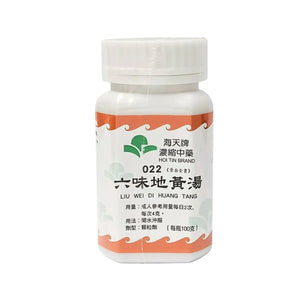
1. Liuwei Dihuang Wan
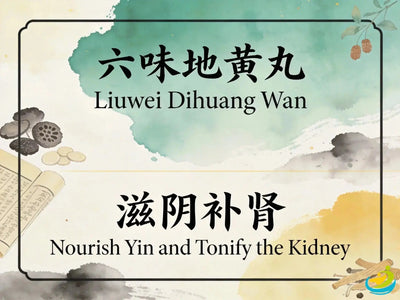
Liuwei Dihuang Wan primarily nourishes kidney yin, with its composition consisting of Shudihuang, Shanzhuyu (Cornus Fruit), Shanyao (Dioscorea Rhizome), Zexie (Alisma Rhizome), Fuling (Poria), and Mudanpi (Tree Peony Bark), emphasising tonifying the kidneys and filling essence. Da Bu Yin Wan, by contrast, places greater emphasis on draining fire on the foundation of nourishing yin, incorporating herbs such as Huangbai and Zhimu that clear heat and drain fire, making it more specifically targeted at symptoms of yin deficiency with fire hyperactivity.
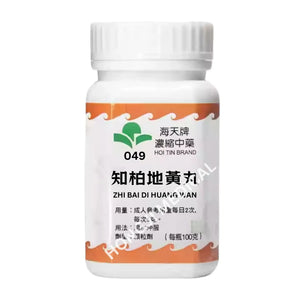
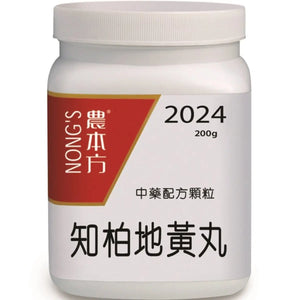
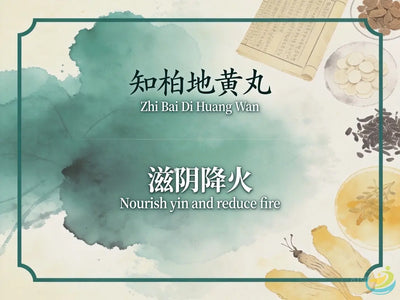
2. Zhibai Dihuang Wan
Zhibai Dihuang Wan is formed on the foundation of Liuwei Dihuang Wan with the addition of Huangbai and Zhimu, reinforcing the heat-clearing and fire-draining action. However, compared with Da Bu Yin Wan, the yin-nourishing and yang-subduing action of Guiban within Da Bu Yin Wan is more prominent, and the presence of Zhujisuǐ to fill essence and boost the marrow makes its yin-nourishing and fire-draining potency stronger and better suited to patients with more marked symptoms of yin deficiency with fire hyperactivity.
3. Zuogui Wan
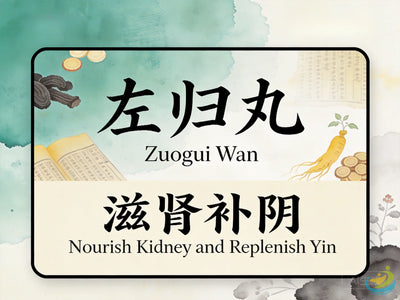
Zuogui Wan is a purely kidney-tonifying and yin-nourishing formula, composed of herbs including Shudihuang, Shanyao, Gouqizi (Goji Berry), Shanzhuyu, Chuan Niuxi (Sichuan Achyranthes Root), Lujiaojiao (Deer Antler Glue), Guibanjiao (Tortoise Plastron Glue), and Tusizi (Cuscuta Seed), with a relatively strong yin-nourishing potency. Da Bu Yin Wan, by contrast, adds fire-draining herbs while nourishing yin, placing greater emphasis on treating the pattern of yin deficiency with fire hyperactivity — the two differ in their actions and indications.

VI. Clinical Applications
1. Tuberculosis
If tuberculosis patients present with yin-deficiency-fire-hyperactivity symptoms such as low-grade fever, night sweating, cough, haemoptysis, and a red tongue with scant coating, Da Bu Yin Wan may be selected for treatment. Through nourishing yin and draining fire, symptoms can be relieved, the recovery of the condition promoted, and a degree of benefit conferred in improving the patient's constitution and strengthening resistance.
2. Hyperthyroidism
Hyperthyroidism patients commonly present with yin-deficiency-fire-hyperactivity symptoms such as vexation with irritability, excessive sweating, weight loss, and a red tongue with scant coating. Da Bu Yin Wan can regulate the body's yin-yang balance, lower thyroid hormone levels, relieve clinical symptoms, and assist in the treatment of hyperthyroidism.
3. Diabetes
If diabetic patients develop liver-kidney yin deficiency with deficiency-fire flaming upward during the course of their illness — manifesting as thirst with excessive drinking, soreness and weakness of the lumbar region and knees, and vexing heat in the five centres — Da Bu Yin Wan may serve as an adjunctive treatment formula. It can help improve the patient's yin-deficiency symptoms, regulate glucose metabolism, and has a degree of positive significance in controlling blood glucose.

VII. Clinical Modifications
1. For Severe Cough with Haemoptysis
Yin-nourishing, lung-moistening, and haemostatic herbs such as Baihe (Lily Bulb), Ejiao (Donkey-hide Gelatin), and Maidong (Ophiopogon Root) may be added to reinforce the actions of moistening the lungs, stopping cough, and stopping bleeding, thereby relieving the symptoms of cough with haemoptysis.
2. For Pronounced Tidal Fever
Heat-clearing and steaming-bone-clearing herbs such as Qinghao (Sweet Wormwood) and Digupi (Lycium Root-bark) may be added to further reinforce the actions of clearing heat, draining fire, and reducing deficiency-heat, alleviating the tidal fever symptoms.
3. For Marked Night Sweating
Perspiration-astringing herbs such as calcined Muli (Oyster Shell) and Fuxiaomai (Blighted Wheat) may be added to astringe and consolidate perspiration, reducing night sweating and allowing the body's yin fluids to be better preserved.
4. For Frequent Spermatorrhoea
Essence-consolidating and seminal-emission-stopping herbs such as Jinyingzi (Cherokee Rose Fruit), Qianshi (Euryale Seed), and Sangpiaoxiao (Mantis Egg-case) may be added to reinforce the essence-consolidating action, reducing the frequency of spermatorrhoea and consolidating the therapeutic effect.

VIII. Dosage and Preparation (Traditional Method and Modern Concentrated Granules)
1. Traditional Method
The traditional administration of Da Bu Yin Wan is oral. Water-honey pills: 6 g per dose, 2–3 times daily; small honey pills: 9 g per dose, 2–3 times daily; large honey pills: 1 pill per dose, 2–3 times daily. Generally taken with lightly salted water or warm boiled water to guide the medicinal force into the Kidney channel and enhance therapeutic efficacy.
Traditional Administration of Da Bu Yin Wan
An introduction to the correct oral dosage for the classical yin-nourishing and fire-draining formula "Da Bu Yin Wan" in its different pill formats — water-honey pills, small honey pills, and large honey pills — and the traditional practice of using lightly salted water as a guiding vehicle to direct the medicinal force into the Kidney channel.
- Water-honey pills (shuimìwán): granular honey pill format
- Small honey pills (xiǎomìwán): small honey pill packaging
- Large honey pills (dàmìwán): large pill packaging
- Lightly salted water: traditional guiding vehicle for administration (recommended — guides the medicinal force into the Kidney channel)
- Warm boiled water: appropriate amount (alternative guiding vehicle)
2. Modern Concentrated Granules
Modern concentrated granules are more convenient to take; the dosage should be determined according to the specifications and product instructions of different manufacturers. Generally, simply dissolve in boiled water according to the recommended dosage in the instructions. Concentrated granules preserve the active constituents of the traditional herbs and dissolve readily for absorption, allowing the therapeutic effect to be better realised.

IX. Precautions and Contraindications
1. Dietary Restrictions
During the course of medication, spicy, greasy, and irritating foods should be avoided, to prevent assisting fire and generating heat and aggravating the symptoms of yin deficiency with fire hyperactivity. Simultaneously, raw, cold foods should also be avoided, to prevent damage to spleen-stomach yang qi and adverse effects on herb absorption and therapeutic efficacy.
2. Constitutional Differences
Use with caution in those with spleen-stomach deficiency-cold, poor appetite, and loose stools. Because Da Bu Yin Wan is cold in nature and readily damages spleen-stomach yang qi, those with this type of constitution may, after taking the formula, experience symptoms such as epigastric discomfort, abdominal pain, and diarrhoea.
3. Special Populations
Use with caution in pregnancy. Although Da Bu Yin Wan contains no herbs with obvious abortifacient properties, to ensure fetal safety, pregnant women should consult a physician before using it. Paediatric dosages should be appropriately adjusted according to age and condition, and the formula should be taken under medical guidance.

X. Modern Research
1. Pharmacological Action Research
Da Bu Yin Wan is a classical formula for nourishing yin and draining fire, possessing the actions of cultivating the root and purifying the source, and preserving yin and generating fluids. Its combination characteristics pair yin-nourishing herbs with heat-clearing and fire-draining herbs, suited to the pattern of yin deficiency with fire hyperactivity such as bone tuberculosis. Within the formula, yin-nourishing herbs such as Shudi and Guiban are combined with heat-clearing and fire-draining herbs such as Huangbai and Zhimu; refined into pills with honey and taken with lightly salted water, the formula is applied clinically for various conditions of yin deficiency with fire hyperactivity.
Modern research has demonstrated that Da Bu Yin Wan has the actions of regulating the endocrine system, immune function, and glucose metabolism. The herb constituents it contains — such as Shudihuang and Guiban — can regulate hormone levels within the body, enhance immune function, and improve abnormal glucose metabolism, providing a scientific basis for its clinical application.
2. Clinical Efficacy Verification
Extensive clinical research has confirmed that Da Bu Yin Wan produces good therapeutic results for various conditions of the yin-deficiency-fire-hyperactivity type — including tuberculosis, hyperthyroidism, and diabetes as mentioned above. It can effectively relieve patients' clinical symptoms, improve laboratory indicators, and enhance patients' quality of life.
3. Dosage Form Improvement Research
With the development of modern pharmaceutical technology, research into improving the dosage form of Da Bu Yin Wan has been ongoing. Beyond the traditional pill form, capsule, tablet, and granule forms have also been developed to meet the needs of different patients, improving drug stability and convenience of administration.
As a classical formula for nourishing yin and draining fire within Chinese medicine, Da Bu Yin Wan has withstood several centuries of clinical practice verification, possessing rich theoretical content and definite clinical efficacy. Even as modern medicine continues to advance, it continues to play an important role in relieving suffering for numerous patients. This valuable formula deserves our in-depth study and transmission, so that it may better serve human health.

Da Bu Yin Wan — Frequently Asked Questions
Q1: What are the therapeutic actions of Da Bu Yin Wan?
Da Bu Yin Wan has the actions of nourishing yin and draining fire, cultivating and supplementing the liver and kidneys, and clearing and reducing deficiency-heat. It is primarily used for tidal fever and night sweating, vexing heat in the five centres, vexation with insomnia, and soreness and weakness of the lumbar region and knees caused by liver-kidney yin deficiency with internal disturbance of deficiency-fire.
Q2: What modern conditions is Da Bu Yin Wan used for?
In modern TCM clinical practice, it is commonly used for menopausal syndrome, hyperthyroidism, insomnia, adjunctive regulation of osteoporosis, chronic wasting diseases, and symptoms related to yin deficiency with fire hyperactivity, among individuals whose presentation corresponds to the pattern of liver-kidney yin deficiency.
Q3: Is Da Bu Yin Wan suitable for tidal fever, night sweating, and menopausal symptoms?
For those presenting with tidal fever, night sweating, dry mouth and throat, insomnia with restlessness, palpitations, and emotional fluctuations reflecting yin deficiency with fire hyperactivity, TCM practitioners commonly apply Da Bu Yin Wan through pattern differentiation for regulation — particularly commonly seen in perimenopausal women.
Q4: Who should not take Da Bu Yin Wan?
Those with spleen-stomach deficiency-cold, yang deficiency with aversion to cold, exuberant phlegm-dampness, or loose stools with diarrhoea should generally not use Da Bu Yin Wan. If chronic aversion to cold and cold limbs, poor appetite, or loose stools are present, professional pattern-differentiation assessment by a qualified TCM practitioner should be sought first.
⚠️ This content is for reference only and does not provide medical advice. Consult a healthcare professional for any health concerns.