Ma Huang Tang: Releasing the Exterior and Calming Wheezing for Severe Wind-Cold Colds

1. Prescription Source & History
1. Origin Legend
Mahuang Decoction As a classic formula in traditional Chinese medicine, it has a long history. Legend has it that in ancient times, a medical expert accidentally discovered that when people were invaded by wind-cold and showed symptoms such as aversion to cold, fever, and no sweating, taking a decoction composed of several herbs including Ephedra and Cinnamon Twig could often relieve the symptoms. After many attempts and summaries by this medical expert, the formula of Mahuang Decoction was gradually determined, and since then Mahuang Decoction has spread among the people and been applied in clinical treatment.
2. Classic Records
Mahuang Decoction It was first recorded in Treatise on Cold Damage Disorders written by Zhang Zhongjing in the Eastern Han Dynasty. Treatise on Cold Damage Disorders is the first clinical work in traditional Chinese medicine with complete theory, principles, formulas and herbs, and is regarded as a classic by later generations of medical experts. The discussion of formulas in the book is rigorous and systematic. As one of the important formulas, Mahuang Decoction elaborates on its composition, efficacy, main treatment, formula meaning and application methods in detail, providing an important basis for later generations to study and apply Mahuang Decoction. Since then, medical experts of past dynasties have continuously studied and practiced Mahuang Decoction, making it play an important role in traditional Chinese medicine clinical practice and having a history of more than two thousand years up to now.
Mahuang Decoction: A classic formula for regulating wind-cold common cold, fever without sweating and aversion to cold with body pain HJMEDICAL">
2. Composition Introduction
1. Monarch Herb - Ephedra
Ephedra is the dried herbaceous stem of Ephedra sinica Stapf, Ephedra intermedia Schrenk et C. A. Mey. or Ephedra equisetina Bunge. It is pungent, slightly bitter in taste and warm in nature. It belongs to the lung and bladder meridians. It has a strong sweating power and is a key herb for inducing sweating and relieving the exterior syndrome. Ephedra can open the pores, penetrate the hair follicles and sweat to relieve exterior pathogenic factors, especially good at treating exterior excess syndrome of wind-cold. In Mahuang Decoction, Ephedra is pungent and warm, can disperse the lung qi, open the pores and disperse wind-cold, so that the pathogenic factors of wind-cold are resolved from the muscle surface, so it is the monarch herb.
2. Minister Herb - Cinnamon Twig
Cinnamon Twig is the dried tender branch of Cinnamomum cassia Presl. It is pungent and sweet in taste and warm in nature. It belongs to the heart, lung and bladder meridians. Cinnamon Twig can assist Ephedra in inducing sweating and relieving the exterior syndrome, and can also warm and dredge the meridians and promote yang qi transformation. In Mahuang Decoction, Cinnamon Twig and Ephedra are used in combination to enhance the power of inducing sweating and relieving the exterior syndrome, and at the same time can warm and dredge the meridians, so that the pathogenic factors of wind-cold can be dispersed, so it is the minister herb.
3. Assistant Herb - Apricot Kernel
Almond is the dried ripe seed of Armeniaca sibirica (L.) Lam., Armeniaca mandshurica (Maxim.) Skvortsov, Armeniaca vulgaris Lam. or Prunus armeniaca L. of the Rosaceae family. It is bitter in taste and slightly warm in nature. It belongs to the lung and large intestine meridians. Almond can lower the lung qi, relieve cough and asthma. When combined with Ephedra, one promotes and the other descends, which can not only enhance the power of dispersing the lung qi and relieving the exterior syndrome, but also prevent Ephedra from excessive sweating and exhausting the lung qi. It can also make the lung qi disperse and descend normally, and the asthma and cough subside naturally, so it is an adjuvant drug.
4. Guide Herb - Prepared Licorice
Fried Licorice Root is the processed product of Licorice Root. It is sweet in taste and neutral in nature. It belongs to the heart, lung, spleen and stomach meridians. Fried Licorice Root can harmonize various drugs, benefit qi and regulate the middle. In Mahuang Decoction, Fried Licorice Root can not only harmonize the properties of Ephedra, Cinnamon Twig and Almond, but also relieve the strong and drastic properties of Ephedra and Cinnamon Twig, so that sweating occurs without excessive sweating. At the same time, it can also benefit qi and tonify the middle, preventing excessive sweating from damaging healthy qi, so it is a guiding drug.
Mahuang Decoction: A classic formula for regulating wind-cold common cold, fever without sweating and aversion to cold with body pain HJMEDICAL">
Pathogenesis, Efficacy and Treatment
1. Pathogenesis (Taiyang Cold Damage Syndrome)
The syndrome treated by Mahuang Decoction is exterior excess syndrome of wind-cold. The pathogenic factors of wind-cold invade the muscle surface, the defensive yang is blocked, the nutrient qi is stagnated, and the healthy qi and pathogenic factors struggle, so symptoms such as aversion to cold, fever, no sweating, headache and body pain appear. The lung governs qi and controls respiration, and externally connects with the skin and hair. When wind-cold binds the exterior, the lung qi fails to disperse, so asthma and cough occur. The key pathogenesis lies in wind-cold binding the exterior, the defensive qi being blocked and the nutrient qi being stagnated.
2. Efficacy
Mahuang Decoction has the effects of inducing sweating and relieving the exterior syndrome, dispersing the lung qi and relieving asthma. Through the effects of Ephedra and Cinnamon Twig in inducing sweating and relieving the exterior syndrome, the pathogenic factors of wind-cold are resolved from the muscle surface; Almond lowers the lung qi, and when combined with Ephedra, it disperses and descends the lung qi to relieve asthma and cough; Fried Licorice Root harmonizes various drugs, benefits qi and regulates the middle, and prevents excessive sweating. The whole formula together achieves the effects of inducing sweating and relieving the exterior syndrome, dispersing the lung qi and relieving asthma.
3. Treatment
Mahuang Decoction is mainly used to treat exterior excess syndrome of wind-cold. Symptoms include aversion to cold and fever, headache and body pain, no sweating and asthma, thin and white tongue coating, and floating and tense pulse. In clinical application, aversion to cold and fever, no sweating and asthma, floating and tense pulse are the key points for syndrome differentiation.
Mahuang Decoction: A classic formula for regulating wind-cold common cold, fever without sweating and aversion to cold with body pain HJMEDICAL">
IV. Analysis of Formula Principles
1. Compatibility of Ephedra and Cinnamon Twig
Ephedra has a strong sweating power, and Cinnamon Twig helps Ephedra induce sweating and relieve the exterior syndrome. The two are used in combination to enhance the power of inducing sweating and relieving the exterior syndrome. Ephedra disperses the lung qi and opens the pores, and Cinnamon Twig warms and dredges the meridians, so that the pathogenic factors of wind-cold can be dispersed, the defensive yang can be unblocked, the nutrient yin can be smooth, and the exterior pathogenic factors can be resolved by themselves.
2. Compatibility of Ephedra and Apricot Kernel
Ephedra disperses lung qi to relieve asthma, and almond descends lung qi to arrest cough and relieve asthma. One dispersing and one descending, they are complementary to each other. They can not only enhance the power of dispersing lung qi and relieving the exterior, but also regulate the ascending and descending functions of lung qi, making the lung qi smooth, and the dyspnea and cough subside spontaneously.
3. Function of Prepared Licorice
Prepared Licorice Root harmonizes all the drugs, alleviates the drastic properties of Ephedra and Ramulus Cinnamomi, so that sweating occurs without excessive sweating, protecting the healthy qi. At the same time, Prepared Licorice Root can also benefit qi and reinforce the middle, preventing excessive sweating from damaging the healthy qi, playing the role of coordinating all the drugs and protecting the healthy qi.
Mahuang Decoction: A classical formula for regulating wind-cold common cold, fever without sweating and aversion to cold with body pain HJMEDICAL">
V. Comparison with Other Similar Formulas
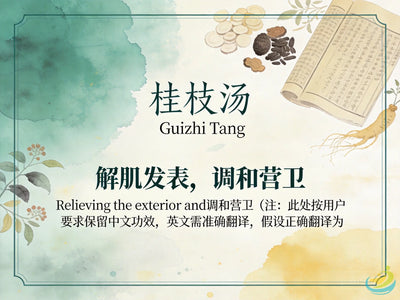
1. Comparison with Guizhi Decoction
- Mahuang Decoction is mainly used to treat exterior excess pattern of wind-cold, characterized by aversion to cold and fever, no sweating and dyspnea, with floating and tense pulse; Guizhi Decoction is mainly used to treat exterior deficiency pattern of wind-cold, characterized by aversion to wind and fever, sweating, with floating and slow pulse.
- Mahuang Decoction has a strong sweating effect. The main drugs used are Ephedra and Ramulus Cinnamomi, focusing on sweating and relieving the exterior; Guizhi Decoction has a weaker sweating effect. The main drugs used are Ramulus Cinnamomi and Paeoniae Radix Alba, focusing on relieving the muscles and releasing the exterior, and regulating nutrient qi and defensive qi.
2. Comparison with Jiuwei Qianghuo Decoction
- Mahuang Decoction is a simple pungent-warm sweating formula, mainly for exterior excess pattern of wind-cold; Jiwei Qianghuo Decoction has the effects of sweating and dispelling dampness, and clearing interior heat concurrently, applicable to the syndrome of wind-cold-damp pathogen invading exterior with interior heat accumulation.
- Mahuang Decoction has simple drug flavors and concentrated medicinal power; Jiwei Qianghuo Decoction has more drug flavors, taking into account both exterior and interior syndromes, and the medication is more complex.
Mahuang Decoction: A classical formula for regulating wind-cold common cold, fever without sweating and aversion to cold with body pain HJMEDICAL">
VI. Clinical Applications and Indications
1. Common Cold
For wind-cold type of common cold, with severe aversion to cold, mild fever, no sweating, headache and body aches, nasal congestion with clear runny nose, cough with thin and white sputum, not thirsty or thirsty but preferring warm drinks, thin, white and moist tongue coating, and floating and tight pulse, Mahuang Decoction has very good curative effects. By inducing sweating to relieve the exterior syndrome and dispelling pathogenic factors of wind-cold, the symptoms of the common cold can be alleviated.
2. Influenza
In the early stage of influenza, if symptoms similar to those of exterior excess syndrome of wind-cold such as aversion to cold, high fever, no sweating, headache, body aches, and fatigue appear, Mahuang Decoction can also be applied. However, it should be noted that the condition of influenza changes relatively fast. If the symptoms do not relieve or worsen continuously, medical treatment should be sought in a timely manner.
3. Bronchitis
For bronchitis caused by wind-cold attacking the lung, with symptoms such as cough, asthma, clear and thin white expectoration, aversion to cold and no sweating, Mahuang Decoction can disperse lung qi and dispel cold, relieve cough and asthma. By regulating the ascending and descending functions of lung qi, symptoms such as cough and asthma can be alleviated.
Mahuang Decoction: A classical formula for regulating wind-cold common cold, fever without sweating and aversion to cold with body aches HJMEDICAL">
VII. Modifications
1. With neck and back pain
Pueraria lobata can be added to relieve the muscles and tendons and enhance the effect of relieving the exterior syndrome, such as Mahuang Decoction plus Pueraria lobata. Pueraria lobata can raise yang and relieve the muscles, and relieve the stiffness and pain of the nape and back.
2. Severe shortness of breath
Perilla frutescens and Magnolia officinalis can be added to lower qi and relieve asthma, such as Sanao Decoction. Perilla frutescens and Magnolia officinalis can enhance the effect of lowering qi and relieving asthma, and better relieve the symptoms of dyspnea.
3. With interior heat
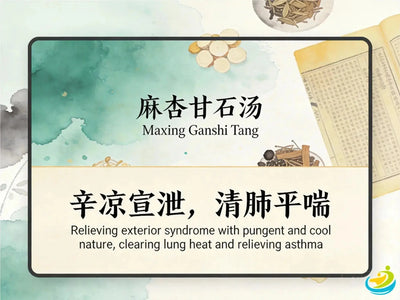
Gypsum fibrosum can be added to clear away interior heat, such as Maxing Shigan Decoction. Gypsum fibrosum can clear heat and purge fire. When combined with Ephedra sinica and Armeniaca vulgaris, it can not only relieve the exterior syndrome but also clear away interior heat, and is applicable to the syndrome of wind-cold exterior contraction with interior stagnant heat.
Mahuang Decoction: A classical formula for regulating wind-cold common cold, fever without sweating and aversion to cold with body aches HJMEDICAL">
VIII. Dosage (Traditional and Modern Concentrated Granules)
1. Traditional method
Ephedra sinica 9g, Cinnamomum cassia 6g, Armeniaca vulgaris 9g, Licorice Root 3g. The above four herbs, with nine liters of water, first boil Ephedra sinica, reduce by two liters, remove the froth on the surface, add the other herbs, boil to obtain two and a half liters, remove the dregs, take eight he of it warm, cover the body to get a slight sweat, do not need to drink gruel, and take care as in the method of treating diseases with Cinnamon Twig Decoction. In modern clinical application, the dosage can be adjusted appropriately according to the specific conditions of the patients, but still need to follow the compatibility principle of the original formula.
2. Modern concentrated granules
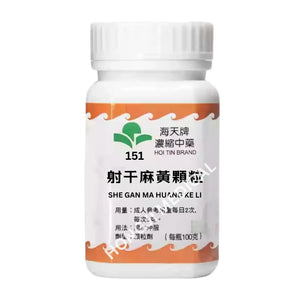
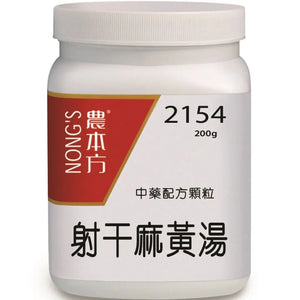
Modern Chinese medicine preparations have developed greatly, and there is also a corresponding concentrated granule dosage form of Mahuang Decoction. Its taking method is more convenient, generally just take it according to the dosage stated in the instruction manual. The concentrated granules maintain the efficacy of the original formula, are convenient for patients to take and carry, and improve the convenience of clinical application.
Mahuang Decoction: A classic formula for regulating wind-cold common cold, fever without sweating and aversion to cold with body pain HJMEDICAL">
IX. Precautions and Taboos
1. Nursing after taking medicine
After taking Mahuang Decoction, attention should be paid to keeping warm and avoiding catching wind-cold again. Generally, it is required to cover the body to get a slight sweat so that the wind-cold pathogen can be resolved with sweat. However, excessive sweating should be avoided to prevent damaging healthy qi. After taking the medicine, appropriate rest can help the body recover.
2. Use with Caution for the Weak
Mahuang Decoction has a relatively strong sweating effect. It should be used with caution for those with weak constitution and insufficient qi and blood. The healthy qi of such people is insufficient. If Mahuang Decoction is used to cause excessive sweating, it may further damage the healthy qi, leading to the aggravation of the disease or the occurrence of other adverse reactions.
3. Taboos for Special Groups
Special populations such as pregnant women, lactating women, and children should use Mahuang Decoction with caution. Pregnant women need to use medicine carefully to avoid affecting the fetus; the medicine used by lactating women may affect the baby through breast milk; children's physiological functions have not yet developed completely and their constitutions are delicate, so the dosage and indications of medicine need to be strictly controlled when using it.
Mahuang Decoction: A classic formula for regulating wind-cold common cold, fever without sweating and aversion to cold with body pain HJMEDICAL">
X. Modern Research Progress
1. Pharmacological Research
Modern pharmacological research shows that ephedrine in Ephedra sinica has effects such as exciting the central nervous system, contracting blood vessels, raising blood pressure, and exciting the heart, and can promote sweat gland secretion to cause sweating; Cinnamomum cassia can dilate blood vessels, promote blood circulation, and enhance the sweating effect of Ephedra sinica; Armeniaca vulgaris has the effects of relieving cough and asthma; Licorice Root has the effects of anti-inflammatory and anti-allergy. These pharmacological effects of Mahuang Decoction work together to make it have the effects of inducing sweating to relieve the exterior syndrome and dispersing lung qi to relieve asthma.
2. Clinical Research
In recent years, many clinical studies have verified the efficacy of Mahuang Decoction. The research found that Mahuang Decoction has significant efficacy in the treatment of wind-cold common cold, bronchitis, bronchial asthma and other diseases. Through the clinical observation and analysis of Mahuang Decoction, its scope of application and efficacy characteristics have been further clarified, providing more scientific basis for the clinical application of Mahuang Decoction.
3. Dosage Form Improvement Research
With the development of modern technology, the research on the improvement of the dosage form of Mahuang Decoction is also continuously carried out. In addition to the above-mentioned concentrated granule dosage form, there are also some new dosage forms such as Mahuang Decoction dripping pills and Mahuang Decoction capsules that are under research and clinical trials. These new dosage forms are expected to further improve the efficacy of Mahuang Decoction and the compliance of patients, providing more choices for the modern application of traditional Chinese medicine prescriptions.
Summary
Ma Huang Tang is a classical formula in traditional Chinese medicine, Chinese herbal medicine, and herbal medicine used for external wind-cold or wind-cold invasion. It releases the exterior, disperses wind-cold, disperses cold, and induces sweating to relieve symptoms such as chills, wheezing, and asthma by regulating lung qi.
Key herbs include ma huang (ephedra), gui zhi, and xing ren. The formula contains ephedrine from ma huang and is particularly effective for wind-cold patterns with no sweating.
What is Ma Huang Tang used for in Traditional Chinese Medicine?
Ma Huang Tang (Ephedra Decoction) is a foundational, highly potent classical formula from the Shanghan Lun, primarily prescribed to treat an excess Wind-Cold pattern affecting the body's exterior layer. It clinically targets acute, severe cold or flu-like presentations marked by intense chills, aversion to cold, fever, a total lack of sweating (anhidrosis), severe generalized body aches, headaches, and restricted breathing or wheezing.
How does Ma Huang Tang induce sweating to resolve acute body aches and respiratory constriction?
The formula operates via a powerful diaphoretic dynamic designed to open up closed pores and unblock stagnant channels. When pathogenic Wind-Cold binds the skin surface, it constricts defensive Qi, trapping heat inside and causing severe pain in the muscles and joints. By forcefully inducing sweat, Ma Huang Tang vents the trapped pathogen outward. Simultaneously, it diffuses locked Lung Qi, which unblocks the upper respiratory passages to quickly calm coughing and wheezing.
What are the precise herbal ingredients in Ma Huang Tang?
This legendary and highly concentrated formula relies on a minimalist matrix of exactly 4 classical botanical ingredients: Ma Huang (Ephedra Stem) serves as the chief herb to forcefully open the pores, induce therapeutic sweating, and diffuse Lung Qi. It is dynamically supported by Gui Zhi (Cinnamon Twig), which warms the channels, harmonizes defensive Qi, and enhances the surface-releasing effect. To control respiratory rebellion and stop coughing, it incorporates Xing Ren (Bitter Apricot Seed), and the entire formulation is finalized and moderated by Zhi Gan Cao (Prepared Licorice Root) to protect stomach fluids from excessive sweating.
⚠️ This content is for reference only and does not provide medical advice. Consult a healthcare professional for any health concerns.