Exterior-Releasing Formulas

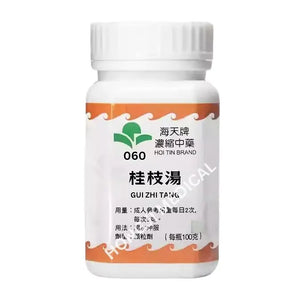
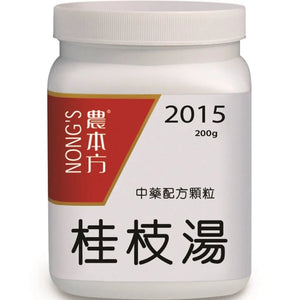
桂枝汤 · Guì Zhī Tāng

Gui Zhi Tang

The foundational formula for exterior deficiency Wind-Cold (Tai Yang Zhong Feng). Characterised by mild fever, aversion to wind, spontaneous sweating, headache and floating moderate pulse.

View formula profile →
Last reviewed August 2026
Formula CategoryExterior-Releasing Formulas
Primary PatternWind-Cold
Primary FunctionRelease exterior Wind-Cold (deficiency type), harmonize Ying-Wei
Primary Therapeutic PrincipleRelease the exterior, harmonize Ying and Wei Qi
Main HerbsCinnamon Twig · White Peony Root · Fresh Ginger · Jujube / Chinese Date · Honey-fried Licorice
Classical SourceShang Han Lun (Zhang Zhongjing, Eastern Han)

Why This Formula?

Traditionally selected for deficiency-type exterior Wind-Cold where sweating is present and the exterior is open, harmonising Ying and Wei — the opposite presentation to Ma Huang Tang, which is reserved for excess Wind-Cold with a closed exterior and complete absence of sweating.

Traditionally selected for deficiency-type exterior Wind-Cold where sweating is present and the exterior is open, harmonising Ying and Wei — the opposite presentation to Ma Huang Tang, which is reserved for excess Wind-Cold with a closed exterior and complete absence of sweating.

What Is Gui Zhi Tang?

1. Classical Record

Gui Zhi Tang, also known as Cinnamon Twig Decoction, is one of the most important classical formulas from Zhang Zhongjing’s Shang Han Lun (Treatise on Cold Damage). Designed for the Taiyang wind-strike pattern (exterior deficiency), it gently releases the exterior while regulating the relationship between Ying (nutritive) and Wei (defensive) qi.

This foundational prescription is primarily used for symptoms such as fever, spontaneous sweating, aversion to wind, headache, stiff neck, and a floating moderate pulse. Revered as the “chief of all formulas,” Gui Zhi Tang remains a cornerstone of Traditional Chinese Medicine for treating exterior deficiency cold patterns and continues to serve as the basis for numerous later modifications.

Gui Zhi Tang

2. Common Cold

If a cold shows headache and fever, spontaneous sweating with aversion to wind, nasal congestion with dry retching, white tongue coat without thirst, and a floating‑moderate pulse—classic exterior wind‑cold with ying‑wei disharmony—Gui Zhi Tang fits well. It releases the muscle layer, harmonizes ying and wei, and pushes out wind‑cold. Starting it early often keeps the illness from worsening.

3. Spontaneous and Night Sweats

When sweating (daytime or nighttime) stems from ying‑wei disharmony—sweating with aversion to wind, body soreness, alternating mild chills and warmth—Gui Zhi Tang can help. By securing the exterior (wei) and nourishing the interior (ying), sweating lessens. Modify as needed to match individual signs.

4. Postpartum Fever

Postpartum fever with headache, mild chills, slight sweating, and a floating‑moderate pulse often reflects qi‑blood deficiency plus wind‑cold invasion. Use Gui Zhi Tang (with appropriate additions) to harmonize ying‑wei, release the exterior, and gently support qi and blood so the pathogen resolves as vitality returns.

Gui Zhi Tang

5. Pregnancy‑Related Nausea (Hyperemesis Gravidarum, pattern‑fit)

If early‑pregnancy nausea and vomiting arise from spleen–stomach weakness with external wind‑cold and ying‑wei disharmony, Gui Zhi Tang (with stomach‑harmonizing, anti‑nausea additions) may ease symptoms by harmonizing ying‑wei and improving middle‑jiao function—without undue risk to the fetus when properly prescribed.

Herb Composition (Sovereign / Minister / Assistant / Envoy)

1. Monarch (Jun) — Gui Zhi (Cinnamon Twig)

Acrid, sweet, warm; promotes sweating to release the exterior, warms and unblocks the channels, and assists yang transformation. As the monarch herb, Gui Zhi disperses wind‑cold from the muscle layer to resolve exterior pathogens. It also warms the channels for pain due to cold congealing and blood stasis (e.g., chest bi, epigastric cold pain, dysmenorrhea), and promotes yang qi movement to facilitate fluid metabolism and distribution.

2. Minister (Chen) — Shao Yao (Peony)

Bitter, sour, slightly cold; nourishes blood and preserves yin, softens the liver to relieve pain, and subdues hyperactive liver yang. Paired with Gui Zhi (one dispersing, one astringing), it enhances release of the exterior while preventing excessive sweating that could injure yin. By nourishing ying‑blood it helps pallor, dizziness, and other deficiency signs, and relieves pain from liver constraint or blood deficiency.

3. Assistants (Zuo) — Sheng Jiang (Fresh Ginger) and Da Zao (Jujube)

Sheng Jiang is acrid, slightly warm; releases the exterior, warms the middle to stop vomiting, and warms the lung to calm cough—assisting Gui Zhi in dispersing wind‑cold and easing gastric discomfort. Da Zao is sweet, warm; tonifies the middle and qi, nourishes blood, and calms the spirit. Together they harmonize ying and wei and support the spleen and stomach, providing a foundation for exterior‑releasing while guarding against damage from excessive sweating.

Gui Zhi Tang

4. Envoy (Shi) — Zhi Gan Cao (Honey‑Fried Licorice)

Sweet, neutral; tonifies spleen and qi, moistens the lung to stop cough, relieves spasm and pain, and harmonizes the formula. As envoy it coordinates Gui Zhi, Shao Yao, Sheng Jiang, and Da Zao so the prescription acts synergistically. It also supports spleen qi to aid recovery of upright qi, thereby facilitating the expulsion of pathogens.

Clinical Presentation in TCM

1. Pathogenesis

Gui Zhi Tang addresses exterior wind-cold affecting ying and wei. Defensive qi fails to secure the exterior, causing fever, spontaneous sweating, and wind aversion. Wind-cold obstructs qi-blood flow, leading to headache and body aches, and can impair digestion, resulting in poor appetite and abdominal distention.

2. Functions

This formula releases the muscle layer and harmonizes ying and wei. Gui Zhi disperses wind-cold, while Shao Yao nourishes blood and preserves yin, balancing exterior release. Sheng Jiang and Da Zao assist harmonization, and Zhi Gan Cao harmonizes the formula, while also tonifying the spleen and qi.

Gui Zhi Tang

3. Indications

Indicated for exterior deficiency (Taiyang Zhongfeng) with symptoms like headache, fever, spontaneous sweating with wind aversion, nasal congestion, dry retching, white tongue coat, and a floating, moderate or weak pulse. Also applicable for other ying-wei disharmonies such as spontaneous/night sweating, postpartum fever, and pregnancy-related nausea, when the pattern aligns.

The Mechanism in Classical Theory

1. Pairing of Gui Zhi and Shao Yao

Gui Zhi (acrid‑warm dispersing) and Shao Yao (sour‑bitter, slightly cold, yin‑preserving) form a complementary pair—one disperses, one astringes. Gui Zhi releases the exterior; Shao Yao nourishes and restrains to prevent over‑sweating, while together they harmonize ying and wei to restore physiological balance.

2. Synergy of Sheng Jiang and Da Zao with Gui Zhi and Shao Yao

Sheng Jiang assists Gui Zhi in dispersing wind‑cold and warms the middle to stop nausea; Da Zao tonifies the center, nourishes blood, and calms the spirit. With Gui Zhi and Shao Yao they jointly release the muscle layer, harmonize ying–wei, and support spleen–stomach, ensuring both exterior resolution and internal support.

Gui Zhi Tang

3. Zhi Gan Cao for Harmonization and Supporting the Upright

Zhi Gan Cao harmonizes all herbs, coordinating their actions for optimal effect. It also tonifies spleen qi, supporting recovery of upright qi—crucial for prognosis in external disorders—so the body can expel pathogens while restoring health.

Clinical Comparison Table

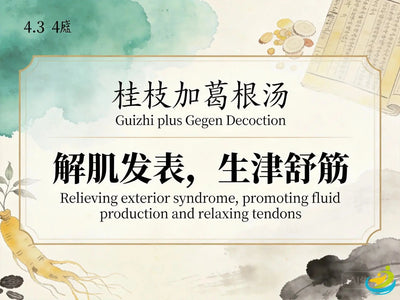
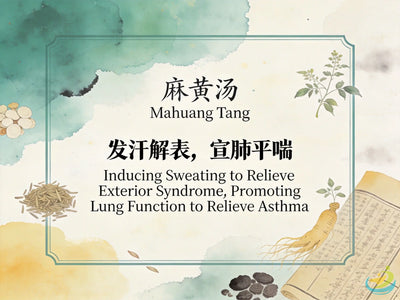
Compare Gui Zhi TangMa Huang TangHuang Qi Gui Zhi Wu Wu TangGui Zhi Jia Ge Gen Tang
Primary Function Release exterior Wind-Cold (deficiency type), harmonize Ying-WeiRelease exterior Wind-Cold, stop wheezingTonify Qi, warm channels, relieve numbnessRelease exterior, relax sinews, relieve neck stiffness
Formula Category Exterior-Releasing FormulasExterior-Releasing FormulasQi-Tonifying FormulasExterior-Releasing Formulas
Typical TCM Pattern Wind-ColdWind-ColdQi DeficiencyWind-Cold
Main Conditions Spontaneous Sweating, Fever, Cold Limbs, Nasal CongestionCough, Dry Cough, Fever, Cold Limbs, Nasal CongestionCold Limbs, Numbness in Limbs, Joint DiscomfortSpontaneous Sweating, Neck Pain, Muscular Stiffness, Fever
Main Herbs Cinnamon Twig · White Peony Root · Fresh Ginger · Jujube / Chinese Date · Honey-fried LicoriceEphedra Herb · Cinnamon Twig · Bitter Apricot Kernel · Honey-fried LicoriceAstragalus Root · Cinnamon Twig · White Peony Root · Fresh Ginger · Jujube / Chinese DateKudzu Root · Cinnamon Twig · White Peony Root · Fresh Ginger · Jujube / Chinese Date · Honey-fried Licorice
Classical Source Shang Han Lun (Zhang Zhongjing, Eastern Han)Shang Han Lun (Zhang Zhongjing, Eastern Han)Jin Gui Yao Lue (Zhang Zhongjing, Eastern Han)Shang Han Lun (Zhang Zhongjing, Eastern Han)

How to tell them apart

Gui Zhi Tang addresses deficiency exterior Wind-Cold with sweating. Ma Huang Tang is for excess Wind-Cold without sweating. Huang Qi Gui Zhi Wu Wu Tang and Dang Gui Si Ni Tang are modifications for internal/channel patterns. Si Ni Tang is for Yang collapse.

For educational reference only, based on traditional pattern differentiation — not a substitute for professional advice.

Clinical Modifications for Gui Zhi Tang

1. For stiff neck and upper back — add Ge Gen (Kudzu root)

When exterior wind‑cold with exterior deficiency presents with pronounced stiffness and pain of the neck and upper back, add Ge Gen. Sweet, acrid, and cool, it releases the muscle layer, reduces fever, generates fluids to relieve thirst, vents rashes, and raises yang to stop diarrhea. It enhances the exterior‑releasing effect and relieves nuchal and dorsal stiffness caused by wind‑cold obstructing the Taiyang channels.

2. For dyspnea/wheezing — add Xing Ren and Hou Po

With concurrent dyspnea, add Xing Ren (bitter, slightly warm; descends qi, stops cough/wheeze, moistens the intestines) and Hou Po (bitter, acrid, warm; dries damp, resolves phlegm, descends qi to relieve fullness). Together with Gui Zhi Tang they strengthen descending of Lung qi and relieve wheeze due to wind‑cold constraining the Lung with rebellious qi.

Gui Zhi Tang

3. For yang deficiency — add Fu Zi

If signs of yang deficiency appear (aversion to cold, cold limbs, deep‑slow pulse), add Fu Zi (acrid, sweet, intensely hot; restores devastated yang, warms and supports heart/spleen/kidney yang, disperses cold to relieve pain). Combined with Gui Zhi Tang it augments warming the yang and exterior‑releasing for wind‑cold in yang‑deficient patients.

What the Science Suggests

1. Pharmacological Studies

Gui Zhi Tang, from the Treatise on Cold Damage, primarily treats Taiyang exterior deficiency, releasing the muscle layer and harmonizing ying and wei, with a balanced effect of nourishing yin and supporting yang. Derivatives such as Gui Zhi Jia Ge Gen Tang address stiff neck/upper back; Xiao Jian Zhong Tang adds maltose for middle jiao deficiency‑cold.

Modern studies show:

  • Gui Zhi (cinnamaldehyde) has antipyretic, analgesic, and anti‑inflammatory effects, relieving fever, headache, and myalgia.
  • Shao Yao (paeoniflorin) offers sedative, antispasmodic, and anti‑inflammatory actions, easing muscle spasm and pain.
  • Sheng Jiang (volatile oils) promotes digestive secretions, appetite, and has antimicrobial effects, improving spleen–stomach function.
  • Da Zao provides nutrients (sugars, vitamins), enhancing and modulating immunity.
  • Zhi Gan Cao exerts anti‑inflammatory, antiallergic, and immunoregulatory effects, strengthening host defenses. These mechanisms provide scientific support for treating exterior disorders and related conditions.

2. Expanded Clinical Applications

Beyond classic wind‑cold exterior deficiency, Gui Zhi Tang shows promise in:

  • Allergic diseases: modulating immunity to reduce hypersensitivity and symptoms.
  • Cardiovascular disorders: vasodilation and improved circulation for adjunct use in coronary disease and arrhythmias.
  • Digestive disorders: regulating GI function, relieving spasm, and improving dyspepsia. These expansions suggest new avenues for development and clinical use.
Gui Zhi Tang

3. Dosage‑Form Improvements

To enhance convenience and consistency, capsule, tablet, and oral‑solution forms have been developed in addition to concentrated granules. These retain efficacy while offering accurate dosing, easier storage, and better usability for modern practice. Concurrently, quality control and standardization are emphasized to ensure safety and effectiveness.

Gui Zhi Tang remains a widely used classic with rich theory and validated efficacy. Ongoing research continues to broaden its pharmacology and indications, supporting greater future contributions to health.

Safety Considerations

1. Dietary Restrictions During Treatment

Strictly avoid raw/cold foods; greasy, slick items; meats/noodles; the five pungents (e.g., scallion, garlic, leek, chili); alcohol/dairy; and foul foods. Such items impair spleen‑yang, hinder absorption, generate damp‑heat, or counteract the formula’s exterior‑releasing action.

2. Post‑dose Care

After dosing, sip hot thin congee to support the spleen and assist mild sweating; keep the body warmly covered to induce a slight sweat. Aim for a gentle perspiration; profuse, streaming sweat can damage upright qi and delay recovery.

3. Appropriate and Inappropriate Patients

Gui Zhi Tang suits exterior wind‑cold with exterior deficiency. Frail patients with wind‑cold may use it under supervision. It is contraindicated in exterior excess (e.g., chills and fever without sweat, wheezing, floating‑tight pulse), to avoid over‑sweating and qi injury. Use cautiously in yin‑deficient internal heat and in pregnancy; if needed, employ only under strict medical guidance with tailored dosing.

Questions About Gui Zhi Tang

Q1: What are the actions of Gui Zhi Tang?
Gui Zhi Tang has the actions of releasing the exterior and expelling Wind-Cold, and harmonizing Ying and Wei. It is primarily used for exterior deficiency Wind-Cold patterns with fever, aversion to wind, sweating that does not relieve the symptoms, and a floating moderate pulse.
Q2: Which modern diseases is Gui Zhi Tang suited to?
Modern TCM clinical practice commonly applies it to individuals whose pattern differentiation falls within exterior deficiency Wind-Cold or Ying-Wei disharmony, including common cold or influenza with sweating, spontaneous sweating, allergic rhinitis, and certain skin conditions such as urticaria.
Q3: Is Gui Zhi Tang suitable for improving fever with sweating and aversion to wind?
For presentations of mild fever, aversion to wind, spontaneous sweating that does not resolve the condition, headache, nasal congestion, and a floating moderate pulse — in those whose pattern differentiation confirms exterior deficiency Wind-Cold — TCM commonly applies Gui Zhi Tang as an adjunct. It cannot replace standard medical treatment.
Q4: Who should not take Gui Zhi Tang?
Those with exterior excess Wind-Cold without sweating (Ma Huang Tang pattern), interior Heat, Yin deficiency with Heat, or Wind-Heat patterns are generally not suitable. Use should be assessed by a qualified TCM physician based on individual constitution and pattern differentiation.
Q5: How does Gui Zhi Tang differ from Ma Huang Tang?
Gui Zhi Tang is used for exterior deficiency patterns with sweating and a moderate pulse, focusing on harmonizing Ying and Wei. Ma Huang Tang is used for exterior excess patterns without sweating and with a tight pulse, focusing on strong induction of sweating to release the exterior.
Q6: Can Gui Zhi Tang be used for spontaneous sweating?
Yes, when spontaneous sweating results from Ying-Wei disharmony or exterior deficiency. The formula helps restore the proper balance between the defensive (Wei) and nutritive (Ying) levels, which can reduce abnormal sweating when the pattern matches.
Q7: What is the traditional method of taking Gui Zhi Tang?
Classically, after taking the warm decoction, the patient is advised to drink warm rice porridge and cover up lightly to induce a mild sweat. Avoid strong sweating. Raw, cold, greasy, or strongly flavored foods should be avoided during treatment.
Q8: Is Gui Zhi Tang suitable for postpartum or post-illness recovery?
Yes, it is frequently used when postpartum or post-illness patients present with Ying-Wei disharmony, mild fever, spontaneous sweating, and aversion to wind. It gently supports recovery of exterior harmony without aggressive sweating.
Q9: What are the main ingredients of Gui Zhi Tang?
The classical formula consists of five ingredients: Gui Zhi (Cinnamon twig), Bai Shao (White peony root), Sheng Jiang (Fresh ginger), Da Zao (Jujube), and Zhi Gan Cao (Honey-fried licorice). Gui Zhi and Bai Shao work together to harmonize Ying and Wei.
Q10: Can Gui Zhi Tang be used for allergic conditions?
In modern practice it is sometimes applied to conditions such as allergic rhinitis or certain forms of urticaria when the underlying pattern is Ying-Wei disharmony or exterior deficiency. Pattern differentiation by a qualified TCM physician remains essential before use.

General Questions

How do I choose the right formula?
TCM formulas are traditionally selected according to individual pattern differentiation rather than by symptom alone. If you're not sure which formula fits your presentation, take our AI Assessment below for a personalized starting point, then confirm with a qualified TCM practitioner.
What are concentrated herbal granules?
Concentrated herbal granules are made by decocting raw herbs, then extracting and concentrating the resulting liquid into a fine granule or powder form. This preserves the same active compounds as a traditional decoction while making the herbs far easier to store, measure, and prepare.
How should I take these products?
Dissolve the recommended amount of granules in hot water, stir until fully dissolved, and drink while warm — following the dosage and frequency advised by your TCM practitioner or as stated on the product packaging.
Are concentrated herbal granules equivalent to traditional decoctions?
Concentrated granules are produced from the same herbs and processed to retain their active compounds, so they are traditionally regarded as a convenient alternative to decoctions rather than a different remedy. Some practitioners note subtle differences in strength or absorption between the two forms, so your TCM practitioner may adjust dosage accordingly.
Are your products authentic?
Yes. HJMEDICAL sources its concentrated granules exclusively from established, reputable manufacturers such as Nong's and Hoi Tin, both long-standing names in the TCM granules industry, with GMP compliance stated directly on their packaging.
Are HJMEDICAL products manufactured under GMP standards?
HJMEDICAL sources its concentrated granules from established, reputable manufacturers such as Nong's and Hoi Tin, both long-standing names in the TCM granules industry. GMP compliance for these products is stated directly on their packaging.
Do you ship internationally?
Yes — we ship worldwide! Every order goes out via Hong Kong Post, and your exact shipping cost and estimated delivery time for your address are calculated and shown right at checkout, so there are never any surprises. We also offer free shipping once your order reaches our free-shipping threshold, so it's easy to stock up on your favorite formulas and save.
Can I take more than one formula at the same time?
Some formulas are traditionally combined, while others overlap or counteract each other. We recommend checking with a qualified TCM practitioner before combining formulas, especially if you are already taking other medication.
Are these products suitable during pregnancy or breastfeeding?
Some TCM formulas are not suitable during pregnancy or breastfeeding. Please consult a qualified TCM practitioner or your doctor before use if you are pregnant, trying to conceive, or nursing.
Do these products replace medical treatment?
No. These products are traditional herbal supplements intended to support wellbeing according to TCM principles — they are not a replacement for professional medical diagnosis or treatment. Please consult a qualified TCM practitioner or licensed healthcare provider before starting, stopping, or combining any treatment, especially if you have a chronic condition.
Medical Disclaimer

For general TCM education only — not medical advice. Consult a qualified TCM practitioner or licensed healthcare provider before use, especially if pregnant, nursing, on medication, or managing a chronic condition.

Not sure which formula is right for you?

Take the AI Assessment

最新文章

Login

Forgot your password?

Don't have an account yet?
Create account

Gui Zhi Tang: Classic TCM Formula for Wind-Cold, Exterior Deficiency & Ying-Wei Imbalance