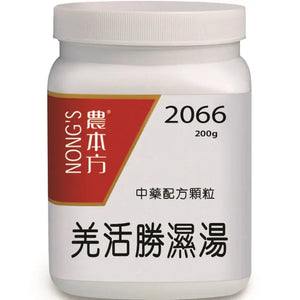
Q1: What are the actions of Qiang Huo Sheng Shi Tang?
Qiang Huo Sheng Shi Tang has the actions of dispelling Wind and overcoming Dampness. Li Dongyuan designed it for Wind-Damp that occupies the exterior and the taiyang channel, producing a heavy aching head, neck, and back.
Q2: Which modern conditions is Qiang Huo Sheng Shi Tang suited to?
Modern TCM clinical practice commonly applies it to individuals whose pattern differentiation falls within exterior Wind-Damp, including a heavy aching common cold of Damp type, neck-and-shoulder stiffness after exposure to wind and damp, and early Wind-Damp body pain before it has become chronic deficiency Bi.
Q3: Is Qiang Huo Sheng Shi Tang suitable for a heavy head, stiff neck, and aching back after damp weather?
For presentations of a heavy or wrapping headache, stiff neck and back, generalized heaviness, possible mild aversion to wind, a white coating, and a floating pulse — in those whose pattern differentiation confirms Wind-Damp on the exterior — TCM commonly applies this formula as an adjunct. Sudden severe headache with fever and stiff neck needs medical evaluation.
Q4: Who should not take Qiang Huo Sheng Shi Tang?
Those with Yin-deficiency empty Heat, Wind-Heat headache, or interior Damp-Heat without an exterior Wind-Damp layer are generally not suitable. The formula is acrid, warming, and drying. Use should be assessed by a qualified TCM physician.
Q5: How do Qiang Huo and Du Huo work together in this formula?
Qiang Huo travels the upper taiyang and dispels Wind-Damp from the head, nape, and back. Du Huo travels the lower body and dispels Wind-Damp from the lumbar region and legs. Gao Ben and Fang Feng assist the vertex and surface. Chuan Xiong and Man Jing Zi treat the Wind-Damp headache. Zhi Gan Cao harmonizes. Together they “overcome Dampness” that is still on the channel and exterior rather than deep in deficient joints.
Q6: How does Qiang Huo Sheng Shi Tang differ from Jiu Wei Qiang Huo Tang or Juan Bi Tang?
Jiu Wei Qiang Huo Tang releases a Wind-Cold-Damp exterior with more interior Heat signs and a larger herb team. Juan Bi Tang treats Wind-Damp Bi that has already settled into the joints and upper limbs. Qiang Huo Sheng Shi Tang is the smaller, more focused formula for a heavy Wind-Damp exterior occupying taiyang — head, neck, and back — before chronic Bi is established.
Q7: What are the main ingredients of Qiang Huo Sheng Shi Tang?
The classical formula consists of Qiang Huo and Du Huo to dispel Wind-Damp from upper and lower taiyang; Gao Ben and Fang Feng to disperse Wind from the vertex and surface; Chuan Xiong and Man Jing Zi to treat Wind-Damp headache; and Zhi Gan Cao to harmonize.
Q8: Is Qiang Huo Sheng Shi Tang suitable for long-term use?
No. It is a short-course formula for an active Wind-Damp exterior. Acrid drying herbs consume Yin and fluids if continued after the heaviness has lifted. Chronic deficient Bi then needs a different, often tonic, strategy.
Q9: Can this formula help both the wrapping headache and the heavy aching back?
Yes. Wind-Damp that occupies the taiyang channel produces a wrapping or heavy head above and a stiff aching back below. Qiang Huo, Du Huo, and the vertex-dispersing pair address that whole channel when Heat-type headache and Blood-deficient empty pain have been excluded.
Q10: What lifestyle advice supports the use of Qiang Huo Sheng Shi Tang?
Keeping the neck and back warm and dry, avoiding sitting in wet clothes after rain, and seeking care for sudden explosive headache, high fever, or neck rigidity all support correct use. This formula treats a TCM Wind-Damp exterior pattern; it is not a substitute for evaluating meningitis or acute cervical injury.