San Zi Yang Qin Tang (Three-Seed Decoction): Classic TCM Formula for Phlegm-Damp Cough and Elderly Weak Digestion

section-1

1. Prescription Source & History

1. Origin Legend

The San Zi Yang Qin Decoction for Nourishing the Aged originated from a warm story. It is said that in ancient times, there was an old man. After his three sons got married separately, their lives were busy and fulfilling, but their care for the old man became less and less. The old man often felt lonely and lost, and his health gradually declined. One day, the old man caught a cold accidentally and had coughing and wheezing, feeling extremely uncomfortable. However, all three sons were busy with their own affairs and had no time to take good care of him. Looking at his busy sons, the old man was filled with helplessness.

Later, a doctor in the village learned about the old man's situation. After a careful diagnosis, the doctor prescribed a formula. He asked the three sons to collect three kinds of seeds, namely semen raphani, semen sinapis alba, and semen perillae, and then boil them together for the old man to drink. The three sons did as the doctor instructed. Strangely enough, after the old man drank several doses of the water boiled with these three kinds of seeds, his condition gradually improved. His coughing lessened, his wheezing eased, and his body slowly regained health.

From then on, these three sons were deeply touched, understood the importance of filial piety towards parents, and showed even more meticulous care for the old man. And this formula composed of semen raphani, semen sinapis alba, and semen perillae, because of its remarkable effect and the affectionate care of children for their parents, spread among the people and was called 'The San Zi Yang Qin Decoction for Nourishing the Aged'.

2. Historical Records & Inheritance

The San Zi Yang Qin Decoction for Nourishing the Aged was first recorded in 'Medical Master's Insights' written by Han Mao in the Ming Dynasty. In this book, the composition, efficacy, and application of the San Zi Yang Qin Decoction for Nourishing the Aged were elaborated in detail. Han Mao highly praised the San Zi Yang Qin Decoction for Nourishing the Aged, believing that it was an excellent formula for treating cough, wheezing and other diseases in the elderly.

Since the Ming Dynasty, the San Zi Yang Qin Decoction for Nourishing the Aged has been widely used in traditional Chinese medicine clinical practice. Successive doctors, on the basis of inheritance, continuously enriched and improved its application experience. It not only spread within China, but also, along with the dissemination of traditional Chinese medicine culture, had a certain impact on the medical development of surrounding countries and regions. Many medical books have recorded and discussed the San Zi Yang Qin Decoction for Nourishing the Aged, making it a shining pearl in the treasure house of traditional Chinese medicine prescriptions and still playing an important role after hundreds of years.

section-2

2. Composition of Medicinal Flavors

1. Monarch Drug - Radish Seed

Semen raphani is the seed of the radish plant in the cruciferous family. It tastes pungent and sweet, and is of neutral nature. It belongs to the lung, spleen, and stomach meridians.

Semen raphani has the effects of promoting digestion and relieving distension, and descending qi to resolve phlegm. In the San Zi Yang Qin Decoction for Nourishing the Aged, it plays an important leading role. For symptoms such as abdominal distension and fullness, belching and acid regurgitation caused by food stagnation, semen raphani can eliminate the food stagnation in the gastrointestinal tract through promoting digestion and resolving accumulation, making the qi mechanism smooth and the distension disappear automatically. At the same time, it can also descend qi to resolve phlegm, and has a good therapeutic effect on symptoms such as cough, wheezing, and thick and sticky phlegm. It can descend the turbid phlegm qi in the lungs, making the phlegm easier to cough out, thus relieving the symptoms of cough and wheezing.

Semen raphani is hard in texture and fragrant in smell. Its pungent and dispersing property is relatively strong, capable of promoting digestion by spreading and dispersing, and breaking qi to relieve fullness. In clinical application, the dosage is often adjusted according to the severity of the disease. Generally speaking, for those with milder conditions, the dosage is relatively smaller, while for those with more severe conditions, the dosage is appropriately increased.

2. Ministerial Drug - Mustard Seed

Semen Sinapis Albae is the seed of Brassica alba L., which is pungent in flavor and warm in nature, and belongs to the Lung Meridian.

Semen Sinapis Albae has the functions of warming the Lung to resolve phlegm and promoting qi to disperse stagnation. In the formula of Sanzi Yangqin Decoction, it assists Semen Raphani to enhance the effect of resolving phlegm and descending qi. Being warm in nature, Semen Sinapis Albae can warm and transform cold phlegm, and has good curative effects on symptoms such as cough, asthma, profuse and clear phlegm caused by the accumulation of cold phlegm in the Lung. It can disperse the cold phlegm in the Lung by warming and dredging the Lung qi, making the airway unobstructed. At the same time, Semen Sinapis Albae can also promote qi to disperse stagnation, and has certain therapeutic effects on symptoms such as limb numbness and joint swelling and pain caused by phlegm obstruction in the channels.

Semen Sinapis Albae is strongly pungent and warm in nature and is good at dispersing. It can penetrate the channels and reach the diseased site to play the role of resolving phlegm and dispelling stagnation. When using it, attention should be paid to its dosage not being too large to avoid consuming qi and injuring yin.

3. Assistant Drug - Perilla Seed

Fructus Perillae is the dried ripe fruit of Perilla frutescens (L.) Britt., which is pungent in flavor and warm in nature, and belongs to the Lung and Large Intestine Meridians.

Fructus Perillae has the effects of descending qi to resolve phlegm, relieving cough and asthma, and moistening the intestine to promote defecation. In the Sanzi Yangqin Decoction, on the one hand, it assists Semen Raphani and Semen Sinapis Albae to descend qi and resolve phlegm, and on the other hand, it can also play the role of moistening the intestine to promote defecation, preventing other drugs from being too warm and dry and injuring body fluids. For cough and asthma caused by the reversal of Lung qi, Fructus Perillae can descend qi and relieve asthma, making the Lung qi descend, thus relieving the cough symptoms. At the same time, its effect of moistening the intestine can promote intestinal peristalsis, help discharge the waste in the body, and keep the defecation unobstructed.

Fructus Perillae is rich in oil, and its effect of descending qi and moistening the intestine is relatively mild. In clinical application, it is often used in combination with other drugs to enhance the overall curative effect of the formula.

4. Guiding Drug

Although the envoy drug in the Sanzi Yangqin Decoction is not clearly pointed out, judging from the overall compatibility of the formula, the role of harmonizing the drugs can be borne by Glycyrrhizae Radix et Rhizoma. Glycyrrhizae Radix et Rhizoma is sweet in flavor and neutral in nature, and belongs to the Heart, Lung, Spleen and Stomach Meridians.

Glycyrrhizae Radix et Rhizoma has the effects of invigorating the spleen and replenishing qi, moistening the Lung and relieving cough, clearing heat and detoxifying, and harmonizing the drugs. In the Sanzi Yangqin Decoction, it can relieve the drastic nature of Semen Raphani, Semen Sinapis Albae and Fructus Perillae, making the property of the whole formula milder and avoiding mutual conflict between drugs. At the same time, Glycyrrhizae Radix et Rhizoma can invigorate the spleen and replenish qi, enhance the transportation and transformation function of the spleen and stomach, help the absorption and utilization of drugs, and make the formula play a better therapeutic role.

The dosage of licorice is generally determined according to the overall compatibility of the prescription and the condition of the disease. It should not be too large to avoid stagnating qi mechanism.

section-3

III. Pathogenesis, Efficacy and Treatment

1. Pathogenesis Analysis

The pathogenesis targeted by the San Zi Yang Qin Decoction for Harmonizing the Aged is mainly the accumulation of phlegm-turbidity and the reverse flow of lung qi. As people age, the functions of the zang-fu organs gradually decline, the transportation and transformation functions of the spleen and stomach become weakened, which easily leads to food stagnation. Over time, food stagnation transforms into phlegm-turbidity, which blocks the interior of the lung, preventing the lung qi from being properly disseminated and released, thus presenting symptoms such as cough and asthma. In addition, factors such as the invasion of pathogenic cold and exogenous pathogenic factors may also induce or exacerbate the condition of phlegm-turbidity obstructing the lung.

The accumulation of phlegm-turbidity is the key pathogenesis leading to cough and asthma. Phlegm-turbidity blocks the airways, making it difficult for the lung qi to flow in and out, thus causing cough and asthma. Moreover, the presence of phlegm-turbidity will further affect the transportation and transformation functions of the spleen and stomach, forming a vicious cycle. The reverse flow of lung qi is the direct manifestation of cough and asthma. The lung qi fails to descend normally but instead flows reversely, resulting in rapid breathing and frequent coughing.

2. Efficacy

The San Zi Yang Qin Decoction for Harmonizing the Aged has the effects of warming the lung to resolve phlegm, descending qi and promoting digestion. By warming and resolving the cold phlegm in the lung, the phlegm can be discharged, thus relieving the symptoms of cough and asthma. At the same time, it can descend qi, enabling the lung qi to descend and restoring normal respiratory function. In addition, the function of promoting digestion and resolving food stagnation can eliminate food stagnation in the gastrointestinal tract, improve digestive function and reduce the source of phlegm-turbidity generation.

Warming the lung to resolve phlegm can dispel pathogenic cold and phlegm-turbidity in the lung, restoring the normal function of the lung. Descending qi can relieve the symptoms of the reverse flow of lung qi and alleviate cough and asthma. Promoting digestion and resolving food stagnation helps to regulate the functions of the spleen and stomach, promote digestion and absorption, and prevent the endogenous generation of phlegm-turbidity. These three aspects cooperate with each other to jointly exert the therapeutic effect, enabling the normal flow of qi, blood, body fluids in the human body and the coordinated balance of the functions of the zang-fu organs.

3. Treatment

The San Zi Yang Qin Decoction for Harmonizing the Aged is mainly used to treat the syndrome of phlegm accumulation, qi reversal and food stagnation. The common symptoms include cough and asthma with reversed qi, profuse phlegm, chest stuffiness, difficulty in digesting food, greasy white tongue coating and slippery pulse.

Cough and asthma with reversed qi are caused by the obstruction of the lung by phlegm-turbidity and the reverse flow of lung qi. Profuse phlegm and chest stuffiness are manifested as an excessive amount of phlegm and discomfort in the chest. Difficulty in digesting food is due to the affected transportation and transformation functions of the spleen and stomach and the decline in digestive ability. Greasy white tongue coating and slippery pulse are typical manifestations of the obstruction of phlegm-turbidity in the interior. The San Zi Yang Qin Decoction for Harmonizing the Aged can effectively improve these symptoms through resolving phlegm, descending qi, promoting digestion and resolving food stagnation, enabling the patient to recover health.

This prescription is especially applicable to cough and asthma and other diseases in the elderly caused by weakness of the spleen and stomach and endogenous generation of phlegm-turbidity. The physical functions of the elderly decline, and the functions of the spleen and stomach are relatively weak, making it easy to have the situation of excessive phlegm-turbidity accumulation. The San Zi Yang Qin Decoction for Harmonizing the Aged precisely targets this characteristic for treatment and has good clinical efficacy.

section-4

IV. Analysis of the Recipe of Sanzi Yangqin Decoction

1. Compatibility of Resolving Phlegm and Lowering Qi

The combination of Semen Raphani, Semen Sinapis Alba, and Fructus Perillae plays a combined role in resolving phlegm and descending qi. Semen Raphani promotes digestion to relieve fullness, descends qi and resolves phlegm. Semen Sinapis Alba warms the lungs to resolve phlegm, promotes qi movement and disperses nodules. Fructus Perillae descends qi and resolves phlegm, relieves cough and asthma. The combination of these three herbs targets the pathogenesis of phlegm turbidity congestion and lung qi reversal, resolving phlegm and descending qi from different aspects.

Semen Raphani focuses on promoting digestion and resolving food stagnation. By eliminating gastrointestinal stagnation, it reduces the source of phlegm turbidity generation. At the same time, it descends qi and resolves phlegm, enabling the lung qi to descend. Semen Sinapis Alba warms and transforms cold phlegm, promotes qi movement and disperses nodules, enhancing the power of resolving phlegm and dissipating phlegm turbidity in the lungs. Fructus Perillae descends qi and relieves asthma, synergistically acting with Semen Raphani and Semen Sinapis Alba to jointly improve the symptoms of cough and asthma. This method of combining herbs to resolve phlegm and descend qi focuses the medicinal power of the formula on resolving phlegm and descending qi, and can quickly relieve the condition.

2. Synergy of Warming Lungs and Digesting Food

Semen Sinapis Alba is warm in nature and can warm the lungs to resolve phlegm. Semen Raphani promotes digestion and resolves food stagnation. Their synergistic effect can both warm and transform cold phlegm in the lungs and reduce the production of phlegm turbidity by promoting digestion and resolving food stagnation. Warming the lungs helps restore the normal function of the lungs, enabling the lung qi to be properly dispersed. Promoting digestion can regulate the function of the spleen and stomach and prevent the endogenous generation of phlegm turbidity.

The synergy between warming the lungs and promoting digestion embodies the principle of treating diseases by addressing the root cause in traditional Chinese medicine. By warming the lungs to resolve phlegm, the cause of the disease is eliminated. At the same time, promoting digestion and resolving food stagnation improves the transportation and transformation function of the spleen and stomach, fundamentally solving the problem of phlegm turbidity congestion. This synergistic effect enables the formula not only to relieve the current symptoms but also to adjust the overall body function, enhance the body's resistance, and prevent the recurrence of diseases.

3. Complementary Drug Properties

The properties of the three herbs in the Three-Substance Decoction for Benefiting the Aged complement each other. Semen Raphani is hard in texture, fragrant in smell, and has a strong dispersing power of pungency. It is good at promoting qi movement and digestion, breaking qi and relieving fullness. Semen Sinapis Alba is pungent, warm, and can penetrate the meridians, reaching the affected site directly, warming the lungs to resolve phlegm, promoting qi movement and dispersing nodules. Fructus Perillae has a relatively large amount of oil, and its effect of descending qi and moistening the intestines is mild.

The combination of the dispersing power of pungency of Semen Raphani and the penetrating nature of Semen Sinapis Alba enhances the power of the formula to resolve phlegm and disperse nodules. The effect of moistening the intestines of Fructus Perillae can restrict the warm and dry nature of Semen Raphani and Semen Sinapis Alba, making the overall formula milder in nature, avoiding excessive warmth and dryness that may damage body fluids. This complementarity of the properties of the herbs enables the formula to maintain good safety and stability while exerting its therapeutic effect.

section-5

V. Comparison with Other Similar Formulas

1. Comparison with Erchen Decoction

Erchen Decoction is a classic phlegm-resolving formula in traditional Chinese medicine, composed of Pinelliae Rhizoma, Citri Reticulatae Exocarpium, Poria, and Glycyrrhizae Radix. It has the effects of drying dampness and resolving phlegm, regulating qi and harmonizing the middle. Compared with the Three-Substance Decoction for Benefiting the Aged, Erchen Decoction focuses on drying dampness and resolving phlegm, mainly targeting the syndrome of damp phlegm. In its herb combination, Pinelliae Rhizoma is used as the monarch herb, with a relatively strong power of drying dampness and resolving phlegm.

The Sanzi Yangqin Decoction focuses more on the condition of excessive phlegm turbidity accompanied by upward adverse flow of lung qi and food stagnation. Sanzi Yangqin Decoction The compatibility of radish seed, white mustard seed and perilla seed in the Sanzi Yangqin Decoction, while resolving phlegm, pays more attention to descending qi and promoting digestion to relieve symptoms such as cough and asthma, and difficult digestion due to less food intake. The medicinal power of the Erchen Decoction is relatively mild, mainly acting on the middle jiao spleen and stomach, drying dampness and resolving phlegm, and regulating qi movement. The Sanzi Yangqin Decoction has a relatively drastic medicinal power and comprehensively treats symptoms such as excessive phlegm turbidity and upward adverse flow of qi in the upper jiao lung and middle jiao spleen and stomach.

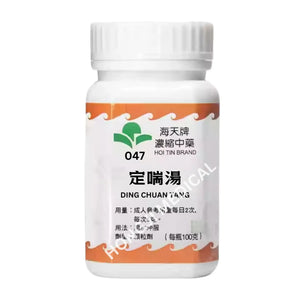
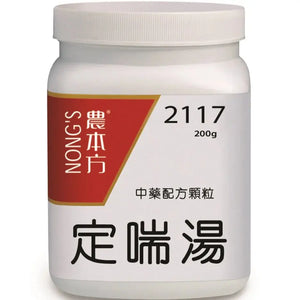
2. Comparison with Dingchuan Decoction

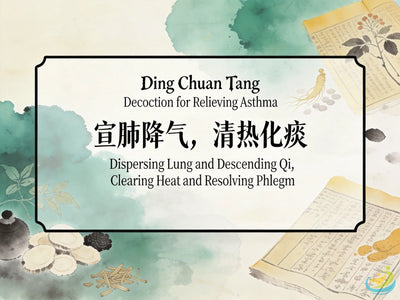
Dingchuan Decoction It has the effects of dispersing and descending lung qi, clearing heat and resolving phlegm, and is mainly used to treat the syndrome of external constraint of wind-cold and internal accumulation of phlegm-heat. Its composition includes ephedra, almond, mulberry bark, scutellaria baicalensis, pinellia ternata, perilla seed, tussilago farfara, ginkgo seed, and licorice root.

Sanzi Yangqin Decoction Compared with the Dingchuan Decoction, the Dingchuan Decoction focuses more on clearing heat and resolving phlegm and is applicable to the situation of phlegm-heat congesting the lung. In the formula, ephedra and almond disperse and relieve asthma, scutellaria baicalensis and mulberry bark clear heat and purge fire, and pinellia ternata and perilla seed resolve phlegm and descend qi. While the Sanzi Yangqin Decoction mainly targets the disease of excessive phlegm turbidity, upward adverse flow of lung qi and tending to cold phlegm, with the main effects of warming the lung to resolve phlegm, descending qi and promoting digestion, and there are no drugs for clearing heat and purging fire. The effect of the Dingchuan Decoction focuses on clearing heat and dispersing the lung, and the effect of the Sanzi Yangqin Decoction focuses on warming and resolving cold phlegm, descending qi and promoting digestion. There are differences in pathogenesis, efficacy and drug composition between the two.

section-6

VI. Clinical Applications and Indications

1. Applications in Respiratory Diseases

The Sanzi Yangqin Decoction is widely used in respiratory diseases. For diseases such as chronic bronchitis and pulmonary emphysema, since most patients are the elderly with weak spleen and stomach, it is easy to present the situation of excessive phlegm turbidity, resulting in symptoms such as cough, asthma, and profuse sputum. The Sanzi Yangqin Decoction can warm the lung to resolve phlegm, descend qi and promote digestion, and effectively relieve these symptoms.

In clinical practice, for patients with chronic bronchitis, if they present symptoms such as cough, asthma, profuse phlegm with white color, chest oppression, and reduced appetite, treating them with the Sanzi Yangqin Decoction often yields good therapeutic effects. By resolving phlegm and lowering qi, it improves the ventilation function of the lungs, reduces the secretion of phlegm, thereby alleviating the symptoms of cough and asthma. At the same time, promoting digestion and resolving food stagnation helps enhance the functions of the spleen and stomach, improve the body's resistance, and facilitate the recovery of the disease.

2. Applications in Digestive Diseases

In terms of digestive system diseases, the Sanzi Yangqin Decoction also has certain application value. For symptoms such as indigestion, fullness in the epigastric region caused by weakness of the spleen and stomach and food stagnation, the Sanzi Yangqin Decoction can play the roles of promoting digestion and resolving food stagnation, regulating qi and harmonizing the middle jiao.

For example, some elderly people are prone to experiencing symptoms such as fullness in the epigastric region and loss of appetite due to the decline of spleen and stomach functions. At this time, using the Sanzi Yangqin Decoction, semen raphani can promote digestion and relieve distension, eliminating food stagnation in the gastrointestinal tract and alleviating fullness in the epigastric region. At the same time, the other drugs in the formula can regulate the qi movement of the spleen and stomach, enhance the transportation and transformation functions of the spleen and stomach, improve the digestion and absorption ability, and restore the patient's appetite to normal.

3. Other Indications

In addition to respiratory and digestive system diseases, the Sanzi Yangqin Decoction can also be used to treat some diseases related to phlegm turbidity. Such as limb numbness, joint pain caused by phlegm blocking the meridians. Phlegm turbidity blocks the meridians, and the qi and blood circulation is不畅, resulting in symptoms such as limb numbness and pain. The Sanzi Yangqin Decoction resolves phlegm and dissipates nodules, enabling the phlegm turbidity to dissipate and the meridians to be unobstructed, thereby alleviating symptoms such as limb numbness and joint pain.

Furthermore, for some diseases such as dizziness and headache caused by internal obstruction of phlegm turbidity, if accompanied by symptoms such as cough, asthma, and difficulty in digesting food, the Sanzi Yangqin Decoction can also be considered for treatment. By resolving phlegm and lowering qi, promoting digestion and resolving food stagnation, it adjusts the运行 of qi, blood, and body fluids in the human body and improves symptoms such as dizziness and headache.

section-7

VII. Modifications

1. Those with severe cough

If the cough is severe, aster tataricus and farfarae flos can be added to enhance the effect of relieving cough and resolving phlegm. Aster tataricus moistens the lung and lowers qi, resolving phlegm and relieving cough. Farfarae flos moistens the lung and lowers qi, relieving cough and resolving phlegm. When combined with the drugs in the Sanzi Yangqin Decoction, they can further enhance the cough-relieving effect of the formula and alleviate the cough symptoms.

Aster tataricus is sweet, bitter, and warm in nature, and belongs to the lung meridian. Its ability to moisten the lung and resolve phlegm is relatively strong, capable of moistening the lung and making the phlegm in the lung easier to cough out. Farfarae flos is pungent, slightly bitter, and warm in nature, and belongs to the lung meridian. It is good at relieving cough and asthma, and has good therapeutic effects on various cough and asthma diseases. When aster tataricus and farfarae flos are added in the case of severe cough, the cough-relieving and phlegm-resolving efficacy of the formula can be made more significant.

2. Those with obvious asthma

When asthma is obvious, ephedra and armeniacae semen can be added to enhance the power of relieving asthma. Ephedra disperses the lung and relieves asthma, armeniacae semen lowers qi and relieves cough and asthma. When combined with the Sanzi Yangqin Decoction, they can quickly alleviate the asthma symptoms.

Ephedra is pungent and slightly bitter in taste, warm in nature, and belongs to the lung and bladder meridians. It has a strong effect of inducing sweating to relieve exterior syndrome and dispersing lung qi to relieve asthma. It can disperse and ventilate the lung qi, making the lung qi smooth and relieving asthma. Bitter Apricot Seed is bitter in taste, slightly warm in nature, and belongs to the lung and large intestine meridians. It has the effects of descending qi to relieve cough and asthma and moistening the intestines to promote defecation, especially good at descending lung qi and having a good effect on relieving asthma symptoms. When asthma is obvious, adding Ephedra and Bitter Apricot Seed can enhance the anti-asthmatic effect of the prescription.

3. Those with yellowish and excessive heat phlegm

When the phlegm is yellow in color and belongs to heat phlegm, Scutellaria baicalensis and Trichosanthes kirilowii can be added to clear heat and resolve phlegm. Scutellaria baicalensis clears heat and dries dampness, purges fire and detoxifies. Trichosanthes kirilowii clears heat and resolves phlegm, widens the chest and disperses nodules. The two can effectively clear heat phlegm and improve symptoms.

Scutellaria baicalensis is bitter in taste, cold in nature, and belongs to the lung, gallbladder, spleen, large intestine, and small intestine meridians. Its effects of clearing heat and drying dampness, purging fire and detoxifying are extensive, and it has a good therapeutic effect on heat phlegm symptoms such as cough with yellow and profuse phlegm due to lung heat. Trichosanthes kirilowii is sweet and slightly bitter in taste, cold in nature, and belongs to the lung, stomach, and large intestine meridians. It can clear heat and resolve phlegm, dilute the phlegm and make it easier to expectorate. At the same time, it can also widen the chest and disperse nodules, relieving the symptoms of chest fullness and discomfort. When the phlegm is yellow in color and belongs to heat phlegm, adding Scutellaria baicalensis and Trichosanthes kirilowii can make the prescription stronger in clearing heat and resolving phlegm.

4. Those with severe food retention

When food retention is severe, Medicated Leaven and Hawthorn can be added to enhance the effect of promoting digestion and resolving food retention. Medicated Leaven promotes digestion and harmonizes the stomach. Hawthorn promotes digestion and resolves food retention, promotes qi movement and removes blood stasis. The two work synergistically with Semen Raphani in the Prescription of Three-Nutrient Soup for Respecting the Aged to better eliminate food retention.

Medicated Leaven is sweet and pungent in taste, warm in nature, and belongs to the spleen and stomach meridians. It is good at promoting digestion and harmonizing the stomach, and has a good therapeutic effect on symptoms such as abdominal distension and loss of appetite caused by food stagnation. Hawthorn is sour and sweet in taste, slightly warm in nature, and belongs to the spleen, stomach, and liver meridians. Its effect of promoting digestion and resolving food retention is relatively strong, especially good at digesting meat stagnation. At the same time, it can also promote qi movement and remove blood stasis, promoting gastrointestinal peristalsis. When food retention is severe, adding Medicated Leaven and Hawthorn can make the prescription more effective in promoting digestion and resolving food retention.

section-8

VIII. Dosage (Traditional and Modern Concentrated Granules)

1. Traditional method

When preparing the Prescription of Three-Nutrient Soup for Respecting the Aged by traditional methods, generally, Semen Raphani, Semen Sinapis Albae, and Fructus Perillae are taken in equal parts. Taking the common dosage as an example, 9 grams of each herb are taken. After washing these three herbs, put them into a pot, add an appropriate amount of water, and soak for about 30 minutes. Then decoct with a small fire for 30 - 40 minutes, and take out the juice about 200 - 300 milliliters. Take one dose daily and warm it and take it in two divided doses.

During the decocting process, pay attention to controlling the heat to avoid over-drying or over-burning. At the same time, some rock sugar or honey can be added appropriately according to personal taste for seasoning to improve the taste. The decoction prepared by traditional methods can fully exert the effective components of the medicine, retain the original flavor of the medicine, and the curative effect is relatively exact.

2. Modern concentrated granules

Modern concentrated granules are prepared by extracting and concentrating traditional Chinese medicines into granule preparations. When using the modern concentrated granules of the Prescription of Three-Nutrient Soup for Respecting the Aged, generally take the dosage recommended in the instructions. Usually, the dosage of the concentrated granules of each herb is equivalent to 9 grams of the traditional cut crude drugs.

When taking, just take appropriate amount of concentrated granules with boiling water. Modern concentrated granules have the advantages of convenient taking and easy carrying. For some people with busy work and fast-paced life, using concentrated granules is more convenient. Moreover, concentrated granules are scientifically extracted and concentrated, with a high content of active ingredients, and the curative effect is equivalent to that of traditional decoctions.

section-9

IX. Precautions and Taboos

1. Dietary Taboos

During the period of taking the San Zi Yang QinElderly-Nourishing Decoction, spicy, greasy, raw and cold and other stimulating foods should be avoided. These foods are likely to damage the spleen and stomach, increase the gastrointestinal burden, and affect the absorption and curative effect of the medicine. Spicy foods such as chili peppers and Chinese prickly ash are likely to stimulate the gastrointestinal tract, causing congestion of the gastrointestinal mucosa and affecting digestive function. Greasy foods such as fried foods and fatty meat are not easy to digest and will increase the transportation and transformation burden of the spleen and stomach. Raw and cold foods such as ice cream and cold drinks will damage the yang qi of the spleen and stomach, resulting in deficiency-cold of the spleen and stomach and affecting the therapeutic effect of the medicine.

At the same time, overly sweet and greasy foods should be avoided to prevent the generation of phlegm-dampness and aggravate the condition. Sweet and greasy foods such as cakes and candies are likely to generate dampness and transform phlegm, making the phlegm turbidity in the body more excessive and not conducive to the recovery of the disease.

2. Constitution Taboos

Those with weak constitutions and deficiency-cold of the spleen and stomach should use the San Zi Yang QinElderly-Nourishing Decoction with caution. The drugs in the San Zi Yang QinElderly-Nourishing Decoction mostly have the nature of pungent-dispersing and warm-drying. For those with weak constitutions and deficiency-cold of the spleen and stomach, it may further damage the healthy qi and aggravate the deficiency-cold symptoms.

Those with weak constitutions have insufficient healthy qi themselves. If overly drastic drugs are used, it may lead to more deficiency of healthy qi and affect the recovery of the body. For those with deficiency-cold of the spleen and stomach, the yang qi of the spleen and stomach is insufficient. Taking the San Zi Yang QinElderly-Nourishing Decoction may aggravate the symptoms of deficiency-cold of the spleen and stomach, presenting adverse reactions such as cold pain in the stomach cavity and diarrhea. Before using the San Zi Yang QinElderly-Nourishing Decoction, the opinions of doctors or traditional Chinese medicine practitioners should be consulted according to personal physical conditions and used with caution.

3. Taboos for Special Groups

Pregnant women are prohibited from using the San Zi Yang QinElderly-Nourishing Decoction. The drugs in the San Zi Yang QinElderly-Nourishing Decoction may have adverse effects on the fetus. To ensure the health of the fetus, pregnant women should avoid using it.

When the elderly use it, the dosage should be appropriately adjusted according to their own physical conditions and diseases. Due to the decline of the body functions of the elderly and the weakening of drug metabolism ability, more caution is needed when using drugs. When children use the San Zi Yang QinElderly-Nourishing Decoction, the dosage should be appropriately adjusted according to age and weight and needs to be used under the guidance of a doctor. The physiological characteristics of children are different from those of adults, and more precise medication is required to ensure safety and effectiveness.

section-10

X. Modern Research Progress

1. Pharmacological Research

Modern research shows that the drugs in the San Zi Yang QinElderly-Nourishing Decoction have various pharmacological effects. Semen Raphani contains rich volatile oils, fatty oils and other components, and has the effects of promoting gastrointestinal peristalsis and enhancing digestive function. It can increase the contraction amplitude and frequency of gastrointestinal smooth muscle, promote the digestion and absorption of food, and reduce gastrointestinal stagnation.

The active ingredients in white mustard seeds can stimulate the respiratory mucosa, causing an increase in respiratory secretion, thereby diluting sputum and promoting sputum discharge. At the same time, it also has certain antibacterial and anti-inflammatory effects, which can inhibit the occurrence and development of respiratory inflammation. Perilla fruit has the effect of lowering qi and relieving asthma. Components such as perilla seed oil contained in it can relax bronchial smooth muscle, relieve bronchospasm, and alleviate asthma symptoms.

In addition, the San Zi Yang Qin Decoction for Nourishing the Aged also has the effect of regulating immune function. It can enhance the body's immunity, improve the body's resistance to diseases, and help prevent and treat diseases.

2. Clinical Efficacy Verification

In clinical studies, many studies have confirmed the effectiveness of the San Zi Yang Qin Decoction for Nourishing the Aged. For patients with chronic bronchitis, after treatment with the San Zi Yang Qin Decoction for Nourishing the Aged, symptoms such as cough, asthma, and expectoration are significantly reduced, and lung function is improved. Research shows that the San Zi Yang Qin Decoction for Nourishing the Aged can reduce the level of inflammatory factors in the sputum of patients, alleviate the respiratory inflammatory response, and thus relieve symptoms.

In the treatment of dyspepsia, the San Zi Yang Qin Decoction for Nourishing the Aged has also achieved good results. It can promote gastrointestinal motility, increase gastric emptying rate, improve digestive function, and relieve symptoms such as fullness in the epigastrium and loss of appetite. Clinical studies have also found that the San Zi Yang Qin Decoction for Nourishing the Aged also has a certain therapeutic effect on some diseases related to phlegm turbidity, such as dizziness and headache, which can improve the symptoms of patients and improve the quality of life.

3. Safety Research

There has also been some progress in the safety research of the San Zi Yang Qin Decoction for Nourishing the Aged. Research shows that at normal dosage, the San Zi Yang Qin Decoction for Nourishing the Aged generally has good safety and fewer adverse reactions. However, for some special populations, such as those with weak constitutions and deficiency-cold in the spleen and stomach, it is still necessary to use it cautiously to avoid adverse reactions.

Regarding long-term use, there are also some studies observing it currently. The results show that under reasonable use, long-term taking of the San Zi Yang Qin Decoction for Nourishing the Aged has no obvious damage to the liver and kidney functions of the human body. However, it is still necessary to further strengthen the monitoring and research on its safety to ensure the safety and effectiveness of clinical medication.

In conclusion, as a classic traditional Chinese medicine formula, the San Zi Yang Qin Decoction for Nourishing the Aged has rich connotations and remarkable clinical curative effects. It has been passed down and applied for hundreds of years and has played an important role in the treatment of various diseases. With the continuous deepening of modern research, our understanding of the San Zi Yang Qin Decoction for Nourishing the Aged is also constantly deepening. I believe it will continue to play an important value in future clinical practice and bring health benefits to more patients.

Frequently Asked Questions


Q

What is San Zi Yang Qin Tang used for in Traditional Chinese Medicine?

San Zi Yang Qin Tang (Three-Seed Decoction to Nourish One's Parents) is a classical TCM formula specifically designed to treat phlegm-dampness obstructing the Lung with Spleen deficiency. It is primarily indicated for chronic cough with copious white or sticky phlegm, wheezing, shortness of breath, chest oppression, and poor appetite in elderly or weak patients. The formula is especially suitable when there is both Lung phlegm and weak digestion, as it gently descends Qi and transforms phlegm without overly drying or damaging the Spleen. Modern applications include chronic bronchitis, bronchial asthma with phlegm, and elderly patients with weak digestion and persistent phlegm cough.

Q

How does San Zi Yang Qin Tang transform phlegm and descend Qi without damaging the Spleen?

San Zi Yang Qin Tang employs a gentle “descend and transform” strategy rather than harsh drying or purging. Su Zi descends Lung Qi and stops cough while transforming phlegm. Bai Jie Zi warms the Lung, transforms cold-phlegm, and unblocks the channels. Lai Fu Zi descends Qi, transforms phlegm, and importantly promotes digestion to prevent the accumulation of dampness from weak Spleen function. Because the formula avoids strongly drying or bitter-cold herbs, it is particularly suitable for elderly or Spleen-deficient patients who cannot tolerate harsh phlegm-resolving formulas that might further damage digestion.

Q

What are the precise herbal ingredients in San Zi Yang Qin Tang?

San Zi Yang Qin Tang is a concise three-herb formula: Su Zi (Perilla Seed) is the chief herb that descends Lung Qi, stops cough, and transforms phlegm; Bai Jie Zi (White Mustard Seed) warms the Lung, transforms cold-phlegm, and opens the channels to relieve chest oppression; Lai Fu Zi (Raphanus Seed / Radish Seed) descends Qi, transforms phlegm, and promotes digestion to strengthen the Spleen and prevent further phlegm generation. This elegant combination is especially effective when phlegm is accompanied by weak digestion and Qi rebellion in the Lung.

⚠️ This content is for reference only and does not provide medical advice. Consult a healthcare professional for any health concerns.

Login

Forgot your password?

Don't have an account yet?
Create account

San Zi Yang Qin Tang (Three-Seed Decoction): Classic TCM Formula for Phlegm-Damp Cough and Elderly Weak Digestion