Er Chen Tang: Classic TCM Formula for Phlegm-Dampness Obstructing the Lung and Spleen

Er Chen Tang (二陈汤), known in English as Two Aged Ingredients Decoction, is one of the most fundamental and widely used classical formulas in Traditional Chinese Medicine for transforming phlegm-dampness. It is particularly indicated for patterns where Spleen deficiency generates Dampness that accumulates as phlegm, obstructing both the Lung (cough with copious white or sticky phlegm) and the middle jiao (nausea, vomiting, poor appetite, chest oppression). In modern clinical practice, Er Chen Tang is used as a base formula for chronic bronchitis, asthma with phlegm, gastritis with Dampness, dizziness due to phlegm, and many other conditions involving phlegm-dampness. By drying Dampness at its source (the Spleen), transforming existing phlegm, and regulating Qi to prevent further accumulation, it provides effective and lasting relief for a wide range of phlegm-related disorders.

Er Chen Tang: Drying Dampness, Resolving Phlegm, Regulating Qi and Harmonising the Middle — Precise Conditioning for Chronic Bronchitis, Chronic Gastritis, and Metabolic Syndrome | HJMEDICAL

I. Origins and History

1. The Legend of Origin

The origin of Er Chen Tang comes with a rich store of legend. It is said that in ancient times, there lived a physician named Chen Wuze, highly skilled in the medical arts and particularly adept at treating various obstinate and complex conditions. One day, he encountered a patient presenting with cough with profuse phlegm, fullness in the chest and diaphragm, and nausea and vomiting. After careful diagnosis and deliberation, Chen Wuze tried several herb combinations, but none proved satisfactory.

One day, while gathering herbs in the mountains, he came upon a plant with a distinctive shape, its leaves broad and thick. He thought that this plant might hold special medicinal value. He brought it back for study and experimentation. After repeated formulation and trial, he used this plant as the principal herb, combined with several other common herbs, to create a formula. To his surprise, after the patient took it, the symptoms gradually eased and the patient eventually recovered. Chen Wuze summarised and refined this formula; since its main herbs had a phlegm-resolving action, and the herbs in the formula were best when aged (chen), he named it Er Chen Tang (Two-Aged-Ingredients Decoction).

2. Historical Development

Er Chen Tang was first recorded in the Song dynasty physician Yan Yonghe's *Jisheng Fang* (Formulas to Aid the Living). The original formula reads: "Banxia, washed in hot water seven times, and Juhong, five liang each; Baifuling, three liang; Gancao, honey-fried, one and a half liang. Coarsely pound the above; take four qian per dose with one and a half cups of water, adding seven slices of fresh ginger and one Wumei (Mume Fruit); decoct down to seventy percent, strain off the dregs, and take warm, at any time." Its combination mainly targets phlegm-fluid disorders, following the method of drying dampness, resolving phlegm, regulating qi, and harmonising the middle.

Later physicians continually developed and refined the formula on this basis. The Ming dynasty physician Zhang Jingyue, in the *Jingyue Quanshu* (Complete Works of Jingyue), provided further elaboration and expanded application of the formula, emphasising the importance of Er Chen Tang in treating a variety of phlegm patterns, and modifying it according to different symptoms and constitutions. As the times developed, Er Chen Tang's scope of application became increasingly broad, becoming one of the foundational formulas in Chinese medicine clinical treatment of phlegm patterns, and has been esteemed and applied by numerous physicians throughout later generations.

Er Chen Tang: Drying Dampness, Resolving Phlegm, Regulating Qi and Harmonising the Middle — Precise Conditioning for Chronic Bronchitis, Chronic Gastritis, and Metabolic Syndrome | HJMEDICAL

II. Herb Composition (Sovereign, Minister, Assistant, Envoy)

1. Chief Herb — Banxia

Banxia (Pinellia) is the chief herb in Er Chen Tang. It is acrid in flavour, warm in nature, and enters the spleen, stomach, and lung channels. It has the actions of drying dampness, resolving phlegm, descending rebellious qi, stopping vomiting, and dispersing nodules to relieve stuffiness. Banxia excels at drying dampness and resolving phlegm, able to effectively eliminate dampness pathogens from the body, allowing phlegm to be resolved. Its phlegm-resolving action is broad, providing good therapeutic effect for cold phlegm, damp phlegm, or wind phlegm alike.

In treating symptoms such as cough with profuse phlegm and fullness in the chest and diaphragm, Banxia, by drying dampness and resolving phlegm, reduces phlegm and thereby relieves discomforts such as coughing. At the same time, Banxia can also descend rebellious qi and stop vomiting, providing good therapeutic effect for nausea and vomiting caused by phlegm-dampness obstructing the middle burner. Its acrid, warm nature can warm and transform spleen-stomach cold-dampness, harmonising the stomach and descending rebellious qi, allowing stomach qi to descend harmoniously and vomiting symptoms to naturally resolve.

2. Deputy Herb — Juhong

Juhong (Red Tangerine Peel) is the deputy herb in Er Chen Tang. It is acrid and bitter in flavour, warm in nature, and enters the lung and spleen channels. It has the actions of regulating qi, strengthening the spleen, drying dampness, and resolving phlegm. Juhong moves spleen-stomach qi, allowing phlegm to disperse when qi moves. Combined with Banxia, it strengthens the power to dry dampness and resolve phlegm, while also regulating qi and relieving the middle burner, providing good regulatory benefit for symptoms such as chest tightness and abdominal distension caused by phlegm-dampness obstruction.

Juhong's qi-regulating action helps restore spleen-stomach transportation and transformation function, allowing water-dampness metabolism to normalise and reducing phlegm generation. While resolving phlegm, it also regulates the qi mechanism, allowing qi to flow smoothly and phlegm to disperse, achieving the effect of treating both the branch and the root. Its acrid, warm nature strengthens the formula's warming, transforming power, making it particularly suited to cold-damp type phlegm.

3. Assistant Herbs — Fuling, Shengjiang, and Wumei

Fuling (Poria) is sweet and bland in flavour, neutral in nature, and enters the heart, lung, spleen, and kidney channels. It has the actions of promoting urination, draining dampness, strengthening the spleen, and calming the heart. In Er Chen Tang, Fuling mainly exerts the action of strengthening the spleen and draining dampness. It helps the spleen and stomach transport and transform water-damp pathogens, reducing the source of phlegm-dampness generation. By promoting urination and draining dampness, excess water within the body is expelled, thereby reducing the accumulation of phlegm-dampness.

Shengjiang (Fresh Ginger) is acrid in flavour, slightly warm in nature, and enters the lung, spleen, and stomach channels. It has the actions of releasing the exterior, dispersing cold, warming the middle, stopping vomiting, resolving phlegm, and stopping coughing. In the formula, Shengjiang, on the one hand, assists Banxia and Juhong in resolving phlegm, strengthening the action of warming and transforming cold phlegm; on the other hand, it moderates the toxicity of Banxia, while also harmonising the stomach and descending rebellious qi, relieving symptoms such as nausea and vomiting. Its acrid, dispersing nature allows the formula's action to be better exerted, promoting spleen-stomach transportation and transformation, and strengthening the effect of eliminating dampness and resolving phlegm.

Wumei (Mume Fruit) is sour and astringent in flavour, neutral in nature, and enters the liver, spleen, lung, and large intestine channels. It has the actions of astringing the lung, astringing the intestines, generating fluids, and calming roundworms. In Er Chen Tang, Wumei mainly exerts the action of astringing lung qi and generating fluids to moisten dryness. It prevents excessive dispersal of lung qi, while also generating fluids, preventing phlegm from becoming too viscous and aiding its expulsion. In addition, Wumei's sour flavour also combines with the acrid flavour of Banxia and Juhong, playing a role in harmonising the herbs' properties.

4. Envoy Herb — Gancao

Gancao (Licorice) is sweet in flavour, neutral in nature, and enters the heart, lung, spleen, and stomach channels. It has the actions of tonifying the spleen, boosting qi, moistening the lung, stopping coughing, clearing heat, resolving toxicity, and harmonising the other herbs. In Er Chen Tang, Gancao serves as the envoy herb, mainly playing the role of harmonising the various herbs. It moderates the fierce, potent nature of herbs such as Banxia and Juhong, making the formula's overall nature more gentle and easier to take.

At the same time, Gancao also tonifies the spleen and boosts qi, strengthening spleen-stomach transportation and transformation function, helping the whole formula better exert its actions of eliminating dampness, resolving phlegm, regulating qi, and harmonising the middle. Its action of moistening the lung and stopping coughing can also relieve cough symptoms to a certain degree, working synergistically with the other herbs to achieve the goal of treating phlegm patterns.

Er Chen Tang: Drying Dampness, Resolving Phlegm, Regulating Qi and Harmonising the Middle — Precise Conditioning for Chronic Bronchitis, Chronic Gastritis, and Metabolic Syndrome | HJMEDICAL

III. Pathomechanism, Actions, and Indications of Er Chen Tang

1. Pathomechanism Analysis

The pathomechanism targeted by Er Chen Tang is mainly internal phlegm-damp obstruction. Under normal circumstances, the body's fluids are distributed throughout the body via the spleen's transportation and transformation and the lung's diffusing and descending functions, exerting a nourishing, moistening action. When spleen-stomach function is disordered and transportation and transformation fail, water-dampness metabolism becomes abnormal, leading to water-dampness accumulation, which condenses into phlegm.

Phlegm-dampness obstructing the middle burner affects spleen-stomach ascending and descending function, giving rise to symptoms such as fullness in the chest and diaphragm, and nausea and vomiting. Phlegm-dampness rising to attack the lung obstructs lung qi's diffusing and descending function, causing cough with profuse phlegm. In addition, phlegm-dampness may also obstruct the channels and qi-blood, leading to a series of symptoms such as heaviness and fatigue of the limbs, and dizziness.

2. Summary of Actions

The main actions of Er Chen Tang are drying dampness, resolving phlegm, regulating qi, and harmonising the middle. Through the dampness-drying, phlegm-resolving action of Banxia and Juhong, phlegm-damp pathogens within the body are eliminated; Fuling strengthens the spleen and drains dampness, reducing phlegm-dampness generation at the source; Shengjiang aids phlegm resolution and harmonises the stomach, descending rebellious qi; Wumei astringes lung qi and generates fluids to moisten dryness; and Gancao harmonises the various herbs while tonifying the spleen and boosting qi.

The whole formula works synergistically, restoring normal spleen-stomach transportation and transformation function, allowing water-dampness to be normally metabolised, phlegm-dampness to gradually resolve, and the qi mechanism to flow smoothly, thereby achieving the goal of treating phlegm patterns.

3. Indications

Er Chen Tang mainly treats the pattern of damp phlegm. Clinical manifestations include cough with profuse phlegm, white in colour and easily expectorated, stuffiness and fullness in the chest and diaphragm, nausea and vomiting, heaviness and fatigue of the limbs, or dizziness with palpitations, a white, slippery or greasy tongue coating, and a slippery pulse.

For a variety of conditions caused by phlegm-dampness, such as chronic bronchitis, the remission phase of bronchial asthma, chronic gastritis, and indigestion presenting with the above symptoms, Er Chen Tang provides good therapeutic effect. Through resolving phlegm, eliminating dampness, regulating qi, and harmonising the middle, it can improve the patient's symptoms and enhance quality of life.

Er Chen Tang: Drying Dampness, Resolving Phlegm, Regulating Qi and Harmonising the Middle — Precise Conditioning for Chronic Bronchitis, Chronic Gastritis, and Metabolic Syndrome | HJMEDICAL

IV. Formula Analysis of Er Chen Tang

1. Combining Drying Dampness and Resolving Phlegm (Phlegm-Dampness) with Regulating Qi and Harmonising the Middle

Banxia dries dampness and resolves phlegm as the chief herb, while Juhong regulates qi and resolves phlegm as the deputy herb; combined, drying dampness and resolving phlegm complements regulating qi and harmonising the middle. Drying dampness and resolving phlegm directly eliminates phlegm-dampness that has already formed, while regulating qi and harmonising the middle promotes spleen-stomach transportation and transformation, preventing phlegm-dampness from regenerating. When qi moves, phlegm resolves; when phlegm resolves, qi flows smoothly — the two work synergistically, allowing the phlegm-damp pathogen to be effectively eliminated and spleen-stomach function to be restored to normal.

2. Strengthening the Spleen and Draining Dampness to Cut Off the Source of Phlegm Generation

Fuling strengthens the spleen and drains dampness, able to enhance spleen-stomach transportation and transformation function, allowing water-dampness to be normally metabolised and reducing phlegm-dampness generation. When the spleen and stomach are robust, water-dampness follows its normal pathways and does not condense into phlegm, cutting off the source of phlegm generation at the root, helping to thoroughly cure phlegm-damp disorders.

3. Harmonising the Herbs' Properties While Supporting Righteous Qi

Zhigancao harmonises the various herbs, moderating the fierce, potent nature of the herbs in the formula, making the whole formula's nature gentle and easy to take. At the same time, Gancao tonifies the spleen and boosts qi, strengthening spleen-stomach function, playing a role in supporting righteous qi. While expelling the pathogen, it does not neglect to support righteous qi, allowing the body's righteous qi to be maintained, which benefits recovery from illness and prevention of recurrence.

4. Synergistic Enhancement Through Herb Combination

Shengjiang assists Banxia and Juhong in resolving phlegm, strengthening the action of warming and transforming cold phlegm, while also moderating Banxia's toxicity and harmonising the stomach to descend rebellious qi. Wumei astringes lung qi and generates fluids to moisten dryness; combined with the other herbs, it allows the formula, while resolving phlegm, to also regulate the body's qi mechanism and fluid metabolism, achieving the goal of synergistic enhancement.

Er Chen Tang: Drying Dampness, Resolving Phlegm, Regulating Qi and Harmonising the Middle — Precise Conditioning for Chronic Bronchitis, Chronic Gastritis, and Metabolic Syndrome | HJMEDICAL

V. Comparison with Related Formulas

1. Comparison with Wendan Tang

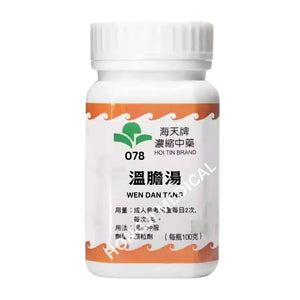
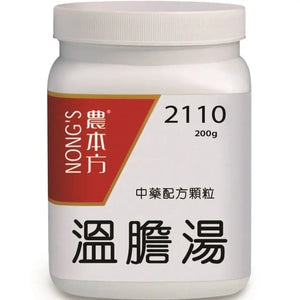
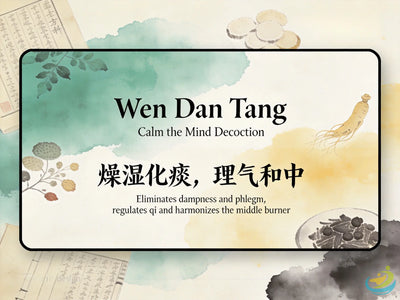
Wendan Tang and Er Chen Tang are both phlegm-resolving formulas. Er Chen Tang mainly dries dampness and resolves phlegm, treating the pattern of damp phlegm, with a relatively simple herb composition and a nature leaning toward warming and drying. Wendan Tang, building on Er Chen Tang, adds herbs such as Zhuru (Bamboo Shavings) and Zhishi (Immature Bitter Orange), giving it a stronger action of clearing heat and resolving phlegm, while also being able to regulate qi and resolve phlegm; it mainly treats the pattern of gallbladder depression with phlegm disturbance, presenting with timidity and being easily startled, dizziness with palpitations, and vexation with insomnia. Wendan Tang's nature is relatively more balanced than that of Er Chen Tang, placing equal emphasis on clearing heat and resolving phlegm.

2. Comparison with Qingqi Huatan Wan

Qingqi Huatan Wan is mainly used to treat phlegm-heat cough. Its herb composition mainly consists of heat-clearing, phlegm-resolving herbs, such as Gualouren (Trichosanthes Seed), Huangqin (Scutellaria Root), and Dan Nanxing (Bile-Processed Arisaema), able to clear heat, drain fire, resolve phlegm, and stop coughing. Compared with Er Chen Tang, Qingqi Huatan Wan places greater emphasis on treating hot-phlegm patterns, providing good therapeutic effect for symptoms such as cough with wheezing and thick, yellow expectoration. Er Chen Tang mainly targets cold-damp type phlegm; the two differ notably in pathomechanism, herb composition, and indications.

3. Comparison with Xiao Xianxiong Tang

Xiao Xianxiong Tang mainly treats the pattern of small chest bind caused by phlegm-heat binding together, presenting with stuffiness and fullness in the chest and epigastrium, pain on pressure, and thick, yellow phlegm expectoration. Its herb composition mainly includes Huanglian, Banxia, and Gualoushi (Trichosanthes Fruit), emphasising clearing heat, resolving phlegm, broadening the chest, and dispersing binding. Compared with Er Chen Tang, Xiao Xianxiong Tang places greater emphasis on clearing heat, resolving phlegm, and dispersing binding, targeting the pattern of phlegm-heat binding in the chest and diaphragm, while Er Chen Tang mainly focuses on regulating middle-burner phlegm-dampness.

Er Chen Tang: Drying Dampness, Resolving Phlegm, Regulating Qi and Harmonising the Middle — Precise Conditioning for Chronic Bronchitis, Chronic Gastritis, and Metabolic Syndrome | HJMEDICAL

VI. Clinical Applications

1. Respiratory System Disorders

In the remission phase of chronic bronchitis, patients commonly present with cough and expectoration, with phlegm that is clear and thin or white and sticky, accompanied by symptoms such as stuffiness and fullness in the chest and diaphragm, mostly belonging to internal phlegm-damp obstruction. At this stage, applying Er Chen Tang with modifications can dry dampness and resolve phlegm, relieving cough and expectoration symptoms, reducing phlegm secretion, and improving the patient's respiratory function.

For the remission phase of bronchial asthma, if the patient presents with cough with profuse phlegm, shortness of breath with fatigue, and a white, greasy tongue coating, Er Chen Tang may also be selected for conditioning. Through resolving phlegm, eliminating dampness, strengthening the spleen, and boosting qi, it strengthens the patient's constitution and reduces the frequency of asthma attacks.

2. Digestive System Disorders

For chronic gastritis patients presenting with epigastric fullness, nausea and vomiting, poor appetite, and a white, greasy tongue coating, mostly due to phlegm-dampness obstructing the middle with stomach qi disharmony, Er Chen Tang can dry dampness, resolve phlegm, regulate qi, and harmonise the middle, regulating spleen-stomach function, relieving epigastric discomfort, and promoting digestion and absorption.

For indigestion accompanied by manifestations such as abdominal distension, belching, nausea, and a thick, greasy tongue coating, applying Er Chen Tang can improve spleen-stomach transportation and transformation function, eliminate phlegm-damp pathogens, and restore normal digestive function.

3. Neurological Disorders

For symptoms such as dizziness and a heavy, wrapped sensation in the head caused by phlegm-dampness disturbing upward, Er Chen Tang has a certain therapeutic effect. Phlegm-dampness obstructing the clear orifices causes unclear vision and cognition; through resolving phlegm and eliminating dampness with Er Chen Tang, clear yang can be raised, relieving dizziness symptoms.

In some conditions of insomnia and excessive dreaming caused by phlegm-dampness, if the patient is accompanied by manifestations such as chest tightness, profuse phlegm, and a greasy tongue coating, Er Chen Tang can dry dampness, resolve phlegm, regulate qi, and calm the heart, helping to improve sleep quality.

Er Chen Tang: Drying Dampness, Resolving Phlegm, Regulating Qi and Harmonising the Middle — Precise Conditioning for Chronic Bronchitis, Chronic Gastritis, and Metabolic Syndrome | HJMEDICAL

VII. Clinical Modifications

1. Pronounced Cold Phlegm

If cold phlegm is relatively pronounced, Ganjiang (Dry Ginger) and Xixin (Asarum) may be added to strengthen the action of warming the lung and resolving fluid retention. Ganjiang is acrid and hot, able to warm the middle, disperse cold, restore yang, and unblock the pulse; combined with Banxia and Juhong, it strengthens the action of warming and transforming cold phlegm. Xixin is warm in nature, with the actions of dispelling wind, dispersing cold, opening the orifices, relieving pain, and warming the lung to resolve fluid retention, able to assist Er Chen Tang in better treating cold-phlegm patterns.

2. Internal Accumulation of Hot Phlegm

When hot phlegm is accumulated internally, Huangqin (Scutellaria Root) and Gualou (Trichosanthes Fruit) may be added. Huangqin clears heat, dries dampness, drains fire, and resolves toxicity, able to effectively eliminate heat pathogens from the body; combined with the dampness-drying, phlegm-resolving herbs in Er Chen Tang, it can treat the pattern of phlegm-heat binding together. Gualou clears heat, resolves phlegm, broadens the chest, and disperses binding, providing good relief for symptoms such as exuberant hot phlegm and stuffiness and fullness in the chest and diaphragm.

3. Wind Phlegm Obstructing the Channels

When wind phlegm obstructing the channels causes symptoms such as numbness of the limbs and deviation of the mouth and eyes, Baifuzi (Typhonium Rhizome) and Tiannanxing (Arisaema Rhizome) may be added. Baifuzi can dry dampness, resolve phlegm, dispel wind, and stop spasms; Tiannanxing dries dampness, resolves phlegm, dispels wind, stops spasms, disperses nodules, and reduces swelling. The two strengthen the action of dispelling wind, resolving phlegm, unblocking the channels, and stopping spasms, suited to conditions of wind phlegm obstructing the channels.

4. Pronounced Spleen Deficiency

When spleen deficiency is pronounced, presenting with symptoms such as poor appetite with loose stools, and fatigue with lack of vigour, Dangshen (Codonopsis Root) and Baizhu (Atractylodes Rhizome) may be added. Dangshen can strengthen the spleen, benefit the lung, nourish blood, and generate fluids; Baizhu can strengthen the spleen, boost qi, dry dampness, and promote urination, strengthening spleen-stomach function; combined with Fuling in Er Chen Tang, they work together to better treat the pattern of spleen deficiency with phlegm-dampness.

Er Chen Tang: Drying Dampness, Resolving Phlegm, Regulating Qi and Harmonising the Middle — Precise Conditioning for Chronic Bronchitis, Chronic Gastritis, and Metabolic Syndrome | HJMEDICAL

VIII. Dosage and Preparation (Traditional Method and Modern Concentrated Granules)

1. Traditional Method

The traditional dosage for Er Chen Tang is: Banxia, washed in hot water seven times, and Juhong, five liang each; Baifuling, three liang; Gancao, honey-fried, one and a half liang. The herbs are coarsely pounded; four qian is taken per dose, with one and a half cups of water, seven slices of fresh ginger, and one Wumei added, decocted down to seventy percent, strained off, and taken warm, at any time.

In actual application, the dosage may be adjusted appropriately according to the patient's specific circumstances. Generally, the commonly used adult dosage is Banxia 9g, Juhong 9g, Fuling 6g, and Gancao 3g, taken according to the above decoction method. Children's dosage should be appropriately reduced according to age and weight.

2. Modern Concentrated Granules

Modern concentrated granules are produced from traditional Chinese herbs through extraction, concentration, and other processing methods, offering a convenient way to take the medicine. The dosage for the modern concentrated granule form of Er Chen Tang is generally: dissolved in water according to the recommended dosage on the product label, adjusted according to the condition and the patient's constitution.

Typically, adults take one dose per day, in two divided doses. The specific dosage may vary between products from different manufacturers. For example, some concentrated granules come in 10g sachets, with one sachet taken per dose; others come in 5g sachets, with two sachets taken per dose. When taking, simply dissolve in boiled water — no traditional decoction process is required.

Er Chen Tang: Drying Dampness, Resolving Phlegm, Regulating Qi and Harmonising the Middle — Precise Conditioning for Chronic Bronchitis, Chronic Gastritis, and Metabolic Syndrome | HJMEDICAL

IX. Precautions and Contraindications

1. Constitutional Contraindications

Er Chen Tang is not suitable for patients with yin-deficiency dry cough, coughing blood, or vomiting blood. Since herbs such as Banxia and Juhong in the formula have a warming, drying nature, they can readily damage yin; for those with a yin-deficient constitution, this may aggravate the damage to yin fluid, being unfavourable for recovery from the condition.

2. Dietary Precautions

While taking Er Chen Tang, raw, cold, greasy, and spicy irritating foods should be avoided. Raw and cold foods readily damage spleen-stomach yang qi, affecting spleen-stomach transportation and transformation function, which is unfavourable for eliminating phlegm-dampness; greasy foods are difficult to digest and may increase the burden on the spleen and stomach, causing internal phlegm-dampness generation; spicy foods readily foster fire and generate phlegm, being unfavourable for relieving the condition.

3. Special Circumstances

Use Er Chen Tang with caution in pregnancy. Although the herbs in the formula are generally relatively mild, to ensure the fetus's safety, pregnant women should consult a physician's opinion before use.

At the same time, if changes in the condition or adverse reactions occur while taking Er Chen Tang, the medication should be discontinued promptly and medical attention sought, so the treatment plan can be adjusted.

Er Chen Tang: Drying Dampness, Resolving Phlegm, Regulating Qi and Harmonising the Middle — Precise Conditioning for Chronic Bronchitis, Chronic Gastritis, and Metabolic Syndrome | HJMEDICAL

X. Modern Research

1. Pharmacological Research

Er Chen Tang is a classical Chinese medicine formula for resolving phlegm, containing herbs such as Chenpi, with the actions of lowering blood glucose, lowering blood lipids, and slowing aging; it is commonly used clinically as an adjunctive treatment for conditions such as fatty liver, non-alcoholic fatty liver disease, and lung cancer.

Modern research shows that Er Chen Tang has a variety of pharmacological actions. Its effect on the respiratory system is mainly reflected in reducing phlegm secretion and improving airway patency. By regulating the secretory function of the respiratory mucosa, it thins phlegm and makes it easier to cough up, thereby relieving cough symptoms.

Regarding the digestive system, Er Chen Tang can promote gastrointestinal peristalsis and enhance digestive enzyme activity, aiding the digestion and absorption of food. It can also regulate the secretion of gastrointestinal hormones, improving gastrointestinal dysfunction, and provides a certain therapeutic effect for conditions such as chronic gastritis and indigestion.

In addition, Er Chen Tang also has a certain anti-inflammatory and antioxidant action, able to reduce inflammatory response and protect cells from oxidative damage, holding positive significance for the treatment and prevention of certain chronic diseases.

2. Verification of Clinical Efficacy

Extensive clinical research has verified the efficacy of Er Chen Tang. In the treatment of respiratory system disorders, multiple studies have shown that Er Chen Tang can effectively relieve symptoms of conditions such as chronic bronchitis and bronchial asthma, reduce the frequency of attacks, and enhance patients' quality of life.

In digestive system disorders, the therapeutic effect of Er Chen Tang for conditions such as chronic gastritis and indigestion has also been confirmed. By improving gastrointestinal function, it relieves symptoms such as epigastric discomfort and nausea and vomiting, promoting patient recovery.

In the treatment of neurological and other disorders, Er Chen Tang has also shown certain advantages, providing strong evidence for its broad clinical application.

3. Dosage Form Improvement and Innovation

With the development of modern technology, the dosage forms of Er Chen Tang continue to be improved and innovated. Besides the traditional decoction and modern concentrated granule forms, capsule and pill forms of Er Chen Tang have also been developed. These new dosage forms offer advantages such as convenience of administration and ease of storage, better suiting the pace and needs of modern life, further promoting the clinical application and adoption of Er Chen Tang.

In summary, as a classical Chinese medicine formula, Er Chen Tang has a long history and rich clinical application experience. Through continuous research and development, it has also shown distinctive value and potential in the field of modern medicine, making an important contribution to human health.

💡 Er Chen Tang — Frequently Asked Questions & Medication Safety (FAQ)

Q1: What are the core actions and mechanism of Er Chen Tang?

Er Chen Tang is precisely combined from four classical herbs — prepared Banxia, Chenpi (Juhong), Fuling, and Zhigancao (the original formula commonly stipulates co-decocting with fresh ginger and mume fruit) — with the core actions of drying dampness, resolving phlegm, regulating qi, and harmonising the middle. Chinese medicine holds that "the spleen is the source that generates phlegm, and the lung is the vessel that stores phlegm." When water-dampness accumulates in the middle burner and the qi mechanism becomes obstructed, the damp pathogen condenses into thick phlegm-fluid. The essence of this formula's combination fully embodies the supreme Chinese medicine conditioning wisdom that "to treat phlegm, first treat qi — when qi flows smoothly, phlegm resolves": Banxia is used generously as the chief herb, acrid, warm, and drying, powerfully drying dampness and resolving phlegm while harmonising the stomach and descending rebellious qi to stop vomiting; Chenpi serves as deputy, regulating qi and drying dampness, unblocking the qi mechanism so that phlegm descends along with qi; Fuling serves as assistant, blandly leaching out dampness and greatly strengthening the spleen and stomach, using the path of "strengthening the spleen to transport dampness" to cut off the source of phlegm generation at the root. The most ingenious touch of the whole formula lies in the counterbalancing addition of Shengjiang to help Banxia harmonise the stomach and stop vomiting while moderating its toxicity, together with a small amount of the sour, astringent Wumei to astringe the lung, preventing the large contingent of acrid, dispersing, dampness-drying herbs from excessively dispersing and depleting lung qi. Because both Banxia and Chenpi in the formula follow the standard that "aged herbs are superior" (their properties becoming more gentle and less drying with age), the formula is named "Er Chen" (Two Aged Ingredients). HJMEDICAL notes that this formula is simple yet focused in its herb use, making it the foremost timeless master formula in Chinese medicine for treating all manner of internal damp-phlegm binding and sluggish qi mechanism.

Q2: What conditions is Er Chen Tang mainly used for in modern medicine?

Modern clinical practice and pharmacological research in respiratory mucosal phlegm clearance and gastrointestinal smooth muscle dynamics show that this formula is widely applied in treating chronic bronchitis, chronic superficial gastritis, metabolic syndrome (hyperlipidaemia/simple obesity), functional dyspepsia, gastroesophageal reflux disease, Ménière's disease, post-benign paroxysmal positional vertigo dizziness, and chronic pharyngolaryngitis attributable to internal damp-phlegm obstruction. When patients — particularly those who favour rich, greasy foods, lack exercise, or have a constitution leaning toward internal dampness — present with typical manifestations of "damp phlegm obstructing the lung with middle-burner disharmony," such as recurrent cough with an extremely large volume of phlegm, phlegm that is thin and white or sticky but very easily expectorated, chest tightness with epigastric fullness, frequent nausea with a desire to vomit clear fluid, slightly loose, sticky stools, and even accompanying bodily heaviness and fatigue, dizziness as if riding a boat or carriage, a pale red tongue, and a thick, greasy white tongue coating, long-term rational use of this formula can significantly and rapidly thin viscous respiratory secretions, enhance ciliary phlegm-clearing movement in the airway, increase gastric emptying rate, and effectively regulate the body's lipid and water-salt metabolic balance. Consultation with HJMEDICAL or a qualified physician for pattern-based diagnosis is recommended.

Q3: What are the strict pattern-based contraindications for taking Er Chen Tang?

All the herbs in this formula are acrid-dispersing, warming-drying, and dampness-transforming in nature, and can very readily deplete the body's yin fluid; it is absolutely unsuitable for yin-deficiency patterns and heat patterns. It is absolutely contraindicated in dry cough purely of the lung-kidney yin-deficiency type (presenting with a dry cough with absolutely no phlegm, heat in the palms and soles, afternoon tidal fever and night sweats, dry mouth and throat, and a red tongue with scanty or peeled, coating-free tongue), coughing blood caused by scorching of the lung collaterals, and externally contracted wind-heat colds (presenting with pronounced fever with mild aversion to cold, a red, swollen, severely painful throat, and thick, yellow, purulent phlegm expectoration). Careless misuse will cause the body's yin fluid to become thoroughly depleted, with fire-heat pathogens attacking upward, triggering severe worsening of dry cough, wheezing, or coughing blood. In addition, the highest-level medication safety warning: because the formula's principal herb Banxia has a warming, drying, downward-directing nature with a relatively strong penetrating, unblocking action, pregnant women and breastfeeding women must strictly avoid use, or use only with extreme caution, at a reduced dose and for a short duration, under the close guidance of a qualified TCM practitioner following strict constitutional assessment, to prevent intense stimulation of the uterus leading to fetal restlessness. During treatment, smoking, alcohol, spicy foods, raw and cold foods, and all sweet, rich, greasy, sticky, hard-to-digest foods should be avoided. Those uncertain of their own constitution should seek professional assessment at an HJMEDICAL partner medical institution.

⚠️ This content is for reference only and does not provide medical advice. Consult a healthcare professional for any health concerns.

Login

Forgot your password?

Don't have an account yet?
Create account

Er Chen Tang: Classic TCM Formula for Phlegm-Dampness Obstructing the Lung and Spleen