Q1: What are the actions of Su Zi Jiang Qi Tang?
Su Zi Jiang Qi Tang has the actions of directing rebellious Qi downward, transforming Phlegm, and stopping wheezing. It treats the classical picture of excess above and deficiency below: Phlegm-Qi flooding the chest while the Kidney fails to grasp Qi.
Q2: Which modern diseases is Su Zi Jiang Qi Tang suited to?
Modern TCM clinical practice commonly applies it to individuals whose pattern differentiation falls within upper excess and lower deficiency wheezing, including chronic bronchitis or asthma of Cold-Phlegm type with a weak lower body, elderly wheeze with copious white Phlegm and sore low back, and some COPD presentations of this pattern after medical evaluation.
Q3: Is Su Zi Jiang Qi Tang suitable for improving wheezing with lots of white phlegm and weak legs?
For presentations of cough and wheeze with copious white Phlegm, chest and diaphragmatic fullness, shortness of breath that is worse on exertion, weak sore lower back and legs, a white greasy coating, and a slippery or weak pulse — in those whose pattern differentiation confirms excess above and deficiency below — TCM commonly applies Su Zi Jiang Qi Tang as an adjunct. Acute severe breathlessness requires emergency care.
Q4: Who should not take Su Zi Jiang Qi Tang?
Those with Phlegm-Heat wheezing (yellow sticky sputum, red tongue), Wind-Heat exterior, or Yin-deficiency dry wheeze without Cold-Phlegm are generally not suitable. The formula is warming and descending. Use should be assessed by a qualified TCM physician.
Q5: Why treat the Lung Phlegm and the Kidney root in one formula?
When the Kidney cannot grasp Qi, breath floats upward; when the Spleen and Lung generate Phlegm, that Phlegm occupies the chest and makes Qi rebel even more. Su Zi, Ban Xia, Hou Po, and Qian Hu descend Qi and transform Phlegm in the upper body. Rou Gui warms the Kidney and helps Qi return to its root. Dang Gui nourishes Blood so descending does not dry the Lung. Gan Cao and the ginger-jujube pair harmonize. Treating only the Phlegm leaves the unrooted Qi; warming only the Kidney leaves the chest blocked.
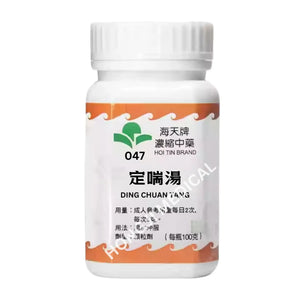
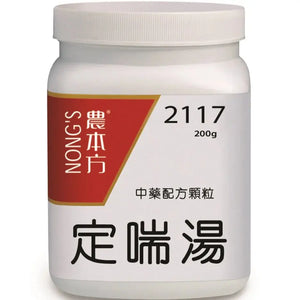
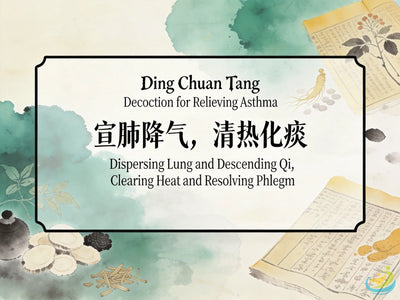
Q6: How does Su Zi Jiang Qi Tang differ from Ding Chuan Tang or San Zi Yang Qin Tang?
Ding Chuan Tang treats wheezing with both exterior Wind-Cold and interior Phlegm-Heat. San Zi Yang Qin Tang is a small three-seed formula for elderly Phlegm-Qi and food accumulation without a clear Kidney-root strategy. Su Zi Jiang Qi Tang is chosen when copious upper Phlegm and a deficient, cold, unrooted lower body appear together.
Q7: What are the main ingredients of Su Zi Jiang Qi Tang?
The He Ji Ju Fang formula typically consists of Su Zi to descend Lung Qi and transform Phlegm; Ban Xia, Hou Po, and Qian Hu to descend Qi and dissolve Phlegm; Rou Gui to warm the Kidney and grasp Qi; Dang Gui to nourish Blood; Zhi Gan Cao to harmonize; and often Sheng Jiang, Da Zao, and Zi Su Ye to support the Middle and gently disperse.
Q8: Is Su Zi Jiang Qi Tang suitable for long-term use?
No. It is used for a course while the upper Phlegm and wheeze are active. Prolonged descending and warming can consume Qi and Yin. Once the chest is quieter, treatment often shifts toward strengthening Spleen and Kidney so Phlegm is not continually generated and Qi can be grasped.
Q9: Can this formula help both the phlegmy wheeze and the weak cold low back?
Yes. That pairing is the formula’s defining pattern: excess Phlegm-Qi above, Kidney not grasping below. Descending the rebellious Qi and gently warming the root can improve both when Heat-Phlegm and pure Lung-Heat wheeze have been excluded.
Q10: What lifestyle advice supports the use of Su Zi Jiang Qi Tang?
Keeping the chest and lower back warm, eating smaller warm meals, reducing greasy Phlegm-generating food, and seeking emergency care for sudden severe breathlessness, cyanosis, or swelling of the legs all support correct use. This formula treats a TCM wheezing pattern; it is not a substitute for inhalers or hospital care when those are needed.