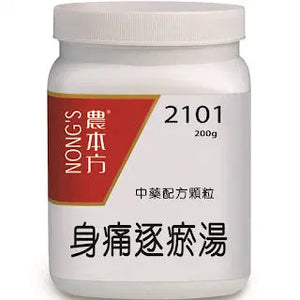
Shen Tong Zhu Yu Tang: Traditional Chinese Formula for Pain Relief and Blood Stasis

Shen Tong Zhu Yu Tang: Activating Blood, Resolving Stasis and Unblocking Channels for Lumbar Disc Herniation and Chronic Joint Pain | HJMEDICAL

I. Origins and History

1. Origins and Background

Shen Tong Zhu Yu Tang (身痛逐瘀汤) is a classical Traditional Chinese Medicine formula traditionally used to invigorate blood circulation, dispel blood stasis, and relieve generalized body pain associated with obstructed meridians. Shen Tong Zhu Yu Tang originates from the Yilin Gaicuo (Corrections of Errors in the Medical Forest) by the celebrated Qing dynasty physician Wang Qingren. Wang Qingren lived during the Jiaqing and Daoguang reigns of the Qing dynasty, a period when medical theory had advanced to a degree but understanding of the internal organs still contained many ambiguities and inaccuracies.

Through years of clinical observation and dissection of cadavers, Wang Qingren revised and supplemented the visceral doctrine of traditional medicine; his work Yilin Gaicuo holds an important place in the history of Chinese medicine and provided new directions and foundations for the development of later medicine. Shen Tong Zhu Yu Tang stands as one of the most distinguished representatives among his many innovative formulas.

2. Historical Development

From the time of the Yilin Gaicuo's publication, Shen Tong Zhu Yu Tang was widely applied and transmitted in TCM clinical practice owing to its distinctive actions and excellent therapeutic outcomes across multiple pain conditions. As the times changed and TCM continued to evolve, later physicians applying Shen Tong Zhu Yu Tang explored and extended it further in light of clinical realities and personal experience. Certain adjustments were made in areas such as herb dosages, processing methods, and the scope of applicable conditions, but the formula as a whole has continued to follow the basic thinking and combination principles of Wang Qingren's original, enabling it to adapt better to the clinical needs of patients across different eras and to sustain its important therapeutic role.

Shen Tong Zhu Yu Tang: Activating Blood, Resolving Stasis and Unblocking Channels for Lumbar Disc Herniation and Chronic Joint Pain | HJMEDICAL

II. Herb Composition (Sovereign, Minister, Assistant, Envoy)

1. Chief Herbs: Qinjiao and Chuanxiong

Qinjiao (Large-leaf Gentian Root) is acrid and bitter in flavour, neutral in nature, and enters the Stomach, Liver, and Gallbladder channels. It dispels wind-dampness, unblocks the channels to relieve pain, clears deficiency heat, and clears damp-heat. It is particularly skilled at moving through the channels and can dispel wind-dampness to relieve impediment pain, making it a commonly used herb for wind-damp impediment pain. In Shen Tong Zhu Yu Tang, Qinjiao acts as chief herb, leading the whole formula's force, with the primary actions of dispelling wind and dampness and unblocking the channels to relieve pain, playing the principal role against pain caused by impediment and obstruction of the channels.

Chuanxiong (Sichuan Lovage Root) is acrid in flavour, warm in nature, and enters the Liver, Gallbladder, and Pericardium channels. It activates blood, moves qi, dispels wind, and relieves pain. Chuanxiong's acrid, aromatic, and penetrating nature makes it a qi herb within the blood; it can ascend to the head and eyes, descend to the sea of blood, spread laterally to the four limbs, and reach outward to the skin and hair. It both activates blood and moves qi, and dispels wind and relieves pain, making it a key herb for treating various pain conditions including headache and wind-damp impediment pain. In Shen Tong Zhu Yu Tang, Chuanxiong assists Qinjiao, reinforcing its channel-unblocking and pain-relieving action while simultaneously activating blood and moving qi so that blood and qi flow freely, creating the conditions for relieving pain caused by blood stasis obstructing the channels.

2. Deputy Herbs: Taoren, Honghua, Danggui, Wulingzhi, and Moyao

Taoren (Peach Kernel) is bitter and sweet in flavour, neutral in nature, and enters the Heart, Liver, and Large Intestine channels. It activates blood, resolves stasis, and moistens the intestines to unblock the bowels. Taoren is particularly skilled at breaking blood and moving stasis, and is a commonly used herb for blood stasis obstruction patterns. In Shen Tong Zhu Yu Tang, Taoren activates blood and resolves stasis, unblocking the blood vessels; working synergistically with other blood-activating herbs, it reinforces the formula's overall capacity to activate blood and resolve stasis, eliminating blood stasis obstruction in the channels.

Honghua (Safflower) is acrid in flavour, warm in nature, and enters the Heart and Liver channels. It activates blood, unblocks the channels, disperses stasis, and relieves pain. Honghua has a relatively strong blood-activating action; it can unblock the channels and disperse blood stasis, producing good therapeutic results for various pain conditions caused by blood stasis obstruction. Combined with Taoren in this formula, it strengthens the action of activating blood and resolving stasis so that blood stasis is dispersed and the channels are unblocked.

Danggui (Angelica Root) is sweet and acrid in flavour, warm in nature, and enters the Liver, Heart, and Spleen channels. It tonifies blood, activates blood, regulates menstruation and relieves pain, and moistens the intestines to unblock the bowels. Danggui both tonifies and nourishes blood and activates blood to move stagnation; it is a key herb for supplementing and harmonising blood. In Shen Tong Zhu Yu Tang, Danggui on one hand nourishes blood to moisten the channels, preventing prolonged blood stasis from damaging the upright qi; on the other hand it activates blood flow, working synergistically with Taoren, Honghua, and others to strengthen the action of activating blood and resolving stasis, so that stasis is removed and new blood is generated and blood and qi are harmonised.

Wulingzhi (Trogopterus Dung) is sweet, salty, and warm in nature, and enters the Liver channel. It activates blood to relieve pain and resolves stasis to stop bleeding. Wulingzhi is particularly skilled at activating blood, resolving stasis, and relieving pain, and produces good therapeutic results for pain caused by blood stasis obstruction. In Shen Tong Zhu Yu Tang, Wulingzhi reinforces the formula's overall actions of activating blood, resolving stasis, unblocking the channels, and relieving pain, and is especially suited to pain arising from internal blood stasis obstructing the free flow of blood and qi.

Moyao (Myrrh) is acrid and bitter in flavour, neutral in nature, and enters the Heart, Liver, and Spleen channels. It disperses stasis to settle pain and reduces swelling to promote tissue regeneration. Moyao can disperse blood stasis, unblock the channels, and relieve pain; combined with the other blood-activating and stasis-resolving herbs in the formula, it reinforces the actions of dispersing blood stasis and relieving pain, and helps to alleviate body pain caused by stasis.

3. Adjuvant Herbs: Xiangfu and Niuxi

Xiangfu (Cyperus Rhizome) is acrid, mildly bitter, and mildly sweet in flavour, neutral in nature, and enters the Liver, Spleen, and Triple Burner channels. It soothes the liver, resolves depression, regulates qi, relaxes the middle, and relieves pain. Xiangfu is skilled at soothing the liver and regulating qi, enabling the qi dynamic to move so that qi movement promotes blood movement. In Shen Tong Zhu Yu Tang, as qi is the commander of blood, impaired qi flow readily leads to blood stasis; the inclusion of Xiangfu assists in moving qi and activating blood, supporting the chief and deputy herbs in better expressing their actions of activating blood, resolving stasis, unblocking the channels, and relieving pain, while also preventing qi stagnation from being further compounded by blood stasis obstruction.

Niuxi (Achyranthes Root) is bitter, sweet, and sour in flavour, neutral in nature, and enters the Liver and Kidney channels. It expels stasis and unblocks the channels, tonifies the liver and kidneys, strengthens the sinews and bones, promotes urination, and directs blood downward. Niuxi both activates blood and resolves stasis to unblock the blood vessels, and tonifies the liver and kidneys to strengthen the sinews and bones. In Shen Tong Zhu Yu Tang, Niuxi on one hand assists the blood-activating and stasis-resolving herbs in strengthening the force of expelling stasis and unblocking the channels so that blood stasis moves downward and is expelled from the body; on the other hand it tonifies the liver and kidneys, preventing the blood-activating herbs from being excessively forceful and damaging liver-kidney upright qi, thereby supporting the upright while expelling pathogenic factors.

4. Envoy Herb: Gancao

Gancao (Licorice Root) is sweet in flavour, neutral in nature, and enters the Heart, Lung, Spleen, and Stomach channels. It tonifies the spleen and augments qi, moistens the lungs to relieve cough, clears heat and resolves toxin, and harmonises all herbs. In Shen Tong Zhu Yu Tang, Gancao serves as envoy herb, primarily fulfilling the role of harmonising all herbs in the formula. It moderates the harsh or forceful nature of the various herbs, enabling them to work synergistically and express their therapeutic actions more effectively. At the same time, Gancao tonifies the spleen and augments qi, protecting the spleen and stomach and preventing the herbs from damaging them; as the spleen and stomach are the root of postnatal qi and the source of blood and qi transformation, their normal functioning ensures that the herbs are absorbed and transported effectively, allowing the whole formula to achieve its best therapeutic effect in a safe and efficacious manner.

Shen Tong Zhu Yu Tang: Activating Blood, Resolving Stasis and Unblocking Channels for Lumbar Disc Herniation and Chronic Joint Pain | HJMEDICAL

III. Pathomechanism, Actions, and Indications

1. Pathomechanism

The primary pathomechanism addressed by Shen Tong Zhu Yu Tang is blood stasis obstructing the channels. The body's channels function like conduits for the circulation of blood and qi; once blood stasis obstructs them and blood and qi can no longer flow freely, local or generalised pain arises. Multiple causes can produce blood stasis obstructing the channels: trauma, invasion of wind-cold-damp pathogenic factors, emotional disturbance, or prolonged illness with constitutional weakness. Trauma can directly damage the channels, causing blood and qi to stagnate. Wind-cold-damp pathogenic factors invading the body and lodging in the channels can, over time, obstruct the movement of blood and qi, producing blood stasis. Emotional disturbance leading to liver qi stagnation causes qi stagnation, which in turn engenders blood stasis. Prolonged illness and constitutional weakness leave blood and qi without the force to circulate, readily generating internal blood stasis. Once blood stasis obstructs the channels, the resulting lack of free flow produces pain, giving rise to various pain conditions.

2. Actions

Shen Tong Zhu Yu Tang activates blood, resolves stasis, unblocks the channels, and relieves pain. The blood-activating and stasis-resolving herbs in the formula — Taoren, Honghua, Danggui, Wulingzhi, Moyao, and others — work together to effectively eliminate blood stasis obstruction in the channels so that blood and qi flow freely. Qinjiao and Chuanxiong dispel wind-dampness and unblock the channels to relieve pain; working synergistically with the blood-activating and stasis-resolving herbs, they enhance the channel-unblocking and pain-relieving effect. Xiangfu regulates qi and moves stagnation, Niuxi expels stasis and unblocks the channels while tonifying the liver and kidneys, and Gancao harmonises all herbs; together they achieve the goals of activating blood, resolving stasis, unblocking the channels, and relieving pain, so that pain caused by blood stasis obstructing the channels is alleviated.

3. Indications

Shen Tong Zhu Yu Tang primarily treats the pattern of blood stasis impediment obstructing the channels. Symptoms include shoulder pain, arm pain, lumbar pain, or generalised body pain of prolonged duration that does not resolve; fixed, immobile pain that feels like needle-stabbing; a purple-dark tongue body or stasis macules and petechiae; and a choppy or wiry-tight pulse. This formula is applicable to various pain conditions caused by blood stasis obstructing the channels, such as rheumatic arthritis, rheumatoid arthritis, sciatica, lumbar disc herniation, periarthritis of the shoulder, and cervical spondylosis in modern medicine; all cases where pattern differentiation identifies blood stasis impediment obstructing the channels may be treated with Shen Tong Zhu Yu Tang.

Shen Tong Zhu Yu Tang: Activating Blood, Resolving Stasis and Unblocking Channels for Lumbar Disc Herniation and Chronic Joint Pain | HJMEDICAL

IV. Formula Analysis

1. Synergistic Action of the Blood-Activating and Stasis-Resolving Herbs

The blood-activating and stasis-resolving herbs in the formula — Taoren, Honghua, Danggui, Wulingzhi, and Moyao — work in concert to express their actions synergistically. Taoren combined with Honghua strengthens the capacity to activate blood and resolve stasis, unblocking the blood vessels and eliminating blood stasis obstruction. Danggui nourishes blood while activating blood; working synergistically with the stasis-resolving herbs, it ensures that as stasis is removed new blood is generated and blood and qi are harmonised. Wulingzhi and Moyao both possess a strong ability to disperse stasis and settle pain; working together with the other blood-activating and stasis-resolving herbs, they reinforce the formula's overall actions of activating blood, resolving stasis, unblocking the channels, and relieving pain, playing a pivotal therapeutic role against pain caused by blood stasis obstructing the channels.

2. Coordination of Wind-Damp-Dispelling and Channel-Unblocking Herbs

Qinjiao and Chuanxiong are the primary herbs for dispelling wind-dampness and unblocking the channels to relieve pain. Qinjiao is skilled at dispelling wind-dampness and unblocking the channels, relieving wind-damp impediment pain. Chuanxiong not only dispels wind and relieves pain but also activates blood and moves qi; its characteristic of ascending to the head and eyes, descending to the sea of blood, spreading laterally to the four limbs, and reaching outward to the skin and hair helps to carry the medicinal force throughout the body's channels. Working synergistically with Qinjiao, it enhances the channel-unblocking and pain-relieving effect, producing good therapeutic results for pain caused by wind-damp pathogenic factors obstructing the channels.

3. Roles of the Qi-Regulating and Channel-Guiding Herbs

Xiangfu, as a qi-regulating herb, soothes the liver, resolves depression, regulates qi, relaxes the middle, and relieves pain. Within the formula it regulates the qi dynamic so that qi movement promotes blood movement, supporting the blood-activating and stasis-resolving herbs in expressing their actions more effectively and preventing qi stagnation from being further compounded by blood stasis obstruction. Niuxi, serving as a channel-guiding herb, both expels stasis and unblocks the channels — directing blood stasis to move downward and out of the body — and tonifies the liver and kidneys to strengthen the sinews and bones. It guides the medicinal force of the other herbs downward to reach the site of disease, while at the same time preventing the blood-activating herbs from being excessively forceful and damaging liver-kidney upright qi, embodying the principle of supporting the upright while expelling pathogenic factors.

4. The Significance of Gancao in Harmonising the Formula

Gancao's primary role in this formula is to harmonise all herbs. It moderates the harsh or forceful nature of the various herbs, enabling them to work synergistically and express their therapeutic actions more effectively. At the same time, Gancao tonifies the spleen and augments qi, protecting the spleen and stomach and preventing the herbs from damaging them. As the spleen and stomach are the root of postnatal qi and the source of blood and qi transformation, their normal functioning ensures that the herbs are absorbed and transported effectively, allowing the whole formula to achieve its best therapeutic effect in a safe and efficacious manner.

Shen Tong Zhu Yu Tang: Activating Blood, Resolving Stasis and Unblocking Channels for Lumbar Disc Herniation and Chronic Joint Pain | HJMEDICAL

V. Comparison with Related Formulas

1. Comparison with Xuefu Zhuyu Tang

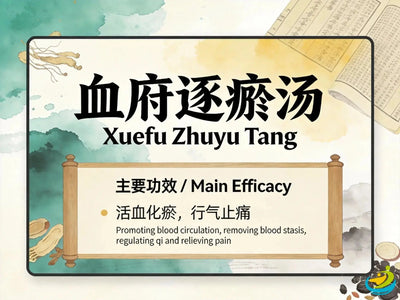
Xuefu Zhuyu Tang and Shen Tong Zhu Yu Tang both originate from Wang Qingren's Yilin Gaicuo and both possess the action of activating blood and resolving stasis. Xuefu Zhuyu Tang is primarily used to treat blood stasis obstructing the chest, presenting with chest pain or headache of prolonged duration that does not resolve, stabbing pain fixed in one location, or persistent hiccup that does not stop, or internal heat with vexing restlessness, or palpitations with insomnia, or irritability with a tendency to anger. Its blood-activating and stasis-resolving force focuses on the chest, primarily addressing patterns of blood and qi stasis in the chest. Shentong Zhuyu Tang, by contrast, primarily targets generalised body pain caused by blood stasis obstructing the channels — such as shoulder pain, arm pain, and lumbar pain — and its medicinal force focuses more on unblocking blood stasis in the channels, with the primary purpose of relieving various pain symptoms. The two formulas share some similarities in herb composition but differ in their primary indications, and clinical selection should be based on the specific condition.

2. Comparison with Tongqiao Huoxue Tang

Tongqiao Huoxue Tang also has blood activation and stasis resolution as its primary action, and is mainly used to treat blood stasis obstructing the channels of the head and face, presenting with headache and dizziness, or deafness, hair loss, a greenish-purple complexion, or rosacea, or vitiligo, as well as dry blood consumption in women and infantile malnutrition accumulation. This formula focuses on unblocking blood stasis in the channels of the head and face, with its medicinal force concentrated in the head and face region. Shen Tong Zhu Yu Tang targets blood stasis obstruction throughout the body's channels, with the primary aim of treating generalised body pain. The two formulas differ markedly in herb composition and primary indications: Tongqiao Huoxue Tang focuses on blood stasis conditions of the head and face, while Shen Tong Zhu Yu Tang is more broadly applied to pain caused by blood stasis in the channels throughout the body.

3. Comparison with Gexia Zhuyu Tang

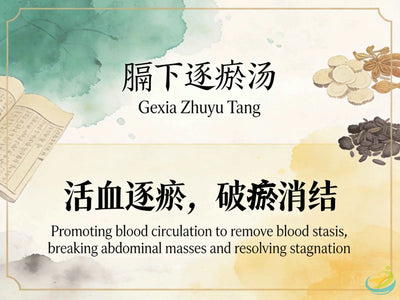
Gexia Zhuyu Tang is primarily used to treat blood stasis obstructing below the diaphragm, presenting with accumulation masses below the diaphragm, or infantile abdominal masses, abdominal pain that refuses pressure, or a sensation of dragging in the abdomen when lying down, palpable intra-abdominal masses with fixed pain, or lumbar soreness at the menstrual period, lower abdominal distension, or menstruation appearing three to five times within a month in continuous succession that stops and then resumes — the blood being purple or black in colour, possibly with clots, or flooding or spotting — accompanied by lower abdominal pain, or dysenteric diarrhoea with tenesmus, or dribbling and stinging urination. It primarily addresses conditions of blood stasis accumulation below the diaphragm. Shen Tong Zhu Yu Tang primarily targets pain caused by blood stasis in the channels, and differs from Gexia Zhuyu Tang in primary indications and therapeutic focus. Gexia Zhuyu Tang emphasises the treatment of tangible accumulation of blood stasis below the diaphragm, while Shen Tong Zhu Yu Tang focuses on relieving the pain symptoms caused by blood stasis in the channels.

Shen Tong Zhu Yu Tang: Activating Blood, Resolving Stasis and Unblocking Channels for Lumbar Disc Herniation and Chronic Joint Pain | HJMEDICAL

VI. Clinical Applications

1. Rheumatic Arthritis

Patients with rheumatic arthritis commonly present with joint pain, swelling, and restricted movement; pain tends to be fixed and immobile, with a needle-stabbing quality, a purple-dark tongue body or stasis macules and petechiae, and a choppy or wiry-tight pulse. TCM pattern differentiation most often identifies blood stasis impeding the channels. Shen Tong Zhu Yu Tang, with its actions of activating blood, resolving stasis, unblocking the channels, and relieving pain, can effectively improve joint pain symptoms in rheumatic arthritis patients, reduce joint swelling, and increase range of motion. In clinical application, herbs may be added or removed based on the patient's specific condition; for example, where pain is more severe, processed Chuanwu (Aconite Main Root) and processed Caowu (Wild Aconite) may be added to enhance the analgesic effect; where joint swelling is pronounced, Yiyiren (Job's Tears Seed) and Fuling (Poria) may be added to promote urination and reduce swelling.

2. Rheumatoid Arthritis

Rheumatoid arthritis has a prolonged course that is difficult to resolve, with persistent joint pain and deformity, pain fixed in location, and accompanying manifestations of internal blood stasis obstruction. Shen Tong Zhu Yu Tang produces good therapeutic results for the blood stasis impeding the channels type of rheumatoid arthritis. By activating blood and resolving stasis, it can improve local blood circulation in the joints, reduce inflammatory responses, alleviate joint pain, and slow the progression of joint deformity. When applying Shen Tong Zhu Yu Tang, modifications may be made based on the patient's specific symptoms; for example, where cold joint pain is pronounced, Xixin (Asarum Root) and Guizhi (Cinnamon Twig) may be added to warm the channels and dispel cold; where flexion and extension of the joints is impaired, Mugua (Chinese Quince) and Shenjincao (Club Moss) may be added to relax the sinews and unblock the channels.

3. Sciatica

Patients with sciatica commonly experience severe pain along the distribution of the sciatic nerve, presenting as stabbing or burning pain that is fixed in location and worsens with movement. TCM considers this to be primarily caused by blood stasis obstructing the channels. Shen Tong Zhu Yu Tang can activate blood, resolve stasis, unblock the channels, and relieve pain, effectively alleviating sciatic pain symptoms. In clinical application, herbs may be modified based on the condition; for example, where pain radiates down the posterior aspect of the thigh, Duhuo (Pubescent Angelica Root) and Sangjisheng (Taxillus Stem) may be added to enhance the wind-damp-dispelling and channel-unblocking force; where lower limb numbness accompanies the presentation, Dilong (Earthworm) and Quanxie (Scorpion) may be added to unblock the channels, relieve pain, dispel wind, and resolve numbness.

4. Lumbar Disc Herniation

Patients with lumbar disc herniation commonly present with lumbar pain, possibly accompanied by radiating pain, numbness, or other symptoms in the lower limbs; pain is relatively fixed in location, and the tongue body is purple-dark or has stasis macules. Shen Tong Zhu Yu Tang produces a certain therapeutic effect for the blood stasis obstructing the channels type of lumbar disc herniation. It can improve local blood circulation in the lumbar region, reduce nerve root compression, and alleviate pain and lower limb numbness symptoms. In application, modifications may be made according to the patient's condition; for example, where lumbar pain is pronounced, Gouji (Cibotium Rhizome) and Duzhong (Eucommia Bark) may be added to tonify the kidneys and strengthen the lumbar region; where lower limb numbness is severe, Jixueteng (Spatholobus Stem) and Luoshiteng (Star Jasmine Stem) may be added to activate blood and unblock the channels.

5. Periarthritis of the Shoulder

Patients with periarthritis of the shoulder present with shoulder pain and restricted movement; pain is typically stabbing in quality, worsens at night, and is fixed in location. TCM pattern differentiation most often identifies blood stasis impeding the channels. Shen Tong Zhu Yu Tang can improve symptoms in periarthritis of the shoulder patients through activating blood, resolving stasis, unblocking the channels, and relieving pain. In clinical application, modifications may be made according to the condition; for example, where the shoulder feels cold, Fangfeng (Saposhnikovia Root) and Qianghuo (Notopterygium Root) may be added to dispel wind and scatter cold; where shoulder muscle atrophy is present, Huangqi (Astragalus Root) and Dangshen (Codonopsis Root) may be added to tonify qi, nourish blood, and strengthen the muscles.

6. Cervical Spondylosis

Patients with cervical spondylosis commonly present with neck pain and stiffness, possibly accompanied by upper limb numbness and pain; pain is relatively fixed in location. Shen Tong Zhu Yu Tang can address the pathomechanism of blood stasis obstructing the channels in cervical spondylosis, activating blood, resolving stasis, unblocking the channels, and relieving pain to alleviate cervical pain and upper limb symptoms. In application, modifications may be made according to the specific situation; for example, where cervical pain is severe, Gegen (Kudzu Root) may be added to relax the muscles and relieve pain; where upper limb numbness is pronounced, Tianma (Gastrodia Rhizome) and Jiangcan (Silkworm) may be added to dispel wind, unblock the channels, and resolve numbness.

Shen Tong Zhu Yu Tang: Activating Blood, Resolving Stasis and Unblocking Channels for Lumbar Disc Herniation and Chronic Joint Pain | HJMEDICAL

VII. Clinical Modifications

1. For Severe Pain

Where the patient's pain is more intense, herbs such as processed Chuanwu (Aconite Main Root), processed Caowu (Wild Aconite), and Xixin (Asarum Root) may be added to enhance the analgesic effect. Processed Chuanwu and processed Caowu are warm in nature and possess a strong action of dispersing cold and relieving pain, enabling rapid alleviation of pain symptoms. Xixin is acrid and warm in flavour and nature, and can dispel wind and scatter cold, open the orifices, and relieve pain, reinforcing the formula's overall analgesic force. However, these herbs require particular attention to dosage when used; strictly follow medical advice and prevent toxicity.

2. For Pronounced Joint Swelling

When the patient's joint swelling is pronounced, water-promoting and swelling-reducing herbs such as Yiyiren (Job's Tears Seed), Fulingpi (Poria Skin), and Zexie (Alisma Rhizome) may be added. Yiyiren promotes urination and drains dampness, strengthens the spleen and stops diarrhoea, relieves impediment, expels pus, and resolves toxin to disperse masses; it produces good therapeutic results for joint swelling. Fulingpi promotes urination and reduces swelling; its nature is mild and harmonious, and it works synergistically with Yiyiren to enhance the water-promoting and swelling-reducing effect. Zexie promotes urination and drains dampness, discharges heat and unblocks painful urination, and can facilitate the absorption of joint effusion to reduce joint swelling.

3. For Concurrent Wind-Cold-Damp Pathogens

Where the patient also has concurrent wind-cold-damp pathogens, wind-damp-dispelling herbs such as Fangfeng (Saposhnikovia Root), Qianghuo (Notopterygium Root), and Duhuo (Pubescent Angelica Root) may be added. Fangfeng dispels wind and releases the exterior, overcomes dampness and relieves pain, and arrests spasm; it can dissipate wind pathogen and relieve muscle and joint pain. Qianghuo releases the exterior and scatters cold, dispels wind and overcomes dampness, and relieves pain; it is particularly skilled at treating wind-cold-damp impediment of the upper body. Duhuo dispels wind and eliminates dampness, unblocks impediment and relieves pain, and is especially suited to treating wind-cold-damp impediment of the lower body. These herbs can reinforce the formula's wind-damp-dispelling action to better treat conditions complicated by wind-cold-damp pathogens.

4. For Qi and Blood Deficiency

For patients with qi and blood deficiency, qi-tonifying and blood-nourishing herbs such as Huangqi (Astragalus Root), Dangshen (Codonopsis Root), and Danggui (Angelica Root) may be added. Huangqi tonifies qi and raises yang, consolidates the exterior and stops sweating, promotes urination and reduces swelling, engenders fluids and nourishes blood, moves stagnation and unblocks impediment, supports expulsion of toxin and pus, and promotes tissue regeneration; it greatly tonifies the source qi and strengthens the body's immune capacity. Dangshen strengthens the spleen and tonifies the lungs, nourishes blood, and engenders fluids, assisting Huangqi in tonifying qi. Danggui tonifies blood, activates blood, regulates menstruation and relieves pain, and moistens the intestines; working together with Huangqi and Dangshen, it both tonifies qi and nourishes blood while also preventing the blood-activating and stasis-resolving herbs from being excessively forceful and injuring the upright, fulfilling the principle of supporting the upright while expelling pathogenic factors.

5. For Prolonged Course with Liver-Kidney Insufficiency

For patients with a prolonged course accompanied by liver-kidney insufficiency, liver-kidney-tonifying and sinew-and-bone-strengthening herbs such as Sangjisheng (Taxillus Stem), Duzhong (Eucommia Bark), Niuxi (Achyranthes Root), and Xuduan (Teasel Root) may be added. Sangjisheng tonifies the liver and kidneys, strengthens the sinews and bones, dispels wind-dampness, and calms the foetus; it tonifies the liver and kidneys, strengthens sinew and bone force, and simultaneously dispels wind-dampness to relieve joint pain. Duzhong tonifies the liver and kidneys, strengthens the sinews and bones, and calms the foetus; it can enhance kidney function and strengthen the sinews and bones. Niuxi expels stasis and unblocks the channels, tonifies the liver and kidneys, strengthens the sinews and bones, promotes urination, and directs blood downward; it both promotes the expulsion of blood stasis and tonifies the liver and kidneys. Xuduan tonifies the liver and kidneys, strengthens the sinews and bones, knits fractures, and stops metrorrhagia and spotting; it promotes the repair of injury and enhances the body's capacity for recovery.

Shen Tong Zhu Yu Tang: Activating Blood, Resolving Stasis and Unblocking Channels for Lumbar Disc Herniation and Chronic Joint Pain | HJMEDICAL

VIII. Dosage and Preparation

1. Traditional Method

Traditional Decoction and Administration Guide for Shen Tong Zhu Yu Tang

Shen Tong Zhu Yu Tang is a classical formula for activating blood, dispersing stasis, unblocking the channels, and relieving pain from the Yilin Gaicuo by the celebrated Qing dynasty physician Wang Qingren. This guide provides a detailed breakdown of the standard herb composition with gram weights, modern soaking techniques, and the step-by-step process of transitioning from strong to gentle heat during decoction.

【Standard Herb Composition for Shen Tong Zhu Yu Tang】
  • Qinjiao (Large-leaf Gentian Root): 3g (dispelling wind-dampness)
  • Chuanxiong (Sichuan Lovage Root): 6g (activating blood and moving qi)
  • Taoren (Peach Kernel): 9g (activating blood and resolving stasis)
  • Honghua (Safflower): 9g (activating blood and unblocking the channels)
  • Gancao (Licorice Root): 6g (harmonising all herbs)
  • Moyao (Myrrh): 6g (dispersing stasis and settling pain)
  • Danggui (Angelica Root): 9g (tonifying blood and activating blood)
  • Wulingzhi (Trogopterus Dung): 6g (activating blood and resolving stasis)
  • Xiangfu (Cyperus Rhizome): 3g (regulating qi and relieving pain)
  • Niuxi (Achyranthes Root): 9g (activating blood and directing herbs downward)
  • Dilong (Earthworm): 6g (unblocking channels and relieving impediment)
  • Water: an appropriate amount (approx. 500–600 ml recommended for a modern decocting vessel)
【Standard Decoction and Administration Steps】
Step 1: Moisten and Soak the Herbs Place all eleven herbs of Shen Tong Zhu Yu Tang into a clay decocting pot and add an appropriate amount of water (approximately 2–3 cm above the surface of the herbs). **Soak for approximately 30 minutes** at room temperature. This step allows the herbal pieces to absorb sufficient water and soften in texture, facilitating the full release of active constituents during subsequent decoction.
Step 2: Bring to a Boil then Switch to Gentle Heat Apply heat and **first bring the water rapidly to a boil over high heat (strong fire)**. Once the decoction is rolling vigorously, in order to prevent the volatile active constituents from evaporating or scorching due to excessive heat, immediately **reduce to low heat (gentle fire) and simmer slowly**. Maintaining a gentle simmer over mild heat ensures that the active constituents of the blood-activating and channel-unblocking herbs are fully extracted.
Step 3: Strain, Concentrate, and Administer Warm in Divided Doses Remove from heat once the liquid in the pot has **reduced to approximately 200–300 ml**. Strain thoroughly through a filter to remove the dregs and divide the decoction evenly into two portions. This formula is taken as **one decoction per day, administered warm in two divided doses**. Taking the medicine evenly maintains a consistent therapeutic concentration in the body, more effectively relieving blood stasis impediment pain throughout the body.
💡 Practitioner's Care Note: As Shen Tong Zhu Yu Tang has a relatively strong blood-activating and stasis-expelling action, specific dosages and herb combinations may be appropriately modified based on each patient's **age, constitutional strength, and severity of condition**. Pregnant women and those with a tendency to bleed should not take this formula without guidance. It is recommended to use under the pattern-differentiation guidance of a qualified licensed TCM physician.

2. Modern Concentrated Granules

With advances in modern pharmaceutical technology, Shen Tong Zhu Yu Tang is also available in a modern concentrated granule formulation. When using modern concentrated granules, simply dissolve the concentrated granules of each herb in an appropriate amount of hot water as directed by the package instructions. General dosage is equivalent to that of the traditional decoction, but specific amounts should also be adjusted based on individual circumstances. The modern concentrated granule formulation offers the advantages of being convenient to take, easy to carry, and simple to store, making it well suited to modern fast-paced lifestyles; its efficacy is essentially equivalent to that of the traditional decoction, and either form may be chosen based on the patient's preference and practical situation.

Shen Tong Zhu Yu Tang: Activating Blood, Resolving Stasis and Unblocking Channels for Lumbar Disc Herniation and Chronic Joint Pain | HJMEDICAL

IX. Precautions and Contraindications

1. Dietary Restrictions

During the course of taking Shen Tong Zhu Yu Tang, consumption of raw and cold, oily, and pungent stimulating foods should be avoided. Raw and cold foods such as ice cream and cold drinks easily damage spleen and stomach yang qi, impairing the spleen and stomach's transportation and absorption of the herbs and thereby reducing efficacy. Oily foods such as deep-fried foods and fatty meats are difficult to digest and increase the burden on the spleen and stomach, interfering with the therapeutic action of the herbs. Pungent foods such as chilli peppers, Sichuan pepper, and raw ginger can easily generate heat and fire, potentially aggravating blood stasis symptoms within the body and being detrimental to recovery.

2. Special Population Precautions

Shen Tong Zhu Yu Tang is contraindicated in pregnant women. The formula contains multiple blood-activating and stasis-resolving herbs — such as Taoren, Honghua, and Danggui — that may cause miscarriage or premature birth in pregnant women and cause serious harm to the foetus. The elderly and debilitated, and those with qi and blood deficiency, should exercise caution when using this formula; dosages may be appropriately reduced and qi-tonifying and blood-nourishing herbs incorporated based on the condition, to prevent excessive blood activation from damaging the upright qi.

3. Drug Interactions

During the course of taking Shen Tong Zhu Yu Tang, concurrent use of other medications that may affect efficacy or increase adverse reactions should be avoided. If other medications are currently being taken, the physician should be informed promptly so that a comprehensive assessment and adjustment of the treatment plan can be made. For example, concurrent use of certain anticoagulant medications with blood-activating and stasis-resolving herbs may increase the risk of bleeding; certain tonic preparations taken concurrently with Shen Tong Zhu Yu Tang may affect drug absorption and efficacy, and caution is needed in such combinations.

4. Monitoring the Condition

During the course of treatment with Shen Tong Zhu Yu Tang, patients should closely monitor changes in their condition. If pain symptoms persistently fail to improve or worsen, medical attention should be sought promptly and the treatment plan adjusted. At the same time, watch for the emergence of other adverse symptoms such as dizziness, nausea, vomiting, or skin rash; if any abnormality arises, the physician should be informed promptly so that a determination can be made as to whether this constitutes an adverse drug reaction and appropriate measures can be taken.

Shen Tong Zhu Yu Tang: Activating Blood, Resolving Stasis and Unblocking Channels for Lumbar Disc Herniation and Chronic Joint Pain | HJMEDICAL

X. Modern Research

1. Effects on Haemorheology

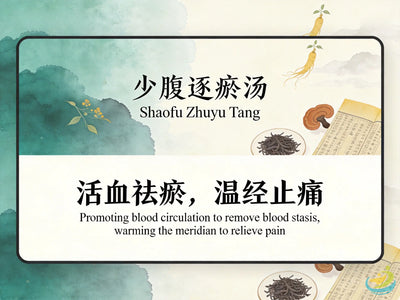
Shen Tong Zhu Yu Tang is a classical formula for activating blood and dispersing stasis, expelling stasis and activating blood, and regulating qi to expel stasis. It bears the actions of moving qi to relieve pain, analgesia, and reducing swelling to relieve pain; it primarily treats fixed pain, lumbar and leg soreness, shoulder and arm pain, menstrual irregularities, and dark or blackish menstrual blood caused by blood stasis, qi deficiency with blood stasis, or blood stasis accumulation, and is particularly suitable for use during women's menstrual period. In clinical practice, it is commonly used in combination with Shaofu Zhuyu Tang with modifications; herbs such as Chishao (Red Peony Root) and Zhiqiao (Bitter Orange Fruit) in the formula produce good results for related blood stasis patterns.

Modern research has demonstrated that Shen Tong Zhu Yu Tang can significantly improve haemorheological parameters. It can reduce blood viscosity, increase red blood cell deformability, improve microcirculatory blood flow, enable blood to flow more readily within the vessels, and reduce the likelihood of blood stasis formation. This mechanism of action helps to improve various conditions caused by blood stasis obstruction and provides a modern medical theoretical basis for its clinical treatment.

2. Anti-inflammatory Action

Shen Tong Zhu Yu Tang possesses a certain anti-inflammatory action. It can inhibit the release of inflammatory mediators, reduce inflammatory responses, and produce a certain relieving effect on joint pain, swelling, and other symptoms arising from inflammatory diseases such as rheumatic arthritis and rheumatoid arthritis. By regulating the body's immune function and reducing the infiltration of inflammatory cells, it achieves an anti-inflammatory and swelling-reducing effect.

3. Effects on Neurological Function

In therapeutic research into neurological conditions such as sciatica and lumbar disc herniation, Shen Tong Zhu Yu Tang has been found to potentially improve local blood circulation around the nerves, nourish nerve tissue, and promote the recovery of neurological function. It can alleviate ischaemia and hypoxia at sites of nerve compression and relieve pain and numbness symptoms caused by nerve injury, offering new directions and methods for the treatment of neurological conditions.

4. Clinical Efficacy Verification

A substantial body of clinical research has verified the effectiveness of Shen Tong Zhu Yu Tang. In treating multiple pain conditions including rheumatic arthritis, rheumatoid arthritis, and sciatica, Shen Tong Zhu Yu Tang has demonstrated good clinical efficacy, markedly alleviating patients' pain symptoms and improving joint function and quality of life. Compared with other treatment modalities, Shen Tong Zhu Yu Tang offers unique advantages for certain conditions, providing more options for clinical treatment.

5. Safety Research

Safety research into Shen Tong Zhu Yu Tang indicates that the formula is relatively safe when used at standard dosages. However, as the formula contains certain blood-activating and stasis-resolving herbs, prolonged or excessive use may have a certain effect on the body. Therefore, in clinical application it remains necessary to maintain strict control over dosage and duration of use, and to closely monitor patient responses to ensure medication safety. At the same time, as modern research continues to deepen, safety evaluations of Shen Tong Zhu Yu Tang will become more comprehensive and accurate, providing more reliable grounds for its appropriate application.

Shen Tong Zhu Yu Tang — Frequently Asked Questions

Q1: What are the actions of Shen Tong Zhu Yu Tang?

Shen Tong Zhu Yu Tang has the actions of activating blood and resolving stasis, dispelling wind-dampness, and unblocking the channels to relieve pain. It is primarily used for limb pain, joint stiffness, restricted movement, and chronic unremitting pain caused by blood stasis obstructing the channels.

Q2: Which modern diseases is Shen Tong Zhu Yu Tang applicable to?

In modern TCM clinical practice, it is commonly used for individuals with lumbar disc herniation, chronic joint pain, osteoarthritis, sciatica, and sequelae of sports injuries that fall within the TCM pattern of blood stasis obstructing the channels.

Q3: Is Shen Tong Zhu Yu Tang suitable for patients with chronic pain?

For patients presenting with blood stasis obstructing the channels — including prolonged lumbar and leg pain, joint pain, fixed stabbing pain, pain that worsens at night, or persistent pain following trauma — TCM practitioners commonly apply Shen Tong Zhu Yu Tang based on pattern differentiation as adjunctive treatment to improve local circulation and pain symptoms.

Q4: Who should not take Shen Tong Zhu Yu Tang?

Pregnant women, those with heavy menstrual bleeding, patients with active bleeding or a tendency to bleed are generally not suitable candidates for Shen Tong Zhu Yu Tang. It should be used only after a qualified TCM physician has conducted a pattern-differentiation assessment based on the individual's constitution and condition.

⚠️ This content is for reference only and does not provide medical advice. Consult a healthcare professional for any health concerns.

Login

Forgot your password?

Don't have an account yet?
Create account

Shen Tong Zhu Yu Tang: Traditional Chinese Formula for Pain Relief and Blood Stasis