Ge Xia Zhu Yu Tang: Classic TCM Formula for Blood Stasis Below the Diaphragm
Ge Xia Zhu Yu Tang (膈下逐瘀汤), known in English as Drive Out Blood Stasis Below the Diaphragm Decoction, is a classical TCM formula by Wang Qing-ren for dispelling Blood stasis below the diaphragm (lower jiao). It is particularly indicated for fixed lower abdominal masses, chronic lower abdominal pain, dysmenorrhea, infertility, and conditions with Blood stasis in the lower abdomen such as endometriosis or pelvic inflammatory disease with fixed pain. In modern clinical practice, Ge Xia Zhu Yu Tang is widely used for gynecological and lower abdominal conditions involving Blood stasis with Qi stagnation. By powerfully moving Blood and Qi in the lower jiao, it effectively breaks up fixed stasis and relieves chronic pain and masses caused by Blood stasis below the diaphragm.

I. Origins and History
1. Source of the Formula
Gexia Zhuyu Tang originates from the *Yilin Gaicuo* (Correction of Errors in the Forest of Medicine), written by the renowned Qing dynasty physician Wang Qingren. Wang Qingren devoted his life to medical practice and made in-depth observations and studies of the body's internal organs. Deeply aware of the inadequacies in earlier understanding of the organs, he personally dissected cadavers and corrected many mistaken views regarding the structure and function of the organs. The *Yilin Gaicuo* is the culmination of his labour throughout this process, recording many practical and effective formulas, of which Gexia Zhuyu Tang is one.
2. Historical Background and Development
In Wang Qingren's era, although medical theory had developed to a certain extent, understanding and treatment methods for blood-stasis disorders still had many limitations. Through prolonged clinical observation and practice, Wang Qingren found that the onset of many diseases was closely related to blood-stasis obstruction. He regarded blood stasis as one of the important causes of disease in the body, believing that if not promptly eliminated, it could give rise to a variety of disorders. Gexia Zhuyu Tang was created precisely on the basis of his profound understanding of blood-stasis pathogenesis theory, aiming specifically to treat blood stasis in the subdiaphragmatic region, providing an important formula model for later generations treating blood-stasis disorders. Since its appearance, it has been widely applied clinically, and through the practice and verification of physicians across generations, its scope of application and efficacy have continually been enriched and refined, and it continues to play an important role in Chinese medicine clinical practice today.

II. Herb Composition (Sovereign, Minister, Assistant, Envoy)
1. Chief Herbs: Taoren and Honghua
Taoren (Peach Kernel) is bitter and sweet in flavour, neutral in nature, and enters the heart, liver, and large intestine channels. It has the actions of activating blood and dispelling stasis, and moistening the intestines to unblock bowel movements. Honghua (Safflower) is acrid in flavour, warm in nature, and enters the heart and liver channels. It activates blood and unblocks the menses, dispersing stasis and relieving pain. Both are essential herbs for activating blood and resolving stasis; in Gexia Zhuyu Tang they play the key role of activating blood, resolving stasis, and unblocking the blood vessels, directly targeting the main pathomechanism of subdiaphragmatic blood stasis, and are therefore the chief herbs. Working together synergistically, they strengthen the formula's power to activate blood and resolve stasis, effectively improving symptoms such as sluggish qi and blood movement caused by blood-stasis obstruction.
2. Deputy Herbs: Danggui, Chuanxiong, Chishao, Wulingzhi, and Mudanpi
Danggui (Angelica Root) is sweet and acrid in flavour, warm in nature, and enters the liver, heart, and spleen channels. It tonifies and activates blood, regulates menstruation and relieves pain, and moistens the intestines to unblock bowel movements. Chuanxiong (Szechuan Lovage Rhizome) is acrid in flavour, warm in nature, and enters the liver, gallbladder, and pericardium channels. It activates blood and moves qi, dispelling wind and relieving pain. Chishao (Red Peony Root) is bitter in flavour, slightly cold in nature, and enters the liver channel. It clears heat and cools the blood, dispersing stasis and relieving pain. Wulingzhi (Flying Squirrel Droppings) is bitter and sweet in flavour, warm in nature, and enters the liver channel. It activates blood and relieves pain, resolving stasis and stopping bleeding. Mudanpi (Tree Peony Bark) is bitter and acrid in flavour, slightly cold in nature, and enters the heart, liver, and kidney channels. It clears heat and cools the blood, activating blood and resolving stasis. These five herbs assist the chief herbs, further strengthening the action of activating blood and resolving stasis, while also attending to nourishing blood, moving qi, and clearing heat, providing comprehensive regulation for the qi-blood disharmony and channel stasis caused by blood stasis, working together to expel stasis and unblock the vessels, and are therefore the deputy herbs.
3. Assistant Herbs: Wuyao, Yanhusuo, Xiangfu, and Zhiqiao
Wuyao (Lindera Root) is acrid in flavour, warm in nature, and enters the lung, spleen, kidney, and bladder channels. It moves qi and relieves pain, warming the kidney and dispersing cold. Yanhusuo (Corydalis Rhizome) is acrid and bitter in flavour, warm in nature, and enters the liver and spleen channels. It activates blood, moves qi, and relieves pain. Xiangfu (Cyperus Rhizome) is acrid, slightly bitter, and slightly sweet in flavour, neutral in nature, and enters the liver, spleen, and triple burner channels. It soothes the liver and resolves depression, regulates qi and relieves middle-burner distension, and regulates menstruation to relieve pain. Zhiqiao (Bitter Orange) is bitter, acrid, and sour in flavour, warm in nature, and enters the spleen and stomach channels. It regulates qi and relieves middle-burner distension, moving stagnation and reducing bloating. These four herbs mainly serve to move qi and relieve pain, since when qi moves, blood moves; blood-stasis obstruction readily leads to a sluggish qi mechanism, and a sluggish qi mechanism in turn aggravates blood-stasis obstruction. By moving qi, the dispersal of blood stasis is aided, and pain and other symptoms caused by blood stasis are relieved at the same time, assisting the chief and deputy herbs in exerting their actions, and are therefore the assistant herbs.
4. Envoy Herb: Gancao (Licorice)
Gancao is sweet in flavour, neutral in nature, and enters the heart, lung, spleen, and stomach channels. It has the actions of tonifying the spleen and boosting qi, moistening the lung to stop coughing, clearing heat and resolving toxicity, and harmonising the actions of the other herbs. In Gexia Zhuyu Tang, Gancao on the one hand harmonises the various herbs, allowing them to work together synergistically for better therapeutic effect; on the other hand, its action of tonifying the spleen and boosting qi prevents the blood-activating and stasis-resolving herbs from being too fierce and damaging righteous qi, serving to protect righteous qi, and is therefore the envoy herb.

III. Pathomechanism, Actions, and Indications
1. Pathomechanism
The pathomechanism targeted by Gexia Zhuyu Tang is mainly blood stasis obstructing the subdiaphragmatic region. Sluggish movement of qi and blood in the body, with blood stasis stagnating in the subdiaphragmatic region, can arise from various causes. For example, emotional disharmony leading to liver qi stagnation, where qi fails to move blood, causing blood stasis to accumulate internally; or cold pathogens congealing and obstructing, causing sluggish blood movement and stasis accumulating below the diaphragm; or traumatic injury from falls and blows, causing local qi-blood stasis. Blood stasis obstructing the subdiaphragmatic region affects the normal circulation of qi and blood, leading to disordered organ function, which in turn gives rise to various disorders.
2. Actions
Its main actions are activating blood, resolving stasis, moving qi, and relieving pain. Through the synergistic action of Taoren, Honghua, Danggui, Chuanxiong, and other blood-activating, stasis-resolving herbs in the formula, subdiaphragmatic blood stasis can be effectively eliminated, the blood vessels unblocked, and the condition of blood-stasis obstruction improved. At the same time, the use of qi-moving herbs such as Wuyao, Yanhusuo, Xiangfu, and Zhiqiao allows the qi mechanism to flow smoothly — since when qi moves, blood moves — further strengthening the effect of activating blood and resolving stasis, and relieving pain caused by blood stasis.
3. Indications
Gexia Zhuyu Tang mainly treats the pattern of blood stasis obstructing the subdiaphragmatic region. Common symptoms include subdiaphragmatic masses, or infantile abdominal masses, abdominal pain that resists pressure, nocturnal fever, abdominal pain, reduced appetite, low spirits, a dull or dark complexion, and dry, scaly skin. These symptoms are mostly caused by blood stasis obstructing the subdiaphragmatic region and sluggish movement of qi and blood. Clinically, it can be used to treat various diseases caused by blood stasis, such as chronic hepatitis, liver cirrhosis, hepatosplenomegaly, abdominal tumours, dysmenorrhoea, amenorrhoea, and pelvic inflammatory disease where blood stasis obstructs the subdiaphragmatic region.

IV. Formula Analysis
1. Activating Blood and Resolving Stasis as the Main Thread
In the formula, Taoren and Honghua serve as chief herbs — Taoren excels at breaking blood and expelling stasis, while Honghua activates blood and unblocks the menses; used together, the two mutually reinforce each other, rapidly dispersing subdiaphragmatic blood stasis and opening the binding caused by blood-stasis obstruction. The deputy herbs Danggui, Chuanxiong, Chishao, Wulingzhi, and Mudanpi further strengthen the power of activating blood and resolving stasis, while also attending to nourishing blood and clearing heat, preventing the blood stasis from transforming into heat or from consuming qi and blood. These blood-activating, stasis-resolving herbs work together, addressing the primary pathomechanism of blood stasis from different angles, allowing the stasis to be dispersed and the blood vessels to be unblocked.
2. Moving Qi to Aid in Resolving Stasis
The assistant herbs Wuyao, Yanhusuo, Xiangfu, and Zhiqiao move qi and relieve pain. Qi is the commander of blood; when qi moves, blood moves. Blood-stasis obstruction readily leads to a sluggish qi mechanism, and a stagnant qi mechanism in turn aggravates blood stasis. Through the use of qi-moving herbs, the qi mechanism is made to flow smoothly, promoting blood circulation and strengthening the effect of activating blood and resolving stasis. At the same time, the qi-moving herbs also relieve pain caused by blood stasis, restoring the normal movement of qi and blood.
3. Gancao Harmonising the Herbs and Supporting Righteous Qi
As the envoy herb, Gancao harmonises the various herbs in the formula, allowing them to work synergistically together and achieve the best therapeutic effect. Its action of tonifying the spleen and boosting qi prevents the blood-activating, stasis-resolving herbs from being too fierce and damaging righteous qi, attending to supporting righteous qi while expelling pathogens, allowing the whole formula to combine attack with supplementation and achieve better therapeutic results.

V. Comparison with Related Formulas
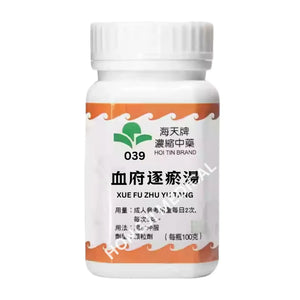
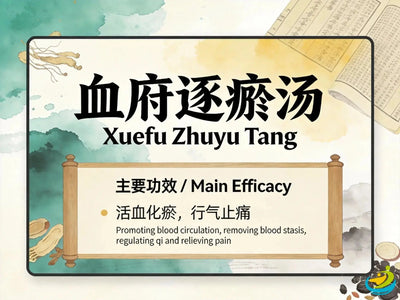
1. Comparison with Xuefu Zhuyu Tang
Xuefu Zhuyu Tang is mainly used for blood stasis in the chest, with symptoms primarily presenting as chest pain, headache, and insomnia with excessive dreaming. Besides blood-activating, stasis-resolving herbs, the formula includes Jiegeng (Platycodon Root) and Niuxi (Achyranthes Root) to direct blood downward, emphasising the regulation of qi-blood stasis in the chest. Gexia Zhuyu Tang, on the other hand, mainly targets subdiaphragmatic blood stasis, presenting primarily as subdiaphragmatic masses and abdominal pain that resists pressure, with relatively more qi-moving herbs, placing greater emphasis on dispersing blood stasis in the subdiaphragmatic region and unblocking the qi mechanism. Although both formulas share activating blood and resolving stasis as their main action, they target different locations of blood stasis and differ somewhat in their herb composition.
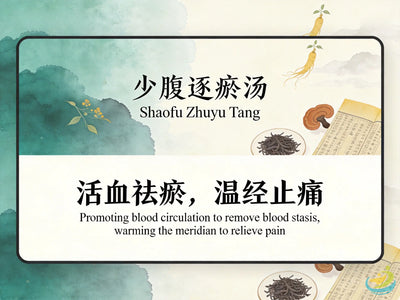
2. Comparison with Shaofu Zhuyu Tang
Shaofu Zhuyu Tang mainly treats blood stasis in the lower abdomen, commonly used for dysmenorrhoea, amenorrhoea, and infertility in women caused by cold-congealed blood stasis in the lower abdomen. The formula includes Xiaohuixiang (Fennel), Ganjiang (Dry Ginger), and Rougui (Cinnamon Bark) to warm the channels and disperse cold, warming and unblocking the blood vessels of the lower abdomen. Gexia Zhuyu Tang mainly targets subdiaphragmatic blood stasis, without emphasising the action of warming the channels and dispersing cold, placing greater emphasis on activating blood, resolving stasis, moving qi, and relieving pain, and is suited to a variety of disorders caused by blood stasis obstructing the subdiaphragmatic region, not limited to the lower abdomen.

VI. Clinical Applications
1. Chronic Hepatitis and Liver Cirrhosis
Patients with chronic hepatitis and liver cirrhosis often suffer from liver qi stagnation and qi-stasis binding due to liver qi depression, leading to sluggish liver qi-blood movement, with symptoms such as hypochondriac pain and hepatosplenomegaly. Gexia Zhuyu Tang has the actions of activating blood, resolving stasis, moving qi, and relieving pain, improving liver blood circulation, reducing blood-stasis obstruction, and relieving hypochondriac pain; it also has a certain softening and dispersing action for hepatosplenomegaly, helping to stabilise the condition and promote recovery.
2. Abdominal Tumours
Patients with abdominal tumours often have internal blood-stasis obstruction. Gexia Zhuyu Tang activates blood and resolves stasis, improving local blood circulation around the tumour, inhibiting tumour growth, and relieving abdominal pain caused by tumour compression. At the same time, its qi-moving action helps to improve the patient's digestive function, strengthen the body's resistance, improve quality of life, and prolong survival.
3. Dysmenorrhoea and Amenorrhoea
Dysmenorrhoea and amenorrhoea in women are mostly caused by blood stasis obstructing the uterus. Gexia Zhuyu Tang can effectively eliminate uterine blood stasis, unblock the blood vessels, and restore normal qi-blood movement. For dysmenorrhoea caused by blood-stasis obstruction, it can relieve pain symptoms; for amenorrhoea, it can promote the descent of menstrual blood and restore the menstrual cycle.
4. Pelvic Inflammatory Disease
Patients with pelvic inflammatory disease often experience symptoms such as lower abdominal pain, a bearing-down sensation, and lumbosacral soreness due to damp-heat binding with stasis and sluggish qi-blood movement. Gexia Zhuyu Tang, by activating blood, resolving stasis, moving qi, and relieving pain, improves pelvic blood circulation and eliminates blood-stasis obstruction; combined with heat-clearing, dampness-draining herbs, it can effectively treat pelvic inflammatory disease and relieve related symptoms.

VII. Clinical Modifications
1. Pronounced Liver Qi Stagnation
Chaihu (Bupleurum Root) and Yujin (Turmeric Tuber) may be added to soothe the liver and regulate qi, strengthening the action of moving qi and resolving depression, to better complement the blood-activating, stasis-resolving herbs and allow qi and blood to move more smoothly. Chaihu is bitter and acrid in flavour, slightly cold in nature, and enters the liver and gallbladder channels. It harmonises the exterior and interior, soothes the liver and resolves depression, and raises yang from collapse. Yujin is acrid and bitter in flavour, cold in nature, and enters the liver, heart, and lung channels. It activates blood and relieves pain, moves qi and resolves depression, clears the heart and cools the blood, and benefits the gallbladder to resolve jaundice.
2. Blood Stasis Transforming into Heat
Mudanpi and Zhizi (Gardenia Fruit) may be added to clear heat and cool the blood, preventing the blood stasis from transforming into heat, while strengthening the action of clearing heat and draining fire to resolve the heat generated by the stasis. Zhizi is bitter in flavour, cold in nature, and enters the heart, lung, and triple burner channels. It drains fire and relieves vexation, clears heat and drains dampness, and cools the blood and resolves toxicity.
3. Pronounced Qi Deficiency
Huangqi (Astragalus Root) and Dangshen (Codonopsis Root) may be added as qi-tonifying herbs, strengthening the body's righteous qi, preventing the blood-activating, stasis-resolving herbs from damaging righteous qi, while helping to propel qi-blood movement and promote the dispersal of blood stasis. Huangqi is sweet in flavour, slightly warm in nature, and enters the spleen and lung channels. It tonifies qi and raises yang, consolidates the exterior and stops sweating, promotes urination and reduces swelling, generates fluids and nourishes blood, moves stagnation and unblocks obstruction, expels toxin and drains pus, and promotes tissue regeneration to heal sores. Dangshen is sweet in flavour, neutral in nature, and enters the spleen and lung channels. It strengthens the spleen and benefits the lung, nourishing blood and generating fluids.
4. Cold-Congealed Blood Stasis
Xiaohuixiang (Fennel), Ganjiang (Dry Ginger), and Rougui (Cinnamon Bark) may be added to warm the channels and disperse cold, strengthening the action of warming and unblocking the blood vessels, more effectively eliminating blood stasis caused by cold pathogens. Xiaohuixiang is acrid in flavour, warm in nature, and enters the liver, kidney, spleen, and stomach channels. It disperses cold and relieves pain, regulating qi and harmonising the stomach. Ganjiang is acrid in flavour, hot in nature, and enters the spleen, stomach, kidney, heart, and lung channels. It warms the middle and disperses cold, restoring yang and unblocking the pulse, warming the lung to resolve fluid retention. Rougui is acrid and sweet in flavour, intensely hot in nature, and enters the kidney, spleen, heart, and liver channels. It tonifies fire and assists yang, disperses cold and relieves pain, warms and unblocks the channels, and guides fire back to its source.

VIII. Dosage and Preparation (Traditional Method and Modern Concentrated Granules)
1. Traditional Method
The traditional method is decocted in water and taken orally. The herbs are generally soaked for around 30 minutes, then simmered over a low flame for 20–30 minutes; the strained liquid is taken warm, one dose per day, divided into two servings. Specific dosages are determined according to the condition and individual patient differences; generally, Taoren 12g, Honghua 9g, Danggui 9g, Chuanxiong 6g, Chishao 6g, Wulingzhi 6g, Mudanpi 6g, Wuyao 6g, Yanhusuo 3g, Xiangfu 4.5g, Zhiqiao 4.5g, and Gancao 9g.
2. Modern Concentrated Granules
Modern concentrated granules are produced from the traditional Chinese herbs through extraction, concentration, and other processing methods. When taking, simply dissolve in boiled water. The dosage generally follows the conversion ratio of the traditional formula — for example, with Gexia Zhuyu Tang concentrated granules, one dose corresponds to a quantity of granules equivalent to the traditional formula's dosage, taken twice daily. Modern concentrated granules are convenient to take and save time, and preserve the active constituents of the herbs relatively well, though they are comparatively more expensive; patients may choose to use them according to their own circumstances.

IX. Precautions and Contraindications
1. Use with Caution in Pregnancy
Gexia Zhuyu Tang contains a variety of blood-activating, stasis-resolving herbs; if taken by a pregnant woman, it may cause fetal restlessness and could even lead to adverse outcomes such as miscarriage. Therefore, pregnant women should use it with caution, and if use is necessary, it must be carried out under a physician's strict guidance.
2. Use with Caution in Qi-Blood Deficiency
Those with qi-blood deficiency have insufficient righteous qi and cannot tolerate aggressive attack on the body. Gexia Zhuyu Tang has a relatively strong action of activating blood and resolving stasis; if used by someone with qi-blood deficiency, it may further damage righteous qi and worsen the condition. Therefore, those with qi-blood deficiency should use it with caution, or appropriately combine it with qi-tonifying, blood-nourishing herbs when using it, to support righteous qi while expelling pathogens.
3. Dietary Precautions During Treatment
Spicy, greasy, raw, and cold irritating foods should be avoided during treatment, so as not to affect the herbs' efficacy. A light diet should be maintained, with more easily digestible foods, to aid the absorption of the herbs and the body's recovery.

X. Modern Research
1. Effects on Blood Rheology
Gexia Zhuyu Tang is a classical formula for activating blood and resolving stasis, mainly treating blood-stasis patterns, and is often mentioned alongside Shentong Zhuyu Tang and Tongqiao Huoxue Tang, suitable for various disorders caused by subdiaphragmatic blood stasis.
Modern research shows that Gexia Zhuyu Tang can improve blood rheology indicators. It can reduce blood viscosity, decrease red blood cell aggregation, and increase red blood cell deformability, thereby improving blood circulation and allowing blood to flow more smoothly through the vessels, aiding in the dispersal of blood stasis.
2. Effects on Vascular Endothelial Function
This formula also has a certain regulatory effect on vascular endothelial function. Vascular endothelial cells play an important role in maintaining normal vascular function; Gexia Zhuyu Tang may improve the function of vascular endothelial cells, promoting vasodilation and inhibiting vasoconstriction, thereby improving local blood circulation and playing a positive role in treating blood-stasis-related disorders.
3. Anti-Inflammatory and Antioxidant Actions
Research has found that Gexia Zhuyu Tang has certain anti-inflammatory and antioxidant capabilities. Inflammatory response and oxidative stress play important roles in the onset and progression of many diseases; Gexia Zhuyu Tang, by inhibiting the release of inflammatory factors and reducing inflammatory response, while also clearing excess free radicals from the body and protecting cells from oxidative damage, helps to relieve pathological states such as blood stasis caused by inflammation and oxidative stress.
4. Anti-Tumour Action
In tumour research, Gexia Zhuyu Tang has shown certain anti-tumour potential. It may exert an inhibitory effect on tumours through various pathways, such as inhibiting tumour cell proliferation, inducing tumour cell apoptosis, and inhibiting tumour angiogenesis, providing new ideas and methods for the comprehensive treatment of tumours.
In summary, as a classical formula for activating blood and resolving stasis, Gexia Zhuyu Tang has wide application and important value in Chinese medicine clinical practice. As modern research continues to deepen, its mechanisms of action and scope of clinical application continue to be revealed and expanded, bringing greater hope for the treatment of various blood-stasis-related disorders.
Gexia Zhuyu Tang — Frequently Asked Questions
What are the main actions of Gexia Zhuyu Tang?
Gexia Zhuyu Tang activates blood, resolves stasis, moves qi, relieves pain, and disperses masses and nodules, and is commonly used for gynaecological disorders and chronic pain caused by blood stasis.
What is it commonly used for in modern practice?
It is commonly used to support uterine fibroids, endometriosis, dysmenorrhoea, ovarian cysts, chronic pelvic pain, sequelae of pelvic inflammatory disease, and abdominal masses.
Is Gexia Zhuyu Tang suitable for long-term conditioning?
This depends on the severity of the blood-stasis pattern and changes in the condition. Long-term use should be assessed by a qualified TCM practitioner to ensure it remains appropriate for the current pattern.
Who should avoid taking it?
Pregnant women, those with heavy menstrual bleeding, patients with bleeding disorders, and those without clear signs of blood stasis should use it with caution. Those currently taking anticoagulant medication or receiving gynaecological treatment should consult a qualified physician first.
⚠️ This content is for reference only and does not provide medical advice. Consult a healthcare professional for any health concerns.