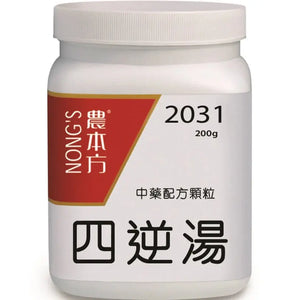
Si Ni San (Four Rebellious Powder): Classic TCM Formula for Cold Extremities and Liver Qi Stagnation

I. Prescription Source & History
1. Recorded in Classic Works
Si Ni Powder is from Treatise on Febrile Diseases written by Zhang Zhongjing, a famous medical scientist in the late Eastern Han Dynasty. As one of the classic works of traditional Chinese medicine, Treatise on Febrile Diseases laid the foundation for syndrome differentiation and treatment in traditional Chinese medicine and had a profound impact on the development of later medicine. Si Ni Powder occupies an important position in this work and is an effective prescription carefully created by Zhang Zhongjing for various diseases.
2. Historical Inheritance & Evolution
Since the publication of Treatise on Febrile Diseases, Si Ni Powder has always been valued and applied by medical experts of successive dynasties. As time goes by, later medical experts have continuously studied and expanded it in clinical practice, and made appropriate adjustments and innovations based on different diseases and characteristics of different eras on the basis of inheritance. For example, there have been some developments and changes in aspects such as dosage, processing methods, and compatibility combinations, but the core drug composition and efficacy characteristics have always been retained, enabling it to continue to play an important role in traditional Chinese medicine clinical practice and remain for thousands of years.

II. Introduction to Ingredients (Ruler, Minister, Assistant, Guide)
1. Ruler Herb - Bupleurum
Bupleurum is slightly cold in nature and belongs to the liver and gallbladder meridians. Its main effects are to harmonize the interior and exterior, soothe the liver and relieve depression. In Si Ni Powder, Bupleurum plays a key role in leading all the drugs and relieving liver depression. It can regulate the liver qi, make the liver qi smooth, and restore its normal dispersing and discharging function, thus relieving various discomfort symptoms caused by stagnation of liver qi.
2. Minister Herb - Paeonia
Paeonia lactiflora is bitter, sour, and slightly cold in nature and belongs to the liver and spleen meridians. It has the effects of nourishing blood and regulating menstruation, astringing yin and stopping sweating, soothing the liver and relieving pain, etc. In Si Ni Powder, Paeonia lactiflora assists Bupleurum to enhance the effect of soothing the liver and regulating qi. At the same time, it can also nourish blood and soothe the liver, relieve symptoms such as hypochondriac pain caused by stagnation of liver qi, play a role in regulating the liver and spleen, and cooperate with Bupleurum, one dispersing and one astringing, to jointly regulate the qi and blood circulation of the liver.
3. Assistant Herb - Immature Bitter Orange
Immature Bitter Orange is slightly cold in nature, bitter and pungent in taste, and belongs to the spleen and stomach meridians. It has the effects of breaking qi and reducing accumulation, resolving phlegm and dispersing stagnation. Immature Bitter Orange mainly plays the role of promoting qi circulation and breaking stagnation in Si Ni Powder. It can assist Bupleurum and Paeonia lactiflora to enhance the effects of soothing the liver and regulating qi, promoting qi movement, and making qi move and blood move, relieving various symptoms caused by qi stagnation and blood stasis, and is the adjuvant drug in the prescription.
4. Guide Herb - Prepared Licorice
Prepared Licorice is sweet in taste, neutral in nature, and belongs to the heart, lung, spleen, and stomach meridians. It has the effects of invigorating the spleen and replenishing qi, moistening the lungs and relieving cough, coordinating all the drugs, etc. In Si Ni Powder, Prepared Licorice on the one hand coordinates the properties of the three drugs of Bupleurum, Paeonia lactiflora, and Immature Bitter Orange, making them cooperate with each other without conflicting with each other; on the other hand, it can also strengthen the spleen and replenish qi to supplement the excessive liver, prevent the drugs for soothing the liver and regulating qi from consuming vital qi too much, and play the role of coordinating all the drugs and protecting vital qi, so it is the guiding drug.

III. Pathogenesis, Efficacy and Indications
1. Pathogenesis Analysis
The pathogenesis targeted by Si Ni Powder is mainly stagnation of liver qi and internal depression of yang qi. The liver is in charge of dispersing and discharging. If emotional disorders and liver qi discomfort occur, it will lead to qi stagnation. When qi movement is not smooth, yang qi cannot reach the limbs externally, thus presenting the symptom of cold hands and feet. At the same time, stagnation of liver qi can also affect the transportation and transformation functions of the spleen and stomach, leading to qi stagnation in the spleen and stomach, presenting symptoms such as abdominal pain and tenesmus.
2. Efficacy
Si Ni Powder has the effects of dispersing pathogenic factors and relieving depression, soothing the liver and regulating the spleen. Through the functions of Bupleurum in soothing the liver and relieving depression, dispersing pathogenic factors externally, Immature Bitter Orange in promoting qi circulation and breaking stagnation, Paeonia lactiflora in nourishing blood and soothing the liver, and Prepared Licorice in coordinating all the drugs, they jointly achieve the effects of dredging qi movement, relieving liver depression, regulating the spleen and stomach, enabling yang qi to be dredged and all symptoms to disappear automatically.
3. Indicated Diseases
Si Ni Powder is mainly used to treat the syndrome of yang stagnation and reversal cold, manifested as cold hands and feet, abdominal pain, or diarrhea with tenesmus, etc.; and the syndrome of liver and spleen qi stagnation, manifested as stuffiness and distension in the hypochondrium, abdominal pain, wiry pulse, etc. These diseases are mostly related to emotional discomfort and liver qi stagnation. By using Si Ni Powder, it can effectively regulate qi movement, relieve symptoms, and restore the normal physiological functions of the body.

IV. Analysis of Si Ni Powder
1. Soothing Liver Qi, Nourishing Spleen
Bupleurum soothes the liver and relieves depression, and Aurantii Fructus Immaturus promotes qi movement and breaks stagnation. The two cooperate with each other to enhance the effect of soothing the liver and regulating qi. Bupleurum promotes the upward movement of yang qi, and Aurantii Fructus Immaturus induces the downward movement of qi. One ascending and one descending, the qi movement can flow smoothly, relieving the pathogenesis of liver qi stagnation.
2. Harmonizing Liver and Spleen
Paeoniae Radix Alba nourishes the blood and soothes the liver, and Glycyrrhizae Radix Preparata invigorates the spleen and benefits qi. The two work together to harmonize the liver and spleen. The liver is in charge of dredging and discharging, and the spleen is in charge of transportation and transformation. Liver qi stagnation is likely to affect the functions of the spleen and stomach. By harmonizing the liver and spleen, the dredging function of the liver and the transportation and transformation function of the spleen and stomach can be coordinated with each other to maintain the normal physiological balance of the body.
3. Releasing Stagnated Evil
Bupleurum has the effect of expelling pathogenic factors and enabling the stagnated yang qi inside to be dredged. In the case of liver qi stagnation, the yang qi is stagnated and cannot reach the exterior. Bupleurum can guide the yang qi to reach the exterior, relieve the syndrome of yang stagnation and reversal cold, and restore the normal yang qi movement of the body.
4. Harmonize Medicinal Properties
Glycyrrhizae Radix Preparata harmonizes all the drugs, enabling Bupleurum, Paeoniae Radix Alba, and Aurantii Fructus Immaturus to synergize with each other and exert the best therapeutic effect. At the same time, it can also relieve the drastic nature of other drugs, protect the qi of the spleen and stomach, enabling the formula to dispel pathogenic factors and strengthen healthy qi during the treatment of diseases, achieving a balanced state.

V. Comparison with Other Similar Formulas
1. Comparison with Xiaoyao San
Xiaoyao Powder is also a classic formula for soothing the liver and regulating qi. Compared with Si Ni Powder, Xiaoyao Powder pays more attention to nourishing the blood and strengthening the spleen on the basis of soothing the liver. Xiaoyao Powder contains ingredients such as Angelicae Sinensis Radix, Atractylodis Macrocephalae Rhizoma, and Poria cocos for nourishing the blood and strengthening the spleen, and is applicable to the syndrome of liver depression, blood deficiency, and spleen weakness, mainly manifested as pain in both hypochondria, headache and dizziness, dry mouth and throat, fatigue, and poor appetite. And Si Ni Powder It mainly focuses on soothing the liver and regulating qi, dispelling pathogenic factors and relieving depression, and is more applicable to syndromes such as stagnation of liver qi and yang depression with reversal cold. The symptoms mainly include coldness of hands and feet, distending pain in the hypochondrium, and tenesmus.
2. Comparison with Chaihu Shugan San
Chaihu Shugan San Its main efficacy is to soothe the liver, regulate qi and relieve pain. Its drug composition adds herbs such as Cyperus rotundus, Ligusticum chuanxiong, and Citrus reticulata Blanco for promoting qi circulation and activating blood circulation, regulating qi and relieving pain on the basis of Si Ni San. Chaihu Shugan San focuses more on treating symptoms such as hypochondriac pain caused by stagnation of liver qi, and its medicinal power is relatively strong. Si Ni San It can not only soothe the liver and regulate qi, but also dispel pathogenic factors and relieve depression, and harmonize the liver and spleen. Its scope of application is wider, and it has good curative effects on various symptoms such as stagnation of liver qi accompanied by yang depression with reversal cold or stagnation of qi in the spleen and stomach.

VI. Clinical Applications and Indications
1. Digestive System Diseases
Si Ni San can be used to treat various digestive system diseases, such as chronic gastritis, gastric ulcer, duodenal ulcer, etc. For digestive system diseases of the type of stagnation of liver qi, patients often present symptoms such as distending pain in the epigastrium, fullness in the hypochondrium, belching with acid regurgitation, and loss of appetite. Using Si Ni San can soothe the liver and regulate qi, relieve the discomfort symptoms in the epigastrium, promote gastrointestinal peristalsis, and improve digestive function.
2. Nervous System Diseases
In terms of the nervous system, Si Ni San can be used to treat neurosis, depression, etc. These diseases are often closely related to emotional factors, and patients often show symptoms such as emotional depression, anxiety, insomnia, headache, etc. Si Ni San can relieve the mental symptoms of patients, improve sleep quality, and relieve discomfort such as headache by soothe the liver and relieve depression and regulating emotions.
3. Gynecological Diseases
For gynecological diseases such as irregular menstruation and dysmenorrhea of the type of stagnation of liver qi in women, Si Ni San also has a certain therapeutic effect. Stagnation of liver qi can lead to unsmooth qi and blood circulation, thus causing symptoms such as menstrual cycle disorders, abnormal menstrual volume, and dysmenorrhea. Si Ni San can soothe the liver and regulate qi, regulate qi and blood, make menstruation return to normal, and relieve dysmenorrhea symptoms.

VII. Additive and Subtractive Changes
1. Liver Qi Transforming into Fire
If liver qi stagnation transforms into fire, presenting symptoms such as bitter taste in the mouth, dry throat, dizziness, red tongue with yellow coating, and taut and rapid pulse, Cortex Moutan and Fructus Gardeniae can be added to the Si Ni Powder to clear heat and purge fire. Cortex Moutan clears heat and cools blood, and Fructus Gardeniae purges fire and relieves restlessness. When combined with the original formula drugs, they enhance the effect of clearing heat to treat the syndrome of liver qi stagnation transforming into fire.
Qi Stagnation and Blood Stasis
When symptoms of qi stagnation and blood stasis appear, such as stabbing pain in the hypochondrium, pain with a fixed location, purple and dull tongue or with ecchymosis, etc., drugs promoting blood circulation to remove blood stasis like Semen Persicae, Flos Carthami, and Rhizoma Chuanxiong can be added. Semen Persicae and Flos Carthami promote blood circulation to remove blood stasis, and Rhizoma Chuanxiong promotes qi and activates blood circulation. When combined with Si Ni Powder, they enhance the effect of promoting qi and removing blood stasis, treating various diseases caused by qi stagnation and blood stasis.
Weak Spleen and Stomach
If the patient has spleen and stomach weakness, presenting symptoms such as loss of appetite, lassitude, loose stools, etc., herbs invigorating the spleen and replenishing qi like Radix Codonopsis, Rhizoma Atractylodis Macrocephalae, and Poria can be added. Radix Codonopsis, Rhizoma Atractylodis Macrocephalae, and Poria invigorate the spleen and replenish qi, enhancing the function of the spleen and stomach. When combined with Si Ni Powder, they regulate the liver and spleen together, taking into account both deficiency and excess.

VIII. Dosage (Traditional & Modern)
1. Traditional Methods
The traditional usage is to take the above four herbs, each in equal parts, pound and sift, and take one fangcunbi with white drink, three times a day. That is, Bupleuri Radix, Paeoniae Radix Alba, Aurantii Fructus Immaturus, and Glycyrrhizae Radix Preparata are in equal parts and made into a powder. Each time, take one fangcunbi (about equal to 2.74 grams in modern times) with boiled water and take it three times a day. This traditional method of taking the powder allows the drug to be slowly released in the body and exert a lasting therapeutic effect.
2. Modern Concentrated Granules
In modern clinical practice, concentrated granules of Si Ni Powder are also often used. Its method of administration is more convenient. Generally, it can be taken by冲服 according to the recommended dose in the instructions. The concentrated granules are made from traditional Chinese medicine through modern processes such as extraction and concentration, maintaining the efficacy of the original formula, being convenient to take, easy to store and carry, and more suitable for the modern fast-paced lifestyle.

IX. Precautions and Taboos
1. Emotional Regulation
During the process of using Si Ni Powder to treat diseases, patients should pay attention to emotional regulation. Since Si Ni Powder mainly treats diseases caused by liver qi stagnation, emotional discomfort is one of the important factors leading to liver qi stagnation. Therefore, patients should keep their mood comfortable and avoid excessive emotional fluctuations, such as anxiety, depression, anger, etc., so as not to affect the treatment effect and aggravate the condition.
2. Dietary Taboos
Patients should pay attention to dietary taboos during the medication period. Avoid eating spicy, greasy, and stimulating foods, such as chili peppers, fried foods, coffee, strong tea, etc. These foods are likely to加重 the gastrointestinal burden, affect the transportation and transformation function of the spleen and stomach, and are not conducive to the recovery of the disease. At the same time, smoking and alcohol should be quit, and the diet should be kept light. Eating more fruits and vegetables and other easily digestible foods is helpful for the recovery of the body.
3. Special Populations
Pregnant women, lactating women, as well as those with weak constitutions and spleen and stomach yang deficiency should use Si Ni Powder with caution. Pregnant women and lactating women need to be cautious about taking medicine to avoid adverse effects on the fetus or baby. Those with weak constitutions and spleen and stomach yang deficiency may加重 the yang deficiency symptoms when using Si Ni Powder and should choose whether to use it or adjust the medication plan under the guidance of a doctor according to the specific situation.

X. Modern Research Progress
1. Pharmacological Research
Si Ni Powder is originated from Treatise on Febrile Diseases. It is mainly used to treat the four reversals in少阴 disease, including the reversal of the four limbs, yang stagnation and reversal syndrome. It has the functions of soothing the liver and relieving depression, regulating the liver and spleen, dispersing pathogenic factors and relieving depression, soothing the liver and regulating the spleen, regulating qi and relieving depression, coordinating various herbs, ascending the clear and descending the turbid, purging heat and resolving binding, promoting blood circulation and removing stasis, relieving spasm, and regulating qi movement. It is applicable to symptoms such as disharmony between the liver and stomach, disharmony between the liver and spleen, harmony between the liver and spleen, liver and gallbladder, harmony of qi and blood, distension and fullness in the hypochondrium, pain in the epigastric and abdominal regions, abdominal pain, coldness of hands and feet, diarrhea with tenesmus, and taut pulse. In the formula, Bupleurum is the monarch herb, supplemented with White Peony Root (Paeonia lactiflora Pall.), Prepared Licorice Root, Licorice Root, etc. to nourish the liver blood and benefit the spleen and regulate the middle. Clinically, Salvia miltiorrhiza, Lindera aggregata, Toosendan fruit, Cyperus rotundus, Corydalis yanhusuo, etc. are often added and decocted with water for oral administration, three times a day, to treat modern diseases such as gastric ulcer, chronic gastritis, gallstone, and cholecystitis.
Modern research shows that Si Ni Powder has various pharmacological effects. It can regulate gastrointestinal motility, promote gastrointestinal peristalsis, enhance digestive function, and has a certain regulatory effect on gastrointestinal dysfunction. At the same time, Si Ni Powder also has anti-inflammatory, analgesic, immunomodulatory and other effects, which can reduce inflammatory responses, relieve pain symptoms, and improve the body's immunity, providing a scientific basis for its clinical application.
2. Clinical Efficacy Verification
A large number of clinical studies have confirmed the effectiveness of Si Ni Powder in the treatment of various diseases. For example, its application in digestive system diseases, nervous system diseases, gynecological diseases, etc. has achieved good clinical efficacy. By observing and analyzing the improvement of patients' symptoms and changes in laboratory indicators, etc., the therapeutic effect and safety of Si Ni Powder have been further verified, laying a foundation for its wide application in modern clinical practice.
3. Dosage Form Improvement Research
With the development of modern science and technology, the research on the dosage form improvement of Si Ni Powder is also constantly deepening. In addition to traditional powder and modern concentrated granules, other dosage forms such as tablets, capsules, oral liquids, etc. are also being explored and developed. The research and development of these new dosage forms aim to further improve the stability, convenience and bioavailability of the drug, better meet clinical needs, and provide patients with higher-quality treatment options.
As a classic prescription in traditional Chinese medicine, Si Ni Powder has rich connotations and extensive application values. Through the detailed introduction of its origin and history, composition of medicinal herbs, pathogenesis and efficacy, analysis of the formula's meaning, comparison with other prescriptions, clinical application, addition and subtraction changes, dosage and usage, precautions, and modern research progress, etc., it is hoped that more people can understand Si Ni Powder and provide a useful reference for its rational application and further research in clinical practice.
Frequently Asked Questions
What is Liu Jun Zi Tang used for in Traditional Chinese Medicine?
Liu Jun Zi Tang (Six Gentlemen Decoction) is a foundational classical TCM formula primarily prescribed to treat patterns of Spleen and Stomach Qi deficiency complicated by damp-phlegm stagnation. It clinically targets chronic functional digestive disorders and related conditions presenting with symptoms such as poor appetite, abdominal distension and fullness, loose stools or diarrhea, fatigue and lassitude, nausea, vomiting, cough with copious white sticky phlegm, a pale tongue with a white greasy coating, and a soggy or slippery pulse. As the core "Six Gentlemen" formula, it serves as the essential base for many modifications including Xiang Sha Liu Jun Zi Tang.
How does Liu Jun Zi Tang strengthen the Spleen and transform phlegm without causing further stagnation?
The formula achieves its balanced clinical efficacy through a sophisticated "tonify while transforming" strategy. In TCM theory, Spleen deficiency fails to transport and transform fluids, leading to damp-phlegm accumulation that further impairs digestion and appetite. Pure tonics may worsen stagnation, while overly drying or moving herbs can damage the already weak Qi. Liu Jun Zi Tang simultaneously rebuilds Spleen and Stomach Qi with sweet, warm tonics while incorporating phlegm-transforming and Qi-regulating herbs to gently resolve dampness, descend Stomach Qi, and restore healthy digestive function without exhausting the patient or creating new blockages.
What are the precise herbal ingredients in Liu Jun Zi Tang?
This elegantly balanced classical formulation, known as the "Six Gentlemen," consists of six key herbs: Ren Shen (Ginseng Root) or its common modern substitute Dang Shen (Codonopsis Root) serves as the chief herb to powerfully tonify Spleen Qi and generate fluids; Bai Zhu (White Atractylodes Rhizome) dries dampness and strengthens the Spleen; Fu Ling (Poria) leaches out dampness and calms the mind; Ban Xia (Pinellia Rhizome) transforms phlegm, descends rebellious Qi, and stops nausea; Chen Pi (Aged Tangerine Peel) regulates Qi, dries dampness, and resolves phlegm; and Zhi Gan Cao (Prepared Licorice Root) tonifies the middle jiao and harmonizes the entire herbal matrix. This precise six-herb combination forms the indispensable foundation upon which Xiang Sha Liu Jun Zi Tang and numerous other variations are built by adding aromatic Qi-moving herbs.
⚠️ This content is for reference only and does not provide medical advice. Consult a healthcare professional for any health concerns.