Harmonising Formulas

逍遥散 · Xiāo Yáo Sǎn

Xiao Yao San

The classic formula for Liver Qi constraint with Blood deficiency and Spleen weakness. Widely used for emotional constraint, PMS, hypochondriac distension and mild digestive symptoms.

View formula profile →
Last reviewed August 2026
Formula CategoryHarmonising Formulas
Primary PatternQi Stagnation
Primary FunctionCourse Liver Qi, tonify Spleen, nourish Blood
Primary Therapeutic PrincipleCourse the Liver, resolve constraint, strengthen the Spleen and nourish Blood
Main HerbsBupleurum Root · Chinese Angelica Root · White Peony Root · White Atractylodes Rhizome · Poria / Hoelen · Mentha / Peppermint · Fresh Ginger · Honey-fried Licorice
Classical SourceTai Ping Hui Min He Ji Ju Fang (Song dynasty)

Why This Formula?

Traditionally selected when Liver Qi constraint occurs together with Blood deficiency and Spleen weakness, requiring coursing and tonification at once — unlike Chai Hu Shu Gan San, which moves Qi and relieves pain more forcefully, and without the heat-clearing herbs that define Jia Wei Xiao Yao San.

Traditionally selected when Liver Qi constraint occurs together with Blood deficiency and Spleen weakness, requiring coursing and tonification at once — unlike Chai Hu Shu Gan San, which moves Qi and relieves pain more forcefully, and without the heat-clearing herbs that define Jia Wei Xiao Yao San.

What Is Xiao Yao San?

1. The Origin of Xiao Yao San

Xiao Yao San (逍遥散), known in English as Free and Easy Powder, is one of the most important and widely used classical formulas in Traditional Chinese Medicine for soothing Liver Qi stagnation with underlying Blood and Spleen deficiency. Created in the Song dynasty, this elegant formula is particularly indicated for emotional disorders such as depression, irritability, anxiety, and PMS, as well as hypochondriac pain, chest and abdominal distension, poor appetite, fatigue, irregular menstruation, and breast distension.

In modern clinical practice, Xiao Yao San is extensively used for stress-related emotional disorders, premenstrual syndrome, chronic hepatitis, and any condition where Liver Qi stagnation is complicated by deficiency. By combining Liver soothing with Blood nourishment and Spleen support, it effectively relieves both the stagnation and the underlying deficiency that often accompanies it in clinical practice.

Xiao Yao San

2. Relieving Stress and Emotional Tension

If you’re feeling "stuck" emotionally—experiencing chest tightness, a bloated feeling in your upper stomach, or constant belching—Xiao Yao San can help. These symptoms usually happen when stress and frustration cause your energy (Qi) to stagnate. In our modern world, with all the pressure from work and social life, it’s very common for this energy to get blocked. Xiao Yao San acts like a release valve, getting your energy flowing again and easing that heavy, uncomfortable pressure in your chest and ribs.

3. Supporting Women’s Hormonal Health

Xiao Yao San is one of the most popular formulas for managing menstrual issues. It is especially helpful for women whose cycles are irregular, or who have periods that are either too heavy or too light. If you experience breast pain and bloating before your period, it’s often a sign that your Liver is stressed and your blood levels are a bit low. By nourishing the blood and soothing the Liver, this formula helps balance your hormones and harmonizes your cycle, making your periods much more manageable.

Xiao Yao San

4. Fixing Digestion Triggered by Stress

Have you ever noticed that when you’re stressed, your stomach starts acting up? This is what practitioners call "Liver-Spleen disharmony." It can lead to a poor appetite, a bloated belly after eating, or even loose stools. Xiao Yao San works by calming the Liver so it stops "attacking" the Spleen (your digestive center). This strengthens your digestion, helps your body absorb nutrients better, and relieves that sluggish, bloated feeling. It is often used as a support for chronic issues like functional dyspepsia (chronic indigestion) when stress is the main trigger.

Herb Composition (Sovereign / Minister / Assistant / Envoy)

1. Chief Herb — Chai Hu

Chai Hu (Bupleurum Root) is the main ingredient in Xiao Yao San. It has a slightly cold nature and targets the liver and gallbladder. Think of it as a "smoother" for your system—it clears up emotional congestion and gets your Liver Qi (energy) moving freely again. If you’re feeling bloated in the chest, having pain under your ribs, or just feeling down because your energy is "stuck," Chai Hu is the herb that fixes it. In this formula, it acts as the leader, guiding all the other herbs straight to the liver to do their work.

2. Deputy Herbs — Dang Gui and Bai Shao

Dang Gui (Angelica Root) and Bai Shao (White Peony Root) are the second-in-command herbs. Dang Gui is warm and moistening; it builds up your blood and keeps it moving, which helps "soften" and nourish the liver. Bai Shao is a bit sour and bitter. It also nourishes the blood, but it’s especially good at calming the body down and easing pain or tension. When you pair them up, they make sure the liver has enough blood to function properly, making it much easier for the chief herb, Chai Hu, to regulate your energy.

3. Assistant Herbs — Bai Zhu, Fu Ling, and Gan Cao

These three herbs work together to support your digestion and energy production. Bai Zhu (Atractylodes Rhizome) and Fu Ling (Poria) focus on strengthening the Spleen and getting rid of excess fluid or "dampness." Gan Cao (Licorice) is the "harmonizer"—it boosts your energy and makes sure all the different herbs in the formula get along well. By keeping your Spleen healthy, these herbs prevent liver stress from affecting your stomach and ensure your body can keep making the blood that the liver needs to stay healthy.

Xiao Yao San

4. Envoy Herbs — Bo He and Roasted Sheng Jiang

Finally, we have the "messengers." Bo He (Peppermint) is cool and refreshing. It helps vent out any trapped heat caused by stress and clears your head. Roasted Sheng Jiang (Fresh Ginger) is warm and helps settle your stomach. It also helps Chai Hu and Bo He push energy outward so nothing stays stagnant. Together, they guide the whole formula to the right places and keep the entire herbal mix balanced and effective.

Clinical Presentation in TCM

1. How the Body Gets Out of Balance

Xiao Yao San is designed to fix a "triple threat" in the body: Liver Stagnation, Blood Deficiency, and Spleen Weakness. Here is how it works in plain English:

  • The Liver Traffic Jam: Think of the Liver as a traffic controller that loves to keep energy (Qi) moving smoothly. When you are stressed or emotional, that energy gets "stuck." This traffic jam leads to physical symptoms like a heavy, bloated feeling in your chest or ribs and a depressed mood.
  • Running Low on Fuel: The Liver also stores blood. If your energy is stuck for a long time, it starts to drain your blood levels, leading to a deficiency.
  • The Spleen Under Pressure: In Chinese medicine, a stressed Liver tends to "bully" the Spleen. This weakens your digestion, making it harder for your body to turn food into new energy and blood.

Basically, these three issues—stress, low blood, and weak digestion—feed into each other, creating a cycle of feeling unwell.

2. Actions: What the Formula Does

To break that cycle, Xiao Yao San performs three main jobs at once:

  • Soothes the Liver: Chai Hu acts as the leader, clearing the energy traffic jam and getting your Qi moving freely again.
  • Nourishes the Blood: Dang Gui and Bai Shao work to refill your blood levels and "soften" the Liver, making it less reactive to stress.
  • Strengthens the Spleen: Bai Zhu, Fu Ling, and Gan Cao boost your digestive system. This protects the Spleen from the Liver’s stress and ensures your body can keep producing the blood it needs.

By working together, these herbs restore harmony between your organs and get your energy and blood back in balance.

Xiao Yao San

3. Indications: When to Use It

Xiao Yao San is the go-to formula for someone who feels both "stuck" and "drained." You might need it if you experience:

  • Physical Pain: Aachy or bloated feeling under the ribs, headaches, and dizziness.
  • Digestive Issues: Feeling tired all the time and having a poor appetite.
  • Hormonal & Emotional Signs: Irregular periods, breast tenderness, a dry mouth and throat, or feeling easily irritable and depressed.
  • The Pulse: A pulse that feels "wiry" (like a tight guitar string) but weak at the same time.

Whether your issues are caused by emotional stress affecting your stomach, or hormonal imbalances caused by a lack of blood, this formula helps by treating the root cause and the symptoms together.

The Mechanism in Classical Theory

1. Balancing the Liver: Moving Energy While Building Blood

This formula works by doing two things at the same time: clearing energy blockages and refilling the body’s blood supply.

  • Chai Hu is the star here—it gets your energy (Qi) moving so you don't feel "stuck."
  • Dang Gui and Bai Shao focus on nourishing the blood and "softening" the Liver.

Think of the Liver like a machine: the blood is the oil (its substance) and the Qi is the movement (its function). When you have enough oil, the machine runs smoothly without overheating. By both moving the energy and replenishing the blood, these herbs work together to keep the Liver healthy and functional.

2. Strengthening the Spleen for Better Harmony

Bai Zhu, Fu Ling, and Gan Cao are included to support your digestive system (the Spleen and Stomach). In Chinese medicine, these organs are the "engine" of the body—they are the source of all the energy and blood you produce after birth.

  • When your Spleen is strong, it creates a steady supply of blood to nourish the Liver.
  • A strong Spleen also acts as a shield; it prevents a stressed-out Liver from "attacking" your digestion.

This creates a harmonious relationship where the Liver stays calm and the Spleen stays productive.

Xiao Yao San

3. Helping the Herbs Work Together

Finally, the formula uses Bo He and roasted Sheng Jiang to make everything work more effectively:

  • Bo He (Peppermint) has a cooling effect that clears out the "heat" caused by stress and helps brighten your mood and clear your head.
  • Roasted Sheng Jiang (Fresh Ginger) warms the stomach and helps the other herbs reach the surface of the body.

These two act like guides, ensuring the herbal mixture goes exactly where it needs to go. They harmonize the different ingredients, making the entire formula more powerful and easier for your body to process.

Clinical Comparison Table

Compare Xiao Yao SanJia Wei Xiao Yao SanChai Hu Shu Gan San
Primary Function Course Liver Qi, tonify Spleen, nourish BloodCourse Liver Qi, clear Heat, tonify Spleen and BloodCourse Liver Qi, regulate Qi, stop pain
Formula Category Harmonising FormulasHarmonising FormulasQi-Regulating Formulas
Typical TCM Pattern Qi StagnationQi StagnationQi Stagnation
Main Conditions Hypochondriac Distension, Emotional Depression, Poor Appetite, Irregular Menstruation, Fatigue & Low EnergyHypochondriac Distension, Anxiety Restlessness, Irregular Menstruation, Emotional Depression, Poor AppetiteHypochondriac Distension, Bloating, Emotional Depression, Chest Tightness
Main Herbs Bupleurum Root · Chinese Angelica Root · White Peony Root · White Atractylodes Rhizome · Poria / Hoelen · Mentha / Peppermint · Fresh Ginger · Honey-fried LicoriceBupleurum Root · Chinese Angelica Root · White Peony Root · White Atractylodes Rhizome · Poria / Hoelen · Moutan Bark / Tree Peony Bark · Gardenia Fruit · Mentha / Peppermint · Fresh Ginger · Honey-fried LicoriceBupleurum Root · Cyperus Rhizome · Chuanxiong Rhizome · Bitter Orange · White Peony Root · Tangerine Peel · Honey-fried Licorice
Classical Source Tai Ping Hui Min He Ji Ju Fang (Song dynasty)Nei Ke Zhai Yao (Summary of Internal Medicine, Ming dynasty) / also known as Dan Zhi Xiao Yao SanJing Yue Quan Shu (Complete Works of Jingyue, Ming dynasty)

How to tell them apart

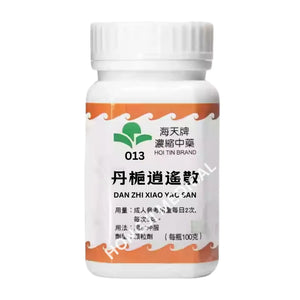
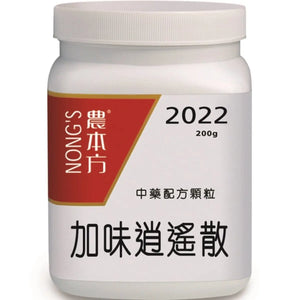
Xiao Yao San addresses Liver constraint with concurrent Blood and Spleen deficiency. Jia Wei Xiao Yao San (Dan Zhi Xiao Yao San) adds heat-clearing herbs when constraint has transformed into Heat. Chai Hu Shu Gan San is stronger for pure Qi stagnation with pain and less emphasis on Blood or Spleen tonification.

For educational reference only, based on traditional pattern differentiation — not a substitute for professional advice.

Clinical Modifications for Xiao Yao San

1. When Stress Turns into "Heat" or Anger

If your liver stress stays bottled up for too long, it can turn into "fire." You’ll know this is happening if you have a bitter taste in your mouth, feel very irritable or angry, or have a red tongue with a yellow coating. In this case, we add Mu Dan Pi (Tree Peony Bark) and Zhi Zi (Gardenia Fruit) to the original Xiao Yao San formula. Mu Dan Pi helps cool the blood and clear out internal heat, while Zhi Zi is excellent at draining "fire" and calming restless feelings. Together, they help cool your system down while keeping your energy moving.

2. When You Are Especially Drained (Blood Deficiency)

If you feel particularly weak—for example, if your skin looks pale and sallow or your dizziness is getting worse—it means your blood levels are very low. To fix this, we can increase the amounts of Dang Gui and Bai Shao already in the formula. We can also add powerful blood-builders like Shu Di (Processed Rehmannia) and E Jiao (Donkey-Hide Gelatin). Shu Di provides deep nourishment for your body's essence, and E Jiao is a famous tonic that replenishes blood and moistens dryness. These additions give the formula an extra boost for people who feel severely depleted.

Xiao Yao San

3. When You Feel Heavy and Sluggish (Dampness)

Sometimes, when the Spleen is weak, your body starts to hold onto too much fluid, which we call "dampness." This makes you feel heavy, tired, and sluggish, and you might notice a thick white coating on your tongue. To clear this up, we add Cang Zhu (Atractylodes), Hou Po (Magnolia Bark), and Yi Yi Ren (Job's Tears). Cang Zhu and Hou Po work together to "dry out" that internal dampness and get rid of bloating. Yi Yi Ren helps your body drain excess fluid naturally. These herbs strengthen your digestion and help you feel light and energized again.

What the Science Suggests

1. Regulatory Effects on the Nervous System

Xiao Yao San (Free and Easy Wanderer) is a classical Chinese herbal medicine formula widely used for treating anxiety, helping reduce anxiety, and addressing depression and anxiety.

Modern evidence from randomized controlled trials and systematic review (despite limitations such as risk of bias and small sample size) suggests benefits for sleep quality, quality of life, indigestion, functional gastrointestinal disorders, gastrointestinal disorders, premenstrual syndrome (PMS), and polycystic ovary syndrome. Research also explores its influence on gut microbiota. As with any herbal formula, attention should be paid to possible adverse events.

Science shows that Xiao Yao San actually helps "re-tune" the nervous system. Within the formula, Bai Shao Yao (White Peony Root) helps nourish the liver, while Wei Jiang (roasted ginger) helps settle the stomach. Research has found that this combination can improve mood and reduce behaviors related to anxiety and depression. It works by balancing brain chemicals—specifically, it boosts "feel-good" serotonin while keeping other chemicals like dopamine and norepinephrine at healthy levels. Essentially, it helps your brain manage emotional stress more effectively.

2. Balancing Your Hormones

Xiao Yao San also has a significant impact on the endocrine system, which is responsible for your body's hormones. For women, it can help regulate estrogen and progesterone levels. This is why it is so effective at fixing irregular menstrual cycles or flow issues caused by stress and blood deficiency. Additionally, modern studies suggest it may help keep the thyroid in balance, ensuring that your entire hormonal system stays harmonized.

Xiao Yao San: Soothing the Liver, Resolving Depression, Strengthening the Spleen and Nourishing Blood — Precise Conditioning for GERD, Irritable Bowel Syndrome and Irregular Menstruation | HJMEDICAL

3. Fighting Inflammation and Protecting Cells

Research indicates that Xiao Yao San acts as both an anti-inflammatory and an antioxidant. It helps lower inflammation throughout the body, particularly in the liver and the digestive tract. As an antioxidant, it boosts your body’s natural defenses against "free radicals"—unstable molecules that can damage your cells. By reducing this internal wear and tear, the formula protects your organs and helps prevent the development of chronic diseases.

Safety Considerations

1. Dietary Precautions

While taking Xiao Yao San, avoid raw/cold, greasy, and spicy/irritating foods that injure spleen‑stomach yang, hinder digestion, or generate internal heat. Maintain a light, easily digestible diet to support the formula’s effect.

2. Special Populations

Use Xiao Yao San with caution in pregnancy—only under physician guidance. In patients with spleen‑stomach deficiency‑cold or loose stools, adjust dose or combine with spleen‑strengthening herbs to avoid damaging spleen‑stomach yang.

Questions About Xiao Yao San

Q1: What are the actions of Xiao Yao San?
Xiao Yao San has the actions of spreading Liver Qi, strengthening the Spleen, and nourishing Blood. It is primarily used for Liver Qi constraint combined with Blood deficiency and Spleen weakness, including hypochondriac or breast distension, mood changes, fatigue, and irregular menstruation.
Q2: Which modern diseases is Xiao Yao San suited to?
Modern TCM clinical practice commonly applies it to individuals whose pattern differentiation falls within Liver-Spleen disharmony with Blood deficiency, including premenstrual syndrome (PMS), menopausal mood symptoms, mild depression or anxiety, functional dyspepsia, and breast hyperplasia.
Q3: Is Xiao Yao San suitable for improving mood swings and breast tenderness?
For presentations of irritability or low mood, hypochondriac or breast distension, fatigue, poor appetite, and irregular periods — in those whose pattern differentiation confirms Liver Qi constraint with Spleen weakness and Blood deficiency — TCM commonly applies Xiao Yao San as an adjunct. It cannot replace standard medical treatment.
Q4: Who should not take Xiao Yao San?
Those with pure excess Heat or Fire patterns, marked Yin deficiency with empty Heat, or severe Yang deficiency are generally not suitable without modification. Pregnant women should use it only under professional guidance. Use should be assessed by a qualified TCM physician based on individual constitution and pattern differentiation.
Q5: How does Xiao Yao San differ from Jia Wei Xiao Yao San?
Xiao Yao San is the base formula for Liver Qi constraint with Spleen weakness and Blood deficiency. Jia Wei Xiao Yao San (Dan Zhi Xiao Yao San) adds Mu Dan Pi and Zhi Zi to clear Heat, and is preferred when stagnation has transformed into Heat with irritability, heat sensations, or a redder tongue.
Q6: Can Xiao Yao San help with digestive issues related to stress?
Yes, when digestive symptoms such as poor appetite, bloating, or irregular stools are driven by Liver Qi constraint overacting on the Spleen. The formula soothes the Liver while supporting Spleen function, which can ease stress-related digestive discomfort when the pattern matches.
Q7: Is Xiao Yao San suitable for long-term use?
It is often used for a course of weeks to months in chronic Liver-Spleen disharmony patterns under professional supervision. Regular reassessment is recommended to adjust the formula according to changes in symptoms and constitution.
Q8: What dietary advice is recommended while taking Xiao Yao San?
Patients are generally advised to avoid excessive spicy, raw, cold, or greasy foods that may further disrupt Liver Qi or burden the Spleen. Regular meals, reduced stress, and moderate physical activity support the formula’s harmonizing effects.
Q9: Can Xiao Yao San be used for menstrual irregularities?
Yes, when irregular menstruation, premenstrual breast distension, or mood changes are linked to Liver Qi constraint with Blood deficiency and Spleen weakness. It helps regulate the cycle by spreading Liver Qi, nourishing Blood, and supporting the Spleen. Pattern differentiation is essential.
Q10: What are the main ingredients of Xiao Yao San?
The classical formula includes Chai Hu (Bupleurum) to spread Liver Qi, Dang Gui and Bai Shao to nourish Blood and soften the Liver, Bai Zhu and Fu Ling to strengthen the Spleen, plus Zhi Gan Cao, Sheng Jiang, and Bo He to harmonize and assist the formula’s actions.

General Questions

How do I choose the right formula?
TCM formulas are traditionally selected according to individual pattern differentiation rather than by symptom alone. If you're not sure which formula fits your presentation, take our AI Assessment below for a personalized starting point, then confirm with a qualified TCM practitioner.
What are concentrated herbal granules?
Concentrated herbal granules are made by decocting raw herbs, then extracting and concentrating the resulting liquid into a fine granule or powder form. This preserves the same active compounds as a traditional decoction while making the herbs far easier to store, measure, and prepare.
How should I take these products?
Dissolve the recommended amount of granules in hot water, stir until fully dissolved, and drink while warm — following the dosage and frequency advised by your TCM practitioner or as stated on the product packaging.
Are concentrated herbal granules equivalent to traditional decoctions?
Concentrated granules are produced from the same herbs and processed to retain their active compounds, so they are traditionally regarded as a convenient alternative to decoctions rather than a different remedy. Some practitioners note subtle differences in strength or absorption between the two forms, so your TCM practitioner may adjust dosage accordingly.
Are your products authentic?
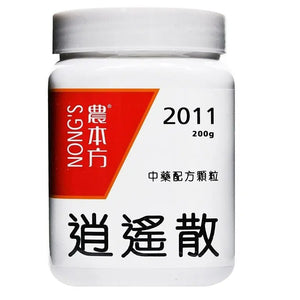
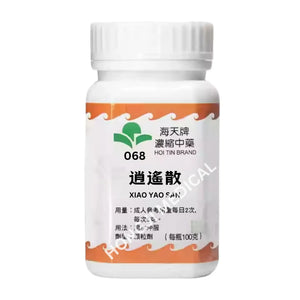
Yes. HJMEDICAL sources its concentrated granules exclusively from established, reputable manufacturers such as Nong's and Hoi Tin, both long-standing names in the TCM granules industry, with GMP compliance stated directly on their packaging.
Are HJMEDICAL products manufactured under GMP standards?
HJMEDICAL sources its concentrated granules from established, reputable manufacturers such as Nong's and Hoi Tin, both long-standing names in the TCM granules industry. GMP compliance for these products is stated directly on their packaging.
Do you ship internationally?
Yes — we ship worldwide! Every order goes out via Hong Kong Post, and your exact shipping cost and estimated delivery time for your address are calculated and shown right at checkout, so there are never any surprises. We also offer free shipping once your order reaches our free-shipping threshold, so it's easy to stock up on your favorite formulas and save.
Can I take more than one formula at the same time?
Some formulas are traditionally combined, while others overlap or counteract each other. We recommend checking with a qualified TCM practitioner before combining formulas, especially if you are already taking other medication.
Are these products suitable during pregnancy or breastfeeding?
Some TCM formulas are not suitable during pregnancy or breastfeeding. Please consult a qualified TCM practitioner or your doctor before use if you are pregnant, trying to conceive, or nursing.
Do these products replace medical treatment?
No. These products are traditional herbal supplements intended to support wellbeing according to TCM principles — they are not a replacement for professional medical diagnosis or treatment. Please consult a qualified TCM practitioner or licensed healthcare provider before starting, stopping, or combining any treatment, especially if you have a chronic condition.
Medical Disclaimer

For general TCM education only — not medical advice. Consult a qualified TCM practitioner or licensed healthcare provider before use, especially if pregnant, nursing, on medication, or managing a chronic condition.

Not sure which formula is right for you?

Take the AI Assessment

最新文章

Login

Forgot your password?

Don't have an account yet?
Create account

Xiao Yao San: Classic TCM Formula for Liver Qi Stagnation, Stress & Mood Balance