Si Ni Tang: The Foremost TCM Formula for Restoring Yang and Reversing Collapse

In the TCM emergency repertoire, there is a formula called “the foremost formula for restoring Yang and reversing collapse”Si Ni Tang (Four Reversal Decoction), created by Zhang Zhongjing and first recorded in the Shang Han Lun (Treatise on Cold Damage). Its name is precise: si (four limbs), ni (reversal — the classical term for coldness ascending from the digits upward, reaching the elbows and knees), tang (decoction). It does not simply mean cold hands and feet; si ni specifically denotes the severe Yang-collapse pattern where limb coldness has advanced beyond the elbows and knees. Three herbs only — Fu Zi (Aconite), Gan Jiang (Dried ginger), and Zhi Gan Cao (Honey-fried Licorice) — yet the formula is described as “few herbs but concentrated power” (yao shao li zhuan). Zhang Zhongjing established the governing principle: “Shaoyin disease, pulse sunken — warm urgently; Si Ni Tang is appropriate.”

Si Ni Tang: The Foremost TCM Formula for Restoring Yang and Reversing Collapse | HJMEDICAL

I. Historical Source and Formula Rationale

Si Ni Tang was created by Zhang Zhongjing and first recorded in the Shang Han Lun — designed specifically for the Shaoyin Cold-Jue pattern and the broader category of Yang-debilitation Yin-excess collapse (wang yang zheng). The formula covers multiple disease contexts in the Shang Han Lun: Shaoyin disease, Taiyang disease complicated by erroneous sweating producing Yang loss, and Yangming disease with exterior-Heat interior-Cold. The theoretical basis: Huang Di Nei Jing’s principles “for Cold pervading internally, treat with sweet-hot; for Cold dominating, equalise with pungent-hot.”

The formula’s classical mnemonic: “Si Ni Tang zhong Fu Cao Jiang, si zhi jue ni ji jian chang, mai wei tu li yin han sheng, jiu ni hui yang lai ci fang” — “Si Ni Tang contains Fu Zi, Gan Cao, and Gan Jiang; four-limb jue-reversal — decoct urgently; pulse faint, vomiting, diarrhoea, Yin-Cold flourishing; rescuing reversal and restoring Yang — rely on this formula.”

Si Ni Tang: The Foremost TCM Formula for Restoring Yang and Reversing Collapse | HJMEDICAL

II. Three-Herb Composition and Formula Analysis

Si Ni Tang: The Foremost TCM Formula for Restoring Yang and Reversing Collapse | HJMEDICAL

Classical proportions (Shang Han Lun): Zhi Gan Cao 2 liang (approx. 6g) · Gan Jiang 1.5 liang (approx. 4.5g) · raw Fu Zi 1 piece (approx. 15g, skin removed, broken into 8 pieces). Modern standard: Zhi Fu Zi (processed) 9–15g · Gan Jiang 6–9g · Zhi Gan Cao 6g.

Chief herb — Fu Zi (Aconite) 9–15g: pungent-sweet, extremely hot, toxic; enters Heart, Kidney, and Spleen channels. Classically described as “the foremost essential herb for supplementing the Original Fire of the prenatal Life-Gate”. Fu Zi can travel through all twelve channels, reaching interior and exterior rapidly; it both warm-supplements Kidney Yang (restoring collapsed Yang) and breaks through Yin-Cold to drive out deep interior Cold. The classical raw form (sheng fu zi) has stronger Yang-restoring force but greater toxicity and requires 1–2 hours of pre-decoction; modern clinical practice uses processed Zhi Fu Zi which retains core efficacy with substantially reduced toxicity (requiring 30–60 minutes pre-decoction until tongue-tasting produces no numbing sensation). Critical safety rule: Fu Zi must always be pre-decocted first. Modern pharmacology: aconitine alkaloids (rendered non-toxic by hydrolysis during prolonged decoction) excite cardiac function, raise blood pressure, improve microcirculation, and enhance cold-resistance — the molecular basis for Si Ni Tang’s use in cardiovascular collapse.

Deputy herb — Gan Jiang (Dried ginger) 6–9g: pungent, hot; enters Spleen, Stomach, Heart, and Lung channels. The classical Ben Jing Shu Zheng states: “Fu Zi travels downward; Gan Jiang holds the Middle. Without ginger, Appendix cannot achieve the achievement of storming the general and capturing the flag; without Appendix, ginger cannot hold the fortress unmoved.” This captures the complementary roles: Fu Zi attacks downward and outward to drive Cold; Gan Jiang holds the Middle Jiao, warming the Spleen-Stomach and consolidating the base of Yang production. Kidney Yang is the root of all Yang; Spleen Yang is the post-natal source of Yang — when Yang collapses, both are depleted, producing the vomiting, diarrhoea, and abdominal pain of the Spleen-Cold component alongside the limb reversal of the Kidney-Yang component. Gan Jiang addresses this Middle-Jiao dimension simultaneously.

Assistant and Envoy herb — Zhi Gan Cao (Honey-fried Licorice) 6g: sweet, neutral; enters Heart, Lung, Spleen, and Stomach channels. Three simultaneous roles: (1) supplement Qi and consolidate collapse — nourishing Spleen-Stomach Qi so the restored Yang has a foundation to consolidate upon; (2) harmonise herb nature — moderating Fu Zi and Gan Jiang’s extreme pungent-hot force, preventing them from depleting Yin-fluids or damaging the Spleen-Stomach; (3) detoxify Fu Zi — glycyrrhizin in Zhi Gan Cao binds aconitine alkaloids and reduces toxicity. The formula’s character: “supplements without cloying, warms without dryness.”

Three-layer formula architecture:
Break Yin and restore Yang (address the branch — exterior Cold): Fu Zi as core; extremely hot pungent force directly strikes the Cold-excess Yang-collapse centre
Warm Middle Jiao and assist Yang (address the root — interior deficiency): Gan Jiang warm-supplements Spleen-Stomach Yang; addresses vomiting, diarrhoea, abdominal pain
Supplement Qi, harmonise, and consolidate (secure the effect): Zhi Gan Cao supplements Qi, moderates pungent-hot force, detoxifies Fu Zi — achieving “treat both branch and root simultaneously”

III. Five-Formula Differential

Si Ni Tang: The Foremost TCM Formula for Restoring Yang and Reversing Collapse | HJMEDICAL

Formula Drug force Core action Key pattern indicator Best for
Si Ni Tang Aggressive (emergency base) Extreme Yang restoration, drive deep Cold Four-limb reversal cold past elbows-knees; pulse faint almost imperceptible Yang collapse emergency
Li Zhong Wan (Tang) Gentle (daily adjustment) Warm Spleen-Stomach, help digestion Chronic Spleen-Stomach Cold: abdominal pain, diarrhoea, poor appetite, no Yang-collapse signs Chronic GI Cold
Fu Zi Li Zhong Wan Moderate (supplementation-dominant) Drive Cold + strengthen Spleen simultaneously (Li Zhong + Fu Zi + Bai Zhu) Chronic Yang deficiency with significant cold-aversion and GI weakness combined Chronic Yang deficiency constitution
Tong Mai Si Ni Tang Extremely aggressive (reinforced emergency) Si Ni Tang with greatly increased Fu Zi + Gan Jiang doses; specially for pulse-vessel obstruction Extreme interior Cold; Yang almost completely exhausted; pulse almost absent Extreme crisis beyond standard Si Ni Tang
Dang Gui Si Ni Tang Gentle (nourish Blood + warm) Nourish Blood + scatter superficial Cold (Gui Zhi Tang variant + Dang Gui + Xi Xin) Blood deficiency + Cold causing limb coldness that does NOT pass elbows-knees Blood-deficiency cold hands and feet, chilblains

IV. Three Core Actions

Si Ni Tang: The Foremost TCM Formula for Restoring Yang and Reversing Collapse | HJMEDICAL

1. Restore Yang and reverse collapse — rescue Yang-collapse emergency:
When Yang-Qi is severely depleted and Yin-Cold dominates internally, the classic Yang-collapse (wang yang zheng) presentation develops: four-limb reversal coldness beyond the elbows and knees, cold sweating, sunken exhausted Spirit (shen shuai yu mei), pale face, faint-imperceptible pulse, weak breathing. Si Ni Tang’s massively pungent-hot force — Fu Zi breaking Yin and restoring Yang as chief, Gan Jiang assisting as deputy — rapidly reverses this collapse. Modern clinical applications: myocardial infarction, heart failure, septic shock, anaphylactic shock — adjunctive to modern emergency medicine to raise blood pressure and cardiac output while the primary intervention is applied.

2. Warm Middle Jiao and scatter Cold — relieve Yang-deficiency Cold-excess:
Gan Jiang warm-supplements the Middle Jiao’s Spleen-Stomach Yang; Fu Zi warm-supplements the lower Jiao’s Kidney Yang. Together they address the two-level Yang deficiency of the Shaoyin Cold pattern: abdominal pain, vomiting (especially of clear fluids), unremitting diarrhoea (sometimes xia li qing gu — diarrhoea containing undigested food), poor appetite, and aversion to cold with inability to warm. For chronic Yang-deficiency constitution with these GI and cold-aversion features (modified formula, lighter doses, combined with Spleen-strengthening herbs), Si Ni Tang’s warming action gradually restores the constitutionally depleted Yang.

3. Supplement Qi and consolidate collapse — anchor the restored Yang:
Zhi Gan Cao supplements Spleen-Stomach Qi, providing the constitutional foundation for restored Yang to anchor and consolidate upon. Without this foundation, the aggressively restored Yang from Fu Zi and Gan Jiang may dissipate again. Also moderates the extreme hot-pungent forces of Fu Zi and Gan Jiang, and detoxifies Fu Zi’s aconitine. The integrated purpose: “restore Yang without depleting Qi, scatter Cold without injuring Yin.”

V. Clinical Applications and Modifications

Si Ni Tang: The Foremost TCM Formula for Restoring Yang and Reversing Collapse | HJMEDICAL

Core pattern: Yang-collapse Yin-domination (yang shuai yin sheng, yang qi xu tuo). Presenting features: four-limb reversal coldness past elbows-knees; cold sweating; sunken exhausted Spirit; pale face; faint-almost-imperceptible pulse; weak breathing; white-slippery tongue coating. The critical discriminating sign: coldness advancing beyond the elbows and knees distinguishes the Yang-collapse Si Ni Tang pattern from ordinary cold hands and feet.

Ten key modifications:

  • Yang-collapse with Qi collapse, pulse almost absent: add Ren Shen and Huang Qi → Si Ni Jia Ren Shen Tang
  • Extreme Yin-Cold, severe four-limb reversal: increase Fu Zi and Gan Jiang doses; add Rou Gui
  • True Cold false Heat (body fever and flushed face with cold limbs): add Cong Bai → Bai Tong Tang
  • Severe abdominal pain, Cold-Qi stagnation: add Rou Gui and Wu Zhu Yu
  • Unremitting diarrhoea, Spleen-Stomach Cold: add Bai Zhu, Shan Yao, and Fu Ling
  • Limb numbness and joint pain (Yang deficiency Cold-congealing): add Gui Zhi and Xi Xin
  • Lower limb oedema, poor urination (Yang deficiency Water flooding): add Fu Ling, Ze Xie, and Bai Zhu
  • Post-partum Yang deficiency, lochia not stopping: add Dang Gui and Chuan Xiong
  • Yang-deficiency asthma: add Ma Huang, Xi Xin, and Wu Wei Zi
  • Vomiting rejecting the medicine (Cold-evil blocking): serve the decoction cold (leng fu — the classical counter-directive method)

Si Ni Tang: The Foremost TCM Formula for Restoring Yang and Reversing Collapse | HJMEDICAL

VI. Dosage, Preparation, and Safety

Si Ni Tang: The Foremost TCM Formula for Restoring Yang and Reversing Collapse | HJMEDICAL

Preparation — the most critical step: Fu Zi must be pre-decocted first to reduce toxicity. Raw Fu Zi: pre-decoct 1–2 hours. Processed Zhi Fu Zi: pre-decoct 30–60 minutes. Test for readiness: taste a drop of the liquid — if no tongue-numbing sensation, aconitine has been sufficiently hydrolysed and it is safe to add the remaining herbs. Then add Gan Jiang and Zhi Gan Cao with water to 600ml; decoct to 240ml; serve warm. If vomiting rejects the medicine: serve cold (counter-directive method).

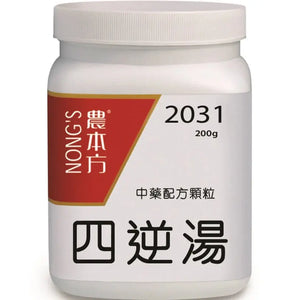
Patent forms: Hai Tian Si Ni Tang and Nong Ben Fang Si Ni Tang granules are standardised processed forms. Follow manufacturer instructions.

Course: Acute emergency: 1–3 days; stop immediately when symptoms resolve (zhong bing ji zhi — stop when the pathology is addressed). Chronic Yang-deficiency adjustment: 1–2 week courses under medical supervision. Si Ni Tang is not for long-term continuous use — prolonged use damages Yin-fluids and may cause dry mouth, abdominal distension, and constipation.

Contraindications:

  • Excess-Heat pattern: high fever, profuse sweating, thirst, dry constipated stool, red tongue with yellow-greasy coating, slippery-rapid pulse — absolute contraindication
  • Pregnancy: Fu Zi and Gan Jiang’s extreme hot nature may stimulate uterine smooth muscle contraction; contraindicated
  • Infants and young children: immature organ systems; contraindicated
  • Heart disease, hypertension, liver and kidney disease: use under strict medical supervision; especially cardiac patients require heart rate and blood pressure monitoring
  • Fu Zi must always be pre-decocted — never take uncooked or under-decocted Fu Zi: aconitine toxicity produces lip-tongue numbness, palpitations, arrhythmia; if this occurs, stop immediately, drink plenty of water, seek emergency care
  • Si Ni Tang cannot replace Western medicine in emergencies: it is adjunctive; acute shock, myocardial infarction, and heart failure require immediate Western emergency intervention — do not delay seeking emergency care
  • Pattern specificity: only for Yang-collapse Yin-domination; ordinary cold hands and feet without Yang-collapse signs (cold not reaching past elbows-knees, no faint pulse, no Spirit exhaustion) do not qualify — using Si Ni Tang in such cases may damage Yin-fluids
  • Absolutely not a wellness supplement: Si Ni Tang contains toxic Fu Zi; must not be self-administered as a daily supplement; pattern-differentiation by a qualified practitioner is mandatory

⚠️ This content is for reference only and does not provide medical advice. Consult a healthcare professional for any health concerns.

Login

Forgot your password?

Don't have an account yet?
Create account

Si Ni Tang: The Foremost TCM Formula for Restoring Yang and Reversing Collapse