Qi-Regulating Formulas

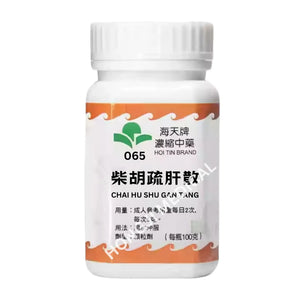
柴胡疏肝散 · Chái Hú Shū Gān Sǎn

Chai Hu Shu Gan San

A focused Qi-regulating formula for Liver Qi stagnation with pain (especially hypochondriac or epigastric). Stronger moving action than Xiao Yao San and without significant Blood or Spleen tonification.

View formula profile →
Last reviewed August 2026
Formula CategoryQi-Regulating Formulas
Primary PatternQi Stagnation
Primary FunctionCourse Liver Qi, regulate Qi, stop pain
Primary Therapeutic PrincipleCourse the Liver, regulate Qi and relieve pain
Main HerbsBupleurum Root · Cyperus Rhizome · Chuanxiong Rhizome · Bitter Orange · White Peony Root · Tangerine Peel · Honey-fried Licorice
Classical SourceJing Yue Quan Shu (Complete Works of Jingyue, Ming dynasty)

Why This Formula?

Traditionally selected for pure Liver Qi stagnation where pain is the leading complaint — hypochondriac distension and epigastric discomfort — moving Qi more forcefully than Xiao Yao San and Jia Wei Xiao Yao San, which are better suited to longer-standing patterns complicated by Blood deficiency and Spleen weakness.

Traditionally selected for pure Liver Qi stagnation where pain is the leading complaint — hypochondriac distension and epigastric discomfort — moving Qi more forcefully than Xiao Yao San and Jia Wei Xiao Yao San, which are better suited to longer-standing patterns complicated by Blood deficiency and Spleen weakness.

What Is Chai Hu Shu Gan San?

1. Where Chai Hu Shu Gan San Began

Chai Hu Shu Gan San, also known as Bupleurum Powder to Spread the Liver, is a classical formula first recorded in Zhang Jingyue’s Ming dynasty work Jingyue Quanshu (Complete Works of Jingyue). Designed to strongly spread constrained liver qi, regulate qi flow, and relieve pain, it is one of the most direct prescriptions for pure liver qi stagnation.

This formula is primarily used for symptoms such as chest and flank distension or pain, irritability, emotional depression, frequent sighing, belching, and abdominal discomfort due to qi stagnation. It remains a foundational remedy in Traditional Chinese Medicine for liver constraint patterns and continues to be widely applied in both emotional and physical manifestations of qi stagnation.

Chai Hu Shu Gan San

2. Helping Your Digestion

Chai Hu Shu Gan San is widely used for stomach and digestive issues that are triggered by stress.

  • Stomach Pain: If you feel a bloating pain in your stomach that spreads to your ribs—especially when you’re upset—and you’re dealing with burping or acid reflux, this formula helps calm the stomach and stop the pain.
  • Rib Pain: If you feel a "traveling" pain or bloating under your ribs that changes depending on your mood, this formula is excellent at clearing that tension.
  • Indigestion: It’s also great for general poor appetite or feeling full too quickly when your digestive system is "shutting down" due to emotional stress.

3. Supporting Mental Health and the Nervous System

Since this formula is so good at moving "stuck" energy, it’s a go-to for emotional well-being.

  • Mood Support: It helps people dealing with depression or anxiety who feel "heavy," low, or restless. By getting the energy moving, it helps improve your mood and can even help you sleep better.
  • Headaches: If you suffer from migraines or headaches that feel like they are linked to stress (often felt on the sides of the head along the liver channel), this formula helps clear the blockage and stop the throbbing.
Chai Hu Shu Gan San

4. Women’s Health

In gynecology, this formula is a favorite for treating irregular periods caused by stress.

  • Period Problems: If your cycle is unpredictable (early or late), the blood is dark, or the flow is inconsistent, Chai Hu Shu Gan San helps get everything back on track.
  • PMS Relief: It is particularly effective for breast tenderness and bloating that happens right before your period. It makes the entire cycle much more comfortable by keeping your energy and blood moving freely.

Herb Composition (Sovereign / Minister / Assistant / Envoy)

1. The Chief Herb — Chai Hu

Chai Hu (Bupleurum Root) is the "Sovereign" or leader of this formula. It has a slightly cool nature and targets the Liver and Gallbladder. Its main job is to clear up emotional congestion and get your energy (Qi) moving upward and outward. Think of Chai Hu as the specialist who unties the "knots" caused by stress, allowing your system to flow smoothly again.

2. The Deputy Herbs — Xiang Fu and Chuan Xiong

These two act as the "Ministers" or second-in-command, helping the chief herb do its job better.

  • Xiang Fu (Cyperus Rhizome) is excellent at spreading Liver energy and settling the stomach. It works alongside Chai Hu to make sure there are no roadblocks in your energy flow.
  • Chuan Xiong (Ligusticum) is a powerhouse for both energy and blood. Since energy and blood move together, Chuan Xiong ensures that as your energy starts moving, your blood flow follows suit. This helps relieve pain caused by "stagnation" or things getting stuck.

3. The Assistant Herbs — Chen Pi, Zhi Ke, and Shao Yao

These three herbs support the formula by balancing the effects and targeting specific symptoms.

  • Chen Pi (Tangerine Peel) focuses on the Spleen and lungs. It keeps your digestion moving and prevents the Liver’s stress from "attacking" your stomach.
  • Zhi Ke (Bitter Orange) helps open up the chest and reduces that bloated, full feeling in the belly.
  • Shao Yao (Peony Root) acts as a balancer. While the other herbs are busy moving energy, Shao Yao nourishes the blood and "softens" the Liver. This helps stop pain and prevents the Liver from becoming too "aggressive" toward your digestive system.
Chai Hu Shu Gan San

4. The Envoy Herb — Gan Cao

Gan Cao (Licorice Root) is the "Envoy" or messenger. Its job is to be the peacemaker of the group. It harmonizes all the different herbs so they work together perfectly without clashing. It also protects your stomach and ensures the formula is gentle on your body while it works to clear out the stress and stagnation.

Clinical Presentation in TCM

1. How the Problem Starts (Pathomechanism)

The main issue Chai Hu Shu Gan San addresses is Liver Qi Stagnation. In Chinese medicine, the Liver is responsible for keeping your body's energy (Qi) moving smoothly. When you deal with long-term stress, bottled-up anger, or depression, this energy gets "stuck."

  • Energy Roadblocks: When Liver energy doesn't move, it creates pressure, leading to pain under the ribs and a tight feeling in the chest.
  • Affecting Digestion: If the Liver stays stressed for too long, it starts to "bully" the Spleen and Stomach, leading to a loss of appetite and bloating.
  • Blood Stasis: Because energy moves the blood, "stuck" energy eventually leads to "stuck" blood, which causes sharper, fixed pain.

2. Actions: What the Formula Does

Based on these issues, Chai Hu Shu Gan San has two main jobs: Soothe the Liver and Move the Blood to Stop Pain.

  • Chai Hu and Xiang Fu work to "unlock" the Liver and get energy flowing again.
  • Chuan Xiong makes sure the blood stays moving, preventing clumping and pain.
  • Chen Pi and Zhi Ke settle the stomach, while Shao Yao calms the Liver. Together, they restore the body’s natural flow, clearing out discomfort and stress-related tension.
Chai Hu Shu Gan San

3. When to Use It (Indications)

This formula is the primary choice for "Liver Qi Stagnation Syndrome." You might need it if you experience:

  • Physical Tension: Pain in the ribs or chest that feels like it moves around or gets worse with stress.
  • The "Sighing" Reflex: Feeling the need to take deep sighs frequently to relieve chest tightness.
  • Emotional Signs: Feeling easily annoyed, irritable, or deeply depressed.
  • Stomach Issues: A bloated belly or feeling full very quickly.
  • The Pulse: A "wiry" pulse (feeling like a tight string), which is the classic sign of Liver stress.

The Mechanism in Classical Theory

1. The Main Strategy: Moving the Energy

The core goal of this formula is to get the Liver's energy (Qi) moving again. Chai Hu is the leader here, untying the emotional and physical "knots." Xiang Fu and Chuan Xiong act as its strongest supporters, ensuring that the Liver’s natural function of keeping everything flowing is fully restored.

2. Treating Energy and Blood Together

In Chinese medicine, "Qi" (energy) is the commander of the blood. If the energy stops, the blood stops. This formula doesn't just focus on the energy; it includes Chuan Xiong to keep the blood moving too. By treating both at the same time, the formula is much more effective at stopping pain and clearing out deep-seated tension.

Chai Hu Shu Gan San

3. Protecting the Digestion

Even though this is a Liver formula, it keeps a close eye on your digestion. Chen Pi and Zhi Ke keep the stomach energy moving downward, so stress doesn't cause nausea or bloating. Shao Yao and Gan Cao act as a buffer, protecting the Spleen and Stomach from being overwhelmed by the Liver's stress. This "whole-body" approach ensures that while we clear the stress, we don't hurt your energy production (digestion).

Clinical Comparison Table

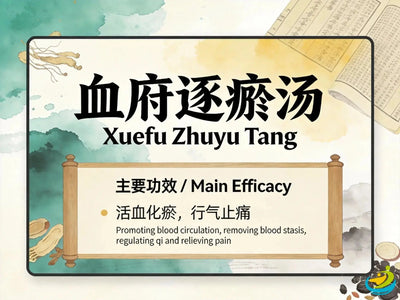
Compare Chai Hu Shu Gan SanSi Ni SanXiao Yao SanXue Fu Zhu Yu TangJia Wei Xiao Yao SanYue Ju Wan
Primary Function Course Liver Qi, regulate Qi, stop painCourse Liver Qi, resolve constraint, harmonizeCourse Liver Qi, tonify Spleen, nourish BloodInvigorate Blood, dispel stasis, move QiCourse Liver Qi, clear Heat, tonify Spleen and BloodRegulate Qi, resolve stagnation of the Six Constraints
Formula Category Qi-Regulating FormulasHarmonising FormulasHarmonising FormulasBlood-Invigorating FormulasHarmonising FormulasQi-Regulating Formulas
Typical TCM Pattern Qi StagnationQi StagnationQi StagnationBlood StasisQi StagnationQi Stagnation
Main Conditions Hypochondriac Distension, Bloating, Emotional Depression, Chest TightnessCold Limbs, Hypochondriac Distension, Bloating, Emotional Depression, Chest TightnessHypochondriac Distension, Emotional Depression, Poor Appetite, Irregular Menstruation, Fatigue & Low EnergyChest Tightness, Headache, Hypochondriac Distension, Emotional Depression, Anxiety RestlessnessHypochondriac Distension, Anxiety Restlessness, Irregular Menstruation, Emotional Depression, Poor AppetiteChest Tightness, Bloating, Emotional Depression, Poor Appetite, Indigestion
Main Herbs Bupleurum Root · Cyperus Rhizome · Chuanxiong Rhizome · Bitter Orange · White Peony Root · Tangerine Peel · Honey-fried LicoriceBupleurum Root · Immature Bitter Orange · White Peony Root · Honey-fried LicoriceBupleurum Root · Chinese Angelica Root · White Peony Root · White Atractylodes Rhizome · Poria / Hoelen · Mentha / Peppermint · Fresh Ginger · Honey-fried LicoricePeach Kernel · Safflower · Chinese Angelica Root · Raw Rehmannia Root · Chuanxiong Rhizome · Red Peony Root · Achyranthes Root · Bupleurum Root · Platycodon Root · Bitter Orange · Licorice RootBupleurum Root · Chinese Angelica Root · White Peony Root · White Atractylodes Rhizome · Poria / Hoelen · Moutan Bark / Tree Peony Bark · Gardenia Fruit · Mentha / Peppermint · Fresh Ginger · Honey-fried LicoriceCyperus Rhizome · Atractylodes Rhizome · Chuanxiong Rhizome · Medicated Leaven · Gardenia Fruit
Classical Source Jing Yue Quan Shu (Complete Works of Jingyue, Ming dynasty)Shang Han Lun (Zhang Zhongjing, Eastern Han)Tai Ping Hui Min He Ji Ju Fang (Song dynasty)Yi Lin Gai Cuo (Corrections of Errors in Medical Classics, Wang Qingren, Qing dynasty)Nei Ke Zhai Yao (Summary of Internal Medicine, Ming dynasty) / also known as Dan Zhi Xiao Yao SanDan Xi Xin Fa (Teachings of Zhu Danxi, Yuan dynasty)

How to tell them apart

Chai Hu Shu Gan San is preferred for pure Qi stagnation with marked pain. Xiao Yao San and Jia Wei Xiao Yao San address constraint together with Blood deficiency and Spleen weakness, and are better for longer-term or deficient patients.

For educational reference only, based on traditional pattern differentiation — not a substitute for professional advice.

Clinical Modifications for Chai Hu Shu Gan San

1. For Severe Pain

If the pain is very intense, we add "heavy-duty" painkillers to the mix. We might add Yan Hu Suo (Corydalis) and Yu Jin (Turmeric Tuber). Yan Hu Suo is one of the most famous herbs for stopping pain anywhere in the body, while Yu Jin helps break up energy blockages and cools the blood. Together, they make the formula much stronger at relieving physical distress.

2. For Blood Stasis (Fixed, Sharp Pain)

If the energy has been stuck so long that it has caused the blood to "clump" (Blood Stasis), you might feel sharp, fixed pain or notice dark clots. In this case, we add Dan Shen (Red Sage), Tao Ren (Peach Kernel), and Hong Hua (Safflower). These herbs act like "blood movers" that clear out blockages and ensure smooth circulation.

Chai Hu Shu Gan San

3. For "Liver Fire" (Heat and Anger)

If your stress has turned into "fire," you might have a bitter taste in your mouth, a dry throat, feel extremely angry, or feel a burning sensation under your ribs. To fix this, we add Mu Dan Pi (Tree Peony Bark) and Zhi Zi (Gardenia Fruit). These two herbs work like a cooling spray, draining the "fire" and calming down that heated, irritable feeling.

What the Science Suggests

1. How it Works in the Lab (Pharmacology)

Modern science has taken a close look at Chai Hu Shu Gan San (which is an upgraded version of the classic Si Ni San). It contains Chai Hu, Bai Shao, Chuan Xiong, Xiang Fu, Zhi Ke, and Gan Cao. Research shows it does several key things:

  • Liver Support: It helps repair liver cells, improves blood flow to the liver, and balances metabolic functions.
  • Brain Balance: It works on the nervous system by regulating brain chemicals (neurotransmitters) that control your mood, helping to ease anxiety and depression.
  • Digestive Boost: It gets the "motor" of your stomach moving, helping with digestion and reducing that bloated, full feeling.
  • Protection: It also acts as an anti-inflammatory and antioxidant, which protects your organs from daily wear and tear and helps slow down the aging process in your cells.
Chai Hu Shu Gan San

2. Real-World Results

Clinical studies have proven that this formula really works for modern health issues.

  • Stomach and Rib Pain: Research shows that people with stress-related stomach pain saw significant relief. In many cases, doctors could actually see the stomach lining healing during exams after the patient used the formula.
  • Mental Health: For those struggling with depression or anxiety caused by "stagnant" energy, Chai Hu Shu Gan San has been shown to significantly lower stress scores and help people get much better sleep.
  • Quality of Life: Overall, patients using this formula reported feeling more energized and physically comfortable compared to those using standard treatments alone.

Safety Considerations

1. Mind Your Mood

While taking Chai Hu Shu Gan San, it is very important to keep your emotions in check. Since "stuck" Liver energy is often caused by stress, anger, or feeling down, staying in a negative headspace can actually block the medicine from working. Try to stay relaxed and avoid big emotional swings. Think of the herbs as the tool that clears the path, but your positive mood is what keeps the path open.

2. What to Eat (and Avoid)

To get the best results, try to avoid "heavy" foods that stress out your system.

  • Avoid: Spicy food, greasy or fried items, coffee, and strong tea. These can irritate your stomach and make it harder for your Liver energy to flow.
  • Quit: It is best to avoid smoking and alcohol, as they put extra strain on your Liver and Spleen.
  • Try: You can add foods that naturally help move energy, such as Fo Shou (Bergamot), Xiang Yuan (Citron), or Mei Gui Hua (Rose tea). These support the formula and help you recover faster.

3. A Note for Moms-to-Be

If you are pregnant, you should be very careful with this formula. Because Chai Hu Shu Gan San is designed to strongly move energy and blood, it could potentially affect the stability of a pregnancy. Always talk to your doctor before using it to make sure it is safe for you and your baby.

Questions About Chai Hu Shu Gan San

Q1: What are the actions of Chai Hu Shu Gan San?
Chai Hu Shu Gan San has the actions of spreading Liver Qi, invigorating Blood, and alleviating pain. It is primarily used for Liver Qi stagnation patterns with hypochondriac or chest distending pain, emotional constraint, irritability, and a wiry pulse.
Q2: Which modern diseases is Chai Hu Shu Gan San suited to?
Modern TCM clinical practice commonly applies it to individuals whose pattern differentiation falls within Liver Qi stagnation, including stress-related depression or anxiety, chronic gastritis, irritable bowel syndrome with emotional triggers, hypochondriac pain, and menstrual pain from Qi stagnation.
Q3: Is Chai Hu Shu Gan San suitable for improving chest or rib-side pain and irritability?
For presentations of distending pain in the chest or hypochondrium, emotional frustration or irritability, frequent sighing, epigastric fullness, and a wiry pulse — in those whose pattern differentiation confirms Liver Qi stagnation — TCM commonly applies Chai Hu Shu Gan San as an adjunct. It cannot replace standard medical treatment.
Q4: Who should not take Chai Hu Shu Gan San?
Those with marked Yin deficiency, pure Qi deficiency without stagnation, Damp-Heat patterns, or who are pregnant should generally not use it without professional modification and guidance. Use should be assessed by a qualified TCM physician based on individual constitution and pattern differentiation.
Q5: How does Chai Hu Shu Gan San differ from Xiao Yao San?
Chai Hu Shu Gan San focuses more strongly on spreading stagnant Liver Qi and moving Blood to relieve pain and constraint. Xiao Yao San places greater emphasis on nourishing Blood and strengthening the Spleen alongside mild Liver-soothing, making it more suitable when Blood deficiency and Spleen weakness are prominent.
Q6: Can Chai Hu Shu Gan San help with stress-related digestive symptoms?
Yes, when abdominal bloating, epigastric fullness, or irregular bowel habits are clearly linked to emotional stress and Liver Qi stagnation invading the Stomach or Spleen. The formula helps restore the free flow of Qi and can ease these symptoms when the pattern matches.
Q7: Is Chai Hu Shu Gan San suitable for long-term use?
It is generally not recommended for prolonged continuous use without monitoring because its aromatic, acrid, and drying nature can consume Qi and Yin over time. Courses are typically limited and adjusted by a qualified TCM physician according to the patient’s response.
Q8: What are the main ingredients of Chai Hu Shu Gan San?
The classical formula includes Chai Hu (Bupleurum) to spread Liver Qi, Xiang Fu (Cyperus) and Chuan Xiong to move Qi and Blood and relieve pain, Chen Pi and Zhi Ke to regulate Qi, Bai Shao to soften the Liver, and Zhi Gan Cao to harmonize.
Q9: Can Chai Hu Shu Gan San be used for menstrual pain?
Yes, when dysmenorrhea or premenstrual distending pain is caused by Liver Qi stagnation rather than pure Blood deficiency or Cold. It helps move stagnant Qi and Blood in the Liver channel. Accurate pattern differentiation is required before use.
Q10: What lifestyle advice supports the use of Chai Hu Shu Gan San?
Maintaining emotional regulation, reducing chronic stress, engaging in moderate exercise, and avoiding excessive spicy, greasy, or stagnating foods help support the formula’s Liver-soothing action. Professional guidance remains essential for safe and effective use.

General Questions

How do I choose the right formula?
TCM formulas are traditionally selected according to individual pattern differentiation rather than by symptom alone. If you're not sure which formula fits your presentation, take our AI Assessment below for a personalized starting point, then confirm with a qualified TCM practitioner.
What are concentrated herbal granules?
Concentrated herbal granules are made by decocting raw herbs, then extracting and concentrating the resulting liquid into a fine granule or powder form. This preserves the same active compounds as a traditional decoction while making the herbs far easier to store, measure, and prepare.
How should I take these products?
Dissolve the recommended amount of granules in hot water, stir until fully dissolved, and drink while warm — following the dosage and frequency advised by your TCM practitioner or as stated on the product packaging.
Are concentrated herbal granules equivalent to traditional decoctions?
Concentrated granules are produced from the same herbs and processed to retain their active compounds, so they are traditionally regarded as a convenient alternative to decoctions rather than a different remedy. Some practitioners note subtle differences in strength or absorption between the two forms, so your TCM practitioner may adjust dosage accordingly.
Are your products authentic?
Yes. HJMEDICAL sources its concentrated granules exclusively from established, reputable manufacturers such as Nong's and Hoi Tin, both long-standing names in the TCM granules industry, with GMP compliance stated directly on their packaging.
Are HJMEDICAL products manufactured under GMP standards?
HJMEDICAL sources its concentrated granules from established, reputable manufacturers such as Nong's and Hoi Tin, both long-standing names in the TCM granules industry. GMP compliance for these products is stated directly on their packaging.
Do you ship internationally?
Yes — we ship worldwide! Every order goes out via Hong Kong Post, and your exact shipping cost and estimated delivery time for your address are calculated and shown right at checkout, so there are never any surprises. We also offer free shipping once your order reaches our free-shipping threshold, so it's easy to stock up on your favorite formulas and save.
Can I take more than one formula at the same time?
Some formulas are traditionally combined, while others overlap or counteract each other. We recommend checking with a qualified TCM practitioner before combining formulas, especially if you are already taking other medication.
Are these products suitable during pregnancy or breastfeeding?
Some TCM formulas are not suitable during pregnancy or breastfeeding. Please consult a qualified TCM practitioner or your doctor before use if you are pregnant, trying to conceive, or nursing.
Do these products replace medical treatment?
No. These products are traditional herbal supplements intended to support wellbeing according to TCM principles — they are not a replacement for professional medical diagnosis or treatment. Please consult a qualified TCM practitioner or licensed healthcare provider before starting, stopping, or combining any treatment, especially if you have a chronic condition.
Medical Disclaimer

For general TCM education only — not medical advice. Consult a qualified TCM practitioner or licensed healthcare provider before use, especially if pregnant, nursing, on medication, or managing a chronic condition.

Not sure which formula is right for you?

Take the AI Assessment

最新文章

Login

Forgot your password?

Don't have an account yet?
Create account

Chai Hu Shu Gan San: Classic TCM Formula for Liver Qi Stagnation & Rib-Side Pain