Yin-Tonifying Formulas

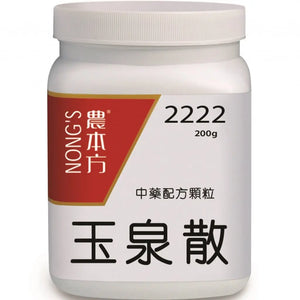
玉泉散 · Yù Quán Sàn

Yu Quan San

A classical formula for intense thirst and polyuria from Yin deficiency and depleted fluids.

View formula profile →
Last reviewed August 2026
Formula CategoryYin-Tonifying Formulas
Primary PatternYin Deficiency
Primary FunctionGenerate fluids, stop thirst, tonify Qi
Primary Therapeutic PrincipleGenerate fluids and tonify Qi for thirst from Yin deficiency
Main HerbsKudzu Root · Trichosanthes Root · Ophiopogon Tuber · Ginseng Root · Poria / Hoelen · Schisandra Fruit · Licorice Root
Classical SourceClassical TCM formulary

Why This Formula?

Traditionally selected for intense thirst from Yin deficiency and fluid depletion, rather than Qi-Yin deficiency with sweat, Kidney Yin tonic patterns, or Yangming excess heat thirst.

Traditionally selected for intense thirst from Yin deficiency and fluid depletion, rather than Qi-Yin deficiency with sweat, Kidney Yin tonic patterns, or Yangming excess heat thirst.

What Is Yu Quan San?

1. Ancient Classics Inheritance

Yu Quan San (玉泉散), or Jade Spring Powder, is a classical formula for wasting-thirst (Xiao Ke) recorded in Ming-Qing texts such as Gu Jin Yi Jian and later refined in Ye Tianshi’s secret formulas. It belongs to the category of formulas that nourish Yin, generate fluids, and clear Heat from the Lungs and Stomach.

The name “Jade Spring” refers to the precious fluids of the mouth that this formula aims to restore. It addresses Qi and Yin deficiency with residual Heat, the pattern of intense thirst, dryness, and wasting. Typical signs include polydipsia, dry mouth and throat, hunger or wasting, frequent urination, fatigue, a red tongue with little coating, and a thin rapid pulse.

Combining Ge Gen and Tian Hua Fen to raise fluids, clear Heat, and stop thirst, Sheng Di Huang and Mai Men Dong to nourish Yin and moisten the Lungs and Stomach, Wu Wei Zi to astringe Qi and fluids so they are not further lost, and Gan Cao with rice to protect the Middle and harmonize, Yu Quan San replenishes the “jade spring” of body fluids and is a classical prescription for Xiao Ke thirst from Yin deficiency.

Yu Quan San

2. Infectious Diseases

Practitioners often use Yu Quan San (Jade Spring Powder) when infectious conditions like pneumonia or tonsillitis cause severe internal heat.

  • Target Symptoms: It is especially helpful if you are experiencing a high fever, a strong cough, intense thirst, or have a red tongue with a yellow coating. It helps clear the heat and bring relief.

3. Febrile (Fever-related) Diseases

For fevers caused by various reasons, as long as it falls under the category of "Qi-level excess heat" in Traditional Chinese Medicine (TCM), this formula can be beneficial.

  • Target Symptoms: Whether it's a severe cold or the flu, if the primary issue is intense internal heat, this formula can help bring the fever down and make you feel cooler and more comfortable.

4. Metabolic Conditions (Wasting-Thirst / Diabetes Support)

In modern clinics, Yu Quan San (Jade Spring Powder)—or its pill form, Yu Quan Wan (Jade Spring Pill)—is very commonly used to support patients with Type 2 diabetes or pre-diabetes, which TCM refers to as "Wasting-Thirst" syndrome.

  • Key Additions: In these cases, herbs like Ge Gen (Kudzu Root), Tian Hua Fen (Snakegourd Root), Sheng Di (Rehmannia Root), and Mai Dong (Ophiopogon Tuber) are often included.
  • Modern Benefits: Research suggests this combination can help improve insulin resistance, stabilize blood sugar, and protect pancreatic function. It is particularly great at relieving the classic "three polys" of diabetes: excessive thirst, frequent urination, and constant hunger, along with weight loss and hot flashes.
Yu Quan San

5. ENT and Gastrointestinal Issues from Internal Heat

Because this formula is so good at putting out fires and restoring moisture, it is also a go-to for issues in the mouth, throat, and gut caused by lingering heat.

  • ENT Issues: It is traditionally used to soothe mouth sores, recurrent canker sores, chronic sore throats, and tongue inflammation.
  • Digestive Issues: If stomach heat is causing chronic dry stools, habitual constipation, burning stomach pain, or an abnormally large appetite, this formula helps by clearing that stomach fire and lubricating the digestive tract.

Herb Composition (Sovereign / Minister / Assistant / Envoy)

1. King Herb

In Yu Quan San, the "King" or chief herb is Shi Gao (Gypsum).

  • Core Characteristics: It has a pungent and sweet taste with a very cold nature. Because it is a heavy mineral, its cooling power is incredibly strong.
  • Why it helps: It is a master at clearing severe, excess heat, particularly from the energy pathways (Qi level) of the lungs and stomach. In this formula, Shi Gao takes the lead role, directly attacking the main cause of the issue—excess internal heat—and setting the foundation for the entire cooling process.

2. Minister Herb

The "Minister" herb is Zhi Mu (Anemarrhena Rhizome).

  • Core Characteristics: Bitter, sweet, and cold, it targets the lung, stomach, and kidney meridians.
  • Why it helps: It not only clears heat and drains "fire," but it also nourishes the body's natural moisture (Yin). When teamed up with Shi Gao, it boosts the overall cooling power. More importantly, its moistening effect replenishes the bodily fluids burned up by the heat, preventing the intensely cold Shi Gao from drying out the body.

3. Assistant Herbs

This formula uses two key "Assistant" herbs to protect the digestive system:

  • Gan Cao (Licorice Root): Sweet and neutral, it naturally boosts energy and harmonizes the formula. It softens the harsh, freezing nature of the King and Minister herbs, ensuring they are gentle on the body. It also protects the stomach and spleen from being damaged by the cold herbs.
  • Jing Mi (Non-glutinous Rice): Sweet and neutral, it is excellent at soothing the stomach and generating fluids. Working alongside Gan Cao, it acts as a buffer for the digestive tract, easing any potential irritation from the stronger herbs and making the whole formula much safer to digest.
Yu Quan San

4. Courier Herb

While this specific formula doesn't have one single herb designated as the "Courier" (the guide), the ingredients work seamlessly together as a team.

  • Synergy: The combined effort of these herbs naturally directs the healing power right where it needs to go. Together, they effectively act as their own courier, targeting the deep internal heat and bringing soothing relief to the affected areas.

Clinical Presentation in TCM

1. Pathogenesis (Underlying Causes)

In Traditional Chinese Medicine (TCM), Yu Quan San is designed to treat what is known as Qi-level Excess Heat.

  • The Chain Reaction: This happens when external heat-related pathogens invade the body, or when internal organs overheat. This intense "fire" burns up the body's natural moisture (fluids).
  • The Symptoms: As a result, the body reacts with signs of extreme heat: a very high fever, intense thirst (wanting to drink a lot of water), and heavy sweating as the body tries to cool itself down. If left unchecked, this heat can further disrupt normal organ functions.

2. Traditional Benefits

The main goal of Yu Quan San is to cool the body down and rehydrate it.

  • Cooling the Fire: By using strong cooling herbs like Shi Gao and Zhi Mu, it effectively puts out the deep internal fire.
  • Restoring Moisture: At the same time, it uses herbs like Jing Mi and Gan Cao to generate fresh fluids, directly relieving the intense thirst caused by the heat. It provides a balanced approach: clearing the heat while simultaneously saving the body's hydration.
Yu Quan San

3. Common Indications (What It is Used For)

Traditionally, practitioners use this formula when a person is showing clear signs of severe internal heat.

  • Key Signs: A high fever, a very red face, intense thirst (gulping down water), heavy sweating, and a strong dislike of hot environments.
  • Common Scenarios: In a modern context, TCM practitioners might use this to support the body during certain febrile (fever-causing) conditions or when there is stubborn, lingering high heat that leaves the person feeling completely dried out and exhausted.

The Mechanism in Classical Theory

1. Power to Clear Heat and Drain "Fire"

The combination of Shi Gao (Gypsum) and Zhi Mu (Anemarrhena Rhizome) creates a powerful cooling effect.

  • Shi Gao (Gypsum) is excellent at directly clearing severe internal heat.
  • Zhi Mu (Anemarrhena Rhizome) not only helps cool the body down but also nourishes the body's natural moisture (Yin).
  • How they work together: By teaming up, they tackle the root problem of excess heat in the Qi level, effectively cooling down the internal "fire" without being overly harsh.

2. The Magic of Generating Fluids and Quenching Thirst

When the body is too hot, it burns through its natural fluids, leading to extreme thirst.

  • Gan Cao (Licorice Root) and Jing Mi (Non-glutinous Rice) step in to soothe the stomach and help the body create new fluids.
  • How they work together: While the cooling herbs put out the fire, these two gently replenish what was lost, bringing your body's hydration levels back into balance and effectively stopping that unquenchable thirst.
Yu Quan San

3. Overall Synergy and Coordination

Every herb in Yu Quan San (Jade Spring Powder) plays a specific role, working together in perfect harmony.

  • A Balanced Approach: The heat-clearing herbs and the fluid-generating herbs support one another. This ensures that the formula effectively removes the bad heat without accidentally drying the body out further.
  • Protecting the Core: It also protects the spleen and stomach, ensuring that while treating the intense heat, the body's foundational energy and moisture are carefully maintained for a complete recovery.

Clinical Comparison Table

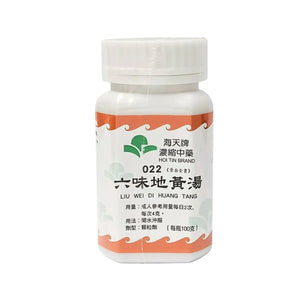
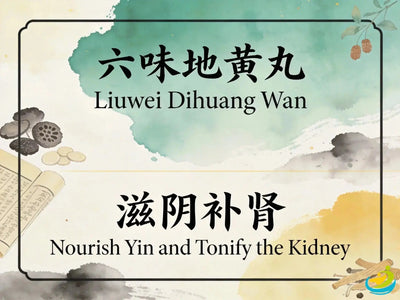
Compare Yu Quan SanSheng Mai SanLiu Wei Di Huang WanBai Hu Tang
Primary Function Generate fluids, stop thirst, tonify QiTonify Qi, generate fluids, astringe YinNourish Kidney YinClear Qi-aspect heat, generate fluids, stop thirst
Formula Category Yin-Tonifying FormulasQi-Tonifying FormulasYin-Tonifying FormulasHeat-Clearing Formulas
Typical TCM Pattern Yin DeficiencyQi DeficiencyKidney Yin DeficiencyStomach Heat
Main Conditions Dry Mouth & ThroatFatigue & Low Energy, Spontaneous Sweating, Dry Mouth & Throat, PalpitationsDizziness & Vertigo, Tinnitus, Night Sweats, Fatigue & Low Energy, Yin Deficiency ConstitutionFever, Dry Mouth & Throat, Spontaneous Sweating
Main Herbs Kudzu Root · Trichosanthes Root · Ophiopogon Tuber · Ginseng Root · Poria / Hoelen · Schisandra Fruit · Licorice RootGinseng Root · Ophiopogon Tuber · Schisandra FruitPrepared Rehmannia Root · Cornus Fruit · Chinese Yam · Alisma Rhizome · Moutan Bark / Tree Peony Bark · Poria / HoelenGypsum · Anemarrhena Rhizome · Licorice Root · Non-glutinous Rice
Classical Source Classical TCM formularyNei Wai Shang Bian Huo Lun (Li Dongyuan) / Yi Xue Qi YuanXiao Er Yao Zheng Zhi Jue (Qian Yi, Song dynasty) / later popularisedShang Han Lun (Zhang Zhongjing, Eastern Han)

How to tell them apart

Yu Quan San, Sheng Mai San, Liu Wei Di Huang Wan and Bai Hu Tang address thirst or fluid damage. Sheng Mai San generates fluids and astringes Qi; Liu Wei Di Huang Wan tonifies Kidney Yin; Bai Hu Tang clears Yangming heat with intense thirst. Yu Quan San generates fluids and tonifies Qi for thirst from Yin deficiency and depleted fluids.

For educational reference only, based on traditional pattern differentiation — not a substitute for professional advice.

Clinical Modifications for Yu Quan San

1. Additions for Severe Heat

If the internal heat is particularly intense, a practitioner might modify the formula by adding herbs like Huang Lian (Coptis Rhizome) and Huang Qin (Baical Skullcap Root).

  • Stronger Cooling Power: Both of these herbs have a bitter taste and a cold nature, which greatly enhances the formula's ability to clear out heat and dry up excess dampness.
  • Deeper Cleansing: They help flush out the stubborn, lingering "fire" from the deeper energy levels of the body, allowing for a much more thorough relief from the intense heat.
Yu Quan San

2. Additions for Severe Fluid Depletion

When the heat has severely dried out the body's natural fluids, herbs like Mai Dong (Ophiopogon Tuber) and Sheng Di (Rehmannia Root) are often included in the mix.

  • Restoring Essential Moisture: These herbs are excellent at nourishing Yin (the body's natural cooling and moistening system) and helping the body generate fresh fluids.
  • Targeted Relief: By replenishing what the heat burned away, they directly relieve uncomfortable, dry symptoms like a parched throat and extreme thirst, helping the body properly rehydrate.

What the Science Suggests

1. Pharmacological Studies

Modern scientific research has started to shed light on how the traditional ingredients in Yu Quan San (Jade Spring Powder) work from a biological perspective.

  • Fever and Inflammation Reduction: Studies suggest that Shi Gao (Gypsum) and Zhi Mu (Anemarrhena Rhizome) have natural fever-reducing and anti-inflammatory properties. Shi Gao is believed to help calm the central nervous system's temperature regulation center, while Zhi Mu helps reduce general inflammation and fight off certain bacteria.
  • Immune and Digestive Protection: Research also indicates that the gentler ingredients, like Gan Cao (Licorice Root) and Jing Mi (Non-glutinous Rice), play a role in regulating the immune system while forming a protective barrier for the stomach and intestines.
Yu Quan San

2. Expanded Clinical Applications

As modern integrative medicine continues to evolve, the clinical uses for Yu Quan San (Jade Spring Powder) have expanded well beyond its historical textbook applications.

  • Bridging Old and New: Originally designed strictly for traditional "Qi-level excess heat," modern practitioners are now applying this ancient formula to contemporary health issues.
  • Modern Condition Management: For instance, in conditions like modern-day diabetes—where patients often experience symptoms identical to traditional severe heat and fluid depletion (like extreme thirst and dryness)—practitioners have successfully adapted this formula. This has opened up exciting new pathways for managing these types of metabolic symptoms using traditional herbal wisdom.

Safety Considerations

1. Use with Caution in Deficiency-Cold Constitutions

Because Yu Quan Powder is cold in nature, people with deficiency-cold conditions, such as spleen-stomach deficiency-cold, should use it cautiously. It may worsen symptoms and cause abdominal pain, diarrhea, or cold stomach pain.

2. Stop Once Symptoms Improve

When using Yu Quan Powder for excessive heat in the qi level, monitor the condition closely. Stop taking it once the fever and other symptoms improve. Avoid prolonged or excessive use to prevent weakening the body’s vital energy.

Questions About Yu Quan San

Q1: What are the actions of Yu Quan San?
Yu Quan San has the actions of nourishing Yin, generating fluids, stopping thirst, and mildly supporting Qi. “Jade spring powder” is a classical fluid-generating formula for dry mouth and wasting-thirst (xiao ke) from Heat injuring Qi and Yin.
Q2: Which modern conditions is Yu Quan San suited to?
Modern TCM clinical practice commonly applies it to individuals whose pattern differentiation falls within Qi-Yin deficiency with dryness-Heat, including persistent thirst and dry mouth of this pattern, some xiao ke presentations after medical diagnosis, and late-stage febrile illness with remaining dry mouth — never as a replacement for diabetes medication or endocrine care.
Q3: Is Yu Quan San suitable for improving thirst that drinking does not fully relieve?
For presentations of dry mouth and throat, thirst, fatigue, possible frequent urination of deficiency-Heat type, a red tongue with scant coating, and a thin rapid pulse — in those whose pattern differentiation confirms Yin injury with residual Heat — TCM commonly applies Yu Quan San as an adjunct. New or worsening thirst with weight loss requires medical evaluation of diabetes and other causes.
Q4: Who should not take Yu Quan San?
Those with Spleen-Stomach deficiency Cold and loose stools, Damp-Phlegm without dryness, or an acute exterior pathogen are generally not suitable. The formula is cool and moistening. Use should be assessed by a qualified TCM physician.
Q5: How does this powder generate fluids without only piling on rich Yin tonics?
Ge Gen and Tian Hua Fen raise fluids and clear Heat that is burning them. Sheng Di Huang and Mai Dong nourish deeper Yin. Wu Wei Zi astringes so newly generated fluids are not immediately lost. Nuo Mi and Gan Cao support the Middle so moistening herbs can be digested. The design is generate, distribute, and hold fluids — not a heavy Rehmannia pile that a weak Stomach cannot move.
Q6: How does Yu Quan San differ from Bai Hu Tang or Liu Wei Di Huang Wan?
Bai Hu Tang (and Jing Yue’s two-herb Yu Quan San with Shi Gao) treats blazing Yangming Heat thirst in a robust excess patient. Liu Wei Di Huang Wan more deeply tonifies Kidney Yin and is less focused on urgent fluid generation for the mouth and Stomach. The commonly used seven-herb Yu Quan San is chosen for Qi-Yin deficiency thirst and dryness rather than high fever or isolated Kidney Yin decline.
Q7: What are the main ingredients of Yu Quan San?
A widely used composition consists of Ge Gen to raise fluids and clear Heat; Tian Hua Fen to generate fluids and stop thirst; Sheng Di Huang and Mai Dong to nourish Yin; Wu Wei Zi to astringe fluids; and Nuo Mi and Gan Cao to support the Middle. Other historical “Yu Quan” prescriptions exist (including a Shi Gao–Gan Cao powder and more complex patents); the prescriber should specify which version is meant.
Q8: Is Yu Quan San suitable for long-term use?
It may be used for a course of treatment in chronic Qi-Yin deficiency thirst under professional supervision. Loose stools or a greasy coating mean it should be modified. If used around a xiao ke / diabetes picture, blood glucose must still be managed with standard medical care.
Q9: Can this formula replace diabetes medication because it treats xiao ke?
No. Xiao ke is a TCM pattern that may overlap with diabetes, but Yu Quan San generates fluids and nourishes Yin; it is not a proven substitute for insulin or other glucose-lowering treatment. Using it instead of indicated medical therapy is unsafe.
Q10: What lifestyle advice supports the use of Yu Quan San?
Sipping fluids regularly, avoiding alcohol and drying spicy food, protecting sleep, and completing recommended blood-glucose and endocrine tests all support correct use. Excessive thirst with weight loss, vomiting, or confusion is a medical emergency.

General Questions

How do I choose the right formula?
TCM formulas are traditionally selected according to individual pattern differentiation rather than by symptom alone. If you're not sure which formula fits your presentation, take our AI Assessment below for a personalized starting point, then confirm with a qualified TCM practitioner.
What are concentrated herbal granules?
Concentrated herbal granules are made by decocting raw herbs, then extracting and concentrating the resulting liquid into a fine granule or powder form. This preserves the same active compounds as a traditional decoction while making the herbs far easier to store, measure, and prepare.
How should I take these products?
Dissolve the recommended amount of granules in hot water, stir until fully dissolved, and drink while warm — following the dosage and frequency advised by your TCM practitioner or as stated on the product packaging.
Are concentrated herbal granules equivalent to traditional decoctions?
Concentrated granules are produced from the same herbs and processed to retain their active compounds, so they are traditionally regarded as a convenient alternative to decoctions rather than a different remedy. Some practitioners note subtle differences in strength or absorption between the two forms, so your TCM practitioner may adjust dosage accordingly.
Are your products authentic?
Yes. HJMEDICAL sources its concentrated granules exclusively from established, reputable manufacturers such as Nong's and Hoi Tin, both long-standing names in the TCM granules industry, with GMP compliance stated directly on their packaging.
Are HJMEDICAL products manufactured under GMP standards?
HJMEDICAL sources its concentrated granules from established, reputable manufacturers such as Nong's and Hoi Tin, both long-standing names in the TCM granules industry. GMP compliance for these products is stated directly on their packaging.
Do you ship internationally?
Yes — we ship worldwide! Every order goes out via Hong Kong Post, and your exact shipping cost and estimated delivery time for your address are calculated and shown right at checkout, so there are never any surprises. We also offer free shipping once your order reaches our free-shipping threshold, so it's easy to stock up on your favorite formulas and save.
Can I take more than one formula at the same time?
Some formulas are traditionally combined, while others overlap or counteract each other. We recommend checking with a qualified TCM practitioner before combining formulas, especially if you are already taking other medication.
Are these products suitable during pregnancy or breastfeeding?
Some TCM formulas are not suitable during pregnancy or breastfeeding. Please consult a qualified TCM practitioner or your doctor before use if you are pregnant, trying to conceive, or nursing.
Do these products replace medical treatment?
No. These products are traditional herbal supplements intended to support wellbeing according to TCM principles — they are not a replacement for professional medical diagnosis or treatment. Please consult a qualified TCM practitioner or licensed healthcare provider before starting, stopping, or combining any treatment, especially if you have a chronic condition.
Medical Disclaimer

For general TCM education only — not medical advice. Consult a qualified TCM practitioner or licensed healthcare provider before use, especially if pregnant, nursing, on medication, or managing a chronic condition.

Not sure which formula is right for you?

Take the AI Assessment

最新文章

Login

Forgot your password?

Don't have an account yet?
Create account

Yu Quan San: Classic TCM Formula for Xiao Ke, Thirst, Frequent Urination & Fluid Damage