
Chest Tightness
胸悶 / 胸闷
Sensation of pressure or constriction in the chest.
Quick Facts
| Health Topic | Cardiovascular Care |
|---|---|
| Also Known As | Chest oppression, Tight chest, Chest constraint, Feeling of chest pressure, Oppressive chest |
| Common Symptoms | A sense of tightness, pressure or constraint in the chest that is not necessarily sharp pain. Breathing may feel restricted, and the sensation can worsen with emotion, weather change or after meals. Sighing or a need to stretch the chest sometimes brings temporary relief. |
| Related TCM Patterns | Phlegm-Heat · Phlegm-Dampness · Damp-Heat · Qi Stagnation · Blood Stasis |
| Related Classical Formulas |
Chai Hu Shu Gan SanYue Ju WanSi Ni SanXue Fu Zhu Yu TangChai Hu Jia Long Gu Mu Li TangXiao Chai Hu TangChai Hu Gui Zhi Gan Jiang TangZhi Shi Xie Bai Gui Zhi TangBan Xia Hou Po TangSan Ren TangQing Qi Hua Tan TangXiao Xian Xiong TangSu Zi Jiang Qi TangWu Yao Shun Qi SanGui Zhi Qu Shao Yao TangShen Mi TangGua Lou Zhi Shi TangShi Shen TangXiang Su San
|
| Related Articles | Chest Tightness: Syndrome Differentiation and Daily Care |
Chest Tightness in Traditional Chinese Medicine
In Traditional Chinese Medicine, chest tightness is often associated with Qi stagnation or Blood stasis patterns. Differentiation looks at whether the sensation is moving or fixed, whether emotion clearly triggers it, whether there is rib-side distension or dark facial colour, and whether the pulse is wiry or choppy. Classical formulas are matched to these pattern features rather than to the feeling of tightness alone. Accompanying signs such as tongue appearance, pulse quality and the presence of heat or cold help distinguish one presentation from another.
TCM Patterns Associated With Chest Tightness
The same presentation may be understood through more than one pattern. Pattern differentiation weighs the accompanying signs, not the symptom on its own.
| Pattern | Common Features | Related Formulas |
|---|---|---|
| Phlegm-Heat痰熱證Phlegm Patterns | Yellow or sticky phlegm that is hard to expectorate, chest tightness, and a sense of heat or restlessness. There may be a bitter taste, thirst, and constipation or dark urine when heat is marked. Cough can be forceful with a rattling sound. Tongue red with a yellow greasy coating; pulse slippery and rapid. | |
| Phlegm-Dampness痰濕證Phlegm Patterns | Copious white or sticky phlegm, a heavy chest or head, and a greasy tongue coating. There may be nausea, poor appetite, and a foggy or heavy mental feeling that worsens in damp weather or after rich food. Coughing brings up phlegm that is hard to clear completely. Tongue pale with a thick greasy white coating; pulse slippery. | |
| Damp-Heat濕熱證Damp Patterns | A heavy body with a sense of heat, sticky or bitter taste in the mouth, scanty dark urine, and discomfort that worsens in hot humid weather. There may be greasy skin, sticky stools, or yellowish discharge. Thirst is present but drinking may not feel satisfying. Tongue red with a yellow greasy coating; pulse slippery and rapid. | |
| Qi Stagnation氣滯證Stagnation Patterns | Distension, tightness or a constrained feeling in the chest, flanks or abdomen that comes and goes with emotion or stress. Frequent sighing, a sense that emotions are hard to move, and in women premenstrual breast or lower abdominal discomfort are common. Symptoms often ease after movement, expression or belching. Tongue may be normal or slightly dusky; pulse wiry. | |
| Blood Stasis血瘀證Stagnation Patterns | Fixed, stabbing or piercing pain that does not move freely, often worse at night or with pressure. The complexion may look darker or purplish, and in women the menstrual flow can be dark with clots. Lips or nails may appear dusky. Tongue dark or with purple spots or congested veins under the tongue; pulse choppy or wiry and hesitant. |
Classical Formulas Traditionally Associated
Associated with 19 classical formulas
Listed for study. Which formula fits, if any, depends on the pattern rather than the symptom.
Chai Hu Shu Gan San
柴胡疏肝散 · Chái Hú Shū Gān Sǎn
Qi StagnationQi-Regulating FormulasYue Ju Wan
越鞠丸 · Yuè Jū Wán
Qi StagnationQi-Regulating FormulasSi Ni San
四逆散 · Sì Nì Sǎn
Qi StagnationHarmonising FormulasXue Fu Zhu Yu Tang
血府逐瘀湯 · Xuè Fǔ Zhú Yū Tāng
Blood StasisBlood-Invigorating FormulasChai Hu Jia Long Gu Mu Li Tang
柴胡加龍骨牡蠣湯 · Chái Hú Jiā Lóng Gǔ Mǔ Lì Tāng
Qi StagnationCalm the Shen FormulasXiao Chai Hu Tang
小柴胡湯 · Xiǎo Chái Hú Tāng
Qi StagnationHarmonising FormulasChai Hu Gui Zhi Gan Jiang Tang
柴胡桂枝乾薑湯 · Chái Hú Guì Zhī Gān Jiāng Tāng
Qi StagnationHarmonising FormulasZhi Shi Xie Bai Gui Zhi Tang
枳實薤白桂枝湯 · Zhǐ Shí Xiè Bái Guì Zhī Tāng
Qi StagnationQi-Regulating FormulasBan Xia Hou Po Tang
半夏厚朴湯 · Bàn Xià Hòu Pò Tāng
Qi StagnationQi-Regulating FormulasSan Ren Tang
三仁湯 · Sān Rén Tāng
Damp-HeatDampness-Draining FormulasQing Qi Hua Tan Tang
清氣化痰湯 · Qīng Qì Huà Tán Tāng
Phlegm-HeatPhlegm-Resolving FormulasXiao Xian Xiong Tang
小陷胸湯 · Xiǎo Xiàn Xiōng Tāng
Phlegm-HeatPhlegm-Resolving FormulasSu Zi Jiang Qi Tang
蘇子降氣湯 · Sū Zǐ Jiàng Qì Tāng
Phlegm-DampnessQi-Regulating FormulasWu Yao Shun Qi San
烏藥順氣散 · Wū Yào Shùn Qì Sǎn
Qi StagnationQi-Regulating FormulasGui Zhi Qu Shao Yao Tang
桂枝去芍藥湯 · Guì Zhī Qù Sháo Yào Tāng
Yang DeficiencyHarmonising FormulasShen Mi Tang
神秘湯 · Shén Mì Tāng
Qi StagnationQi-Regulating FormulasGua Lou Zhi Shi Tang
瓜蔞枳實湯 · Guā Lóu Zhǐ Shí Tāng
Qi StagnationQi-Regulating FormulasShi Shen Tang
十神湯 · Shí Shén Tāng
Wind-ColdExterior-Releasing FormulasXiang Su San
香蘇散 · Xiāng Sū Sǎn
Qi StagnationExterior-Releasing FormulasLearn More About Chest Tightness
Related Health Topic
Cardiovascular Care — Formulas that invigorate blood circulation and support heart and vessel health.
Health Topic
See all Cardiovascular Care conditions
Frequently Asked Questions
How does Traditional Chinese Medicine understand chest tightness?
In TCM, chest tightness (胸闷) reflects impaired movement of Qi in the chest, where the Heart and Lung reside. Liver Qi constraint, Phlegm-Damp obstruction, Blood stasis, Qi deficiency or Cold in the chest can all produce a sensation of oppression, fullness or restricted breathing. Sudden severe tightness must first be assessed as a possible medical emergency.
What are the common TCM patterns of chest tightness?
Frequent patterns include Liver Qi stagnation (tightness linked to stress, sighing), Phlegm-Damp in the chest (heavy oppression, greasy tongue coating), Heart Blood stasis (fixed tightness or stabbing pain), Heart-Lung Qi deficiency (tightness with fatigue and shortness of breath), and Cold constraining the chest Yang. Accurate pattern differentiation determines the treatment approach.
How does TCM regulate chest tightness?
The main principles are to regulate Qi, resolve Phlegm, invigorate Blood, tonify Heart-Lung Qi or warm Yang according to the pattern. Formulas such as modifications of Ban Xia Hou Po Tang, Gua Lou Xie Bai Bai Jiu Tang or Xue Fu Zhu Yu Tang may be considered only after serious cardiac or pulmonary causes are excluded. Internal treatment should be guided by a qualified TCM practitioner.
Related Products
 Hoi Tin Chai Hu Shu Gan San (Bupleurum Liver-Soothing Powder) 5:1 Concentrated Granules
$24.93
Hoi Tin Chai Hu Shu Gan San (Bupleurum Liver-Soothing Powder) 5:1 Concentrated Granules
$24.93
 Hoi Tin Chai Hu Shu Gan Tang (Bupleurum Liver-Soothing Decoction) 5:1 Concentrated Granules
$24.93
Hoi Tin Chai Hu Shu Gan Tang (Bupleurum Liver-Soothing Decoction) 5:1 Concentrated Granules
$24.93
 Nong's Chai Hu Shu Gan Tang (Bupleurum Liver-Soothing Decoction) 5:1 Concentrated Granules
$56.60
Nong's Chai Hu Shu Gan Tang (Bupleurum Liver-Soothing Decoction) 5:1 Concentrated Granules
$56.60
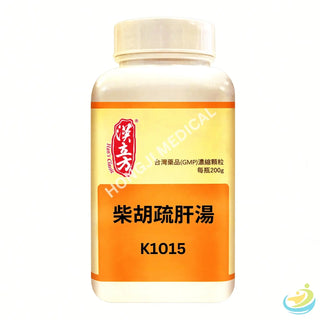 Han's Chai Hu Shu Gan Tang (Bupleurum Soothing the Liver Decoction) 5:1 Concentrated Granules
$59.44
Han's Chai Hu Shu Gan Tang (Bupleurum Soothing the Liver Decoction) 5:1 Concentrated Granules
$59.44
 Hoi Tin Yue Ju Wan (Escape Restraint Formula) 5:1 Concentrated Granules
$24.93
Hoi Tin Yue Ju Wan (Escape Restraint Formula) 5:1 Concentrated Granules
$24.93
 Nong's Yue Ju Wan (Escape Restraint Formula) 5:1 Concentrated Granules
$34.13
Nong's Yue Ju Wan (Escape Restraint Formula) 5:1 Concentrated Granules
$34.13
 Han's Yue Ju Wan (Resolving Stagnation Formula) 5:1 Concentrated Granules
$30.58
Han's Yue Ju Wan (Resolving Stagnation Formula) 5:1 Concentrated Granules
$30.58
 Hoi Tin Si Ni San (Frigid Extremities Powder) 5:1 Concentrated Granules
$22.15
Hoi Tin Si Ni San (Frigid Extremities Powder) 5:1 Concentrated Granules
$22.15
This library is educational. It describes how Traditional Chinese Medicine has traditionally understood these presentations. It is not a diagnosis, and it is not a treatment recommendation.
Back to the Condition Hub