Blood-Invigorating Formulas

補陽還五湯 · Bǔ Yáng Huán Wǔ Tāng

Bu Yang Huan Wu Tang

A classical post-stroke formula for Qi deficiency with blood stasis, hemiplegia and facial paralysis.

View formula profile →
Last reviewed August 2026
Formula CategoryBlood-Invigorating Formulas
Primary PatternQi Deficiency
Primary FunctionTonify Qi, invigorate blood, unblock channels
Primary Therapeutic PrinciplePowerfully tonify Qi to move blood and restore function
Main HerbsAstragalus Root · Chinese Angelica Root · Red Peony Root · Earthworm · Chuanxiong Rhizome · Peach Kernel · Safflower
Classical SourceQing dynasty formulary

Why This Formula?

Traditionally selected for post-stroke hemiplegia from Qi deficiency with blood stasis, rather than Liver Yang rising wind, chest blood stasis, or Qi-deficiency numbness.

Traditionally selected for post-stroke hemiplegia from Qi deficiency with blood stasis, rather than Liver Yang rising wind, chest blood stasis, or Qi-deficiency numbness.

What Is Bu Yang Huan Wu Tang?

1. Wisdom of Ancient Doctors

Bu Yang Huan Wu Tang (补阳还五汤), or Tonify Yang to Restore Five-Tenths Decoction, is a Qing-dynasty formula from Wang Qingren’s Yi Lin Gai Cuo (Corrections of Errors in Medical Circles). It belongs to the category of formulas that tonify Qi, invigorate Blood, and unblock the channels after wind-stroke.

This formula addresses Qi deficiency with Blood stasis in the channels, Wang Qingren’s explanation of hemiplegia in which upright Qi is so depleted that it can no longer move the Blood. Typical signs include hemiplegia or facial paralysis after a stroke, numbness, slurring of speech, a pale complexion, a pale or dusky tongue with white coating, and a deficient pulse.

Combining a very large dose of Huang Qi as the chief herb to powerfully tonify Qi and move Blood by restoring the “Yang” that has been lost, Dang Gui Wei, Chuan Xiong, Chi Shao, Tao Ren, and Hong Hua to invigorate Blood and dispel stasis, and Di Long to open the channels and extinguish Wind, Bu Yang Huan Wu Tang replenishes Qi so that Blood can again reach the paralyzed limbs, aiming to restore the five-tenths of function that deficiency and stasis have taken away.

Bu Yang Huan Wu Tang

2. Sequelae of Stroke

Helping patients recover after a stroke is the most common use for Bu Yang Huan Wu Tang.

  • Target Symptoms: It is primarily used after the patient is stable (post-ischemic stroke) to treat half-body paralysis, numbness, and facial drooping. It helps restore limb function and supports nerve recovery.
  • Best Results: It tends to work best for patients who start treatment relatively soon after their condition stabilizes and who clearly show signs of low energy and poor circulation.
  • Customization: Practitioners often tweak the formula based on the patient's needs. For example, if the upper arms are mostly affected, they might add Sang Zhi (Mulberry Branch) and Gui Zhi (Cassia Twig) to guide the medicine upward. If the legs are weak, they might add Niu Xi (Achyranthes Root) and Du Zhong (Eucommia Bark) to strengthen the lower body.

3. Coronary Heart Disease

This formula is also highly beneficial for heart health, specifically when a patient shows signs of qi deficiency (like a pale face, shortness of breath, and chronic fatigue) combined with poor circulation (chest tightness and pain).

  • How it Works: The Huang Qi (Astragalus) strengthens heart function and improves blood supply to the heart muscle, while the other herbs clear the coronary arteries and relieve angina (chest pain).
  • Modern Use: Clinical studies show that combining this traditional formula with standard Western medications can significantly reduce the frequency of angina attacks and greatly improve a patient's daily quality of life.
Bu Yang Huan Wu Tang

4. Cerebral Infarction

During the recovery phase of a cerebral infarction (a type of stroke caused by a blockage in the brain), patients often struggle with mobility, speech (aphasia), and cognitive issues.

  • Brain Recovery: Bu Yang Huan Wu Tang helps by actively promoting blood circulation within the brain, clearing out the microscopic blockages that cause neurological deficits.
  • Synergistic Care: Today, it is frequently used as a powerful complementary therapy alongside modern physical rehabilitation to speed up overall recovery and help patients regain their independence.

Herb Composition (Sovereign / Minister / Assistant / Envoy)

1. King Herb: Huang Qi (Astragalus)

Huang Qi (Astragalus) acts as the primary "monarch" or king herb in Bu Yang Huan Wu Tang (Buyang Huanwu Decoction) and is intentionally used in a very large dose.

  • Nature and Meridians: It is sweet in taste, slightly warm in nature, and targets the lung and spleen meridians.
  • Key Functions: It is highly valued for tonifying qi to lift yang, securing the body's exterior to stop excessive sweating, reducing edema, and promoting tissue regeneration.
  • Role in the Formula: By significantly boosting qi (the body's vital energy), it provides the necessary power to push blood through the vessels. This treats the root cause of the illness: qi deficiency leading to blood stasis. As noted in historical texts, Huang Qi is a powerhouse for treating internal deficiencies, regulating sweating, and clearing lung heat.

2. Minister Herbs: Dang Gui Wei (Angelica Tail) and Others

A supportive team of "minister" herbs works alongside the king herb to aggressively break up stasis and get the blood moving:

  • Dang Gui Wei (Angelica Tail): Warm and sweet/pungent, it excels at promoting blood circulation, unblocking meridians, and relieving pain.
  • Chi Shao (Red Peony Root): Slightly cold and bitter, it helps clear heat, cool the blood, and disperse stasis.
  • Chuan Xiong (Szechuan Lovage Rhizome): Warm and pungent, it promotes both qi and blood movement while dispelling wind.
  • Tao Ren (Peach Kernel): Known for activating blood, removing stasis, and moistening the intestines.
  • Hong Hua (Safflower): Warm and pungent, it is highly effective at dredging meridians and relieving pain caused by stasis. Synergy: Together, these five herbs amplify the blood-activating power of the formula, effectively clearing physical blockages and restoring healthy circulation to the affected areas.
Bu Yang Huan Wu Tang

3. Assistant & Guide Herb: Di Long (Earthworm)

Di Long (Earthworm) plays a unique dual role in this formula.

  • Nature: It is salty and cold, entering the liver, spleen, and bladder meridians.
  • Functions: It clears heat, calms spasms, relieves asthma, and acts as a powerful agent to unblock the body's microscopic channels.
  • Role in the Formula: As a guide, it helps deliver the medicinal effects deep into the obstructed meridians. As an assistant, its cold nature perfectly balances the warming properties of the other herbs, preventing the formula from causing internal "heat" or damaging the body's fluids.

Clinical Presentation in TCM

1. Analysis of Pathogenesis

The core problem Bu Yang Huan Wu Tang targets is qi deficiency combined with blood stasis.

  • The Vicious Cycle: In Traditional Chinese Medicine, qi is the "commander" of blood. It warms the organs and physically pushes blood through your veins. When qi is weak, it lacks the strength to move the blood, causing it to pool and stagnate (blood stasis). This blockage further traps the remaining qi, making the deficiency even worse.
  • Common Manifestations: This severe energy-blood roadblock is exactly what happens in stroke sequelae, leading to symptoms like paralysis, numbness, and facial drooping.

2. Efficacy

The primary goal of this formula is to tonify qi, activate blood circulation, and dredge the meridians.

  • The Strategy: Instead of just aggressively breaking up blood clots, it uses a massive dose of Huang Qi (Astragalus) to rebuild the body's natural energetic engine.
  • The Result: "When qi moves, blood moves." By restoring the driving force (qi) and simultaneously clearing the roadblocks (using the minister and guide herbs), normal circulation is restored, and the body can begin to heal.
Bu Yang Huan Wu Tang

3. Treatment

This formula is famously used in recovery and rehabilitation settings:

  • Stroke Sequelae: It is the go-to formula for post-stroke recovery, specifically treating half-body paralysis (hemiplegia), facial deviation, slurred speech, drooling, and incontinence, especially when the patient presents with a pale tongue and a weak pulse.
  • Modern Applications: It is also adapted for other cardiovascular and circulatory issues—such as coronary heart disease, cerebral infarction, and poor circulation in the lower legs (arteriosclerosis obliterans)—provided the underlying pattern matches the diagnosis of qi deficiency with blood stasis.

The Mechanism in Classical Theory

1. Synergy of Qi-tonifying

The brilliance of Bu Yang Huan Wu Tang lies in how it balances energy and circulation:

  • The Power of Qi: In this formula, Huang Qi (Astragalus) is used in a massive dose as the main ingredient. In Traditional Chinese Medicine, qi is the "commander of blood." A large amount of Huang Qi (Astragalus) significantly boosts your body's energy, providing the physical push needed to keep blood flowing normally and prevent clots or stasis.
  • Teamwork: It doesn't just rely on energy alone. It pairs this energy boost with blood-activating herbs like Dang Gui Wei (Angelica Tail), Chi Shao (Red Peony Root), Chuan Xiong (Szechuan Lovage Rhizome), Tao Ren (Peach Kernel), and Hong Hua (Safflower).
  • The Result: The extra qi pushes the blood, while the blood-activating herbs ensure the pathways are clear. This prevents the "traffic jam" (qi stagnation) that can happen if you only try to boost energy without clearing the roads.

2. Delicate Herb Compatibility

The way the herbs are paired in Bu Yang Huan Wu Tang is incredibly precise:

  • Balancing Act: While Huang Qi (Astragalus) provides the energy, Dang Gui Wei (Angelica Tail) gets the blood moving. One nourishes, the other activates.
  • Clearing the Blockages: The combination of Chi Shao (Red Peony Root), Chuan Xiong (Szechuan Lovage Rhizome), Tao Ren (Peach Kernel), and Hong Hua (Safflower) creates a powerful team that specifically breaks down areas of stagnant blood.
  • The Guide: Finally, Di Long (Earthworm) acts as a highly effective guide. It specializes in unblocking tiny collaterals (micro-vessels), carrying the medicinal power of the other herbs directly to the affected, hard-to-reach areas.
Bu Yang Huan Wu Tang

3. Integrated Holistic and Local Treatment

This formula doesn't just treat the symptom; it treats the whole body system:

  • Holistic Conditioning: By heavily replenishing qi, it strengthens the body's overall foundation, improving natural disease resistance and self-repair capabilities. It fixes the root cause—the underlying energy deficiency.
  • Targeted Relief: At the same time, the blood-moving herbs go straight to work on the local blockages, helping to relieve physical symptoms like limb numbness and paralysis.
  • The Big Picture: This dual approach—healing the whole body while directly attacking the local problem—is a classic example of TCM's comprehensive treatment strategy.

Clinical Comparison Table

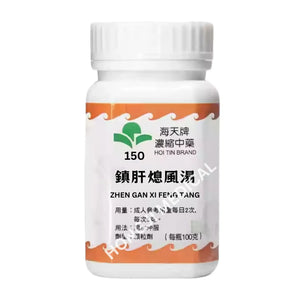
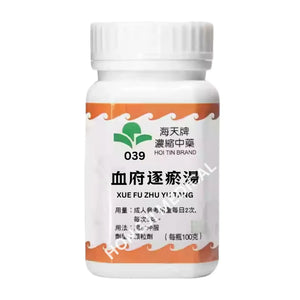
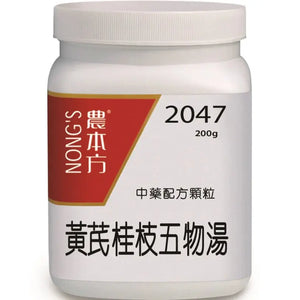
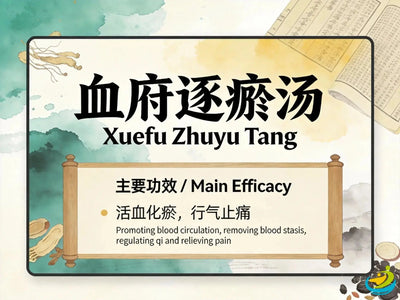
Compare Bu Yang Huan Wu TangZhen Gan Xi Feng TangXue Fu Zhu Yu TangHuang Qi Gui Zhi Wu Wu Tang
Primary Function Tonify Qi, invigorate blood, unblock channelsSedate Liver Yang, extinguish internal wind, nourish YinInvigorate Blood, dispel stasis, move QiTonify Qi, warm channels, relieve numbness
Formula Category Blood-Invigorating FormulasLiver-Wind Extinguishing FormulasBlood-Invigorating FormulasQi-Tonifying Formulas
Typical TCM Pattern Qi DeficiencyLiver FireBlood StasisQi Deficiency
Main Conditions Numbness in LimbsDizziness & Vertigo, HeadacheChest Tightness, Headache, Hypochondriac Distension, Emotional Depression, Anxiety RestlessnessCold Limbs, Numbness in Limbs, Joint Discomfort
Main Herbs Astragalus Root · Chinese Angelica Root · Red Peony Root · Earthworm · Chuanxiong Rhizome · Peach Kernel · SafflowerAchyranthes Root · Hematite · Dragon Bone / Fossilized Bone · Oyster Shell · Tortoise Plastron · White Peony Root · Scrophularia Root · Asparagus Tuber · Toosendan Fruit · Barley Sprout · Virgate Wormwood · Licorice RootPeach Kernel · Safflower · Chinese Angelica Root · Raw Rehmannia Root · Chuanxiong Rhizome · Red Peony Root · Achyranthes Root · Bupleurum Root · Platycodon Root · Bitter Orange · Licorice RootAstragalus Root · Cinnamon Twig · White Peony Root · Fresh Ginger · Jujube / Chinese Date
Classical Source Qing dynasty formularyYi Xue Zhong Zhong Can Xi Lu (Records of Medicine with Reference to East and West, Zhang Xichun, 1918)Yi Lin Gai Cuo (Corrections of Errors in Medical Classics, Wang Qingren, Qing dynasty)Jin Gui Yao Lue (Zhang Zhongjing, Eastern Han)

How to tell them apart

Bu Yang Huan Wu Tang, Zhen Gan Xi Feng Tang, Xue Fu Zhu Yu Tang and Huang Qi Gui Zhi Wu Wu Tang address post-stroke or blood patterns. Zhen Gan Xi Feng Tang anchors Liver Yang and extinguishes wind; Xue Fu Zhu Yu Tang invigorates blood in the chest; Huang Qi Gui Zhi Wu Wu Tang tonifies Qi and warms the exterior for numbness. Bu Yang Huan Wu Tang powerfully tonifies Qi to move blood for hemiplegia from Qi deficiency with blood stasis.

For educational reference only, based on traditional pattern differentiation — not a substitute for professional advice.

Clinical Modifications for Bu Yang Huan Wu Tang

In clinical practice, a practitioner will often customize Bu Yang Huan Wu Tang (Buyang Huanwu Decoction) by adding or removing specific herbs based on the patient's unique symptoms. Here are some common modifications:

1. Addition and Subtraction of Upper Limb Symptoms

If a patient is experiencing pain, numbness, or stiffness specifically in their arms or shoulders, the following herbs are often added:

  • Sang Zhi (Mulberry Branch): This herb is excellent at unblocking the joints of the upper limbs, clearing out wind and dampness, and relieving pain.
  • Gui Zhi (Cassia Twig): Warm and active, it helps warm the channels, push out the cold, and soothe discomfort.
  • Qiang Huo (Notopterygium Root): Great for relieving surface symptoms and dispelling cold and dampness, making it especially effective for rheumatic joint pain in the upper body.
  • Jiang Huang (Turmeric): This herb strongly promotes blood flow, breaks up stasis, and eases pain caused by poor circulation in the arms.

2. Addition and Subtraction of Lower Limb Symptoms

When the primary issues are in the legs—such as weakness, muscle flaccidity, swelling, or pain—the formula can be adjusted with these additions:

  • Niu Xi (Achyranthes Root): This herb is famous for "guiding" the blood downward. It promotes circulation, strengthens the liver and kidneys, and fortifies the bones and tendons in the lower body.
  • Du Zhong (Eucommia Bark): An excellent tonic for the liver and kidneys, it helps rebuild strength in weak tendons and bones of the legs.
  • Mu Gua (Chinese Quince): This herb relaxes the tendons, unblocks collaterals, and helps resolve dampness, making it great for relieving leg cramps and muscle spasms.
  • Du Huo (Pubescent Angelica Root): It specializes in pushing wind and dampness out of the lower body, providing relief for lower back and leg joint pain.
Bu Yang Huan Wu Tang

3. Addition and Subtraction of Speech Disorders

For stroke recovery patients struggling with speech impairment (aphasia), practitioners might add herbs that target the mind and neurological function:

  • Shi Chang Pu (Sweetflag Rhizome): It is used to "open the orifices" and resolve phlegm, helping to clear the mind and promote the return of language skills.
  • Yuan Zhi (Polygala Root): This herb calms the mind, connects the heart and kidney energies, and reduces phlegm, which aids in improving cognitive and expressive abilities.
  • Yu Jin (Turmeric Root Tuber): It promotes blood circulation, clears heat from the heart, and improves blood flow to the brain, indirectly supporting the recovery of speech functions.

What the Science Suggests

Modern science has taken a keen interest in Bu Yang Huan Wu Tang (Buyang Huanwu Decoction), exploring exactly how it works on a biological level. Here is what current research shows:

1. Impact on Nervous System

  • Stroke Recovery: Studies indicate that the formula helps improve cerebral ischemia-reperfusion injury (damage caused when blood supply returns to the brain after a stroke). It reduces nerve cell damage and promotes neurological recovery.
  • Mechanism: It appears to work by regulating neurotransmitters, stopping nerve cells from dying (apoptosis), and boosting overall blood flow in the brain. Animal studies show it increases neuroprotective factors.
  • Future Potential: Researchers are also exploring its use in neurodegenerative diseases like Parkinson's and Alzheimer's, as it may help delay disease progression by improving nerve cell metabolism.

2. Effect on Cardiovascular System

  • Heart Health: The formula acts as a vasodilator, meaning it widens the coronary arteries. This increases blood flow to the heart muscle and significantly relieves angina (chest pain).
  • Blood Health: It has been shown to "thin" the blood by reducing blood viscosity and stopping platelets from clumping together, which directly lowers the risk of dangerous blood clots (thrombosis).
  • Integrative Medicine: When used alongside Western cardiovascular medications, clinical trials show it can enhance treatment efficacy, lower blood pressure (by improving the lining of the blood vessels), and improve long-term patient outcomes.

3. Immune Regulatory Function

  • Boosting Defenses: Research shows this formula can effectively regulate and enhance the body's immune system, making it highly beneficial for patients with weakened immunity.
  • Reducing Inflammation: By managing how immune cells act and release immune factors, it serves as a helpful complementary treatment for chronic inflammatory conditions, such as chronic bronchitis and rheumatoid arthritis.
Bu Yang Huan Wu Tang

4. Other Effects

  • Digestion: The formula can help stimulate gastrointestinal movement, improving overall digestion and relieving indigestion.
  • Kidney Protection: It shows potential in protecting kidney function by improving blood circulation to the renal system and reducing kidney damage.
  • Ongoing Research: Preliminary studies are also investigating the formula's potential antioxidant and anti-tumor properties, opening up new avenues for future medical research.

Safety Considerations

1. Weak Constitution and Bleeding Disorders

People with a weak constitution or poor spleen-stomach function may develop bloating or poor appetite, especially with a high dose of Huangqi. A physician may adjust the dosage or add spleen-strengthening herbs.

Patients with bleeding disorders, such as thrombocytopenic purpura or hemophilia, should use Buyang Huanwu Decoction only under medical supervision, as it may increase bleeding risk.

2. Pregnancy and Menstruation

Buyang Huanwu Decoction contains blood-activating and stasis-removing herbs. Pregnant women should avoid it because of the potential risk of fetal harm or miscarriage. Women should also avoid taking it during menstruation, as it may cause heavier or prolonged bleeding.

Questions About Bu Yang Huan Wu Tang

Q1: What are the actions of Bu Yang Huan Wu Tang?
Bu Yang Huan Wu Tang has the actions of tonifying Qi, invigorating Blood, and unblocking the channels. Wang Qingren designed it to “tonify Yang and restore the five-tenths” of Qi thought to be lost after Wind-stroke with Qi deficiency and Blood stasis.
Q2: Which modern conditions is Bu Yang Huan Wu Tang suited to?
Modern TCM clinical practice commonly applies it to individuals whose pattern differentiation falls within Qi deficiency with Blood stasis after Wind-stroke, including sequelae of ischemic stroke with hemiplegia of this pattern, facial deviation and numbness from Qi-deficient stasis, and some chronic weak-limb presentations after medical stroke care is already in place.
Q3: Is Bu Yang Huan Wu Tang suitable for improving weakness and paralysis after a stroke?
For presentations of hemiplegia or weak numb limbs, a pale complexion, shortness of breath, spontaneous sweat, a pale tongue with static marks, and a deficient pulse — in those whose pattern differentiation confirms Qi deficiency with Blood stasis — TCM commonly applies this formula as an adjunct to rehabilitation. It cannot replace emergency stroke treatment, imaging, or secondary-prevention medicine.
Q4: Who should not take Bu Yang Huan Wu Tang?
Those with acute hemorrhagic stroke, Yin-deficiency Liver-Yang rising, Blood-Heat, or a forceful excess pulse are generally not suitable. A large dose of Huang Qi plus Blood-invigorating herbs can worsen bleeding or stir Yang. Use should be assessed by a qualified TCM physician only after the stroke type is medically clear.
Q5: Why is Huang Qi used in a very large dose?
Wang Qingren held that post-stroke paralysis comes mainly from collapse of Qi, so Blood cannot move through the channels. A large dose of Huang Qi strongly tonifies Qi so that a small team of Blood-invigorating herbs — Dang Gui, Chuan Xiong, Chi Shao, Tao Ren, and Hong Hua — can move without further consuming Qi. Di Long unblocks the collaterals. Tonifying Qi without moving Blood leaves the stasis; moving Blood without restoring Qi leaves the channels empty.
Q6: How does Bu Yang Huan Wu Tang differ from Xue Fu Zhu Yu Tang or Zhen Gan Xi Feng Tang?
Xue Fu Zhu Yu Tang invigorates Blood in the chest for pain from stasis with less emphasis on massive Qi tonification. Zhen Gan Xi Feng Tang anchors Liver Yang and extinguishes Wind for the excess Yang-rising type of stroke risk. Bu Yang Huan Wu Tang is the deficient, pale, sweating, weak-pulse post-stroke formula, not the red-faced, wiry-pulse, Yang-rising one.
Q7: What are the main ingredients of Bu Yang Huan Wu Tang?
The Yi Lin Gai Cuo formula consists of a large dose of Huang Qi to tonify Qi; Dang Gui Wei to nourish and move Blood; Chuan Xiong, Chi Shao, Tao Ren, and Hong Hua to invigorate Blood and dispel stasis; and Di Long to unblock the channels and collaterals.
Q8: Is Bu Yang Huan Wu Tang suitable for long-term use?
It may be used for a supervised course during post-stroke rehabilitation of the correct pattern. Huang Qi and Blood-movers should be reviewed if Heat, rising blood pressure, or bleeding appears. It is not a lifelong “stroke prevention tea” for people without Qi-deficient stasis.
Q9: Can this formula help both the paralyzed limb and the facial deviation of the same pattern?
Yes. When Qi is too weak to move Blood, the channels of the face and limbs both lose nourishment and become static. Tonifying Qi and invigorating Blood can support both complaints of one Qi-deficient stasis pattern. Recovery still depends on the stroke itself, rehabilitation, and conventional secondary prevention.
Q10: What lifestyle advice supports the use of Bu Yang Huan Wu Tang?
Following prescribed rehabilitation, blood-pressure and antiplatelet plans, and swallowing-safety advice all matter more than the decoction alone. Sudden new weakness, severe headache, or vomiting is a stroke emergency again — not a reason to increase this formula.

General Questions

How do I choose the right formula?
TCM formulas are traditionally selected according to individual pattern differentiation rather than by symptom alone. If you're not sure which formula fits your presentation, take our AI Assessment below for a personalized starting point, then confirm with a qualified TCM practitioner.
What are concentrated herbal granules?
Concentrated herbal granules are made by decocting raw herbs, then extracting and concentrating the resulting liquid into a fine granule or powder form. This preserves the same active compounds as a traditional decoction while making the herbs far easier to store, measure, and prepare.
How should I take these products?
Dissolve the recommended amount of granules in hot water, stir until fully dissolved, and drink while warm — following the dosage and frequency advised by your TCM practitioner or as stated on the product packaging.
Are concentrated herbal granules equivalent to traditional decoctions?
Concentrated granules are produced from the same herbs and processed to retain their active compounds, so they are traditionally regarded as a convenient alternative to decoctions rather than a different remedy. Some practitioners note subtle differences in strength or absorption between the two forms, so your TCM practitioner may adjust dosage accordingly.
Are your products authentic?
Yes. HJMEDICAL sources its concentrated granules exclusively from established, reputable manufacturers such as Nong's and Hoi Tin, both long-standing names in the TCM granules industry, with GMP compliance stated directly on their packaging.
Are HJMEDICAL products manufactured under GMP standards?
HJMEDICAL sources its concentrated granules from established, reputable manufacturers such as Nong's and Hoi Tin, both long-standing names in the TCM granules industry. GMP compliance for these products is stated directly on their packaging.
Do you ship internationally?
Yes — we ship worldwide! Every order goes out via Hong Kong Post, and your exact shipping cost and estimated delivery time for your address are calculated and shown right at checkout, so there are never any surprises. We also offer free shipping once your order reaches our free-shipping threshold, so it's easy to stock up on your favorite formulas and save.
Can I take more than one formula at the same time?
Some formulas are traditionally combined, while others overlap or counteract each other. We recommend checking with a qualified TCM practitioner before combining formulas, especially if you are already taking other medication.
Are these products suitable during pregnancy or breastfeeding?
Some TCM formulas are not suitable during pregnancy or breastfeeding. Please consult a qualified TCM practitioner or your doctor before use if you are pregnant, trying to conceive, or nursing.
Do these products replace medical treatment?
No. These products are traditional herbal supplements intended to support wellbeing according to TCM principles — they are not a replacement for professional medical diagnosis or treatment. Please consult a qualified TCM practitioner or licensed healthcare provider before starting, stopping, or combining any treatment, especially if you have a chronic condition.
Medical Disclaimer

For general TCM education only — not medical advice. Consult a qualified TCM practitioner or licensed healthcare provider before use, especially if pregnant, nursing, on medication, or managing a chronic condition.

Not sure which formula is right for you?

Take the AI Assessment

最新文章

Login

Forgot your password?

Don't have an account yet?
Create account

Bu Yang Huan Wu Tang: Classic TCM Formula for Qi Deficiency with Blood Stasis & Post-Stroke Sequelae