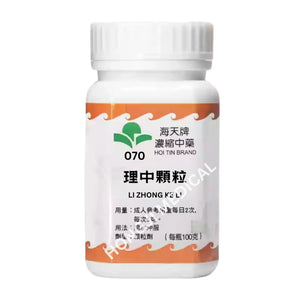
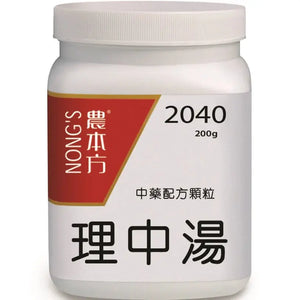
Yang-Tonifying Formulas

理中汤 · Lǐ Zhōng Tāng

Li Zhong Tang

Foundational formula for Spleen and Stomach deficiency Cold (Middle Yang deficiency). Presents with abdominal pain relieved by warmth, loose stools, vomiting of clear fluid and cold limbs.

View formula profile →
Last reviewed August 2026
Formula CategoryYang-Tonifying Formulas
Primary PatternYang Deficiency
Primary FunctionWarm Middle, tonify Spleen Yang
Primary Therapeutic PrincipleWarm the Middle Jiao and strengthen the Spleen
Main HerbsGinseng Root · Dried Ginger · White Atractylodes Rhizome · Honey-fried Licorice
Classical SourceShang Han Lun (Zhang Zhongjing, Eastern Han)

Why This Formula?

Traditionally selected for straightforward Middle Yang deficiency with cold abdominal pain, loose stools and poor appetite, warming and tonifying directly — without the sweet moderating and Blood-nourishing action of Xiao Jian Zhong Tang, and far milder than Da Jian Zhong Tang, which is reserved for severe interior Cold with intense pain.

Traditionally selected for straightforward Middle Yang deficiency with cold abdominal pain, loose stools and poor appetite, warming and tonifying directly — without the sweet moderating and Blood-nourishing action of Xiao Jian Zhong Tang, and far milder than Da Jian Zhong Tang, which is reserved for severe interior Cold with intense pain.

What Is Li Zhong Tang?

1. Classical Source

Li Zhong Tang (理中汤), or Regulate the Middle Decoction, is a classical formula from Zhang Zhongjing’s Shang Han Lun (Treatise on Cold Damage). It belongs to the category of formulas that warm the Middle Burner and strengthen the Spleen.

This formula addresses deficiency-Cold of the Middle Burner (Taiyin pattern), in which Spleen Yang is too weak to transform and transport. Typical signs include abdominal pain relieved by warmth and pressure, watery diarrhea, poor appetite, nausea or vomiting of thin fluid, cold limbs, a pale tongue with white coating, and a deep thin pulse.

Combining Gan Jiang as the chief herb to warm Spleen and Stomach Yang and dispel interior Cold, Ren Shen to tonify Qi and strengthen the Spleen, Bai Zhu to dry Dampness and reinforce the transporting function of the Middle, and Zhi Gan Cao to tonify Qi and harmonize, Li Zhong Tang effectively warms the Center, strengthens the Spleen, and restores the transformation of food and fluids.

Li Zhong Tang

2. Digestive System Disorders

Li Zhong Tang (理中汤, Regulate the Middle Decoction) is a classic formula for warming the Middle Jiao and strengthening the Spleen and Stomach. Li Zhong Tang's profound ability to warm the middle-jiao and strengthen the spleen makes it a versatile formula for various conditions stemming from middle-burner deficiency cold.

Effectively treats chronic gastritis, gastric ulcer, and chronic enteritis linked to spleen–stomach deficiency cold. It alleviates epigastric cold pain, poor appetite, bland taste, cold limbs, and chronic diarrhea by warming the middle and restoring digestive function.

3. Gynecological Disorders

Applied in cases of uterine cold-related infertility and dysmenorrhea due to cold stagnation or yang deficiency. Li Zhong Tang warms the uterus, improves the environment for implantation, and promotes qi-blood flow to relieve menstrual pain.

Li Zhong Tang

4. Other Conditions

Beneficial for individuals with cold constitutions prone to infections by enhancing spleen function and immunity. It also addresses pediatric hypersalivation caused by spleen–stomach deficiency, characterized by thin, clear saliva, by warming the middle and strengthening the spleen.

Herb Composition (Sovereign / Minister / Assistant / Envoy)

1. Monarch (Jun): Gan Jiang (Dried Ginger)

Acrid and warm, Gan Jiang warms the middle and disperses cold, expelling cold from the spleen and stomach. It restores middle-jiao yang, reviving transportive and transformative functions, acting as the key agent for invigorating spleen-stomach function.

2. Minister (Chen): Ren Shen (Ginseng)

Sweet, slightly bitter, and mildly warm, Ren Shen greatly tonifies yuan qi and supplements spleen qi. It restores collapsed qi, strengthens spleen and lung, generates fluids, and nourishes blood, enhancing transportive function in cooperation with Gan Jiang.

3. Assistant (Zuo): Bai Zhu (Atractylodes)

Bitter, sweet, and warm, Bai Zhu tonifies the spleen and qi, dries dampness, and promotes water metabolism. It reinforces the spleen-strengthening and damp-drying actions, improving middle-jiao's transportive function and preventing cold-damp accumulation.

Li Zhong Tang

4. Envoy (Shi): Zhi Gan Cao (Honey‑Fried Licorice)

Sweet and neutral, Zhi Gan Cao harmonizes the herbs, ensuring coordinated actions. It also augments the formula’s spleen-tonifying effect and moderates the harshness or dryness of Gan Jiang and Bai Zhu, ensuring a balanced, effective regimen.

Clinical Presentation in TCM

1. Pathogenesis: Middle-Jiao Deficiency Cold

Li Zhong Tang directly addresses the fundamental imbalance of middle-jiao deficiency cold, effectively restoring digestive function and warming the core. 

The primary pathomechanism is middle-burner deficiency cold, where weakened spleen–stomach yang leads to cold accumulation, impaired digestion, undigested food, and internal cold-dampness, manifesting as a constellation of digestive issues.

2. Functions: Warm & Fortify

Li Zhong Tang works by warming the middle and dispersing cold, alongside tonifying the spleen and augmenting qi. This combined action restores the vital middle-jiao yang, eliminating cold-dampness and rebuilding the foundational digestive functions of the spleen and stomach..

3. Clinical Indications

It is indicated for spleen–stomach deficiency cold, presenting with symptoms like continuous epigastric and abdominal pain (relieved by warmth/pressure), clear abundant urination, vomiting, a bland taste, a pale tongue with a white coating, and a deep, thin, or slow and weak pulse.

Li Zhong Tang

4. How to Identify If Li Zhong Tang Fits Your Symptoms

It is indicated primarily for Spleen-Stomach deficiency cold (middle burner Yang deficiency). Use this self-check as a practical guide—not a substitute for professional TCM diagnosis.

Step 1: Check Your Tongue

Look in the mirror under good natural light:

  • Tongue body: Pale or pale-swollen, often with teeth marks (scalloped edges).
  • Tongue coating: White, moist, slippery, or slightly greasy/white-slimy. → A red tongue body or yellow/dry coating usually points away from this formula (more toward heat or Yin deficiency patterns).

Step 2: Evaluate Your Temperature Preference

  • Prefer warm or hot drinks and foods; dislike or feel worse with cold/iced drinks and raw/cold foods.
  • Abdominal or stomach discomfort feels better with warmth (hot water bottle, warm compress, or pressure) and worse with cold exposure or cold foods.
  • Overall tendency: Feel cold easily, especially hands, feet, or abdomen; prefer warmer environments.

Step 3: Match the Core Symptoms

Look for a cluster of these classic signs (the more that match, the stronger the fit):

  • Dull or cold-type epigastric/abdominal pain that improves with warmth and pressure.
  • Loose stools, watery diarrhea, or undigested food in the stool; chronic or recurrent.
  • Nausea, vomiting of clear fluid or watery saliva, or excessive clear saliva/drooling.
  • Poor appetite, abdominal fullness/bloating after eating, or reduced food intake.
  • Fatigue, low energy, pale complexion.
  • Little or no thirst (especially no desire for cold drinks).

Step 4: Notice Supporting Signs

  • Cold limbs (hands and feet feel cool).
  • Clear urine; possible mild edema in some cases.
  • History of overeating cold/raw foods, prolonged illness, or chronic digestive weakness.
  • In women: Possible pale, thin menstrual blood or related deficiency-cold bleeding patterns (under professional guidance).

Practical tip: Keep a simple 3–5 day symptom diary noting tongue appearance (photo if helpful), temperature preferences, bowel movements, appetite, and abdominal sensations. Bring it to a qualified TCM practitioner for confirmation, pulse diagnosis, and personalized advice (including dosage form—decoction, granules, or pills—and any needed modifications such as Fu Zi Li Zhong Tang for deeper cold).

The Mechanism in Classical Theory

1. Gan Jiang: warming & dispersing cold

As the monarch herb, Gan Jiang directly warms the spleen and stomach to disperse cold. Its warm, acrid nature restores middle-jiao yang, reviving qi dynamics essential for proper digestion and alleviating cold-induced symptoms.

2. Ren Shen: tonifying the spleen qi

Ren Shen, a principal qi tonic, replenishes the spleen and augments qi, crucial for restoring the depleted upright qi caused by spleen-stomach deficiency. It enhances nutrient absorption and strengthens the body's overall resistance.

3. Bai Zhu: strengthening & drying

Bai Zhu powerfully tonifies the spleen and dries dampness, directly addressing internal cold-damp accumulation. It restores the spleen's transportive function, preventing further dampness generation and complementing Gan Jiang's warming action to eliminate pathogenic cold-damp.

Li Zhong Tang

4. Zhi Gan Cao: harmonizing & supporting

Honey-fried licorice harmonizes the formula, moderating the drying and warming effects of Gan Jiang and Bai Zhu. It coordinates synergistic actions among all herbs and reinforces the formula’s overall spleen-tonifying effect for balanced treatment of deficiency cold.

Clinical Comparison Table

Compare Li Zhong TangFu Zi Li Zhong TangXiao Jian Zhong TangXiang Sha Liu Jun Zi Tang
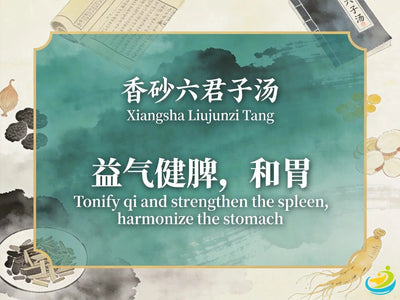
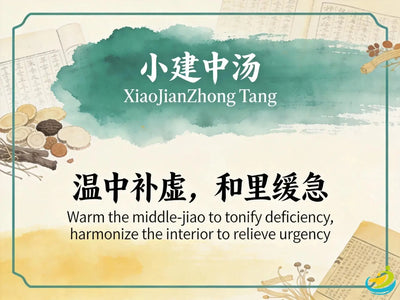
Primary Function Warm Middle, tonify Spleen YangWarm Middle Yang, restore collapsed Yang, strengthen SpleenWarm Middle, tonify Qi and Blood, relieve spasmodic painTonify Spleen Qi, resolve phlegm-damp, move Qi
Formula Category Yang-Tonifying FormulasYang-Tonifying FormulasYang-Tonifying FormulasQi-Tonifying Formulas
Typical TCM Pattern Yang DeficiencyYang DeficiencyYang DeficiencySpleen Qi Deficiency
Main Conditions Abdominal Pain, Diarrhea, Stomach Discomfort, Poor Appetite, Cold LimbsAbdominal Pain, Diarrhea, Stomach Discomfort, Cold Limbs, Fatigue & Low EnergyAbdominal Pain, Poor Appetite, Fatigue & Low Energy, Spontaneous SweatingPoor Appetite, Bloating, Diarrhea, Stomach Discomfort, Indigestion, Spleen Qi Deficiency
Main Herbs Ginseng Root · Dried Ginger · White Atractylodes Rhizome · Honey-fried LicoricePrepared Aconite Accessory Root · Dried Ginger · Ginseng Root · White Atractylodes Rhizome · Honey-fried LicoriceMaltose / Barley Malt Sugar · Cinnamon Twig · White Peony Root · Fresh Ginger · Jujube / Chinese Date · Honey-fried LicoriceGinseng Root · White Atractylodes Rhizome · Poria / Hoelen · Tangerine Peel · Pinellia Rhizome · Aucklandia / Costus Root · Amomum Fruit · Honey-fried Licorice
Classical Source Shang Han Lun (Zhang Zhongjing, Eastern Han)Tai Ping Hui Min He Ji Ju Fang / San Yin Ji Yi Bing Zheng Fang Lun (Song dynasty)Shang Han Lun / Jin Gui Yao Lue (Zhang Zhongjing, Eastern Han)Gu Jin Ming Yi Fang Lun (citing Ke Yunbo, Qing dynasty, ~1675)

How to tell them apart

Li Zhong Tang is the core formula for Middle Yang deficiency. Xiao Jian Zhong Tang adds sweet moderating and Blood-nourishing actions for spasmodic pain. Da Jian Zhong Tang is much stronger for severe Cold. Huang Qi Jian Zhong Tang emphasises Qi tonification.

For educational reference only, based on traditional pattern differentiation — not a substitute for professional advice.

Clinical Modifications for Li Zhong Tang

1. Severe Cold

When middle-burner deficiency cold is severe, presenting with signs of collapsing yang (cold extremities, faint pulse), Fuzi is added. Its intensely hot and acrid nature strengthens warming and dispersing of cold, assisting heart yang, warming spleen yang, and tonifying kidney yang to rescue yang collapse.

2. Cold Stagnation

For spleen–stomach deficiency cold with prominent cold stagnation and marked epigastric or abdominal cold pain, Rou Gui is included. As a pungent, sweet, and strongly warm herb, it tonifies fire and yang, effectively disperses cold, relieves pain, and unblocks the channels.

Li Zhong Tang

3. Water-Damp

If middle-burner deficiency cold is accompanied by internal water-damp (e.g., vomiting clear fluids, chest/hypochondriac distention, palpitations), Bai Zhu is replaced with Fu Ling. Fu Ling promotes urination and leaches dampness, strengthens the spleen, and calms the spirit, restoring normal fluid metabolism.

What the Science Suggests

1. Pharmacological Studies

Modern studies reveal the intricate actions of Li Zhong Tang's components: Gan Jiang's volatile oils promote gastrointestinal motility; Ginseng modulates immune function, enhancing resistance in immune-compromised patients; Bai Zhu regulates gut microbiota, aiding chronic enteritis; and Zhi Gan Cao provides anti-inflammatory and anti-allergic benefits, reducing GI discomfort from middle-jiao cold.

Li Zhong Tang

2. Clinical Efficacy

Clinical trials confirm Li Zhong Tang's effectiveness in treating digestive disorders, such as chronic gastritis and gastric ulcers, by alleviating pain and improving dyspepsia and mucosal repair. For cold-type diarrhea, it reduces stool frequency and improves intestinal absorption. In gynecology, it benefits uterine cold-infertility and dysmenorrhea by improving symptoms and increasing conception chances.

Safety Considerations

1. Diet & Special Populations

While taking Li Zhong Tang, avoid raw/cold, greasy, and spicy foods—these injure spleen yang, hinder digestion, or generate internal heat. Eat a light, warm, easily digestible diet (e.g., millet or yam porridge). Use caution in pregnancy (herbs are warming; weigh risks vs. benefits under medical supervision) and avoid in yin‑deficiency with internal heat, as the formula’s warm nature may worsen heat.

2. Monitoring & Follow‑up

Monitor symptoms closely during treatment; continue only as advised if improved, but stop and seek medical evaluation if new signs appear or symptoms worsen. Watch for adverse reactions (dry mouth, constipation, abdominal distention) and report any abnormalities to your clinician for timely adjustment.

Questions About Li Zhong Tang

Q1: What are the actions of Li Zhong Tang?
Li Zhong Tang has the actions of warming the Middle Jiao, dispelling Cold, strengthening the Spleen, and tonifying Qi. It is the representative Shang Han Lun formula for Spleen-Stomach deficiency Cold.
Q2: Which modern diseases is Li Zhong Tang suited to?
Modern TCM clinical practice commonly applies it to individuals whose pattern differentiation falls within Middle Jiao deficiency Cold, including chronic gastritis or peptic ulcer of Cold type, chronic diarrhea or irritable-bowel presentations with cold pain, functional dyspepsia with preference for warmth, and recovery-stage digestive weakness after illness.
Q3: Is Li Zhong Tang suitable for improving cold abdominal pain and loose stools?
For presentations of abdominal pain that likes warmth and pressure, loose stools or watery diarrhea, poor appetite, absence of thirst, cold limbs, a pale tongue with white coating, and a deep thin pulse — in those whose pattern differentiation confirms Spleen-Stomach Yang deficiency Cold — TCM commonly applies Li Zhong Tang as an adjunct. It cannot replace evaluation of inflammatory, infectious, or other medical causes of diarrhea and pain.
Q4: Who should not take Li Zhong Tang?
Those with Heat-type diarrhea, Damp-Heat dysentery, Yin deficiency with empty Fire, or exterior Heat patterns are generally not suitable. The formula is warm and drying; it will aggravate Heat and can further injure Yin. Use should be assessed by a qualified TCM physician.
Q5: Why does this formula combine Gan Jiang with Ren Shen and Bai Zhu?
Gan Jiang warms the Middle and dispels interior Cold so that Spleen Yang can resume its transforming function. Ren Shen tonifies original Qi and supports the Spleen. Bai Zhu strengthens the Spleen and dries Dampness. Zhi Gan Cao harmonizes and also tonifies the Middle. Together they both attack the Cold and rebuild the deficient center — “regulate the Middle.”
Q6: How does Li Zhong Tang differ from Si Jun Zi Tang or Fu Zi Li Zhong Tang?
Si Jun Zi Tang tonifies Spleen Qi without strongly warming interior Cold (it uses Fu Ling rather than Gan Jiang). Fu Zi Li Zhong Tang adds Fu Zi when Cold is more severe and Yang collapse signs such as icy limbs are present. Li Zhong Tang is the mid-strength warming Qi-tonifying formula for typical Middle Jiao deficiency Cold.
Q7: What are the main ingredients of Li Zhong Tang?
The classical four-ingredient formula consists of Ren Shen to tonify Qi and strengthen the Spleen; Bai Zhu to strengthen the Spleen and dry Dampness; Gan Jiang to warm the Middle and dispel Cold; and Zhi Gan Cao to tonify the Middle and harmonize. In pill form it is also known as Li Zhong Wan.
Q8: Is Li Zhong Tang suitable for long-term use?
It may be used for a course of treatment in chronic Middle Jiao Cold under professional supervision. Because Gan Jiang is drying and warming, prolonged use in someone who later develops Heat or Yin deficiency is inappropriate. Once stools form and cold pain recedes, the formula is often reduced or changed to a milder Spleen tonic.
Q9: Can Li Zhong Tang help both diarrhea and vomiting of the same Cold-deficiency type?
Yes. When Spleen Yang fails, clear Yang does not rise (diarrhea) and turbid Yin does not descend (nausea or vomiting of clear fluids). Warming the Middle restores the Spleen-Stomach’s upbearing and downbearing, so both ends of the same deficiency-Cold picture can improve when the pattern matches.
Q10: What lifestyle advice supports the use of Li Zhong Tang?
Eating only warm, cooked, easily digested foods, avoiding raw-cold drinks and fruit, keeping the abdomen warm, and eating regular meals all support the formula in rebuilding Middle Yang. Persistent bloody diarrhea, high fever, or severe abdominal rigidity requires prompt medical evaluation.

General Questions

How do I choose the right formula?
TCM formulas are traditionally selected according to individual pattern differentiation rather than by symptom alone. If you're not sure which formula fits your presentation, take our AI Assessment below for a personalized starting point, then confirm with a qualified TCM practitioner.
What are concentrated herbal granules?
Concentrated herbal granules are made by decocting raw herbs, then extracting and concentrating the resulting liquid into a fine granule or powder form. This preserves the same active compounds as a traditional decoction while making the herbs far easier to store, measure, and prepare.
How should I take these products?
Dissolve the recommended amount of granules in hot water, stir until fully dissolved, and drink while warm — following the dosage and frequency advised by your TCM practitioner or as stated on the product packaging.
Are concentrated herbal granules equivalent to traditional decoctions?
Concentrated granules are produced from the same herbs and processed to retain their active compounds, so they are traditionally regarded as a convenient alternative to decoctions rather than a different remedy. Some practitioners note subtle differences in strength or absorption between the two forms, so your TCM practitioner may adjust dosage accordingly.
Are your products authentic?
Yes. HJMEDICAL sources its concentrated granules exclusively from established, reputable manufacturers such as Nong's and Hoi Tin, both long-standing names in the TCM granules industry, with GMP compliance stated directly on their packaging.
Are HJMEDICAL products manufactured under GMP standards?
HJMEDICAL sources its concentrated granules from established, reputable manufacturers such as Nong's and Hoi Tin, both long-standing names in the TCM granules industry. GMP compliance for these products is stated directly on their packaging.
Do you ship internationally?
Yes — we ship worldwide! Every order goes out via Hong Kong Post, and your exact shipping cost and estimated delivery time for your address are calculated and shown right at checkout, so there are never any surprises. We also offer free shipping once your order reaches our free-shipping threshold, so it's easy to stock up on your favorite formulas and save.
Can I take more than one formula at the same time?
Some formulas are traditionally combined, while others overlap or counteract each other. We recommend checking with a qualified TCM practitioner before combining formulas, especially if you are already taking other medication.
Are these products suitable during pregnancy or breastfeeding?
Some TCM formulas are not suitable during pregnancy or breastfeeding. Please consult a qualified TCM practitioner or your doctor before use if you are pregnant, trying to conceive, or nursing.
Do these products replace medical treatment?
No. These products are traditional herbal supplements intended to support wellbeing according to TCM principles — they are not a replacement for professional medical diagnosis or treatment. Please consult a qualified TCM practitioner or licensed healthcare provider before starting, stopping, or combining any treatment, especially if you have a chronic condition.
Medical Disclaimer

For general TCM education only — not medical advice. Consult a qualified TCM practitioner or licensed healthcare provider before use, especially if pregnant, nursing, on medication, or managing a chronic condition.

Not sure which formula is right for you?

Take the AI Assessment

最新文章

Login

Forgot your password?

Don't have an account yet?
Create account

Li Zhong Tang: Classic TCM Formula for Spleen Deficiency, Cold & Diarrhea