Qi-Tonifying Formulas

香砂六君子汤 · Xiāng Shā Liù Jūn Zǐ Tāng

Xiang Sha Liu Jun Zi Tang

A classical Qi-tonifying and digestive formula that builds upon Liu Jun Zi Tang by adding aromatic Qi-moving herbs. It addresses Spleen and Stomach Qi deficiency complicated by phlegm-damp and Qi stagnation.

View formula profile →
Last reviewed October 2026
Formula CategoryQi-Tonifying Formulas
Primary PatternSpleen Qi Deficiency
Primary FunctionTonify Spleen Qi, resolve phlegm-damp, move Qi
Primary Therapeutic PrincipleStrengthen the Spleen, tonify Qi, dry dampness, resolve phlegm, regulate Qi and harmonize the Stomach
Main HerbsGinseng Root · White Atractylodes Rhizome · Poria / Hoelen · Tangerine Peel · Pinellia Rhizome · Aucklandia / Costus Root · Amomum Fruit · Honey-fried Licorice
Classical SourceGu Jin Ming Yi Fang Lun (citing Ke Yunbo, Qing dynasty, ~1675)

Why This Formula?

Traditionally selected when spleen-stomach qi deficiency is accompanied by qi stagnation — epigastric fullness and belching — offering more qi-regulating action than Liu Jun Zi Tang, while addressing local stagnation rather than the sunken middle qi and prolapse-type presentation that calls for Bu Zhong Yi Qi Tang.

Traditionally selected when spleen-stomach qi deficiency is accompanied by qi stagnation — epigastric fullness and belching — offering more qi-regulating action than Liu Jun Zi Tang, while addressing local stagnation rather than the sunken middle qi and prolapse-type presentation that calls for Bu Zhong Yi Qi Tang.

What Is Xiang Sha Liu Jun Zi Tang?

1. Background and Origins

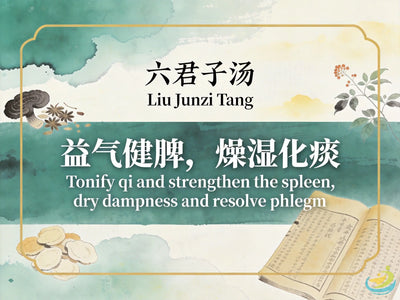
Xiang Sha Liu Jun Zi Tang (香砂六君子汤), or Aucklandia and Amomum Six Gentlemen Decoction, is a classical modification of Liu Jun Zi Tang formed by adding Mu Xiang and Sha Ren. It belongs to the category of formulas that tonify Spleen Qi, transform Phlegm-Damp, and regulate Qi in the Middle Burner.

This formula addresses Spleen-Stomach Qi deficiency with Damp-Phlegm and Qi stagnation, a pattern in which tonifying alone would feel too cloying and moving Qi alone would further weaken the Spleen. Typical signs include poor appetite, epigastric and abdominal fullness or bloating, nausea, loose stools, fatigue, a pale tongue with white greasy coating, and a weak slippery pulse.

Combining the Six Gentlemen core—Ren Shen, Bai Zhu, Fu Ling, Zhi Gan Cao, Ban Xia, and Chen Pi—to tonify Qi, strengthen the Spleen, and transform Phlegm, with Mu Xiang to move stagnant Qi and relieve distention and Sha Ren to aromatically awaken the Spleen, dry Dampness, and prevent the tonics from stagnating, Xiang Sha Liu Jun Zi Tang effectively replenishes the Middle, resolves Damp-Phlegm, and restores comfortable digestion.

Xiang Sha Liu Jun Zi Tang: Tonifying Spleen, Regulating Qi, and Resolving Dampness | HJMEDICAL

2. Digestive System Diseases

Chronic Gastritis: Improves symptoms of spleen-stomach weakness and qi stagnation, such as epigastric fullness, pain, belching, nausea, and poor appetite, by regulating digestive function and promoting gastric mucosa repair.

Gastric Ulcer: When combined with Western treatment, it promotes ulcer healing by tonifying qi, strengthening the spleen, and enhancing gastric mucosal resistance, reducing acid irritation.

Dyspepsia: Effectively relieves abdominal distension, pain, poor appetite, and loose stools by promoting gastrointestinal peristalsis and enhancing digestive function for better absorption.

3. Respiratory System Conditions

Cough with Phlegm: Reduces phlegm production and relieves coughing caused by spleen-stomach weakness and internal phlegm-dampness, especially for chronic cough, by drying dampness and transforming phlegm at its source.

Xiang Sha Liu Jun Zi Tang: Tonifying Spleen, Regulating Qi, and Resolving Dampness | HJMEDICAL

4. Other Related Conditions

Paediatric Food Aversion: Improves spleen-stomach function and appetite in children with underdeveloped digestive systems, aiding normal growth and development due to its gentle properties.

Morning Sickness (Gestational Vomiting): Relieves nausea and vomiting in pregnant women with spleen-stomach weakness by strengthening the spleen, harmonizing the stomach, and regulating qi, reducing discomfort and safeguarding fetal development.

Herb Composition (Sovereign / Minister / Assistant / Envoy)

1. Renshen (Ginseng): The Sovereign

In Traditional Chinese Medicine, complex herbal formulas are designed with a specific hierarchy, ensuring each herb plays a distinct and complementary role. This synergistic approach maximizes therapeutic effect and minimizes potential side effects.

This chief herb greatly tonifies primordial qi, restores the pulse, strengthens the spleen, and benefits the lung. It is crucial for addressing underlying weakness and generating vital energy, acting as the formula's primary therapeutic agent.

2. Baizhu & Fuling: The Ministers

Baizhu (Atractylodes) strengthens the spleen and dries dampness, while Fuling (Poria) promotes urination and drains dampness. These deputy herbs assist the sovereign in reinforcing spleen function and resolving fluid accumulation, ensuring proper transportation and transformation.

3. Adjuvant Herbs: The Assistants

Chenpi, Banxia, Muxiang, and Sharen aid by regulating qi, drying dampness, transforming phlegm, and relieving stagnation. They refine the formula's action, preventing stagnation from tonifying herbs and enhancing the smooth flow of qi and blood.

Xiang Sha Liu Jun Zi Tang: Tonifying Spleen, Regulating Qi, and Resolving Dampness | HJMEDICAL

4. Gancao (Licorice): The Envoy

This envoy herb tonifies the spleen, harmonizes the actions of all other components, and moderates any harsh properties. It ensures the formula's balance and synergy, enhancing its overall therapeutic efficacy and facilitating recovery.

Clinical Presentation in TCM

1. Pathomechanism Targeted

This formula addresses spleen-stomach weakness, which impairs digestion and fosters internal water-dampness and qi stagnation. This leads to symptoms such as poor appetite, abdominal distension, loose stools, epigastric fullness, and belching. Chronic weakness can also result in qi-blood insufficiency, manifesting as a sallow complexion and mental fatigue.

2. Therapeutic Actions

Xiang Sha Liu Jun Zi Tang works by tonifying qi, strengthening the spleen, regulating qi, and harmonizing the stomach. It enhances the spleen-stomach's vital function of transformation and transportation, effectively eliminating water-dampness and resolving qi stagnation, thereby restoring optimal digestive health.

Xiang Sha Liu Jun Zi Tang

3. Primary Indications

Primarily indicated for conditions stemming from spleen-stomach weakness with qi stagnation and phlegm obstruction. Common manifestations include epigastric fullness, nausea, poor appetite, abdominal distension, loose stools, and cough with phlegm. It effectively manages chronic gastritis, gastric ulcer, and dyspepsia, along with related systemic symptoms.

The Mechanism in Classical Theory

1. Qi-Tonifying & Spleen-Strengthening Duo

Renshen, Baizhu, Fuling, and Gancao form the core, powerfully invigorating spleen-stomach qi. This foundational group addresses the root cause by enhancing the digestive system's capacity, while concurrently preventing phlegm-dampness from accumulating and ensuring the qi-tonifying action doesn't lead to stagnation.

2. Damp-Drying & Phlegm-Transforming Allies

Chenpi and Banxia are essential for drying dampness and resolving phlegm. They complement the qi-tonifying herbs by actively clearing pathological byproducts of impaired digestion, enabling the spleen-stomach to more efficiently transform and transport fluids.

3. Qi-Regulating & Stomach-Harmonizing Agents

Muxiang and Sharen are incorporated to regulate qi and harmonize the stomach, directly addressing qi stagnation. They ensure a smooth flow of qi, thereby relieving symptoms like distension and discomfort, and allowing the spleen-strengthening herbs to function optimally without causing further stagnation.

Xiang Sha Liu Jun Zi Tang: Tonifying Spleen, Regulating Qi, and Resolving Dampness | HJMEDICAL

4. Synergy and Balance

The formula exhibits profound synergy: qi-tonifying herbs provide fundamental support, while qi-regulating herbs prevent stagnation, and damp-drying herbs clear phlegm. Gancao also harmonizes all ingredients, creating a balanced and effective remedy that treats both symptoms and underlying causes, avoiding potential side effects of individual herbs.

Clinical Comparison Table

Compare Xiang Sha Liu Jun Zi TangLiu Jun Zi TangSi Jun Zi TangShen Ling Bai Zhu San
Primary Function Tonify Spleen Qi, resolve phlegm-damp, move QiTonify Spleen Qi, resolve phlegm-dampTonify Spleen QiTonify Spleen Qi, resolve dampness, stop diarrhoea
Formula Category Qi-Tonifying FormulasQi-Tonifying FormulasQi-Tonifying FormulasQi-Tonifying Formulas
Typical TCM Pattern Spleen Qi DeficiencySpleen Qi DeficiencySpleen Qi DeficiencySpleen Qi Deficiency
Main Conditions Poor Appetite, Bloating, Diarrhea, Stomach Discomfort, Indigestion, Spleen Qi DeficiencyPoor Appetite, Bloating, Stomach Discomfort, Diarrhea, Spleen Qi Deficiency, Excessive MucusPoor Appetite, Diarrhea, Spleen Qi Deficiency, Mental FogDiarrhea, Poor Appetite, Bloating, Spleen Qi Deficiency
Main Herbs Ginseng Root · White Atractylodes Rhizome · Poria / Hoelen · Tangerine Peel · Pinellia Rhizome · Aucklandia / Costus Root · Amomum Fruit · Honey-fried LicoriceGinseng Root · White Atractylodes Rhizome · Poria / Hoelen · Tangerine Peel · Pinellia Rhizome · Honey-fried LicoriceGinseng Root · White Atractylodes Rhizome · Poria / Hoelen · Honey-fried LicoriceGinseng Root · White Atractylodes Rhizome · Poria / Hoelen · Honey-fried Licorice · Chinese Yam · White Hyacinth Bean · Lotus Seed · Coix Seed / Job's Tears · Amomum Fruit · Platycodon Root
Classical Source Gu Jin Ming Yi Fang Lun (citing Ke Yunbo, Qing dynasty, ~1675)Yi Xue Zheng Zhuan (or derived from Si Jun Zi Tang + Chen Pi + Ban Xia)Tai Ping Hui Min He Ji Ju Fang (Formulary of the Pharmacy Service for Benefiting the People, Song dynasty, 1107)Tai Ping Hui Min He Ji Ju Fang (Song dynasty)

How to tell them apart

Xiang Sha Liu Jun Zi Tang, Liu Jun Zi Tang and Si Jun Zi Tang form a progressive family of Spleen Qi tonics. Si Jun Zi Tang addresses pure Spleen Qi deficiency. Liu Jun Zi Tang adds Ban Xia and Chen Pi for phlegm-damp. Xiang Sha Liu Jun Zi Tang further adds Mu Xiang and Sha Ren for Qi stagnation and marked distension.

For educational reference only, based on traditional pattern differentiation — not a substitute for professional advice.

Clinical Modifications for Xiang Sha Liu Jun Zi Tang

1. Pronounced Spleen-Stomach Cold Deficiency

For significant cold symptoms, Ganjiang (Dry Ginger) and Fuzi (Aconite) are added. Ganjiang warms the middle jiao, scatters cold, and resolves fluid retention, while Fuzi restores yang and assists qi. This combination powerfully counteracts cold-deficiency symptoms like epigastric pain, cold limbs, and preference for warmth, effectively restoring digestive function.

2. Pronounced Dampness Pathogen

When dampness is a primary concern, Houpo (Magnolia Bark) and Cangzhu (Grey Atractylodes) are incorporated. Houpo dries dampness, regulates qi, and relieves fullness, while Cangzhu strengthens the spleen and expels wind-cold. These herbs work synergistically to eliminate excessive dampness, alleviating symptoms such as heavy limbs, abdominal bloating, and a thick, greasy tongue coating.

3. Pronounced Qi Stagnation

To address significant qi stagnation, Zhike (Bitter Orange Shell) and Foshou (Buddha's Hand) are added. Zhike regulates qi and reduces fullness, while Foshou soothes the liver, harmonizes the stomach, and transforms phlegm. This enhances qi flow, effectively reducing epigastric distension, frequent belching, and discomfort caused by stagnant qi in the digestive system.

Xiang Sha Liu Jun Zi Tang

4. Concurrent Food Accumulation

In cases of food accumulation, Shenqu (Medicated Leaven), Maiya (Malt), and Shanzha (Hawthorn) are included. Shenqu and Maiya disperse food and harmonize the stomach, while Shanzha aids digestion, moves qi, and resolves stasis. These additions help to break down undigested food, improve appetite, and relieve abdominal fullness and discomfort stemming from food stagnation.

What the Science Suggests

1. Research on Mechanisms of Action in the Digestive System

In Traditional Chinese Medicine and Chinese herbal medicine, Xiang Sha Liu Jun Zi Tang is a classical herbal formula that tonifies qi and strengthens the spleen while it harmonizes the stomach. It is especially indicated for spleen and stomach qi deficiency and spleen qi deficiency with dampness obstructing the middle jiao.

The formula is built on Ban Xia and Chen Pi, further enhanced by Aucklandia and Amomum (Mu Xiang and Sha Ren) to move qi, resolve stagnation, and support digestion. Clinically, it is commonly used for chronic fatigue, chronic atrophic gastritis, irritable bowel syndrome, abdominal distention, and peptic ulcer. Modern understanding also recognizes its role in supporting the brain-gut axis and modulating inflammatory pathways.

Modern research indicates Xiang Sha Liu Jun Zi Tang may act via multiple mechanisms on the digestive system: regulating gastrointestinal motility, improving gastrointestinal blood circulation, and protecting the gastric mucosa. It promotes peristalsis and gastric emptying to relieve dyspepsia, increases gastric mucosal blood flow to aid repair and regeneration of mucosal cells, and helps prevent or treat conditions such as gastritis and gastric ulcer.

2. Immune-Regulating Effects

Studies show Xiang Sha Liu Jun Zi Tang has immune-regulating effects, modulating immune cell activity and function to strengthen resistance. It can partially improve immune impairment related to spleen-stomach weakness, helping the body resist external pathogens and reduce disease incidence.

3. Chemical Constituent Analysis

Chemical analysis identifies active compounds in Xiang Sha Liu Jun Zi Tang such as ginsenosides, Baizhu and Fuling polysaccharides, Chenpi volatile oils, Banxia alkaloids, Muxiang volatile oils, and Sharen volatile oils. These constituents likely provide the material basis for the formula’s effects, acting synergistically to tonify qi, strengthen the spleen, and regulate qi to harmonize the stomach; ongoing research aims to clarify their specific mechanisms.

Xiang Sha Liu Jun Zi Tang: Tonifying Spleen, Regulating Qi, and Resolving Dampness | HJMEDICAL

4. Potential Applications in Other Fields

Beyond digestive diseases, preliminary research explores potential applications in neurology and cardiovascular fields, suggesting possible regulation of certain nervous system dysfunctions and effects on cardiac function and vascular regulation. These investigations are early-stage but suggest directions for broader clinical application.

Safety Considerations

1. Dietary Restrictions & Drug Interactions

While taking Xiang Sha Liu Jun Zi Tang, avoid raw/cold, greasy, and spicy/irritating foods (e.g., ice cream, cold drinks, raw fish, fried foods, fatty meats, chili, Sichuan pepper, raw ginger) and alcohol. These impair spleen-stomach yang or irritate the gastrointestinal tract. Inform your physician about all concurrent medications—Xiang Sha Liu Jun Zi Tang may interact with other drugs (for example, some antibiotics), affecting efficacy or increasing the risk of adverse reactions; the physician will adjust therapy as needed.

2. Special Populations & Monitoring

Use Xiang Sha Liu Jun Zi Tang with caution in pregnancy—only under physician risk–benefit assessment. Pediatric doses must be adjusted by age and weight and given under adult supervision. If symptoms worsen or new signs appear (e.g., increased epigastric pain, melena), stop Xiang Sha Liu Jun Zi Tang and seek medical evaluation for treatment adjustment.

Questions About Xiang Sha Liu Jun Zi Tang

Q1: What are the actions of Xiang Sha Liu Jun Zi Tang?
Xiang Sha Liu Jun Zi Tang has the actions of strengthening the Spleen, tonifying Qi, regulating Qi, drying Dampness, and transforming Phlegm. It is Liu Jun Zi Tang with Mu Xiang and Sha Ren added when deficiency is accompanied by more Qi stagnation and focal distention.
Q2: Which modern diseases is Xiang Sha Liu Jun Zi Tang suited to?
Modern TCM clinical practice commonly applies it to individuals whose pattern differentiation falls within Spleen Qi deficiency with Damp-Phlegm and Qi stagnation, including functional dyspepsia or chronic gastritis with fullness and belching, chronic loose stools with bloating, nausea after meals, and weak digestion after illness when food sits in the Stomach.
Q3: Is Xiang Sha Liu Jun Zi Tang suitable for improving fullness, belching, poor appetite, and loose stools?
For presentations of epigastric or abdominal fullness, belching, reduced appetite, nausea, loose stools, fatigue, a pale tongue with white greasy coating, and a weak or slippery pulse — in those whose pattern differentiation confirms Spleen Qi deficiency with Damp-Phlegm and Qi stagnation — TCM commonly applies Xiang Sha Liu Jun Zi Tang as an adjunct. It cannot replace evaluation of ulcer, obstruction, or other digestive disease.
Q4: Who should not take Xiang Sha Liu Jun Zi Tang?
Those with Heat-type or Damp-Heat epigastric pain, Yin deficiency dryness, or constipation from Heat are generally not suitable. The formula is warm, aromatic, and drying; it can aggravate Heat and further injure Yin. Use should be assessed by a qualified TCM physician.
Q5: Why are Mu Xiang and Sha Ren added to Liu Jun Zi Tang?
Liu Jun Zi Tang tonifies Qi and transforms Phlegm-Damp, but tonic herbs can feel heavy when Qi is already stagnant. Sha Ren aromatically awakens the Spleen, moves Qi, and transforms Dampness. Mu Xiang moves Qi in the Middle Jiao and stops pain from stagnation. Together they keep the tonic from becoming cloying and specifically relieve fullness and belching.
Q6: How does Xiang Sha Liu Jun Zi Tang differ from Liu Jun Zi Tang or Xiang Sha Yang Wei Wan?
Liu Jun Zi Tang is chosen when Phlegm-Damp and nausea are present but focal Qi stagnation is milder. Xiang Sha Liu Jun Zi Tang is preferred when fullness, belching, and food stagnation-like distention are more obvious. Xiang Sha Yang Wei formulas place even more emphasis on awakening the Stomach and moving stagnant food, with relatively less Qi tonification.
Q7: What are the main ingredients of Xiang Sha Liu Jun Zi Tang?
The formula consists of the Liu Jun Zi Tang core — Ren Shen (or Dang Shen), Bai Zhu, Fu Ling, Zhi Gan Cao, Chen Pi, and Ban Xia — plus Mu Xiang to move Qi and stop pain and Sha Ren to aromatically awaken the Spleen, transform Dampness, and prevent the tonics from stagnating. Sheng Jiang and Da Zao are often added in decoction.
Q8: Is Xiang Sha Liu Jun Zi Tang suitable for long-term use?
It may be used for a course of treatment in chronic Spleen deficiency with Dampness and Qi stagnation under professional supervision. Because Mu Xiang and Sha Ren are aromatic and drying, prolonged use can consume Qi and Yin. Once fullness eases, many patients step down to Liu Jun Zi Tang or Si Jun Zi Tang.
Q9: Can this formula help both the weak digestion and the feeling that food sits in the stomach?
Yes. That combination is why the formula exists. Spleen Qi deficiency fails to transform food (fatigue, loose stools, poor appetite), while stagnant Qi and Damp-Phlegm make the Stomach feel full and rebellious (belching, nausea, focal distention). Tonifying and moving together addresses both sides of the same pattern.
Q10: What lifestyle advice supports the use of Xiang Sha Liu Jun Zi Tang?
Eating smaller warm cooked meals, reducing raw-cold, greasy, and hard-to-digest foods, chewing well, and not lying down immediately after eating all support the formula. Persistent vomiting, black stool, or progressive weight loss should be properly evaluated.

General Questions

How do I choose the right formula?
TCM formulas are traditionally selected according to individual pattern differentiation rather than by symptom alone. If you're not sure which formula fits your presentation, take our AI Assessment below for a personalized starting point, then confirm with a qualified TCM practitioner.
What are concentrated herbal granules?
Concentrated herbal granules are made by decocting raw herbs, then extracting and concentrating the resulting liquid into a fine granule or powder form. This preserves the same active compounds as a traditional decoction while making the herbs far easier to store, measure, and prepare.
How should I take these products?
Dissolve the recommended amount of granules in hot water, stir until fully dissolved, and drink while warm — following the dosage and frequency advised by your TCM practitioner or as stated on the product packaging.
Are concentrated herbal granules equivalent to traditional decoctions?
Concentrated granules are produced from the same herbs and processed to retain their active compounds, so they are traditionally regarded as a convenient alternative to decoctions rather than a different remedy. Some practitioners note subtle differences in strength or absorption between the two forms, so your TCM practitioner may adjust dosage accordingly.
Are your products authentic?
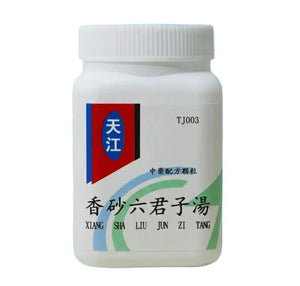
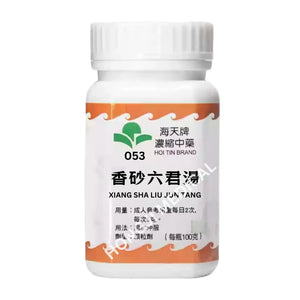
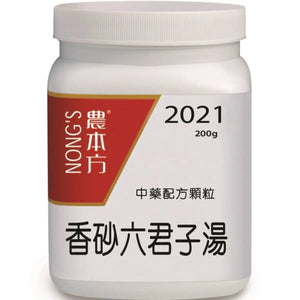
Yes. HJMEDICAL sources its concentrated granules exclusively from established, reputable manufacturers such as Nong's and Hoi Tin, both long-standing names in the TCM granules industry, with GMP compliance stated directly on their packaging.
Are HJMEDICAL products manufactured under GMP standards?
HJMEDICAL sources its concentrated granules from established, reputable manufacturers such as Nong's and Hoi Tin, both long-standing names in the TCM granules industry. GMP compliance for these products is stated directly on their packaging.
Do you ship internationally?
Yes — we ship worldwide! Every order goes out via Hong Kong Post, and your exact shipping cost and estimated delivery time for your address are calculated and shown right at checkout, so there are never any surprises. We also offer free shipping once your order reaches our free-shipping threshold, so it's easy to stock up on your favorite formulas and save.
Can I take more than one formula at the same time?
Some formulas are traditionally combined, while others overlap or counteract each other. We recommend checking with a qualified TCM practitioner before combining formulas, especially if you are already taking other medication.
Are these products suitable during pregnancy or breastfeeding?
Some TCM formulas are not suitable during pregnancy or breastfeeding. Please consult a qualified TCM practitioner or your doctor before use if you are pregnant, trying to conceive, or nursing.
Do these products replace medical treatment?
No. These products are traditional herbal supplements intended to support wellbeing according to TCM principles — they are not a replacement for professional medical diagnosis or treatment. Please consult a qualified TCM practitioner or licensed healthcare provider before starting, stopping, or combining any treatment, especially if you have a chronic condition.
Medical Disclaimer

For general TCM education only — not medical advice. Consult a qualified TCM practitioner or licensed healthcare provider before use, especially if pregnant, nursing, on medication, or managing a chronic condition.

Not sure which formula is right for you?

Take the AI Assessment

最新文章

Login

Forgot your password?

Don't have an account yet?
Create account

Xiang Sha Liu Jun Zi Tang: Classic TCM Formula for Spleen Qi Deficiency with Dampness, Bloating & Poor Appetite