Yin-Tonifying Formulas

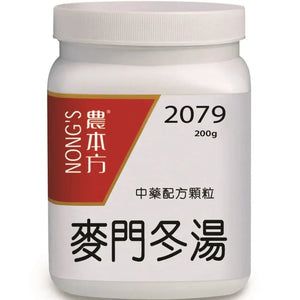
麦门冬汤 · Mài Mén Dōng Tāng

Mai Men Dong Tang

A Jin Gui formula for Lung and Stomach Yin deficiency with rebellious Qi, presenting with short, dry cough, phlegm that is hard to expectorate, dry throat and nausea or vomiting of foam.

View formula profile →
Last reviewed August 2026
Formula CategoryYin-Tonifying Formulas
Primary PatternYin Deficiency
Primary FunctionNourish Lung-Stomach Yin, descend rebellious Qi
Primary Therapeutic PrincipleEnrich Yin of the Lung and Stomach and direct counterflow downward
Main HerbsOphiopogon Tuber · Pinellia Rhizome · Ginseng Root · Licorice Root · Non-glutinous Rice · Jujube / Chinese Date
Classical SourceJin Gui Yao Lue (Zhang Zhongjing, Eastern Han)

Why This Formula?

Traditionally selected for dry cough with foamy sputum and nausea from Lung-Stomach Yin deficiency — combining moistening with descending, rather than pure dryness-clearing or pure Kidney-nourishing formulas.

Traditionally selected for dry cough with foamy sputum and nausea from Lung-Stomach Yin deficiency — combining moistening with descending, rather than pure dryness-clearing or pure Kidney-nourishing formulas.

What Is Mai Men Dong Tang?

1. Ancient Classic Records

Mai Men Dong Tang (麦门冬汤), or Ophiopogon Decoction, is a classical formula from Zhang Zhongjing’s Jin Gui Yao Lue (Essential Prescriptions from the Golden Cabinet). It belongs to the category of formulas that nourish Yin, generate fluids, and direct rebellious Qi downward.

This formula addresses Lung and Stomach Yin deficiency with rebellious Qi rising due to dryness and deficient Heat. Typical signs include a chronic dry or unproductive cough (sometimes with scanty sticky phlegm or frothy saliva), dry mouth and throat, thirst, a sensation of Qi rushing upward, nausea or belching, a red tongue with little or no coating, and a thin rapid or weak pulse.

Centered on a large dose of Mai Men Dong to powerfully nourish Lung and Stomach Yin and generate fluids, balanced by a smaller amount of Ban Xia to descend rebellious Qi without further damaging Yin, and supported by Ren Shen, Jing Mi, Gan Cao, and Da Zao to tonify Qi and harmonize the Middle, Mai Men Dong Tang moistens dryness, clears deficient Heat, and restores the normal descending function of the Lung and Stomach.

Mai Men Dong Tang

2. Respiratory System Diseases

  • For conditions like chronic bronchitis and bronchiectasis, if you are experiencing symptoms of Lung and Stomach Yin deficiency, such as coughing, wheezing, and scanty but sticky phlegm, Mai Men Dong Tang can be highly effective.
  • It works by deeply nourishing your Lung Yin, relieving your cough, reducing stubborn phlegm production, and improving your overall respiratory function.

3. Digestive System Diseases

  • When dealing with digestive issues like chronic gastritis or gastroesophageal reflux disease (GERD) that lead to Stomach Yin deficiency, vomiting, or hiccups, Mai Men Dong Tang is a great choice.
  • It effectively nourishes your Stomach Yin, directs rebellious Qi back downwards, and stops vomiting. By regulating your stomach's natural functions, it relieves discomfort and helps your digestive system recover.
Mai Men Dong Tang

4. Other Conditions

  • In addition, if you are experiencing symptoms like a dry throat, a dry mouth, or a hoarse voice caused by a deficiency of Yin in your Lungs and Stomach, Mai Men Dong Tang can be adapted and used based on your specific situation.
  • It helps to nourish your body's Yin, moisten the dryness, and bring much-needed relief to these uncomfortable symptoms.

Herb Composition (Sovereign / Minister / Assistant / Envoy)

1. The "King" Herb - Mai Men Dong

  • Mai Men Dong is sweet, slightly bitter, and mildly cold. It naturally targets your Lung and Stomach meridians.
  • It is highly valued for its ability to nourish Yin, moisten the Lungs, benefit the Stomach, and generate healthy body fluids.
  • In Mai Men Dong Tang, it is used in a very heavy dose, making it the absolute key player for hydrating dryness. Its sweet and cooling nature perfectly relieves symptoms caused by Lung and Stomach Yin deficiency, laying a strong foundation for the formula to clear out heat.

2. The "Minister" Herb - Ban Xia

  • Ban Xia is spicy and warm, working mainly on your Spleen, Stomach, and Lung meridians.
  • Its main job is to dry up dampness, dissolve phlegm, and direct rebellious Qi downwards to stop vomiting.
  • When paired with Mai Men Dong, they might seem like complete opposites, but they actually make a perfect team! The warm and drying nature of Ban Xia keeps the highly moisturizing Mai Men Dong from becoming too heavy or greasy for your stomach to digest. At the same time, it helps restore the natural flow of your Lung and Stomach Qi, which is essential for stopping coughs and nausea.

3. The "Assistant" Herbs - Ren Shen, Gan Cao, Jing Mi, and Da Zao

  • Ren Shen is sweet and slightly warm, famously known for powerfully boosting your core energy (Qi), supporting the Spleen and Lungs, and generating fluids.
  • Gan Cao is sweet and neutral. It strengthens Spleen Qi, moistens the Lungs, and helps clear out toxins.
  • Jing Mi is sweet and neutral, offering gentle nourishment to your Spleen, Stomach, and five internal organs.
  • Da Zao is sweet and warm, great for boosting central Qi, nourishing your blood, and calming the mind.
  • Together, these four herbs act as fantastic assistants. They help Mai Men Dong deeply nourish the Lungs and Stomach while boosting energy and hydration. Additionally, Gan Cao helps to harmonize all the different herbs so they work smoothly together.
Mai Men Dong Tang

4. The "Envoy" Herb - Gan Cao

  • Gan Cao actually does double duty in this formula, acting as both an Assistant and the "Envoy" or messenger herb.
  • In its role as the Envoy, it gently guides all the other herbs straight to the affected areas of the body. It completely harmonizes the different properties of the entire formula, ensuring that all the ingredients work together seamlessly as a unified team to treat the condition.

Clinical Presentation in TCM

1. The Root Cause (Mechanism)

  • Mai Men Dong Tang specifically targets a condition where there is a deficiency of "Yin" (the body's cooling, moistening fluids) in both your Lungs and Stomach, causing Qi and "fire" to rebel and push upwards instead of flowing downward naturally.
  • In traditional Chinese medicine, your Lungs are in charge of breathing and Qi, while your Stomach is responsible for receiving and digesting food.
  • When the Yin fluids in your Lungs and Stomach are depleted, it creates an internal "deficiency fire." This internal heat can dry out and burn the delicate networks within your Lungs, leading to coughing and wheezing.
  • At the same time, as this heat flares upwards, your Stomach loses its natural ability to send things downward, which results in symptoms like nausea and vomiting.

2. What It Does (Benefits)

  • The primary benefit of Mai Men Dong Tang is its powerful ability to deeply nourish the Yin of both the Lungs and the Stomach, while simultaneously directing that rebellious Qi back downward where it belongs.
  • By replenishing these essential fluids and clearing out the internal deficiency fire, it helps restore the normal, healthy physiological functions of your Lungs and Stomach. This dual action is exactly how it achieves its great results in stopping both coughs and vomiting.
Mai Men Dong Tang

3. What It Treats (Indications)

  • Lung Atrophy (Fei Wei): This formula is highly regarded for treating Lung Atrophy, a chronic, consumptive condition caused by severe damage and exhaustion of the Lung's fluids and Qi. Symptoms typically include coughing and spitting up cloudy saliva or froth, shortness of breath, rapid breathing, a dry throat, a dry and red tongue with very little coating, and a weak, rapid pulse. Mai Men Dong Tang shows excellent results in treating this condition.
  • Stomach Yin Deficiency: It is also significantly effective for treating vomiting and nausea caused by rebellious Qi due to Stomach Yin deficiency. You might also experience thirst, a dry throat, a red tongue with little coating, and a weak, rapid pulse.

The Mechanism in Classical Theory

1. Focusing on Nourishing Yin and Moistening Dryness

  • As the "King" herb, Mai Men Dong is used in a large dose to deeply nourish the Yin of your Lungs and Stomach. It is the absolute core of this formula's ability to nourish Yin and moisten dryness.
  • Its sweet and cold nature allows it to directly replenish the Yin fluids your Lungs and Stomach have lost, effectively relieving the uncomfortable symptoms of Yin deficiency.

2. Assisting with Directing Qi Downward

  • Ban Xia is added for its warm, drying nature and its special ability to send rebellious Qi back down.
  • When paired with Mai Men Dong, it does two very important things: it prevents the highly moisturizing Mai Men Dong from becoming too heavy or greasy for your digestion, and it pushes the upward-rebelling Qi of your Lungs and Stomach back downward. This naturally relieves symptoms like coughing and vomiting.

3. Boosting Qi and Strengthening the Spleen for Better Digestion

  • Ren Shen, Gan Cao, Jing Mi, and Da Zao work beautifully together to boost your vital energy (Qi) and strengthen your Spleen.
  • This helps your digestive system efficiently process food and nutrients, providing ample nourishment to your Lungs and Stomach. It not only promotes the creation of more hydrating Yin fluids but also boosts your body's natural resistance, giving you the healthy energy (healthy Qi) needed for a full recovery.
Mai Men Dong Tang

4. Harmonizing Herbs for Synergistic Action

  • Gan Cao acts as a peacemaker, harmonizing the different properties of all the herbs like Mai Men Dong and Ban Xia to ensure they don't clash or conflict with each other.
  • It ensures all the ingredients work together in perfect synergy, maximizing the overall healing power of the formula and guiding the medicine exactly where it is needed most to improve the treatment's effectiveness.

Clinical Comparison Table

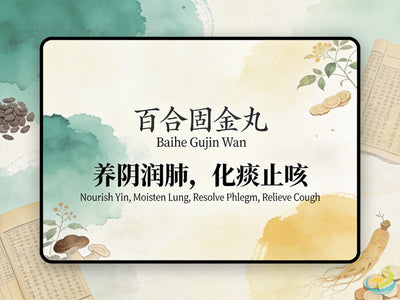
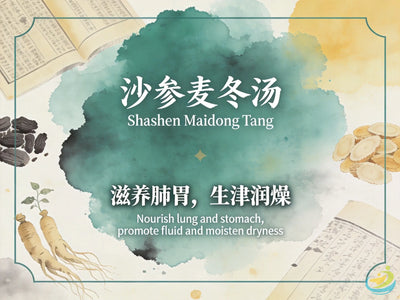
Compare Mai Men Dong TangSha Shen Mai Dong TangYang Yin Qing Fei TangBai He Gu Jin Tang
Primary Function Nourish Lung-Stomach Yin, descend rebellious QiNourish Lung-Stomach Yin, generate fluidsNourish Yin, clear Lung heat, resolve toxin, benefit the throatNourish Lung-Kidney Yin, moisten Lungs, stop cough
Formula Category Yin-Tonifying FormulasYin-Tonifying FormulasYin-Tonifying FormulasYin-Tonifying Formulas
Typical TCM Pattern Yin DeficiencyYin DeficiencyYin DeficiencyYin Deficiency
Main Conditions Dry Cough, Dry Mouth & Throat, Nausea, Poor AppetiteDry Cough, Yin Deficiency Constitution, Dry Mouth & ThroatSore Throat, Dry Cough, Dry Mouth & ThroatDry Cough, Yin Deficiency Constitution, Night Sweats
Main Herbs Ophiopogon Tuber · Pinellia Rhizome · Ginseng Root · Licorice Root · Non-glutinous Rice · Jujube / Chinese DateGlehnia Root · Ophiopogon Tuber · Fragrant Solomonseal Rhizome · Mulberry Leaf · Trichosanthes Root · White Hyacinth Bean · Licorice RootRaw Rehmannia Root · Ophiopogon Tuber · Scrophularia Root · Fritillaria Bulb · Moutan Bark / Tree Peony Bark · White Peony Root · Mentha / Peppermint · Licorice RootLily Bulb · Raw Rehmannia Root · Prepared Rehmannia Root · Ophiopogon Tuber · Scrophularia Root · Fritillaria Bulb · Platycodon Root · Chinese Angelica Root · White Peony Root · Licorice Root
Classical Source Jin Gui Yao Lue (Zhang Zhongjing, Eastern Han)Wen Bing Tiao Bian (Wu Jutong, Qing dynasty)Chong Lou Yu Yao (Zheng Meijian, Qing dynasty)Shen Zhai Yi Shu (Ming dynasty) / traditional

How to tell them apart

Mai Men Dong Tang nourishes Lung-Stomach Yin and descends counterflow. Sha Shen Mai Dong Tang focuses more on dry cough from dryness. Yang Yin Qing Fei Tang clears dryness-heat for diphtheria-type sore throat. Bai He Gu Jin Tang nourishes Lung-Kidney Yin for dry cough with blood-tinged phlegm.

For educational reference only, based on traditional pattern differentiation — not a substitute for professional advice.

Clinical Modifications for Mai Men Dong Tang

1. For Severe Cough

  • If your cough is particularly severe, herbs like Xing Ren and Jie Geng can be added to boost the formula's cough-relieving power.
  • Xing Ren helps direct Qi downward to stop coughing and calm wheezing, while Jie Geng opens up the lungs, clears out phlegm, and soothes the throat.
  • When paired with Mai Men Dong Tang, they work together beautifully to relieve cough symptoms and restore the natural, healthy flow of your Lung Qi.

2. For Frequent Vomiting

  • If you are dealing with frequent vomiting, adding Zhu Ru and Xuan Fu Hua can strengthen the formula's ability to direct rebellious Qi downward and stop nausea.
  • Zhu Ru clears heat, resolves phlegm, eases irritability, and stops vomiting. Xuan Fu Hua also directs Qi downward, clears phlegm, and settles the stomach.
  • These additions provide extra support to alleviate vomiting symptoms and help your Stomach Qi flow properly downward again.
Mai Men Dong Tang

3. For Severe Yin Deficiency

  • When Yin deficiency is especially pronounced, herbs like Shi Hu and Yu Zhu can be included to deeply nourish your body's essential fluids.
  • Shi Hu greatly benefits the stomach, generates fluids, nourishes Yin, and clears internal heat. Yu Zhu excels at nourishing Yin, moistening dryness, and quenching thirst.
  • By adding these herbs, the overall Yin-nourishing effect of the formula is enhanced, perfectly tailoring the treatment to address severe Yin deficiency.

What the Science Suggests

1. Pharmacological Research

  • Modern studies show that Mai Men Dong Tang offers a variety of pharmacological benefits for your body.
  • Its Yin-nourishing ingredients help regulate your immune system, boosting your overall resistance to illness.
  • It also works wonders for your digestive system by promoting gastrointestinal movement and improving digestion.
  • Additionally, it provides anti-inflammatory and antioxidant effects, which help reduce inflammation and slow down cellular aging.

2. Clinical Efficacy Verification

  • In real-world clinical practice, a growing number of studies are verifying just how effective Mai Men Dong Tang is.
  • For conditions linked to Lung and Stomach Yin deficiency—such as chronic pharyngitis or Sjögren's syndrome—it has shown excellent results in improving symptoms and enhancing patients' quality of life.
  • By observing and analyzing numerous clinical cases, researchers have further confirmed the significant value of this formula in traditional Chinese medicine.
Mai Men Dong Tang

3. Dosage Form Improvement Research

  • Thanks to modern technology, researchers are constantly finding better ways to prepare and deliver Mai Men Dong Tang.
  • Beyond the modern concentrated granules you might be familiar with, they are actively developing new forms like oral liquids and capsules. This makes the medicine more stable, convenient to take, and adaptable to different people's needs.
  • At the same time, quality control and standardization are being heavily strengthened to ensure that the formula remains both safe and highly effective for everyone.

Safety Considerations

1. Contraindicated for Deficiency-Cold Syndromes

Mai Meng Dong Tang is cold in nature and targets yin deficiency with heat. It must be avoided in patients with deficiency-cold (e.g., spleen-stomach cold or lung-cold cough) as it can worsen the condition.

2. Use with Caution for Spleen-Stomach Weakness

The formula's rich, greasy nature can cause bloating and poor appetite in those with weak digestion. Use cautiously, or combine with herbs that strengthen the spleen and aid digestion if needed.

3. Dietary Restrictions

Avoid spicy, greasy, and irritating foods to prevent worsening internal dryness and reducing efficacy. Stick to a light diet and eat yin-nourishing foods like lily bulbs, white fungus, and pears to aid recovery.

Questions About Mai Men Dong Tang

Q1: What are the actions of Mai Men Dong Tang?
Mai Men Dong Tang has the actions of nourishing the Lung and Stomach Yin, generating fluids, and directing rebellious Qi downward. It clears deficiency Heat from the Lung and Stomach while restoring the normal descending movement of Qi.
Q2: Which modern diseases is Mai Men Dong Tang suited to?
Modern TCM clinical practice commonly applies it to individuals whose pattern differentiation falls within Lung and Stomach Yin deficiency with Qi counterflow, including chronic dry cough or post-infectious cough, chronic pharyngitis with dryness, certain cases of chronic bronchitis or bronchiectasis with scanty sticky sputum, and Stomach Yin deficiency presentations such as chronic or atrophic gastritis with dry mouth and mild nausea.
Q3: Is Mai Men Dong Tang suitable for improving dry cough with sticky sputum that is hard to expectorate and a dry throat?
For presentations of dry cough or coughing up sticky saliva/foam that is difficult to expectorate, shortness of breath, dry mouth and throat, thirst, possible mild upward rebellion (hiccup or dry heaves), a red tongue with little coating, and a deficient rapid pulse — in those whose pattern differentiation confirms Lung-Stomach Yin deficiency with deficiency Heat and Qi counterflow — TCM commonly applies Mai Men Dong Tang as an adjunct. It cannot replace standard medical treatment.
Q4: Who should not take Mai Men Dong Tang?
Those with Cold-deficiency patterns, exterior Wind-Cold cough, or excess Phlegm-Damp with copious thin watery sputum are generally not suitable. The formula is moistening and mildly cooling; it can worsen Cold or congested Phlegm conditions. Use should be assessed by a qualified TCM physician.
Q5: Why does this formula use a large dose of Mai Men Dong with only a small amount of Ban Xia?
Mai Men Dong is the chief herb that nourishes Yin and generates fluids in large quantity to moisten the Lung and Stomach. Ban Xia, used in a smaller dose, directs rebellious Qi downward and prevents the rich, moistening herbs from becoming too cloying or stagnating, allowing the formula to nourish without obstructing the Middle Burner.
Q6: Can Mai Men Dong Tang help both dry respiratory symptoms and Stomach Yin deficiency at the same time?
Yes. The Lung and Stomach share a relationship through the descending pathway of Qi and fluids. When Yin is deficient in both, the formula nourishes fluids while restoring proper downward movement, addressing dry cough or throat dryness together with dry mouth, thirst, or mild rebellious Qi symptoms such as hiccup or nausea of Yin-deficiency type.
Q7: What are the main ingredients of Mai Men Dong Tang?
The classical formula consists of a large dose of Mai Men Dong (Ophiopogon) to nourish Lung and Stomach Yin and generate fluids; a smaller amount of Ban Xia to direct rebellious Qi downward; Ren Shen to tonify Qi and support fluid generation; Zhi Gan Cao, Geng Mi (non-glutinous rice), and Da Zao to benefit the Stomach, generate fluids, and harmonize the formula.
Q8: Is Mai Men Dong Tang suitable for long-term use?
It may be used for a course of treatment while Yin deficiency and dry symptoms are being addressed. Because the formula is relatively gentle and includes Stomach-supporting herbs, it is often well tolerated. Once dryness and counterflow improve, the prescription is typically adjusted or reduced under professional guidance rather than continued indefinitely at full dose.
Q9: How does Mai Men Dong Tang differ from purely moistening or purely descending formulas?
Purely moistening formulas may nourish Yin but fail to address rebellious Qi. Strong descending formulas may stop counterflow but do not replenish deficient fluids. Mai Men Dong Tang combines substantial Yin nourishment with gentle descending action and Middle-Burner support, making it suitable for deficiency Heat rising due to Lung-Stomach Yin depletion.
Q10: What lifestyle advice supports the use of Mai Men Dong Tang?
Staying adequately hydrated with room-temperature or warm fluids, avoiding excessive drying or spicy foods, protecting the throat from dry air, and resting help support Yin recovery and the downward movement of Qi. Professional evaluation remains important for persistent dry cough or digestive symptoms.

General Questions

How do I choose the right formula?
TCM formulas are traditionally selected according to individual pattern differentiation rather than by symptom alone. If you're not sure which formula fits your presentation, take our AI Assessment below for a personalized starting point, then confirm with a qualified TCM practitioner.
What are concentrated herbal granules?
Concentrated herbal granules are made by decocting raw herbs, then extracting and concentrating the resulting liquid into a fine granule or powder form. This preserves the same active compounds as a traditional decoction while making the herbs far easier to store, measure, and prepare.
How should I take these products?
Dissolve the recommended amount of granules in hot water, stir until fully dissolved, and drink while warm — following the dosage and frequency advised by your TCM practitioner or as stated on the product packaging.
Are concentrated herbal granules equivalent to traditional decoctions?
Concentrated granules are produced from the same herbs and processed to retain their active compounds, so they are traditionally regarded as a convenient alternative to decoctions rather than a different remedy. Some practitioners note subtle differences in strength or absorption between the two forms, so your TCM practitioner may adjust dosage accordingly.
Are your products authentic?
Yes. HJMEDICAL sources its concentrated granules exclusively from established, reputable manufacturers such as Nong's and Hoi Tin, both long-standing names in the TCM granules industry, with GMP compliance stated directly on their packaging.
Are HJMEDICAL products manufactured under GMP standards?
HJMEDICAL sources its concentrated granules from established, reputable manufacturers such as Nong's and Hoi Tin, both long-standing names in the TCM granules industry. GMP compliance for these products is stated directly on their packaging.
Do you ship internationally?
Yes — we ship worldwide! Every order goes out via Hong Kong Post, and your exact shipping cost and estimated delivery time for your address are calculated and shown right at checkout, so there are never any surprises. We also offer free shipping once your order reaches our free-shipping threshold, so it's easy to stock up on your favorite formulas and save.
Can I take more than one formula at the same time?
Some formulas are traditionally combined, while others overlap or counteract each other. We recommend checking with a qualified TCM practitioner before combining formulas, especially if you are already taking other medication.
Are these products suitable during pregnancy or breastfeeding?
Some TCM formulas are not suitable during pregnancy or breastfeeding. Please consult a qualified TCM practitioner or your doctor before use if you are pregnant, trying to conceive, or nursing.
Do these products replace medical treatment?
No. These products are traditional herbal supplements intended to support wellbeing according to TCM principles — they are not a replacement for professional medical diagnosis or treatment. Please consult a qualified TCM practitioner or licensed healthcare provider before starting, stopping, or combining any treatment, especially if you have a chronic condition.
Medical Disclaimer

For general TCM education only — not medical advice. Consult a qualified TCM practitioner or licensed healthcare provider before use, especially if pregnant, nursing, on medication, or managing a chronic condition.

Not sure which formula is right for you?

Take the AI Assessment

最新文章

Login

Forgot your password?

Don't have an account yet?
Create account

Mai Men Dong Tang: Classic TCM Formula for Lung & Stomach Yin Deficiency with Dry Cough