Yin-Tonifying Formulas

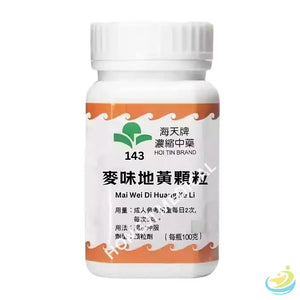
麥味地黃丸 · Mài Wèi Dì Huáng Wán

Mai Wei Di Huang Wan

A classical Liu Wei modification for Kidney-Lung Yin deficiency with dry cough, night sweating and thirst.

View formula profile →
Last reviewed September 2026
Formula CategoryYin-Tonifying Formulas
Primary PatternKidney Yin Deficiency
Primary FunctionEnrich Yin, astringe Lung, stop cough and sweating
Primary Therapeutic PrincipleNourish Kidney-Lung Yin and astringe the Lung
Main HerbsPrepared Rehmannia Root · Cornus Fruit · Chinese Yam · Poria / Hoelen · Moutan Bark / Tree Peony Bark · Alisma Rhizome · Ophiopogon Tuber · Schisandra Fruit
Classical SourceClassical TCM formulary

Why This Formula?

Traditionally selected for Kidney-Lung Yin deficiency with dry cough and night sweating, rather than plain Kidney Yin, stronger Lung Yin dry cough, or Yin-deficiency fire.

Traditionally selected for Kidney-Lung Yin deficiency with dry cough and night sweating, rather than plain Kidney Yin, stronger Lung Yin dry cough, or Yin-deficiency fire.

What Is Mai Wei Di Huang Wan?

1. Ancient Classics Inheritance

Mai Wei Di Huang Wan (麦味地黄丸), or Ophiopogon, Schisandra, and Rehmannia Pill, is a classical modification of Liu Wei Di Huang Wan formed by adding Mai Men Dong and Wu Wei Zi; it is also known as Ba Xian Chang Shou Wan (Eight-Immortal Longevity Pill). It belongs to the category of formulas that nourish Kidney and Lung Yin.

This formula addresses Kidney Yin deficiency that fails to moisten the Lungs, a pattern of deficient Heat steaming upward and drying the Metal organ. Typical signs include dry cough with little sputum, night sweats or tidal fever, dry mouth and throat, lower back weakness, a red tongue with little coating, and a thin rapid pulse.

Combining the Liu Wei Di Huang Wan core—Shu Di Huang, Shan Zhu Yu, and Shan Yao to nourish Kidney, Liver, and Spleen Yin, with Ze Xie, Mu Dan Pi, and Fu Ling to drain turbidity—plus Mai Men Dong to nourish Lung and Stomach Yin and clear deficient Heat from the Upper Burner, and Wu Wei Zi to astringe Lung Qi and Kidney Essence and stop sweating and cough, Mai Wei Di Huang Wan replenishes the Water that should generate Metal and is especially suited to Yin-deficient dry cough and steaming-bone sensations.

Mai Wei Di Huang Wan

2. Respiratory System Conditions

For individuals in the remission phase of chronic respiratory issues like chronic bronchitis or mild asthma, this formula can serve as an excellent supportive therapy.

  • Key Symptoms: It is particularly helpful when these conditions are accompanied by signs of Lung and Kidney Yin Deficiency, such as chronic shortness of breath, a dry mouth and throat, and a sore, weak lower back.
  • How it Works: By deeply nourishing the kidney Yin to hydrate the lungs, it helps strengthen respiratory function, potentially reducing the frequency of flare-ups and easing daily symptoms.

3. Urinary and Metabolic Conditions

Mai Wei Di Huang Wan (Ophiopogon and Schisandra Rehmannia Pill) is also used in TCM to support metabolic and urinary health, particularly when there is underlying kidney depletion.

  • Targeted Support: For patients managing conditions like diabetic nephropathy (kidney complications from diabetes) or chronic pyelonephritis, this formula can be used under professional TCM guidance.
  • Key Symptoms: It helps manage symptoms associated with kidney Yin deficiency, such as weakness in the knees and lower back, dizziness, ringing in the ears, and frequent urination, by regulating and supporting overall kidney function.

4. Neurological Symptoms

When the kidneys lack sufficient Yin, they cannot send vital essence upward to nourish the brain, nor can they properly anchor the mind, leading to neurological discomfort.

  • Symptom Relief: This formula is highly effective for managing dizziness, persistent tinnitus (ringing in the ears), and insomnia with vivid dreams.
  • How it Works: By replenishing the kidney Yin, the formula restores nourishment to the head and calms the nervous system, significantly improving sleep and daily quality of life.
Mai Wei Di Huang Wan

5. Other Health Benefits

Beyond specific diseases, this formula is a powerful general tonic for long-term depletion.

  • General Relief: It is frequently used to treat chronic night sweats and persistent dry mouth and throat caused by Yin deficiency.
  • Body Strengthening: For individuals with a generally weak constitution and chronic kidney Yin deficiency, taking Mai Wei Di Huang Wan (Ophiopogon and Schisandra Rehmannia Pill) over time can help rebuild the body's foundation, boost overall resistance, and improve general vitality.

Herb Composition (Sovereign / Minister / Assistant / Envoy)

1. King Herb: Shu Di Huang

Shu Di Huang (Prepared Rehmannia Root) is sweet and slightly warm, naturally targeting the liver and kidney meridians.

  • Core Role: It is the absolute core ingredient for nourishing Yin (the body's cooling, moistening system) in Mai Wei Di Huang Wan (Ophiopogon and Schisandra Rehmannia Pill).
  • Why it helps: Because of its rich and heavy nature, it acts as a solid foundation. It continuously supplies deep moisture and essential nutrients to the body, directly repairing the underlying kidney Yin deficiency.

2. Minister Herbs: Shan Zhu Yu and Shan Yao

These two herbs work alongside the King to boost its effects and protect the body's energy.

  • Shan Zhu Yu (Asiatic Cornelian Cherry): Sour and slightly warm, it not only nourishes the liver and kidneys but also acts as an "astringent." This means it helps lock in the body's vital essence, preventing the newly replenished kidney Yin from leaking out.
  • Shan Yao (Chinese Yam): Sweet and neutral, it focuses on strengthening the spleen and stomach. By improving digestion, it helps the body produce more natural energy and blood. It also directly supports the kidneys, creating a balanced approach to restoring Yin.

3. Assistant Herbs: Ze Xie, Mu Dan Pi, and Fu Ling

This trio ensures the formula doesn't become too heavy or overly warming for the digestive system.

  • Ze Xie (Water Plantain): Sweet, bland, and cold, it helps clear dampness through urination. It prevents the rich Shu Di Huang from becoming too sticky and congesting the system.
  • Mu Dan Pi (Tree Peony Bark): Bitter and slightly cold, it cools the blood and promotes healthy circulation. It keeps the warming nature of the King herb in check, preventing any unwanted "heat" side effects.
  • Fu Ling (Poria): Sweet and neutral, it drains excess dampness while strengthening the spleen and calming the mind. It helps all the other herbs work more efficiently together.
Mai Wei Di Huang Wan

4. Courier Herbs: Mai Dong and Wu Wei Zi

These two herbs give this specific formula its unique focus on the lungs.

  • Mai Dong (Ophiopogon Tuber): Sweet and slightly cold, it is a master at moistening the lungs, generating fresh fluids, and clearing heat from the heart.
  • Wu Wei Zi (Schisandra Fruit): Sour and warm, it helps "hold in" lung energy to stop coughing, while also generating fluids and calming the mind.
  • Synergy: Together, they direct the healing power upward to the lungs. They ensure that both the lungs and kidneys moisturize and support one another perfectly.

Clinical Presentation in TCM

1. Pathogenesis Analysis (The Underlying Cause)

In Traditional Chinese Medicine (TCM), Mai Wei Di Huang Wan (Ophiopogon and Schisandra Rehmannia Pill) is used to treat Lung and Kidney Yin Deficiency.

  • The Connection: The lungs govern your breathing, while the kidneys help "anchor" that breath. When they lack moisture (Yin deficiency), they cannot work together properly.
  • The Symptoms: A lack of lung moisture leads to chronic coughing and shortness of breath. A lack of kidney moisture causes lower back weakness, dizziness, and ringing in the ears. Because Yin is cooling, lacking it causes "empty heat," leading to hot flashes, night sweats, and a dry throat.

2. Benefits

The primary goal of this formula is to nourish the kidneys and moisten the lungs.

  • Restoring Balance: By supplying abundant Yin, it deeply hydrates the internal organs.
  • Targeted Relief: Thanks to Mai Dong and Wu Wei Zi, it specifically soothes the respiratory tract, stopping coughs and generating saliva. It beautifully bridges the gap between the lungs and kidneys, restoring the body's overall harmony.
Mai Wei Di Huang Wan

3. Clinical Indications (What It is Used For)

Practitioners commonly recommend this formula when a person is deeply depleted and showing signs of "empty heat."

  • Key Signs: It is highly effective for chronic night sweats, a persistently dry throat, dizziness, ringing in the ears (tinnitus), and a chronic sore lower back.
  • Respiratory Support: It is often used as a supportive therapy for chronic lung issues like lingering coughs or mild asthma, provided the root cause is Yin deficiency.
  • Metabolic Support: For patients with diabetes (known as "Wasting-Thirst" in TCM), this formula is sometimes used to manage symptoms when there are clear signs that the kidney's moisture reserves are running low.

The Mechanism in Classical Theory

1. The Synergy of Nourishing Yin and the Kidneys

The combination of herbs in this formula works together to create a powerful Yin-nourishing effect.

  • The Nourishing Trio: Shu Di Huang (Prepared Rehmannia Root), Shan Zhu Yu (Asiatic Cornelian Cherry), and Shan Yao (Chinese Yam) work hand-in-hand. Shu Di Huang heavily replenishes the liver and kidney Yin, Shan Zhu Yu locks in this vital essence to prevent it from leaking, and Shan Yao supports the spleen to help produce more energy. Together, they deeply hydrate the organs.
  • The Balancing Act: Ze Xie (Water Plantain), Mu Dan Pi (Tree Peony Bark), and Fu Ling (Poria) play a crucial supporting role. Ze Xie flushes out cloudy kidney waste, Mu Dan Pi cools down internal "false fire" to prevent the formula from being too heavy, and Fu Ling gently drains dampness while calming the mind. This ensures the body absorbs the rich nutrients without experiencing unwanted side effects like bloating or excess heat.

2. The Principle of Treating the Lungs and Kidneys Together

In Traditional Chinese Medicine, the lungs and kidneys share a deep connection. When one is depleted of moisture (Yin), the other suffers.

  • Targeting the Lungs: Mai Dong (Ophiopogon Tuber) moistens the lungs and generates fluids, while Wu Wei Zi (Schisandra Fruit) helps the lungs "hold onto" their energy to stop coughing.
  • Mutual Support: By combining these two herbs with the kidney-nourishing base, Mai Wei Di Huang Wan (Ophiopogon and Schisandra Rehmannia Pill) achieves a holistic dual-treatment. It nourishes the kidney Yin at the root, which then naturally moves upward to hydrate the lungs. In return, healthy lungs help send fluids back down to the kidneys, restoring a healthy, self-sustaining cycle.
Mai Wei Di Huang Wan

3. The Logic Behind the Herbal Combination

The brilliance of this formula lies in its highly strategic pairing of ingredients.

  • Tonifying Without Stagnation: It perfectly balances rich, hydrating herbs with herbs that clear heat, drain dampness, and support digestion.
  • A Complete System: While the Yin-nourishing herbs do the heavy lifting of hydrating the body, the cooling and draining herbs make sure this newly added moisture doesn't turn into stagnant dampness or internal heat. Meanwhile, the spleen-supporting herbs ensure the stomach can easily digest and utilize the medicine. This scientific and rigorous approach is a hallmark of classic TCM formula design.

Clinical Comparison Table

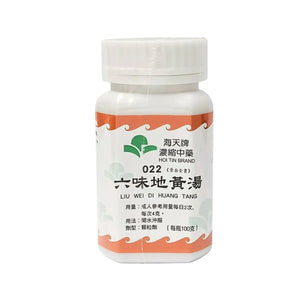
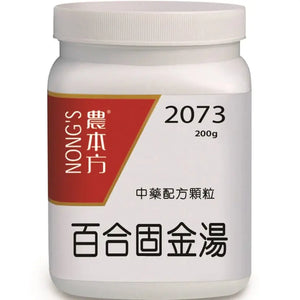
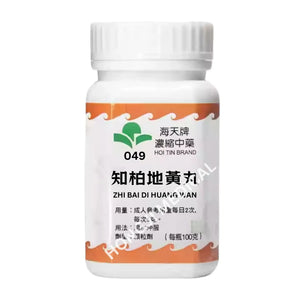
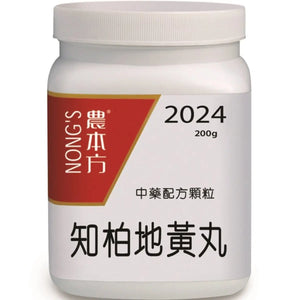
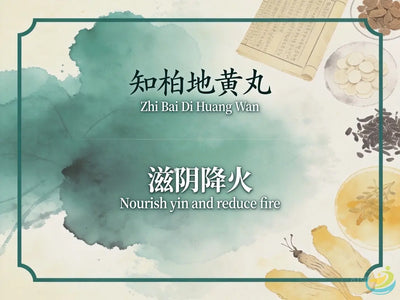
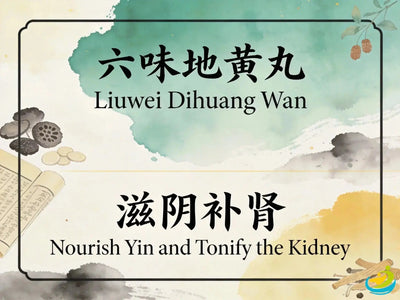
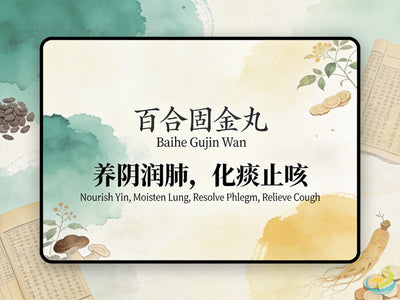
Compare Mai Wei Di Huang WanLiu Wei Di Huang WanBai He Gu Jin TangZhi Bai Di Huang Wan
Primary Function Enrich Yin, astringe Lung, stop cough and sweatingNourish Kidney YinNourish Lung-Kidney Yin, moisten Lungs, stop coughNourish Yin, clear deficiency Heat
Formula Category Yin-Tonifying FormulasYin-Tonifying FormulasYin-Tonifying FormulasYin-Tonifying Formulas
Typical TCM Pattern Kidney Yin DeficiencyKidney Yin DeficiencyYin DeficiencyKidney Yin Deficiency
Main Conditions Dry Cough, Night Sweats, Dry Mouth & ThroatDizziness & Vertigo, Tinnitus, Night Sweats, Fatigue & Low Energy, Yin Deficiency ConstitutionDry Cough, Yin Deficiency Constitution, Night SweatsYin Deficiency Constitution, Night Sweats
Main Herbs Prepared Rehmannia Root · Cornus Fruit · Chinese Yam · Poria / Hoelen · Moutan Bark / Tree Peony Bark · Alisma Rhizome · Ophiopogon Tuber · Schisandra FruitPrepared Rehmannia Root · Cornus Fruit · Chinese Yam · Alisma Rhizome · Moutan Bark / Tree Peony Bark · Poria / HoelenLily Bulb · Raw Rehmannia Root · Prepared Rehmannia Root · Ophiopogon Tuber · Scrophularia Root · Fritillaria Bulb · Platycodon Root · Chinese Angelica Root · White Peony Root · Licorice RootPrepared Rehmannia Root · Cornus Fruit · Chinese Yam · Alisma Rhizome · Moutan Bark / Tree Peony Bark · Poria / Hoelen · Anemarrhena Rhizome · Phellodendron Bark
Classical Source Classical TCM formularyXiao Er Yao Zheng Zhi Jue (Qian Yi, Song dynasty) / later popularisedShen Zhai Yi Shu (Ming dynasty) / traditionalYi Zong Jin Jian / Investigation of Medical Formulas (Ming dynasty)

How to tell them apart

Mai Wei Di Huang Wan, Liu Wei Di Huang Wan, Bai He Gu Jin Tang and Zhi Bai Di Huang Wan nourish Yin related to Lung or Kidney. Liu Wei is the base Kidney Yin tonic; Bai He Gu Jin Tang nourishes Lung-Kidney Yin for dry cough; Zhi Bai Di Huang Wan clears Yin-deficiency fire. Mai Wei Di Huang Wan is a Liu Wei modification that astringes the Lung for Kidney-Lung Yin deficiency with dry cough and night sweating.

For educational reference only, based on traditional pattern differentiation — not a substitute for professional advice.

Clinical Modifications for Mai Wei Di Huang Wan

1. For Severe Cough

When a cough is particularly stubborn, practitioners often customize the formula to focus on respiratory relief.

  • Herbal Additions: Herbs like Chuan Bei Mu (Fritillaria Bulb) and Bai Bu (Stemona Root) are frequently added.
  • Why it helps: Chuan Bei Mu is excellent at clearing heat and dissolving phlegm, while Bai Bu effectively directs lung energy downward to stop coughing. Together with the base formula, they provide targeted relief for chronic coughs caused by Lung and Kidney Yin deficiency.

2. For Prominent Hot Flashes and Night Sweats

If "empty heat" symptoms like night sweats are the primary concern, the formula's cooling aspect needs a boost.

  • Herbal Additions: Di Gu Pi (Wolfberry Bark) is commonly added.
  • Why it helps: This herb has a cooling nature that specifically targets the lungs, liver, and kidneys. It is highly effective at clearing deep-seated internal heat and stopping night sweats without being overly harsh on the digestive system.

3. For Severe Lower Back and Knee Weakness

When the kidney depletion heavily impacts structural strength, leading to significant soreness.

  • Herbal Additions: Herbs like Sang Ji Sheng (Mulberry Mistletoe Stem) and Du Zhong (Eucommia Bark) are included.
  • Why it helps: Both of these herbs are renowned in TCM for deeply tonifying the liver and kidneys while specifically strengthening the bones, tendons, and lower back joints.
Mai Wei Di Huang Wan

4. For Severe Dry Mouth and Throat

If fluid depletion is severe, resulting in intense internal dryness.

  • Herbal Additions: Xuan Shen (Figwort Root) and additional Mai Dong (Ophiopogon Tuber) can be utilized.
  • Why it helps: Xuan Shen clears heat and cools the blood while powerfully generating fluids. Paired with extra Mai Dong, they create a strong synergy to deeply hydrate the throat and relieve intense dryness.

What the Science Suggests

1. Pharmacological Actions

Modern scientific studies have explored the mechanisms behind Mai Wei Di Huang Wan (Ophiopogon and Schisandra Rehmannia Pill).

  • Immunity and Metabolism: Research suggests it can help regulate the immune system, making it beneficial for individuals with lowered resistance. It has also shown potential in helping to balance blood sugar and blood lipids, offering supportive care for those managing metabolic conditions like diabetes or high cholesterol.
  • Kidney Protection: Laboratory studies indicate it may offer protective effects for the kidneys, helping to improve functional markers and potentially slowing the progression of certain kidney issues linked to Yin deficiency.

2. Clinical Research Applications

Clinical trials continue to expand the understood uses of this traditional formula.

  • Expanding the Scope: Beyond its classic applications for respiratory, urinary, and neurological health, recent studies have explored its use as a supportive therapy in eye conditions (such as retinopathy) and endocrine disorders (like hyperthyroidism).
  • Adjunctive Support: In these modern clinical settings, it is often used to help restore the body's internal balance, easing accompanying symptoms and improving the overall quality of life during treatment.
Mai Wei Di Huang Wan

3. Dosage Form Improvements and Development

As pharmaceutical technology advances, the delivery methods for this ancient medicine have evolved for better patient experience.

  • Modern Convenience: While traditionally taken as a large honey-bound pill, it is now widely available in concentrated granules, capsules, and tablets. These modern formats make it much easier for patients to take consistently.
  • Enhanced Quality: Ongoing research focuses on optimizing the extraction and purification of the herbs' active ingredients. This continuous development aims to ensure higher quality control and maximize the therapeutic benefits for clinical use.

Safety Considerations

1. Dietary Restrictions and Special Populations

While taking Maiwei Dihuang Pills, avoid spicy and greasy foods, as well as smoking and alcohol. Do not use them during a cold or fever. Pregnant or breastfeeding women should take them only under medical supervision.

2. Other Precautions

If symptoms do not improve after four weeks, consult a doctor. Seek medical advice if any discomfort or questions arise, and do not change the dosage or stop taking the medicine on your own. Follow the prescribed schedule consistently.

Questions About Mai Wei Di Huang Wan

Q1: What are the actions of Mai Wei Di Huang Wan?
Mai Wei Di Huang Wan (also called Ba Xian Chang Shou Wan) has the actions of nourishing Kidney and Lung Yin and astringing leakage. It is Liu Wei Di Huang Wan plus Mai Dong and Wu Wei Zi, used when Kidney Yin deficiency has already involved the Lung.
Q2: Which modern conditions is Mai Wei Di Huang Wan suited to?
Modern TCM clinical practice commonly applies it to individuals whose pattern differentiation falls within Kidney-Lung Yin deficiency, including chronic dry cough or night sweats of this pattern, some residual cough after a febrile illness with a red scant-coated tongue, and steaming-bone or consumptive Heat pictures after medical causes have been assessed.
Q3: Is Mai Wei Di Huang Wan suitable for improving a dry Yin-deficiency cough and night sweats?
For presentations of dry cough with little sputum, night sweats or five-center heat, dry throat, sore weak lower back, a red tongue with little coating, and a thin rapid pulse — in those whose pattern differentiation confirms Kidney-Lung Yin deficiency — TCM commonly applies Mai Wei Di Huang Wan as an adjunct. Persistent cough, bloody sputum, or unexplained weight loss requires medical evaluation.
Q4: Who should not take Mai Wei Di Huang Wan?
Those with Spleen-Stomach deficiency Cold and loose stools, Phlegm-Damp cough with copious white sputum, or an unresolved exterior pathogen are generally not suitable. Shu Di Huang is cloying and Wu Wei Zi astringes. Use should be assessed by a qualified TCM physician.
Q5: Why add Mai Dong and Wu Wei Zi to Liu Wei Di Huang Wan?
The Kidney is the root of Yin; the Lung is the tender viscus that is easily dried when Kidney Yin fails to nourish it. Mai Dong nourishes Lung-Stomach Yin and clears residual Heat. Wu Wei Zi astringes Lung Qi and Kidney Essence so cough and night sweat are less able to leak fluids. Liu Wei nourishes the root; the two added herbs treat the Lung branch.
Q6: How does Mai Wei Di Huang Wan differ from Liu Wei Di Huang Wan or Bai He Gu Jin Tang?
Liu Wei Di Huang Wan is the basic Kidney Yin tonic without a specific Lung pair. Zhi Bai Di Huang Wan drains more vigorous empty Fire. Bai He Gu Jin Tang more strongly moistens the Lung and stops dry cough when the Lung is the main target. Mai Wei Di Huang Wan is chosen when Kidney Yin deficiency and Lung dryness (cough, night sweat) appear together and a pill form of Liu Wei plus Mai Dong and Wu Wei Zi is appropriate.
Q7: What are the main ingredients of Mai Wei Di Huang Wan?
The formula is Liu Wei Di Huang Wan plus Mai Dong and Wu Wei Zi: Shu Di Huang, Shan Zhu Yu, and Shan Yao to nourish Kidney, Liver, and Spleen Yin; Ze Xie, Mu Dan Pi, and Fu Ling to drain and prevent stagnation; Mai Dong to nourish Lung Yin; and Wu Wei Zi to astringe Lung and Kidney.
Q8: Is Mai Wei Di Huang Wan suitable for long-term use?
It may be used for a course of treatment in chronic Kidney-Lung Yin deficiency under professional supervision. Because Shu Di Huang is enriching and Wu Wei Zi astringes, poor appetite, greasy coating, or an exterior cold means the pill should be paused or modified.
Q9: Can this formula help both the dry cough and the night sweats of the same Yin deficiency?
Yes. Kidney Yin failure lets empty Heat steam at night (sweat) and fails to moisten the Lung (dry cough). Nourishing the root and astringing the Lung can support both complaints of one pattern. Copious yellow Phlegm-Heat cough is a different formula.
Q10: What lifestyle advice supports the use of Mai Wei Di Huang Wan?
Sleeping enough to preserve Yin, avoiding smoking, alcohol, and late-night spicy food, keeping the throat moist, and seeking care for bloody sputum or unexplained weight loss all support correct use. This pill treats a TCM Kidney-Lung Yin pattern; it is not a substitute for evaluating tuberculosis or other chronic lung disease.

General Questions

How do I choose the right formula?
TCM formulas are traditionally selected according to individual pattern differentiation rather than by symptom alone. If you're not sure which formula fits your presentation, take our AI Assessment below for a personalized starting point, then confirm with a qualified TCM practitioner.
What are concentrated herbal granules?
Concentrated herbal granules are made by decocting raw herbs, then extracting and concentrating the resulting liquid into a fine granule or powder form. This preserves the same active compounds as a traditional decoction while making the herbs far easier to store, measure, and prepare.
How should I take these products?
Dissolve the recommended amount of granules in hot water, stir until fully dissolved, and drink while warm — following the dosage and frequency advised by your TCM practitioner or as stated on the product packaging.
Are concentrated herbal granules equivalent to traditional decoctions?
Concentrated granules are produced from the same herbs and processed to retain their active compounds, so they are traditionally regarded as a convenient alternative to decoctions rather than a different remedy. Some practitioners note subtle differences in strength or absorption between the two forms, so your TCM practitioner may adjust dosage accordingly.
Are your products authentic?
Yes. HJMEDICAL sources its concentrated granules exclusively from established, reputable manufacturers such as Nong's and Hoi Tin, both long-standing names in the TCM granules industry, with GMP compliance stated directly on their packaging.
Are HJMEDICAL products manufactured under GMP standards?
HJMEDICAL sources its concentrated granules from established, reputable manufacturers such as Nong's and Hoi Tin, both long-standing names in the TCM granules industry. GMP compliance for these products is stated directly on their packaging.
Do you ship internationally?
Yes — we ship worldwide! Every order goes out via Hong Kong Post, and your exact shipping cost and estimated delivery time for your address are calculated and shown right at checkout, so there are never any surprises. We also offer free shipping once your order reaches our free-shipping threshold, so it's easy to stock up on your favorite formulas and save.
Can I take more than one formula at the same time?
Some formulas are traditionally combined, while others overlap or counteract each other. We recommend checking with a qualified TCM practitioner before combining formulas, especially if you are already taking other medication.
Are these products suitable during pregnancy or breastfeeding?
Some TCM formulas are not suitable during pregnancy or breastfeeding. Please consult a qualified TCM practitioner or your doctor before use if you are pregnant, trying to conceive, or nursing.
Do these products replace medical treatment?
No. These products are traditional herbal supplements intended to support wellbeing according to TCM principles — they are not a replacement for professional medical diagnosis or treatment. Please consult a qualified TCM practitioner or licensed healthcare provider before starting, stopping, or combining any treatment, especially if you have a chronic condition.
Medical Disclaimer

For general TCM education only — not medical advice. Consult a qualified TCM practitioner or licensed healthcare provider before use, especially if pregnant, nursing, on medication, or managing a chronic condition.

Not sure which formula is right for you?

Take the AI Assessment

最新文章

Login

Forgot your password?

Don't have an account yet?
Create account

Mai Wei Di Huang Wan: Classic TCM Formula for Kidney & Lung Yin Deficiency, Dry Cough & Night Sweats